SITE ANALYSIS DIAGRAMS
-SHIBANI.M
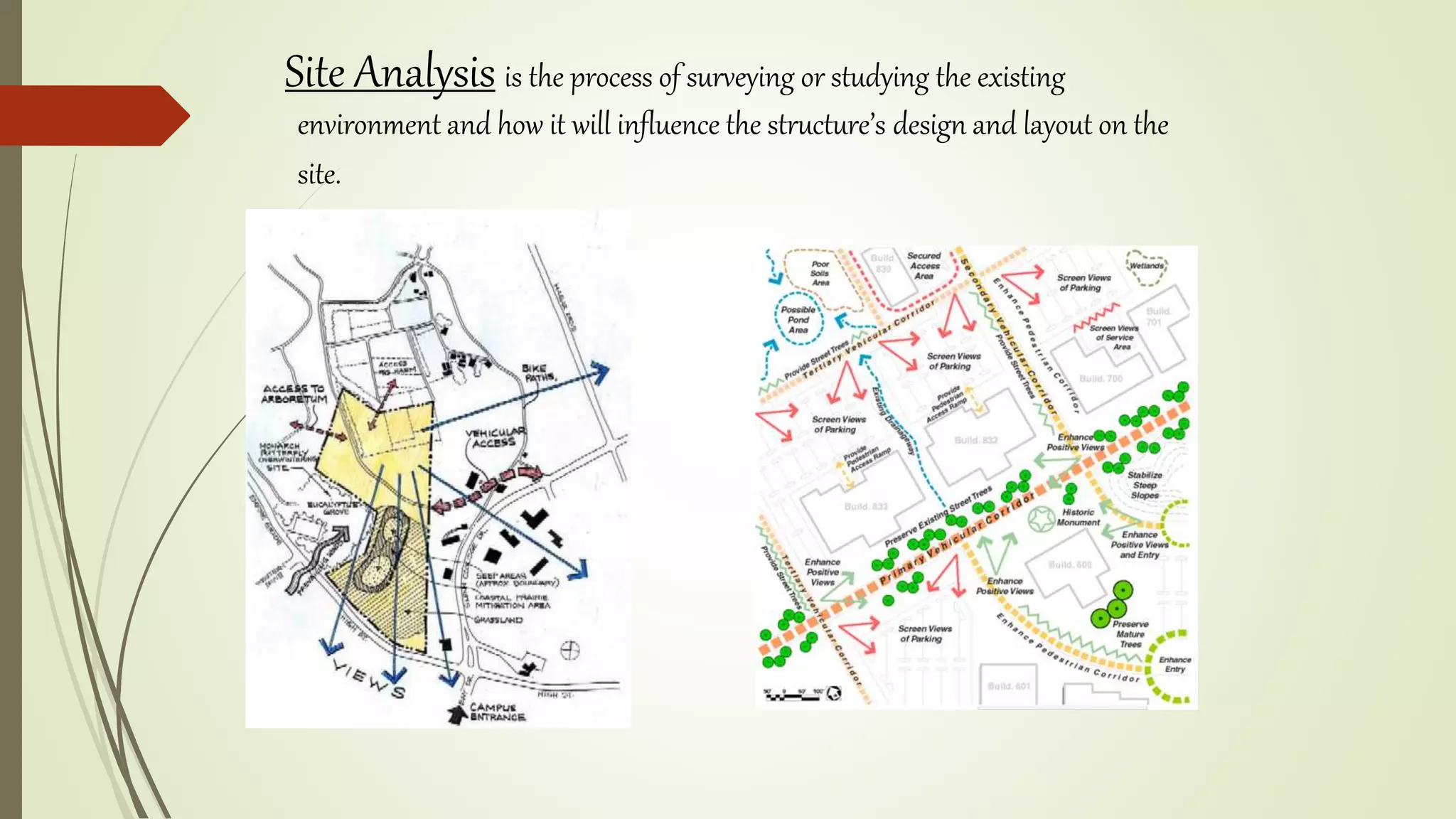
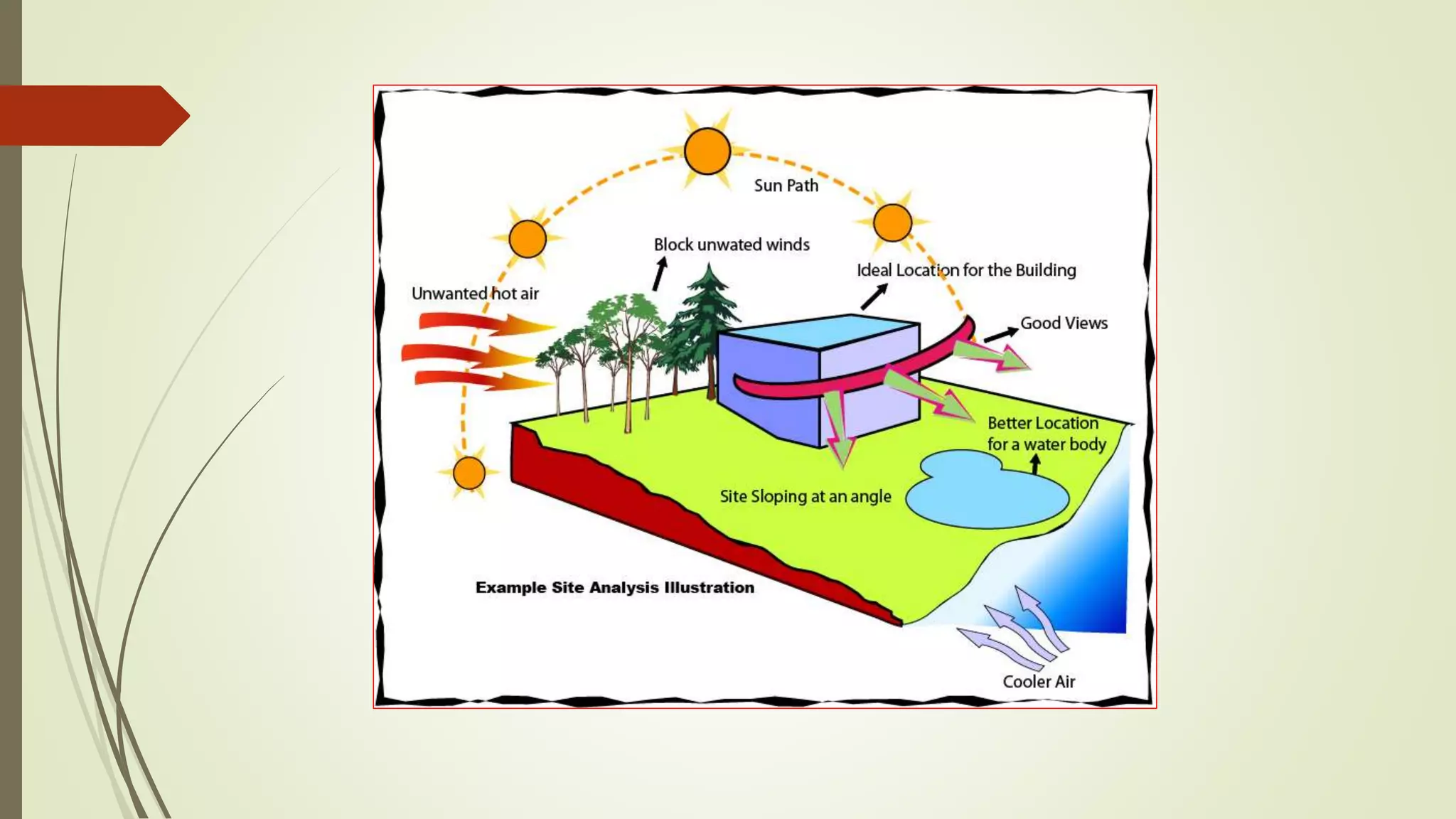
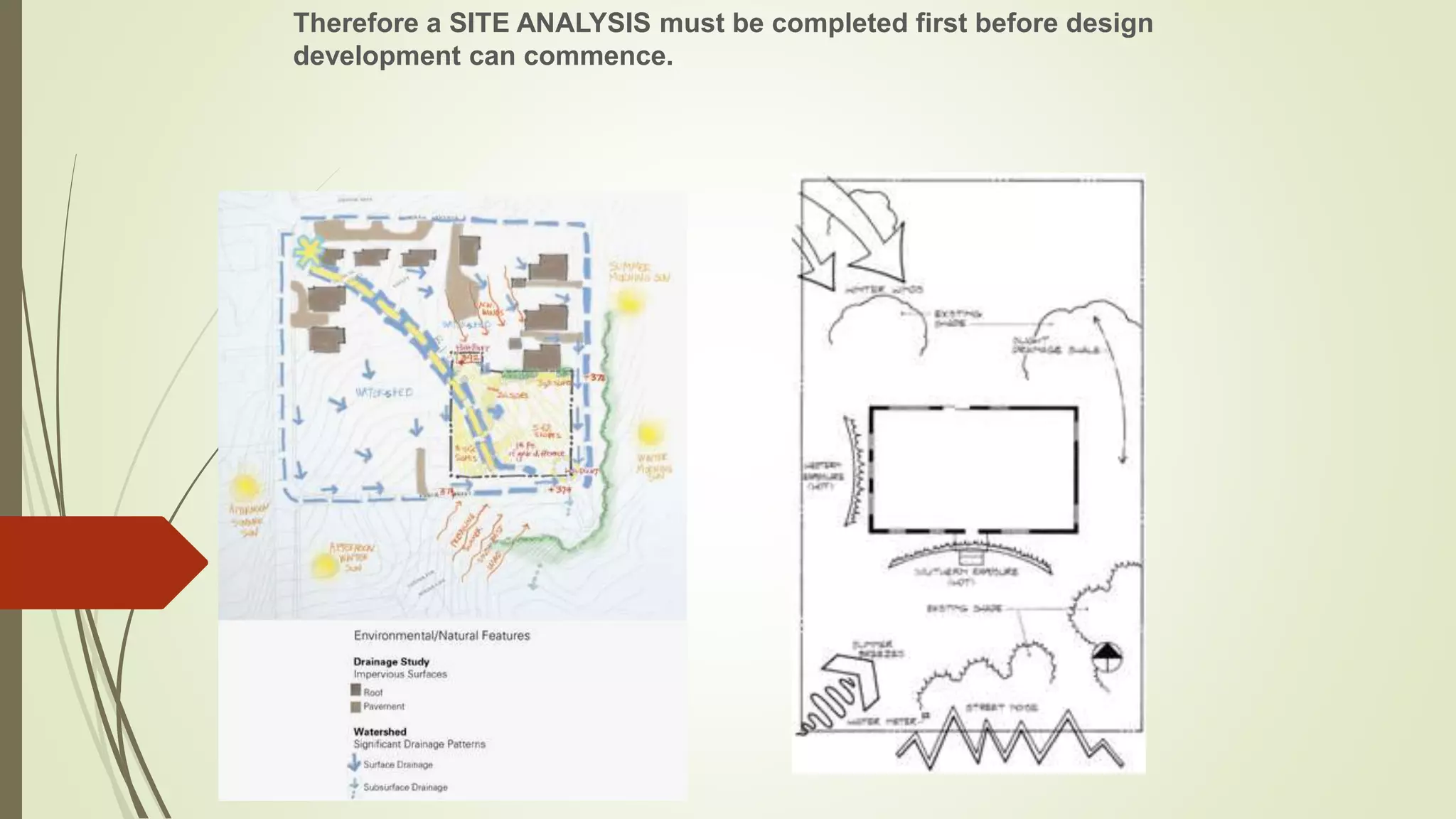
Site Analysis is the process of surveying or studying the existing
environment and how it will influence the structure’s design and layout on the
site.
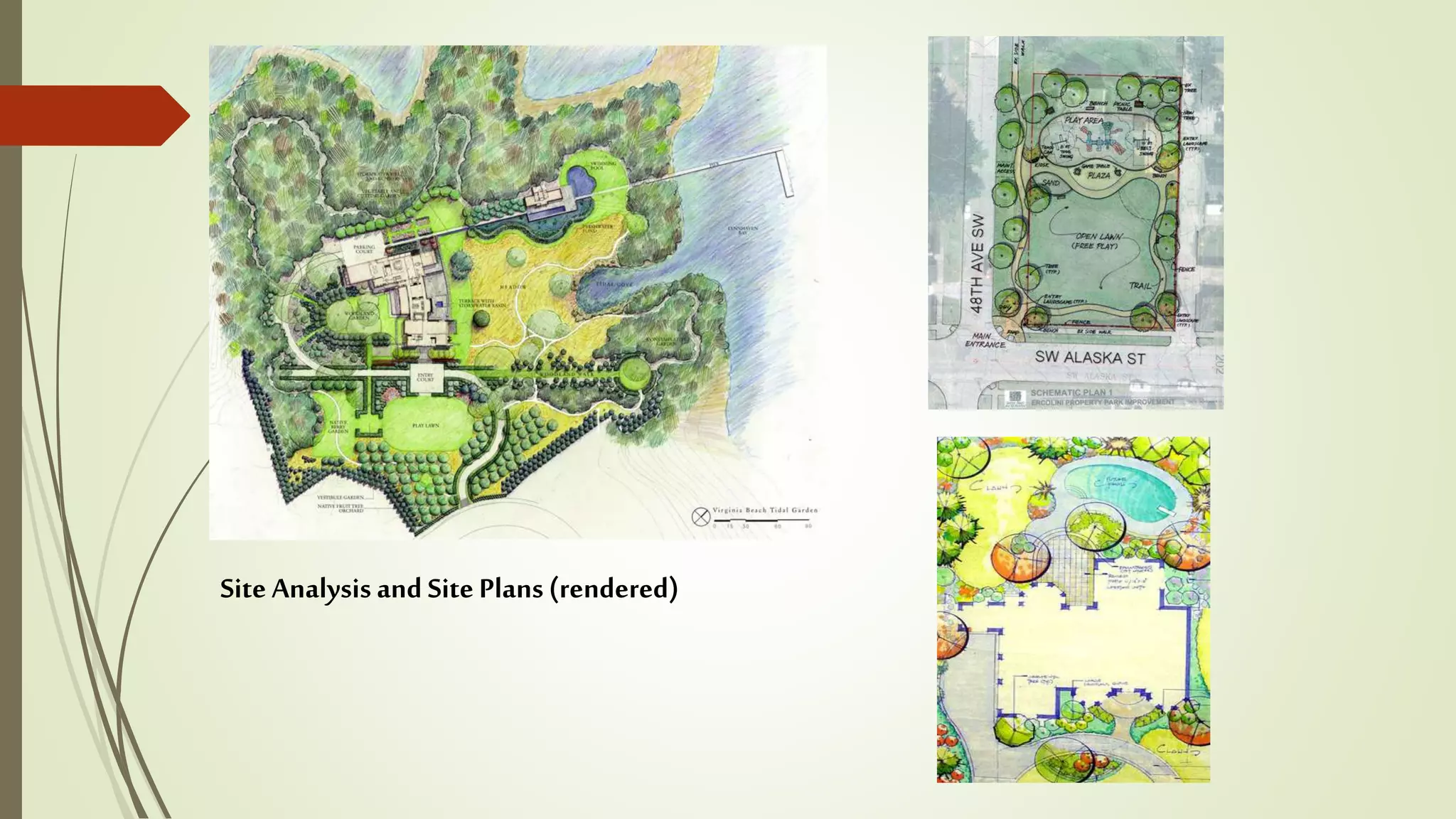
Site Analysis and Site Plans(rendered)
Site Analysis
•Topography
•Geographic location
•Plant material
•Water
•Climate
•Solar orientation
•Prevailing winds
•Soil
•Regulatory factors
Zoning Ordinances
Codes
Covenants
Historical Requirements
•Sensory Factors
Views
Sounds
Smells
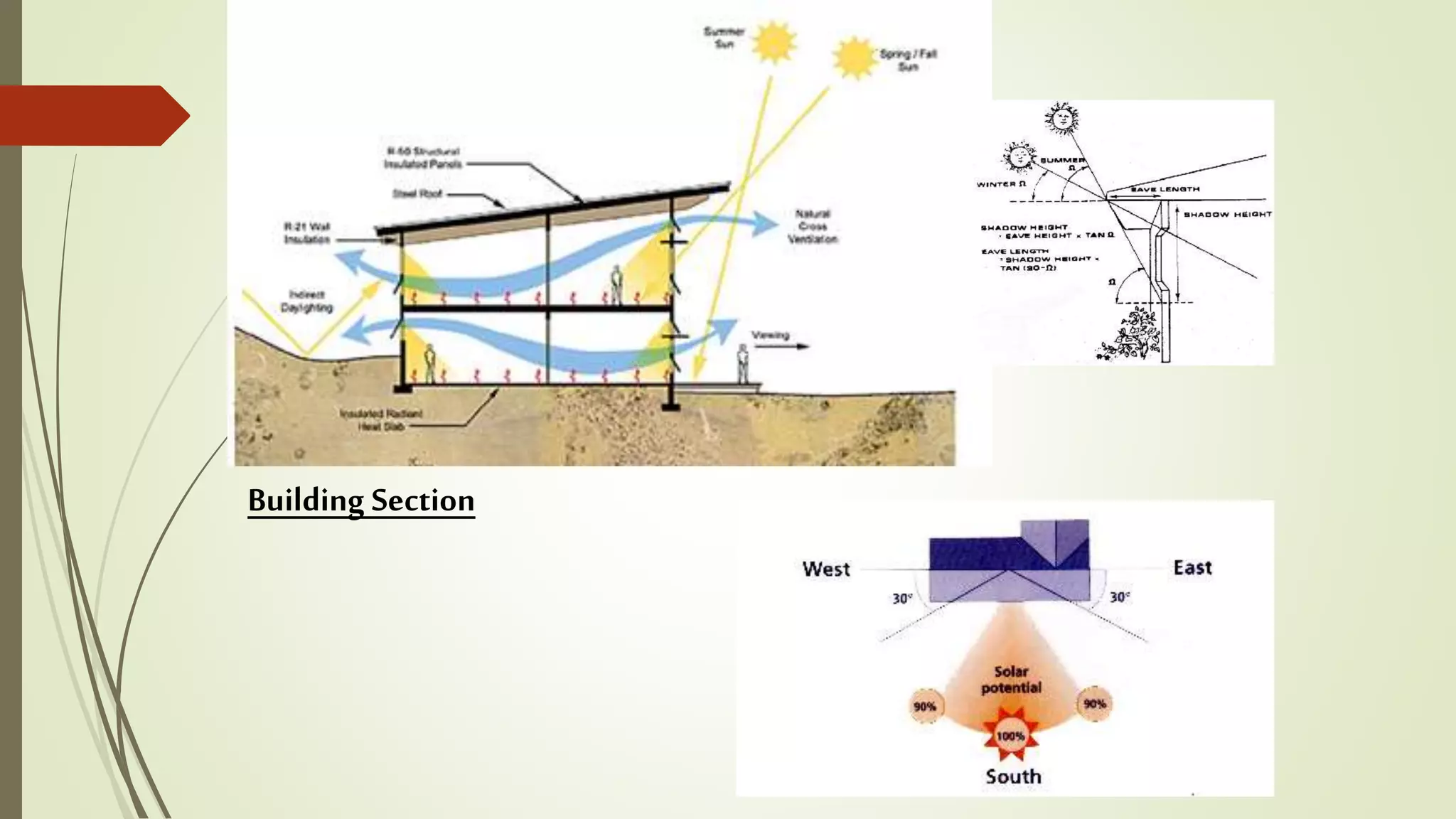
Building Section
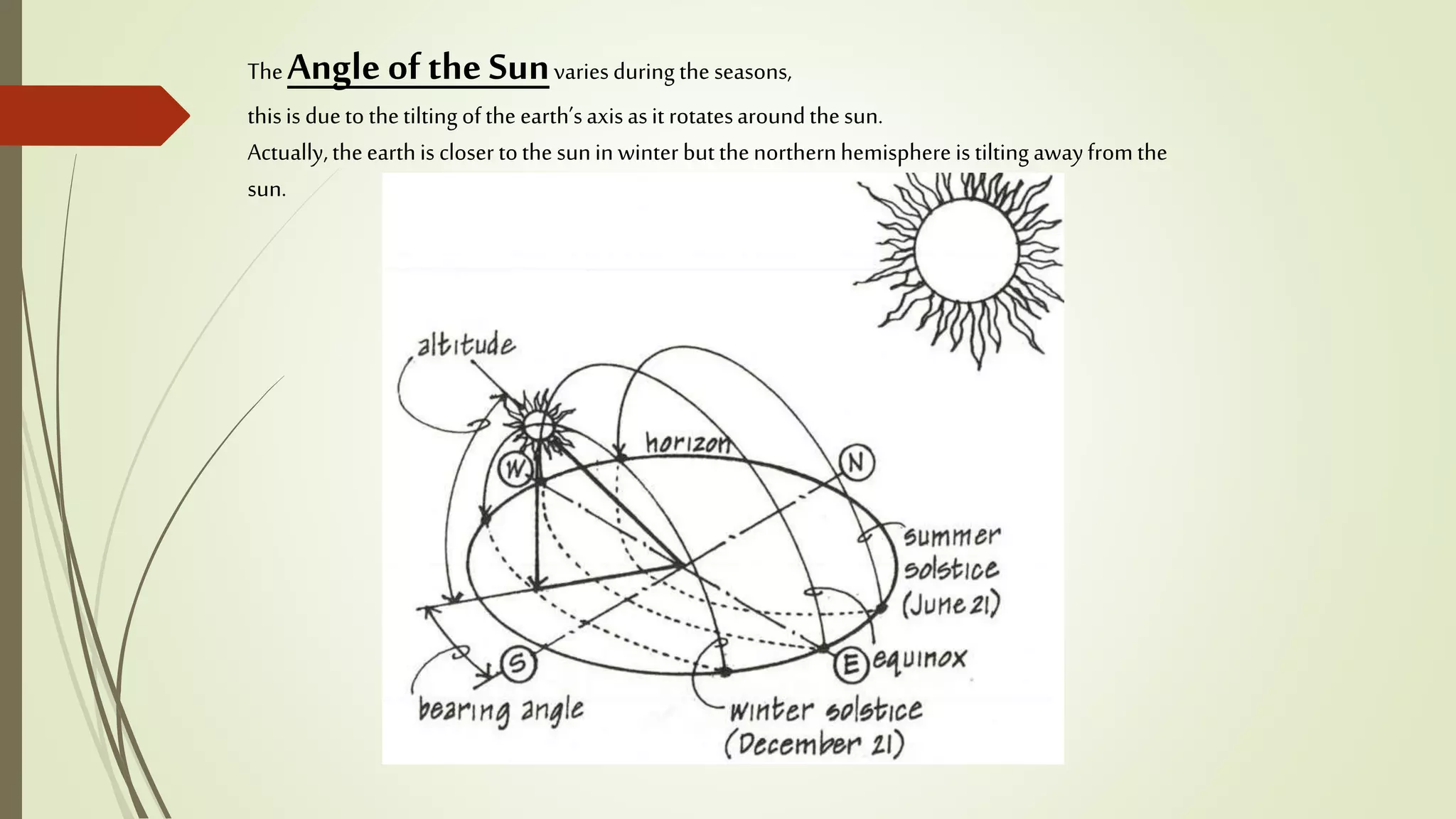
TheAngle of the Sunvariesduring the seasons,
thisis dueto thetilting ofthe earth’saxisasit rotatesaroundthesun.
Actually,theearthis closer tothe sunin winter butthenorthernhemisphere is tilting awayfromthe
sun.
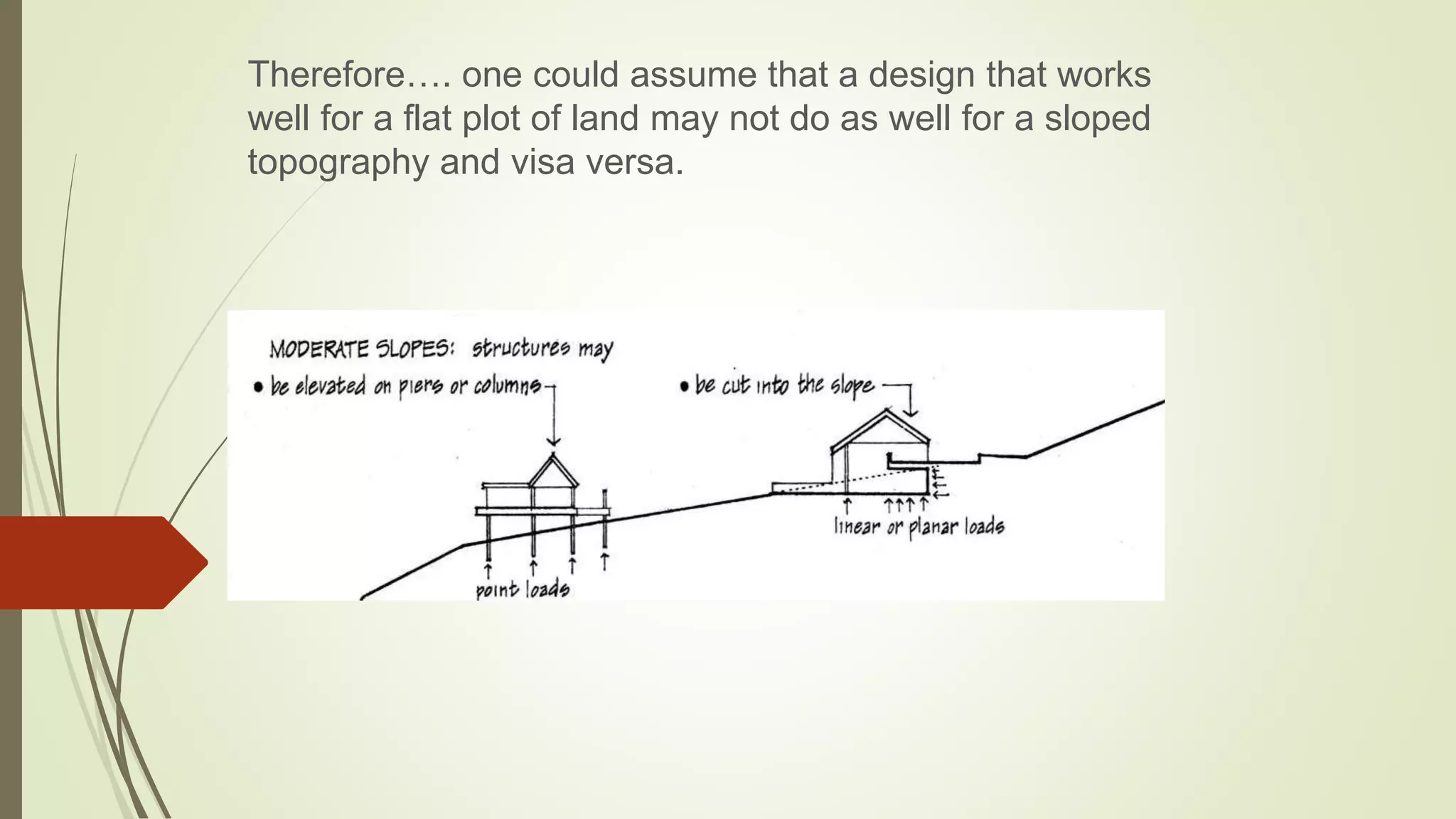
Therefore…. one could assume that a design that works
well for a flat plot of land may not do as well for a sloped
topography and visa versa.
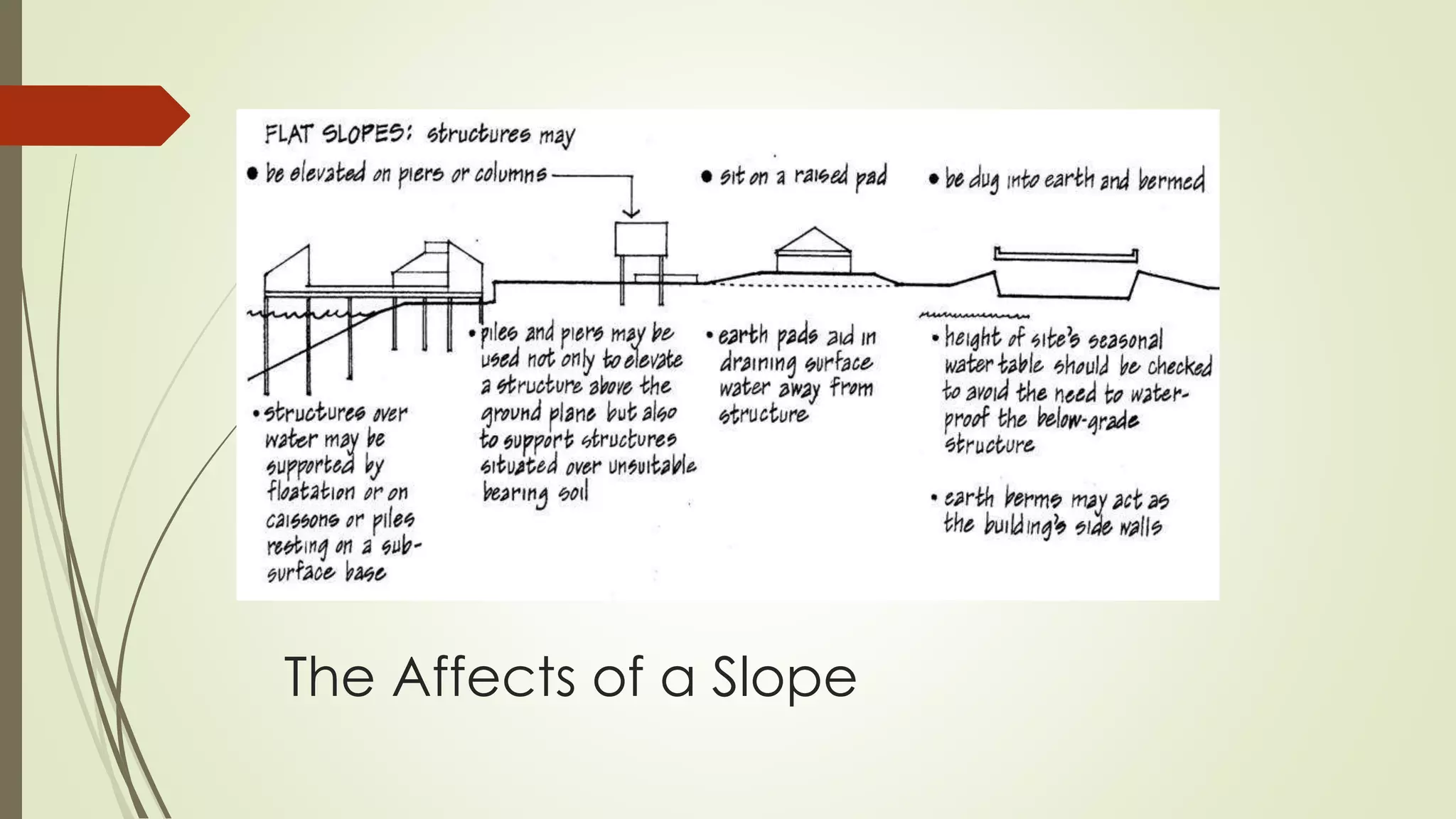
The Affects of a Slope
Therefore a SITE ANALYSIS must be completed first before design
development can commence.
Topography
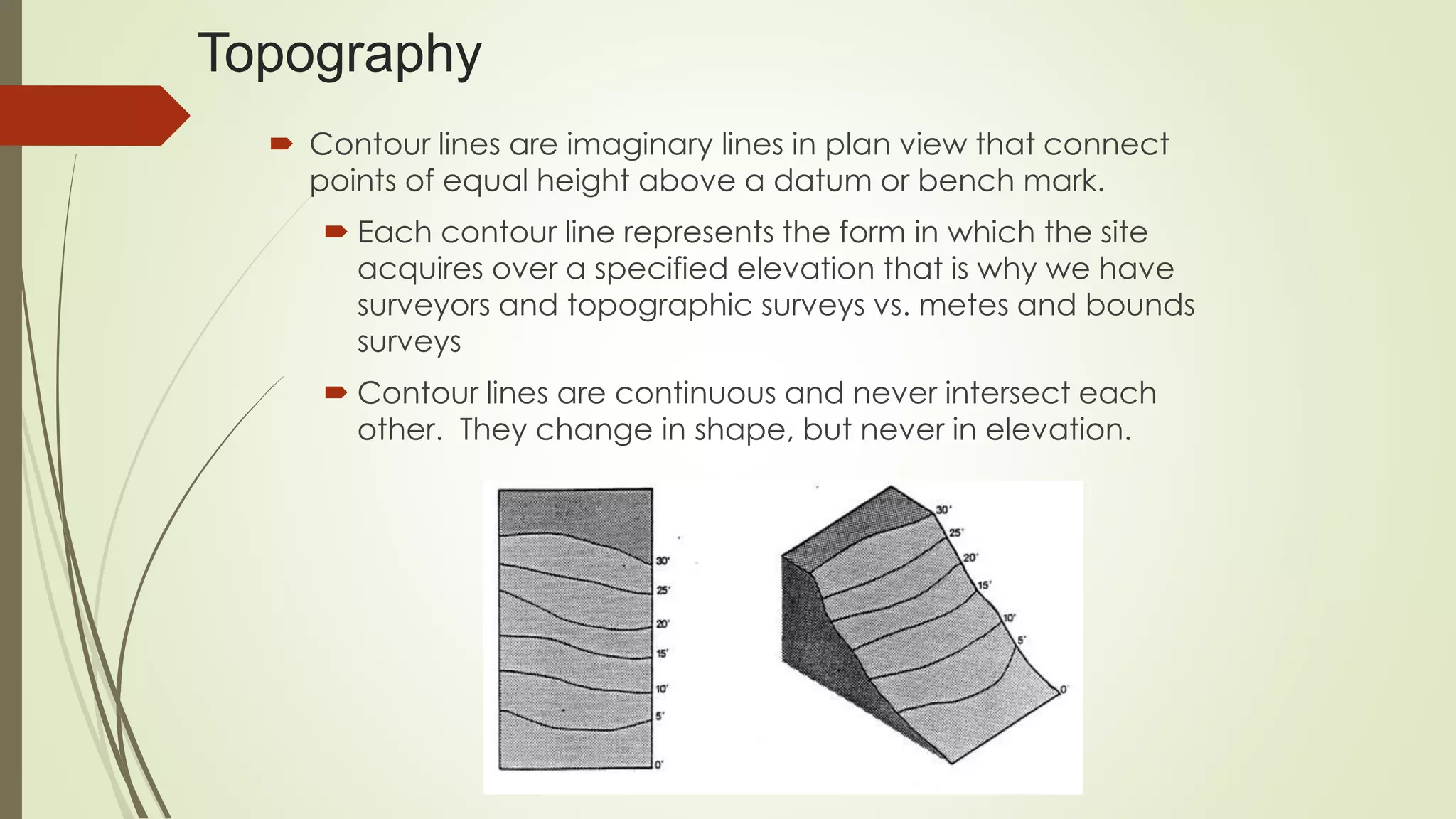
 Contour lines are imaginary lines in plan view that connect
points of equal height above a datum or bench mark.
 Each contour line represents the form in which the site
acquires over a specified elevation that is why we have
surveyors and topographic surveys vs. metes and bounds
surveys
 Contour lines are continuous and never intersect each
other. They change in shape, but never in elevation.
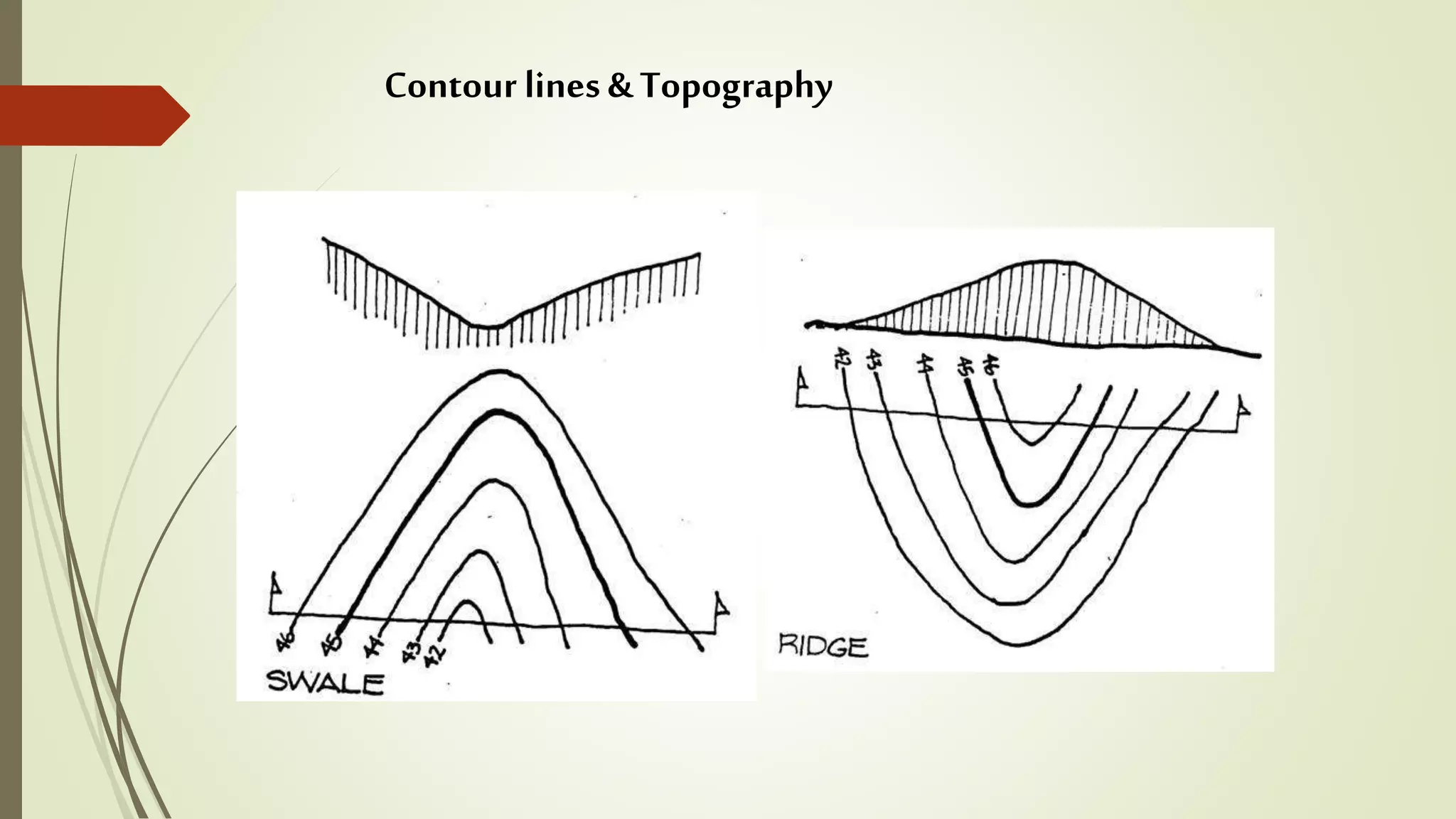
Contour lines & Topography
Geographic factors
 SOIL
 The soil type affects:
the type and size of a building’s foundation system
the drainage of ground and surface water
the types of plant material able to grow on a site
All buildings rely on soil for their ultimate support.
The underlying foundation is effected by the soil’s strength.
Geographic factors
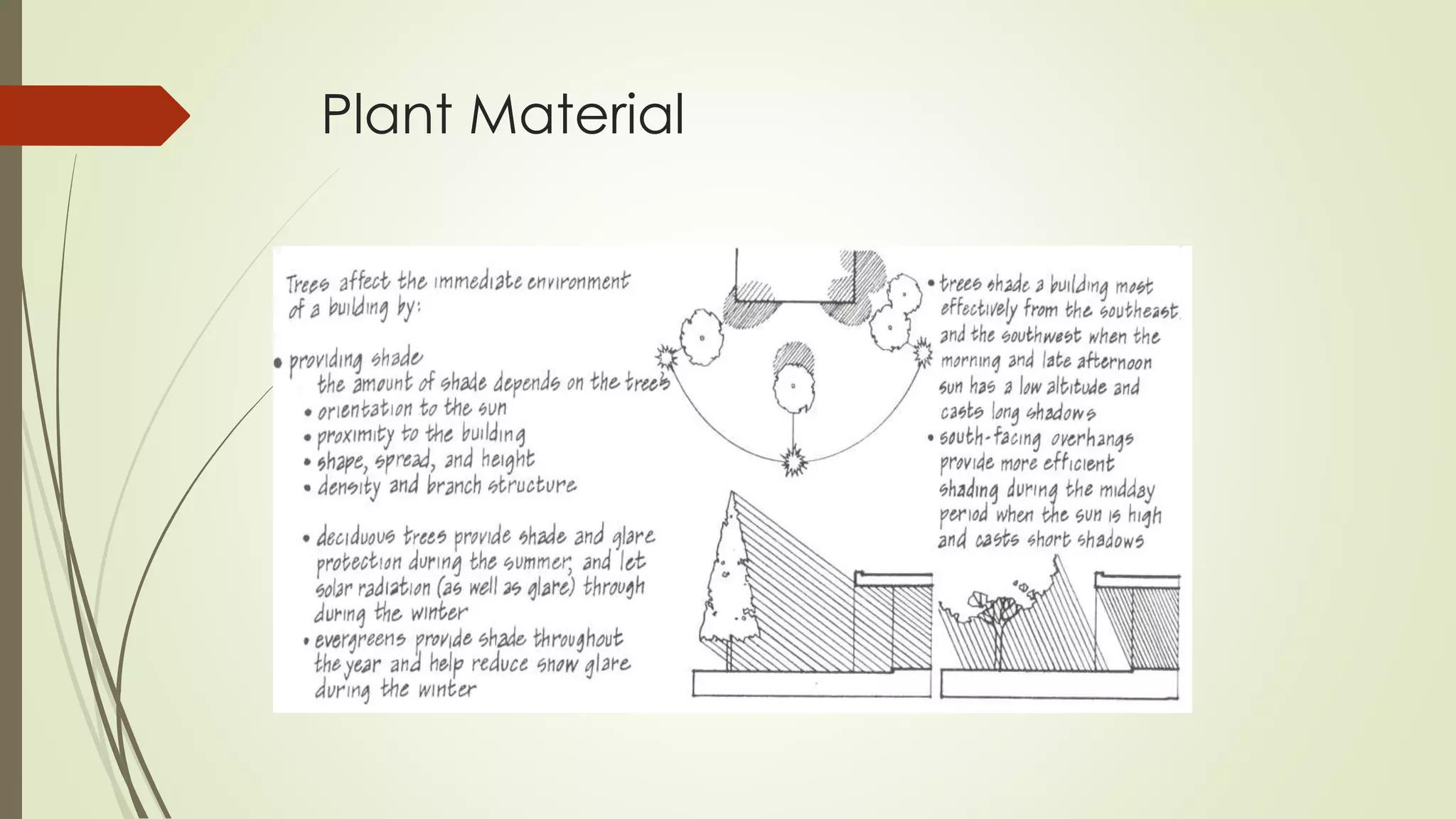
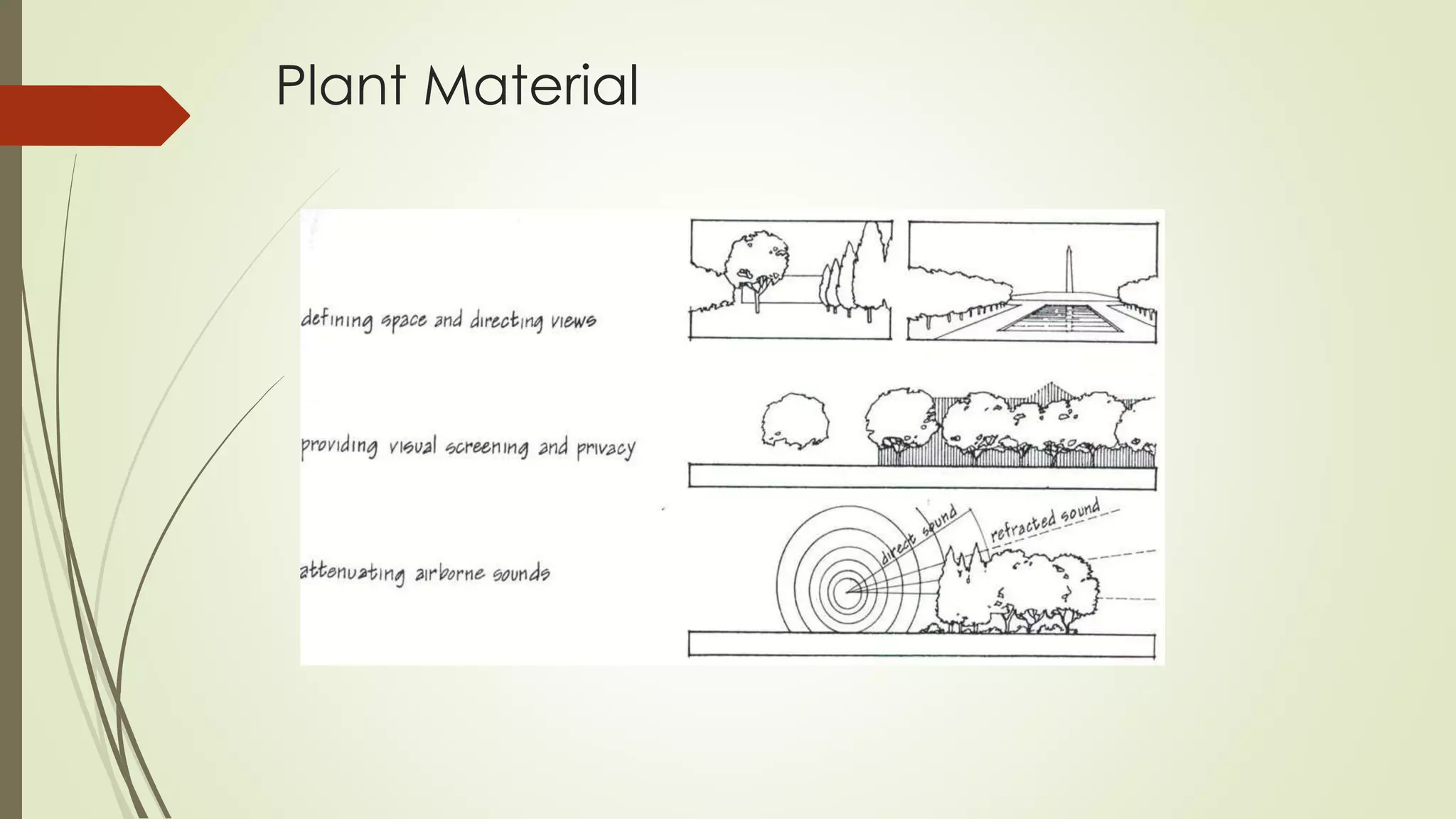
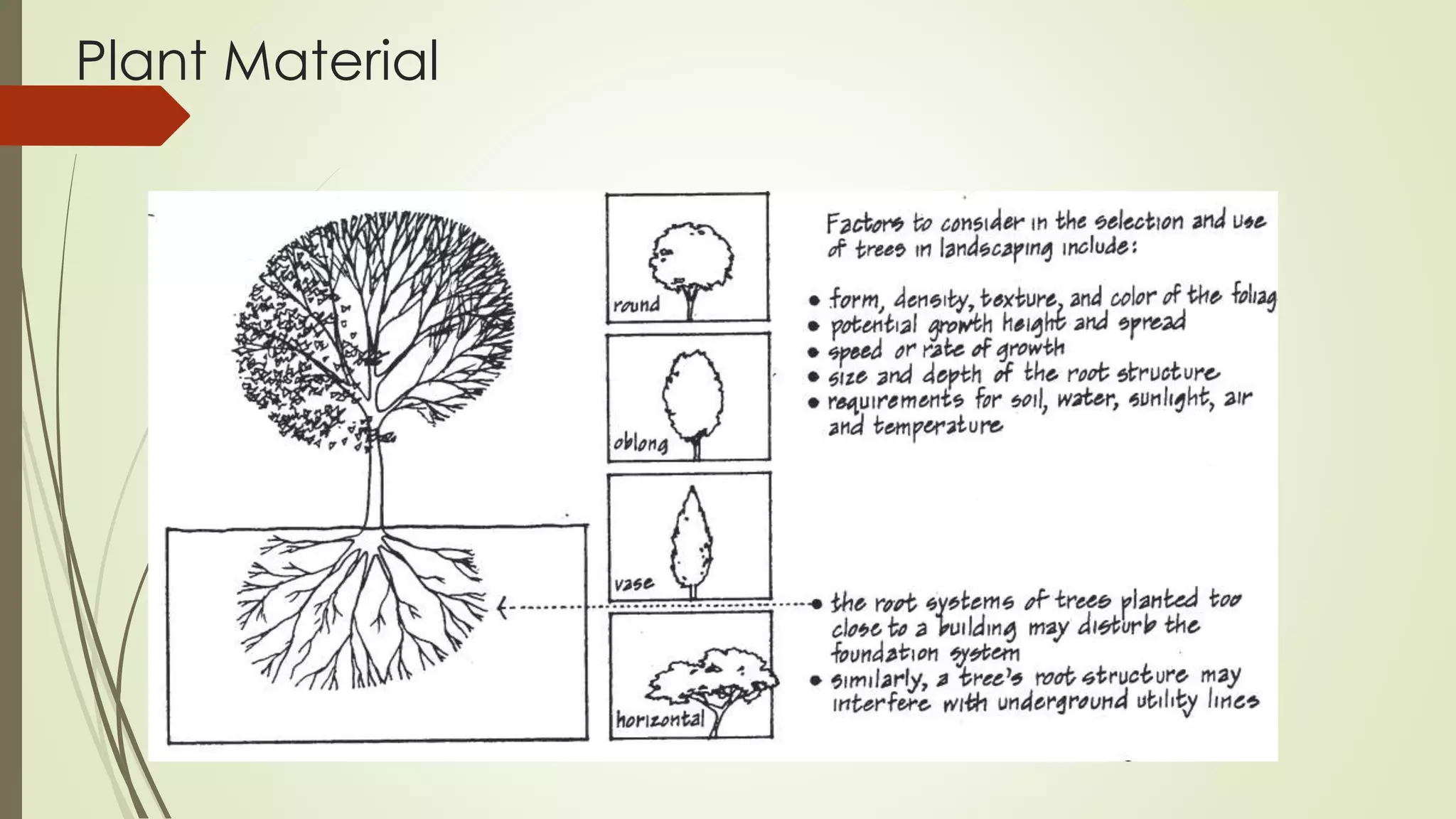
 VEGETATION
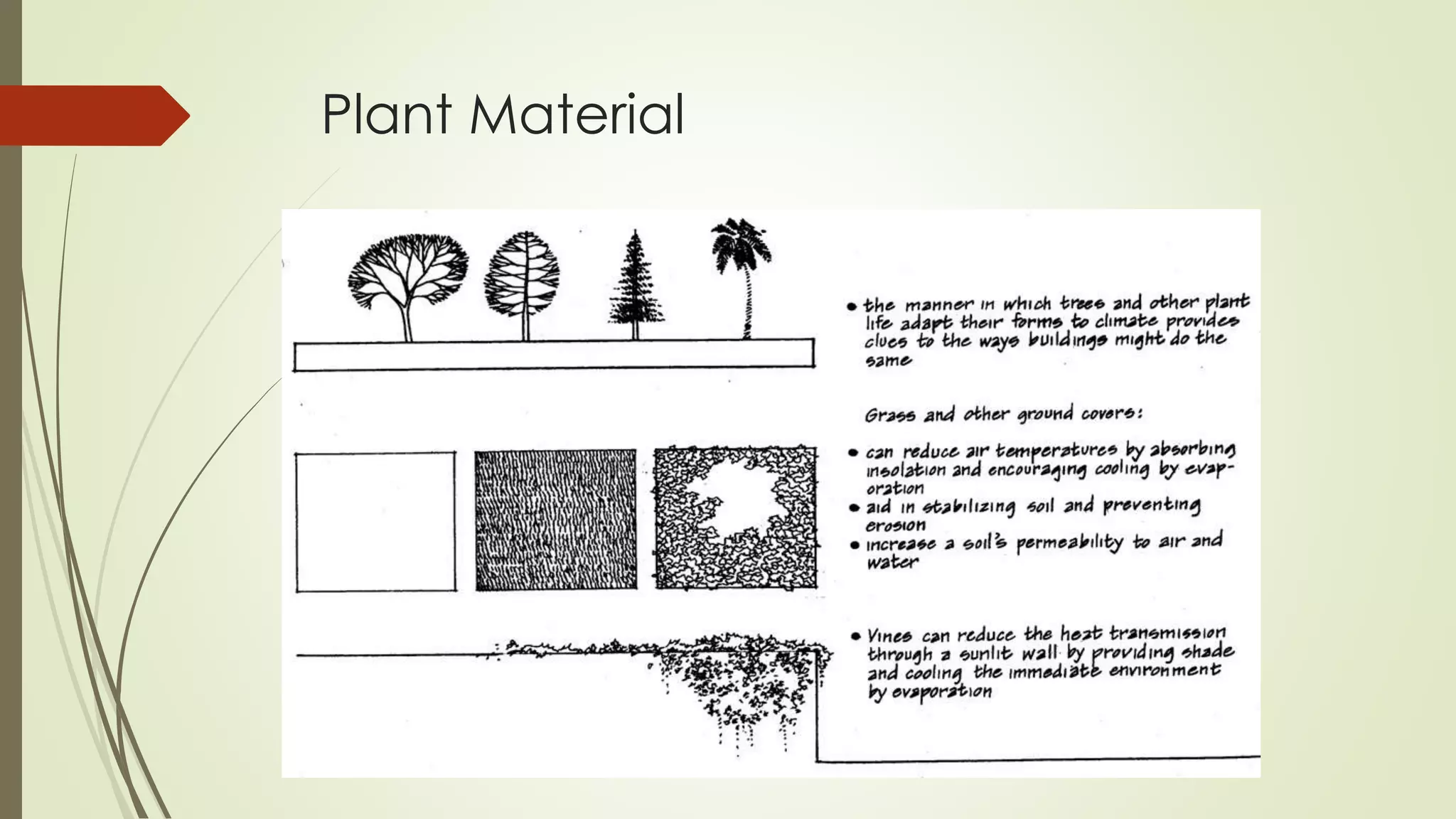
The types and locations of plant materials affect:
the site’s micro-climate
Solar radiation, wind, humidity, air temperature
the definition or visual screening or exterior spaces
the absorption or dispersion of sound
Plant Material
Plant Material
Plant Material
Plant Material
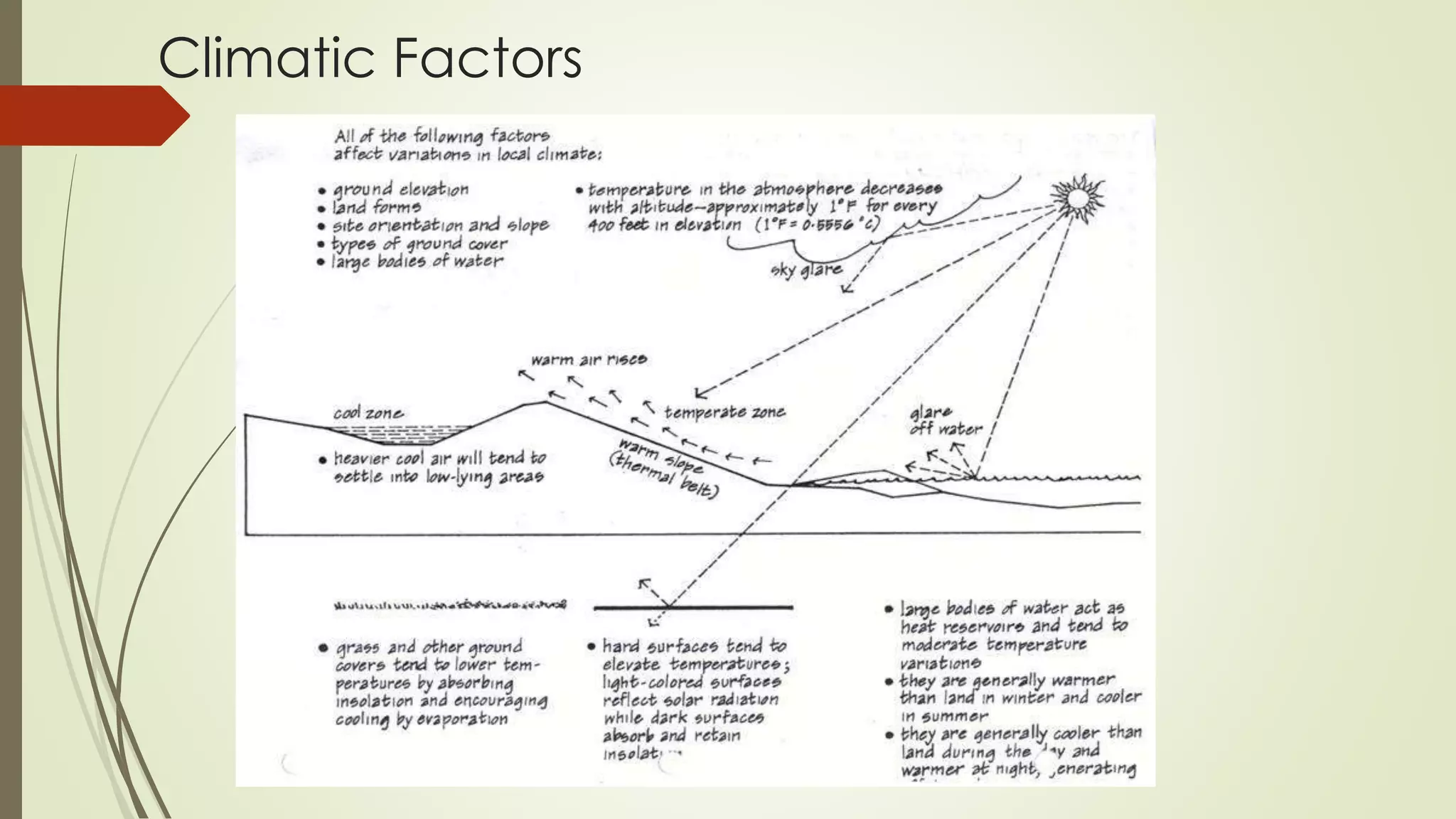
Climatic Factors
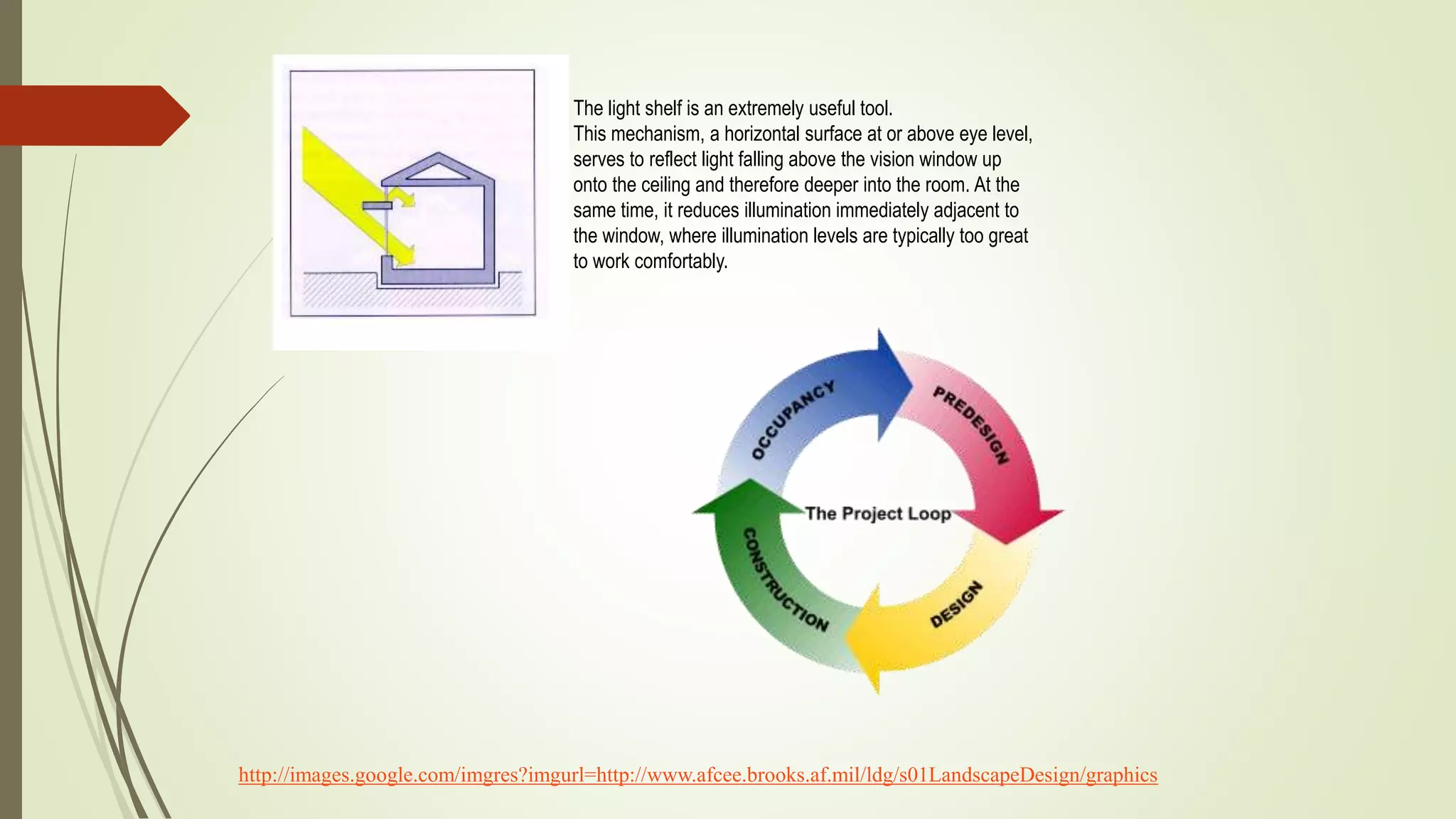
The light shelf is an extremely useful tool.
This mechanism, a horizontal surface at or above eye level,
serves to reflect light falling above the vision window up
onto the ceiling and therefore deeper into the room. At the
same time, it reduces illumination immediately adjacent to
the window, where illumination levels are typically too great
to work comfortably.
http://images.google.com/imgres?imgurl=http://www.afcee.brooks.af.mil/ldg/s01LandscapeDesign/graphics
Site analysis

Site analysis

  • 1.
  • 2.
    Site Analysis isthe process of surveying or studying the existing environment and how it will influence the structure’s design and layout on the site.
  • 4.
    Site Analysis andSite Plans(rendered)
  • 5.
    Site Analysis •Topography •Geographic location •Plantmaterial •Water •Climate •Solar orientation •Prevailing winds •Soil •Regulatory factors Zoning Ordinances Codes Covenants Historical Requirements •Sensory Factors Views Sounds Smells
  • 6.
  • 7.
    TheAngle of theSunvariesduring the seasons, thisis dueto thetilting ofthe earth’saxisasit rotatesaroundthesun. Actually,theearthis closer tothe sunin winter butthenorthernhemisphere is tilting awayfromthe sun.
  • 8.
    Therefore…. one couldassume that a design that works well for a flat plot of land may not do as well for a sloped topography and visa versa.
  • 9.
  • 10.
    Therefore a SITEANALYSIS must be completed first before design development can commence.
  • 11.
    Topography  Contour linesare imaginary lines in plan view that connect points of equal height above a datum or bench mark.  Each contour line represents the form in which the site acquires over a specified elevation that is why we have surveyors and topographic surveys vs. metes and bounds surveys  Contour lines are continuous and never intersect each other. They change in shape, but never in elevation.
  • 12.
    Contour lines &Topography
  • 13.
    Geographic factors  SOIL The soil type affects: the type and size of a building’s foundation system the drainage of ground and surface water the types of plant material able to grow on a site All buildings rely on soil for their ultimate support. The underlying foundation is effected by the soil’s strength.
  • 14.
    Geographic factors  VEGETATION Thetypes and locations of plant materials affect: the site’s micro-climate Solar radiation, wind, humidity, air temperature the definition or visual screening or exterior spaces the absorption or dispersion of sound
  • 15.
  • 16.
  • 17.
  • 18.
  • 19.
  • 20.
    The light shelfis an extremely useful tool. This mechanism, a horizontal surface at or above eye level, serves to reflect light falling above the vision window up onto the ceiling and therefore deeper into the room. At the same time, it reduces illumination immediately adjacent to the window, where illumination levels are typically too great to work comfortably. http://images.google.com/imgres?imgurl=http://www.afcee.brooks.af.mil/ldg/s01LandscapeDesign/graphics