Downloaded 1,161 times

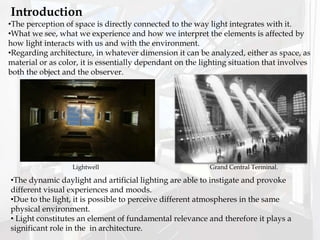
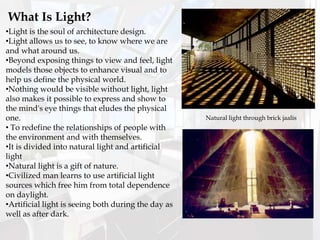

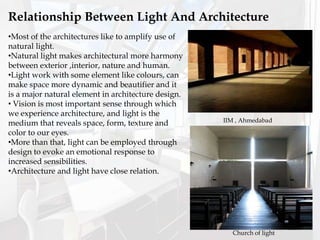
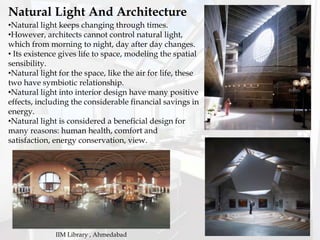
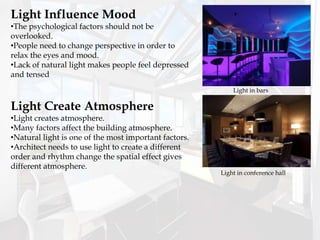
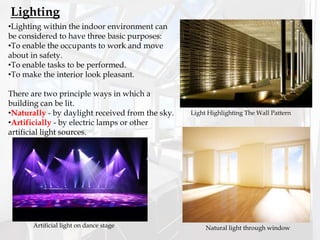
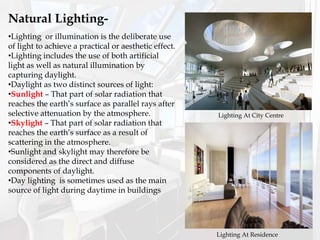
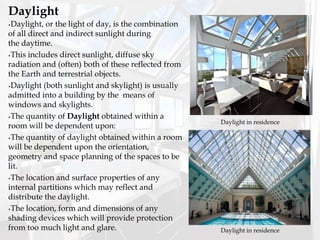

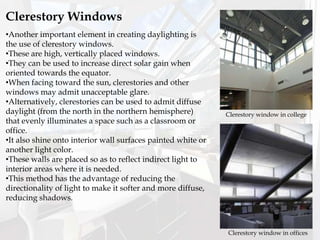
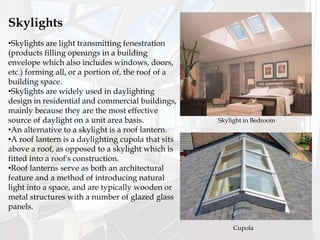








Light plays a significant role in architecture by affecting how spaces are perceived and experienced. There are two main sources of light - natural light from the sun and sky, and artificial light from electric sources. Natural light is preferable as it provides psychological and health benefits and reduces energy costs. Daylighting techniques like windows, skylights, lightwells, and clerestories are used to introduce natural light into interior spaces. Artificial lighting is also important and includes ambient, accent, task, and decorative types to serve different lighting needs. The dynamic interplay between light, space, and humans is fundamental to architectural design.


![[Architecture ebook] peter zumthor thinking architecture161](https://cdn.slidesharecdn.com/ss_thumbnails/architectureebookpeterzumthor-thinkingarchitecture161-120110160112-phpapp01-thumbnail.jpg?width=640&height=640&fit=bounds)


