A PRESENTATION ON
Entry and Approach
Roll: 140113
150113
150123
150134
150142
• Approach
• Entry
• Circulation of the path
• Path-space relationship
• Form of the circulation space
We are going to describe about site approach and
building entry
Element of circulation
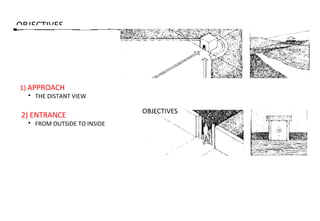
OBJECTIVES
1) APPROACH
• THE DISTANT VIEW
2) ENTRANCE
• FROM OUTSIDE TO INSIDE
OBJECTIVES
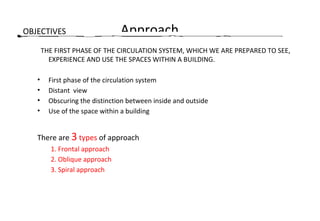
THE FIRST PHASE OF THE CIRCULATION SYSTEM, WHICH WE ARE PREPARED TO SEE,
EXPERIENCE AND USE THE SPACES WITHIN A BUILDING.
• First phase of the circulation system
• Distant view
• Obscuring the distinction between inside and outside
• Use of the space within a building
There are 3 types of approach
1. Frontal approach
2. Oblique approach
3. Spiral approach
ApproachOBJECTIVES
Approach to Notre Dame Du Haut, Ronchamp,France,
le corbusier
OBJECTIVES: APPROACH
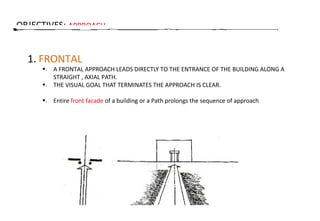
1. FRONTAL
•. A FRONTAL APPROACH LEADS DIRECTLY TO THE ENTRANCE OF THE BUILDING ALONG A
STRAIGHT , AXIAL PATH.
•. THE VISUAL GOAL THAT TERMINATES THE APPROACH IS CLEAR.
•. Entire front facade of a building or a Path prolongs the sequence of approach
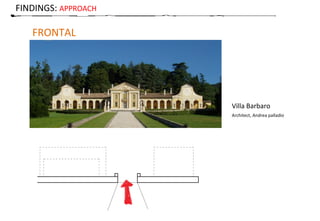
FINDINGS: APPROACH
Architect, Andrea palladio
FRONTAL
Villa Barbaro
OBJECTIVES: APPROACH
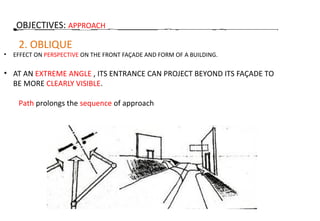
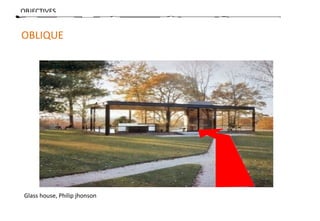
2. OBLIQUE
• EFFECT ON PERSPECTIVE ON THE FRONT FAÇADE AND FORM OF A BUILDING.
• AT AN EXTREME ANGLE , ITS ENTRANCE CAN PROJECT BEYOND ITS FAÇADE TO
BE MORE CLEARLY VISIBLE.
Path prolongs the sequence of approach
Glass house, Philip jhonson
OBJECTIVES
OBLIQUE
OBJECTIVES: APPROACH
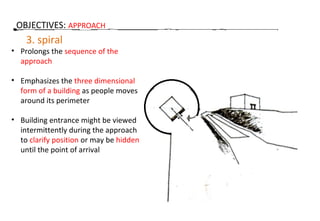
3. spiral
• Prolongs the sequence of the
approach
• Emphasizes the three dimensional
form of a building as people moves
around its perimeter
• Building entrance might be viewed
intermittently during the approach
to clarify position or may be hidden
until the point of arrival
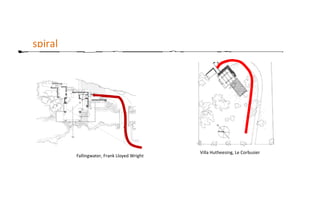
Fallingwater, Frank Lloyed Wright
Villa Hutheesing, Le Corbusier
spiral
PAGE: 01-01
entrance
Entrance is a space within a space of a defined field of exterior space, involves the act of
penetrating a vertical plane that distinguish one space from another and separetes,where you
are, from where you are going
• Should be usable by everyone
• Entrance should always be identifiable within the building façade and allow views into the
building for reassurance
• Good lighting entrance must be well lit and where ever possible weather protection must
be provided
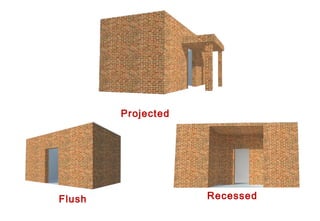
Entrance can be grouped formally into 3 categories
1. Flush entrance
2. Recessed entrance
3. Projected entrance
Flush
Projected
Recessed
OBJECTIVES: ENTRANCE
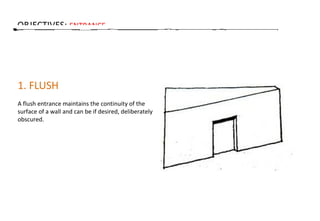
1. FLUSH
A flush entrance maintains the continuity of the
surface of a wall and can be if desired, deliberately
obscured.
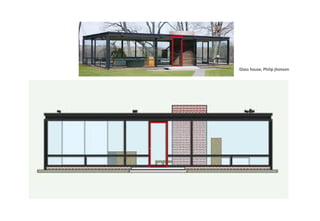
Glass house, Philip jhonson
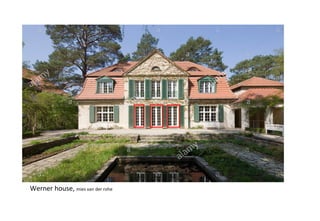
Werner house, mies van der rohe
PAGE: 01-01
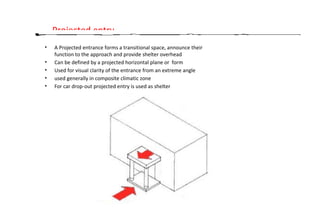
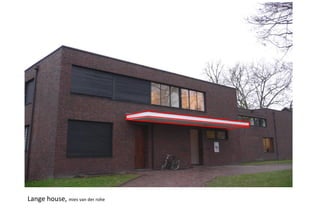
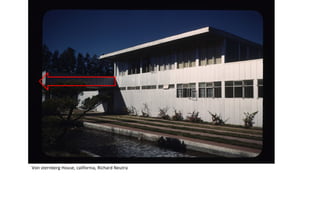
• A Projected entrance forms a transitional space, announce their
function to the approach and provide shelter overhead
• Can be defined by a projected horizontal plane or form
• Used for visual clarity of the entrance from an extreme angle
• used generally in composite climatic zone
• For car drop-out projected entry is used as shelter
Projected entry
Lange house, mies van der rohe
Von sternberg House, california, Richard Neutra
PAGE: 01-01
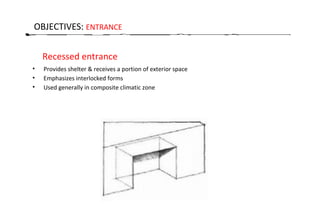
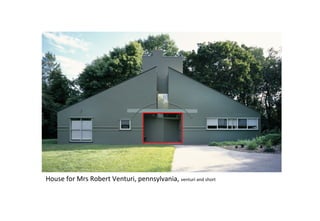
• Provides shelter & receives a portion of exterior space
• Emphasizes interlocked forms
• Used generally in composite climatic zone
Recessed entrance
OBJECTIVES: ENTRANCE
House for Mrs Robert Venturi, pennsylvania, venturi and short
PAGE: 01-01
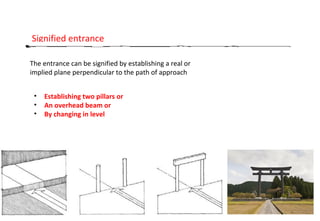
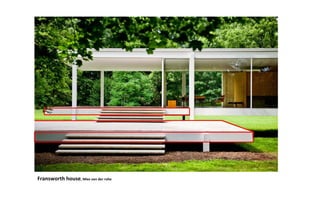
The entrance can be signified by establishing a real or
implied plane perpendicular to the path of approach
• Establishing two pillars or
• An overhead beam or
• By changing in level
Signified entrance
Fransworth house, Mies van der rohe
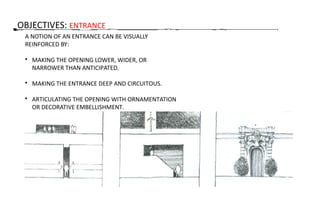
A NOTION OF AN ENTRANCE CAN BE VISUALLY
REINFORCED BY:
• MAKING THE OPENING LOWER, WIDER, OR
NARROWER THAN ANTICIPATED.
• MAKING THE ENTRANCE DEEP AND CIRCUITOUS.
• ARTICULATING THE OPENING WITH ORNAMENTATION
OR DECORATIVE EMBELLISHMENT.
OBJECTIVES: ENTRANCE

Entry and approach

  • 1.
    A PRESENTATION ON Entryand Approach Roll: 140113 150113 150123 150134 150142
  • 2.
    • Approach • Entry •Circulation of the path • Path-space relationship • Form of the circulation space We are going to describe about site approach and building entry Element of circulation
  • 3.
    OBJECTIVES 1) APPROACH • THEDISTANT VIEW 2) ENTRANCE • FROM OUTSIDE TO INSIDE OBJECTIVES
  • 4.
    THE FIRST PHASEOF THE CIRCULATION SYSTEM, WHICH WE ARE PREPARED TO SEE, EXPERIENCE AND USE THE SPACES WITHIN A BUILDING. • First phase of the circulation system • Distant view • Obscuring the distinction between inside and outside • Use of the space within a building There are 3 types of approach 1. Frontal approach 2. Oblique approach 3. Spiral approach ApproachOBJECTIVES
  • 5.
    Approach to NotreDame Du Haut, Ronchamp,France, le corbusier
  • 6.
    OBJECTIVES: APPROACH 1. FRONTAL •.A FRONTAL APPROACH LEADS DIRECTLY TO THE ENTRANCE OF THE BUILDING ALONG A STRAIGHT , AXIAL PATH. •. THE VISUAL GOAL THAT TERMINATES THE APPROACH IS CLEAR. •. Entire front facade of a building or a Path prolongs the sequence of approach
  • 7.
    FINDINGS: APPROACH Architect, Andreapalladio FRONTAL Villa Barbaro
  • 8.
    OBJECTIVES: APPROACH 2. OBLIQUE •EFFECT ON PERSPECTIVE ON THE FRONT FAÇADE AND FORM OF A BUILDING. • AT AN EXTREME ANGLE , ITS ENTRANCE CAN PROJECT BEYOND ITS FAÇADE TO BE MORE CLEARLY VISIBLE. Path prolongs the sequence of approach
  • 9.
    Glass house, Philipjhonson OBJECTIVES OBLIQUE
  • 10.
    OBJECTIVES: APPROACH 3. spiral •Prolongs the sequence of the approach • Emphasizes the three dimensional form of a building as people moves around its perimeter • Building entrance might be viewed intermittently during the approach to clarify position or may be hidden until the point of arrival
  • 11.
    Fallingwater, Frank LloyedWright Villa Hutheesing, Le Corbusier spiral
  • 12.
    PAGE: 01-01 entrance Entrance isa space within a space of a defined field of exterior space, involves the act of penetrating a vertical plane that distinguish one space from another and separetes,where you are, from where you are going • Should be usable by everyone • Entrance should always be identifiable within the building façade and allow views into the building for reassurance • Good lighting entrance must be well lit and where ever possible weather protection must be provided Entrance can be grouped formally into 3 categories 1. Flush entrance 2. Recessed entrance 3. Projected entrance
  • 13.
  • 14.
    OBJECTIVES: ENTRANCE 1. FLUSH Aflush entrance maintains the continuity of the surface of a wall and can be if desired, deliberately obscured.
  • 15.
  • 16.
    Werner house, miesvan der rohe
  • 17.
    PAGE: 01-01 • AProjected entrance forms a transitional space, announce their function to the approach and provide shelter overhead • Can be defined by a projected horizontal plane or form • Used for visual clarity of the entrance from an extreme angle • used generally in composite climatic zone • For car drop-out projected entry is used as shelter Projected entry
  • 18.
    Lange house, miesvan der rohe
  • 19.
    Von sternberg House,california, Richard Neutra
  • 20.
    PAGE: 01-01 • Providesshelter & receives a portion of exterior space • Emphasizes interlocked forms • Used generally in composite climatic zone Recessed entrance OBJECTIVES: ENTRANCE
  • 21.
    House for MrsRobert Venturi, pennsylvania, venturi and short
  • 22.
    PAGE: 01-01 The entrancecan be signified by establishing a real or implied plane perpendicular to the path of approach • Establishing two pillars or • An overhead beam or • By changing in level Signified entrance
  • 23.
  • 24.
    A NOTION OFAN ENTRANCE CAN BE VISUALLY REINFORCED BY: • MAKING THE OPENING LOWER, WIDER, OR NARROWER THAN ANTICIPATED. • MAKING THE ENTRANCE DEEP AND CIRCUITOUS. • ARTICULATING THE OPENING WITH ORNAMENTATION OR DECORATIVE EMBELLISHMENT. OBJECTIVES: ENTRANCE