LOS VERBOS –AR 
PRESENTE 
FUTURO 
PASADO
UNDERSTANDING TENSES 
 So far we have only used the PRESENT 
tense when conjugating verbs – this is what 
happens now. I watch tv. 
 To talk about things that will happen 
tomorrow, next week, next month, etc. use 
the FUTURE tense. I will watch tv 
tomorrow. 
 To talk about things that happened yesterday, 
last week, last year, etc. use the PAST tense. 
 Spanish has 2 past tenses: (more on this later) 
Preterite = I watched tv last night. 
Imperfect = I used to watch tv every day.
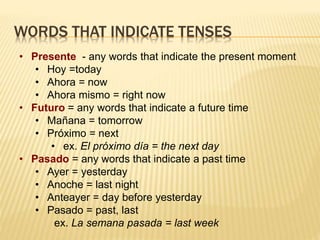
WORDS THAT INDICATE TENSES 
• Presente - any words that indicate the present moment 
• Hoy =today 
• Ahora = now 
• Ahora mismo = right now 
• Futuro = any words that indicate a future time 
• Mañana = tomorrow 
• Próximo = next 
• ex. El próximo día = the next day 
• Pasado = any words that indicate a past time 
• Ayer = yesterday 
• Anoche = last night 
• Anteayer = day before yesterday 
• Pasado = past, last 
ex. La semana pasada = last week
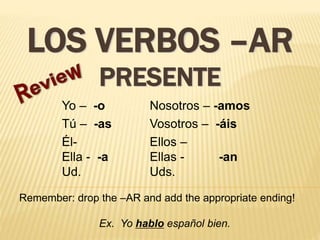
LOS VERBOS –AR 
PRESENTE 
Yo – -o Nosotros – -amos 
Tú – -as Vosotros – -áis 
Él- 
Ellos – 
Ella - -a 
Ellas - -an 
Ud. 
Uds. 
Remember: drop the –AR and add the appropriate ending! 
Ex. Yo hablo español bien.
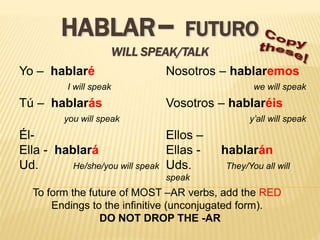
HABLAR– FUTURO 
WILL SPEAK/TALK 
Yo – hablaré Nosotros – hablaremos 
I will speak we will speak 
Tú – hablarás Vosotros – hablaréis 
you will speak y’all will speak 
Él- 
Ella - hablará 
Ud. He/she/you will speak 
Ellos – 
Ellas - hablarán 
Uds. They/You all will 
speak 
To form the future of MOST –AR verbs, add the RED 
Endings to the infinitive (unconjugated form). 
DO NOT DROP THE -AR
EJEMPLOS DEL FUTURO: 
 Mañana viajaré a Costa Rica. 
 Tomorrow I will travel to Costa Rica. 
 Ellos estudiarán en la biblioteca el viernes. 
 They will study in the library on Friday. 
 Nosotros llegaremos a las nueve. 
We will arrive at 9:00.
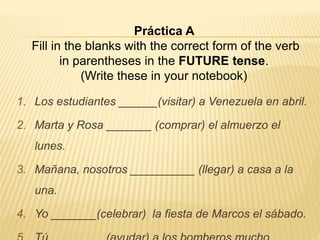
Práctica A 
Fill in the blanks with the correct form of the verb 
in parentheses in the FUTURE tense. 
(Write these in your notebook) 
1. Los estudiantes ______(visitar) a Venezuela en abril. 
2. Marta y Rosa _______ (comprar) el almuerzo el 
lunes. 
3. Mañana, nosotros __________ (llegar) a casa a la 
una. 
4. Yo _______(celebrar) la fiesta de Marcos el sábado. 
5. Tú ________ (ayudar) a los bomberos mucho.
-AR – PRETÉRITO 
Yo – -é Nosotros – -amos 
Tú – -aste Vosotros – -asteis 
Él- 
Ellos – 
Ella - -ó 
Ellas - -aron 
Ud. 
Uds. 
To form: 
•Drop –AR 
•Add appropriate 
Ex. Yo hablé español ayer. preterite ending 
I spoke Spanish yesterday. 
The preterite tense is used to express: 
• An completed action at a given point in the past 
• An action or state that occupies a limited period of time 
• An action with a specific and indicated beginning or ending
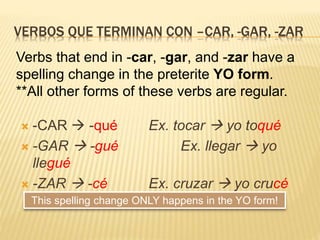
VERBOS QUE TERMINAN CON –CAR, -GAR, -ZAR 
Verbs that end in -car, -gar, and -zar have a 
spelling change in the preterite YO form. 
**All other forms of these verbs are regular. 
 -CAR  -qué Ex. tocar  yo toqué 
 -GAR  -gué Ex. llegar  yo 
llegué 
 -ZAR  -cé Ex. cruzar  yo crucé 
This spelling change ONLY happens in the YO form!
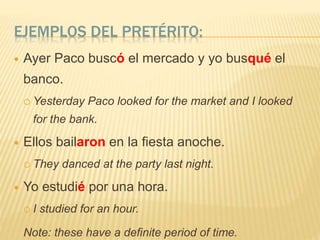
EJEMPLOS DEL PRETÉRITO: 
 Ayer Paco buscó el mercado y yo busqué el 
banco. 
 Yesterday Paco looked for the market and I looked 
for the bank. 
 Ellos bailaron en la fiesta anoche. 
 They danced at the party last night. 
 Yo estudié por una hora. 
 I studied for an hour. 
Note: these have a definite period of time.
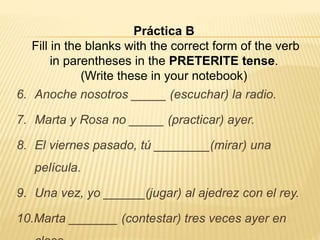
6. Anoche nosotros _____ (escuchar) la radio. 
7. Marta y Rosa no _____ (practicar) ayer. 
8. El viernes pasado, tú ________(mirar) una 
película. 
9. Una vez, yo ______(jugar) al ajedrez con el rey. 
10.Marta _______ (contestar) tres veces ayer en 
clase. 
Práctica B 
Fill in the blanks with the correct form of the verb 
in parentheses in the PRETERITE tense. 
(Write these in your notebook)
-AR – IMPERFECTO 
Yo – -aba Nosotros – -ábamos 
Tú – -abas Vosotros – -abáis 
Él- 
Ellos – 
Ella - -aba 
Ellas - -aban 
Ud. 
Uds. 
To form: 
•Drop –AR 
•Add 
appropriate 
ending 
The imperfect tense is used to express: 
• A habitual action in the past (describes things that USED to happen) 
• INCOMPLETE /interrupted actions in the past (was/were ….-ing) 
• Descriptions of people, places, time, weather, age, etc. in past.
EJEMPLOS DEL IMPERFECTO: 
 Manuel nadaba todos los días. 
 Manuel used to swim every day. 
 Tú mirabas la tele cuando llegó la familia. 
 You were watching TV when the family arrived. 
 Nosotros bailábamos todos los fines de 
semana. 
We used to dance every weekend.
11. Yo _______ (repasar) los verbos todos los días. 
12. Ellas ________(viajar) a la playa cada verano. 
13. Todos los días, tú ______(usar) computadora 9. 
14. Cada año, Pablo ______ (cantar) en el coro. 
15. Nosotros _______ (llamar) a mi abuela cada 
noche. 
Práctica C 
Fill in the blanks with the correct form of the verb 
in parentheses in the IMPERFECT tense. 
(Write these in your notebook)

Ar verbs: past, present, & future

  • 1.
    LOS VERBOS –AR PRESENTE FUTURO PASADO
  • 2.
    UNDERSTANDING TENSES So far we have only used the PRESENT tense when conjugating verbs – this is what happens now. I watch tv.  To talk about things that will happen tomorrow, next week, next month, etc. use the FUTURE tense. I will watch tv tomorrow.  To talk about things that happened yesterday, last week, last year, etc. use the PAST tense.  Spanish has 2 past tenses: (more on this later) Preterite = I watched tv last night. Imperfect = I used to watch tv every day.
  • 3.
    WORDS THAT INDICATETENSES • Presente - any words that indicate the present moment • Hoy =today • Ahora = now • Ahora mismo = right now • Futuro = any words that indicate a future time • Mañana = tomorrow • Próximo = next • ex. El próximo día = the next day • Pasado = any words that indicate a past time • Ayer = yesterday • Anoche = last night • Anteayer = day before yesterday • Pasado = past, last ex. La semana pasada = last week
  • 4.
    LOS VERBOS –AR PRESENTE Yo – -o Nosotros – -amos Tú – -as Vosotros – -áis Él- Ellos – Ella - -a Ellas - -an Ud. Uds. Remember: drop the –AR and add the appropriate ending! Ex. Yo hablo español bien.
  • 5.
    HABLAR– FUTURO WILLSPEAK/TALK Yo – hablaré Nosotros – hablaremos I will speak we will speak Tú – hablarás Vosotros – hablaréis you will speak y’all will speak Él- Ella - hablará Ud. He/she/you will speak Ellos – Ellas - hablarán Uds. They/You all will speak To form the future of MOST –AR verbs, add the RED Endings to the infinitive (unconjugated form). DO NOT DROP THE -AR
  • 6.
    EJEMPLOS DEL FUTURO:  Mañana viajaré a Costa Rica.  Tomorrow I will travel to Costa Rica.  Ellos estudiarán en la biblioteca el viernes.  They will study in the library on Friday.  Nosotros llegaremos a las nueve. We will arrive at 9:00.
  • 7.
    Práctica A Fillin the blanks with the correct form of the verb in parentheses in the FUTURE tense. (Write these in your notebook) 1. Los estudiantes ______(visitar) a Venezuela en abril. 2. Marta y Rosa _______ (comprar) el almuerzo el lunes. 3. Mañana, nosotros __________ (llegar) a casa a la una. 4. Yo _______(celebrar) la fiesta de Marcos el sábado. 5. Tú ________ (ayudar) a los bomberos mucho.
  • 8.
    -AR – PRETÉRITO Yo – -é Nosotros – -amos Tú – -aste Vosotros – -asteis Él- Ellos – Ella - -ó Ellas - -aron Ud. Uds. To form: •Drop –AR •Add appropriate Ex. Yo hablé español ayer. preterite ending I spoke Spanish yesterday. The preterite tense is used to express: • An completed action at a given point in the past • An action or state that occupies a limited period of time • An action with a specific and indicated beginning or ending
  • 9.
    VERBOS QUE TERMINANCON –CAR, -GAR, -ZAR Verbs that end in -car, -gar, and -zar have a spelling change in the preterite YO form. **All other forms of these verbs are regular.  -CAR  -qué Ex. tocar  yo toqué  -GAR  -gué Ex. llegar  yo llegué  -ZAR  -cé Ex. cruzar  yo crucé This spelling change ONLY happens in the YO form!
  • 10.
    EJEMPLOS DEL PRETÉRITO:  Ayer Paco buscó el mercado y yo busqué el banco.  Yesterday Paco looked for the market and I looked for the bank.  Ellos bailaron en la fiesta anoche.  They danced at the party last night.  Yo estudié por una hora.  I studied for an hour. Note: these have a definite period of time.
  • 11.
    6. Anoche nosotros_____ (escuchar) la radio. 7. Marta y Rosa no _____ (practicar) ayer. 8. El viernes pasado, tú ________(mirar) una película. 9. Una vez, yo ______(jugar) al ajedrez con el rey. 10.Marta _______ (contestar) tres veces ayer en clase. Práctica B Fill in the blanks with the correct form of the verb in parentheses in the PRETERITE tense. (Write these in your notebook)
  • 12.
    -AR – IMPERFECTO Yo – -aba Nosotros – -ábamos Tú – -abas Vosotros – -abáis Él- Ellos – Ella - -aba Ellas - -aban Ud. Uds. To form: •Drop –AR •Add appropriate ending The imperfect tense is used to express: • A habitual action in the past (describes things that USED to happen) • INCOMPLETE /interrupted actions in the past (was/were ….-ing) • Descriptions of people, places, time, weather, age, etc. in past.
  • 13.
    EJEMPLOS DEL IMPERFECTO:  Manuel nadaba todos los días.  Manuel used to swim every day.  Tú mirabas la tele cuando llegó la familia.  You were watching TV when the family arrived.  Nosotros bailábamos todos los fines de semana. We used to dance every weekend.
  • 14.
    11. Yo _______(repasar) los verbos todos los días. 12. Ellas ________(viajar) a la playa cada verano. 13. Todos los días, tú ______(usar) computadora 9. 14. Cada año, Pablo ______ (cantar) en el coro. 15. Nosotros _______ (llamar) a mi abuela cada noche. Práctica C Fill in the blanks with the correct form of the verb in parentheses in the IMPERFECT tense. (Write these in your notebook)