Using Subject Pronouns 
with SER 
SER is a VERB that means TO BE
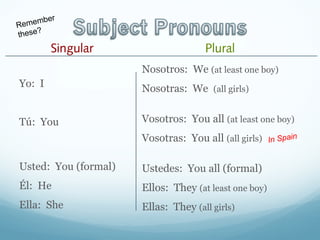
Singular 
Yo: I 
Tú: You 
Usted: You (formal) 
Él: He 
Ella: She 
Plural 
Nosotros: We (at least one boy) 
Nosotras: We (all girls) 
Vosotros: You all (at least one boy) 
Vosotras: You all (all girls) 
Ustedes: You all (formal) 
Ellos: They (at least one boy) 
Ellas: They (all girls) 
Remember 
these? 
In Spain
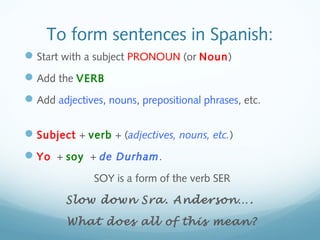
To form sentences in Spanish: 
Start with a subject PRONOUN (or Noun) 
Add the VERB 
Add adjectives, nouns, prepositional phrases, etc. 
Subject + verb + (adjectives, nouns, etc.) 
Yo + soy + de Durham. 
SOY is a form of the verb SER 
Slow down Sra. Anderson…. 
What does all of this mean?
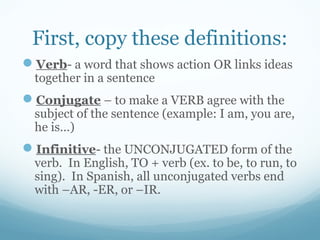
First, copy these definitions: 
Verb- a word that shows action OR links ideas 
together in a sentence 
Conjugate – to make a VERB agree with the 
subject of the sentence (example: I am, you are, 
he is…) 
Infinitive- the UNCONJUGATED form of the 
verb. In English, TO + verb (ex. to be, to run, to 
sing). In Spanish, all unconjugated verbs end 
with –AR, -ER, or –IR.
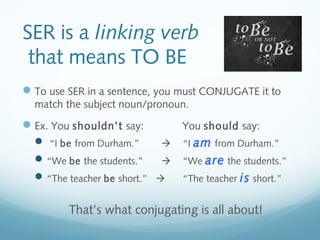
SER is a linking verb 
that means TO BE 
To use SER in a sentence, you must CONJUGATE it to 
match the subject noun/pronoun. 
Ex. You shouldn’t say: You should say: 
 “I be from Durham.”  “I am from Durham.” 
“We be the students.”  “We are the students.” 
“The teacher be short.”  “The teacher is short.” 
That’s what conjugating is all about!
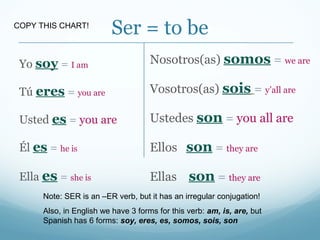
Ser = to be 
COPY THIS CHART! 
Yo soy = I am 
Tú eres = you are 
Usted es = you are 
Él es = he is 
Ella es = she is 
Nosotros(as) somos = we are 
Vosotros(as) sois = y’all are 
Ustedes son = you all are 
Ellos son = they are 
Ellas son = they are 
Note: SER is an –ER verb, but it has an irregular conjugation! 
Also, in English we have 3 forms for this verb: am, is, are, but 
Spanish has 6 forms: soy, eres, es, somos, sois, son
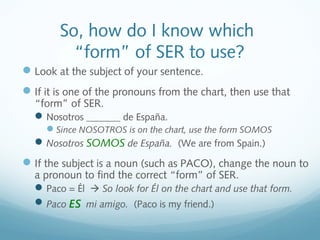
So, how do I know which 
“form” of SER to use? 
Look at the subject of your sentence. 
If it is one of the pronouns from the chart, then use that 
“form” of SER. 
Nosotros _______ de España. 
Since NOSOTROS is on the chart, use the form SOMOS 
Nosotros SOMOS de España. (We are from Spain.) 
If the subject is a noun (such as PACO), change the noun to 
a pronoun to find the correct “form” of SER. 
Paco = Él  So look for Él on the chart and use that form. 
Paco ES mi amigo. (Paco is my friend.)
When should I use the verb 
SER? 
SER is used in the following situations: 
•Origin: Soy de Durham. 
•Descriptions and Characteristics: Soy baja. 
•Possession: Es mi libro. 
•Time and Date: Son las ocho. Es el 7 de mayo. 
•Identification: Rosa es mi amiga. Es una pluma. 
•Professions: La Srta. Farlow es una maestra. 
•Nationality: Paco es mexicano.
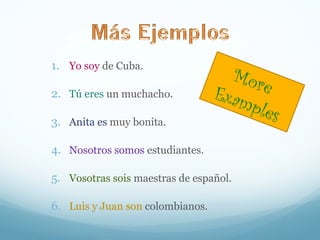
1. Yo soy de Cuba. 
2. Tú eres un muchacho. 
3. Anita es muy bonita. 
4. Nosotros somos estudiantes. 
5. Vosotras sois maestras de español. 
6. Luis y Juan son colombianos. 
More 
Examples
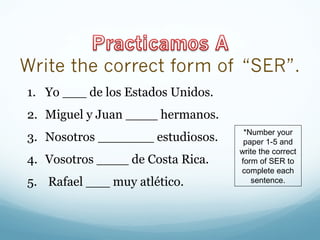
1. Yo ___ de los Estados Unidos. 
2. Miguel y Juan ____ hermanos. 
3. Nosotros _______ estudiosos. 
4. Vosotros ____ de Costa Rica. 
5. Rafael ___ muy atlético. 
*Number your 
paper 1-5 and 
write the correct 
form of SER to 
complete each 
sentence.
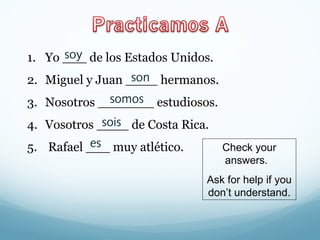
soy 
1. Yo ___ de los Estados Unidos. 
2. Miguel y Juan ____ son 
hermanos. 
3. Nosotros _______ estudiosos. 
4. Vosotros ____ de Costa Rica. 
5. Rafael ___ muy atlético. 
somos 
sois 
es Check your 
answers. 
Ask for help if you 
don’t understand.
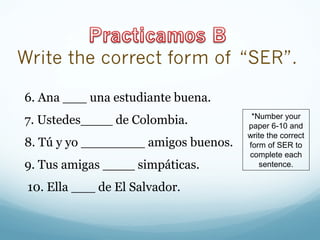
6. Ana ___ una estudiante buena. 
7. Ustedes____ de Colombia. 
8. Tú y yo ________ amigos buenos. 
9. Tus amigas ____ simpáticas. 
10. Ella ___ de El Salvador. 
*Number your 
paper 6-10 and 
write the correct 
form of SER to 
complete each 
sentence.
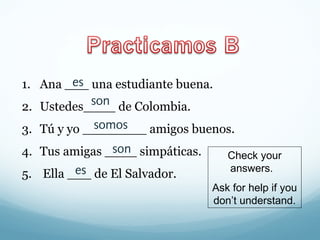
es 
1. Ana ___ una estudiante buena. 
2. Ustedes____ son 
de Colombia. 
3. Tú y yo ________ somos 
amigos buenos. 
4. Tus amigas ____ son 
simpáticas. 
5. Ella ___ es 
de El Salvador. 
Check your 
answers. 
Ask for help if you 
don’t understand.
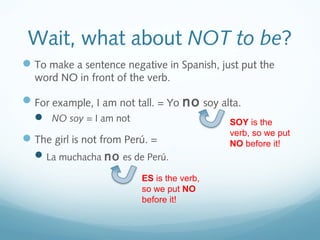
Wait, what about NOT to be? 
To make a sentence negative in Spanish, just put the 
word NO in front of the verb. 
For example, I am not tall. = Yo no soy alta. 
 NO soy = I am not 
SOY is the 
verb, so we put 
The girl is not from Perú. = 
NO before it! 
La muchacha no es de Perú. 
ES is the verb, 
so we put NO 
before it!
¡Adiós!

Pronouns and ser

  • 1.
    Using Subject Pronouns with SER SER is a VERB that means TO BE
  • 2.
    Singular Yo: I Tú: You Usted: You (formal) Él: He Ella: She Plural Nosotros: We (at least one boy) Nosotras: We (all girls) Vosotros: You all (at least one boy) Vosotras: You all (all girls) Ustedes: You all (formal) Ellos: They (at least one boy) Ellas: They (all girls) Remember these? In Spain
  • 3.
    To form sentencesin Spanish: Start with a subject PRONOUN (or Noun) Add the VERB Add adjectives, nouns, prepositional phrases, etc. Subject + verb + (adjectives, nouns, etc.) Yo + soy + de Durham. SOY is a form of the verb SER Slow down Sra. Anderson…. What does all of this mean?
  • 4.
    First, copy thesedefinitions: Verb- a word that shows action OR links ideas together in a sentence Conjugate – to make a VERB agree with the subject of the sentence (example: I am, you are, he is…) Infinitive- the UNCONJUGATED form of the verb. In English, TO + verb (ex. to be, to run, to sing). In Spanish, all unconjugated verbs end with –AR, -ER, or –IR.
  • 5.
    SER is alinking verb that means TO BE To use SER in a sentence, you must CONJUGATE it to match the subject noun/pronoun. Ex. You shouldn’t say: You should say:  “I be from Durham.”  “I am from Durham.” “We be the students.”  “We are the students.” “The teacher be short.”  “The teacher is short.” That’s what conjugating is all about!
  • 6.
    Ser = tobe COPY THIS CHART! Yo soy = I am Tú eres = you are Usted es = you are Él es = he is Ella es = she is Nosotros(as) somos = we are Vosotros(as) sois = y’all are Ustedes son = you all are Ellos son = they are Ellas son = they are Note: SER is an –ER verb, but it has an irregular conjugation! Also, in English we have 3 forms for this verb: am, is, are, but Spanish has 6 forms: soy, eres, es, somos, sois, son
  • 7.
    So, how doI know which “form” of SER to use? Look at the subject of your sentence. If it is one of the pronouns from the chart, then use that “form” of SER. Nosotros _______ de España. Since NOSOTROS is on the chart, use the form SOMOS Nosotros SOMOS de España. (We are from Spain.) If the subject is a noun (such as PACO), change the noun to a pronoun to find the correct “form” of SER. Paco = Él  So look for Él on the chart and use that form. Paco ES mi amigo. (Paco is my friend.)
  • 8.
    When should Iuse the verb SER? SER is used in the following situations: •Origin: Soy de Durham. •Descriptions and Characteristics: Soy baja. •Possession: Es mi libro. •Time and Date: Son las ocho. Es el 7 de mayo. •Identification: Rosa es mi amiga. Es una pluma. •Professions: La Srta. Farlow es una maestra. •Nationality: Paco es mexicano.
  • 9.
    1. Yo soyde Cuba. 2. Tú eres un muchacho. 3. Anita es muy bonita. 4. Nosotros somos estudiantes. 5. Vosotras sois maestras de español. 6. Luis y Juan son colombianos. More Examples
  • 10.
    1. Yo ___de los Estados Unidos. 2. Miguel y Juan ____ hermanos. 3. Nosotros _______ estudiosos. 4. Vosotros ____ de Costa Rica. 5. Rafael ___ muy atlético. *Number your paper 1-5 and write the correct form of SER to complete each sentence.
  • 11.
    soy 1. Yo___ de los Estados Unidos. 2. Miguel y Juan ____ son hermanos. 3. Nosotros _______ estudiosos. 4. Vosotros ____ de Costa Rica. 5. Rafael ___ muy atlético. somos sois es Check your answers. Ask for help if you don’t understand.
  • 12.
    6. Ana ___una estudiante buena. 7. Ustedes____ de Colombia. 8. Tú y yo ________ amigos buenos. 9. Tus amigas ____ simpáticas. 10. Ella ___ de El Salvador. *Number your paper 6-10 and write the correct form of SER to complete each sentence.
  • 13.
    es 1. Ana___ una estudiante buena. 2. Ustedes____ son de Colombia. 3. Tú y yo ________ somos amigos buenos. 4. Tus amigas ____ son simpáticas. 5. Ella ___ es de El Salvador. Check your answers. Ask for help if you don’t understand.
  • 14.
    Wait, what aboutNOT to be? To make a sentence negative in Spanish, just put the word NO in front of the verb. For example, I am not tall. = Yo no soy alta.  NO soy = I am not SOY is the verb, so we put The girl is not from Perú. = NO before it! La muchacha no es de Perú. ES is the verb, so we put NO before it!
  • 15.