Spanish Grammar Book!David MorrisonPeriod: 31
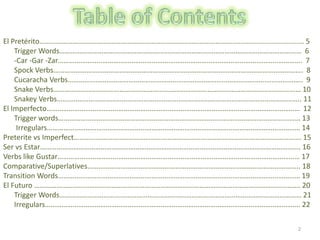
2Table of ContentsEl Pretérito…………………………………………………………………………………………….................................... 5      Trigger Words……………………………………………………………………………………………………………………  6      -Car -Gar -Zar…………………………………………………………………………………………………………………….  7      Spock Verbs……………………………………………………………………………………………………………………….  8      Cucaracha Verbs………………………………………………………………………………………………………………..  9      Snake Verbs……………………………………………………………………………………………………………………… 10Snakey Verbs………..………………………………………………………………………………………………………….. 11El Imperfecto…………………………………………………………………………………………………………………………  12      Trigger words…………………………………………………………………………………………………………………… 13       Irregulars………………………………………………………………………………………………………………………… 14Preteritevs Imperfect……………………………………………………………………………………………………………. 15Ser vsEstar……………………………………………………………………………………………………………………………. 16Verbs like Gustar…………………………………………………………………………………………………………………… 17Comparative/Superlatives…………………………………………………………………………………………………….. 18Transition Words…………………………………………………………………………………………………………………… 19El Futuro ………………………………………………………………………………………………………………………………. 20      Trigger Words…………………………………………………………………………………………………………………… 21      Irregulars…………………………………………………………………………………………………………………………. 22
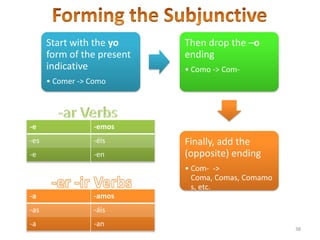
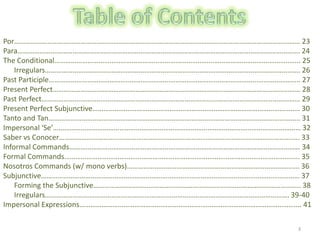
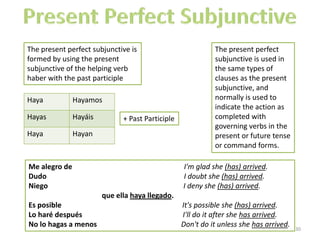
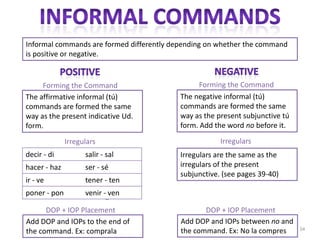
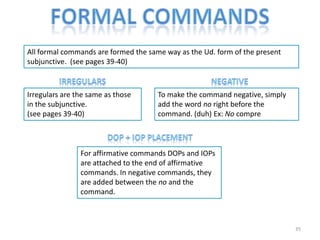
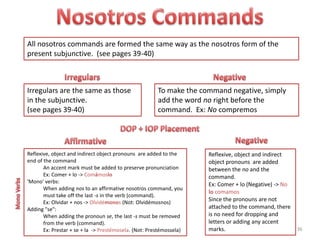
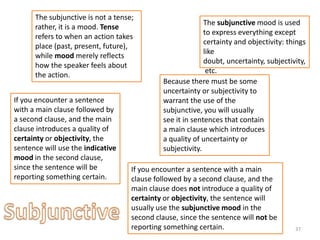
3Table of ContentsPor………………………………………………………………………………………………………………………………………… 23Para………………………………………………………………………………………………………………………………………. 24The Conditional…………………………………………………………………………………………………………………….. 25      Irregulars…………………………………………………………………………………………………………………………. 26Past Participle……………………………………………………………………………………………………………………….. 27Present Perfect……………………………………………………………………………………………………………………… 28Past Perfect…………………………………………………………………………………………………………………………… 29Present Perfect Subjunctive………………………………………………………………………………………………….. 30Tanto and Tan……………………………………………………………………………………………………………………….. 31Impersonal ‘Se’……………………………………………………………………………………………………………………… 32Saber vsConocer………………………………………………………………………………………………………………….. 33Informal Commands……………………………………………………………………………………………………………… 34Formal Commands……………………………………………………………………………………………………………..... 35Nosotros Commands (w/ mono verbs)…………………………………………………………………………………. 36Subjunctive…………………………………………………………………………………………………………………………… 37      Forming the Subjunctive………………………………………………………………………………………………….. 38      Irregulars……………………………………………………………………………………………………………………. 39-40Impersonal Expressions…………………………………………………………………………………………………………. 41
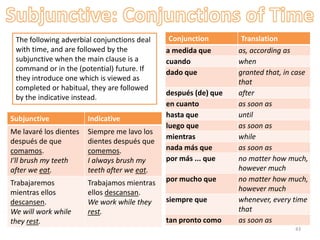
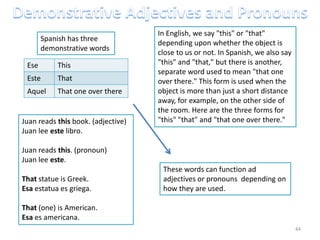
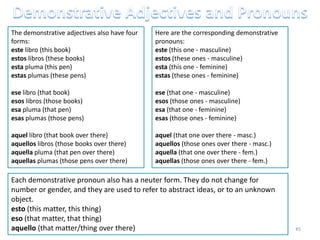
4Table of ContentsSubjunctive with Verbs of Emotion……………………………………………………………………………………….. 42Subjunctive: Conjunctions of Time………………………………………………………………………………………… 43Demonstrative Adjectives and Pronouns…………………………………………………………………………. 44-45
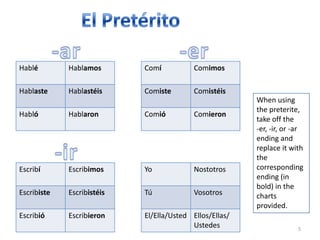
El Pretérito-ar-erWhen using the preterite, take off the -er, -ir, or -ar ending and replace it with the corresponding ending (in bold) in the charts provided.-ir5
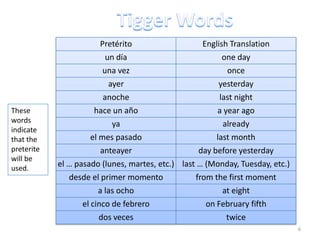
Tigger WordsThese words indicate that the preterite will be used.6
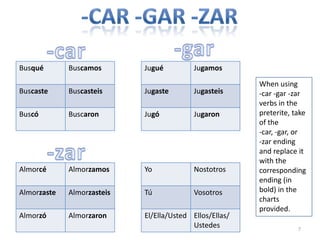
-Car -gar -zar-gar-carWhen using -car -gar -zar verbs in the preterite, take of the -car, -gar, or -zar ending and replace it with the corresponding ending (in bold) in the charts provided.-zar7
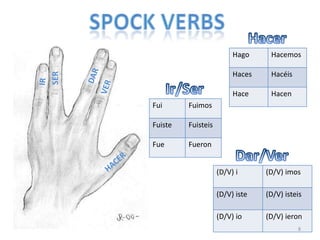
Spock VerbsHacerDARSERIRVERIr/SerDar/VerHACER8
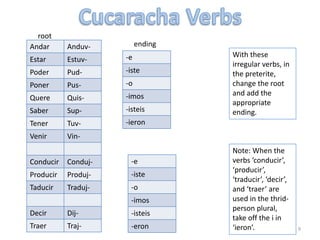
Cucaracha VerbsrootendingWith these irregular verbs, in the preterite, change the root and add the appropriate ending.Note: When the verbs ‘conducir’, ‘producir’, ‘traducir’, ‘decir’, and ‘traer’ are used in the thrid-person plural, take off the i in ‘ieron’.9
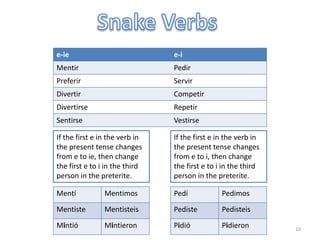
Snake VerbsIf the first e in the verb in the present tense changes from e to i, then change the first e to i in the third person in the preterite.If the first e in the verb in the present tense changes from e to ie, then change the first e to i in the third person in the preterite.10
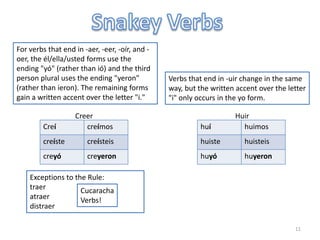
Snakey VerbsFor verbs that end in -aer, -eer, -oír, and -oer, the él/ella/usted forms use the ending "yó" (rather than ió) and the third person plural uses the ending "yeron" (rather than ieron). The remaining forms gain a written accent over the letter "i."Verbs that end in -uir change in the same way, but the written accent over the letter "i" only occurs in the yo form.CreerHuirExceptions to the Rule:traeratraerdistraerCucarachaVerbs!11
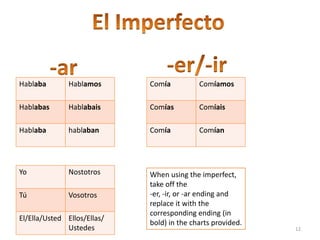
El Imperfecto-er/-ir-arWhen using the imperfect, take off the -er, -ir, or -ar ending and replace it with the corresponding ending (in bold) in the charts provided.12
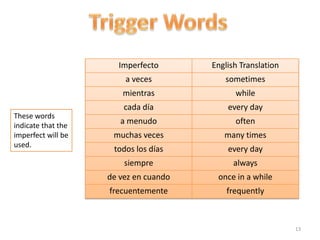
Trigger WordsThese words indicate that the imperfect will be used.13
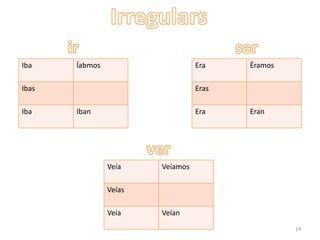
Irregularsirserver14
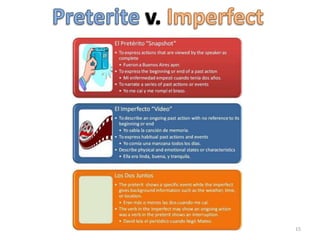
Preteritev. Imperfect15
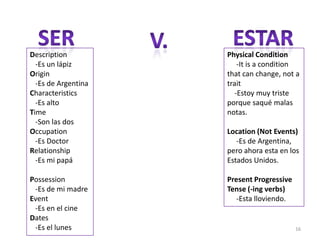
SerEstarV.Description   -Es un lápizOrigin  -Es de ArgentinaCharacteristics  -Es altoTime  -Son las dosOccupation  -Es DoctorRelationship  -Es mi papáPossession  -Es de mi madreEvent  -Es en el cineDates-Es el lunesPhysical Condition -It is a condition that can change, not a trait-Estoymuytristeporquesaquémalasnotas.Location (Not Events)    -Es de Argentina, peroahoraesta en los EstadosUnidos.Present Progressive Tense (-ing verbs)    -Estalloviendo.16
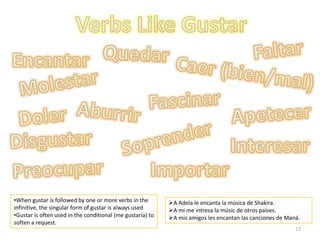
Verbs Like GustarFaltarQuedarEncantarCaer (bien/mal)MolestarFascinarAburrirApetecerDolerSoprenderDisgustarInteresarPreocuparImportarWhen gustar is followed by one or more verbs in the infinitive, the singular form of gustar is always used
Gustar is often used in the conditional (me gustaría) to soften a request.
A Adela le encanta la música de Shakira.
A mi me intresa la músic de otrospaíses.
A mis amigos les encantanlascanciones de Maná.17
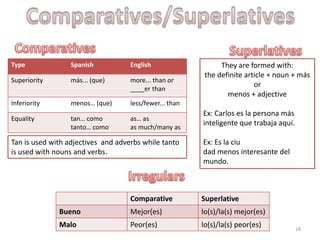
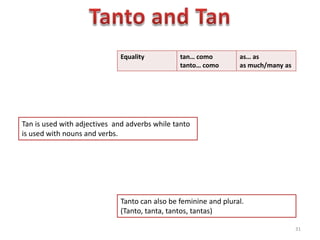
Comparatives/SuperlativesComparativesSuperlativesThey are formed with:the definite article + noun + másor menos + adjectiveEx: Carlos es la persona más inteligente que trabaja aquí.Ex: Es la ciuEqualitydad menos interesante del mundo.Tan is used with adjectives  and adverbs while tanto is used with nouns and verbs.Irregulars18
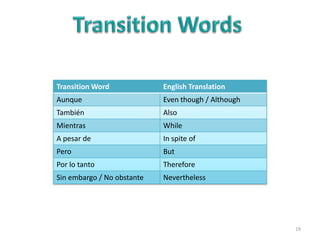
Transition Words19
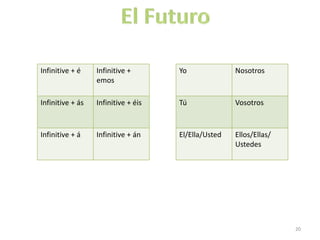
El Futuro20
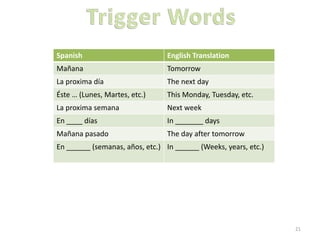
Trigger Words21
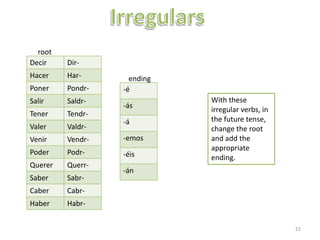
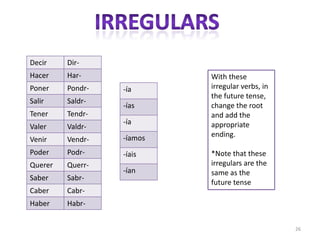
IrregularsrootendingWith these irregular verbs, in the future tense, change the root and add the appropriate ending.22
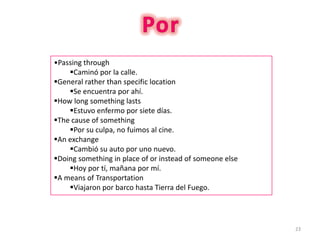
PorPassing through
Caminópor la calle.
General rather than specific location
Se encuentraporahí.
How long something lasts
Estuvoenfermoporsietedías.
The cause of something
Porsu culpa, no fuimos al cine.
An exchange
Cambiósu auto porunonuevo.
Doing something in place of or instead of someone else
Hoy portí, mañanapormí.
A means of Transportation
Viajaronporbarcohasta Tierra del Fuego.23
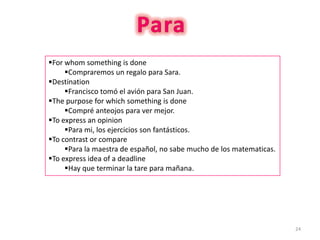
ParaFor whom something is done
Compraremos un regalopara Sara.
Destination
Francisco tomó el aviónpara San Juan.
The purpose for which something is done

Grammar Book

  • 1.
    Spanish Grammar Book!DavidMorrisonPeriod: 31
  • 2.
    2Table of ContentsElPretérito…………………………………………………………………………………………….................................... 5 Trigger Words…………………………………………………………………………………………………………………… 6 -Car -Gar -Zar……………………………………………………………………………………………………………………. 7 Spock Verbs………………………………………………………………………………………………………………………. 8 Cucaracha Verbs……………………………………………………………………………………………………………….. 9 Snake Verbs……………………………………………………………………………………………………………………… 10Snakey Verbs………..………………………………………………………………………………………………………….. 11El Imperfecto………………………………………………………………………………………………………………………… 12 Trigger words…………………………………………………………………………………………………………………… 13 Irregulars………………………………………………………………………………………………………………………… 14Preteritevs Imperfect……………………………………………………………………………………………………………. 15Ser vsEstar……………………………………………………………………………………………………………………………. 16Verbs like Gustar…………………………………………………………………………………………………………………… 17Comparative/Superlatives…………………………………………………………………………………………………….. 18Transition Words…………………………………………………………………………………………………………………… 19El Futuro ………………………………………………………………………………………………………………………………. 20 Trigger Words…………………………………………………………………………………………………………………… 21 Irregulars…………………………………………………………………………………………………………………………. 22
  • 3.
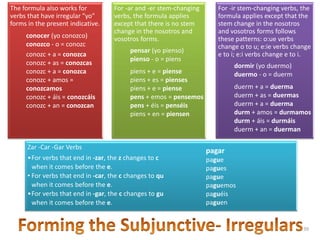
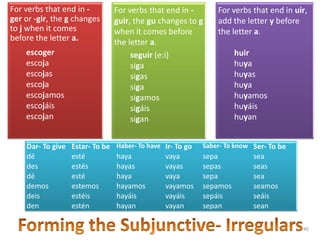
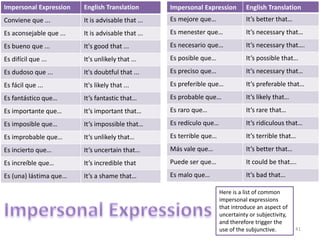
    3Table of ContentsPor…………………………………………………………………………………………………………………………………………23Para………………………………………………………………………………………………………………………………………. 24The Conditional…………………………………………………………………………………………………………………….. 25 Irregulars…………………………………………………………………………………………………………………………. 26Past Participle……………………………………………………………………………………………………………………….. 27Present Perfect……………………………………………………………………………………………………………………… 28Past Perfect…………………………………………………………………………………………………………………………… 29Present Perfect Subjunctive………………………………………………………………………………………………….. 30Tanto and Tan……………………………………………………………………………………………………………………….. 31Impersonal ‘Se’……………………………………………………………………………………………………………………… 32Saber vsConocer………………………………………………………………………………………………………………….. 33Informal Commands……………………………………………………………………………………………………………… 34Formal Commands……………………………………………………………………………………………………………..... 35Nosotros Commands (w/ mono verbs)…………………………………………………………………………………. 36Subjunctive…………………………………………………………………………………………………………………………… 37 Forming the Subjunctive………………………………………………………………………………………………….. 38 Irregulars……………………………………………………………………………………………………………………. 39-40Impersonal Expressions…………………………………………………………………………………………………………. 41
  • 4.
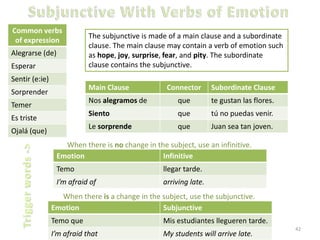
    4Table of ContentsSubjunctivewith Verbs of Emotion……………………………………………………………………………………….. 42Subjunctive: Conjunctions of Time………………………………………………………………………………………… 43Demonstrative Adjectives and Pronouns…………………………………………………………………………. 44-45
  • 5.
    El Pretérito-ar-erWhen usingthe preterite, take off the -er, -ir, or -ar ending and replace it with the corresponding ending (in bold) in the charts provided.-ir5
  • 6.
    Tigger WordsThese wordsindicate that the preterite will be used.6
  • 7.
    -Car -gar -zar-gar-carWhenusing -car -gar -zar verbs in the preterite, take of the -car, -gar, or -zar ending and replace it with the corresponding ending (in bold) in the charts provided.-zar7
  • 8.
  • 9.
    Cucaracha VerbsrootendingWith theseirregular verbs, in the preterite, change the root and add the appropriate ending.Note: When the verbs ‘conducir’, ‘producir’, ‘traducir’, ‘decir’, and ‘traer’ are used in the thrid-person plural, take off the i in ‘ieron’.9
  • 10.
    Snake VerbsIf thefirst e in the verb in the present tense changes from e to i, then change the first e to i in the third person in the preterite.If the first e in the verb in the present tense changes from e to ie, then change the first e to i in the third person in the preterite.10
  • 11.
    Snakey VerbsFor verbsthat end in -aer, -eer, -oír, and -oer, the él/ella/usted forms use the ending "yó" (rather than ió) and the third person plural uses the ending "yeron" (rather than ieron). The remaining forms gain a written accent over the letter "i."Verbs that end in -uir change in the same way, but the written accent over the letter "i" only occurs in the yo form.CreerHuirExceptions to the Rule:traeratraerdistraerCucarachaVerbs!11
  • 12.
    El Imperfecto-er/-ir-arWhen usingthe imperfect, take off the -er, -ir, or -ar ending and replace it with the corresponding ending (in bold) in the charts provided.12
  • 13.
    Trigger WordsThese wordsindicate that the imperfect will be used.13
  • 14.
  • 15.
  • 16.
    SerEstarV.Description -Es un lápizOrigin -Es de ArgentinaCharacteristics -Es altoTime -Son las dosOccupation -Es DoctorRelationship -Es mi papáPossession -Es de mi madreEvent -Es en el cineDates-Es el lunesPhysical Condition -It is a condition that can change, not a trait-Estoymuytristeporquesaquémalasnotas.Location (Not Events) -Es de Argentina, peroahoraesta en los EstadosUnidos.Present Progressive Tense (-ing verbs) -Estalloviendo.16
  • 17.
    Verbs Like GustarFaltarQuedarEncantarCaer(bien/mal)MolestarFascinarAburrirApetecerDolerSoprenderDisgustarInteresarPreocuparImportarWhen gustar is followed by one or more verbs in the infinitive, the singular form of gustar is always used
  • 18.
    Gustar is oftenused in the conditional (me gustaría) to soften a request.
  • 19.
    A Adela leencanta la música de Shakira.
  • 20.
    A mi meintresa la músic de otrospaíses.
  • 21.
    A mis amigosles encantanlascanciones de Maná.17
  • 22.
    Comparatives/SuperlativesComparativesSuperlativesThey are formedwith:the definite article + noun + másor menos + adjectiveEx: Carlos es la persona más inteligente que trabaja aquí.Ex: Es la ciuEqualitydad menos interesante del mundo.Tan is used with adjectives and adverbs while tanto is used with nouns and verbs.Irregulars18
  • 23.
  • 24.
  • 25.
  • 26.
    IrregularsrootendingWith these irregularverbs, in the future tense, change the root and add the appropriate ending.22
  • 27.
  • 28.
  • 29.
    General rather thanspecific location
  • 30.
  • 31.
  • 32.
  • 33.
    The cause ofsomething
  • 34.
    Porsu culpa, nofuimos al cine.
  • 35.
  • 36.
  • 37.
    Doing something inplace of or instead of someone else
  • 38.
  • 39.
    A means ofTransportation
  • 40.
  • 41.
  • 42.
  • 43.
  • 44.
    Francisco tomó elaviónpara San Juan.
  • 45.
    The purpose forwhich something is done