PRETERITE VS.
IMPERFECT
When to use these past tenses
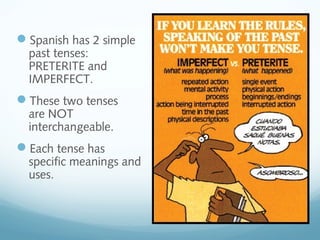
Spanish has 2 simple
past tenses:
PRETERITE and
IMPERFECT.
These two tenses
are NOT
interchangeable.
Each tense has
specific meanings and
uses.
When to Use the Preterite
When an action was completed
When an action was completed at a specific time
When an action was completed a specific number of
times
When an action began or ended
When an action interrupts another action
For Preterite tense
remember SIMBA
 Sequence of events
 I woke up, brushed my teeth, and took a shower.
 Interruption
 I was watching TV when the phone rang.
 Main Event
 The teacher yelled at the class.
 Beginning/End of an event
 The game ended at 5:00.
 Action completed
 I went to the mall yesterday.
S
I
M
B
A
Review the Phrases that indicate
use of the preterite
 Ayer
 Anteayer
 Anoche
 Desde el primer momento
 Durante (dos siglos)
 El otro (día)
 En ese momento
 Entonces
 Esta (mañana)
 (El año) pasado
 Hace (dos días)
 Por la mañana
 A las 10:00
 El martes/lunes/etc.
* Parenthesis indicate a
measure of time that can be
interchangeable.
Ex: (El año) pasado
El verano pasado
When to use the Imperfect
To state in general when an action took place
To describe background information
To express weather
To tell time
To tell age
To describe physical and mental states and conditions,
including feelings
To express habitual actions
To express what used to happen
To express what was/were…ing
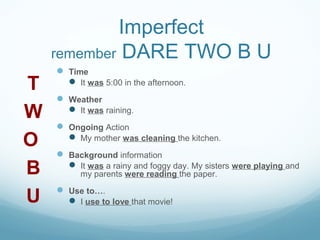
Imperfect
remember DARE TWO B U
 Description
 My mother was tall.
 Age
 I was 18 years old.
 Repeated Action
 I always got good grades.
 Every summer we went camping.
 Emotion
 I was bored.
D
A
R
E
Imperfect
remember DARE TWO B U
 Time
 It was 5:00 in the afternoon.
 Weather
 It was raining.
 Ongoing Action
 My mother was cleaning the kitchen.
 Background information
 It was a rainy and foggy day. My sisters were playing and
my parents were reading the paper.
 Use to….
 I use to love that movie!
T
W
O
B
U
Phrases that indicate use of the
Imperfect
 A menudo
 A veces
 Cada (día)
 Nunca
 Rara vez
 Siempre
 Casi siempre
 En aquella época
 Frecuentemente
 Generalmente
 Muchas veces
 Mucho
 De vez en cuando
 Con frecuencia
¡OJO!
Ex. Yo conocí a mi mejor amiga hace tres años.
I met my best friend three years ago.
Yo conocía a Luisa bien cuando éramos niñas.
I used to know Luisa well when we were kids.
Some verbs change meaning
depending on the use of
the preterite or the
imperfect:
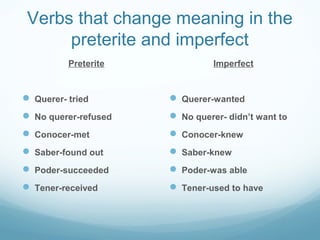
Verbs that change meaning in the
preterite and imperfect
Preterite
 Querer- tried
 No querer-refused
 Conocer-met
 Saber-found out
 Poder-succeeded
 Tener-received
Imperfect
 Querer-wanted
 No querer- didn’t want to
 Conocer-knew
 Saber-knew
 Poder-was able
 Tener-used to have
Examples of
the preterite tense
Paco trabajó en el supermercado hace dos años.
Paco worked at the supermarket 2 years ago.
Yo leí el periódico ayer por la tarde.
I read the newspaper yesterday afternoon.
Comimos una torta en la fiesta el viernes pasado.
We ate a cake at the party last Friday.
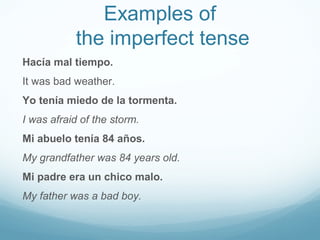
Examples of
the imperfect tense
Hacía mal tiempo.
It was bad weather.
Yo tenía miedo de la tormenta.
I was afraid of the storm.
Mi abuelo tenía 84 años.
My grandfather was 84 years old.
Mi padre era un chico malo.
My father was a bad boy.
Examples of the preterite vs. the
imperfect tenses
Beto estudió anoche.
Beto studied last night.
Beto estudiaba todas las noches.
Beto used to study every night.
Beto estudiaba cuando se durmió.
Beto was studying when he fell asleep.
Practice
1. Anoche Luís comió/comía unos tacos.
2. Hace un año viajamos/viajábamos a Costa Rica.
3. Isabel tuvo/tenía seis años cuando aprendió/aprendía a montar la bicicleta.
4. Yo estuve/estaba en la clase de historia cuando mi mamá me llamó/llamaba.
5. Fueron/Eran las tres de la tarde cuando Marco llegó/llegaba a casa.
6. Tú siempre sacaste/sacabas buenas notas.
7. Manuela fue/era muy simpática.
8. El otro día yo fui/iba a la biblioteca.
9. Nosotras asistimos/asistíamos a la clase de baile solamente tres veces.
10. 10)De vez en cuando mi mamá cocinó/cocinaba comida china.

3.3.3 preterite vs imperfect

  • 1.
    PRETERITE VS. IMPERFECT When touse these past tenses
  • 2.
    Spanish has 2simple past tenses: PRETERITE and IMPERFECT. These two tenses are NOT interchangeable. Each tense has specific meanings and uses.
  • 3.
    When to Usethe Preterite When an action was completed When an action was completed at a specific time When an action was completed a specific number of times When an action began or ended When an action interrupts another action
  • 4.
    For Preterite tense rememberSIMBA  Sequence of events  I woke up, brushed my teeth, and took a shower.  Interruption  I was watching TV when the phone rang.  Main Event  The teacher yelled at the class.  Beginning/End of an event  The game ended at 5:00.  Action completed  I went to the mall yesterday. S I M B A
  • 5.
    Review the Phrasesthat indicate use of the preterite  Ayer  Anteayer  Anoche  Desde el primer momento  Durante (dos siglos)  El otro (día)  En ese momento  Entonces  Esta (mañana)  (El año) pasado  Hace (dos días)  Por la mañana  A las 10:00  El martes/lunes/etc. * Parenthesis indicate a measure of time that can be interchangeable. Ex: (El año) pasado El verano pasado
  • 6.
    When to usethe Imperfect To state in general when an action took place To describe background information To express weather To tell time To tell age To describe physical and mental states and conditions, including feelings To express habitual actions To express what used to happen To express what was/were…ing
  • 7.
    Imperfect remember DARE TWOB U  Description  My mother was tall.  Age  I was 18 years old.  Repeated Action  I always got good grades.  Every summer we went camping.  Emotion  I was bored. D A R E
  • 8.
    Imperfect remember DARE TWOB U  Time  It was 5:00 in the afternoon.  Weather  It was raining.  Ongoing Action  My mother was cleaning the kitchen.  Background information  It was a rainy and foggy day. My sisters were playing and my parents were reading the paper.  Use to….  I use to love that movie! T W O B U
  • 9.
    Phrases that indicateuse of the Imperfect  A menudo  A veces  Cada (día)  Nunca  Rara vez  Siempre  Casi siempre  En aquella época  Frecuentemente  Generalmente  Muchas veces  Mucho  De vez en cuando  Con frecuencia
  • 10.
    ¡OJO! Ex. Yo conocía mi mejor amiga hace tres años. I met my best friend three years ago. Yo conocía a Luisa bien cuando éramos niñas. I used to know Luisa well when we were kids. Some verbs change meaning depending on the use of the preterite or the imperfect:
  • 11.
    Verbs that changemeaning in the preterite and imperfect Preterite  Querer- tried  No querer-refused  Conocer-met  Saber-found out  Poder-succeeded  Tener-received Imperfect  Querer-wanted  No querer- didn’t want to  Conocer-knew  Saber-knew  Poder-was able  Tener-used to have
  • 12.
    Examples of the preteritetense Paco trabajó en el supermercado hace dos años. Paco worked at the supermarket 2 years ago. Yo leí el periódico ayer por la tarde. I read the newspaper yesterday afternoon. Comimos una torta en la fiesta el viernes pasado. We ate a cake at the party last Friday.
  • 13.
    Examples of the imperfecttense Hacía mal tiempo. It was bad weather. Yo tenía miedo de la tormenta. I was afraid of the storm. Mi abuelo tenía 84 años. My grandfather was 84 years old. Mi padre era un chico malo. My father was a bad boy.
  • 14.
    Examples of thepreterite vs. the imperfect tenses Beto estudió anoche. Beto studied last night. Beto estudiaba todas las noches. Beto used to study every night. Beto estudiaba cuando se durmió. Beto was studying when he fell asleep.
  • 15.
    Practice 1. Anoche Luíscomió/comía unos tacos. 2. Hace un año viajamos/viajábamos a Costa Rica. 3. Isabel tuvo/tenía seis años cuando aprendió/aprendía a montar la bicicleta. 4. Yo estuve/estaba en la clase de historia cuando mi mamá me llamó/llamaba. 5. Fueron/Eran las tres de la tarde cuando Marco llegó/llegaba a casa. 6. Tú siempre sacaste/sacabas buenas notas. 7. Manuela fue/era muy simpática. 8. El otro día yo fui/iba a la biblioteca. 9. Nosotras asistimos/asistíamos a la clase de baile solamente tres veces. 10. 10)De vez en cuando mi mamá cocinó/cocinaba comida china.