ClinicoPathologicalCasediscussion
Presenter : Dr Jason Dsouza
Selector: Dr Lea Varghese
Moderator: Dr Habib Khan
ChiefComplaints
16 year old , Male:
Headache since 1 year 5 months
Abdominal pain since 1 day
Elevated Blood pressure recordings since 1 day
Howdiditallbegin?
 Child was apparently normal until 17 months prior to
current admission
At 14years 7months of age
History of Road traffic accident
 Complaints of Episodic headache and neck pain
multiple episodes per week
2months
later…..
 Trauma while playing soccer (Collided with other
person)
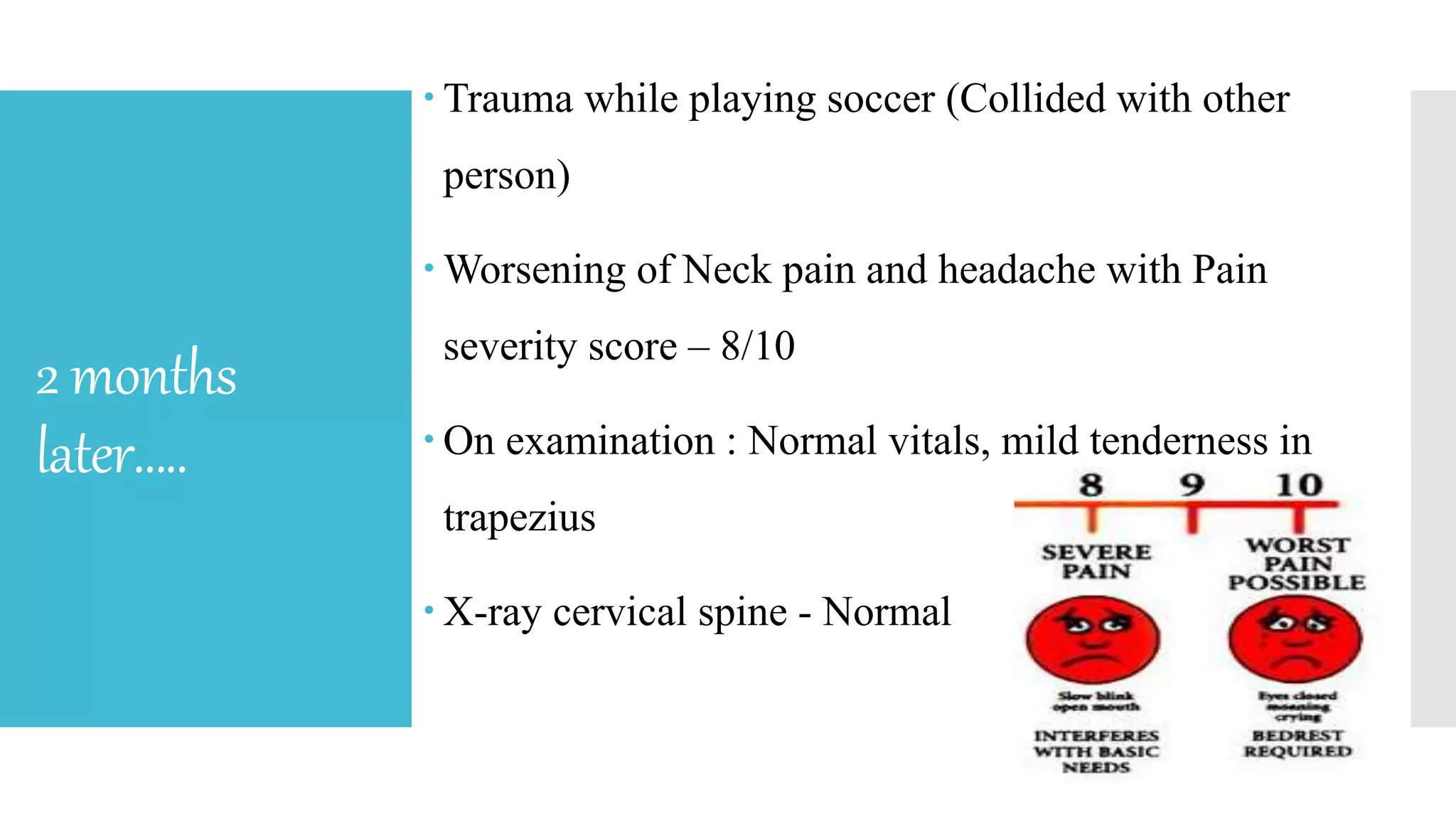
 Worsening of Neck pain and headache with Pain
severity score – 8/10
 On examination : Normal vitals, mild tenderness in
trapezius
 X-ray cervical spine - Normal
FORTHENext15
months:
 On regular follow-up with Pediatrics and Neurology
dept’s
 Received multiple medications for headache (Ibuprofen,
Nortryptyline, Sumatriptan, Cyclobenzaprine &
Diazepam) –No Improvement of symptoms
 Tried alternative therapy with Acupuncture, Physical
therapy, Chiropractic, Massage therapy
3monthspriorto
currentadmission
At 15 year 9months of age
 Nausea with episodes of headache; Headache
worsened on lying down and on physical activity
resulting in Vomiting and Tunnel vision
 Intensity of pain reduced after vomiting
 O/E: Tachycardia(104/min)
BP: 128/80mmHg(50-90th centile)
 Stopped outdoor sports on Medical advice
2dayspriorto
current
admission:
(17monthsafteronset)
 Worsened headache awoke patient from sleep;
 Nausea was constant with 2 episodes of vomiting /day.
 Unable to attend school due to symptoms.
 O/E: Tachycardia (HR:115/min) with other vitals normal
BP:120/64mmHg  (50-90th centile)
General physical examination :Normal ;
BMI : 27Kg/m2  OVERWEIGHT
Chronology:
 17 months back  ACUTE ONSET HEADACHE
precipitated by Trauma
 15 months later EPISODIC HEADACHE persisting
despite various treatment
 2 months later  HEADACHE with NAUSEA,
VOMITING and TUNNEL VISION (?Signs of raised
ICT/ ?Aura)
Diagnosedas….
Mixed migraine and Tension Type
Headache
Discharged with Prednisolone(Not taken), Zlometriptan &
Ondansetron
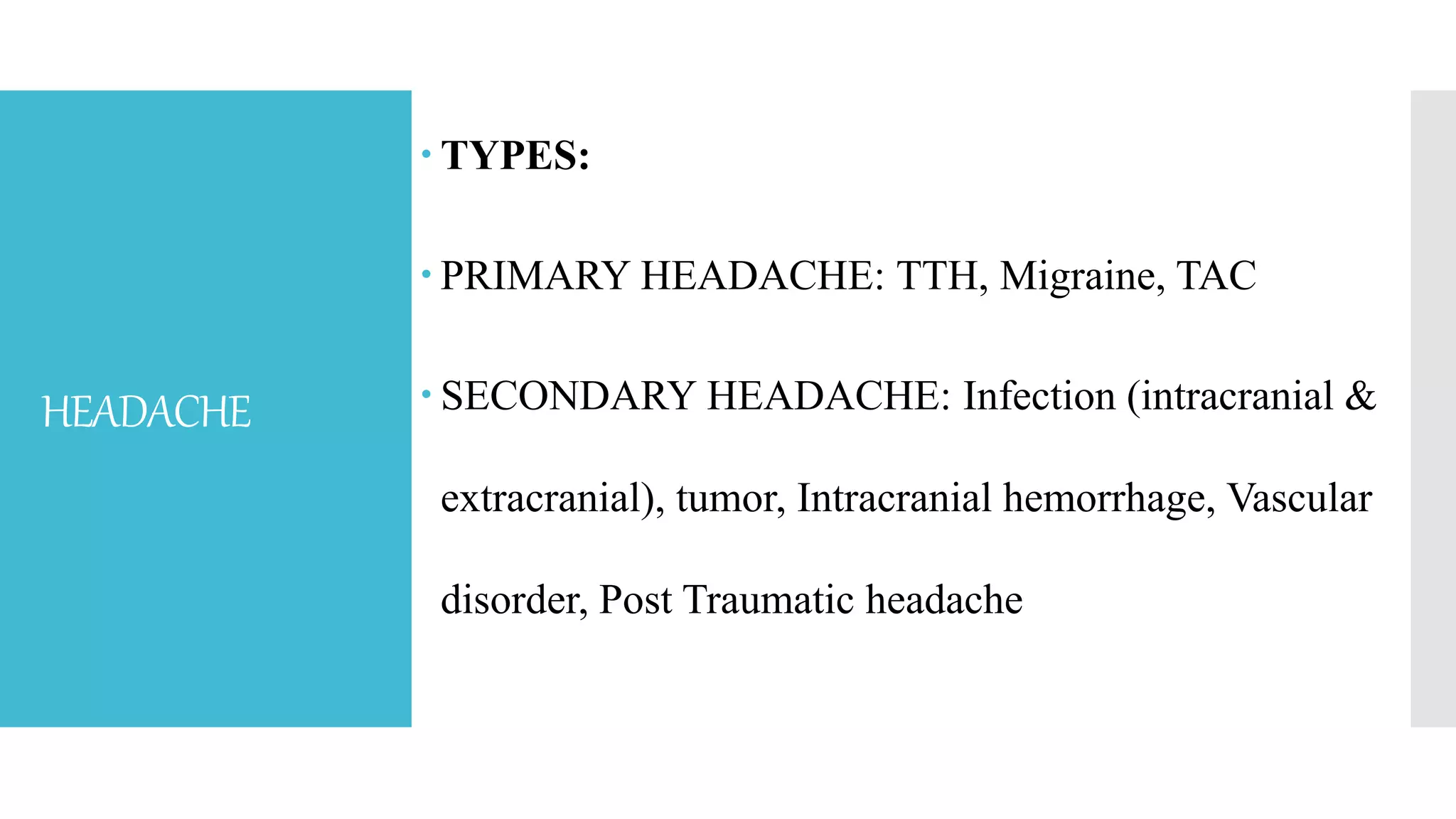
HEADACHE
 TYPES:
 PRIMARY HEADACHE: TTH, Migraine, TAC
 SECONDARY HEADACHE: Infection (intracranial &
extracranial), tumor, Intracranial hemorrhage, Vascular
disorder, Post Traumatic headache
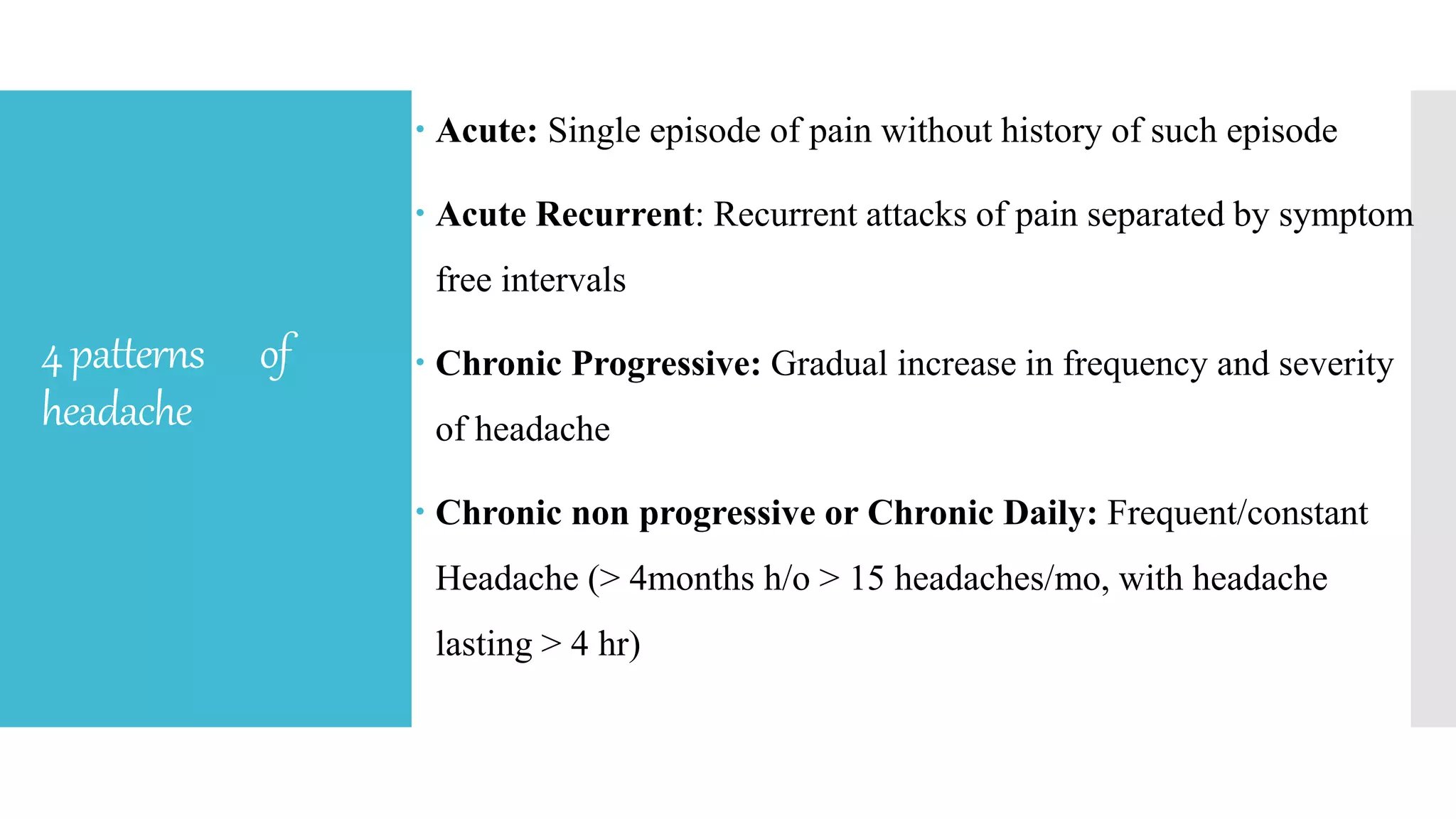
4patterns of
headache
 Acute: Single episode of pain without history of such episode
 Acute Recurrent: Recurrent attacks of pain separated by symptom
free intervals
 Chronic Progressive: Gradual increase in frequency and severity
of headache
 Chronic non progressive or Chronic Daily: Frequent/constant
Headache (> 4months h/o > 15 headaches/mo, with headache
lasting > 4 hr)
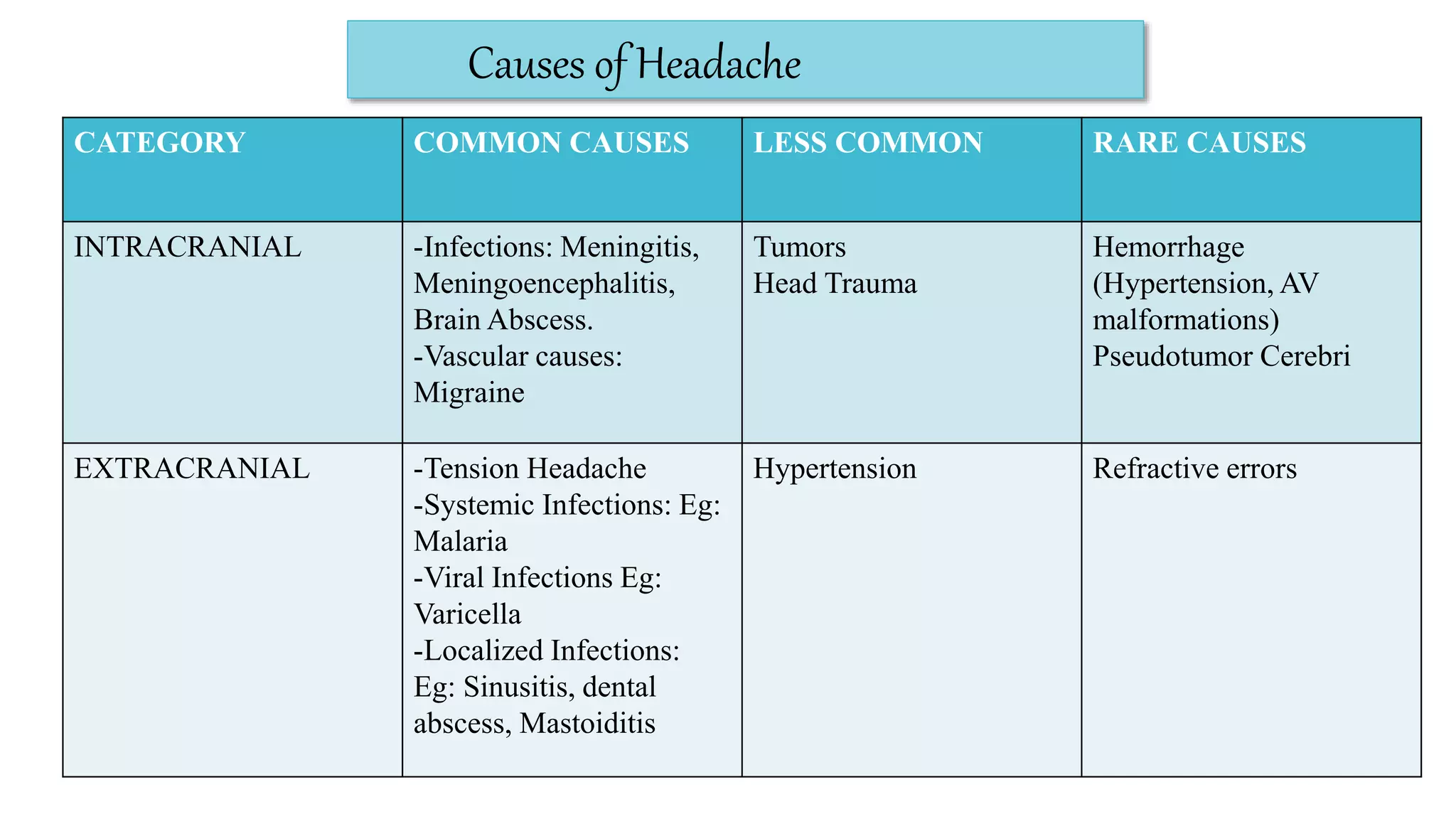
CATEGORY COMMON CAUSES LESS COMMON RARE CAUSES
INTRACRANIAL -Infections: Meningitis,
Meningoencephalitis,
Brain Abscess.
-Vascular causes:
Migraine
Tumors
Head Trauma
Hemorrhage
(Hypertension, AV
malformations)
Pseudotumor Cerebri
EXTRACRANIAL -Tension Headache
-Systemic Infections: Eg:
Malaria
-Viral Infections Eg:
Varicella
-Localized Infections:
Eg: Sinusitis, dental
abscess, Mastoiditis
Hypertension Refractive errors
Causes of Headache
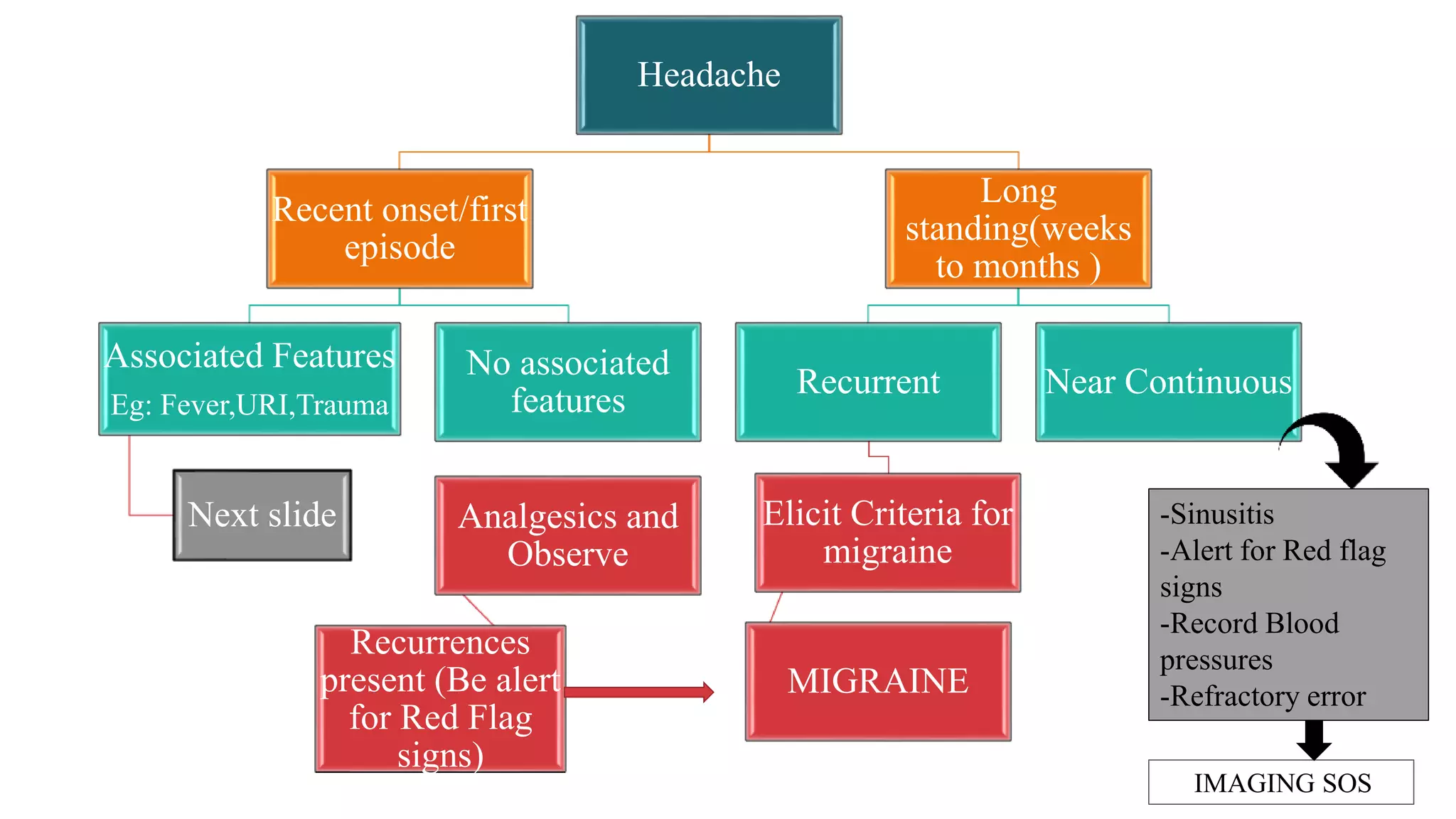
Approach to
Headache
Headache
Recent onset/first
episode
Associated Features
Eg: Fever,URI,Trauma
Next slide
No associated
features
Analgesics and
Observe
Recurrences
present (Be alert
for Red Flag
signs)
Long
standing(weeks
to months )
Recurrent
Elicit Criteria for
migraine
MIGRAINE
Near Continuous
-Sinusitis
-Alert for Red flag
signs
-Record Blood
pressures
-Refractory error
IMAGING SOS
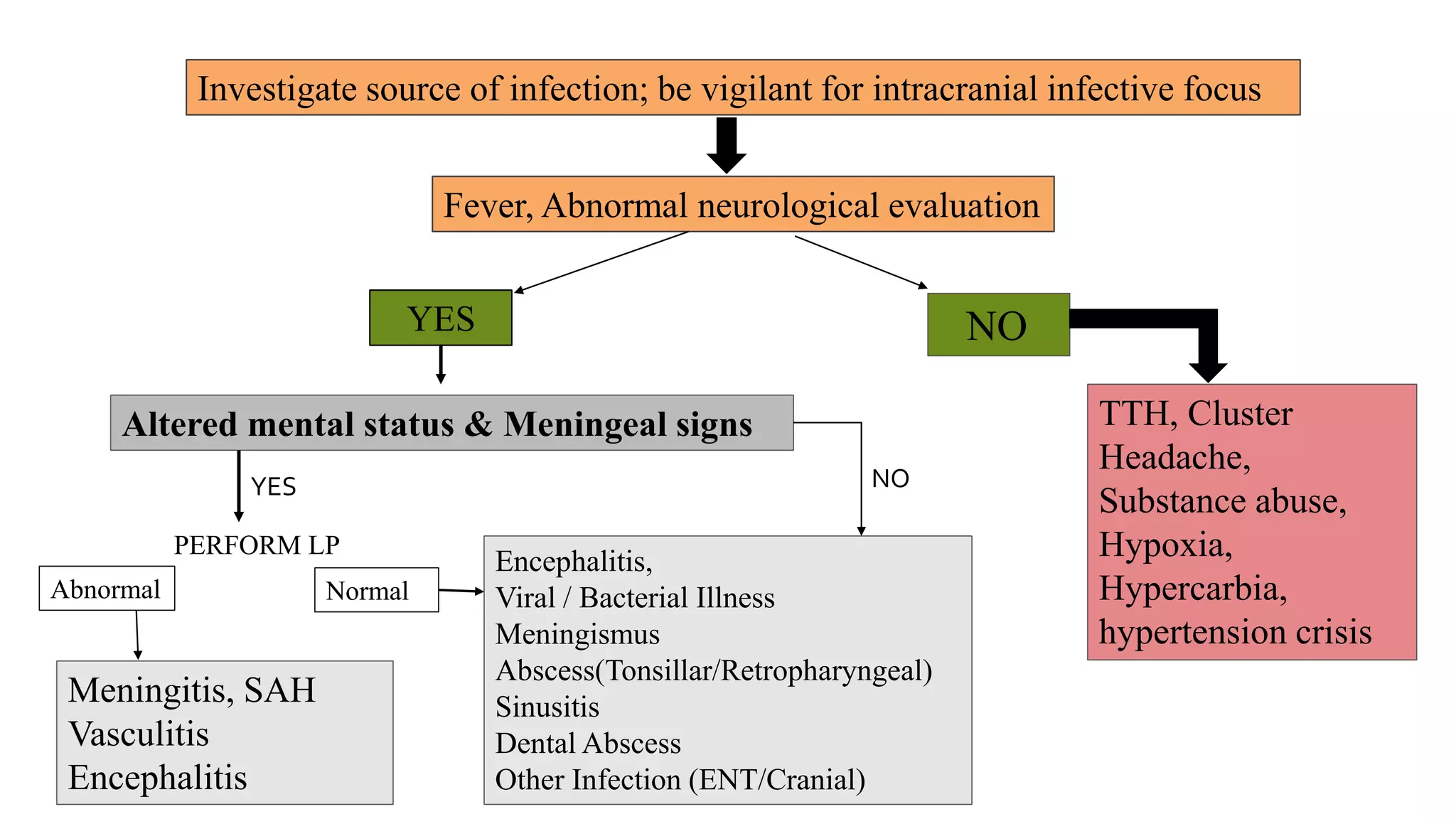
Investigate source of infection; be vigilant for intracranial infective focus
Fever, Abnormal neurological evaluation
YES NO
TTH, Cluster
Headache,
Substance abuse,
Hypoxia,
Hypercarbia,
hypertension crisis
Altered mental status & Meningeal signs
Meningitis, SAH
Vasculitis
Encephalitis
Encephalitis,
Viral / Bacterial Illness
Meningismus
Abscess(Tonsillar/Retropharyngeal)
Sinusitis
Dental Abscess
Other Infection (ENT/Cranial)
NO
YES
PERFORM LP
Abnormal Normal
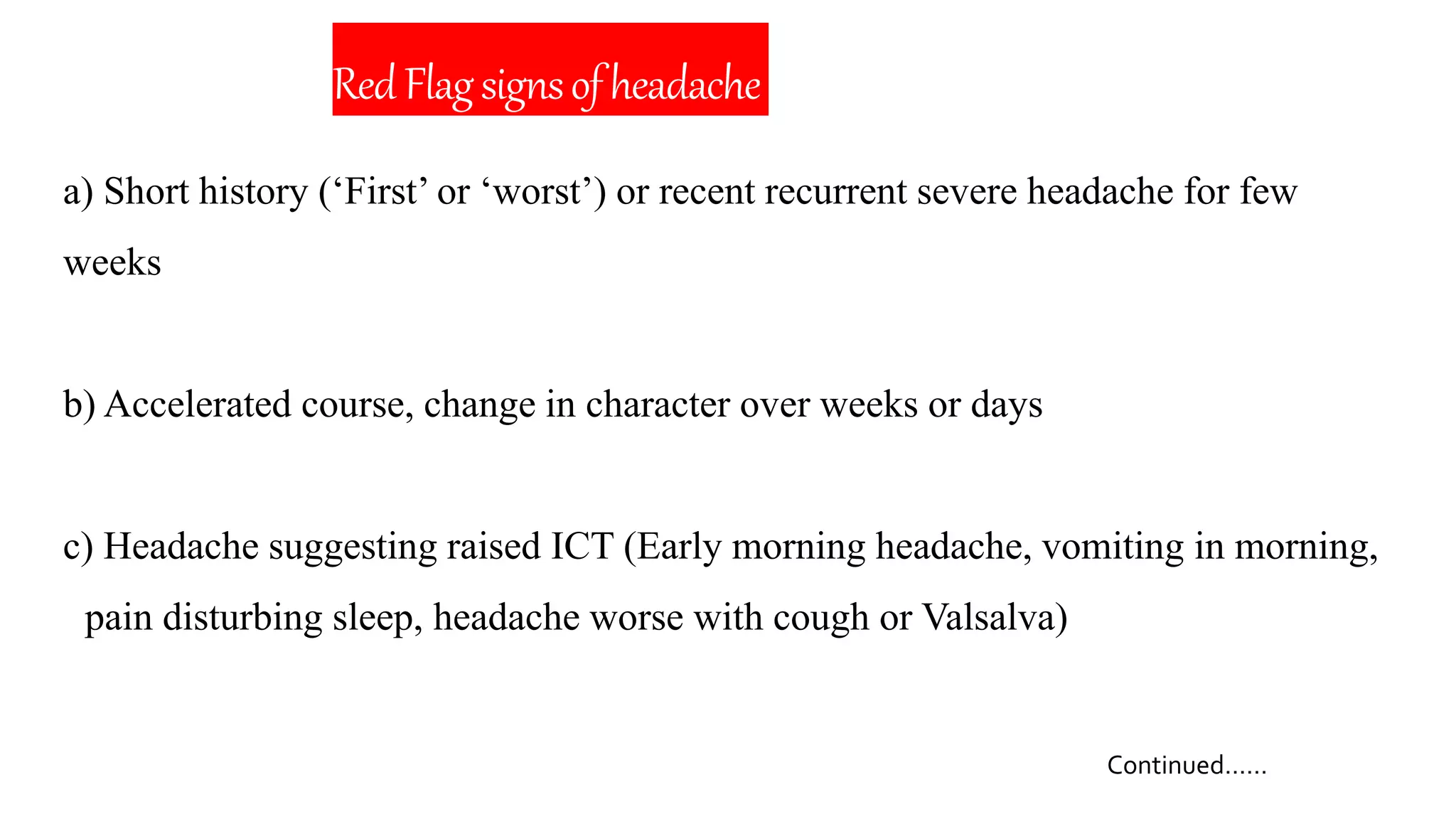
RedFlagsignsofheadache
a) Short history (‘First’ or ‘worst’) or recent recurrent severe headache for few
weeks
b) Accelerated course, change in character over weeks or days
c) Headache suggesting raised ICT (Early morning headache, vomiting in morning,
pain disturbing sleep, headache worse with cough or Valsalva)
Continued……
RedFlagsignsofheadache
d) Associated symptoms of personality changes, weakness, visual disturbances, confusion, focal
weakness, seizures or fever
e) Underlying history of neurocutaneous syndrome, history of systemic illnesses (eg. known
malignancy with possible metastases, hypercoagulopathy)
f) Young age of child (< 3 years old)
Tensiontype
Headache
 15% of older children, 8-12 years of age (most frequent)
 Typical pattern is that patients awaken feeling well, with throbbing
pain beginning gradually and escalating throughout the day;
Relieved on rest
 TTH are classified as either episodic or chronic.
 Normal neurologic and physical findings, except for possible scalp
tenderness; Sleep disturbances, school absence and chronic
analgesic use are common.
Migraine
 Migraine with/without aura:
Periodic episodes of headache
Pulsating quality
Photophobia
Phonophobia
Nausea, vomiting
Relieved by sleep
Family history present
 Compared to Adults: Shorter duration (1-48hours), bilateral(bifrontal)
IntracranialSpace
occupyinglesion
 Second most common cause of childhood malignancy
 Mechanism: Obstruction to CSF flow (Hydrocephalus)/ Direct Traction on
vascular or Dural structures
 Symptoms: Late night / early morning headache (Progressive)
Vomiting (Projectile)
Poor academic performance
Weakness
Visual disturbances
Personality / Behavioural changes
Papilledema
Ataxia/ Movement disorders
 Physical examination abnormal findings, Papilledema & neurologic deficits
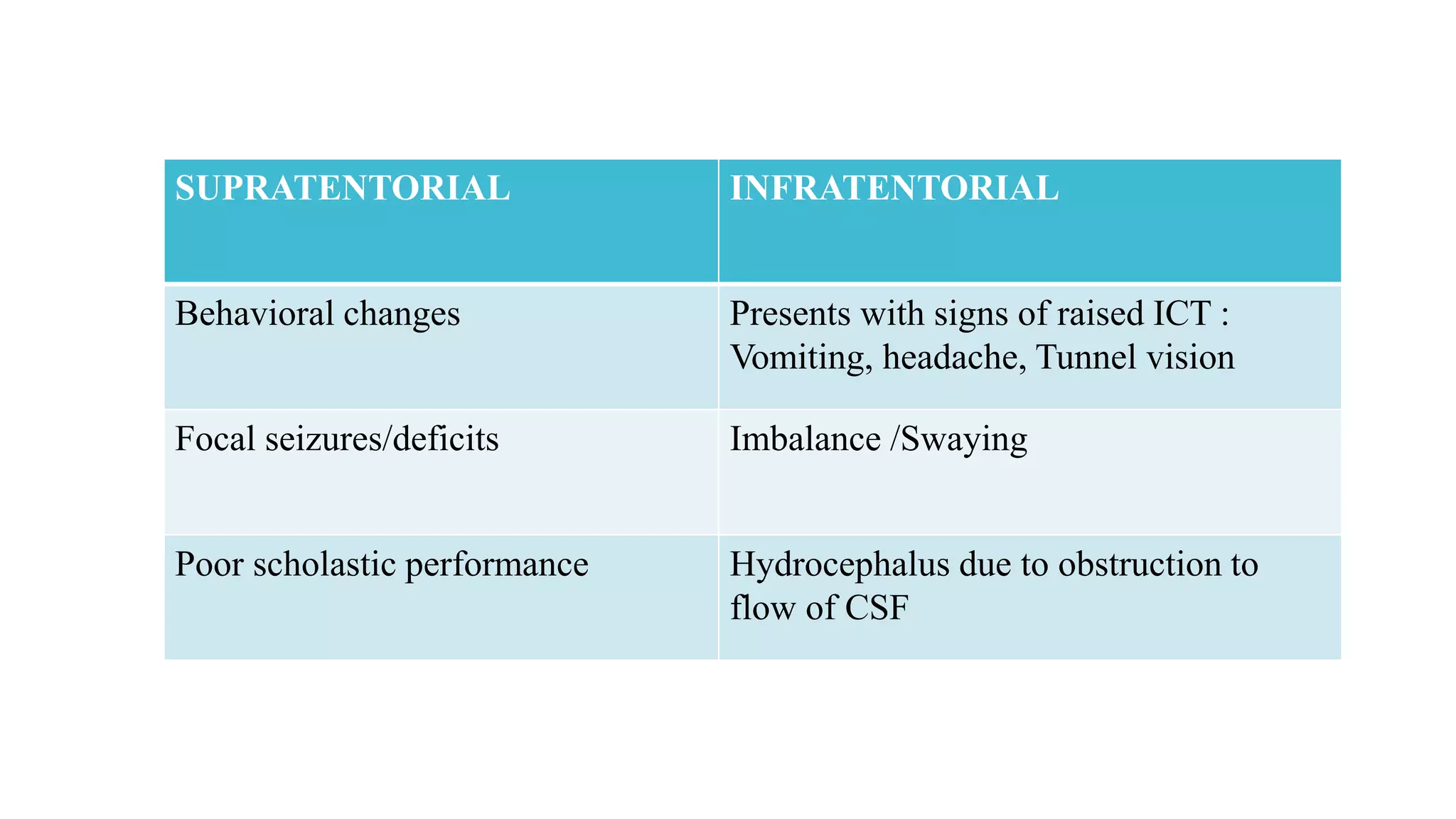
SUPRATENTORIAL INFRATENTORIAL
Behavioral changes Presents with signs of raised ICT :
Vomiting, headache, Tunnel vision
Focal seizures/deficits Imbalance /Swaying
Poor scholastic performance Hydrocephalus due to obstruction to
flow of CSF
Ourcurrent
diagnosis
Mixed Migraine Disorder
?Signs of raised ICT
?Aura
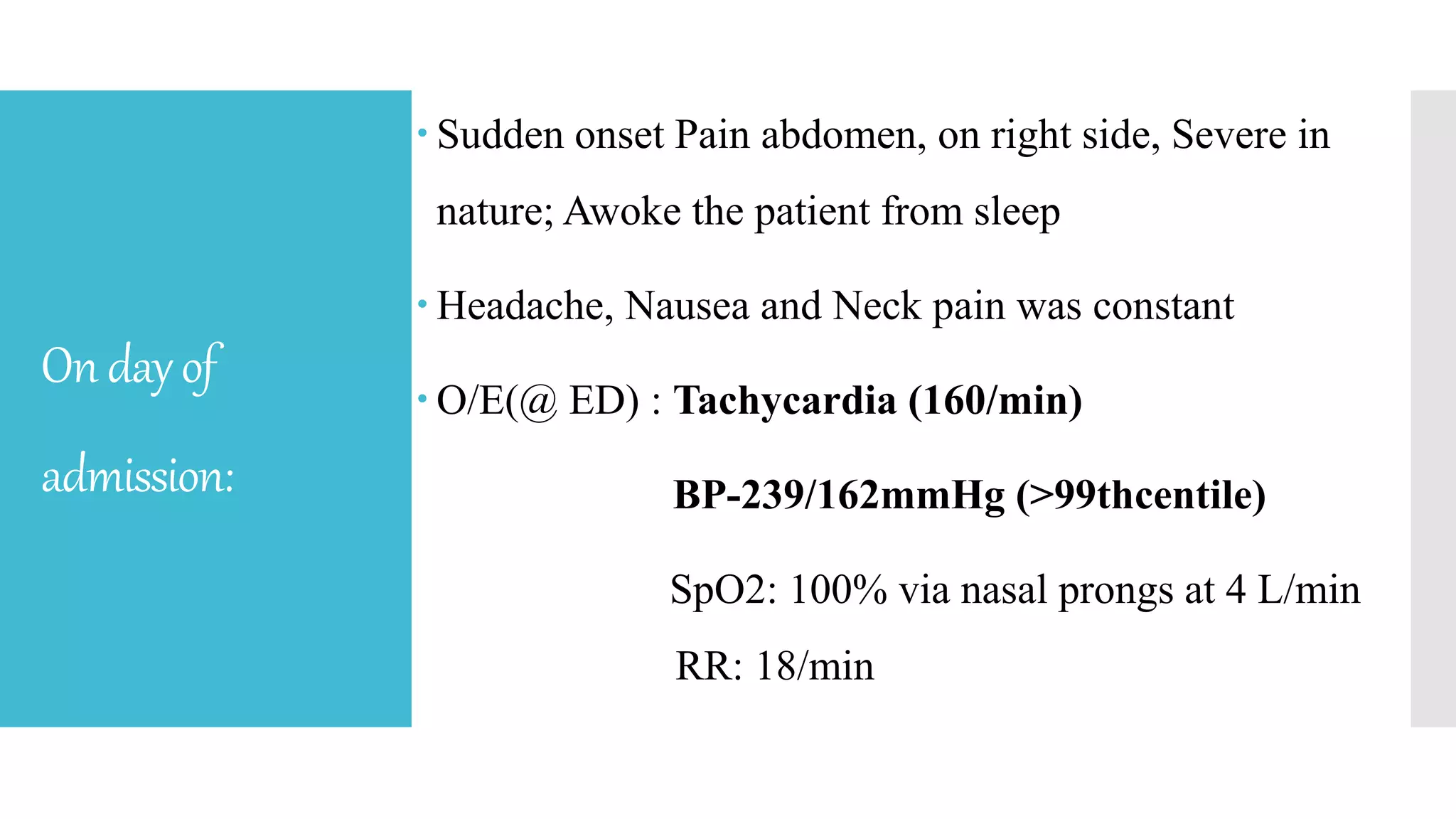
Ondayof
admission:
 Sudden onset Pain abdomen, on right side, Severe in
nature; Awoke the patient from sleep
 Headache, Nausea and Neck pain was constant
 O/E(@ ED) : Tachycardia (160/min)
BP-239/162mmHg (>99thcentile)
SpO2: 100% via nasal prongs at 4 L/min
RR: 18/min
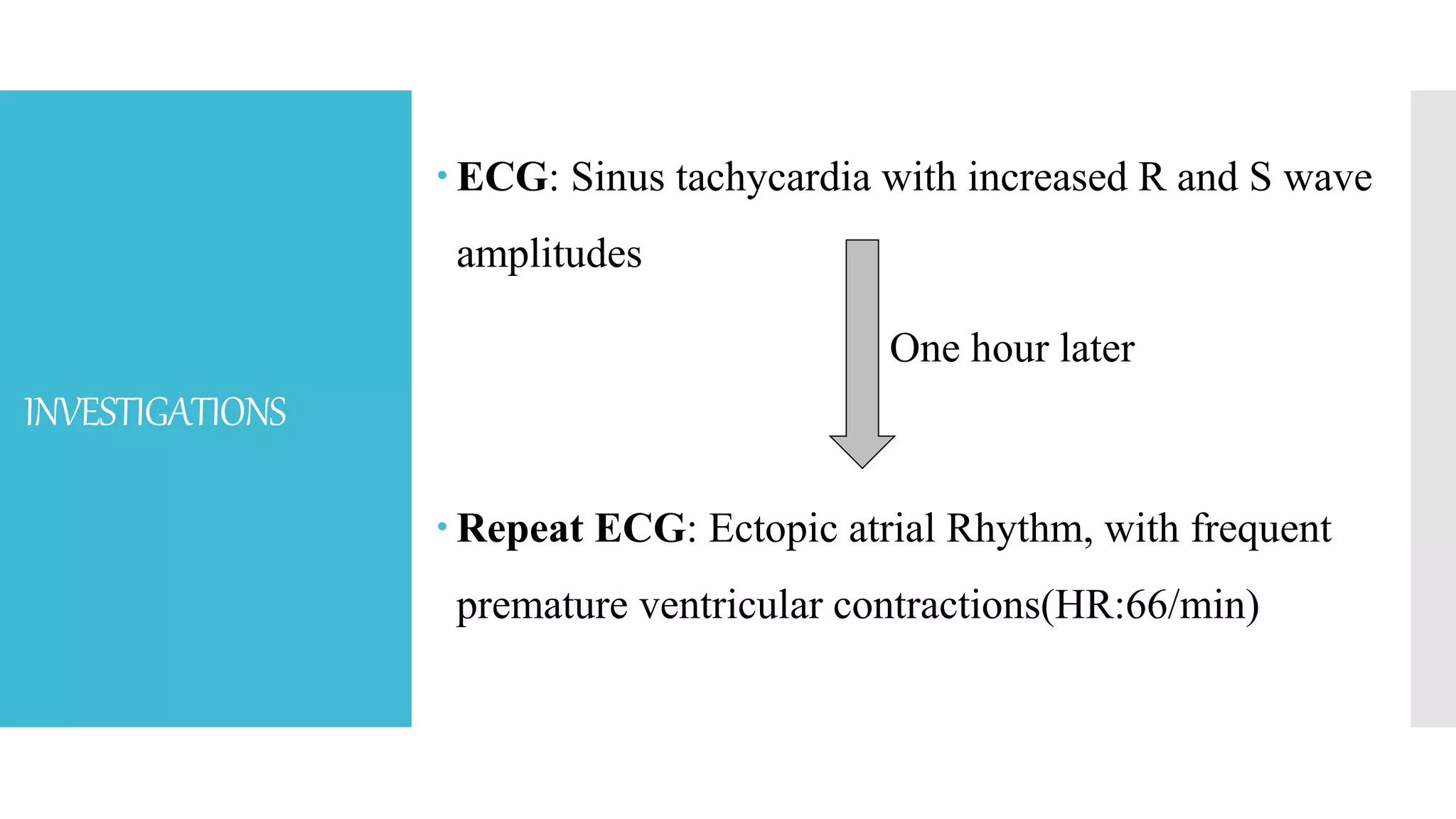
INVESTIGATIONS
 ECG: Sinus tachycardia with increased R and S wave
amplitudes
One hour later
 Repeat ECG: Ectopic atrial Rhythm, with frequent
premature ventricular contractions(HR:66/min)
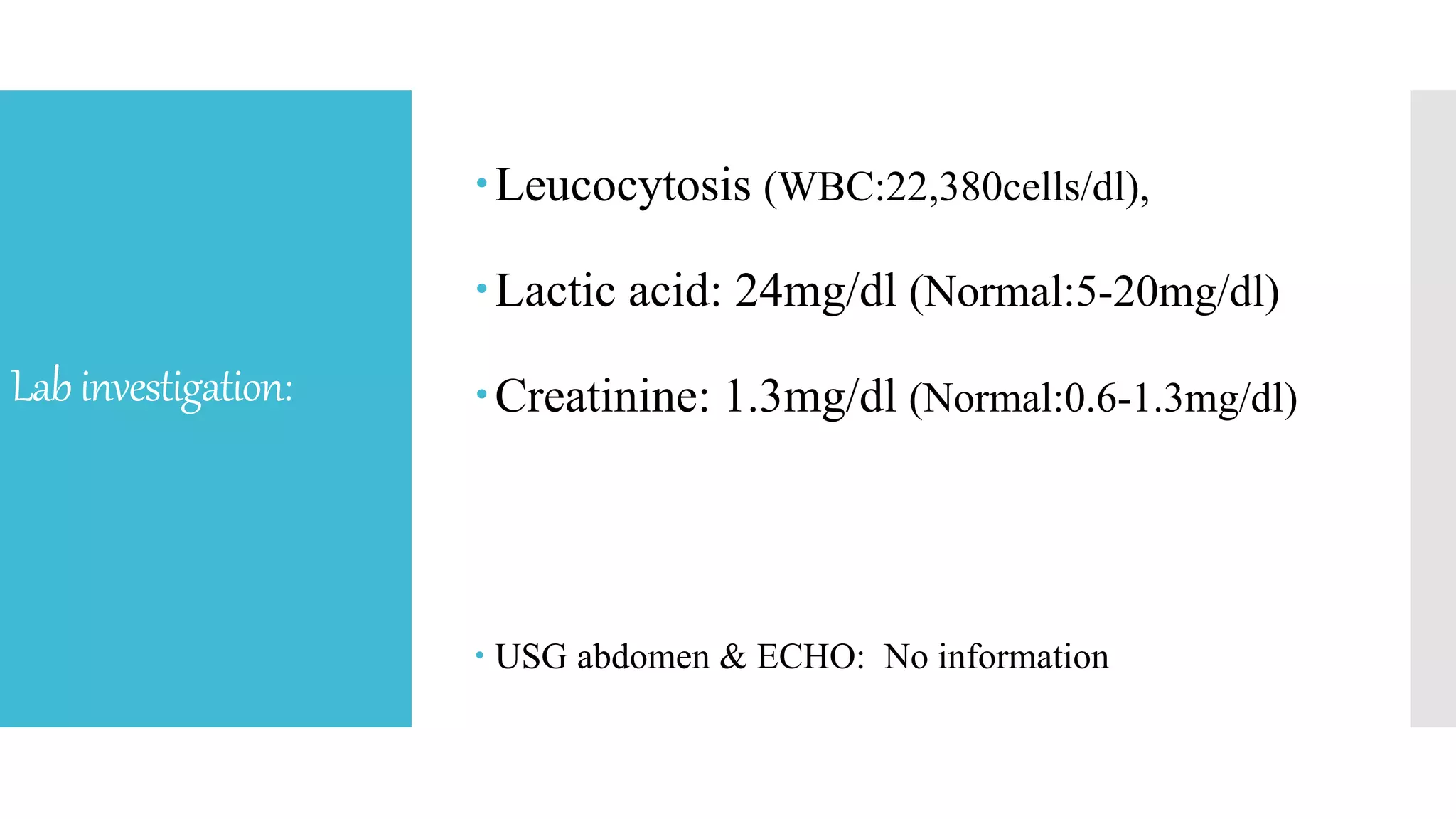
Labinvestigation:
Leucocytosis (WBC:22,380cells/dl),
Lactic acid: 24mg/dl (Normal:5-20mg/dl)
Creatinine: 1.3mg/dl (Normal:0.6-1.3mg/dl)
 USG abdomen & ECHO: No information
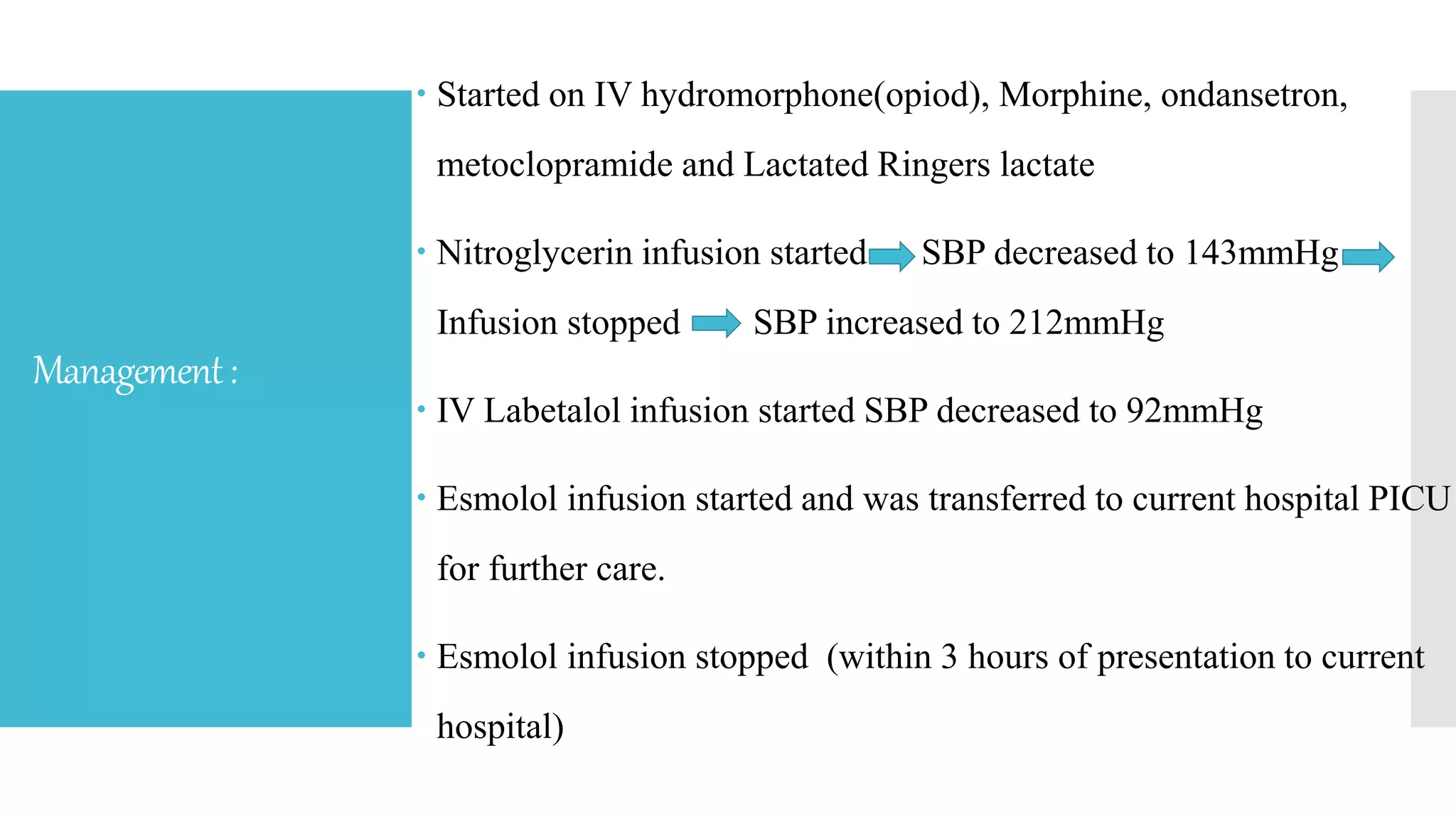
Management:
 Started on IV hydromorphone(opiod), Morphine, ondansetron,
metoclopramide and Lactated Ringers lactate
 Nitroglycerin infusion started SBP decreased to 143mmHg
Infusion stopped SBP increased to 212mmHg
 IV Labetalol infusion started SBP decreased to 92mmHg
 Esmolol infusion started and was transferred to current hospital PICU
for further care.
 Esmolol infusion stopped (within 3 hours of presentation to current
hospital)
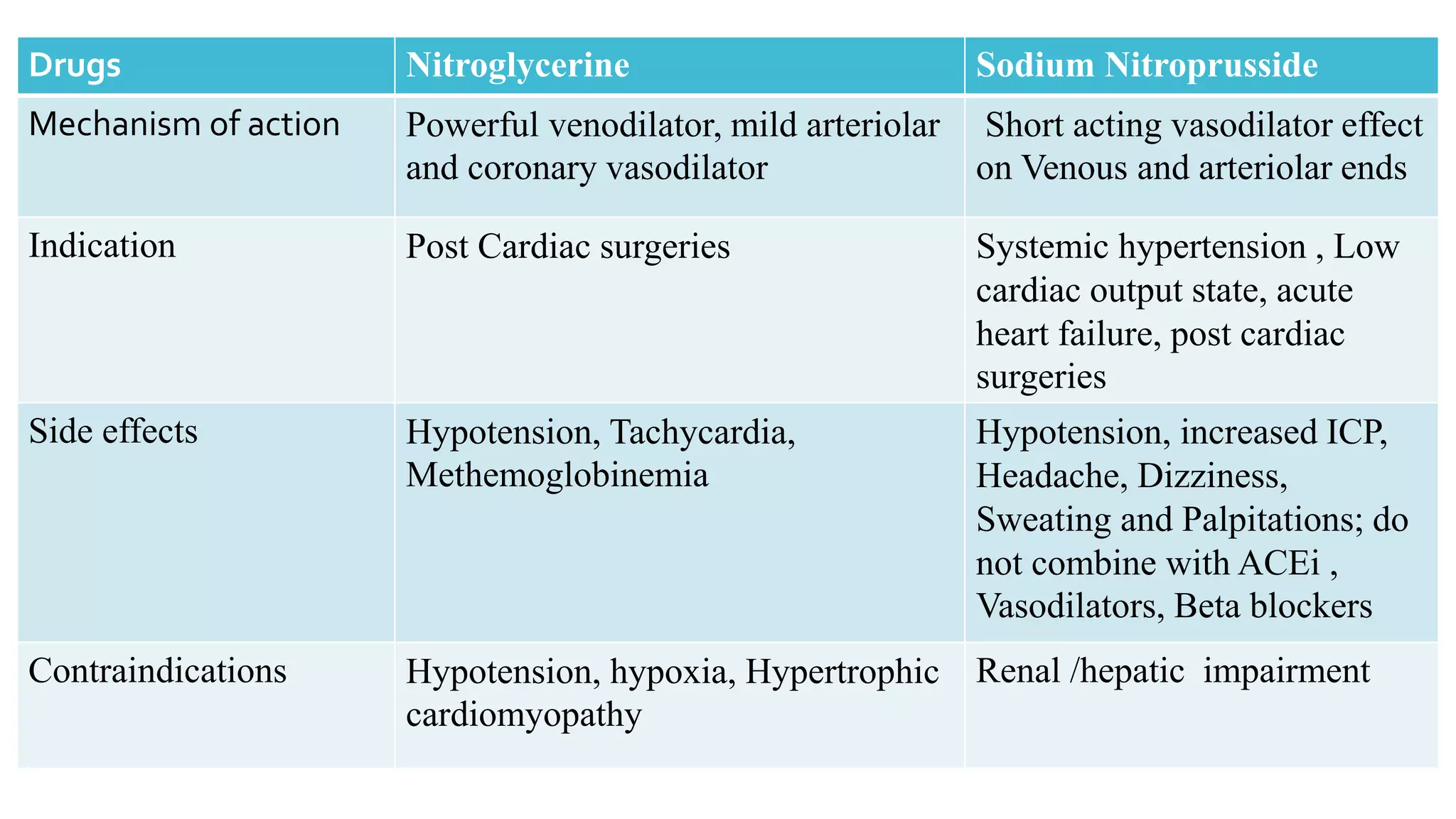
Drugs Nitroglycerine Sodium Nitroprusside
Mechanism of action Powerful venodilator, mild arteriolar
and coronary vasodilator
Short acting vasodilator effect
on Venous and arteriolar ends
Indication Post Cardiac surgeries Systemic hypertension , Low
cardiac output state, acute
heart failure, post cardiac
surgeries
Side effects Hypotension, Tachycardia,
Methemoglobinemia
Hypotension, increased ICP,
Headache, Dizziness,
Sweating and Palpitations; do
not combine with ACEi ,
Vasodilators, Beta blockers
Contraindications Hypotension, hypoxia, Hypertrophic
cardiomyopathy
Renal /hepatic impairment
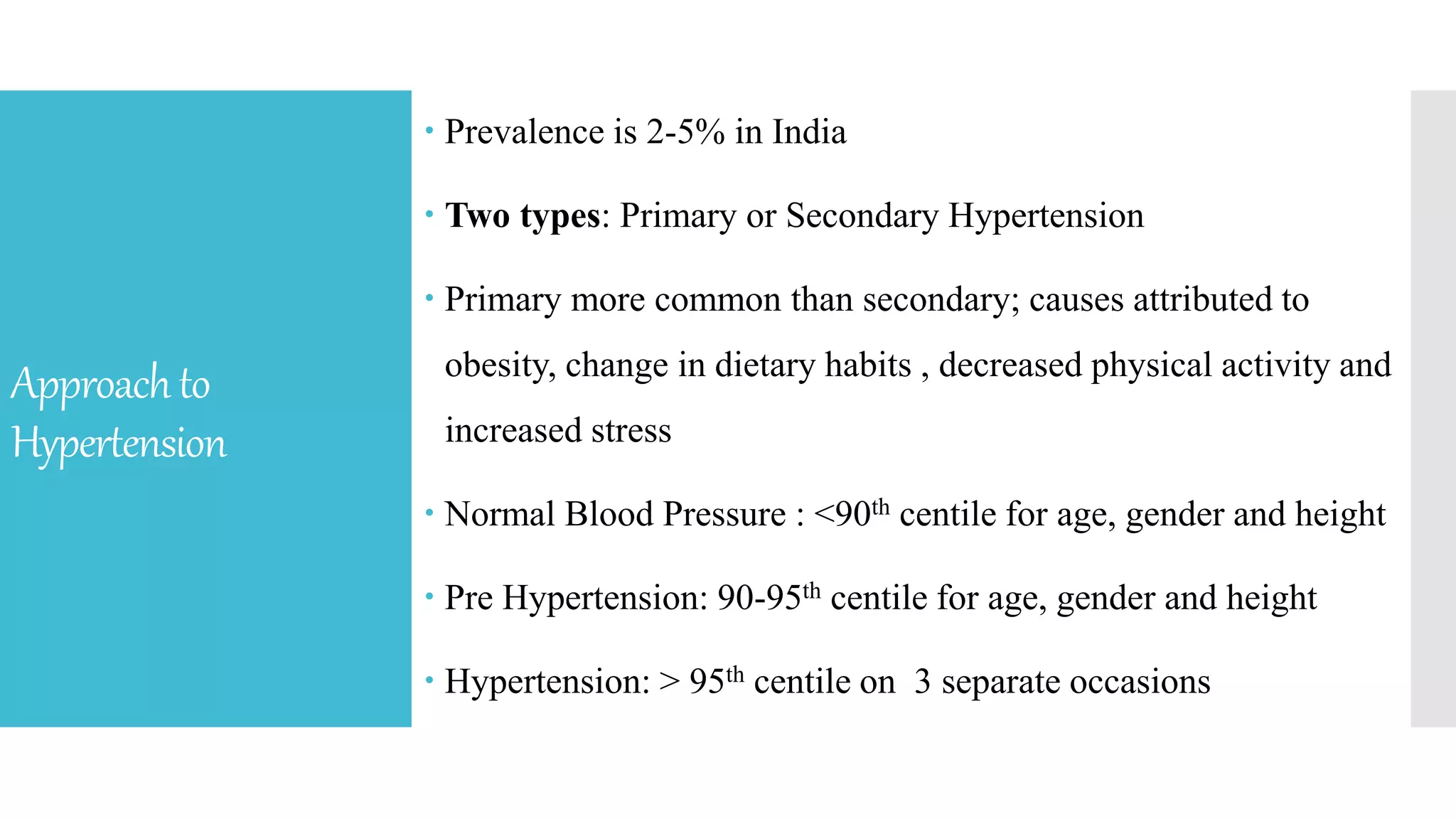
Approachto
Hypertension
 Prevalence is 2-5% in India
 Two types: Primary or Secondary Hypertension
 Primary more common than secondary; causes attributed to
obesity, change in dietary habits , decreased physical activity and
increased stress
 Normal Blood Pressure : <90th centile for age, gender and height
 Pre Hypertension: 90-95th centile for age, gender and height
 Hypertension: > 95th centile on 3 separate occasions
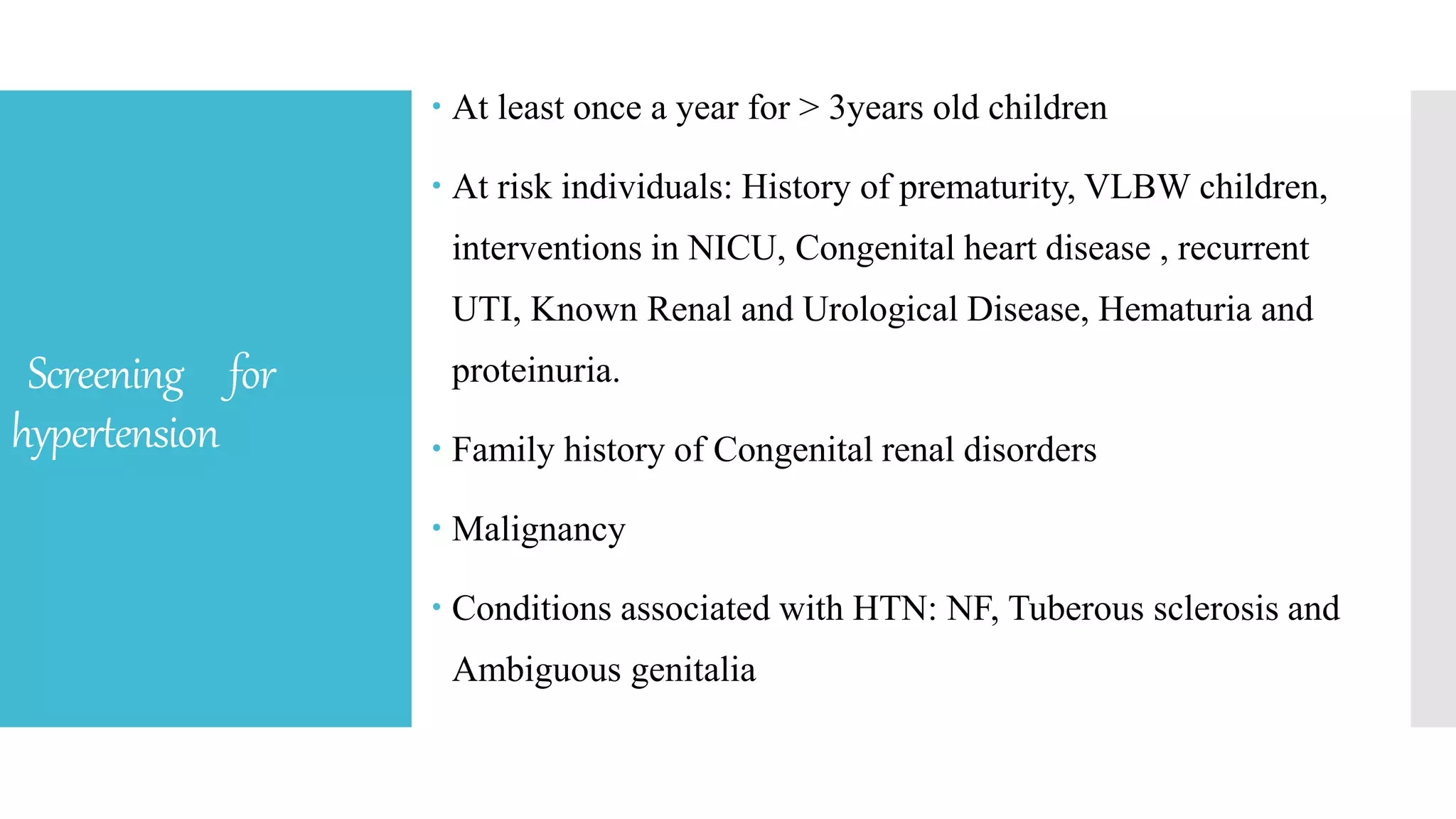
Screening for
hypertension
 At least once a year for > 3years old children
 At risk individuals: History of prematurity, VLBW children,
interventions in NICU, Congenital heart disease , recurrent
UTI, Known Renal and Urological Disease, Hematuria and
proteinuria.
 Family history of Congenital renal disorders
 Malignancy
 Conditions associated with HTN: NF, Tuberous sclerosis and
Ambiguous genitalia
Causes
Renal : Parenchymal(Chronic GN, ADPKD, Renal Dysplasia,
Obstructive uropathy) or Renovascular(Takayasu,RAS,Renal artery
thrombosis)
Infancy : Coarctation of aorta
Primary Hypertension
Rare: Endocrine origin : Pheochromocytoma, Cushing’s, CAH
Clinicalfeaturesand
complications
 Most are asymptomatic or have non specific symptoms like
irritability, FTT, feeding problems , seizures, respiratory
distress, In older children(decreased scholastic performance)
 Hypertensive emergency: HTN with end organ damage
(Hypertensive encephalopathy, IC bleed, Acute LV failure ,
Renal failure)
 Hypertensive Urgency: HTN without end organ damage
Management
 Primary Hypertension : Lifestyle modification with weight
reduction, increased physical activity and dietary changes – trial given
for 6 months
 Secondary hypertension: HTN in Children with
1) Comorbid condition (DM,CKD, Dyslipidemia)
2) Target organ damage
3) Failure of BP to decline <95th centile despite lifetstyle modification
for 6 months
Commonly used meds include ACEi, CCB, Vasodilator , BB, Thiazide diuretics
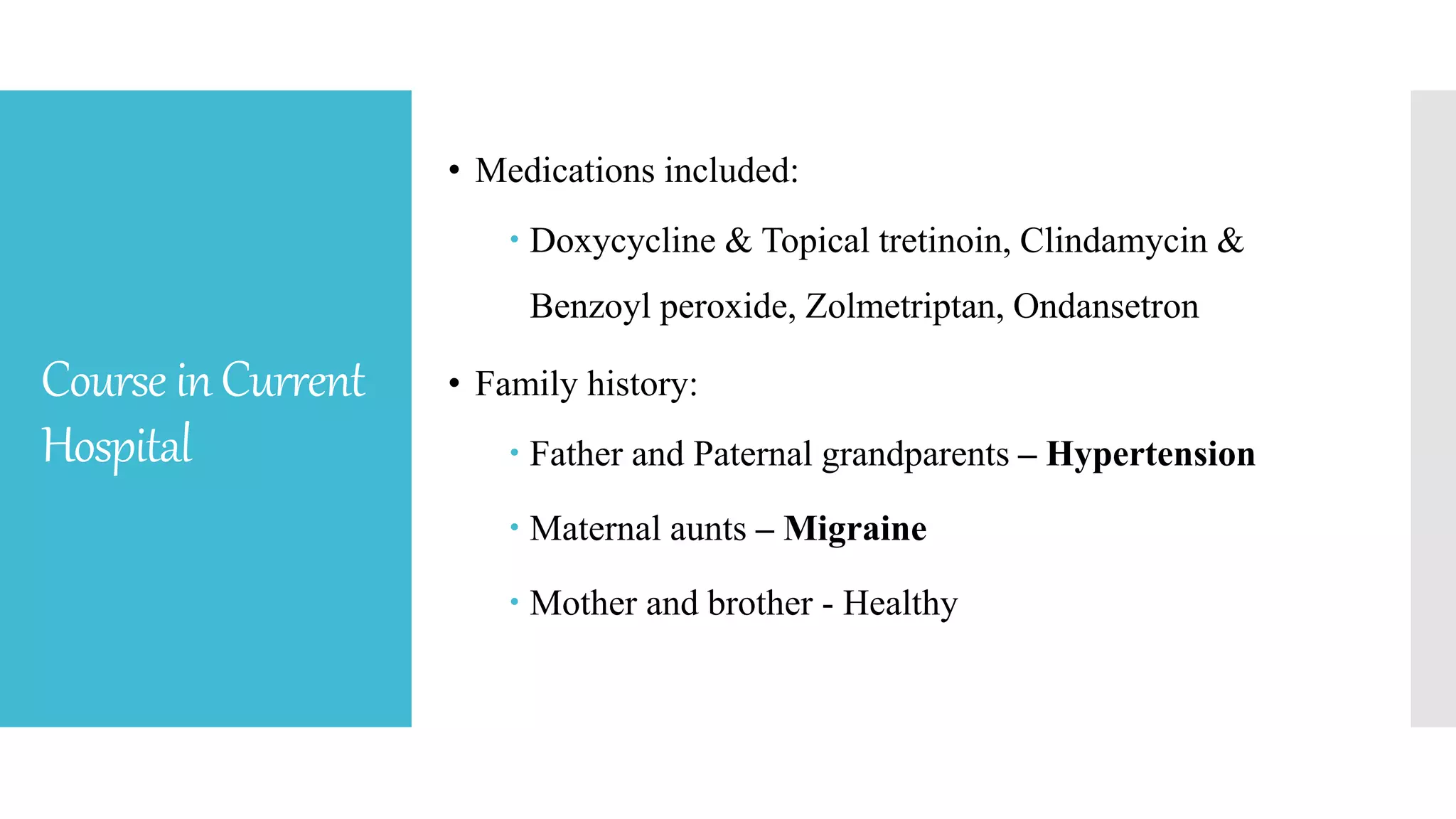
CourseinCurrent
Hospital
History reassessed:
 History of paintball few days back – No direct trauma to chest
and abdomen
 Notable history of heat intolerance and night sweats with
history of Acne
 Right upper lobe Pneumonia – 10 months prior to current
admission
 Normal growth and development, received all routine
vaccines, no drug allergies
Course inCurrent
Hospital
• Medications included:
 Doxycycline & Topical tretinoin, Clindamycin &
Benzoyl peroxide, Zolmetriptan, Ondansetron
• Family history:
 Father and Paternal grandparents – Hypertension
 Maternal aunts – Migraine
 Mother and brother - Healthy
Drugs
DRUG DOXYCYCLINE TRETINOIN ZOLMITRIPTAN ONDANSETRON
CLASS Tetracyclines Retinoids Triptans Antiemetics
MOA Inhibits protein
synthesis (30S)
Form of vitamin A 5HT1d/1b receptor
agonists
5HT3antagonist
PHARMACOKINETICS 100% absorption GIT
Excreted in Feces
T1/2 : 18-24hours
100% absorption S/c
Metabolized by MAO-A
Excreted in Urine
T1/2 : 2hours
60% absorption oral
Metabolized by CYP
enzymes, Excreted in
Feces and Urine
T1/2 : 3-5hours
USES Veneral disease(LGV,
GI, Chlamydial),
Atypical pneumonia,
Rickettsial
Acne, APL , Oral
Leukoplakia
Migraine prophylaxis Chemotherapy induced,
Drug /diseased induced
PONV
ADVERSE EFFECTS Epigastric tenderness,
Phototoxicity , Teeth
and bone discoloration
,HSR
Dryness of skin ,eye,
nose, mouth
,pruritus, epistaxis,
Musculoskeletal
symptoms
C/I:
IHD,HTN, Epilepsy,
Pregnancy
S/E: Tightness in head ,
chest, dizziness,
bradycardia, HTN (less
clinical imp)
Headache, dizziness
(common)
Bradycardia,
Hypotension ,Chest
pain and Allergies less
common
Coursein Current
Hospital
(Cont.)
 Personal history:
 Good in academics, performed well in school, No illicit
drug/substance abuse
• O/E:
 Pale, diaphoretic & tired looking
 In distress because of pain
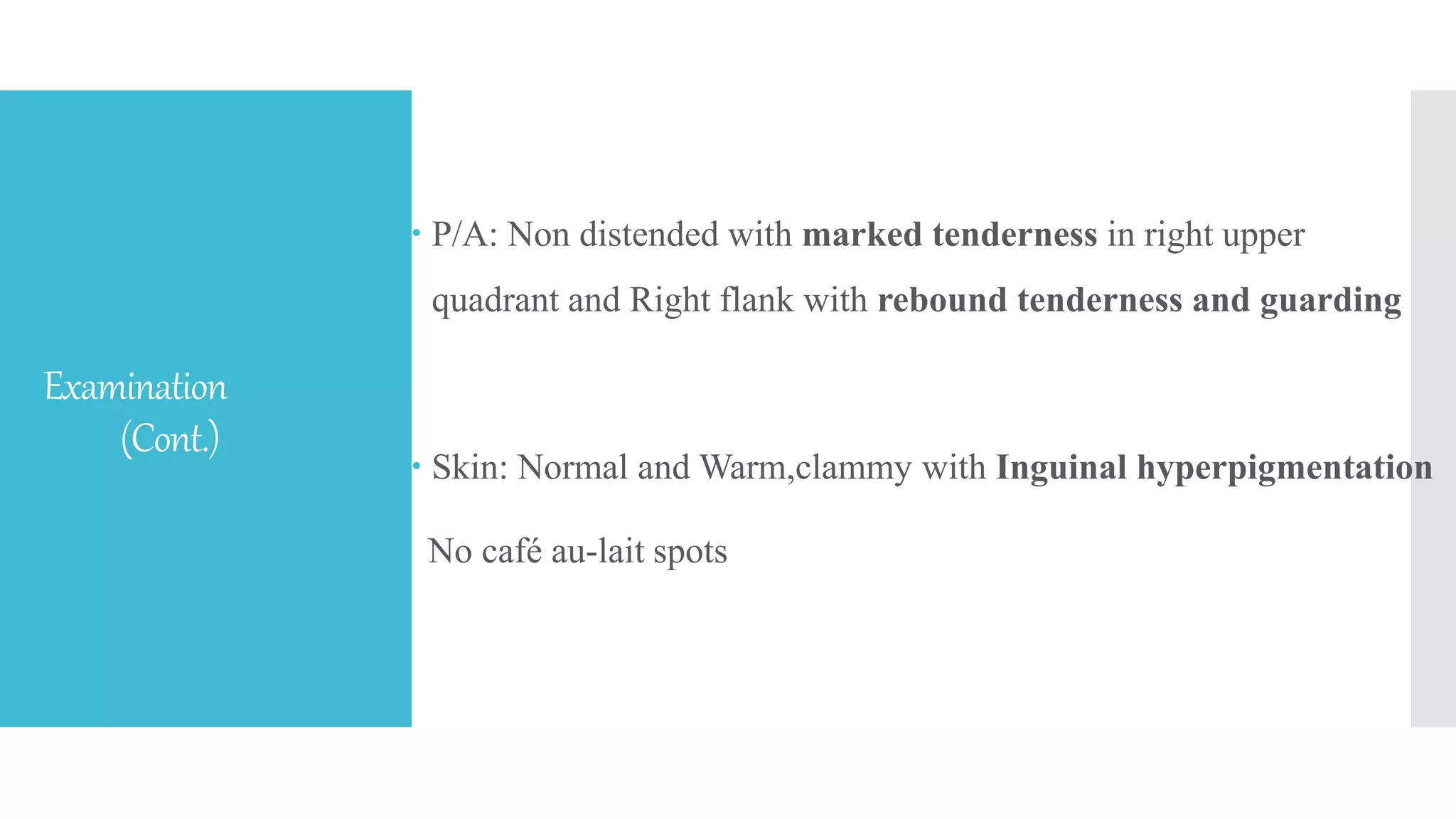
 Spoke in brief with frequent hiccups
 Normal temp – 36.6°C
 HR – 126/min (Tachycardia)
 BP – 90/44 (@5th centile)
 SpO2: 100% via nasal prongs at 4 L/min, RR: 15/min
Examination
(Cont.)
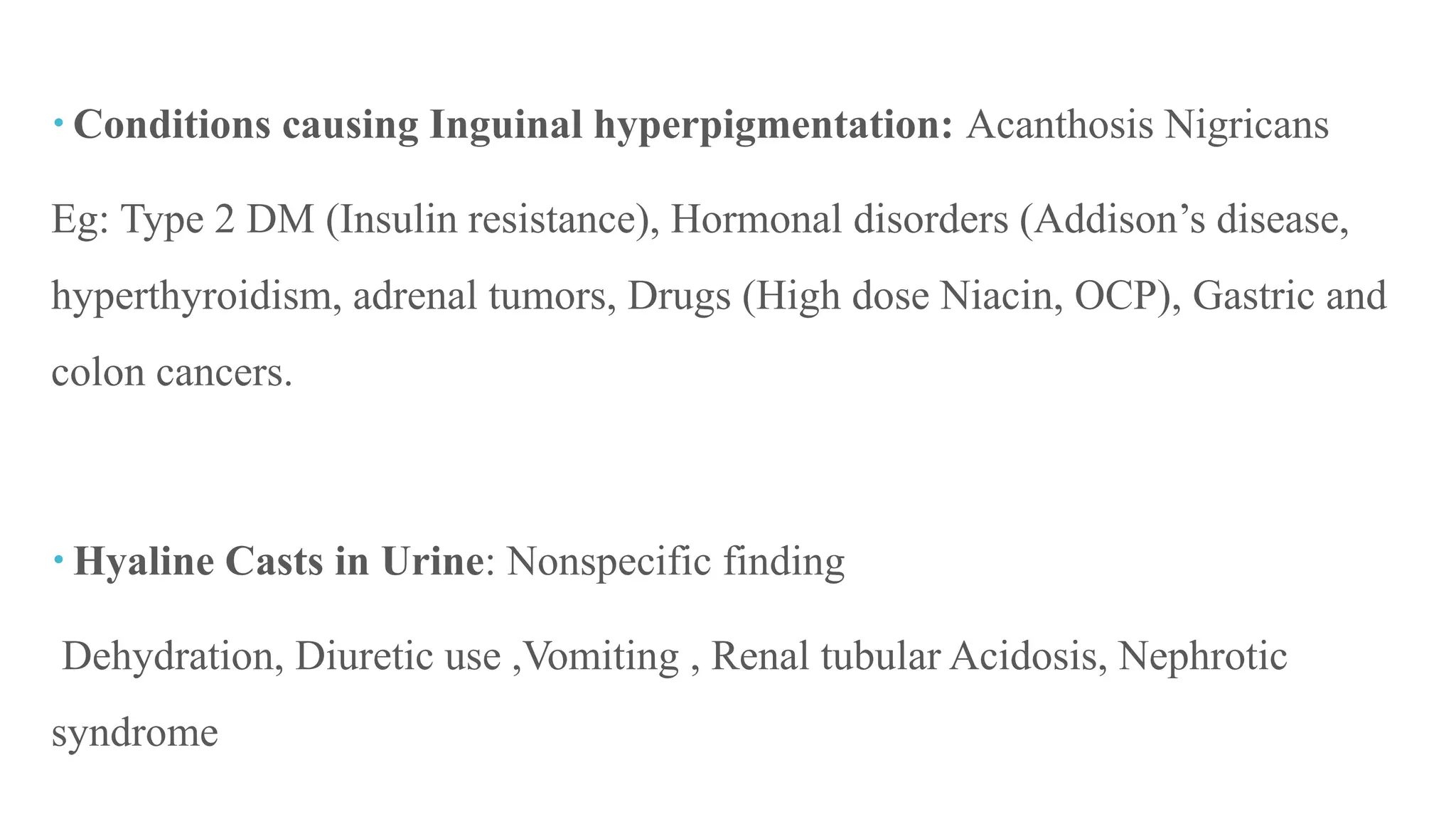
 P/A: Non distended with marked tenderness in right upper
quadrant and Right flank with rebound tenderness and guarding
 Skin: Normal and Warm,clammy with Inguinal hyperpigmentation
No café au-lait spots
 Conditions causing Inguinal hyperpigmentation: Acanthosis Nigricans
Eg: Type 2 DM (Insulin resistance), Hormonal disorders (Addison’s disease,
hyperthyroidism, adrenal tumors, Drugs (High dose Niacin, OCP), Gastric and
colon cancers.
 Hyaline Casts in Urine: Nonspecific finding
Dehydration, Diuretic use ,Vomiting , Renal tubular Acidosis, Nephrotic
syndrome
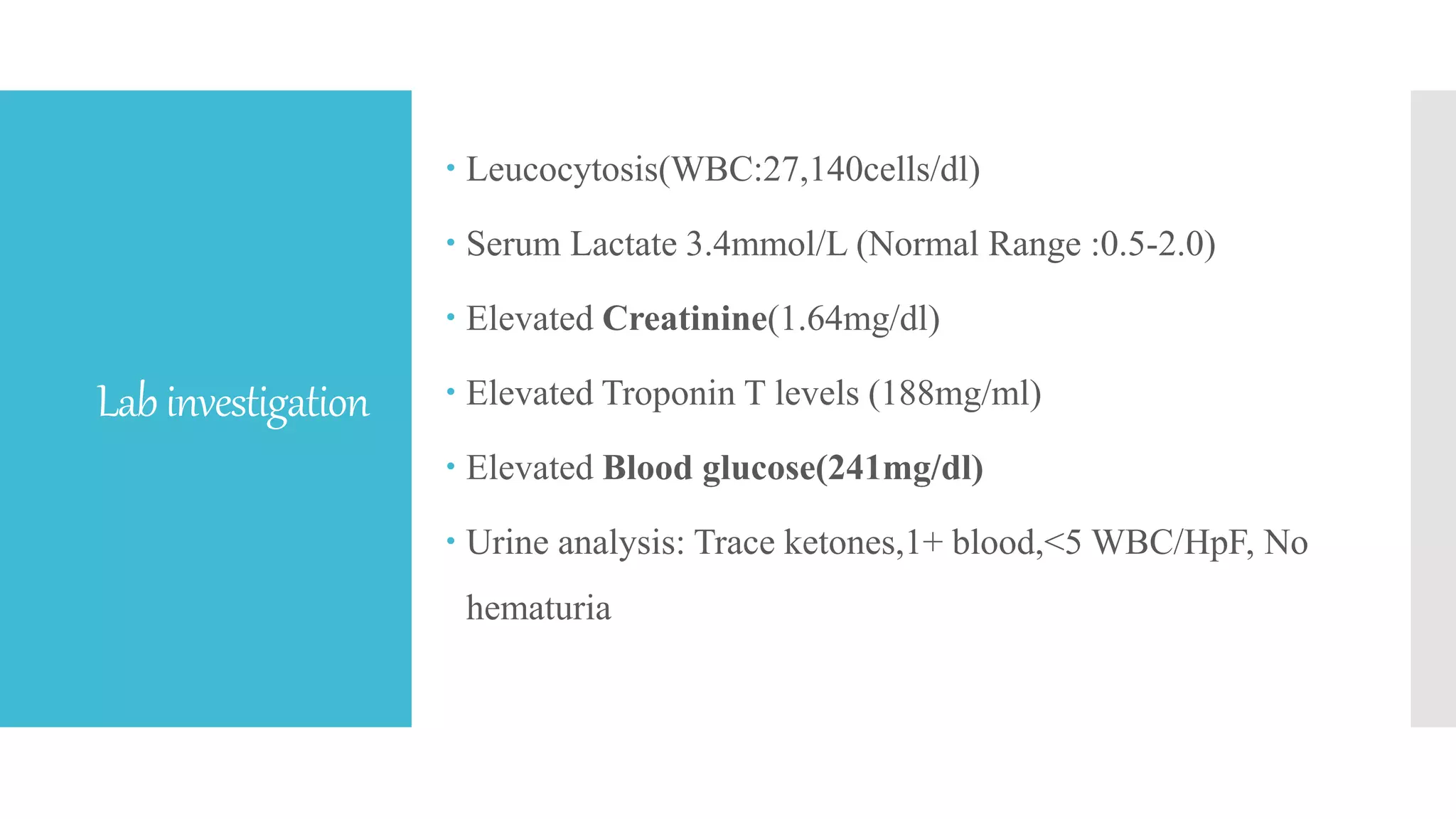
Labinvestigation
 Leucocytosis(WBC:27,140cells/dl)
 Serum Lactate 3.4mmol/L (Normal Range :0.5-2.0)
 Elevated Creatinine(1.64mg/dl)
 Elevated Troponin T levels (188mg/ml)
 Elevated Blood glucose(241mg/dl)
 Urine analysis: Trace ketones,1+ blood,<5 WBC/HpF, No
hematuria
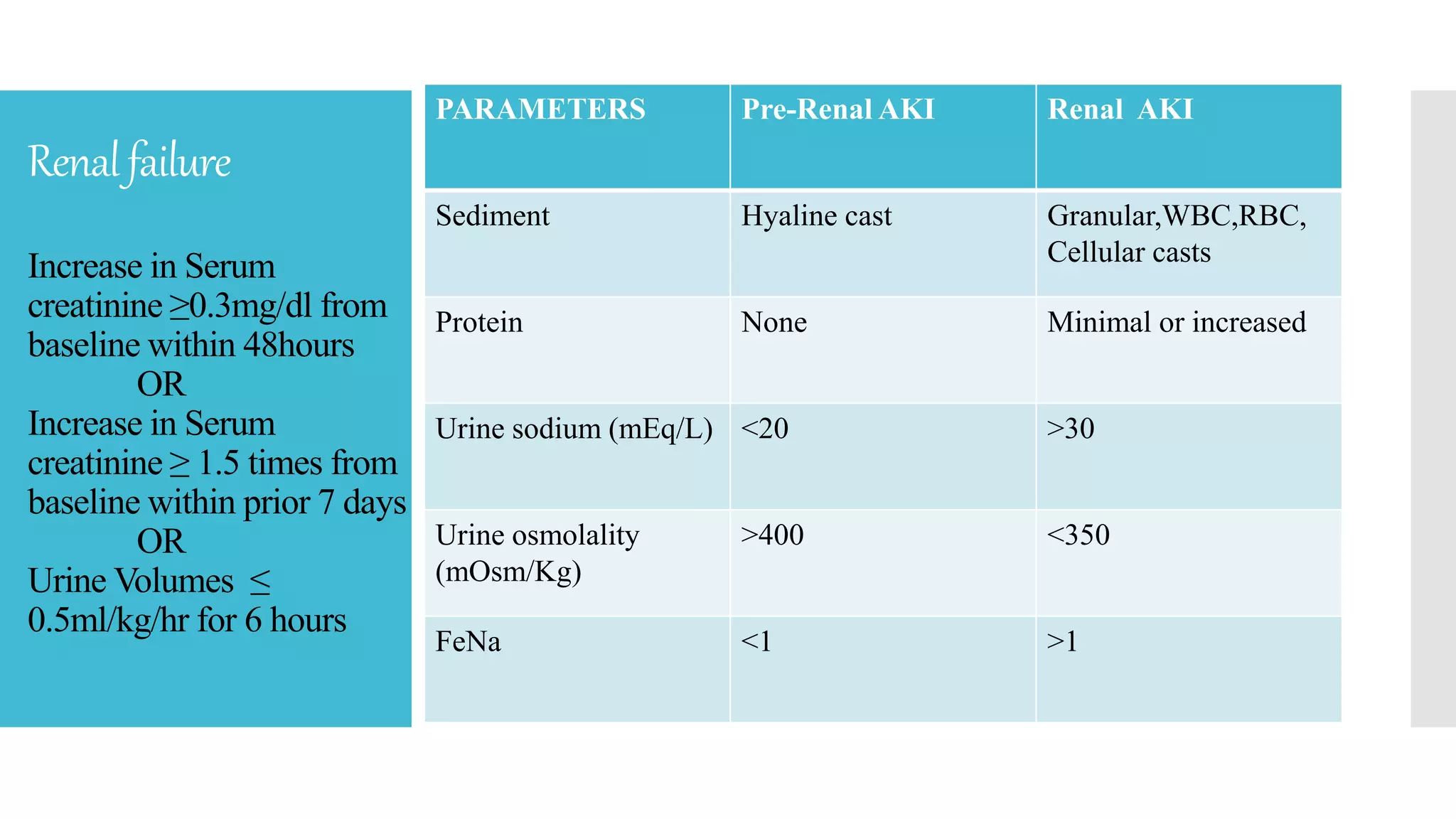
Renalfailure
Increase in Serum
creatinine ≥0.3mg/dl from
baseline within 48hours
OR
Increase in Serum
creatinine ≥ 1.5 times from
baseline within prior 7 days
OR
Urine Volumes ≤
0.5ml/kg/hr for 6 hours
PARAMETERS Pre-Renal AKI Renal AKI
Sediment Hyaline cast Granular,WBC,RBC,
Cellular casts
Protein None Minimal or increased
Urine sodium (mEq/L) <20 >30
Urine osmolality
(mOsm/Kg)
>400 <350
FeNa <1 >1
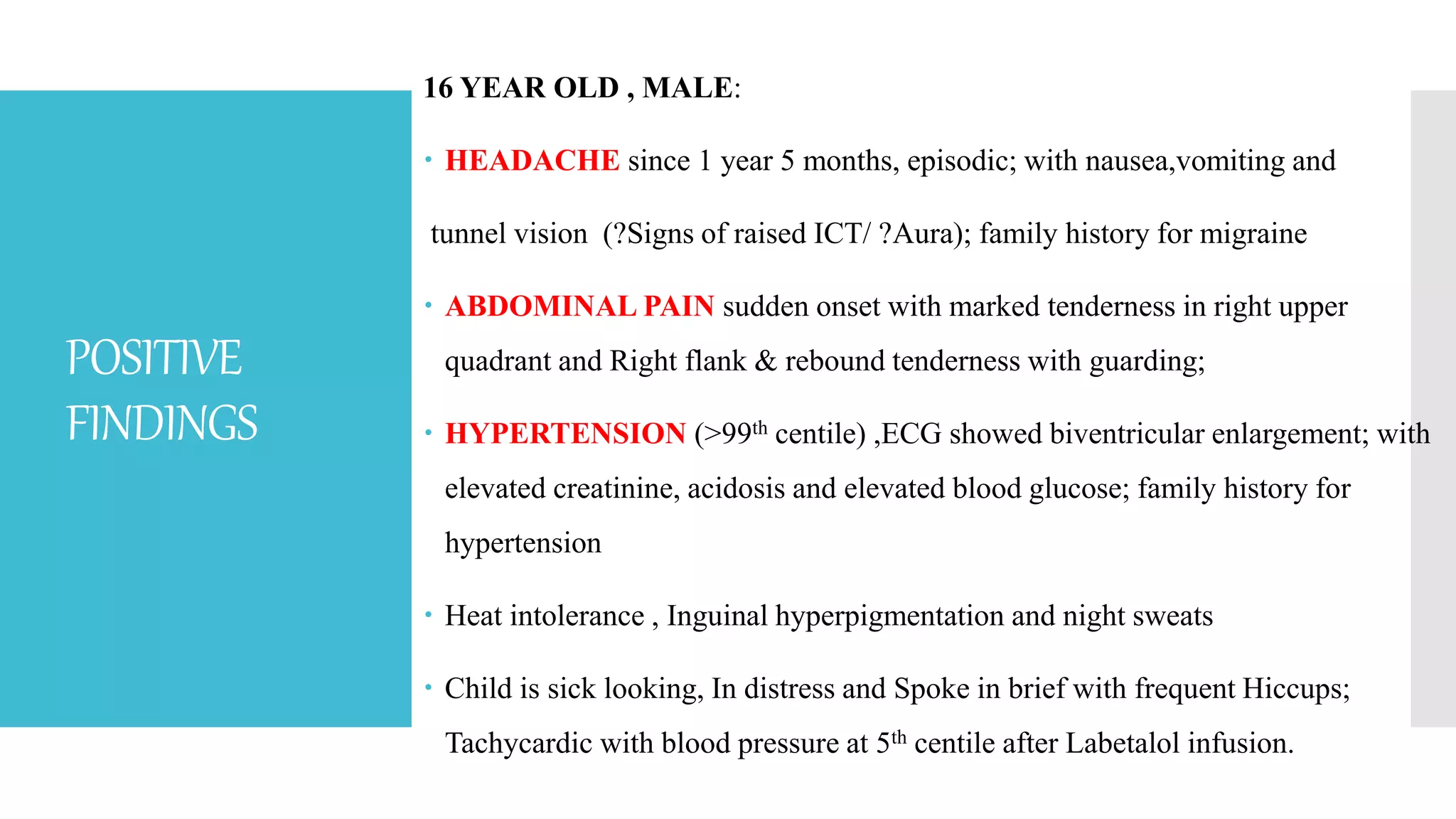
POSITIVE
FINDINGS
16 YEAR OLD , MALE:
 HEADACHE since 1 year 5 months, episodic; with nausea,vomiting and
tunnel vision (?Signs of raised ICT/ ?Aura); family history for migraine
 ABDOMINAL PAIN sudden onset with marked tenderness in right upper
quadrant and Right flank & rebound tenderness with guarding;
 HYPERTENSION (>99th centile) ,ECG showed biventricular enlargement; with
elevated creatinine, acidosis and elevated blood glucose; family history for
hypertension
 Heat intolerance , Inguinal hyperpigmentation and night sweats
 Child is sick looking, In distress and Spoke in brief with frequent Hiccups;
Tachycardic with blood pressure at 5th centile after Labetalol infusion.
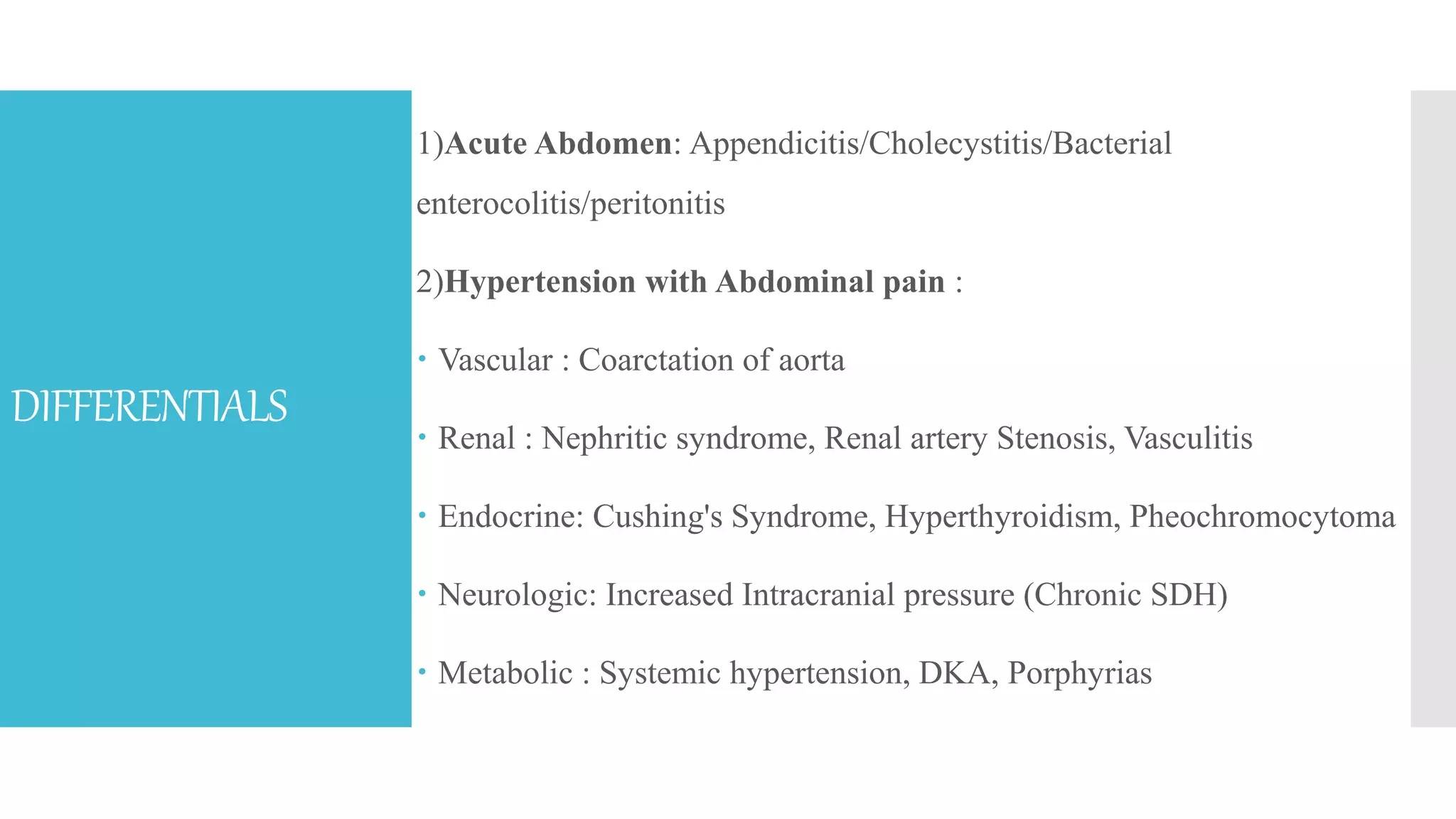
DIFFERENTIALS
1)Acute Abdomen: Appendicitis/Cholecystitis/Bacterial
enterocolitis/peritonitis
2)Hypertension with Abdominal pain :
 Vascular : Coarctation of aorta
 Renal : Nephritic syndrome, Renal artery Stenosis, Vasculitis
 Endocrine: Cushing's Syndrome, Hyperthyroidism, Pheochromocytoma
 Neurologic: Increased Intracranial pressure (Chronic SDH)
 Metabolic : Systemic hypertension, DKA, Porphyrias
FinalDiagnosis
Mixed migraine disorder with Aura
Diabetic Ketoacidosis (Hyperglycemia,Ketonuria,Acidosis)
Pheochromocytoma (Hypertension, Headache,Hyperglycemia)

Clinico pathological case discussion cpc dr jason

  • 1.
    ClinicoPathologicalCasediscussion Presenter : DrJason Dsouza Selector: Dr Lea Varghese Moderator: Dr Habib Khan
  • 2.
    ChiefComplaints 16 year old, Male: Headache since 1 year 5 months Abdominal pain since 1 day Elevated Blood pressure recordings since 1 day
  • 3.
    Howdiditallbegin?  Child wasapparently normal until 17 months prior to current admission At 14years 7months of age History of Road traffic accident  Complaints of Episodic headache and neck pain multiple episodes per week
  • 4.
    2months later…..  Trauma whileplaying soccer (Collided with other person)  Worsening of Neck pain and headache with Pain severity score – 8/10  On examination : Normal vitals, mild tenderness in trapezius  X-ray cervical spine - Normal
  • 5.
    FORTHENext15 months:  On regularfollow-up with Pediatrics and Neurology dept’s  Received multiple medications for headache (Ibuprofen, Nortryptyline, Sumatriptan, Cyclobenzaprine & Diazepam) –No Improvement of symptoms  Tried alternative therapy with Acupuncture, Physical therapy, Chiropractic, Massage therapy
  • 6.
    3monthspriorto currentadmission At 15 year9months of age  Nausea with episodes of headache; Headache worsened on lying down and on physical activity resulting in Vomiting and Tunnel vision  Intensity of pain reduced after vomiting  O/E: Tachycardia(104/min) BP: 128/80mmHg(50-90th centile)  Stopped outdoor sports on Medical advice
  • 7.
    2dayspriorto current admission: (17monthsafteronset)  Worsened headacheawoke patient from sleep;  Nausea was constant with 2 episodes of vomiting /day.  Unable to attend school due to symptoms.  O/E: Tachycardia (HR:115/min) with other vitals normal BP:120/64mmHg  (50-90th centile) General physical examination :Normal ; BMI : 27Kg/m2  OVERWEIGHT
  • 8.
    Chronology:  17 monthsback  ACUTE ONSET HEADACHE precipitated by Trauma  15 months later EPISODIC HEADACHE persisting despite various treatment  2 months later  HEADACHE with NAUSEA, VOMITING and TUNNEL VISION (?Signs of raised ICT/ ?Aura)
  • 9.
    Diagnosedas…. Mixed migraine andTension Type Headache Discharged with Prednisolone(Not taken), Zlometriptan & Ondansetron
  • 10.
    HEADACHE  TYPES:  PRIMARYHEADACHE: TTH, Migraine, TAC  SECONDARY HEADACHE: Infection (intracranial & extracranial), tumor, Intracranial hemorrhage, Vascular disorder, Post Traumatic headache
  • 11.
    4patterns of headache  Acute:Single episode of pain without history of such episode  Acute Recurrent: Recurrent attacks of pain separated by symptom free intervals  Chronic Progressive: Gradual increase in frequency and severity of headache  Chronic non progressive or Chronic Daily: Frequent/constant Headache (> 4months h/o > 15 headaches/mo, with headache lasting > 4 hr)
  • 12.
    CATEGORY COMMON CAUSESLESS COMMON RARE CAUSES INTRACRANIAL -Infections: Meningitis, Meningoencephalitis, Brain Abscess. -Vascular causes: Migraine Tumors Head Trauma Hemorrhage (Hypertension, AV malformations) Pseudotumor Cerebri EXTRACRANIAL -Tension Headache -Systemic Infections: Eg: Malaria -Viral Infections Eg: Varicella -Localized Infections: Eg: Sinusitis, dental abscess, Mastoiditis Hypertension Refractive errors Causes of Headache
  • 13.
  • 14.
    Headache Recent onset/first episode Associated Features Eg:Fever,URI,Trauma Next slide No associated features Analgesics and Observe Recurrences present (Be alert for Red Flag signs) Long standing(weeks to months ) Recurrent Elicit Criteria for migraine MIGRAINE Near Continuous -Sinusitis -Alert for Red flag signs -Record Blood pressures -Refractory error IMAGING SOS
  • 15.
    Investigate source ofinfection; be vigilant for intracranial infective focus Fever, Abnormal neurological evaluation YES NO TTH, Cluster Headache, Substance abuse, Hypoxia, Hypercarbia, hypertension crisis Altered mental status & Meningeal signs Meningitis, SAH Vasculitis Encephalitis Encephalitis, Viral / Bacterial Illness Meningismus Abscess(Tonsillar/Retropharyngeal) Sinusitis Dental Abscess Other Infection (ENT/Cranial) NO YES PERFORM LP Abnormal Normal
  • 16.
    RedFlagsignsofheadache a) Short history(‘First’ or ‘worst’) or recent recurrent severe headache for few weeks b) Accelerated course, change in character over weeks or days c) Headache suggesting raised ICT (Early morning headache, vomiting in morning, pain disturbing sleep, headache worse with cough or Valsalva) Continued……
  • 17.
    RedFlagsignsofheadache d) Associated symptomsof personality changes, weakness, visual disturbances, confusion, focal weakness, seizures or fever e) Underlying history of neurocutaneous syndrome, history of systemic illnesses (eg. known malignancy with possible metastases, hypercoagulopathy) f) Young age of child (< 3 years old)
  • 18.
    Tensiontype Headache  15% ofolder children, 8-12 years of age (most frequent)  Typical pattern is that patients awaken feeling well, with throbbing pain beginning gradually and escalating throughout the day; Relieved on rest  TTH are classified as either episodic or chronic.  Normal neurologic and physical findings, except for possible scalp tenderness; Sleep disturbances, school absence and chronic analgesic use are common.
  • 19.
    Migraine  Migraine with/withoutaura: Periodic episodes of headache Pulsating quality Photophobia Phonophobia Nausea, vomiting Relieved by sleep Family history present  Compared to Adults: Shorter duration (1-48hours), bilateral(bifrontal)
  • 20.
    IntracranialSpace occupyinglesion  Second mostcommon cause of childhood malignancy  Mechanism: Obstruction to CSF flow (Hydrocephalus)/ Direct Traction on vascular or Dural structures  Symptoms: Late night / early morning headache (Progressive) Vomiting (Projectile) Poor academic performance Weakness Visual disturbances Personality / Behavioural changes Papilledema Ataxia/ Movement disorders  Physical examination abnormal findings, Papilledema & neurologic deficits
  • 21.
    SUPRATENTORIAL INFRATENTORIAL Behavioral changesPresents with signs of raised ICT : Vomiting, headache, Tunnel vision Focal seizures/deficits Imbalance /Swaying Poor scholastic performance Hydrocephalus due to obstruction to flow of CSF
  • 22.
  • 23.
    Ondayof admission:  Sudden onsetPain abdomen, on right side, Severe in nature; Awoke the patient from sleep  Headache, Nausea and Neck pain was constant  O/E(@ ED) : Tachycardia (160/min) BP-239/162mmHg (>99thcentile) SpO2: 100% via nasal prongs at 4 L/min RR: 18/min
  • 24.
    INVESTIGATIONS  ECG: Sinustachycardia with increased R and S wave amplitudes One hour later  Repeat ECG: Ectopic atrial Rhythm, with frequent premature ventricular contractions(HR:66/min)
  • 25.
    Labinvestigation: Leucocytosis (WBC:22,380cells/dl), Lactic acid:24mg/dl (Normal:5-20mg/dl) Creatinine: 1.3mg/dl (Normal:0.6-1.3mg/dl)  USG abdomen & ECHO: No information
  • 26.
    Management:  Started onIV hydromorphone(opiod), Morphine, ondansetron, metoclopramide and Lactated Ringers lactate  Nitroglycerin infusion started SBP decreased to 143mmHg Infusion stopped SBP increased to 212mmHg  IV Labetalol infusion started SBP decreased to 92mmHg  Esmolol infusion started and was transferred to current hospital PICU for further care.  Esmolol infusion stopped (within 3 hours of presentation to current hospital)
  • 27.
    Drugs Nitroglycerine SodiumNitroprusside Mechanism of action Powerful venodilator, mild arteriolar and coronary vasodilator Short acting vasodilator effect on Venous and arteriolar ends Indication Post Cardiac surgeries Systemic hypertension , Low cardiac output state, acute heart failure, post cardiac surgeries Side effects Hypotension, Tachycardia, Methemoglobinemia Hypotension, increased ICP, Headache, Dizziness, Sweating and Palpitations; do not combine with ACEi , Vasodilators, Beta blockers Contraindications Hypotension, hypoxia, Hypertrophic cardiomyopathy Renal /hepatic impairment
  • 28.
    Approachto Hypertension  Prevalence is2-5% in India  Two types: Primary or Secondary Hypertension  Primary more common than secondary; causes attributed to obesity, change in dietary habits , decreased physical activity and increased stress  Normal Blood Pressure : <90th centile for age, gender and height  Pre Hypertension: 90-95th centile for age, gender and height  Hypertension: > 95th centile on 3 separate occasions
  • 29.
    Screening for hypertension  Atleast once a year for > 3years old children  At risk individuals: History of prematurity, VLBW children, interventions in NICU, Congenital heart disease , recurrent UTI, Known Renal and Urological Disease, Hematuria and proteinuria.  Family history of Congenital renal disorders  Malignancy  Conditions associated with HTN: NF, Tuberous sclerosis and Ambiguous genitalia
  • 30.
    Causes Renal : Parenchymal(ChronicGN, ADPKD, Renal Dysplasia, Obstructive uropathy) or Renovascular(Takayasu,RAS,Renal artery thrombosis) Infancy : Coarctation of aorta Primary Hypertension Rare: Endocrine origin : Pheochromocytoma, Cushing’s, CAH
  • 31.
    Clinicalfeaturesand complications  Most areasymptomatic or have non specific symptoms like irritability, FTT, feeding problems , seizures, respiratory distress, In older children(decreased scholastic performance)  Hypertensive emergency: HTN with end organ damage (Hypertensive encephalopathy, IC bleed, Acute LV failure , Renal failure)  Hypertensive Urgency: HTN without end organ damage
  • 32.
    Management  Primary Hypertension: Lifestyle modification with weight reduction, increased physical activity and dietary changes – trial given for 6 months  Secondary hypertension: HTN in Children with 1) Comorbid condition (DM,CKD, Dyslipidemia) 2) Target organ damage 3) Failure of BP to decline <95th centile despite lifetstyle modification for 6 months Commonly used meds include ACEi, CCB, Vasodilator , BB, Thiazide diuretics
  • 33.
    CourseinCurrent Hospital History reassessed:  Historyof paintball few days back – No direct trauma to chest and abdomen  Notable history of heat intolerance and night sweats with history of Acne  Right upper lobe Pneumonia – 10 months prior to current admission  Normal growth and development, received all routine vaccines, no drug allergies
  • 34.
    Course inCurrent Hospital • Medicationsincluded:  Doxycycline & Topical tretinoin, Clindamycin & Benzoyl peroxide, Zolmetriptan, Ondansetron • Family history:  Father and Paternal grandparents – Hypertension  Maternal aunts – Migraine  Mother and brother - Healthy
  • 35.
    Drugs DRUG DOXYCYCLINE TRETINOINZOLMITRIPTAN ONDANSETRON CLASS Tetracyclines Retinoids Triptans Antiemetics MOA Inhibits protein synthesis (30S) Form of vitamin A 5HT1d/1b receptor agonists 5HT3antagonist PHARMACOKINETICS 100% absorption GIT Excreted in Feces T1/2 : 18-24hours 100% absorption S/c Metabolized by MAO-A Excreted in Urine T1/2 : 2hours 60% absorption oral Metabolized by CYP enzymes, Excreted in Feces and Urine T1/2 : 3-5hours USES Veneral disease(LGV, GI, Chlamydial), Atypical pneumonia, Rickettsial Acne, APL , Oral Leukoplakia Migraine prophylaxis Chemotherapy induced, Drug /diseased induced PONV ADVERSE EFFECTS Epigastric tenderness, Phototoxicity , Teeth and bone discoloration ,HSR Dryness of skin ,eye, nose, mouth ,pruritus, epistaxis, Musculoskeletal symptoms C/I: IHD,HTN, Epilepsy, Pregnancy S/E: Tightness in head , chest, dizziness, bradycardia, HTN (less clinical imp) Headache, dizziness (common) Bradycardia, Hypotension ,Chest pain and Allergies less common
  • 36.
    Coursein Current Hospital (Cont.)  Personalhistory:  Good in academics, performed well in school, No illicit drug/substance abuse • O/E:  Pale, diaphoretic & tired looking  In distress because of pain  Spoke in brief with frequent hiccups  Normal temp – 36.6°C  HR – 126/min (Tachycardia)  BP – 90/44 (@5th centile)  SpO2: 100% via nasal prongs at 4 L/min, RR: 15/min
  • 37.
    Examination (Cont.)  P/A: Nondistended with marked tenderness in right upper quadrant and Right flank with rebound tenderness and guarding  Skin: Normal and Warm,clammy with Inguinal hyperpigmentation No café au-lait spots
  • 38.
     Conditions causingInguinal hyperpigmentation: Acanthosis Nigricans Eg: Type 2 DM (Insulin resistance), Hormonal disorders (Addison’s disease, hyperthyroidism, adrenal tumors, Drugs (High dose Niacin, OCP), Gastric and colon cancers.  Hyaline Casts in Urine: Nonspecific finding Dehydration, Diuretic use ,Vomiting , Renal tubular Acidosis, Nephrotic syndrome
  • 39.
    Labinvestigation  Leucocytosis(WBC:27,140cells/dl)  SerumLactate 3.4mmol/L (Normal Range :0.5-2.0)  Elevated Creatinine(1.64mg/dl)  Elevated Troponin T levels (188mg/ml)  Elevated Blood glucose(241mg/dl)  Urine analysis: Trace ketones,1+ blood,<5 WBC/HpF, No hematuria
  • 40.
    Renalfailure Increase in Serum creatinine≥0.3mg/dl from baseline within 48hours OR Increase in Serum creatinine ≥ 1.5 times from baseline within prior 7 days OR Urine Volumes ≤ 0.5ml/kg/hr for 6 hours PARAMETERS Pre-Renal AKI Renal AKI Sediment Hyaline cast Granular,WBC,RBC, Cellular casts Protein None Minimal or increased Urine sodium (mEq/L) <20 >30 Urine osmolality (mOsm/Kg) >400 <350 FeNa <1 >1
  • 41.
    POSITIVE FINDINGS 16 YEAR OLD, MALE:  HEADACHE since 1 year 5 months, episodic; with nausea,vomiting and tunnel vision (?Signs of raised ICT/ ?Aura); family history for migraine  ABDOMINAL PAIN sudden onset with marked tenderness in right upper quadrant and Right flank & rebound tenderness with guarding;  HYPERTENSION (>99th centile) ,ECG showed biventricular enlargement; with elevated creatinine, acidosis and elevated blood glucose; family history for hypertension  Heat intolerance , Inguinal hyperpigmentation and night sweats  Child is sick looking, In distress and Spoke in brief with frequent Hiccups; Tachycardic with blood pressure at 5th centile after Labetalol infusion.
  • 42.
    DIFFERENTIALS 1)Acute Abdomen: Appendicitis/Cholecystitis/Bacterial enterocolitis/peritonitis 2)Hypertensionwith Abdominal pain :  Vascular : Coarctation of aorta  Renal : Nephritic syndrome, Renal artery Stenosis, Vasculitis  Endocrine: Cushing's Syndrome, Hyperthyroidism, Pheochromocytoma  Neurologic: Increased Intracranial pressure (Chronic SDH)  Metabolic : Systemic hypertension, DKA, Porphyrias
  • 43.
    FinalDiagnosis Mixed migraine disorderwith Aura Diabetic Ketoacidosis (Hyperglycemia,Ketonuria,Acidosis) Pheochromocytoma (Hypertension, Headache,Hyperglycemia)

Editor's Notes

  • #9 Trauma is known to cause primary headache both acute onset and persistent headache
  • #11 There are 3 categories of primary headaches: tension-type headache,migraine headache, and the trigeminal autonomic cephalgias. Primary headache more common; less dangerous and benign TTH and migraine are the most common headache types in children and adolescents
  • #12 Acute: often described as first and worst type, in adults SAH but in children often due to febrile illness like URTI (but causes like hemorrhage meningitis ,tumor must also be considered) Acute Recurrent : primary headaches like TTH,Migraine included here, Occasionally can be attributed to epilepsy syndromes,substance abuse and recent trauma Chronic progressive: occurs with incrasing ICT, Eg: Brain tumors,Chronic meningitis, brain abscess ,hydrocephalus etc Chronic Non progressive: Normal neurologic examination,psychologic and anxiety factors common
  • #13 Headache in infancy may often present as Irritability or head banging
  • #15 Migraine without Aura A. At least 5 attacks fulfilling criteria B-D B. Headache attacks lasting 4-72 hr (untreated or unsuccessfully treated) C. Headache has at least 2 of the following 4 characteristics: 1. Unilateral location 2. Pulsating quality 3. Moderate or severe pain intensity 4. Aggravation by or causing avoidance of routine physical activity (e.g., walking or climbing stairs) D. During headache at least 1 of the following: 1. Nausea and/or vomiting 2. Photophobia and phonophobia E. Not better accounted for by another ICHD-3 diagnosis A. At least 2 attacks fulfilling criteria B and C B. Aura consisting of visual, sensory, and/or speech/language symptoms, each fully reversible, but no motor, brainstem, or retinal symptoms C. At least 2 of the following 4 characteristics: 1. At least 1 aura symptom spreads gradually over 5 or more min, and/ or 2 or more symptoms occur in succession 2. Each individual aura symptom lasts 5-60 min 3. At least 1 aura symptom is unilateral 4. The aura is accompanied, or followed within 60 min, by headache D. Not better accounted for by another ICHD-3 diagnosis, and transient ischemic attack has been excluded
  • #17 Ref: Pediatric migraine - American academy of Pediatrics 2012
  • #19 Prevalencce increases with age Both episodic and chronic TTH are further classified as having associated pericranial tenderness or as lacking such tenderness Episodic tension-type headache is categorized as either infrequent or frequent. Infrequent episodic TTH is defined as 10 or more episodes total, occurring less than once per month on average.Frequent episodic TTH is defined as 10 or more episodes total, occurring on 1-14 days per month on average for over 3 months. Chronic tension-type headaches are defined as headaches occurring at least 15 days a month for over 3 months, with features otherwise similar to episodic TTH Ref: Fenichels clinical neurology
  • #22 Clinical feature sof ICSOl can be easily remembered by the following subdivision
  • #23 After evaluating our current symptom I came to a conclusion that headache could be due to MMD or part of Raised IC or part of aura Nausea, slow growing
  • #25 ECG shows biventricular enlargement –Xray and 2dECHO
  • #31 Evaluation and management : Careful history and physical examination to look for underlying etiology Examples: Renal/ Renovascular : facial puffiness, edema, abdominal pain, dysuria, H/o UTI , Abdominal mass, Hematuria etc Coarctation of aorta : Assymetric pulses, abdominal/neck Bruit Connective tissue disorders: Arthritis, arthralgia, rash Endocrine: Muscle weakness, flushing, sweating, fever, palpitations, tachycardia, Polyuria/Polydipsia, abdominal mass, ambiguous genitalia Drug induced/substance abuse
  • #32 While Hypertensive emergencies require reduction of BP within hours while the same can be achieved over 2-3 days in patients with HTN urgency
  • #33 Nifedipine and Amlodipine are effective CCB in children Captoprila (young infanst ), beyond infancy enalapril is prefferd Cardioselective bb like atenolol and metoprolol is used .. Labetalol which is alph and beta blocker used in patienst who are refractory to other medication
  • #41 Since this child had elevated creat hence I would like to add a note on aki
  • #43 Aortic Coarctation : no mention about upper and lower limb BP variations ,bruits Renal Causes: generally present as chronic HTN, edema, hematuria dysuria, UTI Vasculitis: No weight loss, fever ,myalgias ,Hematuria Chronic post traumatic headache (SDH): but no mention on dizziness, fatigue, LOC, Irritability Cushing syndrome: weight gain , htn causing headache, no other symptoms like ecchymosis, purple striae, buffalo hump mentioned Hyperthyroidism: HTn,Heat intoleranace,night sweats ,headache---this was overweight,good school performance Pheochromocytoma : Htn,Headache,Hypermetabolism,Hyperglycemia and possible hyperhidrosis Porphyrias: htn,tachycardia with cns effectslike insomnia , agitation, skin pigmentation