Approach to the vomiting
child
EDWARD GIL LONDOÑO
HEALTH FOR CHILDREN AND TEENAGERS
UCEVA
CLINICAL HISTORY
The physiology of vomiting is complex and
without a thorough appreciation of the pathways
involved, clinicians can get confused.
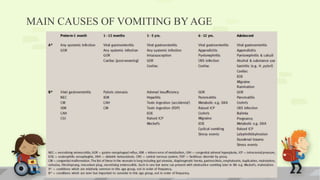
A huge number of conditions can result in
vomiting, the frequency of each changes with age
and knowledge of this can be used to ensure that
the clinical history is focused.
BIOCHEMICAL CONSEQUENCES OF VOMITING
volume depletion and dehydration due to water loss.
Disruption of normal acid-base homeostasis beyond the capacity of the kidney to
compensate can quickly result in metabolic derangements.
Net loss of predominately hydrogen ions (H + ) and chloride ions (Cl -) in gastric contents
usually results in hypochloremic metabolic alkalosis together with hypokalaemia due to
renal compensation for the H(+) Loss
The presence of a metabolic acidosis uggests that vomiting may be the result of an
underlying metabolic condition such as diabetic ketoacidosis.
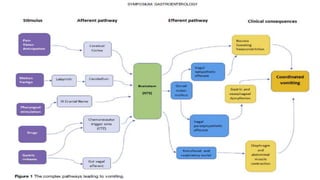
mechanism of vomiting:
Vomiting involves the expulsion of
ingested material, usually gastric
contents, via the mouth.
The process is far from simple
reversal of normal gut peristalsis.
There are many triggers, central
neural processes and complex
coordinated muscle group actions
which result in vomiting with
associated autonomic prodromal
symptoms
The complex interrelationship
between the central nervous
system (CNS) and the enteric
nervous system in controlling gut
motility acts overlap of neural
networks in the brain stem for
swallowing, respiration, vomiting
and other functions.
The chemoreceptor trigger zone
(CTZ) in the medulla is
responsible for monitoring the
bloodstream and the
cerebrospinal fluid for foreign
toxins including prescribed drugs
which are often emetogenic
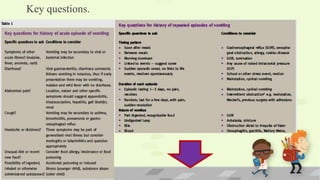
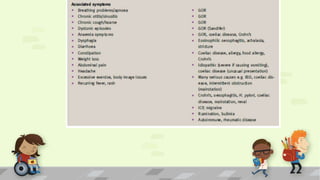
MAIN CAUSES OF VOMITING BY AGE
Key questions.
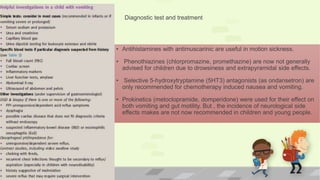
• Antihistamines with antimuscarinic are useful in motion sickness.
• Phenothiazines (chlorpromazine, promethazine) are now not generally
advised for children due to drowsiness and extrapyramidal side effects.
• Selective 5-hydroxytryptamine (5HT3) antagonists (as ondansetron) are
only recommended for chemotherapy induced nausea and vomiting.
• Prokinetics (metoclopramide, domperidone) were used for their effect on
both vomiting and gut motility. But , the incidence of neurological side
effects makes are not now recommended in children and young people.
Diagnostic test and treatment
https://www.paediatricsandchildhealthjournal.co.uk/article/S1751-7222(18)30186-0/pdf
REFERENCES
THANK YOU FOR PAY ATTENTION

Approach to the vomiting child

  • 1.
    Approach to thevomiting child EDWARD GIL LONDOÑO HEALTH FOR CHILDREN AND TEENAGERS UCEVA
  • 2.
    CLINICAL HISTORY The physiologyof vomiting is complex and without a thorough appreciation of the pathways involved, clinicians can get confused. A huge number of conditions can result in vomiting, the frequency of each changes with age and knowledge of this can be used to ensure that the clinical history is focused.
  • 3.
    BIOCHEMICAL CONSEQUENCES OFVOMITING volume depletion and dehydration due to water loss. Disruption of normal acid-base homeostasis beyond the capacity of the kidney to compensate can quickly result in metabolic derangements. Net loss of predominately hydrogen ions (H + ) and chloride ions (Cl -) in gastric contents usually results in hypochloremic metabolic alkalosis together with hypokalaemia due to renal compensation for the H(+) Loss The presence of a metabolic acidosis uggests that vomiting may be the result of an underlying metabolic condition such as diabetic ketoacidosis.
  • 4.
    mechanism of vomiting: Vomitinginvolves the expulsion of ingested material, usually gastric contents, via the mouth. The process is far from simple reversal of normal gut peristalsis. There are many triggers, central neural processes and complex coordinated muscle group actions which result in vomiting with associated autonomic prodromal symptoms The complex interrelationship between the central nervous system (CNS) and the enteric nervous system in controlling gut motility acts overlap of neural networks in the brain stem for swallowing, respiration, vomiting and other functions. The chemoreceptor trigger zone (CTZ) in the medulla is responsible for monitoring the bloodstream and the cerebrospinal fluid for foreign toxins including prescribed drugs which are often emetogenic
  • 6.
    MAIN CAUSES OFVOMITING BY AGE
  • 7.
  • 9.
    • Antihistamines withantimuscarinic are useful in motion sickness. • Phenothiazines (chlorpromazine, promethazine) are now not generally advised for children due to drowsiness and extrapyramidal side effects. • Selective 5-hydroxytryptamine (5HT3) antagonists (as ondansetron) are only recommended for chemotherapy induced nausea and vomiting. • Prokinetics (metoclopramide, domperidone) were used for their effect on both vomiting and gut motility. But , the incidence of neurological side effects makes are not now recommended in children and young people. Diagnostic test and treatment
  • 10.
  • 11.
    THANK YOU FORPAY ATTENTION

Editor's Notes

  • #3 NOTA: Para cambiar imágenes de esta diapositiva, seleccione una imagen y elimínela. Después, haga clic en el icono Insertar imagen en el marcador de posición para insertar su propia imagen.
  • #5 NOTA: Para cambiar imágenes de esta diapositiva, seleccione una imagen y elimínela. Después, haga clic en el icono Insertar imagen en el marcador de posición para insertar su propia imagen.