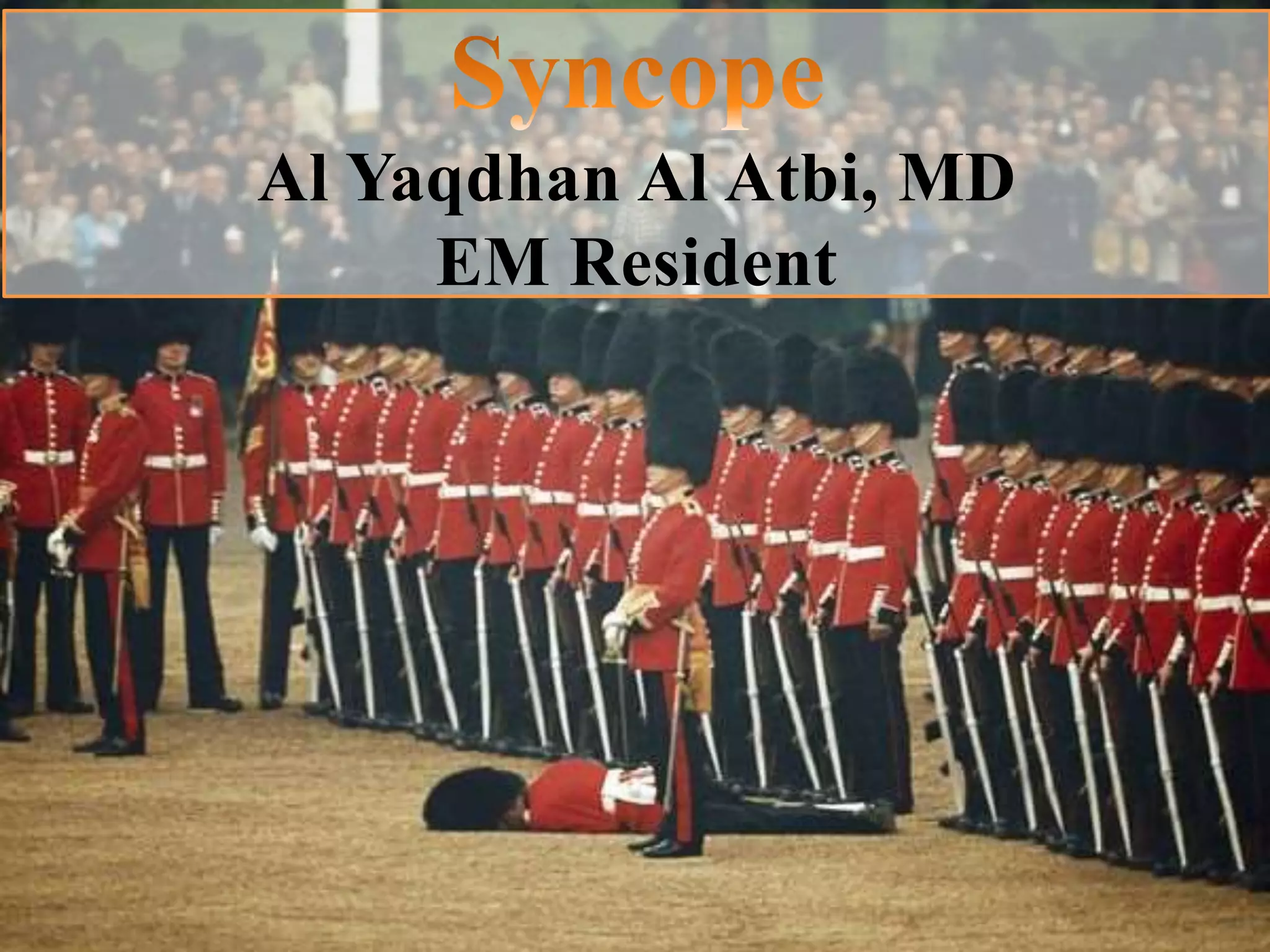
Al Yaqdhan Al Atbi, MD
EM Resident
Outline
• Introduction
• Importance
• Pathophysiology
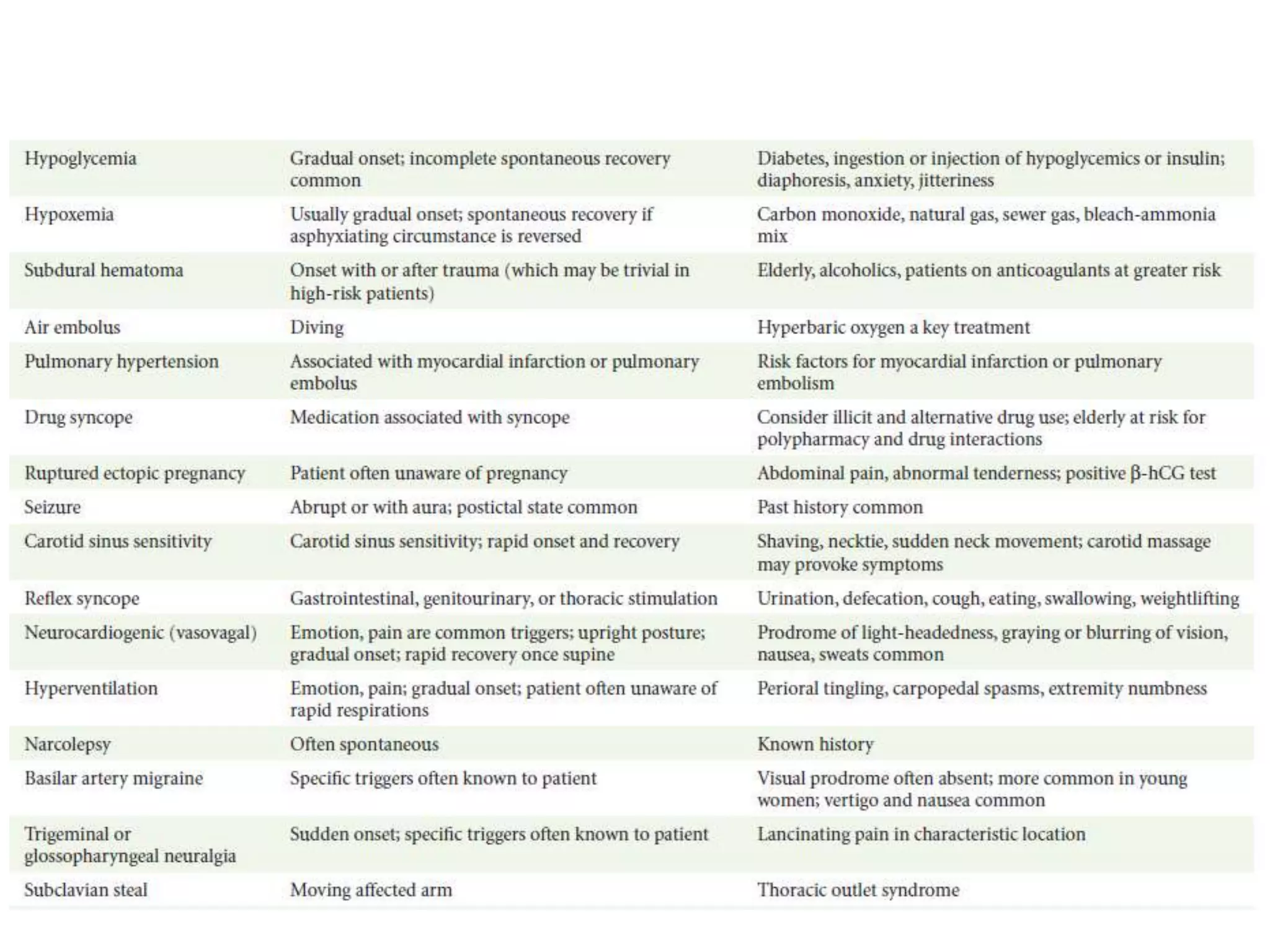
• Etiology and DDx
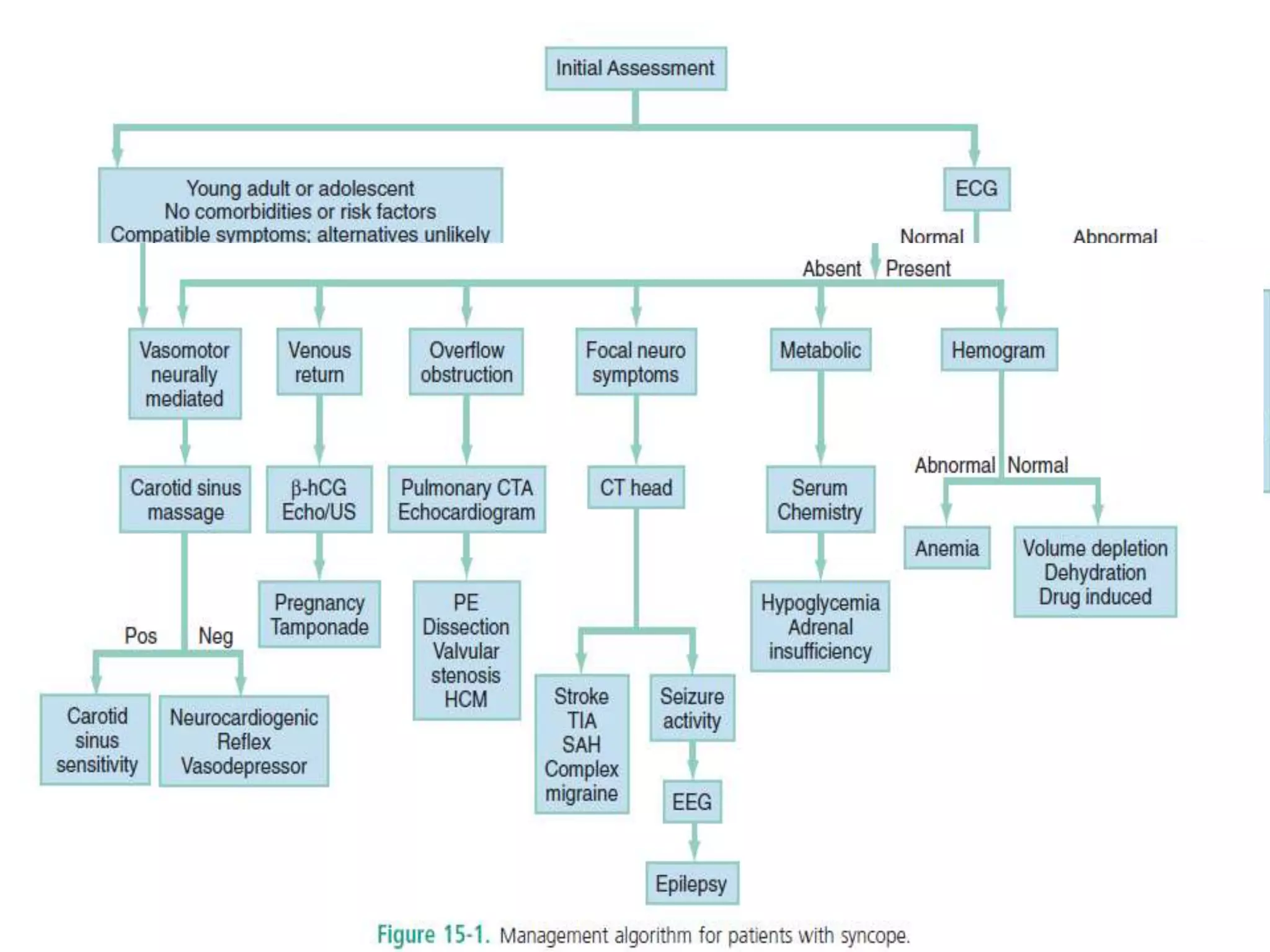
• Approach to a patient presented with syncope
• Disposition
Introduction
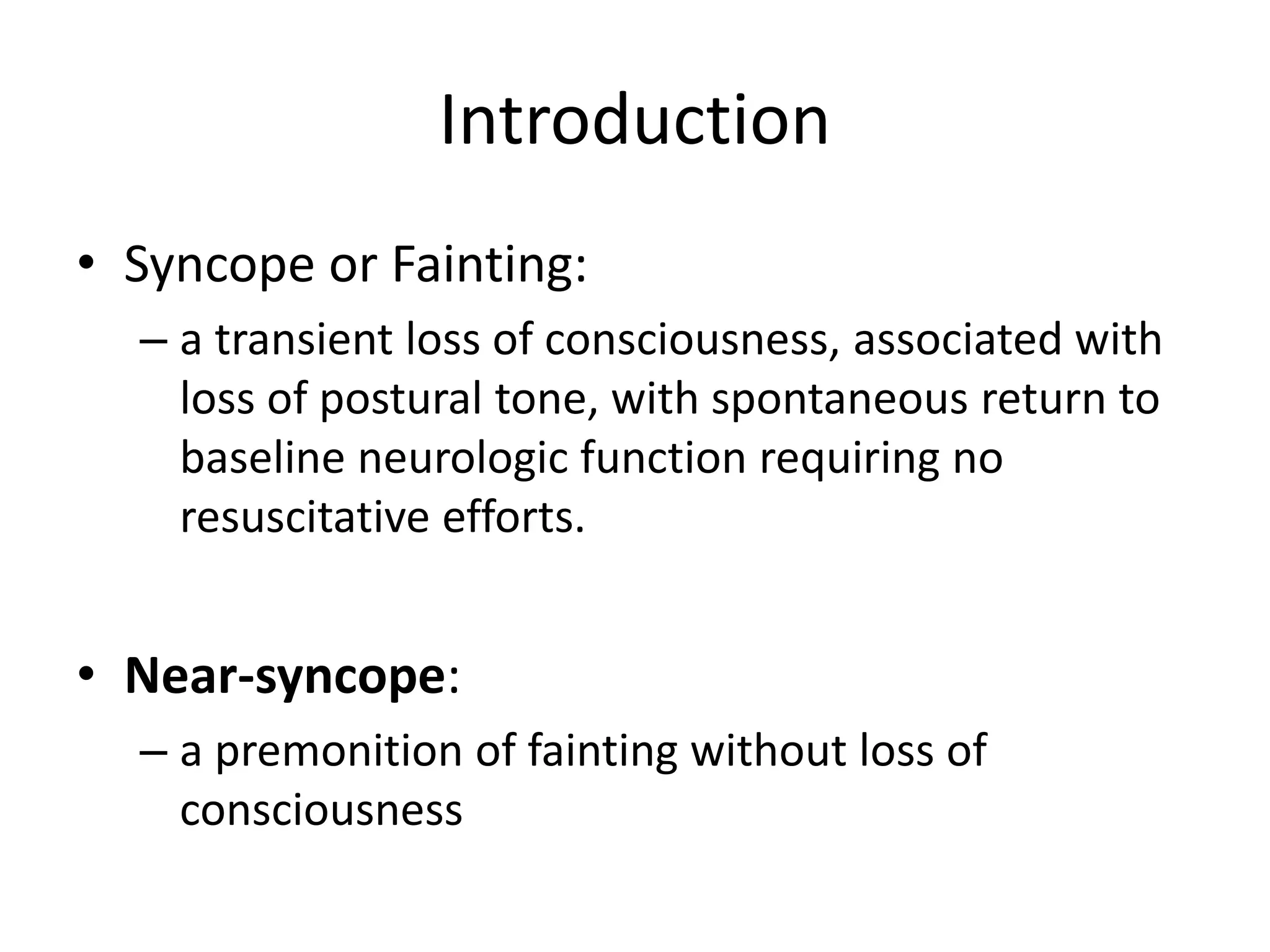
• Syncope or Fainting:
– a transient loss of consciousness, associated with
loss of postural tone, with spontaneous return to
baseline neurologic function requiring no
resuscitative efforts.
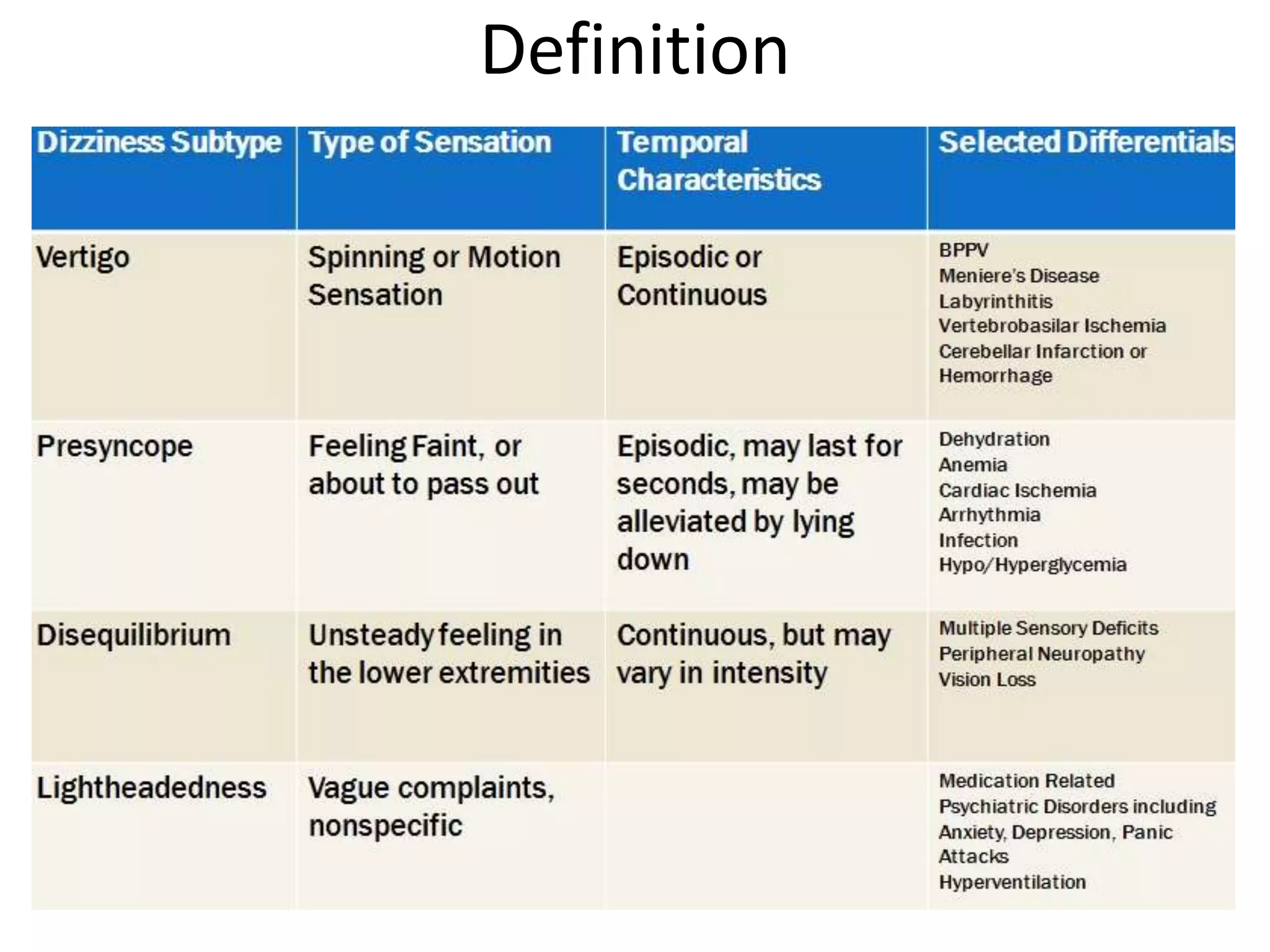
• Near-syncope:
– a premonition of fainting without loss of
consciousness
Definition
Why it is Important
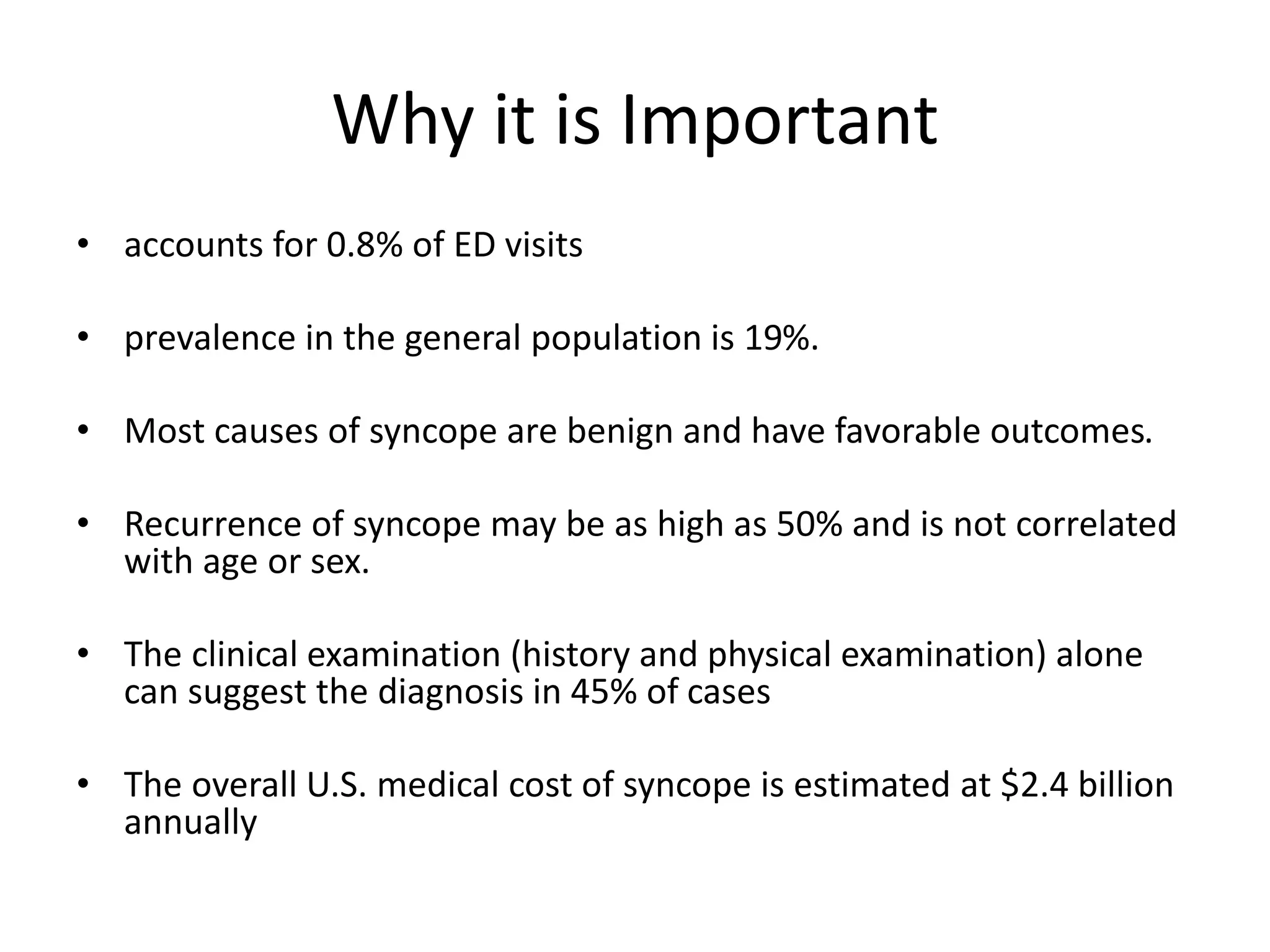
• accounts for 0.8% of ED visits
• prevalence in the general population is 19%.
• Most causes of syncope are benign and have favorable outcomes.
• Recurrence of syncope may be as high as 50% and is not correlated
with age or sex.
• The clinical examination (history and physical examination) alone
can suggest the diagnosis in 45% of cases
• The overall U.S. medical cost of syncope is estimated at $2.4 billion
annually
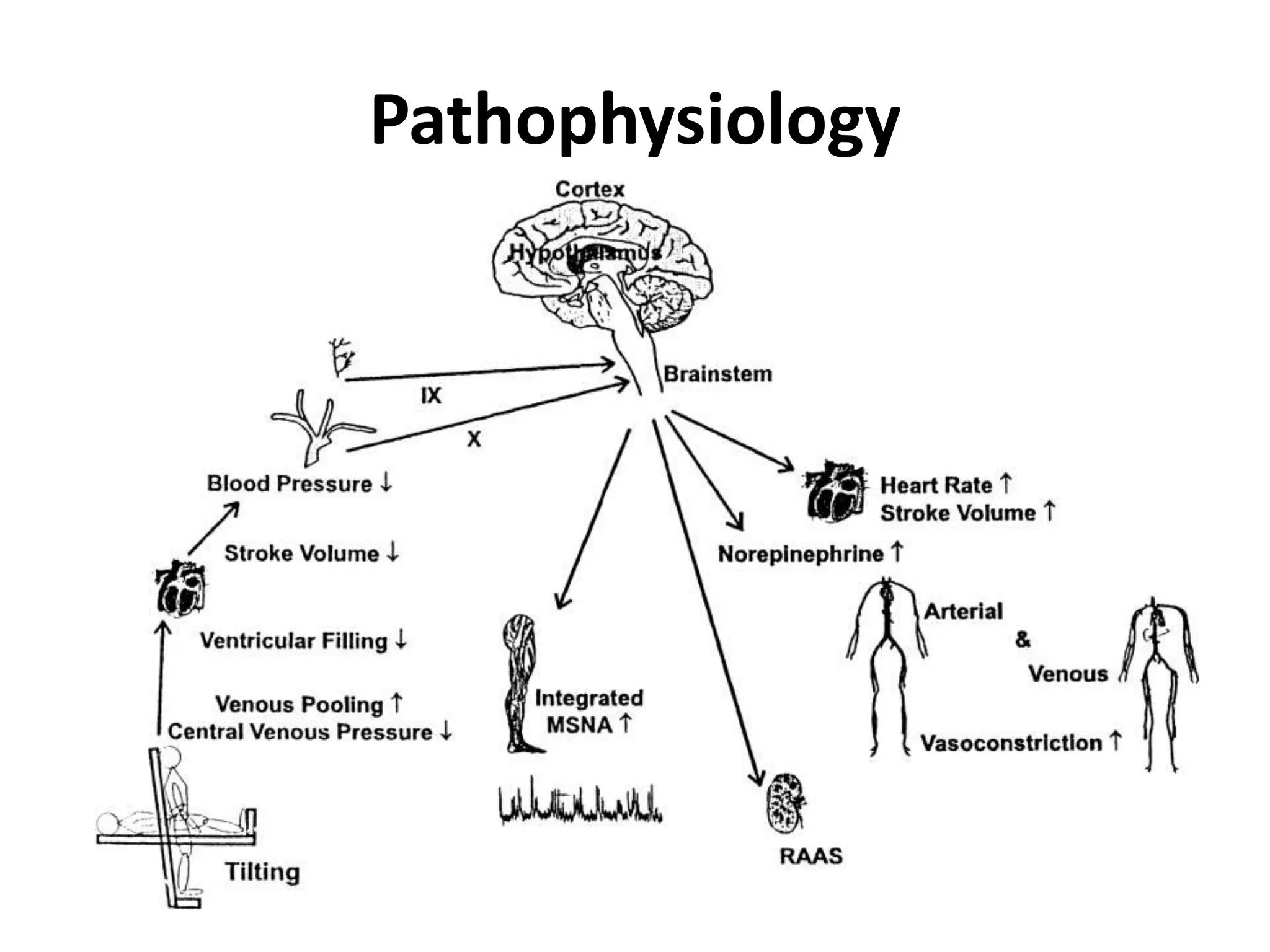
Pathophysiology
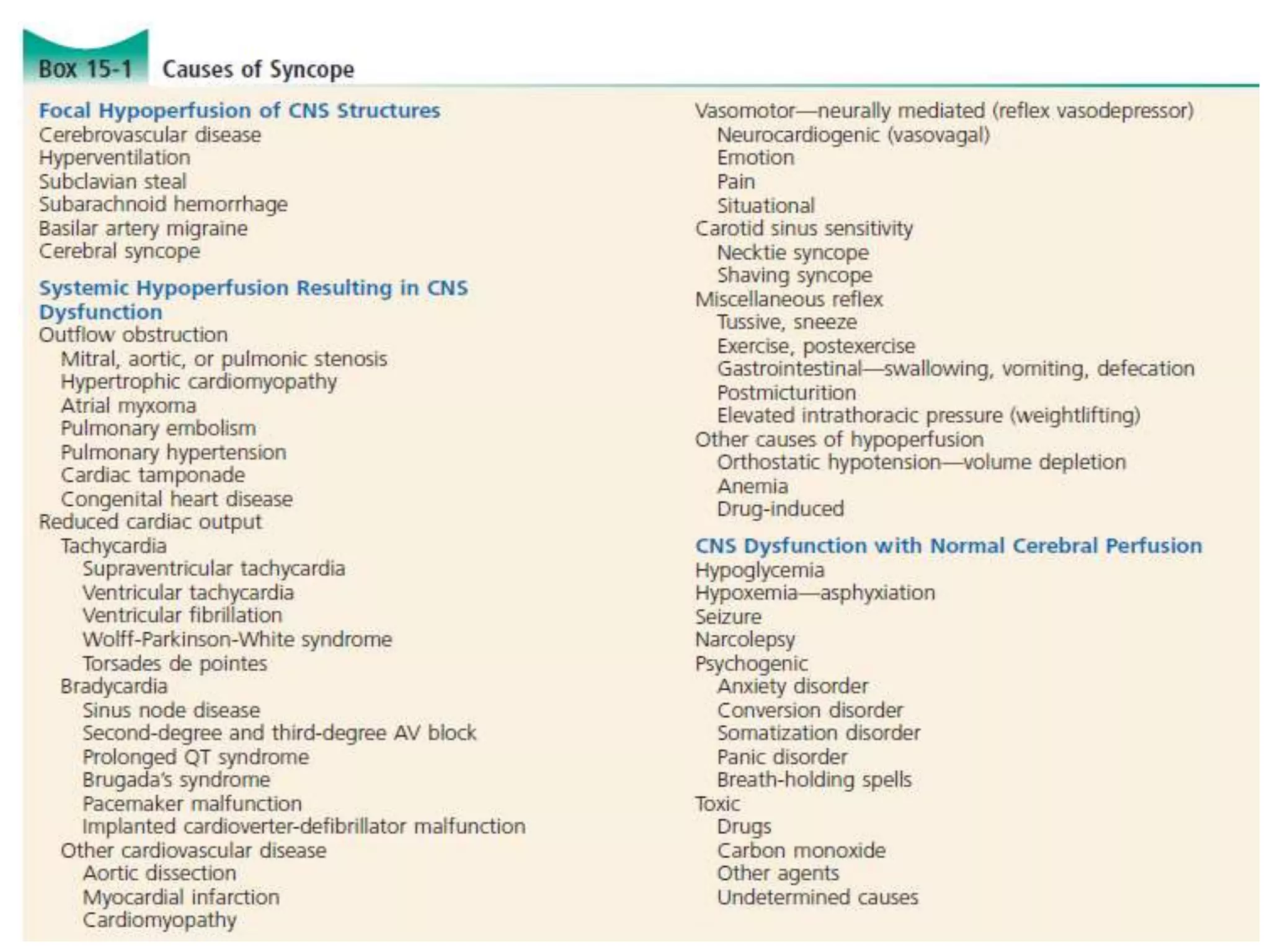
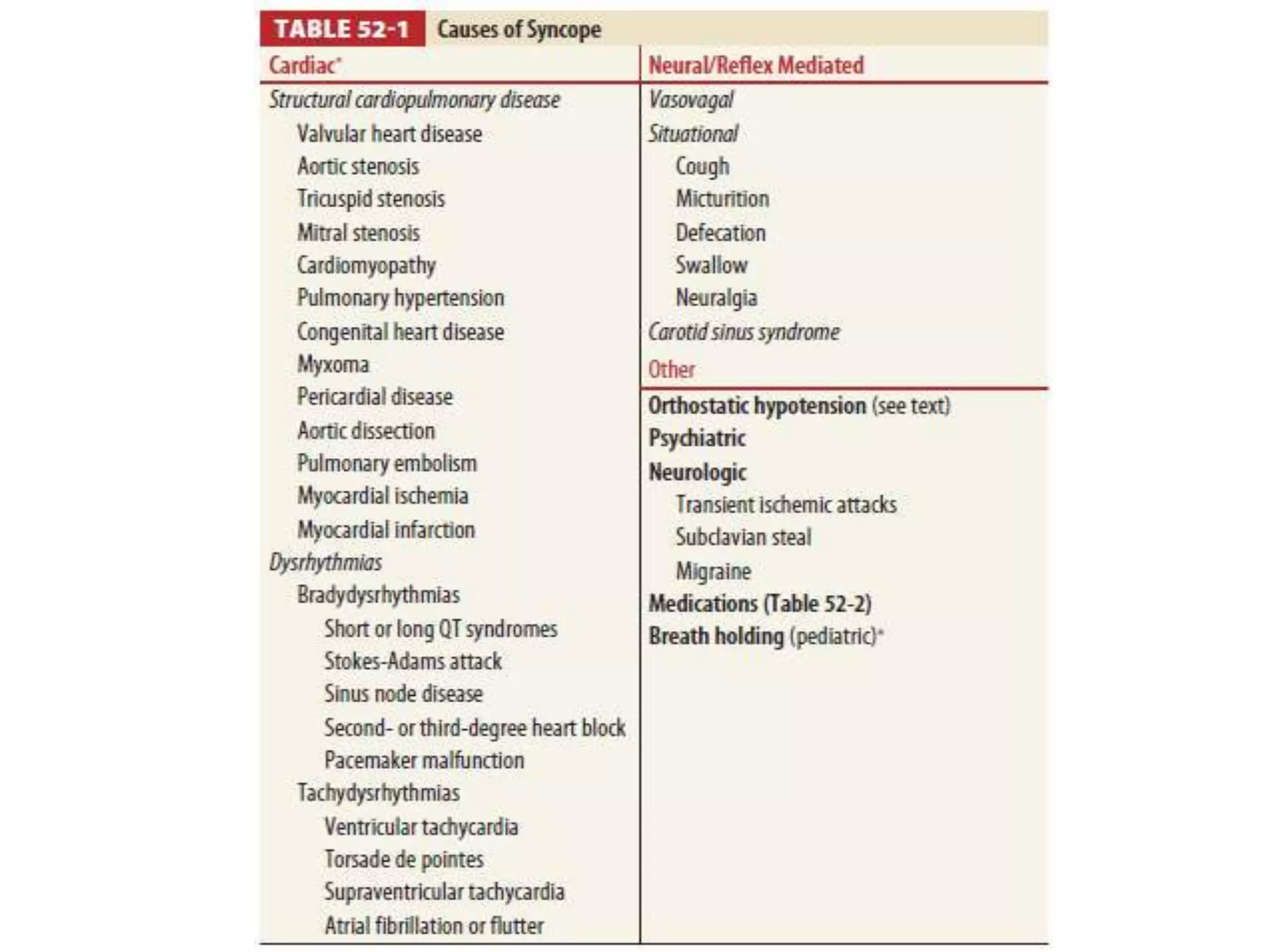
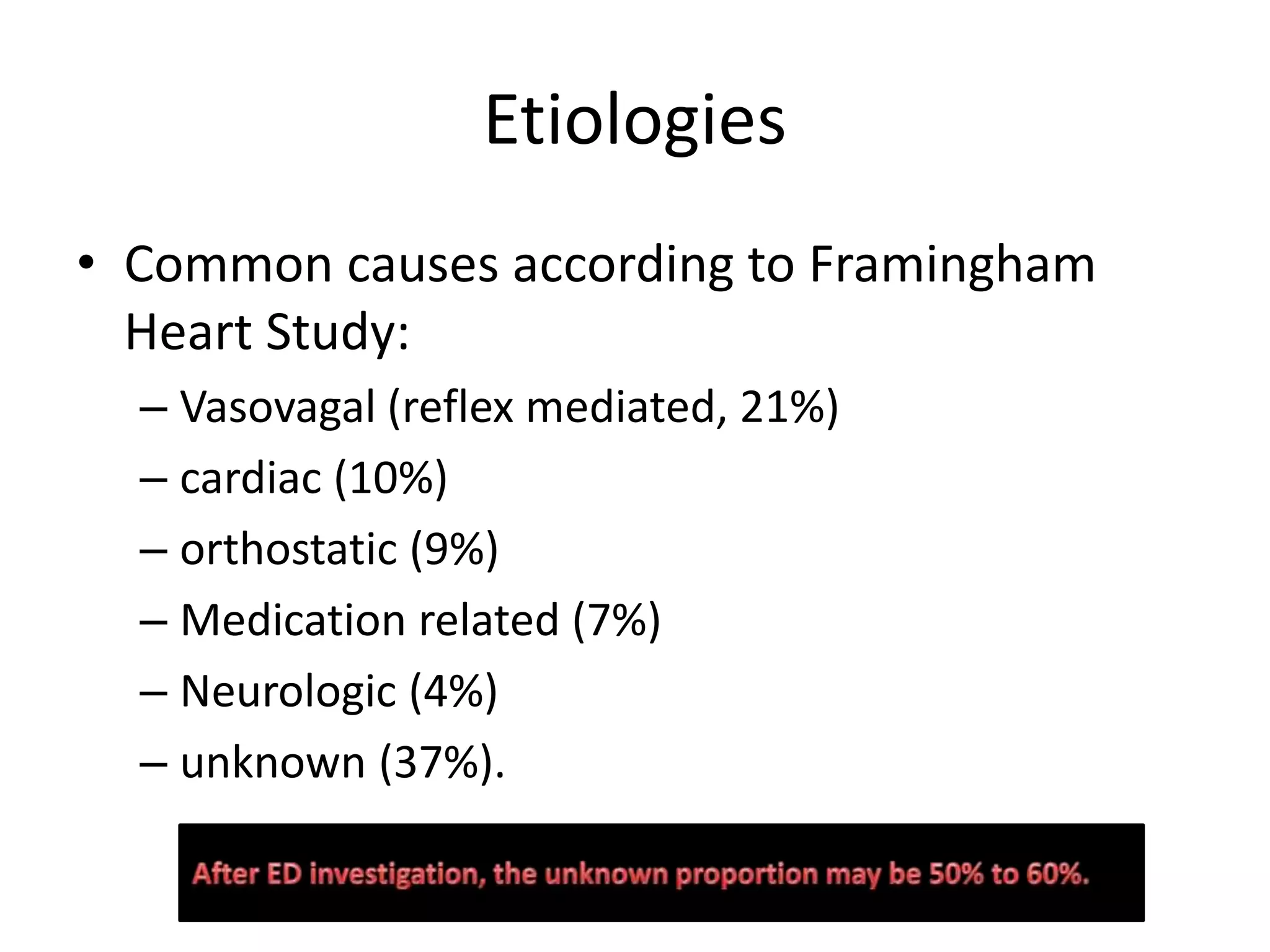
Etiologies
• Common causes according to Framingham
Heart Study:
– Vasovagal (reflex mediated, 21%)
– cardiac (10%)
– orthostatic (9%)
– Medication related (7%)
– Neurologic (4%)
– unknown (37%).
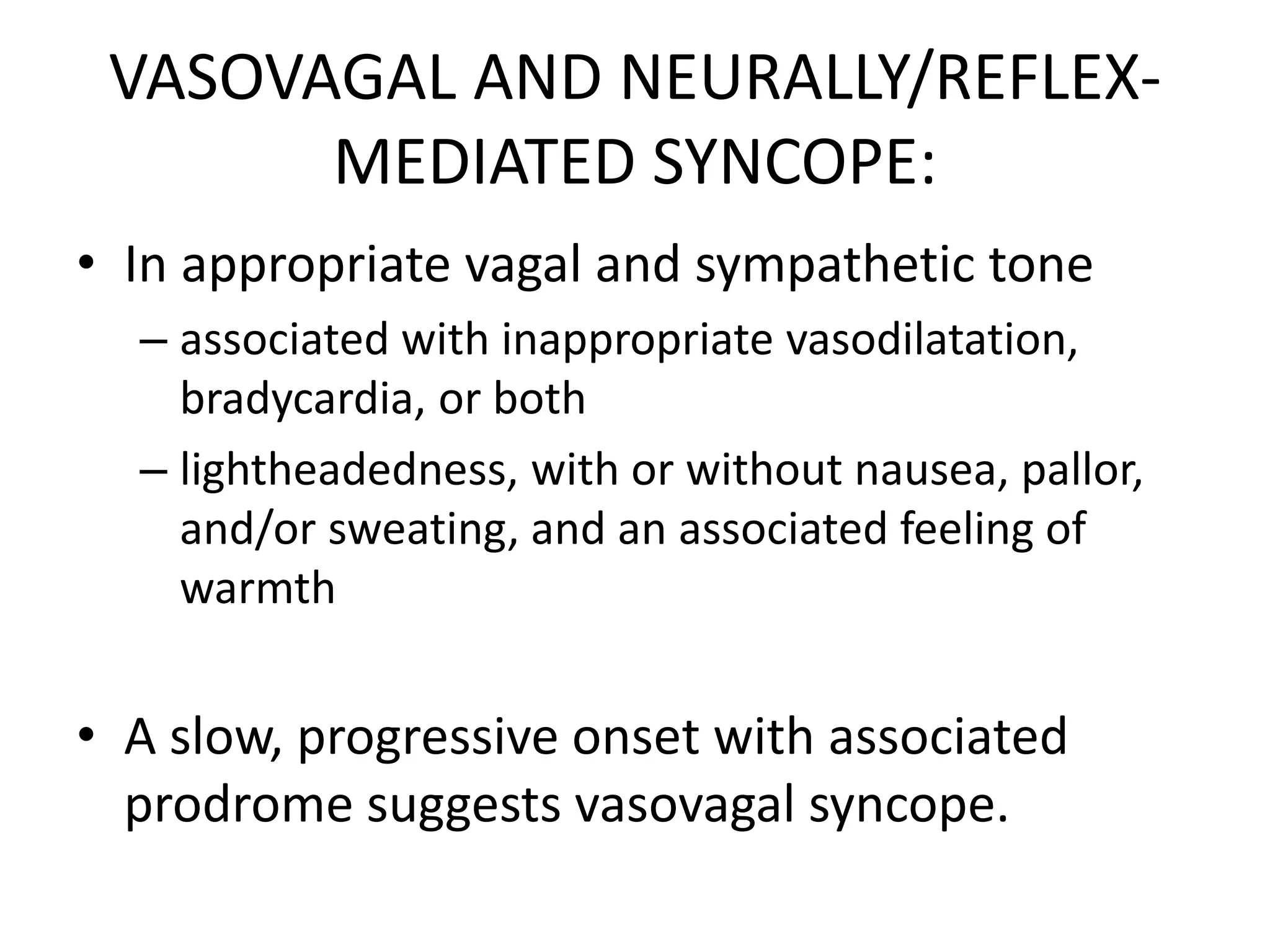
VASOVAGAL AND NEURALLY/REFLEX-
MEDIATED SYNCOPE:
• In appropriate vagal and sympathetic tone
– associated with inappropriate vasodilatation,
bradycardia, or both
– lightheadedness, with or without nausea, pallor,
and/or sweating, and an associated feeling of
warmth
• A slow, progressive onset with associated
prodrome suggests vasovagal syncope.
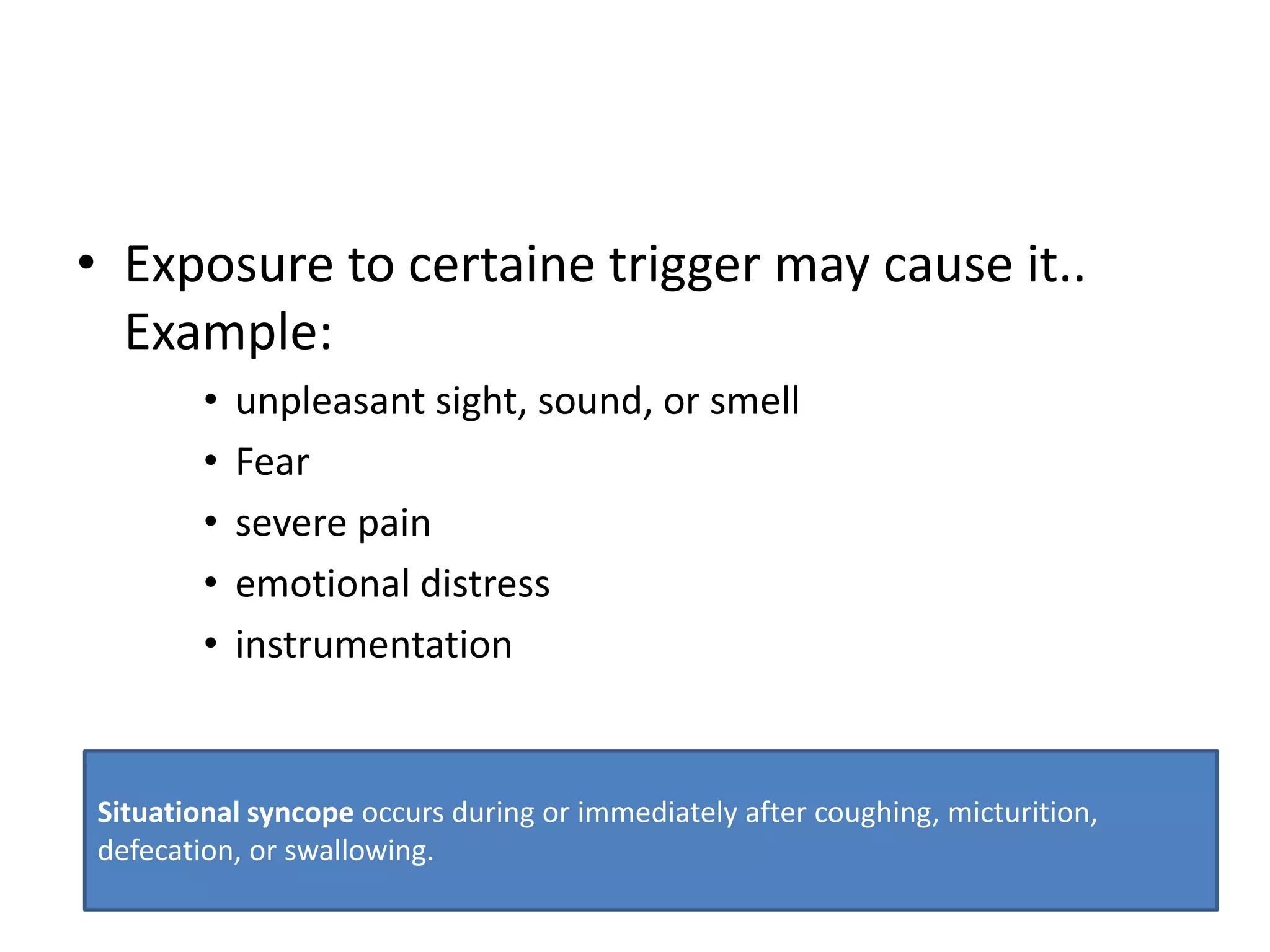
• Exposure to certaine trigger may cause it..
Example:
• unpleasant sight, sound, or smell
• Fear
• severe pain
• emotional distress
• instrumentation
Situational syncope occurs during or immediately after coughing, micturition,
defecation, or swallowing.
PSYCHIATRIC DISORDERS
• Organic causes should be rolled out first
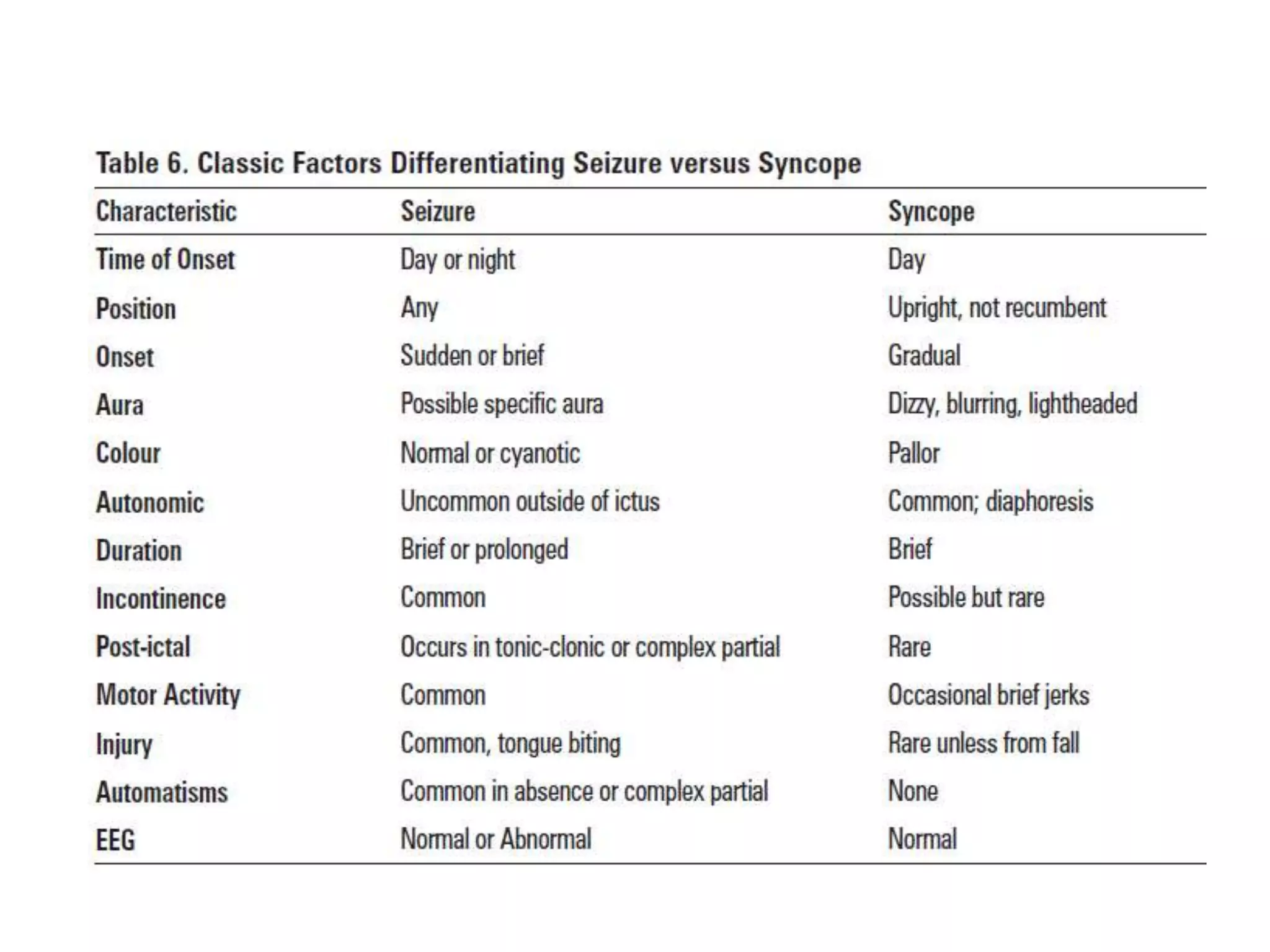
• 40% vasovagal syncope & 62% unknown
• Most common Dx:
– generalized anxiety disorder and major depressive
disorder
• Young> elderly
NEUROLOGIC SYNCOPE
• Rare
• Patients with loss of consciousness with
persistent neurologic deficits or altered
mental status do not have true syncope.
• Subclavian steal syndrome
• Seizure
History
• Age
• Syncopal attack:
– Witnesses/unwitnessed
– Onset , duration , recovary
– Prior to attack
– Attack
– postsyncopal events
– Associated symptoms
• Past medical hx
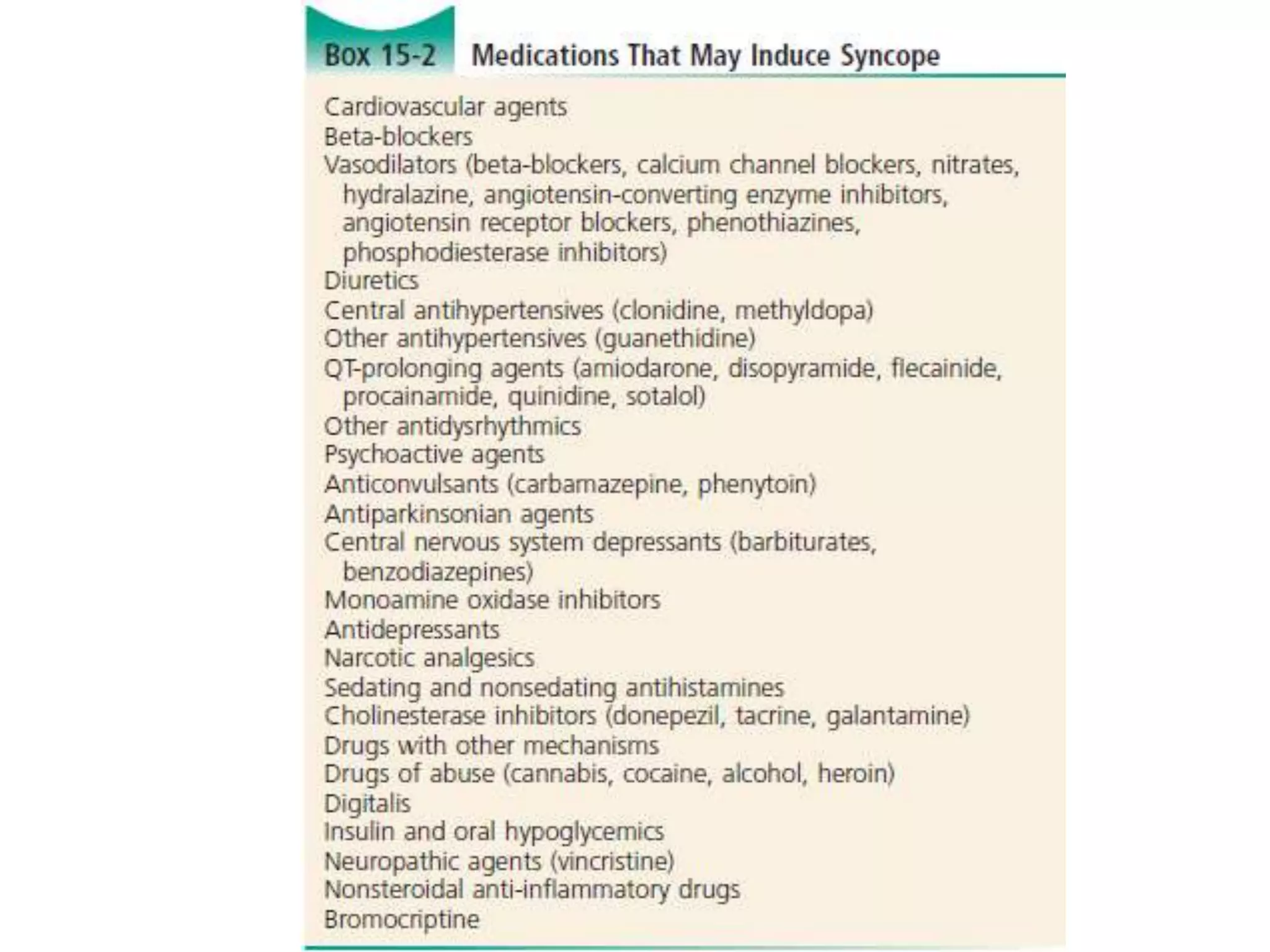
• Medication HX
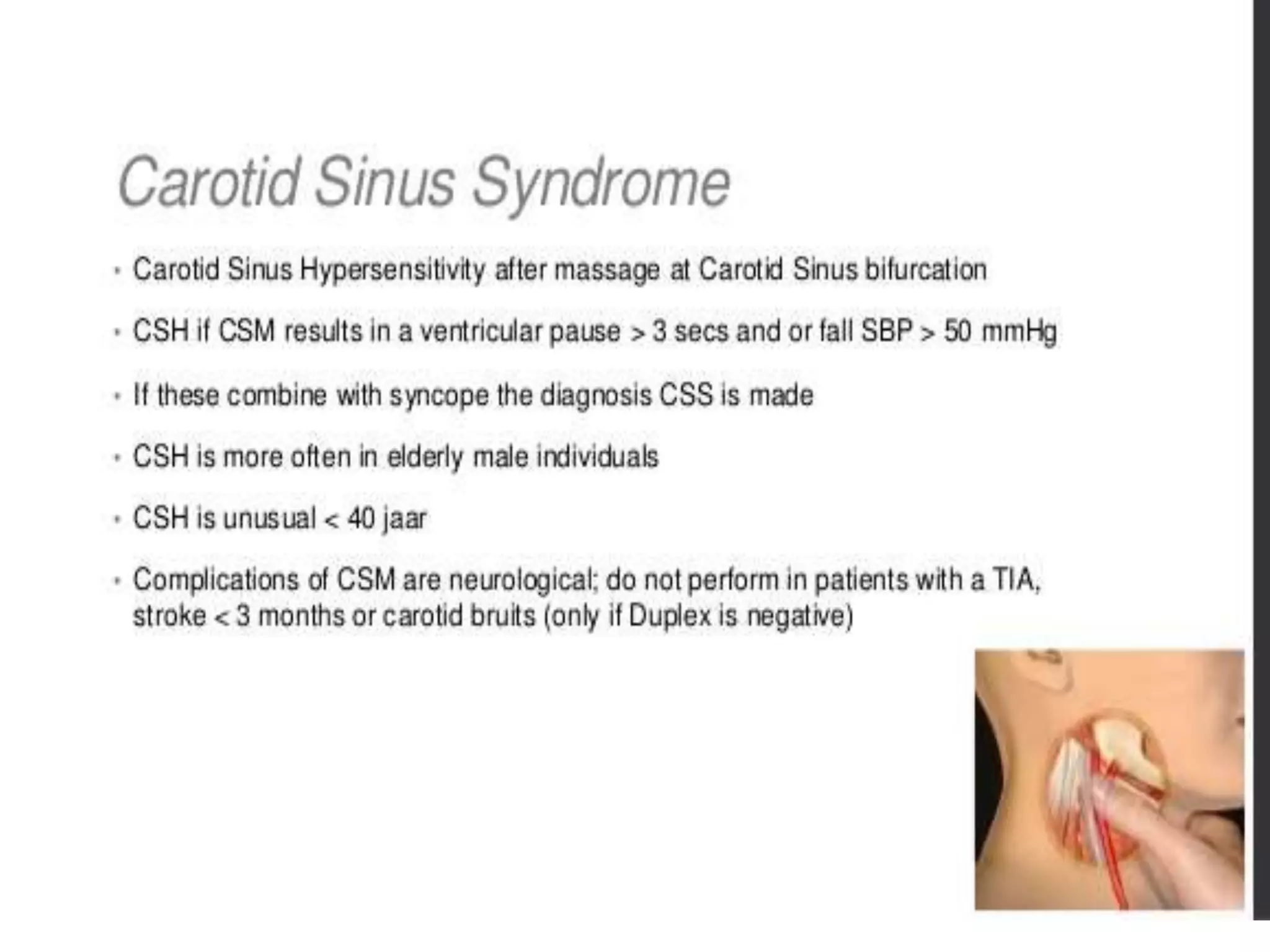
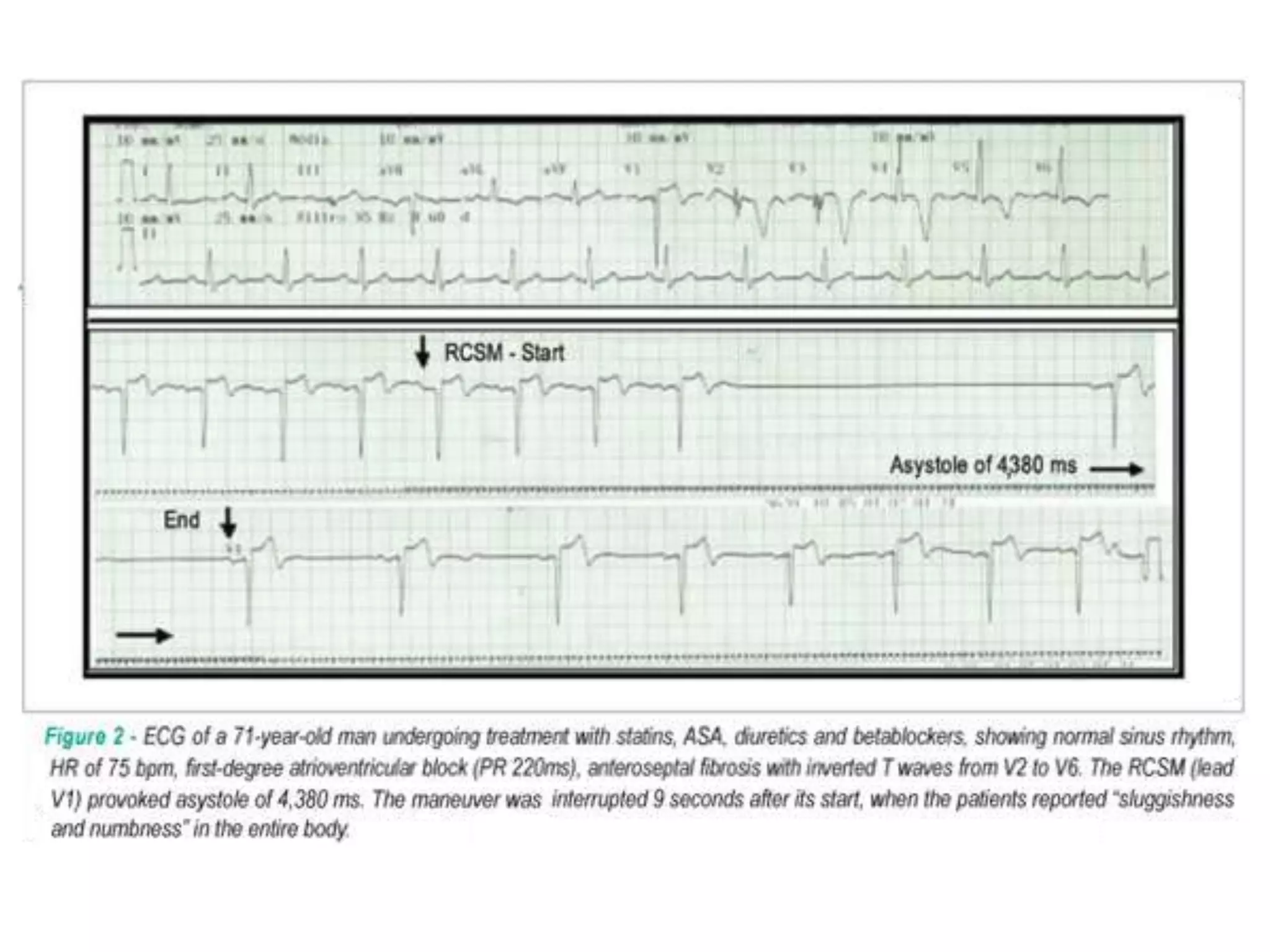
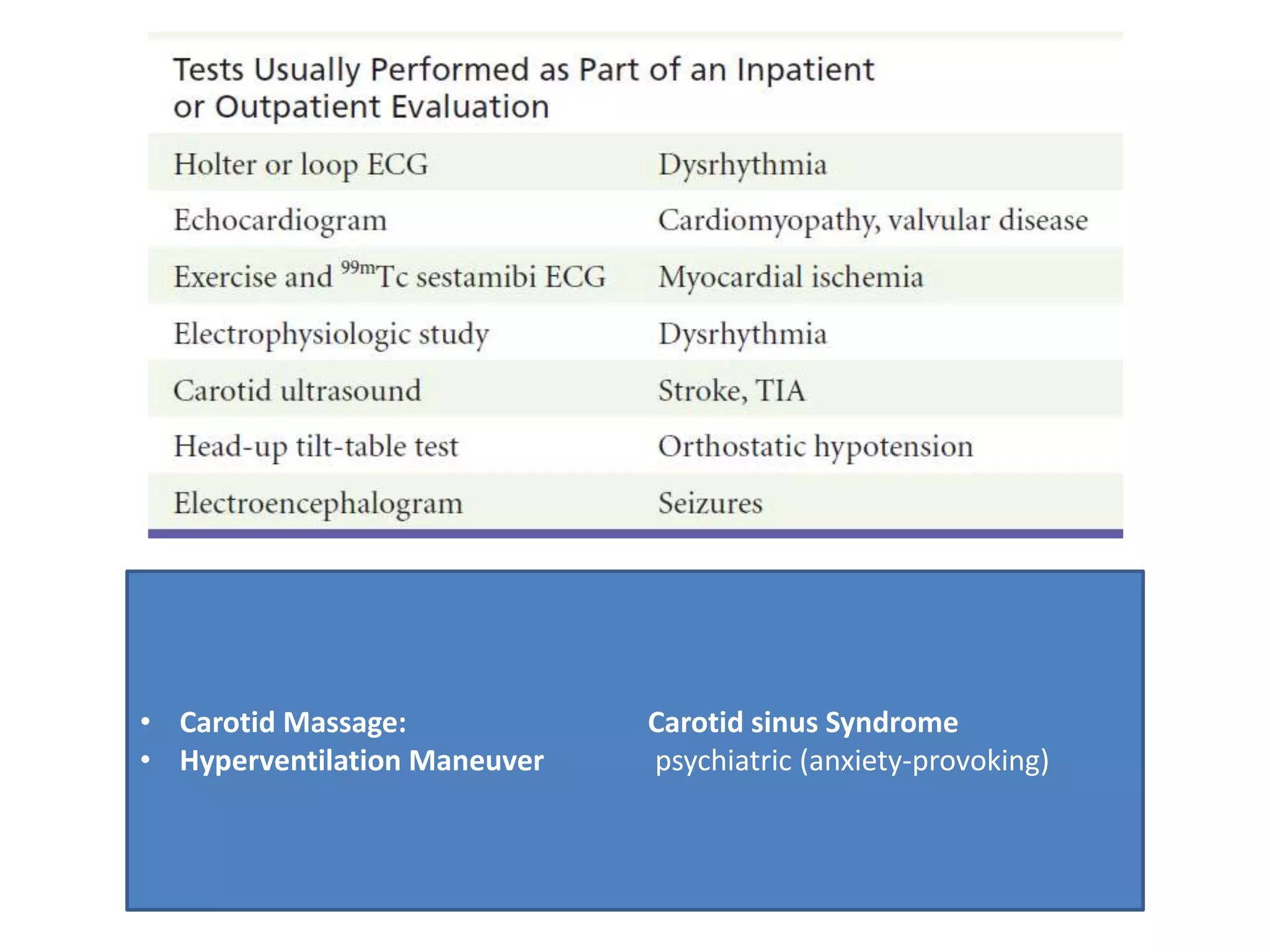
• Carotid Massage: Carotid sinus Syndrome
• Hyperventilation Maneuver psychiatric (anxiety-provoking)
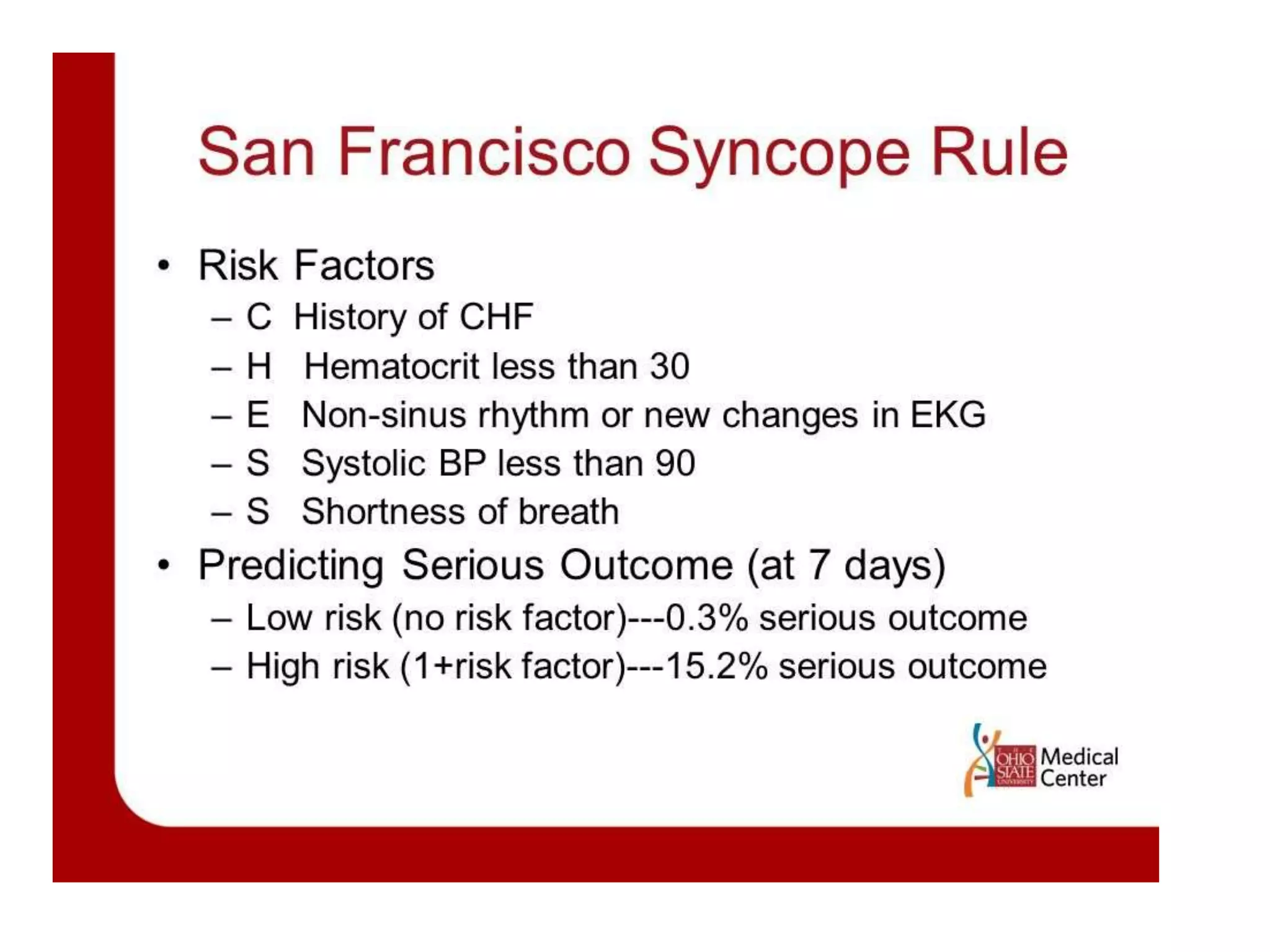
Disposition
• Inpatient:
– If life threaten condition detected
– Farther workup for high risk patient
• Out patient:
– Low risk patients
Take Home Message
• Syncope is a common presentation in ED.
• It can indicate for a life threaten conditions.
• The ED evaluation of syncope is often
inconclusive
References
• Tintinalli’s
• Rosen
approach to Syncope patient in ED

approach to Syncope patient in ED

  • 1.
    Al Yaqdhan AlAtbi, MD EM Resident
  • 2.
    Outline • Introduction • Importance •Pathophysiology • Etiology and DDx • Approach to a patient presented with syncope • Disposition
  • 3.
    Introduction • Syncope orFainting: – a transient loss of consciousness, associated with loss of postural tone, with spontaneous return to baseline neurologic function requiring no resuscitative efforts. • Near-syncope: – a premonition of fainting without loss of consciousness
  • 4.
  • 5.
    Why it isImportant • accounts for 0.8% of ED visits • prevalence in the general population is 19%. • Most causes of syncope are benign and have favorable outcomes. • Recurrence of syncope may be as high as 50% and is not correlated with age or sex. • The clinical examination (history and physical examination) alone can suggest the diagnosis in 45% of cases • The overall U.S. medical cost of syncope is estimated at $2.4 billion annually
  • 6.
  • 9.
    Etiologies • Common causesaccording to Framingham Heart Study: – Vasovagal (reflex mediated, 21%) – cardiac (10%) – orthostatic (9%) – Medication related (7%) – Neurologic (4%) – unknown (37%).
  • 11.
    VASOVAGAL AND NEURALLY/REFLEX- MEDIATEDSYNCOPE: • In appropriate vagal and sympathetic tone – associated with inappropriate vasodilatation, bradycardia, or both – lightheadedness, with or without nausea, pallor, and/or sweating, and an associated feeling of warmth • A slow, progressive onset with associated prodrome suggests vasovagal syncope.
  • 12.
    • Exposure tocertaine trigger may cause it.. Example: • unpleasant sight, sound, or smell • Fear • severe pain • emotional distress • instrumentation Situational syncope occurs during or immediately after coughing, micturition, defecation, or swallowing.
  • 15.
    PSYCHIATRIC DISORDERS • Organiccauses should be rolled out first • 40% vasovagal syncope & 62% unknown • Most common Dx: – generalized anxiety disorder and major depressive disorder • Young> elderly
  • 16.
    NEUROLOGIC SYNCOPE • Rare •Patients with loss of consciousness with persistent neurologic deficits or altered mental status do not have true syncope. • Subclavian steal syndrome • Seizure
  • 19.
    History • Age • Syncopalattack: – Witnesses/unwitnessed – Onset , duration , recovary – Prior to attack – Attack – postsyncopal events – Associated symptoms • Past medical hx • Medication HX
  • 22.
    • Carotid Massage:Carotid sinus Syndrome • Hyperventilation Maneuver psychiatric (anxiety-provoking)
  • 28.
    Disposition • Inpatient: – Iflife threaten condition detected – Farther workup for high risk patient • Out patient: – Low risk patients
  • 29.
    Take Home Message •Syncope is a common presentation in ED. • It can indicate for a life threaten conditions. • The ED evaluation of syncope is often inconclusive
  • 30.

Editor's Notes

  • #7 10 seconds of complete disruption of blood flow or nutrient delivery to both cerebral cortices or to the brainstem reticular activating system Etiologies: Hypoperfusion 50 vasospasm reduces CNS blood flow
  • #20 Occurrence during significant exertion suggests outflow obstruction, whereas occurrence after exercise or a prolonged exposure to heat stress suggests orthostasis. neurocardiogenic response, including significant emotional events, micturition, eating, bowel movements, emesis, and movement or manipulation of the neck causing stimulation of the carotid sinus Occurrence in supine position or the presence of acute palpitations is relatively specific for syncope of cardiac origin