Optimising inhaled mannitol
for cystic fibrosis in an adult
population
AF Patrick, LA Moira, B Diana..et al
Done By :
Al Yaqdhan Al Atbi, MD
• Introduction
• Mannitol/ Mannitol inhaler
• Literature Review
• Study: Aim, methodology, results,
discussion, conclusion.
• CF chronic airway infection and
inflammation.
• Airway clearance therapies (ACTs) is a
primary therapy for CF patients.
– Inhaled hypertonic saline
– Recombinant human DNAase
• Naturally occurring sugar alcohol
• Dry powder formulated.
• Mechanism of Action:
– Change the viscoelastic properties of airway phlegm
– Increase the hydration of the airway surface liquid 
increased clearance of the retained secretions
through mucociliary activity and productive cough.
• phase 3 studies (CF301 and CF302):
– Investigate the safety and efficacy of inhaled mannitol
in subjects with CF over a period of 6 months.
– These studies demonstrated clinically relevant
benefits of inhaled mannitol.
– Inhaled mannitol was recently approved for use in
adults in Europe.
– To discuss the importance of airway clearance
treatments in the management of cystic fibrosis.
– To describe the clinical data that supports the use of
mannitol in adult patients with cystic fibrosis.
– To highlight the role of mannitol tolerance testing in
screening for hyperresponsiveness.
– To provide practical considerations for patient
education in use of mannitol inhaler
• Multicentre, randomised, controlled, parallel-arm,
double-blind
• phase III clinical trial to determine the efficacy and
safety of inhaled dry powder
• Pooled Data from CF301, CF302.
– Adults > 18 years
– Sample size: 390
– Subjects:
• diagnosed patient with CF
• FEV1 range 30-90% (CF301); 40-90% (CF302)
• Continuation of all approved CF therapies.
• Mannitol Tolerance Test (MTT):
• subjects were randomised 3:2
• 2phases:
– Phase I: 26 weeks (control 50 mg BID, study group
400mg BID)
– Phase II: 26 weeks optional , open-Labeled , all
subjects received 400mg BID mannitol.
Results
Results
• Withdrawals, education and compliance:
– CF301: withdrawal rate 35.3 %
– CF302: withdrawal rate 20.5%
• Mannitol was well tolerated by adult subjects
with CF, although there was a higher drop-out
rate overall in the mannitol group compared
with the control group
42% reduction in
withdrawal rate
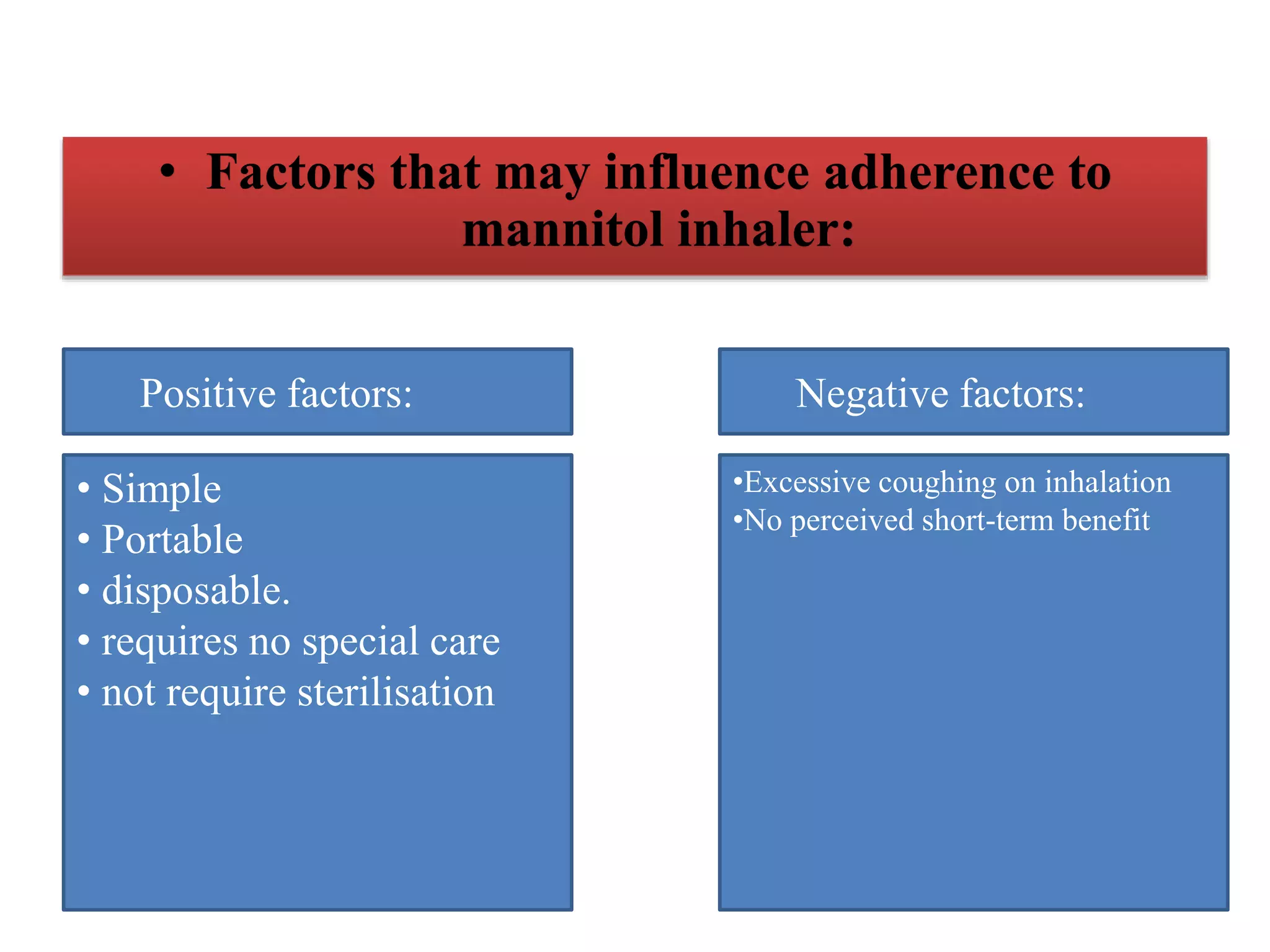
• Factors that may influence adherence to
mannitol inhaler:
• Simple
• Portable
• disposable.
• requires no special care
• not require sterilisation
Positive factors:
•Excessive coughing on inhalation
•No perceived short-term benefit
Negative factors:
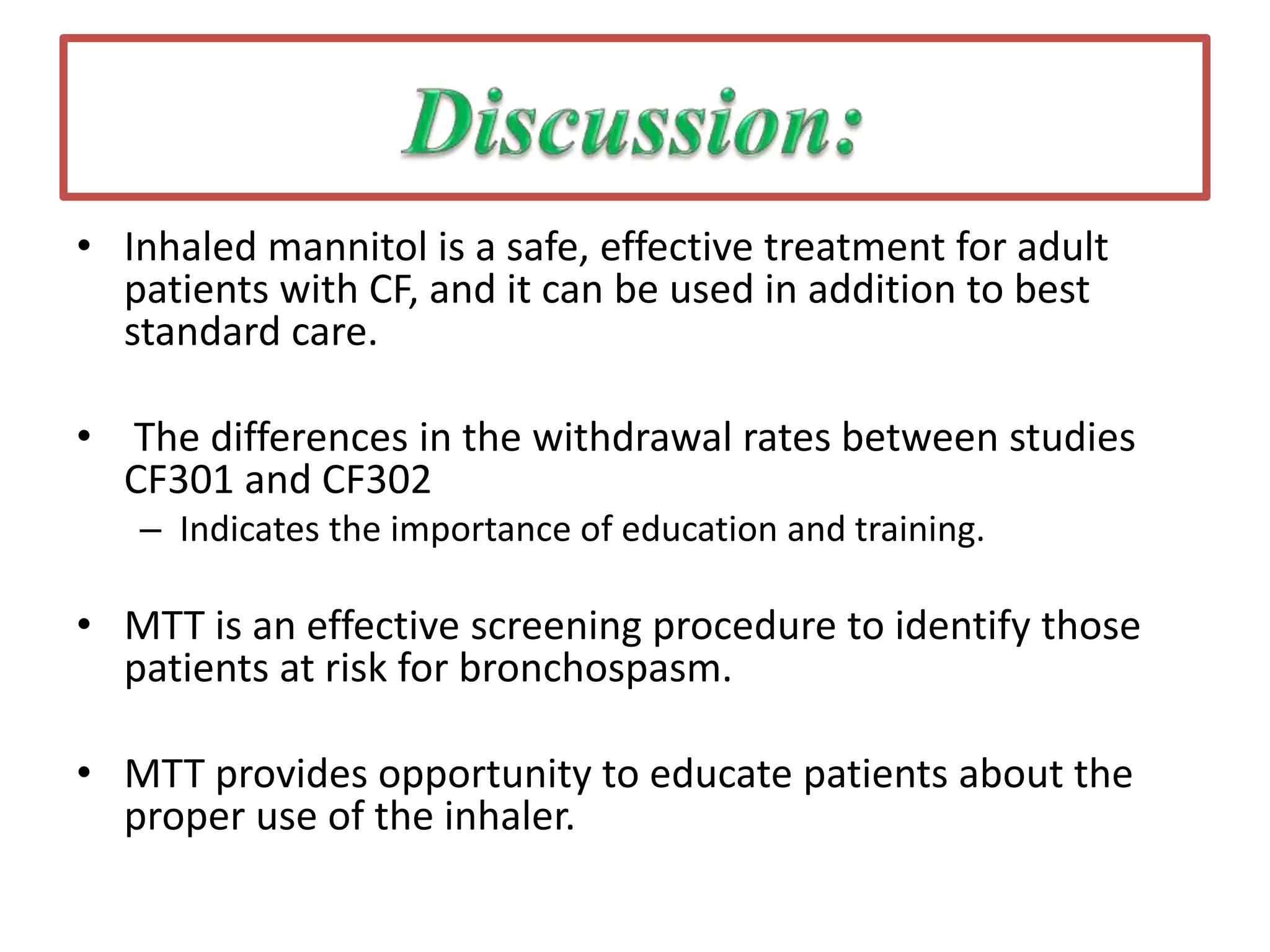
• Inhaled mannitol is a safe, effective treatment for adult
patients with CF, and it can be used in addition to best
standard care.
• The differences in the withdrawal rates between studies
CF301 and CF302
– Indicates the importance of education and training.
• MTT is an effective screening procedure to identify those
patients at risk for bronchospasm.
• MTT provides opportunity to educate patients about the
proper use of the inhaler.
• Only remove capsules immediately before use.
• Pierce capsules once only.
• Tilt inhaler so mouth-piece faces slightly downward
• Breathe out completely away from the inhaler.
• With the head tilted upwards, the patient should inhale deeply
“rattling” sound
– The inhalation rate may be slowed down if coughing occurs
• After the dose from each capsule is inhaled, breath hold for 5 s
• Exhale and cough AWAY from the inhaler to prevent humidity build-
up within the device.
• The 10 capsules should be taken closely together over a 3–5 min.
• A sip of water may be taken throughout the challenge to relieve
cough and/or dry throat.
• Inhaled mannitol is now available for adult
patients with CF as an adjunctive therapy to
augment airway clearance.
• THANK YOU

Optimising inhaled mannitol for cystic fibrosis in an adult population

  • 1.
    Optimising inhaled mannitol forcystic fibrosis in an adult population AF Patrick, LA Moira, B Diana..et al Done By : Al Yaqdhan Al Atbi, MD
  • 2.
    • Introduction • Mannitol/Mannitol inhaler • Literature Review • Study: Aim, methodology, results, discussion, conclusion.
  • 4.
    • CF chronicairway infection and inflammation. • Airway clearance therapies (ACTs) is a primary therapy for CF patients. – Inhaled hypertonic saline – Recombinant human DNAase
  • 5.
    • Naturally occurringsugar alcohol • Dry powder formulated. • Mechanism of Action: – Change the viscoelastic properties of airway phlegm – Increase the hydration of the airway surface liquid  increased clearance of the retained secretions through mucociliary activity and productive cough.
  • 7.
    • phase 3studies (CF301 and CF302): – Investigate the safety and efficacy of inhaled mannitol in subjects with CF over a period of 6 months. – These studies demonstrated clinically relevant benefits of inhaled mannitol. – Inhaled mannitol was recently approved for use in adults in Europe.
  • 8.
    – To discussthe importance of airway clearance treatments in the management of cystic fibrosis. – To describe the clinical data that supports the use of mannitol in adult patients with cystic fibrosis. – To highlight the role of mannitol tolerance testing in screening for hyperresponsiveness. – To provide practical considerations for patient education in use of mannitol inhaler
  • 9.
    • Multicentre, randomised,controlled, parallel-arm, double-blind • phase III clinical trial to determine the efficacy and safety of inhaled dry powder • Pooled Data from CF301, CF302. – Adults > 18 years – Sample size: 390 – Subjects: • diagnosed patient with CF • FEV1 range 30-90% (CF301); 40-90% (CF302)
  • 10.
    • Continuation ofall approved CF therapies. • Mannitol Tolerance Test (MTT): • subjects were randomised 3:2 • 2phases: – Phase I: 26 weeks (control 50 mg BID, study group 400mg BID) – Phase II: 26 weeks optional , open-Labeled , all subjects received 400mg BID mannitol.
  • 11.
  • 12.
  • 16.
    • Withdrawals, educationand compliance: – CF301: withdrawal rate 35.3 % – CF302: withdrawal rate 20.5% • Mannitol was well tolerated by adult subjects with CF, although there was a higher drop-out rate overall in the mannitol group compared with the control group 42% reduction in withdrawal rate
  • 18.
    • Factors thatmay influence adherence to mannitol inhaler: • Simple • Portable • disposable. • requires no special care • not require sterilisation Positive factors: •Excessive coughing on inhalation •No perceived short-term benefit Negative factors:
  • 19.
    • Inhaled mannitolis a safe, effective treatment for adult patients with CF, and it can be used in addition to best standard care. • The differences in the withdrawal rates between studies CF301 and CF302 – Indicates the importance of education and training. • MTT is an effective screening procedure to identify those patients at risk for bronchospasm. • MTT provides opportunity to educate patients about the proper use of the inhaler.
  • 20.
    • Only removecapsules immediately before use. • Pierce capsules once only. • Tilt inhaler so mouth-piece faces slightly downward • Breathe out completely away from the inhaler. • With the head tilted upwards, the patient should inhale deeply “rattling” sound – The inhalation rate may be slowed down if coughing occurs • After the dose from each capsule is inhaled, breath hold for 5 s • Exhale and cough AWAY from the inhaler to prevent humidity build- up within the device. • The 10 capsules should be taken closely together over a 3–5 min. • A sip of water may be taken throughout the challenge to relieve cough and/or dry throat.
  • 21.
    • Inhaled mannitolis now available for adult patients with CF as an adjunctive therapy to augment airway clearance.
  • 22.

Editor's Notes

  • #4 • autosomal recessive, CFTR gene found on chromosome 7 (ΔF508 mutation in 70%, over 800 different mutations identified) • 1 in 3,000 live births, mostly Caucasians • mutation in transmembrane conductance regulator of chloride – causes cells to be impermeable to Cl which increases the reabsorption of Na • leads to relative dehydration of airway secretions, resulting in impaired mucociliary transport and airway obstruction
  • #5 Chronic airways infection and inflammation is associated with considerable morbidity and early mortality in patients with cystic fibrosis (CF) [3]. In CF, the lung airway surface liquid is depleted, resulting in a defective mucociliary clearance. This contributes to retained airways phlegm, which promotes infection and inflammation within the airway lumen and wall, leading to airway remodelling. Initial reversible injury eventually results in refractory bronchiectasis and progressive loss of lung function [4]. Recombinant human DNAase These agents alter the rheological properties of airway phlegm, thereby easing its clearance from the airways [5]. Inhaled rh DNase improves lung function by digesting high molecular weight DNA that is typically released in the CF airways by dead neutrophils and which contributes to the secretion viscosity Inhaled hypertonic saline increase airway surface liquid volume in vitro and modestly improve lung function in patients with CF [9–12]. Although recommended in guidelines, hypertonic saline is not a regulatory approved treatment and there are widely recognised tolerability issues in some patients [13, 14]. In addition, the administration of nebulised saline is time consuming and is associated with poor adherence
  • #6 Mannitol is a sugar alcohol that is currently used in medicine as an osmotic agent [11]. When inhaled, it creates an osmotic gradient that is thought to facilitate movement of water into the lumen of the airways, thereby increasing the volume of airway surface liquid and improving clearance of mucus
  • #8 Two recent, near identical, randomised, multicentre, double-blind, controlled, parallel-group
  • #9 open-label trial or open trial is a type of clinical trial in which both the researchers and participants know which treatment is being administered.[1][2] This contrasts with single blind and double blind experimental designs, where participants are not aware of what treatment they are receiving (researchers are also unaware in a double blind trial).
  • #10 -all subjects were screened for significant airway hyperresponsiveness to mannitol Unlike the first phase II efficacy study, where a nonrespirable dose of mannitol was given, this study used a subtherapeutic (50 mg) dose of mannitol as the control Steps: MTT Randomisations in ratio of 2:3 Subjects took a dose of the short-acting bronchodilator salbutamo (400 mg) 5–15 min before each dose of study medication. 400mg Mannitol BID for 26 weeks Inhaled mannitol was supplied as 10 capsules (40 mg each) together with an inhaler device (RS01 Monodose Inhaler Model 7; Plastiape, Milan, Italy). Capsules were loaded into the inhaler device, punctured, then mannitol inhaled in a deep, controlled manner, followed by a 5-s breath hold. The process was repeated until the contents of 10 capsules were inhaled. The time taken to inhale from 10 capsules was usually 2–5 min. The inhaler device was replaced after 1 week Assessment of Effecacy of mannitol: change in FEV1 over 26 weeks was the primary end-point selected for this trial. they did not mention about f/u The OL phase included patient follow-up visits at 38 and 52 weeks to assess lung function, sputum microbiology, and review PEs and safety. Safety was assessed by tracking the number and percentage of adverse events (AEs) as well as monitoring for changes in haematology, liver and renal function, and sputum pathogens.
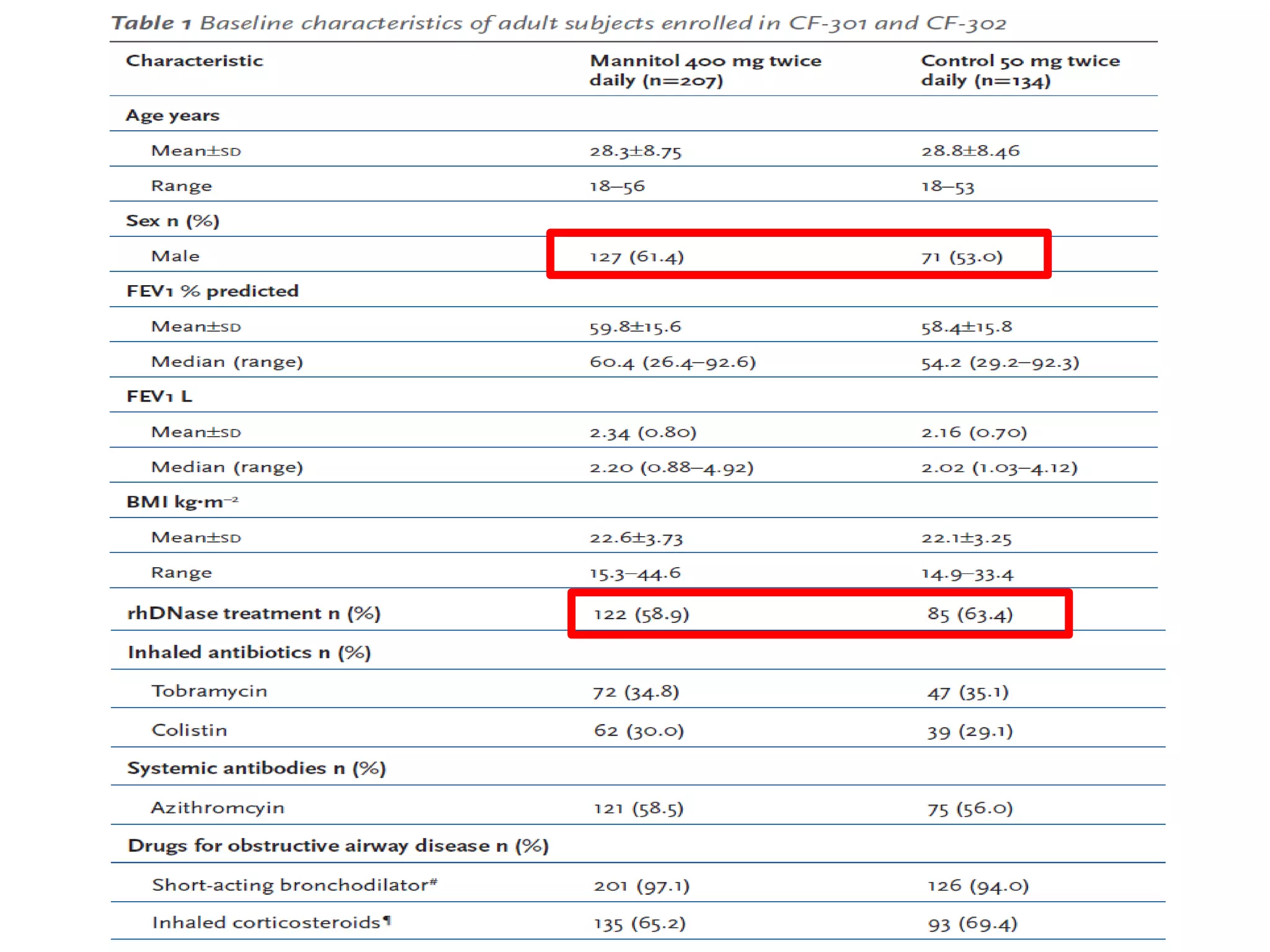
  • #13 there were more male subjects in the mannitol group (61.4 versus 53.0% in the control group), and more subjects receiving rhDNase treatment in the control group (63.4 versus 58.9% in the mannitol group).
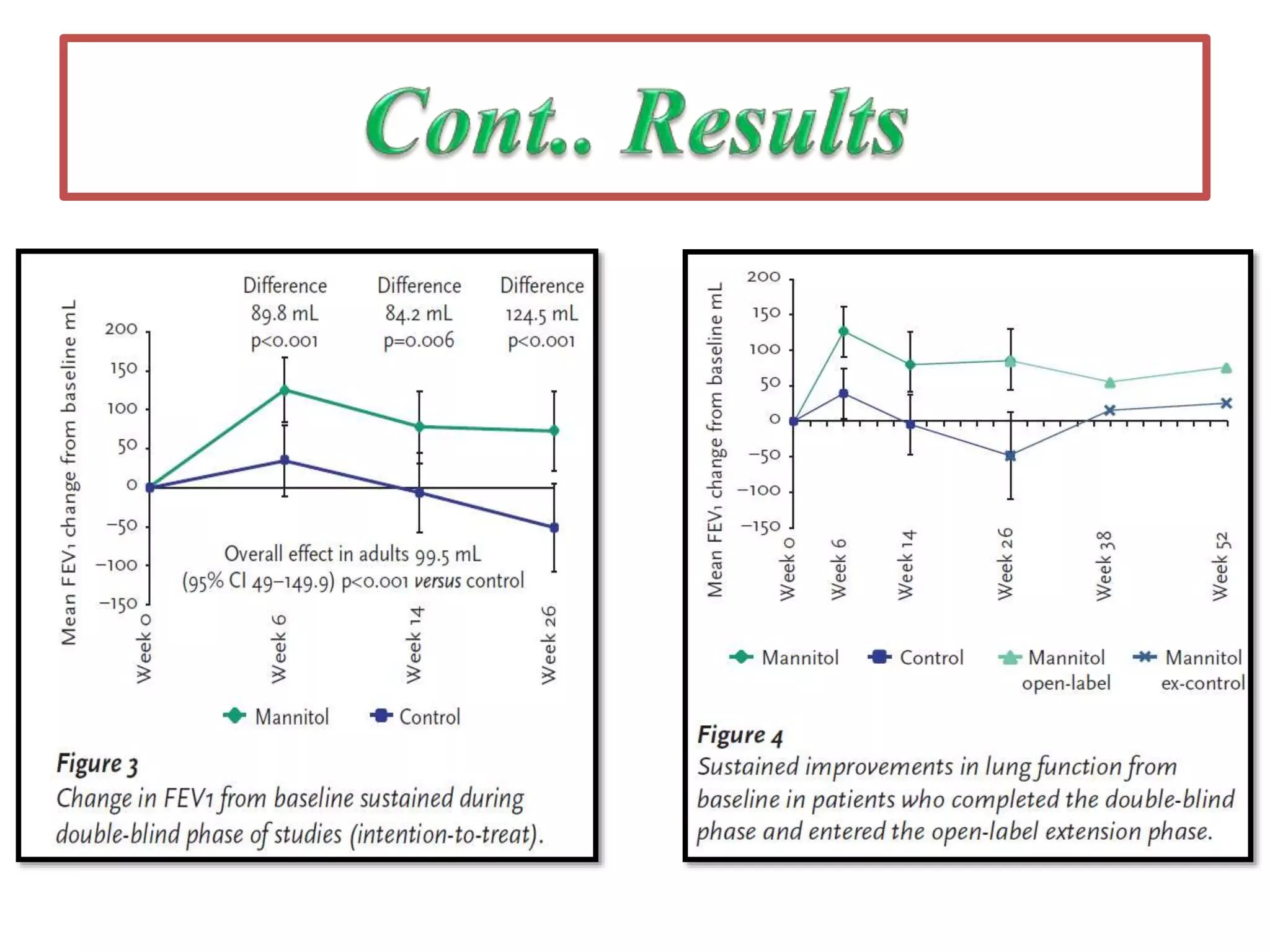
  • #14 Effects of mannitol on lung function: In general population: Study CF301 and study CF302 both demonstrated a statistically significant improvement in lung function (FEV1 P <0.001 and FVC P <o.o35) In the pooled data:317 subjects Over 26 weeks, mannitol improved lung function as demonstrated by a mean absolute change in FEV1 from baseline compared with control of +99.5 mL (95% CI 49.1–149.9; p=0.001) and a relative change in % predicted for normal compared with control of +4.72% (95% CI 1.86–7.59; p=0.001). Statistically significant improvements in FEV1 were sustained over the duration of the double-blind phase (fig. 3). Improvements in lung function were maintained for an additional 26 weeks in mannitol- treated subjects who consented to enter the open-label phase, indicating that the beneficial effects of mannitol on lung function can be sustained with prolonged treatment (fig. 4). The individual subject response at week 6 was highly predictive of longer-term FEV1 changes as shown in figure 5. In subjects who had received control medication (mannitol 50 mg twice daily) in the double-blind phase, the mean FEV1 increased upon switching treatment to mannitol 400 mg twice daily in the open-label phase. At week 52, the mean FEV1 had increased by 74.7 mL in these subjects.
  • #15 The individual subject response at week 6 was highly predictive of longer-term FEV1 changes as shown in figure 5.
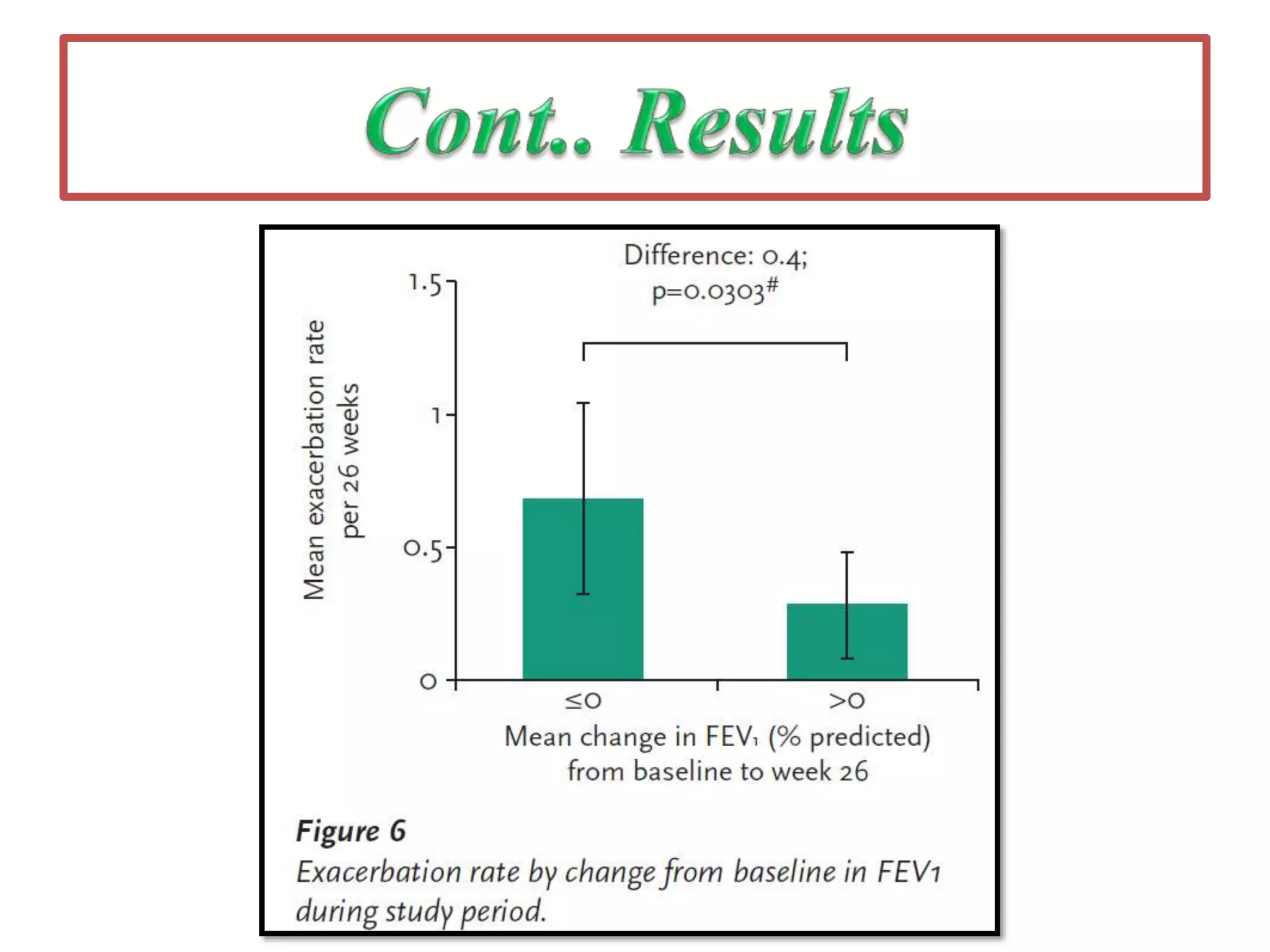
  • #16 Effects of mannitol on the frequency of pulmonary exacerbations: This appeared to be driven by mannitol-treated subjects who had improved FEV1 between baseline and week 26. These subjects had a significantly reduced frequency of pulmonary exacerbations relative to those whose lung function did not respond (relative risk 0.4; p=0.03). الاشخاص الذين وجد عندهم تحسن في FEV1 من بعد استخدام ال مانيتول قلت نسبة ال exacerbations
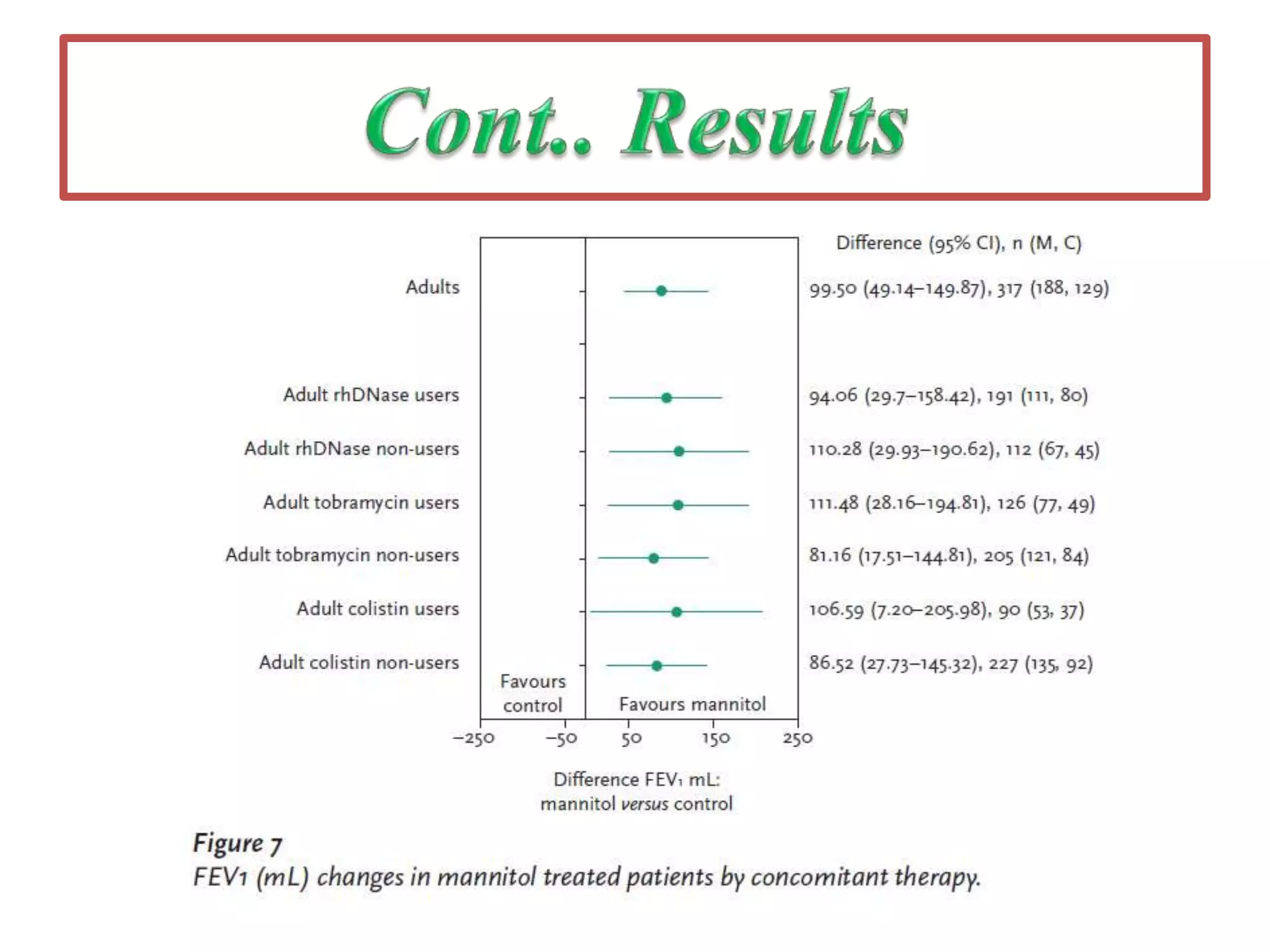
  • #17 Lung function in other subgroups of adult subjects: To assess the efficacy of inhaled mannitol when used in conjunction with best standard care, lung function scores were compared in various treatment groups. Improvements were seen irrespective of rhDNase, tobramycin or colistin use, as shown in figure 7
  • #18 Withdrawal rate: Additional instruction of study coordinators to teach subjects proper inhaler technique with reinforcement and additional training provided during study CF302. Compliance: Median treatment compliance as measured by capsule returns in adult subjects who stayed on medication for the duration of the study was over 88% and 91% in the mannitol and control groups, respectively
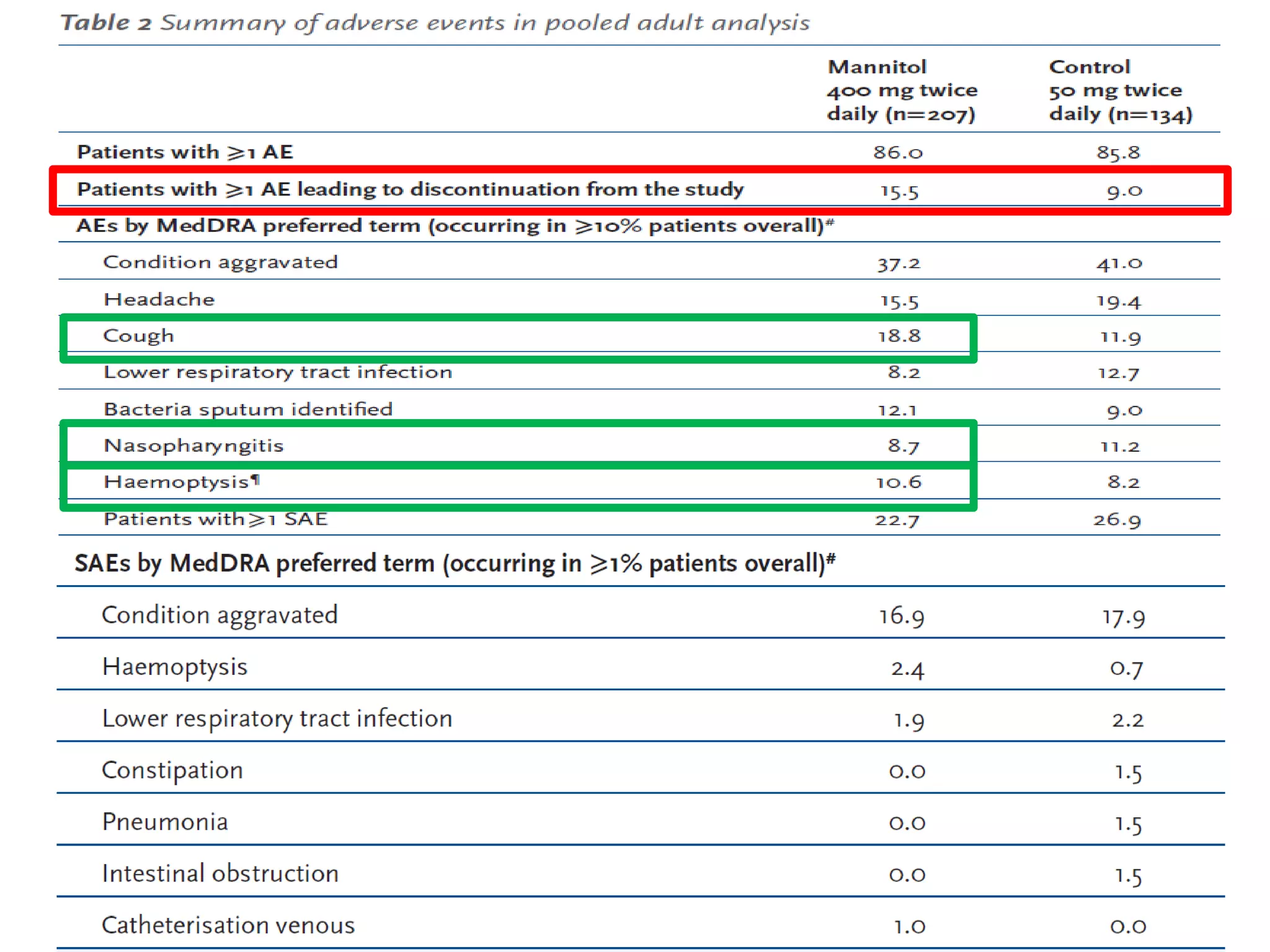
  • #19 Adverse events were generally mild or moderate, and consistent with CF and its standard therapies There was a greater incidence of adverse events leading to discontinuation in mannitol-treated subjects compared with those on control. The most frequently reported adverse event in both treatment groups was “condition aggravated” (pulmonary exacerbation) The most commonly reported respiratory adverse events occurring more frequently in mannitol- treated subjects were cough, haemoptysis and pharyngeal pain. The incidence of exacerbation-related haemoptysis episodes in mannitol treated subjects was lower than the incidence in the control group (mannitol 4.8% versus control 9.7%). The total incidence of haemoptysis, including all events reported as a haemoptysis adverse event or those occurring as part of an exacerbation was marginally lower in the mannitol arm (15.5% and 17.9%, for mannitol and control, respectively). There was no change in growth of CF organisms with mannitol and no difference in growth between mannitol and control over 26 weeks
  • #20 For the management of hacking, dry and irritated cough: patients were advised to slow down the speed of inhalation take sips of water between capsules and take time to settle the cough. Productive cough was managed by: patients taking a moment between capsules to get control of their coughing and by practicing controlled huffing and coughing to clear secretions between inhalations. Patients tend to accommodate cough well, provided expectations are set, and the positive implication of a productive cough is understood.
  • #21 These data suggest that demonstration and reinforcement of proper inhaler technique and setting clear expectations with respect to treatment effects may increase the proportion of patients who could benefit from this novel medication. The differences in the withdrawal rates between studies CF301 and CF302 however, seem to highlight the importance of education and training in achieving good treatment adherence. MTT provides opportunity to educate patients about the proper use of the inhaler including loading capsules, inhaler technique and the appropriate inspiratory flow rate.
  • #22 Only remove capsules immediately before use. Pierce capsules once only. Tilt inhaler so mouth-piece faces slightly downward which allows capsule to drop forward into spinning chamber. Keep inhaler tilted in this way and breathe out completely away from the inhaler. With the head tilted upwards, the patient should inhale deeply at an even, steady rate that is fast enough to make the capsule spin - the capsule will make a “rattling” sound in the inhaler when inspiratory flow is sufficient. The inhalation rate may be slowed down if coughing occurs – controlled coughing should be encouraged where possible After the dose from each capsule is inhaled, the patient must breath hold for 5 s – exhale and cough AWAY from the inhaler to prevent humidity build-up within the device. The 10 capsules should be taken closely together over a 3–5 min. A sip of water may be taken throughout the challenge to relieve cough and/or dry throat.