Case Scenario
• Clinical approach
Case discussion:
• Differential diagnosis
• Investigations
• Management
53yrs old lady brought by the family with
history of altered mental status and fever since
2 days.
Vitals :
• PR120; RR30; SpO2 85; BP 105/56
• T: 36.8
How would like to Proceed?
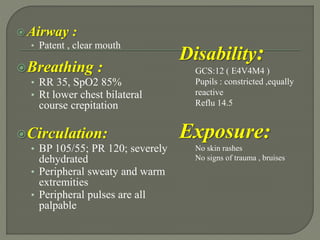
Airway :
• Patent , clear mouth
Breathing :
• RR 35, SpO2 85%
• Rt lower chest bilateral
course crepitation
Circulation:
• BP 105/55; PR 120; severely
dehydrated
• Peripheral sweaty and warm
extremities
• Peripheral pulses are all
palpable
Disability:
GCS:12 ( E4V4M4 )
Pupils : constricted ,equally
reactive
Reflu 14.5
Exposure:
No skin rashes
No signs of trauma , bruises
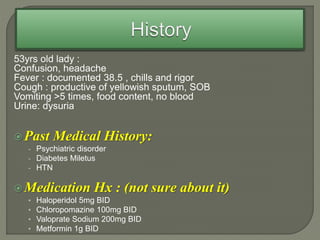
53yrs old lady :
Confusion, headache
Fever : documented 38.5 , chills and rigor
Cough : productive of yellowish sputum, SOB
Vomiting >5 times, food content, no blood
Urine: dysuria
Past Medical History:
- Psychiatric disorder
- Diabetes Miletus
- HTN
Medication Hx : (not sure about it)
• Haloperidol 5mg BID
• Chloropomazine 100mg BID
• Valoprate Sodium 200mg BID
• Metformin 1g BID
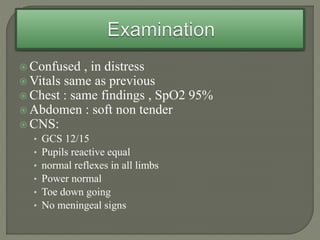
 Confused , in distress
 Vitals same as previous
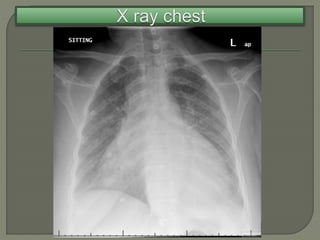
 Chest : same findings , SpO2 95%
 Abdomen : soft non tender
 CNS:
• GCS 12/15
• Pupils reactive equal
• normal reflexes in all limbs
• Power normal
• Toe down going
• No meningeal signs
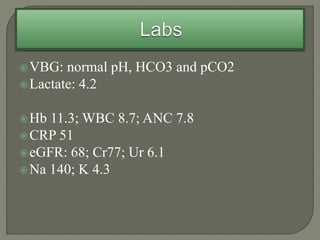
VBG: normal pH, HCO3 and pCO2
Lactate: 4.2
Hb 11.3; WBC 8.7; ANC 7.8
CRP 51
eGFR: 68; Cr77; Ur 6.1
Na 140; K 4.3
Started on :
• Antibiotic cover , hydration , antipyretics
Impression:
• CAP
• UTI
• CNS infection
Referred to medicine.
Medical team Morning round, the plan was to
resume her regular medications
 Haloperidol 5mg BID.
 Chloropomazine 100mg BID.
 Valoprate Sodium 200mg BID.
 Metformin 1g BID.
• After 12 hours she was noted :
 More confused , sweaty
 Vitals : PR 120; T39.4 ; RR20
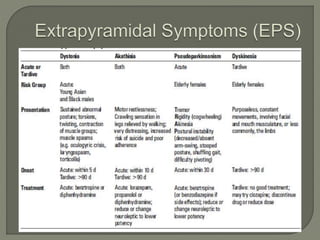
 Has upper limb cogwheel rigidity
• What is the cause of her new symptoms??
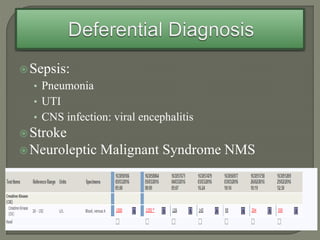
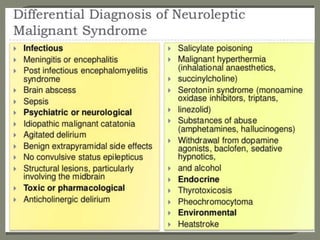
Sepsis:
• Pneumonia
• UTI
• CNS infection: viral encephalitis
Stroke
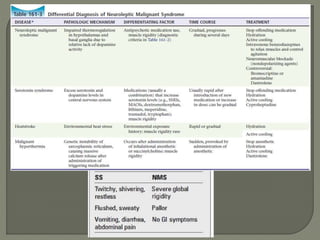
Neuroleptic Malignant Syndrome NMS
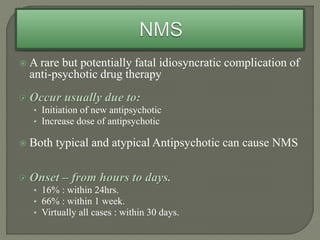
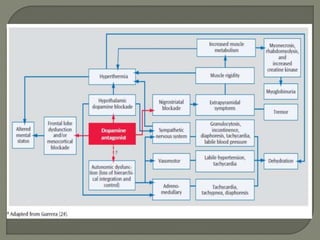
 A rare but potentially fatal idiosyncratic complication of
anti-psychotic drug therapy
 Occur usually due to:
• Initiation of new antipsychotic
• Increase dose of antipsychotic
 Both typical and atypical Antipsychotic can cause NMS
 Onset – from hours to days.
• 16% : within 24hrs.
• 66% : within 1 week.
• Virtually all cases : within 30 days.
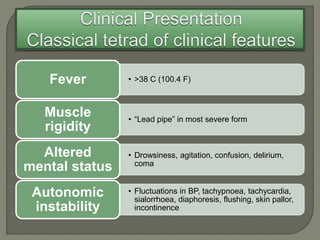
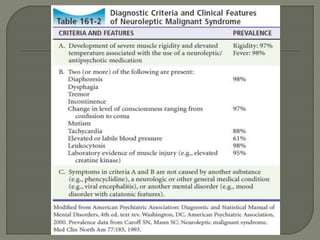
• >38 C (100.4 F)Fever
• “Lead pipe” in most severe form
Muscle
rigidity
• Drowsiness, agitation, confusion, delirium,
coma
Altered
mental status
• Fluctuations in BP, tachypnoea, tachycardia,
sialorrhoea, diaphoresis, flushing, skin pallor,
incontinence
Autonomic
instability
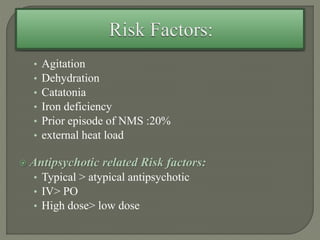
• Agitation
• Dehydration
• Catatonia
• Iron deficiency
• Prior episode of NMS :20%
• external heat load
 Antipsychotic related Risk factors:
• Typical > atypical antipsychotic
• IV> PO
• High dose> low dose
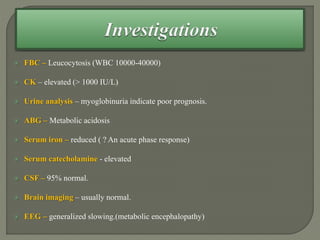
 FBC – Leucocytosis (WBC 10000-40000)
 CK – elevated (> 1000 IU/L)
 Urine analysis – myoglobinuria indicate poor prognosis.
 ABG – Metabolic acidosis
 Serum iron – reduced ( ? An acute phase response)
 Serum catecholamine - elevated
 CSF – 95% normal.
 Brain imaging – usually normal.
 EEG – generalized slowing.(metabolic encephalopathy)
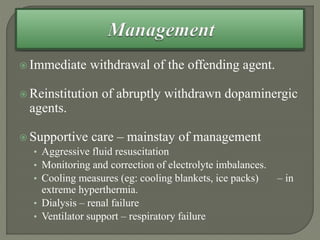
 Immediate withdrawal of the offending agent.
 Reinstitution of abruptly withdrawn dopaminergic
agents.
 Supportive care – mainstay of management
• Aggressive fluid resuscitation
• Monitoring and correction of electrolyte imbalances.
• Cooling measures (eg: cooling blankets, ice packs) – in
extreme hyperthermia.
• Dialysis – renal failure
• Ventilator support – respiratory failure
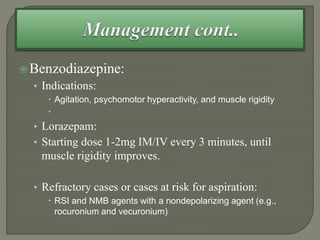
Benzodiazepine:
• Indications:
 Agitation, psychomotor hyperactivity, and muscle rigidity

• Lorazepam:
• Starting dose 1-2mg IM/IV every 3 minutes, until
muscle rigidity improves.
• Refractory cases or cases at risk for aspiration:
 RSI and NMB agents with a nondepolarizing agent (e.g.,
rocuronium and vecuronium)
 Dopaminergic agents
 Bromocriptine
 Dopamine agonist
 Starting dose - 2.5mg BID oral/NG
 Increase dose by 2.5mg every 24hrs.
 Max. dose – 45mg/day
 Amantadine
 200-400mg/day in divided doses oral/NG
 Dantrolene:
• Inhibits the release of calcium from the sarcoplasmic reticulum
• has no proven benefit.
ECT
• can be effective in,
 Poor response to supportive care and pharmacological
management.
 When idiopathic malignant catatonia cannot be
excluded.
 Persistent residual catatonia and parkinsonism after the
resolution of acute symptoms.
 Estimated risk of 30% of developing NMS
again with re-introduction of antipsychotics.
 Precautions:
• At least 2 weeks should be allowed from recovery
before re-challenge.
• Low potency conventional antipsychotics/ atypical
antipsychotics.
• Start with a low dose and titrate gradually.
• Careful monitoring for early signs of NMS.
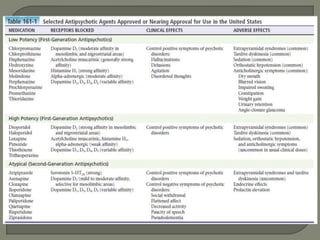
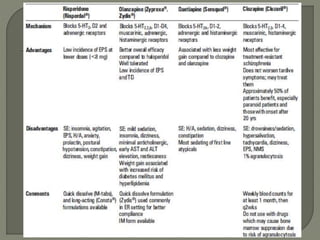
Aka neuroleptics
atypical antipsychotics are as effective as
typical antipsychotics but have better side
effect profile
Route:
• PO; short-acting or long-acting depot IM
injections; sublingual
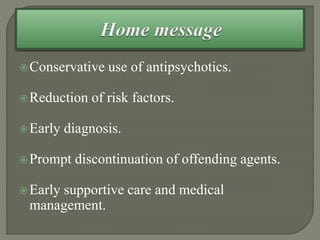
Conservative use of antipsychotics.
Reduction of risk factors.
Early diagnosis.
Prompt discontinuation of offending agents.
Early supportive care and medical
management.
Tintinalli’s EM
Rosen’s 8th edition
Toronto Notes
Medscape
NMS Neuroleptic malignant syndrome

NMS Neuroleptic malignant syndrome

  • 2.
    Case Scenario • Clinicalapproach Case discussion: • Differential diagnosis • Investigations • Management
  • 3.
    53yrs old ladybrought by the family with history of altered mental status and fever since 2 days. Vitals : • PR120; RR30; SpO2 85; BP 105/56 • T: 36.8 How would like to Proceed?
  • 5.
    Airway : • Patent, clear mouth Breathing : • RR 35, SpO2 85% • Rt lower chest bilateral course crepitation Circulation: • BP 105/55; PR 120; severely dehydrated • Peripheral sweaty and warm extremities • Peripheral pulses are all palpable Disability: GCS:12 ( E4V4M4 ) Pupils : constricted ,equally reactive Reflu 14.5 Exposure: No skin rashes No signs of trauma , bruises
  • 6.
    53yrs old lady: Confusion, headache Fever : documented 38.5 , chills and rigor Cough : productive of yellowish sputum, SOB Vomiting >5 times, food content, no blood Urine: dysuria Past Medical History: - Psychiatric disorder - Diabetes Miletus - HTN Medication Hx : (not sure about it) • Haloperidol 5mg BID • Chloropomazine 100mg BID • Valoprate Sodium 200mg BID • Metformin 1g BID
  • 7.
     Confused ,in distress  Vitals same as previous  Chest : same findings , SpO2 95%  Abdomen : soft non tender  CNS: • GCS 12/15 • Pupils reactive equal • normal reflexes in all limbs • Power normal • Toe down going • No meningeal signs
  • 8.
    VBG: normal pH,HCO3 and pCO2 Lactate: 4.2 Hb 11.3; WBC 8.7; ANC 7.8 CRP 51 eGFR: 68; Cr77; Ur 6.1 Na 140; K 4.3
  • 10.
    Started on : •Antibiotic cover , hydration , antipyretics Impression: • CAP • UTI • CNS infection Referred to medicine.
  • 11.
    Medical team Morninground, the plan was to resume her regular medications  Haloperidol 5mg BID.  Chloropomazine 100mg BID.  Valoprate Sodium 200mg BID.  Metformin 1g BID.
  • 12.
    • After 12hours she was noted :  More confused , sweaty  Vitals : PR 120; T39.4 ; RR20  Has upper limb cogwheel rigidity • What is the cause of her new symptoms??
  • 13.
    Sepsis: • Pneumonia • UTI •CNS infection: viral encephalitis Stroke Neuroleptic Malignant Syndrome NMS
  • 15.
     A rarebut potentially fatal idiosyncratic complication of anti-psychotic drug therapy  Occur usually due to: • Initiation of new antipsychotic • Increase dose of antipsychotic  Both typical and atypical Antipsychotic can cause NMS  Onset – from hours to days. • 16% : within 24hrs. • 66% : within 1 week. • Virtually all cases : within 30 days.
  • 16.
    • >38 C(100.4 F)Fever • “Lead pipe” in most severe form Muscle rigidity • Drowsiness, agitation, confusion, delirium, coma Altered mental status • Fluctuations in BP, tachypnoea, tachycardia, sialorrhoea, diaphoresis, flushing, skin pallor, incontinence Autonomic instability
  • 18.
    • Agitation • Dehydration •Catatonia • Iron deficiency • Prior episode of NMS :20% • external heat load  Antipsychotic related Risk factors: • Typical > atypical antipsychotic • IV> PO • High dose> low dose
  • 22.
     FBC –Leucocytosis (WBC 10000-40000)  CK – elevated (> 1000 IU/L)  Urine analysis – myoglobinuria indicate poor prognosis.  ABG – Metabolic acidosis  Serum iron – reduced ( ? An acute phase response)  Serum catecholamine - elevated  CSF – 95% normal.  Brain imaging – usually normal.  EEG – generalized slowing.(metabolic encephalopathy)
  • 23.
     Immediate withdrawalof the offending agent.  Reinstitution of abruptly withdrawn dopaminergic agents.  Supportive care – mainstay of management • Aggressive fluid resuscitation • Monitoring and correction of electrolyte imbalances. • Cooling measures (eg: cooling blankets, ice packs) – in extreme hyperthermia. • Dialysis – renal failure • Ventilator support – respiratory failure
  • 24.
    Benzodiazepine: • Indications:  Agitation,psychomotor hyperactivity, and muscle rigidity  • Lorazepam: • Starting dose 1-2mg IM/IV every 3 minutes, until muscle rigidity improves. • Refractory cases or cases at risk for aspiration:  RSI and NMB agents with a nondepolarizing agent (e.g., rocuronium and vecuronium)
  • 25.
     Dopaminergic agents Bromocriptine  Dopamine agonist  Starting dose - 2.5mg BID oral/NG  Increase dose by 2.5mg every 24hrs.  Max. dose – 45mg/day  Amantadine  200-400mg/day in divided doses oral/NG  Dantrolene: • Inhibits the release of calcium from the sarcoplasmic reticulum • has no proven benefit.
  • 26.
    ECT • can beeffective in,  Poor response to supportive care and pharmacological management.  When idiopathic malignant catatonia cannot be excluded.  Persistent residual catatonia and parkinsonism after the resolution of acute symptoms.
  • 27.
     Estimated riskof 30% of developing NMS again with re-introduction of antipsychotics.  Precautions: • At least 2 weeks should be allowed from recovery before re-challenge. • Low potency conventional antipsychotics/ atypical antipsychotics. • Start with a low dose and titrate gradually. • Careful monitoring for early signs of NMS.
  • 28.
    Aka neuroleptics atypical antipsychoticsare as effective as typical antipsychotics but have better side effect profile Route: • PO; short-acting or long-acting depot IM injections; sublingual
  • 32.
    Conservative use ofantipsychotics. Reduction of risk factors. Early diagnosis. Prompt discontinuation of offending agents. Early supportive care and medical management.
  • 33.
    Tintinalli’s EM Rosen’s 8thedition Toronto Notes Medscape

Editor's Notes

  • #7 UDS: nitrate +, RBC+++, ketone +++++