Approach to
Metabolic
Acidosis
Metabolic acidosis is an acid-base
disorder characterized by a decrease in
serum pH that results from either a
primary decrease in plasma
bicarbonate concentration ([HCO3-]) or
an increase in hydrogen ion
concentration ([H+])
A primary metabolic acidosis is a
pathophysiologic state characterized
by an arterial pH of less than 7.35
in the absence of an elevated PaCO2
It is created by
one of three
mechanisms:
(1) increased
production of
acids
(2) decreased
excretion of
acids
(3) loss of alkali.
The kidneys are responsible for
reclaiming filtered bicarbonate (HCO3-)
and eliminating the daily acid load
generated from nitrogen (protein)
metabolism
Anion gap
To achieve electrochemical balance, ionic
elements in the extracellular fluid must
equal a net charge of zero. Therefore, the
number of negatively charged ions (anions)
should equal the number of positively
charged ions (cations).
Anion Gap = (Sodium) – (Chloride +
Bicarbonate)
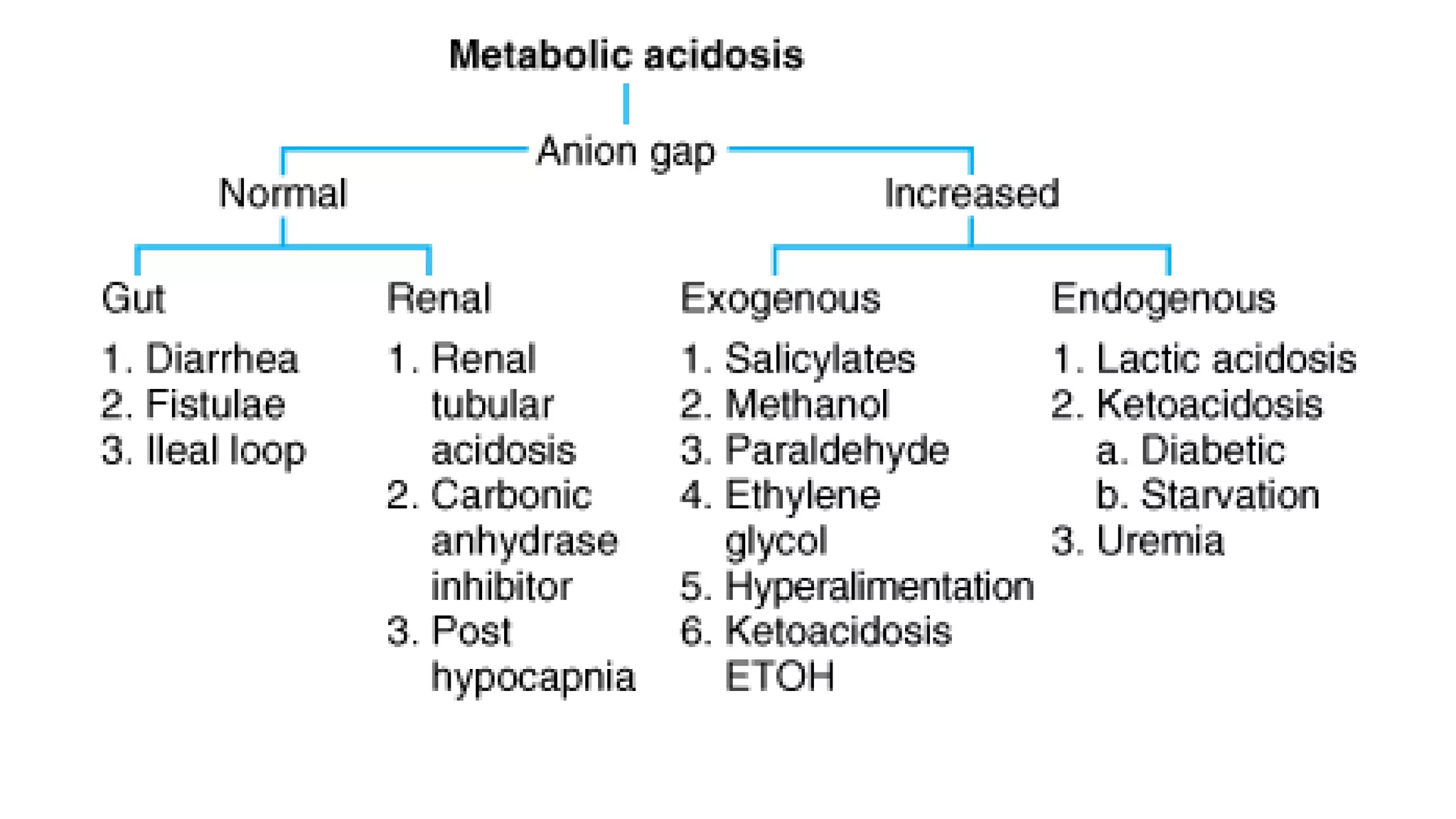
Practically, a metabolic acidosis is
divided into processes that are
associated with a normal anion gap (8-
12 mEq/L) or an elevated anion gap
(>12 mEq/L)
A normal anion gap metabolic acidosis
involves no gain of unmeasured anions;
however, because of the need for electrical
neutrality, serum chloride replaces the
depleted bicarbonate, and hyperchloremia
develops.
In contrast, an elevated anion gap
metabolic acidosis is caused when extra
unmeasured anions are added to the blood.
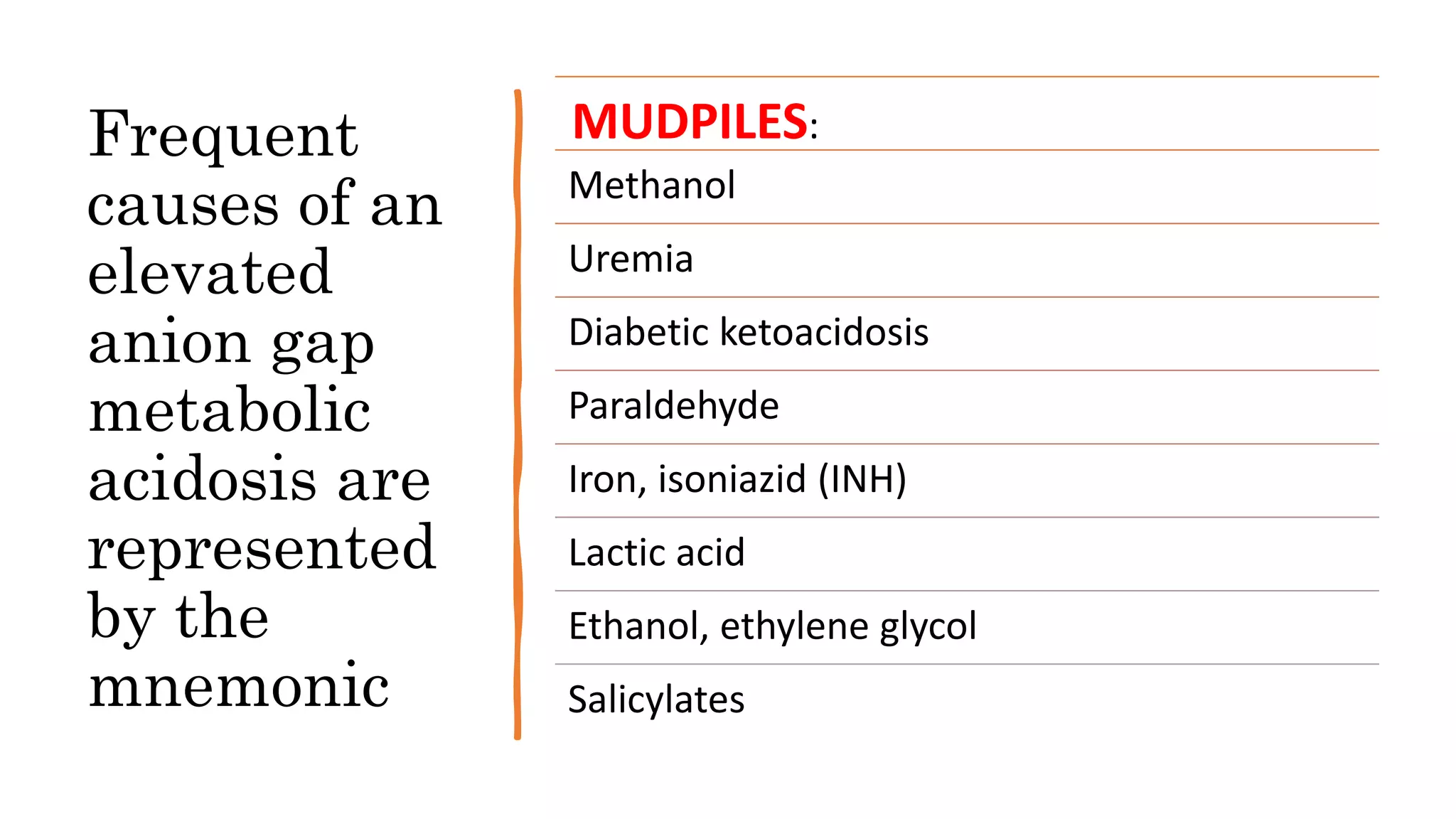
Frequent
causes of an
elevated
anion gap
metabolic
acidosis are
represented
by the
mnemonic
MUDPILES:
Methanol
Uremia
Diabetic ketoacidosis
Paraldehyde
Iron, isoniazid (INH)
Lactic acid
Ethanol, ethylene glycol
Salicylates
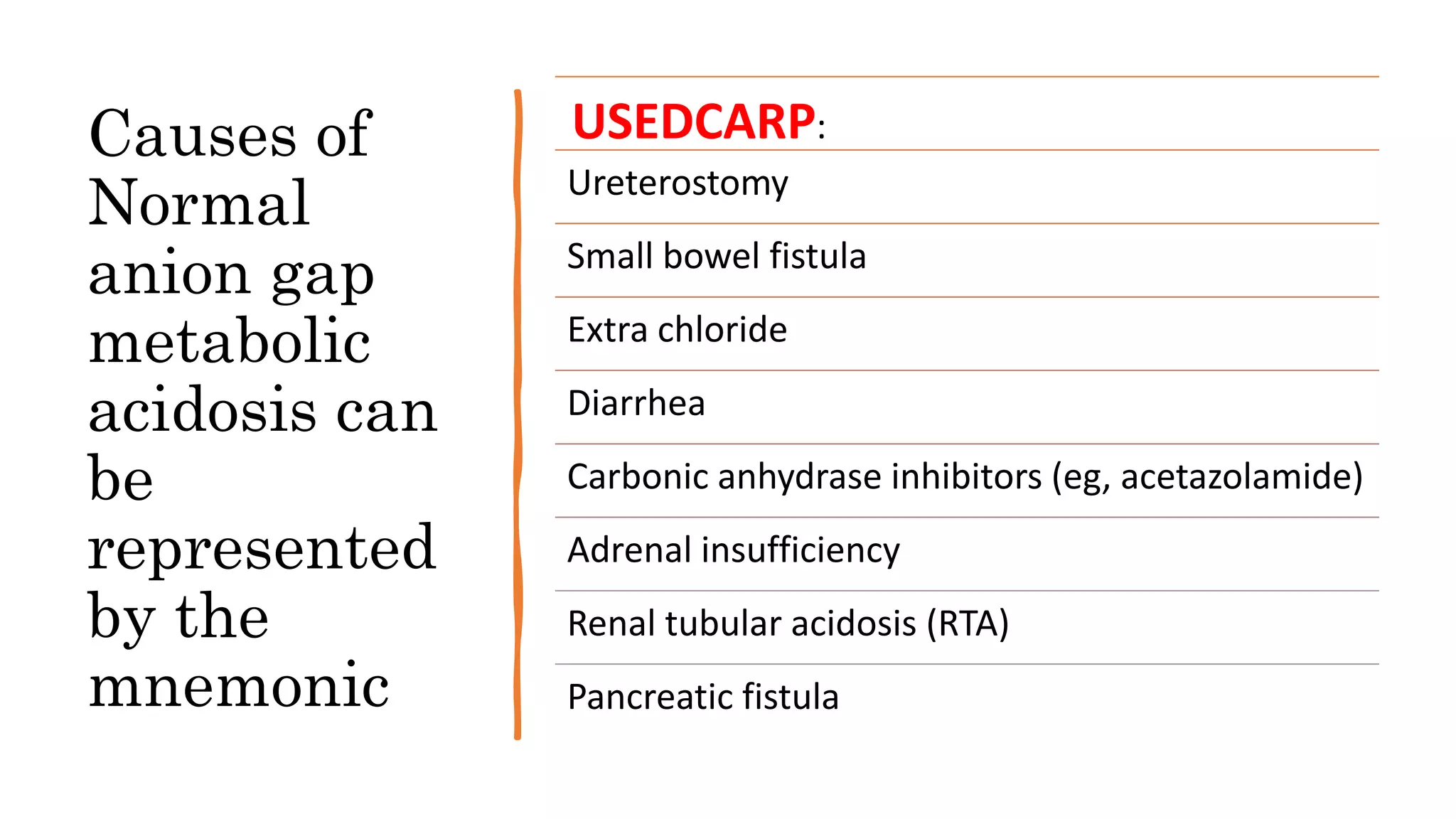
Causes of
Normal
anion gap
metabolic
acidosis can
be
represented
by the
mnemonic
USEDCARP:
Ureterostomy
Small bowel fistula
Extra chloride
Diarrhea
Carbonic anhydrase inhibitors (eg, acetazolamide)
Adrenal insufficiency
Renal tubular acidosis (RTA)
Pancreatic fistula
Approach to metabolic acidosis

Approach to metabolic acidosis

  • 1.
  • 2.
    Metabolic acidosis isan acid-base disorder characterized by a decrease in serum pH that results from either a primary decrease in plasma bicarbonate concentration ([HCO3-]) or an increase in hydrogen ion concentration ([H+])
  • 3.
    A primary metabolicacidosis is a pathophysiologic state characterized by an arterial pH of less than 7.35 in the absence of an elevated PaCO2
  • 4.
    It is createdby one of three mechanisms: (1) increased production of acids (2) decreased excretion of acids (3) loss of alkali.
  • 5.
    The kidneys areresponsible for reclaiming filtered bicarbonate (HCO3-) and eliminating the daily acid load generated from nitrogen (protein) metabolism
  • 6.
    Anion gap To achieveelectrochemical balance, ionic elements in the extracellular fluid must equal a net charge of zero. Therefore, the number of negatively charged ions (anions) should equal the number of positively charged ions (cations). Anion Gap = (Sodium) – (Chloride + Bicarbonate)
  • 7.
    Practically, a metabolicacidosis is divided into processes that are associated with a normal anion gap (8- 12 mEq/L) or an elevated anion gap (>12 mEq/L)
  • 8.
    A normal aniongap metabolic acidosis involves no gain of unmeasured anions; however, because of the need for electrical neutrality, serum chloride replaces the depleted bicarbonate, and hyperchloremia develops. In contrast, an elevated anion gap metabolic acidosis is caused when extra unmeasured anions are added to the blood.
  • 9.
    Frequent causes of an elevated aniongap metabolic acidosis are represented by the mnemonic MUDPILES: Methanol Uremia Diabetic ketoacidosis Paraldehyde Iron, isoniazid (INH) Lactic acid Ethanol, ethylene glycol Salicylates
  • 10.
    Causes of Normal anion gap metabolic acidosiscan be represented by the mnemonic USEDCARP: Ureterostomy Small bowel fistula Extra chloride Diarrhea Carbonic anhydrase inhibitors (eg, acetazolamide) Adrenal insufficiency Renal tubular acidosis (RTA) Pancreatic fistula