CKD and Dialysis
Kidney
• Organs that filter waste products from the blood
• Involved in regulating blood pressure, electrolyte balance, and red blood
cell production in the body
• The kidneys excrete a dietary protein called urea, as well as sodium,
potassium, and phosphate
• These substances can build up in the body if kidney function is impaired
indicative of kidney disease
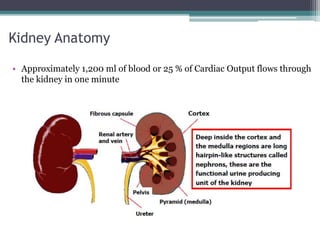
Kidney Anatomy
• Approximately 1,200 ml of blood or 25 % of Cardiac Output flows through
the kidney in one minute
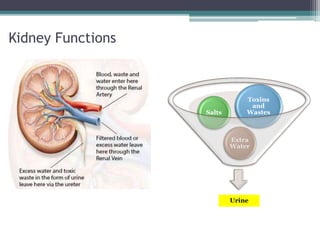
Kidney Functions
Urine
Extra
Water
Salts
Toxins
and
Wastes
CKD
• A type of kidney disease in which there is gradual loss of kidney
function over a period of months or years
• Structural or functional abnormalities of the kidneys for ≥3months, as
manifested by either:
1. Kidney damage, with or without decreased GFR, as defined by
 pathologic abnormalities
 markers of kidney damage, including abnormalities in the
composition of the blood or urine or abnormalities in imaging tests
 Kidney transplantation
2. GFR <60 ml/min/1.73 m2, with or without
 kidney damage
• Kidney Failure is defined as either
▫ a level of GFR to <15 mL/min/1.73 m2, which is accompanied in most
cases by uremia, or
▫ a need for initiation of kidney replacement therapy (dialysis or
transplantation) for complications of decreased GFR.
• End-Stage Renal Disease (ESRD)
▫ administrative term for disbursement by Medicare, specifically the
level of GFR (creatinine of 8mg/dl) and occurrence of kidney failure
symptoms necessitating replacement therapy.
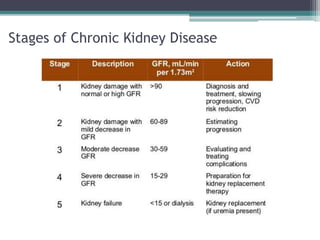
Stages of Chronic Kidney Disease
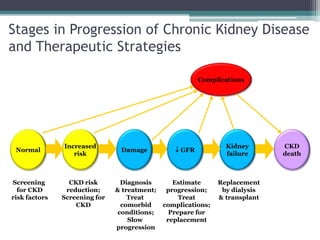
Stages in Progression of Chronic Kidney Disease
and Therapeutic Strategies
CKD
death
Complications
Screening
for CKD
risk factors
CKD risk
reduction;
Screening for
CKD
Diagnosis
& treatment;
Treat
comorbid
conditions;
Slow
progression
Estimate
progression;
Treat
complications;
Prepare for
replacement
Replacement
by dialysis
& transplant
Normal
Increased
risk
Kidney
failure
Damage  GFR
Causes and Incidence
• Chronic renal failure occurs in approximately 1 out of 1,000 people.
• Causative diseases include any type:
▫ Diabetes mellitus - Most Common cause
▫ Hypertension
▫ Glomerulonephritis
▫ Others
 Chronic pyelonephritis
 PKD /polycystic kidney disease
 Obstructive uropathy
 Stones, BPH, cancer, etc.
 Alport syndrome
 Drug-induced nephropathy
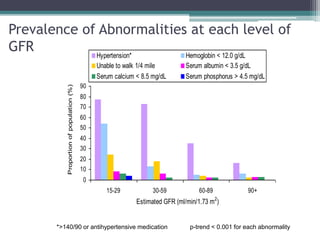
Prevalence of Abnormalities at each level of
GFR
0
10
20
30
40
50
60
70
80
90
15-29 30-59 60-89 90+
Estimated GFR (ml/min/1.73 m2
)
Proportionofpopulation(%)
Hypertension* Hemoglobin < 12.0 g/dL
Unable to walk 1/4 mile Serum albumin < 3.5 g/dL
Serum calcium < 8.5 mg/dL Serum phosphorus > 4.5 mg/dL
*>140/90 or antihypertensive medication p-trend < 0.001 for each abnormality
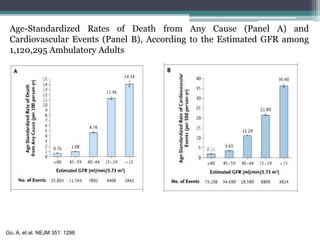
Age-Standardized Rates of Death from Any Cause (Panel A) and
Cardiovascular Events (Panel B), According to the Estimated GFR among
1,120,295 Ambulatory Adults
Go, A, et al. NEJM 351: 1296
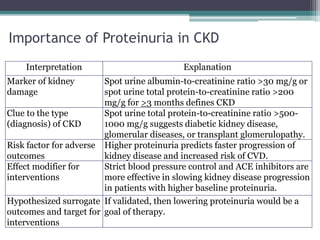
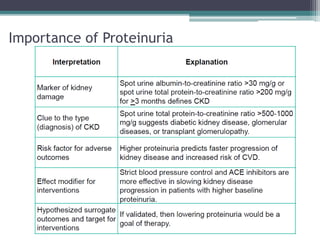
Importance of Proteinuria in CKD
Interpretation Explanation
Marker of kidney
damage
Spot urine albumin-to-creatinine ratio >30 mg/g or
spot urine total protein-to-creatinine ratio >200
mg/g for >3 months defines CKD
Clue to the type
(diagnosis) of CKD
Spot urine total protein-to-creatinine ratio >500-
1000 mg/g suggests diabetic kidney disease,
glomerular diseases, or transplant glomerulopathy.
Risk factor for adverse
outcomes
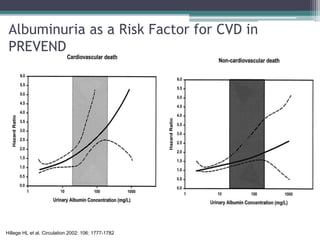
Higher proteinuria predicts faster progression of
kidney disease and increased risk of CVD.
Effect modifier for
interventions
Strict blood pressure control and ACE inhibitors are
more effective in slowing kidney disease progression
in patients with higher baseline proteinuria.
Hypothesized surrogate
outcomes and target for
interventions
If validated, then lowering proteinuria would be a
goal of therapy.
Albuminuria as a Risk Factor for CVD in
PREVEND
Hillege HL et al. Circulation 2002: 106: 1777-1782
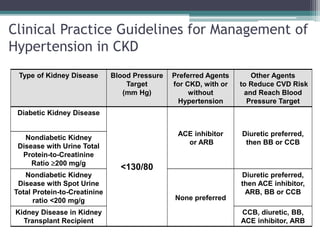
Clinical Practice Guidelines for Management of
Hypertension in CKD
Type of Kidney Disease Blood Pressure
Target
(mm Hg)
Preferred Agents
for CKD, with or
without
Hypertension
Other Agents
to Reduce CVD Risk
and Reach Blood
Pressure Target
Diabetic Kidney Disease
<130/80
ACE inhibitor
or ARB
Diuretic preferred,
then BB or CCB
Nondiabetic Kidney
Disease with Urine Total
Protein-to-Creatinine
Ratio 200 mg/g
Nondiabetic Kidney
Disease with Spot Urine
Total Protein-to-Creatinine
ratio <200 mg/g None preferred
Diuretic preferred,
then ACE inhibitor,
ARB, BB or CCB
Kidney Disease in Kidney
Transplant Recipient
CCB, diuretic, BB,
ACE inhibitor, ARB
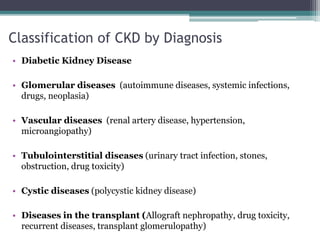
Classification of CKD by Diagnosis
• Diabetic Kidney Disease
• Glomerular diseases (autoimmune diseases, systemic infections,
drugs, neoplasia)
• Vascular diseases (renal artery disease, hypertension,
microangiopathy)
• Tubulointerstitial diseases (urinary tract infection, stones,
obstruction, drug toxicity)
• Cystic diseases (polycystic kidney disease)
• Diseases in the transplant (Allograft nephropathy, drug toxicity,
recurrent diseases, transplant glomerulopathy)
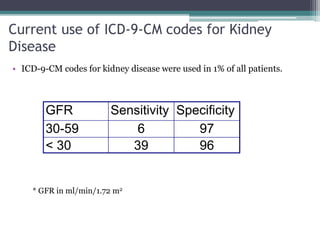
Current use of ICD-9-CM codes for Kidney
Disease
• ICD-9-CM codes for kidney disease were used in 1% of all patients.
GFR Sensitivity Specificity
30-59 6 97
< 30 39 96
* GFR in ml/min/1.72 m2
Symptoms
INITIAL (non-specific)
• nintentional weight loss
• nausea, vomiting
• general ill feeling
• fatigue
• headache
• frequent hiccups
• generalized itching (pruritus)
LATER
• increase or decrease urine output
• need to urinate at night
• anasarca
• easy bruising or bleeding
• blood in the vomit or stools
• breath odor (uremic fetor)
• muscle twitching or cramps
• restless legs syndrome
• increased skin pigmentation
• uremic frost
• decreased sensation
• decreased alertness/lethargy
Uremic Syndrome
• Attributed to a variety of toxic substances, mainly nitrogenous (protein
and amino acid byproducts
▫ urea (when >50 mmol/l) and cyanate (CNO-)
▫ guanidino compounds (eg guanidinosuccinic acid)
▫ middle molecules (mw 300-3,500) – mainly polypeptides
▫ urates and other metabolites of nucleic acids
▫ aliphatic amines and metabolites of aromatic amino acids
▫ hormones (eg PTH)
▫ advanced glycation end-products
• Other factors already considered – bone disease, acidosis, and fluid and
electrolyte disturbances – also contribute to the picture of full-blown
uremia.
Signs and Tests
• Blood pressure may be high
• Urinalysis may show protein, blood, pus or other abnormalities
• Creatinine and BUN levels progressively increase
• Creatinine clearance progressively decreases
• Potassium elevated
• Calcium low and Phosphorus high
• Arterial blood gas show metabolic acidosis
• Xray of bones may show osteodystrophy
Signs and Tests
• Changes that indicate chronic renal failure, including both kidneys being
smaller than normal, may be seen on:
▫ abdominal ultrasound
▫ plain KUB X-ray
▫ abdominal CT scan or MRI
• However, CKD with normal sized or enlarged kidneys:
▫ amyloidosis, diabetes
▫ multiple myeloma
▫ polycystic kidneys
▫ accelerated hypertension
Determinants of Rate of Progression
• Type of Renal Disease
▫ rate of decline in PCKD and interstitial nephritis slower than in CGN
▫ membranous Nephropathy may spontaneously remit with or without
treatment
• Hypertension
• Proteinuria
• Race – blacks fare worse
• Sex – women with PCKD fare better
• Pregnancy – GFR falls faster
• Diabetics – high sugar accelerates
• Smokers
Importance of Proteinuria
Dietary Requirements
• Protein
▫ 0.6-0.8 gm/k/day
▫ supplements of essential amino acids at 0.3 gm/k/day
▫ may allow lower protein intake to 0.4 gm/k/day
▫ intake for uremic patient not yet dialysed: 0.4 - 0.6gm/k/day
▫ for dialysed patients: increase to 1.0 - 1.2 gm/k/day
• Energy
▫ 35 kcal/k/day for sedentary, stable, non-obese HD patients
▫ higher with strenuous labor, underweight or hypercatabolic
Dietary Requirements
• Fat
▫ limit cholesterol <300 mg/day
▫ more proportion of mono- or polyunsaturated than saturated
• Na+
▫ 7-10 gm/day (table salt) if with adequate urine
▫ <6 gm/day or <100 mmol/day if with fluid retention/edema
• K+
▫ HD: restrict to 2-3 gm/day (50-75 meq/day)
▫ PD: 3-4 gm/day or 75-100 meq/day
Dietary Requirements
• Ca++
▫ restrict milk products so supplemental Ca++ is needed (1-1.5 gm/day)
+ Vitamin D to keep serum Ca++ >2.5 mg/dl
• Phosphorus
▫ restrict to 0.6 - 1.2 gm/day to maintain s.Phos <4.5 to 5.5 mg/dl
▫ phosphate binders as needed such as calcium carbonate and calcium
acetate
• Vitamins/ Minerals
▫ ascorbic acid < 150-200 mg maximum to avoid oxalosis
▫ folic acid 1000 mcg; vit.B1 30 or > mg/day; B6 20 or more mg/day;
Other water soluble vitamins based on RDA
▫ provide selenium and zinc
▫ vitamin A preparations must be avoided
Management with Progressive Renal Disease
• Early recognition
• Monitoring the progression
• Detection and correction of reversible causes
• Institution of interventions to delay progression, e.g. diet, ACE inhibitors,
BP, and sugar control
• Avoidance of additional renal injury, e.g. smoking, NSAIDs, radio
contrast, aminoglycosides
• Treatment of complications, e.g. acid base, mineral, and fluid-electrolyte
abnormalities
• Planning ahead for renal replacement therapy (dialysis or
transplantation)
Dialysis
• Artificial process, accumulation of drug removed by diffusion into dialysis fluid
• Separates elements in a solution by diffusion across a semipermeable membrane
down conc. Gradient
• Two Methods –
▫ Peritoneal Dialysis
▫ Hemodialysis
Stage 5 CKD: End Stage Renal Disease
• Kidney function inadequate to sustain life (50-66% of normal function
lost)
• GFR < 15 mL/min/1.73m2 (or dialysis)
• Requires renal replacement therapy
▫ Renal Transplant
▫ Dialysis
Access in CKD
 Avoid PICC/midlines in CKD stage 4-5
 Try to preserve access
 Try for the feet/EJ
 But if you need to, order a midline
PCP should refer CKD stage IV to nephrologists in anticipation of HD
Indications to begin dialysis
• Diabetics: Creatinine clearance is < 15 mL/min
• Non-diabetics: serum creatinine reaches 6 mg/dL
Additional Indications
• Symptoms
▫ Pericarditis
▫ Uncontrollable fluid overload
▫ Pulmonary edema
▫ Uncontrollable and repeated hyperkalemia
▫ Coma
▫ Lethargy
• Less Severe Symptoms
▫ Azotemia
▫ Nausea
▫ Vomiting
Main Goals of Dialysis
Remove
• Fluid
• Waste Products
▫ Urea
▫ Creatinine
▫ Potassium
▫ Phosphorous
▫ Sodium
Maintain
• Fluid
• Electrolyte
• Acid-base balance
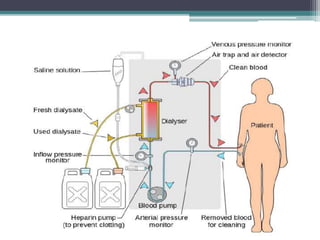
Hemodialysis
• Defined as method for removing waste products such as creatinine and
urea , as well as free water from the blood when the kidneys are in renal
failure
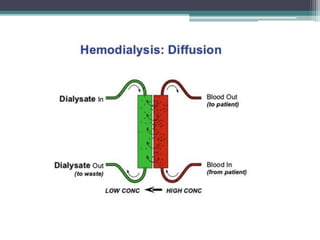
• Principle - involves diffusion of solutes across a semipermeable
membrane
• The process uses artificial kidney to remove waste product
• Artificial kidney contains a number of tubes with semi permeable lining,
suspended in a tank filled with dialysing fluid
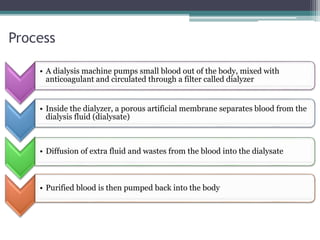
Process
• A dialysis machine pumps small blood out of the body, mixed with
anticoagulant and circulated through a filter called dialyzer
• Inside the dialyzer, a porous artificial membrane separates blood from the
dialysis fluid (dialysate)
• Diffusion of extra fluid and wastes from the blood into the dialysate
• Purified blood is then pumped back into the body
Important Notes
• Heprain is used to prevent blood clotting during dialysis
• It is much more effective method for rapid removal of drug ( overdose ,
poisoning) and preferred method in ESRD
• Dialysis may be required from every 2 days to 3 times a week, one dialysis
period is of 2-4 hrs depending on patient’s size, weight and renal function
Access
• Arteriovenous Fistula
• Arteriovenous Graft
• Central Venous Catheter
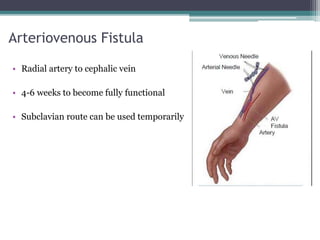
Arteriovenous Fistula
• Radial artery to cephalic vein
• 4-6 weeks to become fully functional
• Subclavian route can be used temporarily
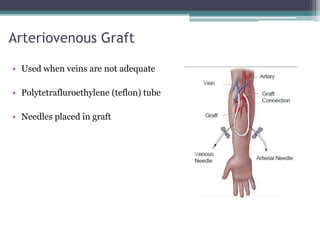
Arteriovenous Graft
• Used when veins are not adequate
• Polytetrafluroethylene (teflon) tube
• Needles placed in graft
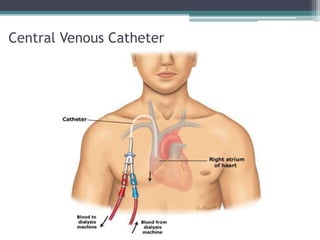
Central Venous Catheter
Types
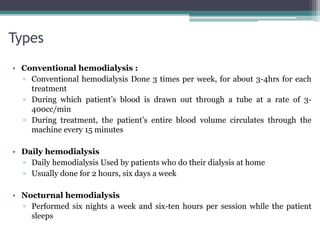
• Conventional hemodialysis :
▫ Conventional hemodialysis Done 3 times per week, for about 3-4hrs for each
treatment
▫ During which patient’s blood is drawn out through a tube at a rate of 3-
400cc/min
▫ During treatment, the patient’s entire blood volume circulates through the
machine every 15 minutes
• Daily hemodialysis
▫ Daily hemodialysis Used by patients who do their dialysis at home
▫ Usually done for 2 hours, six days a week
• Nocturnal hemodialysis
▫ Performed six nights a week and six-ten hours per session while the patient
sleeps
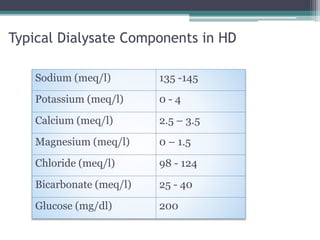
Typical Dialysate Components in HD
Sodium (meq/l) 135 -145
Potassium (meq/l) 0 - 4
Calcium (meq/l) 2.5 – 3.5
Magnesium (meq/l) 0 – 1.5
Chloride (meq/l) 98 - 124
Bicarbonate (meq/l) 25 - 40
Glucose (mg/dl) 200
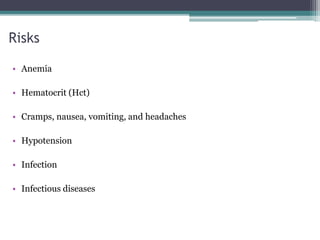
Risks
• Anemia
• Hematocrit (Hct)
• Cramps, nausea, vomiting, and headaches
• Hypotension
• Infection
• Infectious diseases
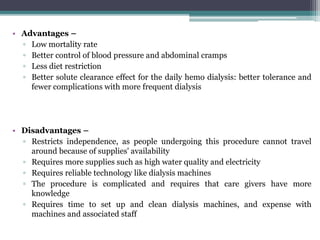
• Advantages –
▫ Low mortality rate
▫ Better control of blood pressure and abdominal cramps
▫ Less diet restriction
▫ Better solute clearance effect for the daily hemo dialysis: better tolerance and
fewer complications with more frequent dialysis
• Disadvantages –
▫ Restricts independence, as people undergoing this procedure cannot travel
around because of supplies' availability
▫ Requires more supplies such as high water quality and electricity
▫ Requires reliable technology like dialysis machines
▫ The procedure is complicated and requires that care givers have more
knowledge
▫ Requires time to set up and clean dialysis machines, and expense with
machines and associated staff
Peritoneal Dialysis
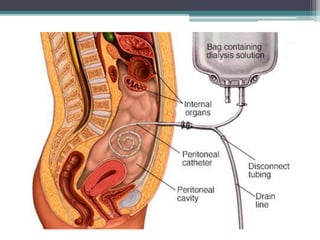
• Peritoneal dialysis Introducing dialyzing fluid into the peritoneal cavity
via a catheter and after a period, the fluid is drained and discarded
• Principle osmosis and diffusion
• The process uses the patient's peritoneum in the abdomen as a membrane
across which fluids and dissolved substances ( electrolytes , urea ,
glucose, albumin and other small molecules) are exchanged from the
blood
• Membrane restricts the movement of formed elements(eg. erythrocytes)
and large molecules(eg. protein) but allows the movement of smaller
molecules according to the conc. gradient
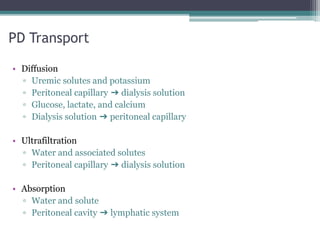
PD Transport
• Diffusion
▫ Uremic solutes and potassium
▫ Peritoneal capillary ➔ dialysis solution
▫ Glucose, lactate, and calcium
▫ Dialysis solution ➔ peritoneal capillary
• Ultrafiltration
▫ Water and associated solutes
▫ Peritoneal capillary ➔ dialysis solution
• Absorption
▫ Water and solute
▫ Peritoneal cavity ➔ lymphatic system
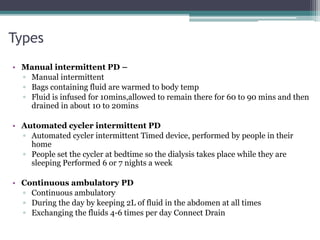
Types
• Manual intermittent PD –
▫ Manual intermittent
▫ Bags containing fluid are warmed to body temp
▫ Fluid is infused for 10mins,allowed to remain there for 60 to 90 mins and then
drained in about 10 to 20mins
• Automated cycler intermittent PD
▫ Automated cycler intermittent Timed device, performed by people in their
home
▫ People set the cycler at bedtime so the dialysis takes place while they are
sleeping Performed 6 or 7 nights a week
• Continuous ambulatory PD
▫ Continuous ambulatory
▫ During the day by keeping 2L of fluid in the abdomen at all times
▫ Exchanging the fluids 4-6 times per day Connect Drain
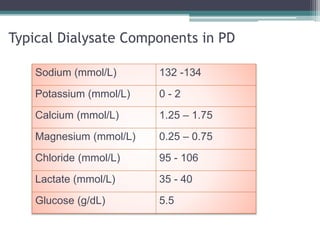
Typical Dialysate Components in PD
Sodium (mmol/L) 132 -134
Potassium (mmol/L) 0 - 2
Calcium (mmol/L) 1.25 – 1.75
Magnesium (mmol/L) 0.25 – 0.75
Chloride (mmol/L) 95 - 106
Lactate (mmol/L) 35 - 40
Glucose (g/dL) 5.5
Precautions
• Solution s clear
• Solution type and percentage
• Volume
• No leaks after gentle squeezing
• Chances of infection
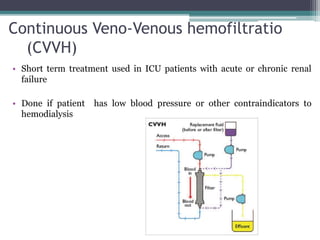
Continuous Veno-Venous hemofiltratio
(CVVH)
• Short term treatment used in ICU patients with acute or chronic renal
failure
• Done if patient has low blood pressure or other contraindicators to
hemodialysis
• Filter properties –
▫ Synthetic, high flux(permeability), hollow fibre membrane
▫ Pore size 50000 da
▫ High Surface Area ( 0.6-1.2 m2)
• Notes –
▫ Flow rate of 20-35 ml/kg/hr is usually required
▫ No benefit shown with higher flow rate, more expensive
▫ Although higher flow rate may be used if rapid solute clearance is necessary
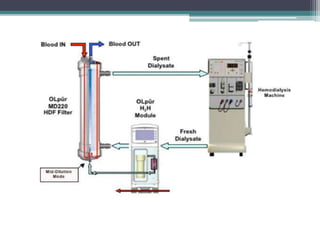
Hemodiafiltration
• Hemofiltration in combination with hemodialysis
• Blood is pumped through the blood compartment of a high flux dialyzer, and
a high rate of ultrafiltration is used
• So high rate of movement of water and solutes from blood to dialysate that
must be replaced by substitution fluid that is infused directly into the blood
line
• Dialysis solution is also run through the dialysate compartment of the
dialyzer
• Blood pump is used to drive blood flow through the filter
• Access is achieved through a catheter
• Good removal of both large and small mole.wgt solutes
Hemofiltration
• An alternative to hemodialysis and hemoperfusion
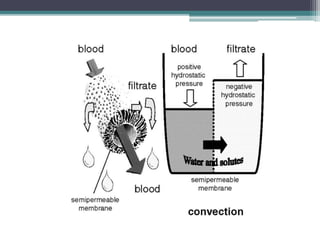
• Convective solute transport
• Process by which fluid, electrolytes, small molecular weight substances
are removed from the blood using hollow artificial fibre via a machine to
a semipermeable membrane (the filter ) where waste products and water
are removed
• Loss of water and electrolytes takes place, that leads to production of
ultrafiltrate
• Replacement fluid is administered to the patient for volume replacement
purified blood is returned to the patient
• Dialysate is not used
• Positive hydrostatic pressure drives water and solutes across the filter
membrane from the blood to the filtrate compartment, from which it is
drained
• Removes non-protein bound, small molecules from blood
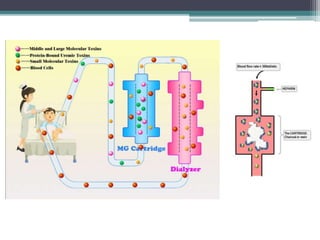
Hemoperfusion
• Removing the drugs by passing the blood from the patient through an adsorbent
material and back to the patient
• Molecules which have greater affinity for the materials will be removed
• Useful in accidental poisoning and drug overdose
• Adsorbents used –
▫ Activated charcoal
 adsorbs both polar and nonpolar drugs
▫ Amberlite resin (Amberlite XAD-2/XAD-4)
 available as insoluble polymeric beads
 each containing agglomerate of polystyrene microspheres
 greater affinity for nonpolar drugs
MNT Objectives in Dialysis
• Maintain protein and kcal balance
• Prevent dehydration or fluid overload
• Maintain normal potassium and sodium blood levels
• Maintain acceptable serum phosphorus and calcium levels
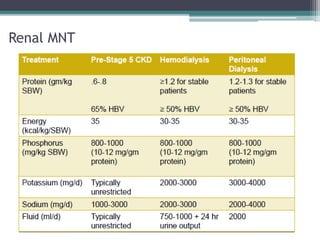
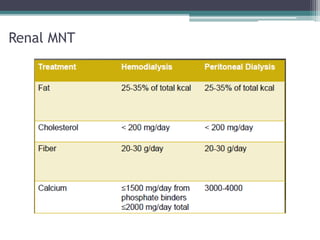
Renal MNT
Renal MNT
Patient Recommendations
• Foods to enjoy
• Fresh meat, fish and poultry
• Enriched bread, pasta and rice
• Allowed vegetables and fruits
• Olive oil, butter, or margarine
Helpful Fluid Tips
• Each morning, measure fluid allowance in water and store in container
• Every time you drink fluid, pour out an equal amount
• Drink only when thirsty
• Satisfy thirst- cold/frozen fruit
• Rinse mouth frequently- don't swallow
• Chew gum
• Have a piece of hard sour candy
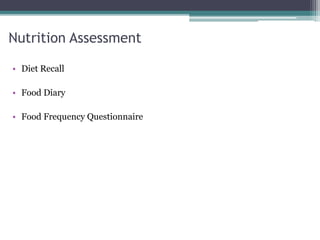
Nutrition Assessment
• Diet Recall
• Food Diary
• Food Frequency Questionnaire
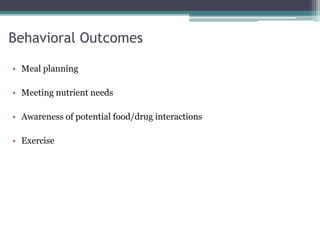
Behavioral Outcomes
• Meal planning
• Meeting nutrient needs
• Awareness of potential food/drug interactions
• Exercise
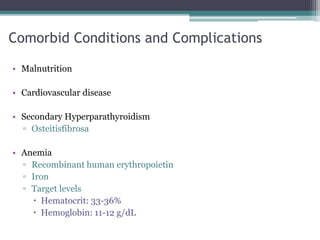
Comorbid Conditions and Complications
• Malnutrition
• Cardiovascular disease
• Secondary Hyperparathyroidism
▫ Osteitisfibrosa
• Anemia
▫ Recombinant human erythropoietin
▫ Iron
▫ Target levels
 Hematocrit: 33-36%
 Hemoglobin: 11-12 g/dL
Ckd and dialysis

Ckd and dialysis

  • 1.
  • 2.
    Kidney • Organs thatfilter waste products from the blood • Involved in regulating blood pressure, electrolyte balance, and red blood cell production in the body • The kidneys excrete a dietary protein called urea, as well as sodium, potassium, and phosphate • These substances can build up in the body if kidney function is impaired indicative of kidney disease
  • 3.
    Kidney Anatomy • Approximately1,200 ml of blood or 25 % of Cardiac Output flows through the kidney in one minute
  • 4.
  • 5.
    CKD • A typeof kidney disease in which there is gradual loss of kidney function over a period of months or years • Structural or functional abnormalities of the kidneys for ≥3months, as manifested by either: 1. Kidney damage, with or without decreased GFR, as defined by  pathologic abnormalities  markers of kidney damage, including abnormalities in the composition of the blood or urine or abnormalities in imaging tests  Kidney transplantation 2. GFR <60 ml/min/1.73 m2, with or without  kidney damage
  • 6.
    • Kidney Failureis defined as either ▫ a level of GFR to <15 mL/min/1.73 m2, which is accompanied in most cases by uremia, or ▫ a need for initiation of kidney replacement therapy (dialysis or transplantation) for complications of decreased GFR. • End-Stage Renal Disease (ESRD) ▫ administrative term for disbursement by Medicare, specifically the level of GFR (creatinine of 8mg/dl) and occurrence of kidney failure symptoms necessitating replacement therapy.
  • 7.
    Stages of ChronicKidney Disease
  • 8.
    Stages in Progressionof Chronic Kidney Disease and Therapeutic Strategies CKD death Complications Screening for CKD risk factors CKD risk reduction; Screening for CKD Diagnosis & treatment; Treat comorbid conditions; Slow progression Estimate progression; Treat complications; Prepare for replacement Replacement by dialysis & transplant Normal Increased risk Kidney failure Damage  GFR
  • 9.
    Causes and Incidence •Chronic renal failure occurs in approximately 1 out of 1,000 people. • Causative diseases include any type: ▫ Diabetes mellitus - Most Common cause ▫ Hypertension ▫ Glomerulonephritis ▫ Others  Chronic pyelonephritis  PKD /polycystic kidney disease  Obstructive uropathy  Stones, BPH, cancer, etc.  Alport syndrome  Drug-induced nephropathy
  • 10.
    Prevalence of Abnormalitiesat each level of GFR 0 10 20 30 40 50 60 70 80 90 15-29 30-59 60-89 90+ Estimated GFR (ml/min/1.73 m2 ) Proportionofpopulation(%) Hypertension* Hemoglobin < 12.0 g/dL Unable to walk 1/4 mile Serum albumin < 3.5 g/dL Serum calcium < 8.5 mg/dL Serum phosphorus > 4.5 mg/dL *>140/90 or antihypertensive medication p-trend < 0.001 for each abnormality
  • 11.
    Age-Standardized Rates ofDeath from Any Cause (Panel A) and Cardiovascular Events (Panel B), According to the Estimated GFR among 1,120,295 Ambulatory Adults Go, A, et al. NEJM 351: 1296
  • 12.
    Importance of Proteinuriain CKD Interpretation Explanation Marker of kidney damage Spot urine albumin-to-creatinine ratio >30 mg/g or spot urine total protein-to-creatinine ratio >200 mg/g for >3 months defines CKD Clue to the type (diagnosis) of CKD Spot urine total protein-to-creatinine ratio >500- 1000 mg/g suggests diabetic kidney disease, glomerular diseases, or transplant glomerulopathy. Risk factor for adverse outcomes Higher proteinuria predicts faster progression of kidney disease and increased risk of CVD. Effect modifier for interventions Strict blood pressure control and ACE inhibitors are more effective in slowing kidney disease progression in patients with higher baseline proteinuria. Hypothesized surrogate outcomes and target for interventions If validated, then lowering proteinuria would be a goal of therapy.
  • 13.
    Albuminuria as aRisk Factor for CVD in PREVEND Hillege HL et al. Circulation 2002: 106: 1777-1782
  • 14.
    Clinical Practice Guidelinesfor Management of Hypertension in CKD Type of Kidney Disease Blood Pressure Target (mm Hg) Preferred Agents for CKD, with or without Hypertension Other Agents to Reduce CVD Risk and Reach Blood Pressure Target Diabetic Kidney Disease <130/80 ACE inhibitor or ARB Diuretic preferred, then BB or CCB Nondiabetic Kidney Disease with Urine Total Protein-to-Creatinine Ratio 200 mg/g Nondiabetic Kidney Disease with Spot Urine Total Protein-to-Creatinine ratio <200 mg/g None preferred Diuretic preferred, then ACE inhibitor, ARB, BB or CCB Kidney Disease in Kidney Transplant Recipient CCB, diuretic, BB, ACE inhibitor, ARB
  • 15.
    Classification of CKDby Diagnosis • Diabetic Kidney Disease • Glomerular diseases (autoimmune diseases, systemic infections, drugs, neoplasia) • Vascular diseases (renal artery disease, hypertension, microangiopathy) • Tubulointerstitial diseases (urinary tract infection, stones, obstruction, drug toxicity) • Cystic diseases (polycystic kidney disease) • Diseases in the transplant (Allograft nephropathy, drug toxicity, recurrent diseases, transplant glomerulopathy)
  • 16.
    Current use ofICD-9-CM codes for Kidney Disease • ICD-9-CM codes for kidney disease were used in 1% of all patients. GFR Sensitivity Specificity 30-59 6 97 < 30 39 96 * GFR in ml/min/1.72 m2
  • 17.
    Symptoms INITIAL (non-specific) • nintentionalweight loss • nausea, vomiting • general ill feeling • fatigue • headache • frequent hiccups • generalized itching (pruritus) LATER • increase or decrease urine output • need to urinate at night • anasarca • easy bruising or bleeding • blood in the vomit or stools • breath odor (uremic fetor) • muscle twitching or cramps • restless legs syndrome • increased skin pigmentation • uremic frost • decreased sensation • decreased alertness/lethargy
  • 18.
    Uremic Syndrome • Attributedto a variety of toxic substances, mainly nitrogenous (protein and amino acid byproducts ▫ urea (when >50 mmol/l) and cyanate (CNO-) ▫ guanidino compounds (eg guanidinosuccinic acid) ▫ middle molecules (mw 300-3,500) – mainly polypeptides ▫ urates and other metabolites of nucleic acids ▫ aliphatic amines and metabolites of aromatic amino acids ▫ hormones (eg PTH) ▫ advanced glycation end-products • Other factors already considered – bone disease, acidosis, and fluid and electrolyte disturbances – also contribute to the picture of full-blown uremia.
  • 19.
    Signs and Tests •Blood pressure may be high • Urinalysis may show protein, blood, pus or other abnormalities • Creatinine and BUN levels progressively increase • Creatinine clearance progressively decreases • Potassium elevated • Calcium low and Phosphorus high • Arterial blood gas show metabolic acidosis • Xray of bones may show osteodystrophy
  • 20.
    Signs and Tests •Changes that indicate chronic renal failure, including both kidneys being smaller than normal, may be seen on: ▫ abdominal ultrasound ▫ plain KUB X-ray ▫ abdominal CT scan or MRI • However, CKD with normal sized or enlarged kidneys: ▫ amyloidosis, diabetes ▫ multiple myeloma ▫ polycystic kidneys ▫ accelerated hypertension
  • 21.
    Determinants of Rateof Progression • Type of Renal Disease ▫ rate of decline in PCKD and interstitial nephritis slower than in CGN ▫ membranous Nephropathy may spontaneously remit with or without treatment • Hypertension • Proteinuria • Race – blacks fare worse • Sex – women with PCKD fare better • Pregnancy – GFR falls faster • Diabetics – high sugar accelerates • Smokers
  • 22.
  • 23.
    Dietary Requirements • Protein ▫0.6-0.8 gm/k/day ▫ supplements of essential amino acids at 0.3 gm/k/day ▫ may allow lower protein intake to 0.4 gm/k/day ▫ intake for uremic patient not yet dialysed: 0.4 - 0.6gm/k/day ▫ for dialysed patients: increase to 1.0 - 1.2 gm/k/day • Energy ▫ 35 kcal/k/day for sedentary, stable, non-obese HD patients ▫ higher with strenuous labor, underweight or hypercatabolic
  • 24.
    Dietary Requirements • Fat ▫limit cholesterol <300 mg/day ▫ more proportion of mono- or polyunsaturated than saturated • Na+ ▫ 7-10 gm/day (table salt) if with adequate urine ▫ <6 gm/day or <100 mmol/day if with fluid retention/edema • K+ ▫ HD: restrict to 2-3 gm/day (50-75 meq/day) ▫ PD: 3-4 gm/day or 75-100 meq/day
  • 25.
    Dietary Requirements • Ca++ ▫restrict milk products so supplemental Ca++ is needed (1-1.5 gm/day) + Vitamin D to keep serum Ca++ >2.5 mg/dl • Phosphorus ▫ restrict to 0.6 - 1.2 gm/day to maintain s.Phos <4.5 to 5.5 mg/dl ▫ phosphate binders as needed such as calcium carbonate and calcium acetate • Vitamins/ Minerals ▫ ascorbic acid < 150-200 mg maximum to avoid oxalosis ▫ folic acid 1000 mcg; vit.B1 30 or > mg/day; B6 20 or more mg/day; Other water soluble vitamins based on RDA ▫ provide selenium and zinc ▫ vitamin A preparations must be avoided
  • 26.
    Management with ProgressiveRenal Disease • Early recognition • Monitoring the progression • Detection and correction of reversible causes • Institution of interventions to delay progression, e.g. diet, ACE inhibitors, BP, and sugar control • Avoidance of additional renal injury, e.g. smoking, NSAIDs, radio contrast, aminoglycosides • Treatment of complications, e.g. acid base, mineral, and fluid-electrolyte abnormalities • Planning ahead for renal replacement therapy (dialysis or transplantation)
  • 27.
    Dialysis • Artificial process,accumulation of drug removed by diffusion into dialysis fluid • Separates elements in a solution by diffusion across a semipermeable membrane down conc. Gradient • Two Methods – ▫ Peritoneal Dialysis ▫ Hemodialysis
  • 28.
    Stage 5 CKD:End Stage Renal Disease • Kidney function inadequate to sustain life (50-66% of normal function lost) • GFR < 15 mL/min/1.73m2 (or dialysis) • Requires renal replacement therapy ▫ Renal Transplant ▫ Dialysis
  • 29.
    Access in CKD Avoid PICC/midlines in CKD stage 4-5  Try to preserve access  Try for the feet/EJ  But if you need to, order a midline PCP should refer CKD stage IV to nephrologists in anticipation of HD
  • 30.
    Indications to begindialysis • Diabetics: Creatinine clearance is < 15 mL/min • Non-diabetics: serum creatinine reaches 6 mg/dL
  • 31.
    Additional Indications • Symptoms ▫Pericarditis ▫ Uncontrollable fluid overload ▫ Pulmonary edema ▫ Uncontrollable and repeated hyperkalemia ▫ Coma ▫ Lethargy • Less Severe Symptoms ▫ Azotemia ▫ Nausea ▫ Vomiting
  • 32.
    Main Goals ofDialysis Remove • Fluid • Waste Products ▫ Urea ▫ Creatinine ▫ Potassium ▫ Phosphorous ▫ Sodium Maintain • Fluid • Electrolyte • Acid-base balance
  • 33.
    Hemodialysis • Defined asmethod for removing waste products such as creatinine and urea , as well as free water from the blood when the kidneys are in renal failure • Principle - involves diffusion of solutes across a semipermeable membrane • The process uses artificial kidney to remove waste product • Artificial kidney contains a number of tubes with semi permeable lining, suspended in a tank filled with dialysing fluid
  • 35.
    Process • A dialysismachine pumps small blood out of the body, mixed with anticoagulant and circulated through a filter called dialyzer • Inside the dialyzer, a porous artificial membrane separates blood from the dialysis fluid (dialysate) • Diffusion of extra fluid and wastes from the blood into the dialysate • Purified blood is then pumped back into the body
  • 37.
    Important Notes • Heprainis used to prevent blood clotting during dialysis • It is much more effective method for rapid removal of drug ( overdose , poisoning) and preferred method in ESRD • Dialysis may be required from every 2 days to 3 times a week, one dialysis period is of 2-4 hrs depending on patient’s size, weight and renal function
  • 38.
    Access • Arteriovenous Fistula •Arteriovenous Graft • Central Venous Catheter
  • 39.
    Arteriovenous Fistula • Radialartery to cephalic vein • 4-6 weeks to become fully functional • Subclavian route can be used temporarily
  • 40.
    Arteriovenous Graft • Usedwhen veins are not adequate • Polytetrafluroethylene (teflon) tube • Needles placed in graft
  • 41.
  • 42.
    Types • Conventional hemodialysis: ▫ Conventional hemodialysis Done 3 times per week, for about 3-4hrs for each treatment ▫ During which patient’s blood is drawn out through a tube at a rate of 3- 400cc/min ▫ During treatment, the patient’s entire blood volume circulates through the machine every 15 minutes • Daily hemodialysis ▫ Daily hemodialysis Used by patients who do their dialysis at home ▫ Usually done for 2 hours, six days a week • Nocturnal hemodialysis ▫ Performed six nights a week and six-ten hours per session while the patient sleeps
  • 43.
    Typical Dialysate Componentsin HD Sodium (meq/l) 135 -145 Potassium (meq/l) 0 - 4 Calcium (meq/l) 2.5 – 3.5 Magnesium (meq/l) 0 – 1.5 Chloride (meq/l) 98 - 124 Bicarbonate (meq/l) 25 - 40 Glucose (mg/dl) 200
  • 44.
    Risks • Anemia • Hematocrit(Hct) • Cramps, nausea, vomiting, and headaches • Hypotension • Infection • Infectious diseases
  • 45.
    • Advantages – ▫Low mortality rate ▫ Better control of blood pressure and abdominal cramps ▫ Less diet restriction ▫ Better solute clearance effect for the daily hemo dialysis: better tolerance and fewer complications with more frequent dialysis • Disadvantages – ▫ Restricts independence, as people undergoing this procedure cannot travel around because of supplies' availability ▫ Requires more supplies such as high water quality and electricity ▫ Requires reliable technology like dialysis machines ▫ The procedure is complicated and requires that care givers have more knowledge ▫ Requires time to set up and clean dialysis machines, and expense with machines and associated staff
  • 46.
    Peritoneal Dialysis • Peritonealdialysis Introducing dialyzing fluid into the peritoneal cavity via a catheter and after a period, the fluid is drained and discarded • Principle osmosis and diffusion • The process uses the patient's peritoneum in the abdomen as a membrane across which fluids and dissolved substances ( electrolytes , urea , glucose, albumin and other small molecules) are exchanged from the blood • Membrane restricts the movement of formed elements(eg. erythrocytes) and large molecules(eg. protein) but allows the movement of smaller molecules according to the conc. gradient
  • 48.
    PD Transport • Diffusion ▫Uremic solutes and potassium ▫ Peritoneal capillary ➔ dialysis solution ▫ Glucose, lactate, and calcium ▫ Dialysis solution ➔ peritoneal capillary • Ultrafiltration ▫ Water and associated solutes ▫ Peritoneal capillary ➔ dialysis solution • Absorption ▫ Water and solute ▫ Peritoneal cavity ➔ lymphatic system
  • 49.
    Types • Manual intermittentPD – ▫ Manual intermittent ▫ Bags containing fluid are warmed to body temp ▫ Fluid is infused for 10mins,allowed to remain there for 60 to 90 mins and then drained in about 10 to 20mins • Automated cycler intermittent PD ▫ Automated cycler intermittent Timed device, performed by people in their home ▫ People set the cycler at bedtime so the dialysis takes place while they are sleeping Performed 6 or 7 nights a week • Continuous ambulatory PD ▫ Continuous ambulatory ▫ During the day by keeping 2L of fluid in the abdomen at all times ▫ Exchanging the fluids 4-6 times per day Connect Drain
  • 50.
    Typical Dialysate Componentsin PD Sodium (mmol/L) 132 -134 Potassium (mmol/L) 0 - 2 Calcium (mmol/L) 1.25 – 1.75 Magnesium (mmol/L) 0.25 – 0.75 Chloride (mmol/L) 95 - 106 Lactate (mmol/L) 35 - 40 Glucose (g/dL) 5.5
  • 51.
    Precautions • Solution sclear • Solution type and percentage • Volume • No leaks after gentle squeezing • Chances of infection
  • 52.
    Continuous Veno-Venous hemofiltratio (CVVH) •Short term treatment used in ICU patients with acute or chronic renal failure • Done if patient has low blood pressure or other contraindicators to hemodialysis
  • 53.
    • Filter properties– ▫ Synthetic, high flux(permeability), hollow fibre membrane ▫ Pore size 50000 da ▫ High Surface Area ( 0.6-1.2 m2) • Notes – ▫ Flow rate of 20-35 ml/kg/hr is usually required ▫ No benefit shown with higher flow rate, more expensive ▫ Although higher flow rate may be used if rapid solute clearance is necessary
  • 54.
    Hemodiafiltration • Hemofiltration incombination with hemodialysis • Blood is pumped through the blood compartment of a high flux dialyzer, and a high rate of ultrafiltration is used • So high rate of movement of water and solutes from blood to dialysate that must be replaced by substitution fluid that is infused directly into the blood line • Dialysis solution is also run through the dialysate compartment of the dialyzer • Blood pump is used to drive blood flow through the filter • Access is achieved through a catheter • Good removal of both large and small mole.wgt solutes
  • 56.
    Hemofiltration • An alternativeto hemodialysis and hemoperfusion • Convective solute transport • Process by which fluid, electrolytes, small molecular weight substances are removed from the blood using hollow artificial fibre via a machine to a semipermeable membrane (the filter ) where waste products and water are removed • Loss of water and electrolytes takes place, that leads to production of ultrafiltrate • Replacement fluid is administered to the patient for volume replacement purified blood is returned to the patient • Dialysate is not used • Positive hydrostatic pressure drives water and solutes across the filter membrane from the blood to the filtrate compartment, from which it is drained • Removes non-protein bound, small molecules from blood
  • 58.
    Hemoperfusion • Removing thedrugs by passing the blood from the patient through an adsorbent material and back to the patient • Molecules which have greater affinity for the materials will be removed • Useful in accidental poisoning and drug overdose • Adsorbents used – ▫ Activated charcoal  adsorbs both polar and nonpolar drugs ▫ Amberlite resin (Amberlite XAD-2/XAD-4)  available as insoluble polymeric beads  each containing agglomerate of polystyrene microspheres  greater affinity for nonpolar drugs
  • 60.
    MNT Objectives inDialysis • Maintain protein and kcal balance • Prevent dehydration or fluid overload • Maintain normal potassium and sodium blood levels • Maintain acceptable serum phosphorus and calcium levels
  • 61.
  • 62.
  • 63.
    Patient Recommendations • Foodsto enjoy • Fresh meat, fish and poultry • Enriched bread, pasta and rice • Allowed vegetables and fruits • Olive oil, butter, or margarine
  • 64.
    Helpful Fluid Tips •Each morning, measure fluid allowance in water and store in container • Every time you drink fluid, pour out an equal amount • Drink only when thirsty • Satisfy thirst- cold/frozen fruit • Rinse mouth frequently- don't swallow • Chew gum • Have a piece of hard sour candy
  • 65.
    Nutrition Assessment • DietRecall • Food Diary • Food Frequency Questionnaire
  • 66.
    Behavioral Outcomes • Mealplanning • Meeting nutrient needs • Awareness of potential food/drug interactions • Exercise
  • 67.
    Comorbid Conditions andComplications • Malnutrition • Cardiovascular disease • Secondary Hyperparathyroidism ▫ Osteitisfibrosa • Anemia ▫ Recombinant human erythropoietin ▫ Iron ▫ Target levels  Hematocrit: 33-36%  Hemoglobin: 11-12 g/dL