BOHR International Journal of Operations Management Research
and Practices
2023, Vol. 2, No. 1, pp. 40–48
DOI: 10.54646/bijomrp.2023.16
www.bohrpub.com
REVIEW
Applying value stream management to improve warehouse
operation processes – A case study
Phong Nguyen Nhu*, Phuc Nguyen Huu, Phat Nguyen Tien and Phuong Vy Nguyen Thuy
Industrial Systems Engineering, HCM University of Technology, Ho Chi Minh City, Vietnam
*Correspondence:
Phong Nguyen Nhu,
nnphong@hcmut.edu.vn
Received: 25 July 2023; Accepted: 30 July 2023; Published: 26 September 2023
The warehouse under study is an important link in the supply chain of a multinational company. At the
moment, wastes still exist in warehouse operation processes, which lead to a low rate of order fulfilment
and a low customer’s service level and negatively affect the company’s competitive advantages. This research
shows how warehouse operations can be improved by using value stream management as a platform
with the objective to reduce the non-value-added time and decrease the lead time and hence reduce
the late order rate and increase the customer’s service level. The current state map has been drawn.
Non-value-added activities in the current state map are analyzed to define causes and solutions to the
problems; then the future state map is drawn. The result shows that the non-value-added time reduces by
50.69%, from 143 (mins) to 70.5 (mins), and the lead time decreases by 19.07%, from 464 (mins) to 375.5
(mins).
Keywords: warehouse operations, receiving, put away, picking, packaging, shipping, value stream management
Introduction
A warehouse is a point in the supply chain, where
the products are stored and processed and continue to
move on the supply chain. Warehouses play an important
role in supply chains (1). Warehouses need both storage
space and time of labor operating inside; these are
the costs that need to be taken into account when it
comes to warehouse management. Warehouse management
includes warehouse planning and operations. Warehouse
planning includes layout planning, materials handling
equipment (MHE) planning, and inventory planning.
Warehouse operations include receiving, putting away,
picking, packing, and shipping.
The distribution center under study is one of the largest
and most modern distribution centers in Vietnam, also a
critical link in the company’s supply chain. Products at the
distribution center include homecare, personal care, foods,
and promotion products. The distribution center has just
started an operating warehouse, storing finish goods (FGs),
which account for 60% in stock.
The company is concerned that the late order rate
in the warehouse (up to 20%) will negatively affect the
customer’s service level. Analysis shows that there is plenty
of waste in logistics management in the warehouse. Wastes
in warehouse operations can be movement waste caused
by unreasonable space allocation and waste of resources
or time caused by uncareful resource planning. Causes of
these wastes lie in the warehouse layout, storage and MHE
planning, and operations.
Failure mode and effect analysis (FMEA) indicates that
the main reason is warehouse operations. This research
uses value stream management (VSM) as the platform
to improve warehouse operations with the objectives to
reduce the non-value-added time and reduce the lead time
and hence reduce the late order rate and increase the
customer’s service level. The scope of research is limited to
the FG warehouse.
40
10.54646/bijomrp.2023.16 41
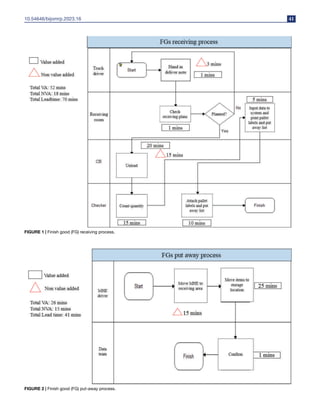
FIGURE 1 | Finish good (FG) receiving process.
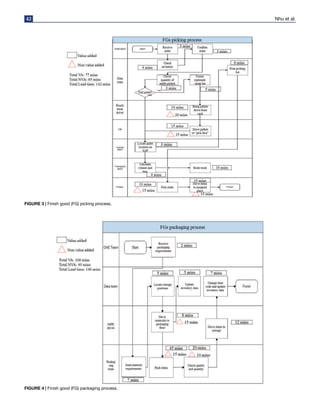
FIGURE 2 | Finish good (FG) put-away process.
42 Nhu et al.
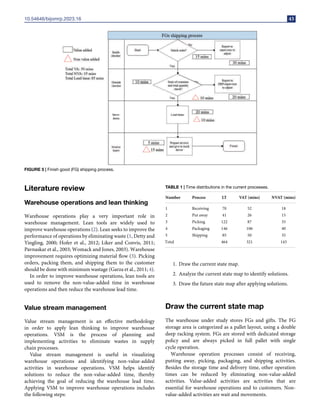
FIGURE 3 | Finish good (FG) picking process.
FIGURE 4 | Finish good (FG) packaging process.
10.54646/bijomrp.2023.16 43
FIGURE 5 | Finish good (FG) shipping process.
Literature review
Warehouse operations and lean thinking
Warehouse operations play a very important role in
warehouse management. Lean tools are widely used to
improve warehouse operations (2). Lean seeks to improve the
performance of operations by eliminating waste (1, Detty and
Yingling, 2000; Hofer et al., 2012; Liker and Convis, 2011;
Pavnaskar et al., 2003; Womack and Jones, 2003). Warehouse
improvement requires optimizing material flow (3). Picking
orders, packing them, and shipping them to the customer
should be done with minimum wastage (Garza et al., 2011; 4).
In order to improve warehouse operations, lean tools are
used to remove the non-value-added time in warehouse
operations and then reduce the warehouse lead time.
Value stream management
Value stream management is an effective methodology
in order to apply lean thinking to improve warehouse
operations. VSM is the process of planning and
implementing activities to eliminate wastes in supply
chain processes.
Value stream management is useful in visualizing
warehouse operations and identifying non-value-added
activities in warehouse operations. VSM helps identify
solutions to reduce the non-value-added time, thereby
achieving the goal of reducing the warehouse lead time.
Applying VSM to improve warehouse operations includes
the following steps:
TABLE 1 | Time distributions in the current processes.
Number Process LT VAT (mins) NVAT (mins)
1 Receiving 70 52 18
2 Put away 41 26 15
3 Picking 122 87 35
4 Packaging 146 106 40
5 Shipping 85 50 35
Total 464 321 143
1. Draw the current state map.
2. Analyze the current state map to identify solutions.
3. Draw the future state map after applying solutions.
Draw the current state map
The warehouse under study stores FGs and gifts. The FG
storage area is categorized as a pallet layout, using a double
deep racking system. FGs are stored with dedicated storage
policy and are always picked in full pallet with single
cycle operation.
Warehouse operation processes consist of receiving,
putting away, picking, packaging, and shipping activities.
Besides the storage time and delivery time, other operation
times can be reduced by eliminating non-value-added
activities. Value-added activities are activities that are
essential for warehouse operations and to customers. Non-
value-added activities are wait and movements.
44 Nhu et al.
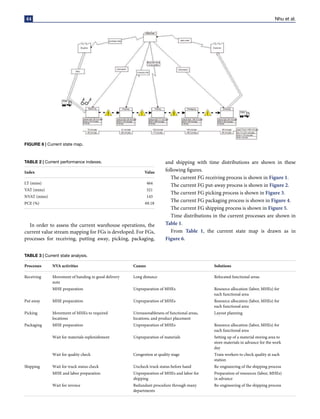
FIGURE 6 | Current state map.
TABLE 2 | Current performance indexes.
Index Value
LT (mins) 464
VAT (mins) 321
NVAT (mins) 143
PCE (%) 69.18
In order to assess the current warehouse operations, the
current value stream mapping for FGs is developed. For FGs,
processes for receiving, putting away, picking, packaging,
and shipping with time distributions are shown in these
following figures.
The current FG receiving process is shown in Figure 1.
The current FG put-away process is shown in Figure 2.
The current FG picking process is shown in Figure 3.
The current FG packaging process is shown in Figure 4.
The current FG shipping process is shown in Figure 5.
Time distributions in the current processes are shown in
Table 1.
From Table 1, the current state map is drawn as in
Figure 6.
TABLE 3 | Current state analysis.
Processes NVA activities Causes Solutions
Receiving Movement of handing in good delivery
note
Long distance Relocated functional areas
MHE preparation Unpreparation of MHEs Resource allocation (labor, MHEs) for
each functional area
Put away MHE preparation Unpreparation of MHEs Resource allocation (labor, MHEs) for
each functional area
Picking Movement of MHEs to required
locations
Unreasonableness of functional areas,
locations, and product placement
Layout planning
Packaging MHE preparation Unpreparation of MHEs Resource allocation (labor, MHEs) for
each functional area
Wait for materials replenishment Unpreparation of materials Setting up of a material storing area to
store materials in advance for the work
day
Wait for quality check Congestion at quality stage Train workers to check quality at each
station
Shipping Wait for truck status check Uncheck truck status before hand Re-engineering of the shipping process
MHE and labor preparation Unpreparation of MHEs and labor for
shipping
Preparation of resources (labor, MHEs)
in advance
Wait for invoice Redundant procedure through many
departments
Re-engineering of the shipping process
10.54646/bijomrp.2023.16 45
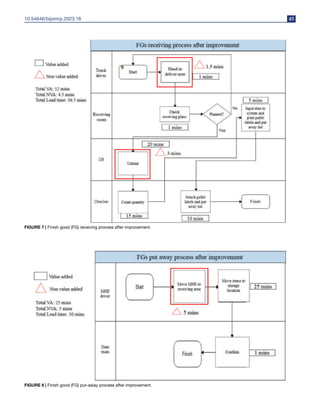
FIGURE 7 | Finish good (FG) receiving process after improvement.
FIGURE 8 | Finish good (FG) put-away process after improvement.
46 Nhu et al.
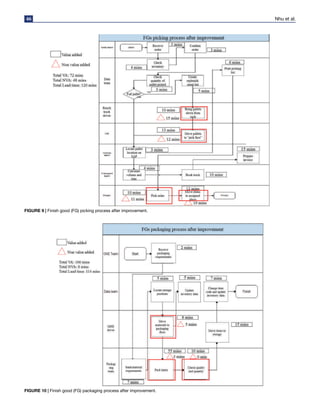
FIGURE 9 | Finish good (FG) picking process after improvement.
FIGURE 10 | Finish good (FG) packaging process after improvement.
10.54646/bijomrp.2023.16 47
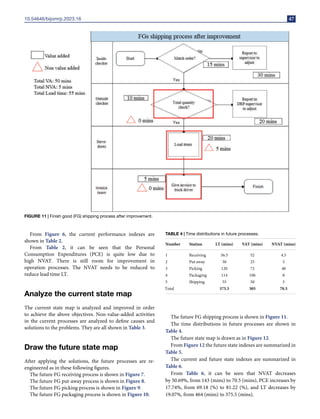
FIGURE 11 | Finish good (FG) shipping process after improvement.
From Figure 6, the current performance indexes are
shown in Table 2.
From Table 2, it can be seen that the Personal
Consumption Expenditures (PCE) is quite low due to
high NVAT. There is still room for improvement in
operation processes. The NVAT needs to be reduced to
reduce lead time LT.
Analyze the current state map
The current state map is analyzed and improved in order
to achieve the above objectives. Non-value-added activities
in the current processes are analyzed to define causes and
solutions to the problems. They are all shown in Table 3.
Draw the future state map
After applying the solutions, the future processes are re-
engineered as in these following figures.
The future FG receiving process is shown in Figure 7.
The future FG put-away process is shown in Figure 8.
The future FG picking process is shown in Figure 9.
The future FG packaging process is shown in Figure 10.
TABLE 4 | Time distributions in future processes.
Number Station LT (mins) VAT (mins) NVAT (mins)
1 Receiving 56.5 52 4.5
2 Put away 30 25 5
3 Picking 120 72 48
4 Packaging 114 106 8
5 Shipping 55 50 5
Total 375.5 305 70.5
The future FG shipping process is shown in Figure 11.
The time distributions in future processes are shown in
Table 4.
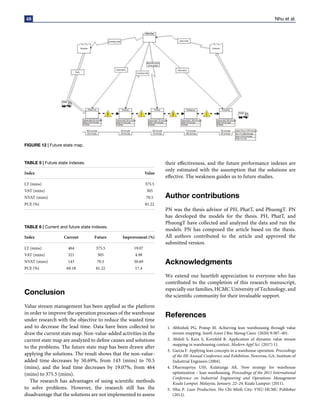
The future state map is drawn as in Figure 12.
From Figure 12 the future state indexes are summarized in
Table 5.
The current and future state indexes are summarized in
Table 6.
From Table 6, it can be seen that NVAT decreases
by 50.69%, from 143 (mins) to 70.5 (mins), PCE increases by
17.74%, from 69.18 (%) to 81.22 (%), and LT decreases by
19.07%, from 464 (mins) to 375.5 (mins).
48 Nhu et al.
FIGURE 12 | Future state map.
TABLE 5 | Future state indexes.
Index Value
LT (mins) 375.5
VAT (mins) 305
NVAT (mins) 70.5
PCE (%) 81.22
TABLE 6 | Current and future state indexes.
Index Current Future Improvement (%)
LT (mins) 464 375.5 19.07
VAT (mins) 321 305 4.98
NVAT (mins) 143 70.5 50.69
PCE (%) 69.18 81.22 17.4
Conclusion
Value stream management has been applied as the platform
in order to improve the operation processes of the warehouse
under research with the objective to reduce the wasted time
and to decrease the lead time. Data have been collected to
draw the current state map. Non-value-added activities in the
current state map are analyzed to define causes and solutions
to the problems. The future state map has been drawn after
applying the solutions. The result shows that the non-value-
added time decreases by 50.69%, from 143 (mins) to 70.5
(mins), and the lead time decreases by 19.07%, from 464
(mins) to 375.5 (mins).
The research has advantages of using scientific methods
to solve problems. However, the research still has the
disadvantage that the solutions are not implemented to assess
their effectiveness, and the future performance indexes are
only estimated with the assumption that the solutions are
effective. The weakness guides us to future studies.
Author contributions
PN was the thesis advisor of PH, PhatT, and PhuongT. PN
has developed the models for the thesis. PH, PhatT, and
PhuongT have collected and analyzed the data and run the
models. PN has composed the article based on the thesis.
All authors contributed to the article and approved the
submitted version.
Acknowledgments
We extend our heartfelt appreciation to everyone who has
contributed to the completion of this research manuscript,
especially our families, HCMC University of Technology, and
the scientific community for their invaluable support.
References
1. Abhishek PG, Pratap M. Achieving lean warehousing through value
stream mapping. South Asian J Bus Manag Cases. (2020) 9:387–401.
2. Abdoli S, Kara S, Kornfeld B. Application of dynamic value stream
mapping in warehousing context. Modern Appl Sci. (2017) 11.
3. Garcia F. Applying lean concepts in a warehouse operation. Proceedings
of the IIE Annual Conference and Exhibition. Norcross, GA: Institute of
Industrial Engineers (2004).
4. Dharmapriya USS, Kulatunga AK. New strategy for warehouse
optimization – lean warehousing. Proceedings of the 2011 International
Conference on Industrial Engineering and Operations Management
Kuala Lumpur, Malaysia, January, 22–24. Kuala Lumpur: (2011).
5. Nhu P. Lean Production. Ho Chi Minh City: VNU-HCMC Publisher
(2012).

Applying value stream management to improve warehouse operation processes – A case study

  • 1.
    BOHR International Journalof Operations Management Research and Practices 2023, Vol. 2, No. 1, pp. 40–48 DOI: 10.54646/bijomrp.2023.16 www.bohrpub.com REVIEW Applying value stream management to improve warehouse operation processes – A case study Phong Nguyen Nhu*, Phuc Nguyen Huu, Phat Nguyen Tien and Phuong Vy Nguyen Thuy Industrial Systems Engineering, HCM University of Technology, Ho Chi Minh City, Vietnam *Correspondence: Phong Nguyen Nhu, nnphong@hcmut.edu.vn Received: 25 July 2023; Accepted: 30 July 2023; Published: 26 September 2023 The warehouse under study is an important link in the supply chain of a multinational company. At the moment, wastes still exist in warehouse operation processes, which lead to a low rate of order fulfilment and a low customer’s service level and negatively affect the company’s competitive advantages. This research shows how warehouse operations can be improved by using value stream management as a platform with the objective to reduce the non-value-added time and decrease the lead time and hence reduce the late order rate and increase the customer’s service level. The current state map has been drawn. Non-value-added activities in the current state map are analyzed to define causes and solutions to the problems; then the future state map is drawn. The result shows that the non-value-added time reduces by 50.69%, from 143 (mins) to 70.5 (mins), and the lead time decreases by 19.07%, from 464 (mins) to 375.5 (mins). Keywords: warehouse operations, receiving, put away, picking, packaging, shipping, value stream management Introduction A warehouse is a point in the supply chain, where the products are stored and processed and continue to move on the supply chain. Warehouses play an important role in supply chains (1). Warehouses need both storage space and time of labor operating inside; these are the costs that need to be taken into account when it comes to warehouse management. Warehouse management includes warehouse planning and operations. Warehouse planning includes layout planning, materials handling equipment (MHE) planning, and inventory planning. Warehouse operations include receiving, putting away, picking, packing, and shipping. The distribution center under study is one of the largest and most modern distribution centers in Vietnam, also a critical link in the company’s supply chain. Products at the distribution center include homecare, personal care, foods, and promotion products. The distribution center has just started an operating warehouse, storing finish goods (FGs), which account for 60% in stock. The company is concerned that the late order rate in the warehouse (up to 20%) will negatively affect the customer’s service level. Analysis shows that there is plenty of waste in logistics management in the warehouse. Wastes in warehouse operations can be movement waste caused by unreasonable space allocation and waste of resources or time caused by uncareful resource planning. Causes of these wastes lie in the warehouse layout, storage and MHE planning, and operations. Failure mode and effect analysis (FMEA) indicates that the main reason is warehouse operations. This research uses value stream management (VSM) as the platform to improve warehouse operations with the objectives to reduce the non-value-added time and reduce the lead time and hence reduce the late order rate and increase the customer’s service level. The scope of research is limited to the FG warehouse. 40
  • 2.
    10.54646/bijomrp.2023.16 41 FIGURE 1| Finish good (FG) receiving process. FIGURE 2 | Finish good (FG) put-away process.
  • 3.
    42 Nhu etal. FIGURE 3 | Finish good (FG) picking process. FIGURE 4 | Finish good (FG) packaging process.
  • 4.
    10.54646/bijomrp.2023.16 43 FIGURE 5| Finish good (FG) shipping process. Literature review Warehouse operations and lean thinking Warehouse operations play a very important role in warehouse management. Lean tools are widely used to improve warehouse operations (2). Lean seeks to improve the performance of operations by eliminating waste (1, Detty and Yingling, 2000; Hofer et al., 2012; Liker and Convis, 2011; Pavnaskar et al., 2003; Womack and Jones, 2003). Warehouse improvement requires optimizing material flow (3). Picking orders, packing them, and shipping them to the customer should be done with minimum wastage (Garza et al., 2011; 4). In order to improve warehouse operations, lean tools are used to remove the non-value-added time in warehouse operations and then reduce the warehouse lead time. Value stream management Value stream management is an effective methodology in order to apply lean thinking to improve warehouse operations. VSM is the process of planning and implementing activities to eliminate wastes in supply chain processes. Value stream management is useful in visualizing warehouse operations and identifying non-value-added activities in warehouse operations. VSM helps identify solutions to reduce the non-value-added time, thereby achieving the goal of reducing the warehouse lead time. Applying VSM to improve warehouse operations includes the following steps: TABLE 1 | Time distributions in the current processes. Number Process LT VAT (mins) NVAT (mins) 1 Receiving 70 52 18 2 Put away 41 26 15 3 Picking 122 87 35 4 Packaging 146 106 40 5 Shipping 85 50 35 Total 464 321 143 1. Draw the current state map. 2. Analyze the current state map to identify solutions. 3. Draw the future state map after applying solutions. Draw the current state map The warehouse under study stores FGs and gifts. The FG storage area is categorized as a pallet layout, using a double deep racking system. FGs are stored with dedicated storage policy and are always picked in full pallet with single cycle operation. Warehouse operation processes consist of receiving, putting away, picking, packaging, and shipping activities. Besides the storage time and delivery time, other operation times can be reduced by eliminating non-value-added activities. Value-added activities are activities that are essential for warehouse operations and to customers. Non- value-added activities are wait and movements.
  • 5.
    44 Nhu etal. FIGURE 6 | Current state map. TABLE 2 | Current performance indexes. Index Value LT (mins) 464 VAT (mins) 321 NVAT (mins) 143 PCE (%) 69.18 In order to assess the current warehouse operations, the current value stream mapping for FGs is developed. For FGs, processes for receiving, putting away, picking, packaging, and shipping with time distributions are shown in these following figures. The current FG receiving process is shown in Figure 1. The current FG put-away process is shown in Figure 2. The current FG picking process is shown in Figure 3. The current FG packaging process is shown in Figure 4. The current FG shipping process is shown in Figure 5. Time distributions in the current processes are shown in Table 1. From Table 1, the current state map is drawn as in Figure 6. TABLE 3 | Current state analysis. Processes NVA activities Causes Solutions Receiving Movement of handing in good delivery note Long distance Relocated functional areas MHE preparation Unpreparation of MHEs Resource allocation (labor, MHEs) for each functional area Put away MHE preparation Unpreparation of MHEs Resource allocation (labor, MHEs) for each functional area Picking Movement of MHEs to required locations Unreasonableness of functional areas, locations, and product placement Layout planning Packaging MHE preparation Unpreparation of MHEs Resource allocation (labor, MHEs) for each functional area Wait for materials replenishment Unpreparation of materials Setting up of a material storing area to store materials in advance for the work day Wait for quality check Congestion at quality stage Train workers to check quality at each station Shipping Wait for truck status check Uncheck truck status before hand Re-engineering of the shipping process MHE and labor preparation Unpreparation of MHEs and labor for shipping Preparation of resources (labor, MHEs) in advance Wait for invoice Redundant procedure through many departments Re-engineering of the shipping process
  • 6.
    10.54646/bijomrp.2023.16 45 FIGURE 7| Finish good (FG) receiving process after improvement. FIGURE 8 | Finish good (FG) put-away process after improvement.
  • 7.
    46 Nhu etal. FIGURE 9 | Finish good (FG) picking process after improvement. FIGURE 10 | Finish good (FG) packaging process after improvement.
  • 8.
    10.54646/bijomrp.2023.16 47 FIGURE 11| Finish good (FG) shipping process after improvement. From Figure 6, the current performance indexes are shown in Table 2. From Table 2, it can be seen that the Personal Consumption Expenditures (PCE) is quite low due to high NVAT. There is still room for improvement in operation processes. The NVAT needs to be reduced to reduce lead time LT. Analyze the current state map The current state map is analyzed and improved in order to achieve the above objectives. Non-value-added activities in the current processes are analyzed to define causes and solutions to the problems. They are all shown in Table 3. Draw the future state map After applying the solutions, the future processes are re- engineered as in these following figures. The future FG receiving process is shown in Figure 7. The future FG put-away process is shown in Figure 8. The future FG picking process is shown in Figure 9. The future FG packaging process is shown in Figure 10. TABLE 4 | Time distributions in future processes. Number Station LT (mins) VAT (mins) NVAT (mins) 1 Receiving 56.5 52 4.5 2 Put away 30 25 5 3 Picking 120 72 48 4 Packaging 114 106 8 5 Shipping 55 50 5 Total 375.5 305 70.5 The future FG shipping process is shown in Figure 11. The time distributions in future processes are shown in Table 4. The future state map is drawn as in Figure 12. From Figure 12 the future state indexes are summarized in Table 5. The current and future state indexes are summarized in Table 6. From Table 6, it can be seen that NVAT decreases by 50.69%, from 143 (mins) to 70.5 (mins), PCE increases by 17.74%, from 69.18 (%) to 81.22 (%), and LT decreases by 19.07%, from 464 (mins) to 375.5 (mins).
  • 9.
    48 Nhu etal. FIGURE 12 | Future state map. TABLE 5 | Future state indexes. Index Value LT (mins) 375.5 VAT (mins) 305 NVAT (mins) 70.5 PCE (%) 81.22 TABLE 6 | Current and future state indexes. Index Current Future Improvement (%) LT (mins) 464 375.5 19.07 VAT (mins) 321 305 4.98 NVAT (mins) 143 70.5 50.69 PCE (%) 69.18 81.22 17.4 Conclusion Value stream management has been applied as the platform in order to improve the operation processes of the warehouse under research with the objective to reduce the wasted time and to decrease the lead time. Data have been collected to draw the current state map. Non-value-added activities in the current state map are analyzed to define causes and solutions to the problems. The future state map has been drawn after applying the solutions. The result shows that the non-value- added time decreases by 50.69%, from 143 (mins) to 70.5 (mins), and the lead time decreases by 19.07%, from 464 (mins) to 375.5 (mins). The research has advantages of using scientific methods to solve problems. However, the research still has the disadvantage that the solutions are not implemented to assess their effectiveness, and the future performance indexes are only estimated with the assumption that the solutions are effective. The weakness guides us to future studies. Author contributions PN was the thesis advisor of PH, PhatT, and PhuongT. PN has developed the models for the thesis. PH, PhatT, and PhuongT have collected and analyzed the data and run the models. PN has composed the article based on the thesis. All authors contributed to the article and approved the submitted version. Acknowledgments We extend our heartfelt appreciation to everyone who has contributed to the completion of this research manuscript, especially our families, HCMC University of Technology, and the scientific community for their invaluable support. References 1. Abhishek PG, Pratap M. Achieving lean warehousing through value stream mapping. South Asian J Bus Manag Cases. (2020) 9:387–401. 2. Abdoli S, Kara S, Kornfeld B. Application of dynamic value stream mapping in warehousing context. Modern Appl Sci. (2017) 11. 3. Garcia F. Applying lean concepts in a warehouse operation. Proceedings of the IIE Annual Conference and Exhibition. Norcross, GA: Institute of Industrial Engineers (2004). 4. Dharmapriya USS, Kulatunga AK. New strategy for warehouse optimization – lean warehousing. Proceedings of the 2011 International Conference on Industrial Engineering and Operations Management Kuala Lumpur, Malaysia, January, 22–24. Kuala Lumpur: (2011). 5. Nhu P. Lean Production. Ho Chi Minh City: VNU-HCMC Publisher (2012).