Aplastic Anemia
Download more documents and slide shows on The Medical Post [ www.themedicalpost.net ]
Dr. Kalpana Malla
MD Pediatrics
Manipal Teaching Hospital
1. DEFINTION
2. ETIOLOGY
3. PATHOLOGY
4. CLASSIFICATON
5. CLINICAL FEATURES
6. DIAGNOSIS
7. DIFFERENTIAL DIAGNOSIS
8. MANAGEMENT
PANCYTOPENIA:
• Simultaneous presence of
anaemia, leukopenia, thrombocytopenia
• Causes: aplastic anemia
Subleukemic leukemia
cytotoxic drugs
radiotherapy
bone marrow infiltration
hypersplenism
megaloblastosis
SLE
APLASTIC ANEMIA:
• Failure of two or more cell lines
+ Hypoplasia or aplasia of the
marrow
ETIOLOGY
• Hereditary
• Acquired
HEREDITARY
• Diamond-Blackfan syndrome
• Shwachmann-Diamond syndrome
• Fanconi anemia
• Dyskeratosis Congenita
• TAR (thrombocytopenia with absent radii)
• Amegakaryocytic thrombocytopenia
ACQUIRED
• Radiation
• Drugs and chemicals
- chemotherapy
- benzene
- chloramphenicol
- antiepileptics
• Viruses:
- CMV
- EBV
- Hep B, C,D
- HIV
• Immune diseases:
- eosinophilic fascitis
- thymoma
• Pregnancy
• PNH
• Marrow replacement:
- leukemia
- myelofibrosis
- myelodysplasia
Pathology:
1. Absent or defective stem cells (marrow
failure)
2. Abnormal marrow microenvironment
3. Inhibition by abnormal clone of
hematopoietic cells
4. Immune mediated suppression of
hematopoietic cells –
Cytotoxic T cells in blood and marrow release
gamma IFN and TNF -> inhibit early and late
progenitor cells
Pathology:
• Hallmark: peripheral pancytopenia with
hypoplastic/ aplastic bone marrow
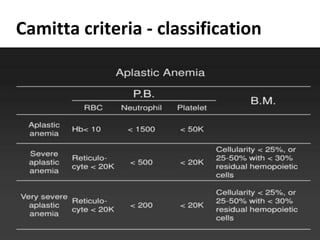
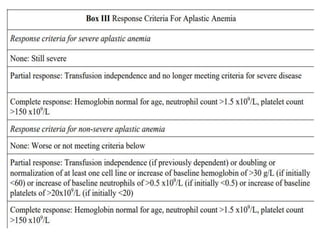
Camitta criteria - classification
CLINICAL FEATURES
RBC (anemia)
• Progressive and persistent pallor
• Anemia related symptoms
WBC (Leucopenia/neutropenia)
• Prone to infections -
Pyodermas, OM, pneumonia, UTI, GI
infections, sepsis
Platelets (Thrombocytopenia)
• Petechiae, purpura, ecchymoses
• Hematemesis, hematuria, epistaxis, gingival bleed
• IC bleed- headache, irritability, drowsiness, coma
NO HEPATOMEGALY
NO SPLENOMEGALY
NO LYMPHADENOPATHY
Failure of entire RES. No extramedullary
hematopoesis
Blood picture:
• Anemia-normocytic, normochromic
• Leukopenia (neutropenia)
• Relative lymphocytosis
• Thrombocytopenia
• Absolute reticulocyte count low
• Mild to moderate anisopoikilocytosis
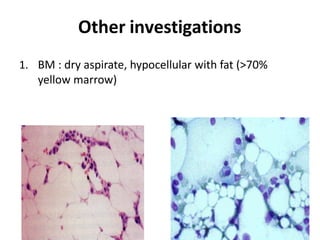
Other investigations
1. BM : dry aspirate, hypocellular with fat (>70%
yellow marrow)
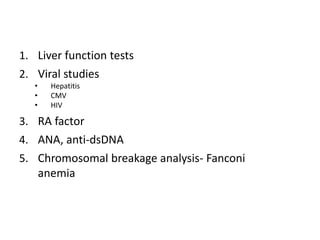
1. Liver function tests
2. Viral studies
• Hepatitis
• CMV
• HIV
3. RA factor
4. ANA, anti-dsDNA
5. Chromosomal breakage analysis- Fanconi
anemia
DIFFERENTIAL DIAGNOSIS
• ITP
• LEUKEMIA
• MYELOID METAPLASIA
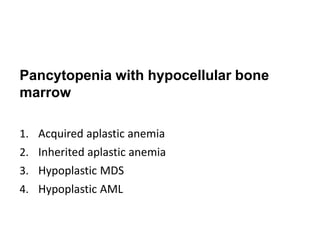
Differential Diagnosis
Pancytopenia with hypocellular bone
marrow
1. Acquired aplastic anemia
2. Inherited aplastic anemia
3. Hypoplastic MDS
4. Hypoplastic AML
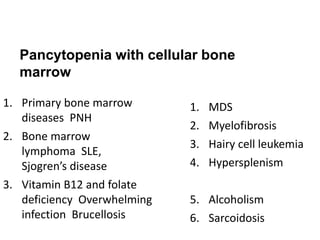
Pancytopenia with cellular bone
marrow
1. Primary bone marrow
diseases PNH
2. Bone marrow
lymphoma SLE,
Sjogren’s disease
3. Vitamin B12 and folate
deficiency Overwhelming
infection Brucellosis
1. MDS
2. Myelofibrosis
3. Hairy cell leukemia
4. Hypersplenism
5. Alcoholism
6. Sarcoidosis
Hypocellular bone marrow with or without
cytopenia
1. Q fever
2. Legionaires
disease
3. Mycobacteria
4. Tuberculosis
5. Hypothyroidism
6. Anorexia
nervosa
Management:
• Identification and elimination of underlying
cause
• Supportive therapy:
1. Blood transfusion
2. Iron chelation to treat iron overload
3. Antibiotics
4. Growth factors
Blood Transfusion
• The 2 types of transfusion typically used for
aplastic anemia patients are:
• Red blood cell transfusion
• Hb < 6
• Platelet transfusion
• <10,000 / bleeding
• Maintain > 30,000 prior to ATG infusion
• White blood cells live for a very short time. So
patients with a low white count rarely get
transfusions of white blood cells.
Iron Chelation Therapy for Iron Overload
• Blood iron level checked regularly if patient get red
blood cell transfusions.
• Iron overload can start to become a problem after as few
as 20 units of red blood cells.
• ferritin of over 1,000 - treatment
• Deferasirox
• Deferoxamine
• Diferiprone
Antibiotics
• Prophylactic antibiotics
• If infection: cephalosporins + aminoglycosides
• + metronidazole
• Antifungals: amphotericin B, fluconazole (if fever
>10 days despite antibiotics)
HAEMATOPOIETIC GROWTH FACTORS
• GM-CSF
• G-CSF
• IL-3
• IL-1
• IL-6
Definitive Therapy
Acquired aplastic anaemia can be treated with
either
•Hematopoietic stem cell transplantation (HSCT)
•Immunosuppressive therapy.
BONE MARROW TRANSPLANTATION
• Treatment of choice
• HLA matched donor. Usually siblings
• Long term survival rates: 60-70%
• Donor stem cells > 4 X 10⁸ cells/kg
IMMUNOSUPPRESSION
• Antithymocyte globulin (ATG)
• Antilymphocyte glubulin (ALG)
• Cyclosporin
• Intensive immunosupression :
cyclophosphamide
• Corticosteroids
ATG administration:
• IV administration of Ig preparations containing
antibody to human thymocytes
• Improvement in haematological indices in one-half
of subjects
• Anaphylaxis
ATG AND ALG
• Dose : 40 mg/kg/day X 4 days
• Hematologic response rate 45%
• Survival rate 60%
• Side effects: serum sickness
ANDROGENS
• No longer have primary role
• Increase erythopoietin producion
• Stimulate erythroid stem cells
• Increase Hb levels in normal males
• methyl testosterone, testesterone enanthate,
oxymetholone, danazol
• Oral dose : 2-5mg/kg/day, IM dose: 1-2mg/kg/wk
• Side effects: cholestatic jaundice, masculinization
Corticosteroids:
• High dose steroids combined with anabolic
agents
• Uncertain benefits
• Side-effects
Treatment summary
These are the most common treatments for
aplastic anemia:
•Blood transfusions
•Growth factors
•Antibiotics
•Iron chelation
•Immunosuppressive drug therapy
•Stem cell transplantation
Thank you
Download more documents and slide shows on The
Medical Post [ www.themedicalpost.net ]

aplastic anemia.pptx

  • 1.
    Aplastic Anemia Download moredocuments and slide shows on The Medical Post [ www.themedicalpost.net ] Dr. Kalpana Malla MD Pediatrics Manipal Teaching Hospital
  • 2.
    1. DEFINTION 2. ETIOLOGY 3.PATHOLOGY 4. CLASSIFICATON 5. CLINICAL FEATURES 6. DIAGNOSIS 7. DIFFERENTIAL DIAGNOSIS 8. MANAGEMENT
  • 3.
    PANCYTOPENIA: • Simultaneous presenceof anaemia, leukopenia, thrombocytopenia • Causes: aplastic anemia Subleukemic leukemia cytotoxic drugs radiotherapy bone marrow infiltration hypersplenism megaloblastosis SLE
  • 4.
    APLASTIC ANEMIA: • Failureof two or more cell lines + Hypoplasia or aplasia of the marrow
  • 5.
  • 6.
    HEREDITARY • Diamond-Blackfan syndrome •Shwachmann-Diamond syndrome • Fanconi anemia • Dyskeratosis Congenita • TAR (thrombocytopenia with absent radii) • Amegakaryocytic thrombocytopenia
  • 7.
    ACQUIRED • Radiation • Drugsand chemicals - chemotherapy - benzene - chloramphenicol - antiepileptics • Viruses: - CMV - EBV - Hep B, C,D - HIV • Immune diseases: - eosinophilic fascitis - thymoma • Pregnancy • PNH • Marrow replacement: - leukemia - myelofibrosis - myelodysplasia
  • 8.
    Pathology: 1. Absent ordefective stem cells (marrow failure) 2. Abnormal marrow microenvironment 3. Inhibition by abnormal clone of hematopoietic cells 4. Immune mediated suppression of hematopoietic cells – Cytotoxic T cells in blood and marrow release gamma IFN and TNF -> inhibit early and late progenitor cells
  • 9.
    Pathology: • Hallmark: peripheralpancytopenia with hypoplastic/ aplastic bone marrow
  • 10.
    Camitta criteria -classification
  • 11.
    CLINICAL FEATURES RBC (anemia) •Progressive and persistent pallor • Anemia related symptoms WBC (Leucopenia/neutropenia) • Prone to infections - Pyodermas, OM, pneumonia, UTI, GI infections, sepsis Platelets (Thrombocytopenia) • Petechiae, purpura, ecchymoses • Hematemesis, hematuria, epistaxis, gingival bleed • IC bleed- headache, irritability, drowsiness, coma
  • 12.
    NO HEPATOMEGALY NO SPLENOMEGALY NOLYMPHADENOPATHY Failure of entire RES. No extramedullary hematopoesis
  • 13.
    Blood picture: • Anemia-normocytic,normochromic • Leukopenia (neutropenia) • Relative lymphocytosis • Thrombocytopenia • Absolute reticulocyte count low • Mild to moderate anisopoikilocytosis
  • 14.
    Other investigations 1. BM: dry aspirate, hypocellular with fat (>70% yellow marrow)
  • 15.
    1. Liver functiontests 2. Viral studies • Hepatitis • CMV • HIV 3. RA factor 4. ANA, anti-dsDNA 5. Chromosomal breakage analysis- Fanconi anemia
  • 16.
    DIFFERENTIAL DIAGNOSIS • ITP •LEUKEMIA • MYELOID METAPLASIA
  • 17.
    Differential Diagnosis Pancytopenia withhypocellular bone marrow 1. Acquired aplastic anemia 2. Inherited aplastic anemia 3. Hypoplastic MDS 4. Hypoplastic AML
  • 18.
    Pancytopenia with cellularbone marrow 1. Primary bone marrow diseases PNH 2. Bone marrow lymphoma SLE, Sjogren’s disease 3. Vitamin B12 and folate deficiency Overwhelming infection Brucellosis 1. MDS 2. Myelofibrosis 3. Hairy cell leukemia 4. Hypersplenism 5. Alcoholism 6. Sarcoidosis
  • 19.
    Hypocellular bone marrowwith or without cytopenia 1. Q fever 2. Legionaires disease 3. Mycobacteria 4. Tuberculosis 5. Hypothyroidism 6. Anorexia nervosa
  • 21.
    Management: • Identification andelimination of underlying cause • Supportive therapy: 1. Blood transfusion 2. Iron chelation to treat iron overload 3. Antibiotics 4. Growth factors
  • 22.
    Blood Transfusion • The2 types of transfusion typically used for aplastic anemia patients are: • Red blood cell transfusion • Hb < 6 • Platelet transfusion • <10,000 / bleeding • Maintain > 30,000 prior to ATG infusion • White blood cells live for a very short time. So patients with a low white count rarely get transfusions of white blood cells.
  • 23.
    Iron Chelation Therapyfor Iron Overload • Blood iron level checked regularly if patient get red blood cell transfusions. • Iron overload can start to become a problem after as few as 20 units of red blood cells. • ferritin of over 1,000 - treatment • Deferasirox • Deferoxamine • Diferiprone
  • 24.
    Antibiotics • Prophylactic antibiotics •If infection: cephalosporins + aminoglycosides • + metronidazole • Antifungals: amphotericin B, fluconazole (if fever >10 days despite antibiotics)
  • 25.
    HAEMATOPOIETIC GROWTH FACTORS •GM-CSF • G-CSF • IL-3 • IL-1 • IL-6
  • 26.
    Definitive Therapy Acquired aplasticanaemia can be treated with either •Hematopoietic stem cell transplantation (HSCT) •Immunosuppressive therapy.
  • 27.
    BONE MARROW TRANSPLANTATION •Treatment of choice • HLA matched donor. Usually siblings • Long term survival rates: 60-70% • Donor stem cells > 4 X 10⁸ cells/kg
  • 28.
    IMMUNOSUPPRESSION • Antithymocyte globulin(ATG) • Antilymphocyte glubulin (ALG) • Cyclosporin • Intensive immunosupression : cyclophosphamide • Corticosteroids
  • 29.
    ATG administration: • IVadministration of Ig preparations containing antibody to human thymocytes • Improvement in haematological indices in one-half of subjects • Anaphylaxis
  • 30.
    ATG AND ALG •Dose : 40 mg/kg/day X 4 days • Hematologic response rate 45% • Survival rate 60% • Side effects: serum sickness
  • 31.
    ANDROGENS • No longerhave primary role • Increase erythopoietin producion • Stimulate erythroid stem cells • Increase Hb levels in normal males • methyl testosterone, testesterone enanthate, oxymetholone, danazol • Oral dose : 2-5mg/kg/day, IM dose: 1-2mg/kg/wk • Side effects: cholestatic jaundice, masculinization
  • 32.
    Corticosteroids: • High dosesteroids combined with anabolic agents • Uncertain benefits • Side-effects
  • 33.
    Treatment summary These arethe most common treatments for aplastic anemia: •Blood transfusions •Growth factors •Antibiotics •Iron chelation •Immunosuppressive drug therapy •Stem cell transplantation
  • 35.
    Thank you Download moredocuments and slide shows on The Medical Post [ www.themedicalpost.net ]