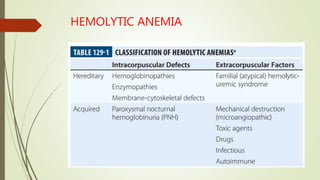
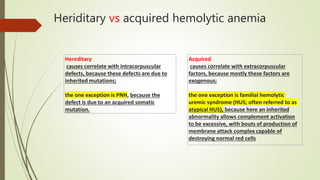
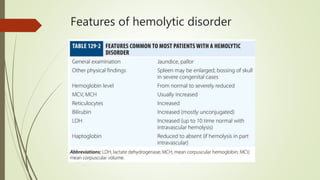
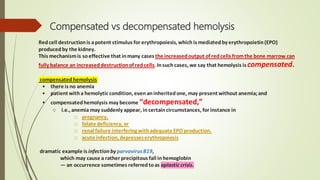
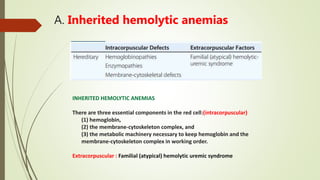
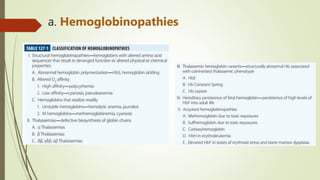
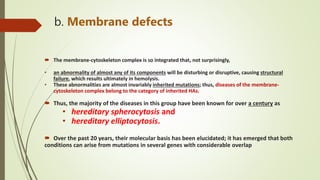
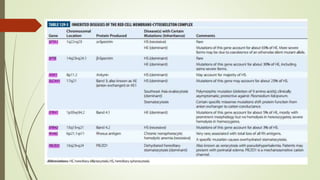
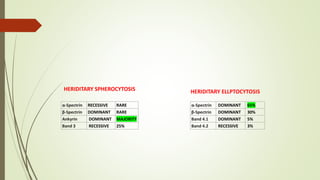
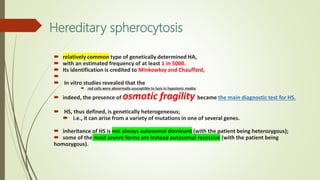
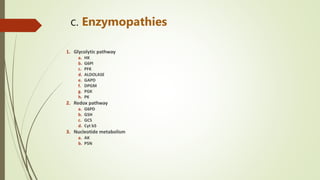
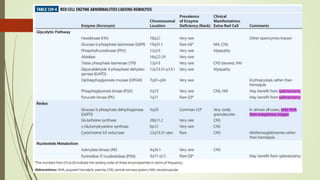
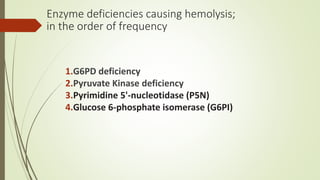
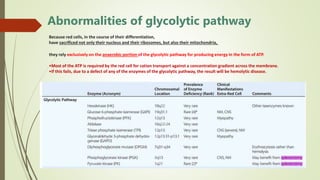
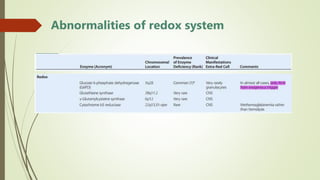
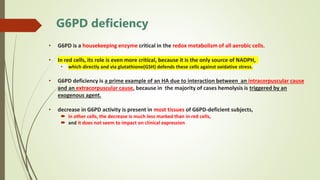
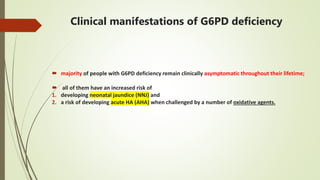
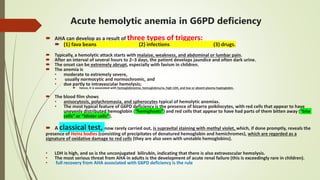
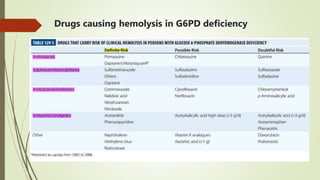
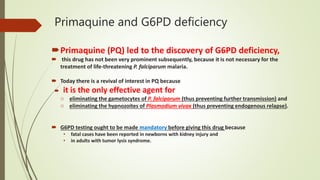
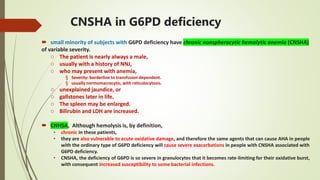
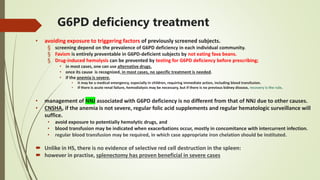
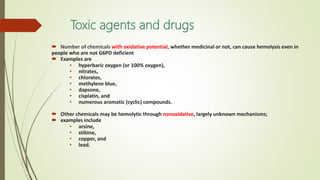
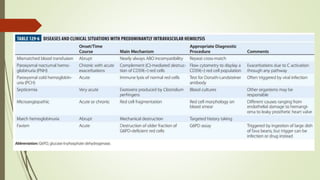
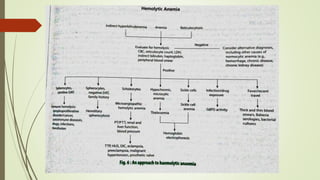
Hereditary hemolytic anemias can be caused by defects in the red blood cell's hemoglobin, membrane, metabolic machinery or enzymes. Glucose-6-phosphate dehydrogenase (G6PD) deficiency is the most common enzyme defect causing hemolytic anemia. It results from a lack of the enzyme G6PD, which protects red blood cells from oxidative damage. Patients with G6PD deficiency typically present with neonatal jaundice or acute hemolytic anemia triggered by factors like fava beans, infections or drugs. An acute hemolytic episode is characterized by symptoms like jaundice and dark urine over hours to days, along with signs of intravascular and extravascular hemolysis on lab tests.







![CASE_PRESENTATION_ON_subdural_hematoma(SDH)[1 FINAL PPT]-1.pptx](https://cdn.slidesharecdn.com/ss_thumbnails/casepresentationonsubduralhematomasdh1finalppt-1-260129172522-d405d375-thumbnail.jpg?width=640&height=640&fit=bounds)

