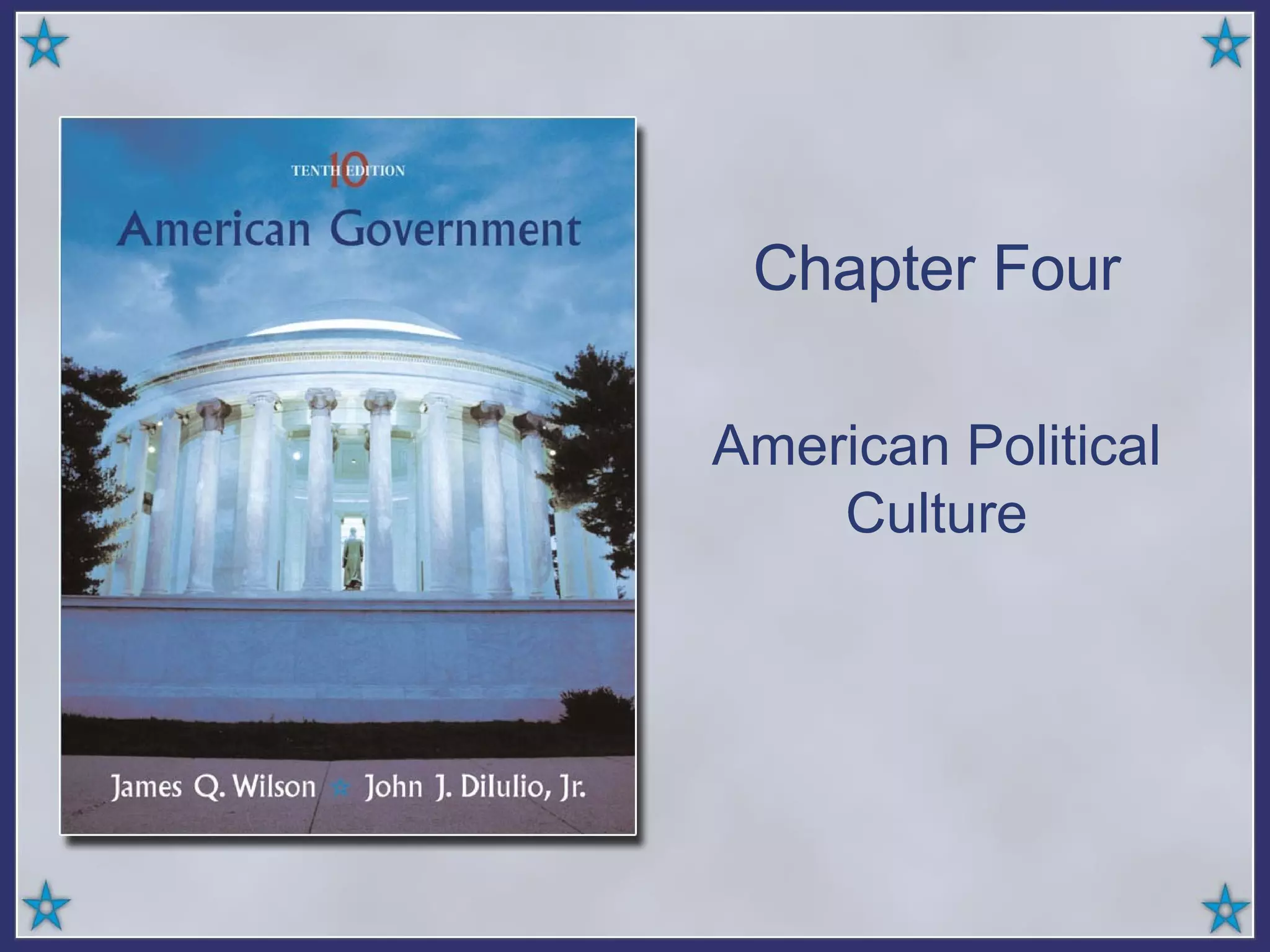
Chapter Four American Political Culture
Political Culture Political Culture : A distinctive and patterned way of thinking about how political and economic life ought to be carried out For example, Americans generally believe more strongly in political than in economic equality
American Political Values Liberty – rights Equality – equal vote; equal chance to participate and succeed Democracy – government is accountable to the people Civic duty – take community affairs seriously and become involved when possible Individual responsibility – individuals responsible for their own actions and well-being
Questions About Political Culture How do we know people share these beliefs? How do we explain behavior inconsistent with these beliefs? Why is there so much political conflict in U.S. history?
Beliefs About Economics Americans support free enterprise, but support some limits on marketplace freedom Americans believe in equality of opportunity but not equality of result Americans have a widely shared commitment to economic individualism
American Political Culture Americans tend to assert their rights Emphasize individualism, competition, equality, following rules, treating others fairly but impersonally Some other countries put more emphasis on harmony and equality
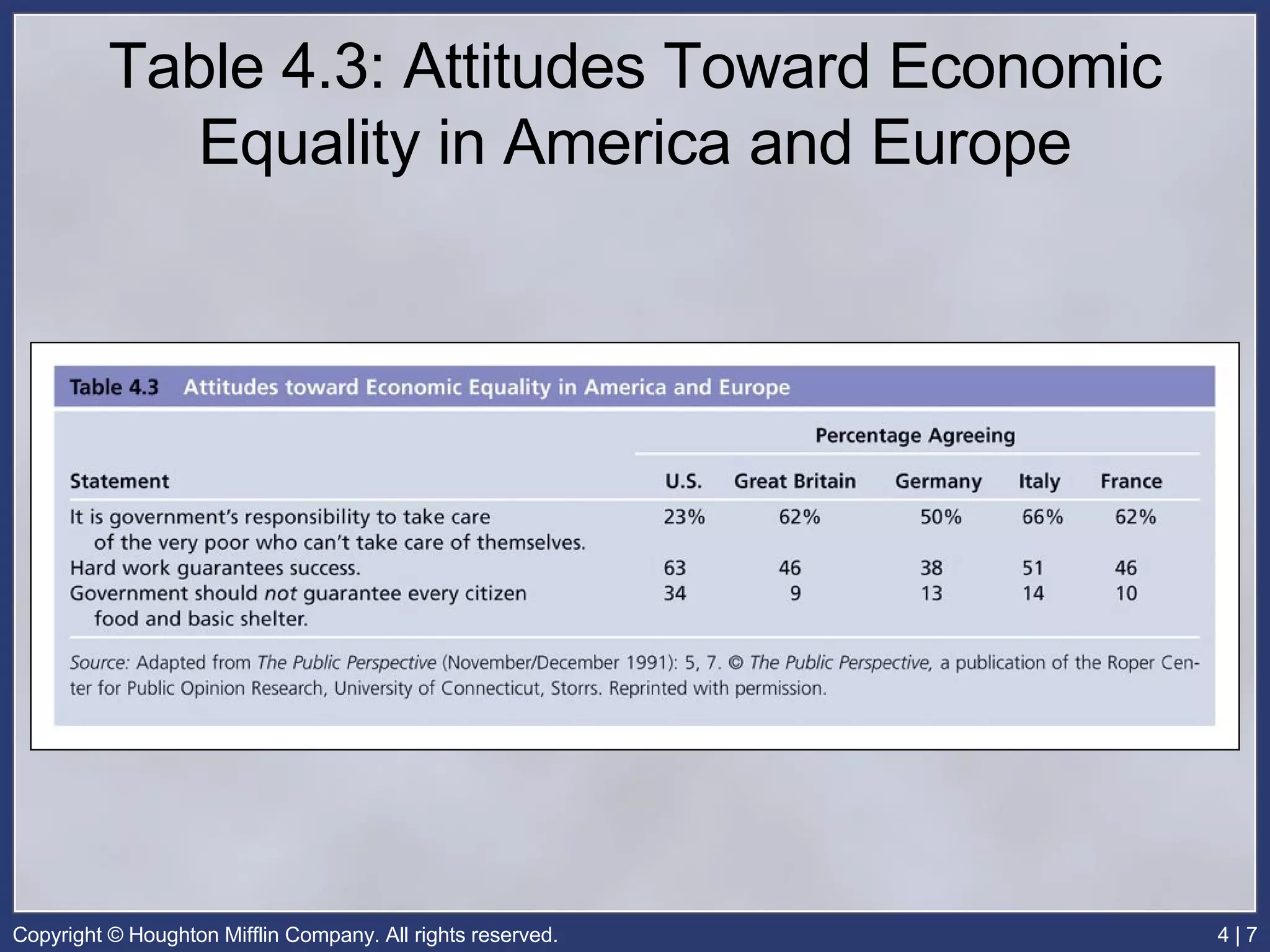
Table 4.3: Attitudes Toward Economic Equality in America and Europe
Civic Duty and Competence Civic duty:  a belief that one has an obligation to participate in civic and political affairs Civic competence:  a belief that one can affect government policies
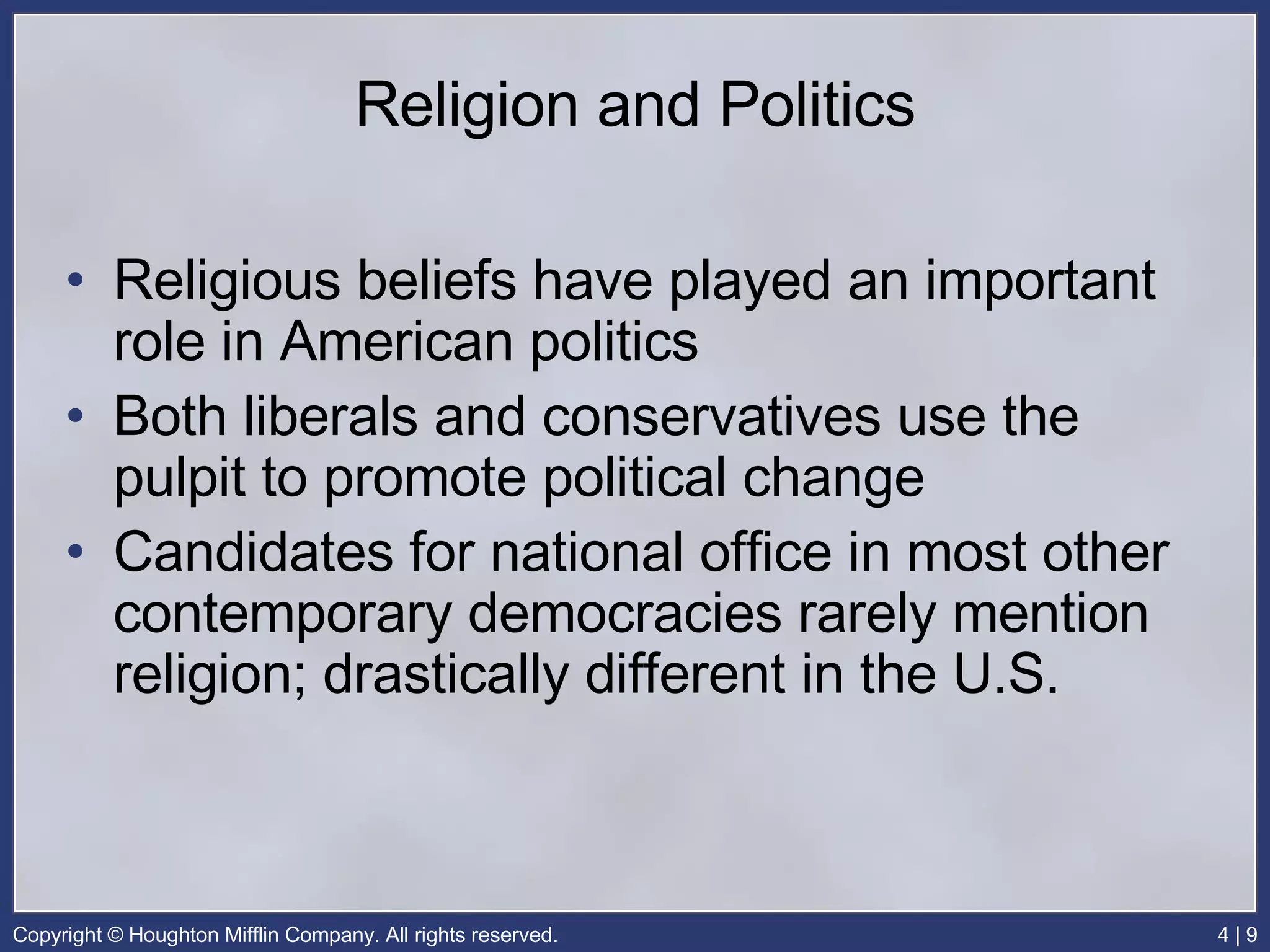
Religion and Politics Religious beliefs have played an important role in American politics Both liberals and conservatives use the pulpit to promote political change Candidates for national office in most other contemporary democracies rarely mention religion; drastically different in the U.S.
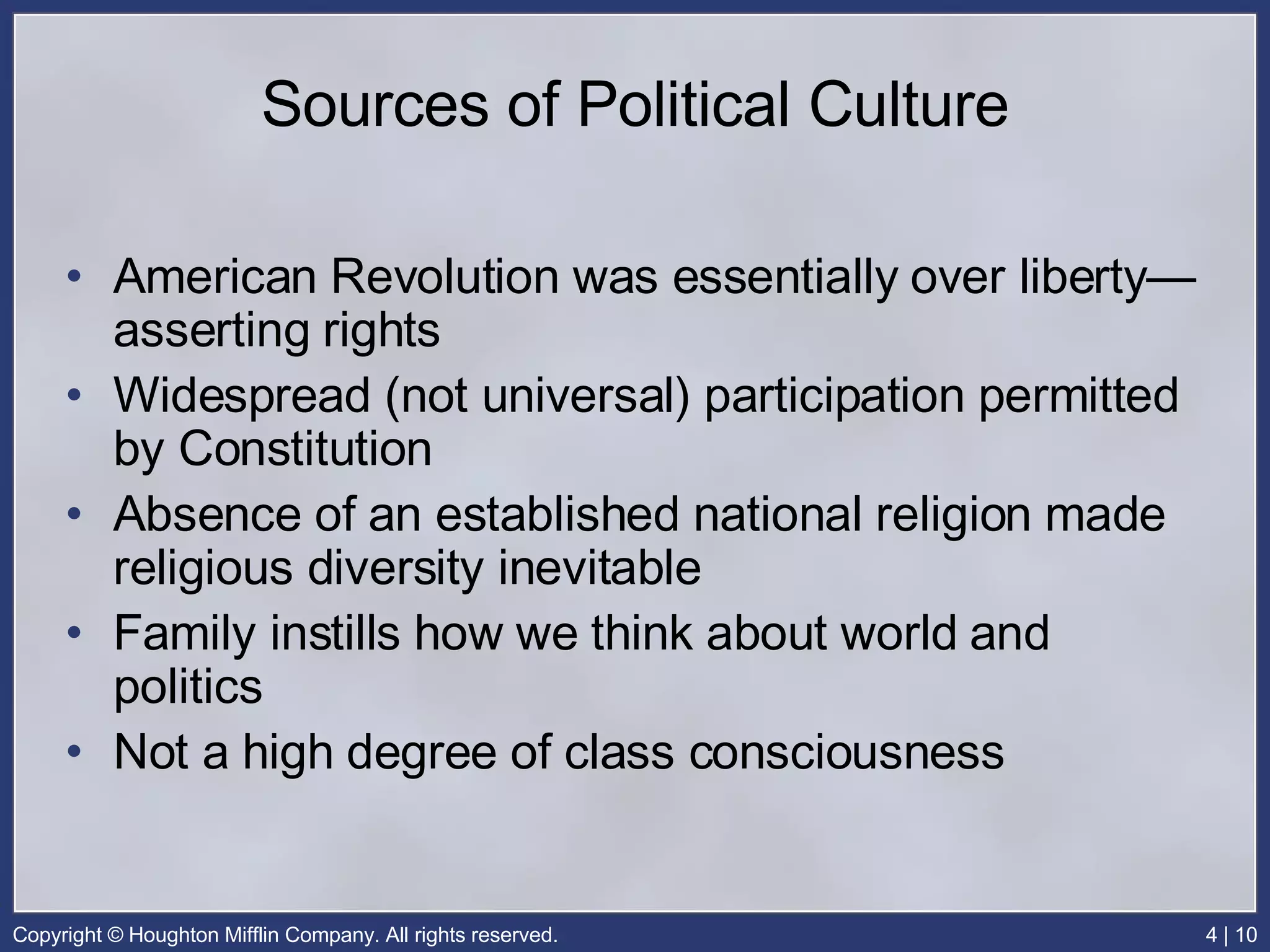
Sources of Political Culture American Revolution was essentially over liberty—asserting rights Widespread (not universal) participation permitted by Constitution Absence of an established national religion made religious diversity inevitable Family instills how we think about world and politics Not a high degree of class consciousness
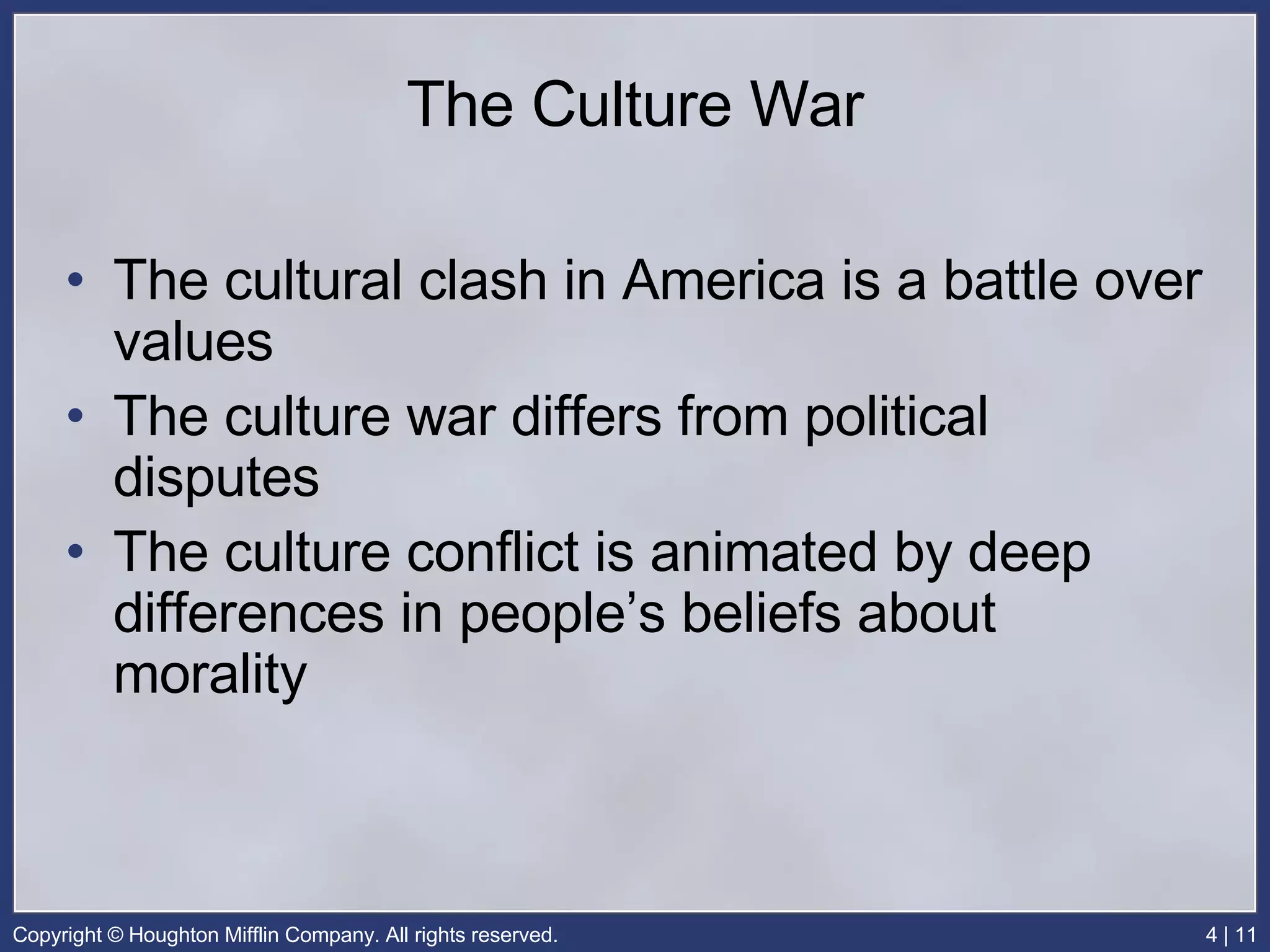
The Culture War The cultural clash in America is a battle over values The culture war differs from political disputes  The culture conflict is animated by deep differences in people’s beliefs about morality
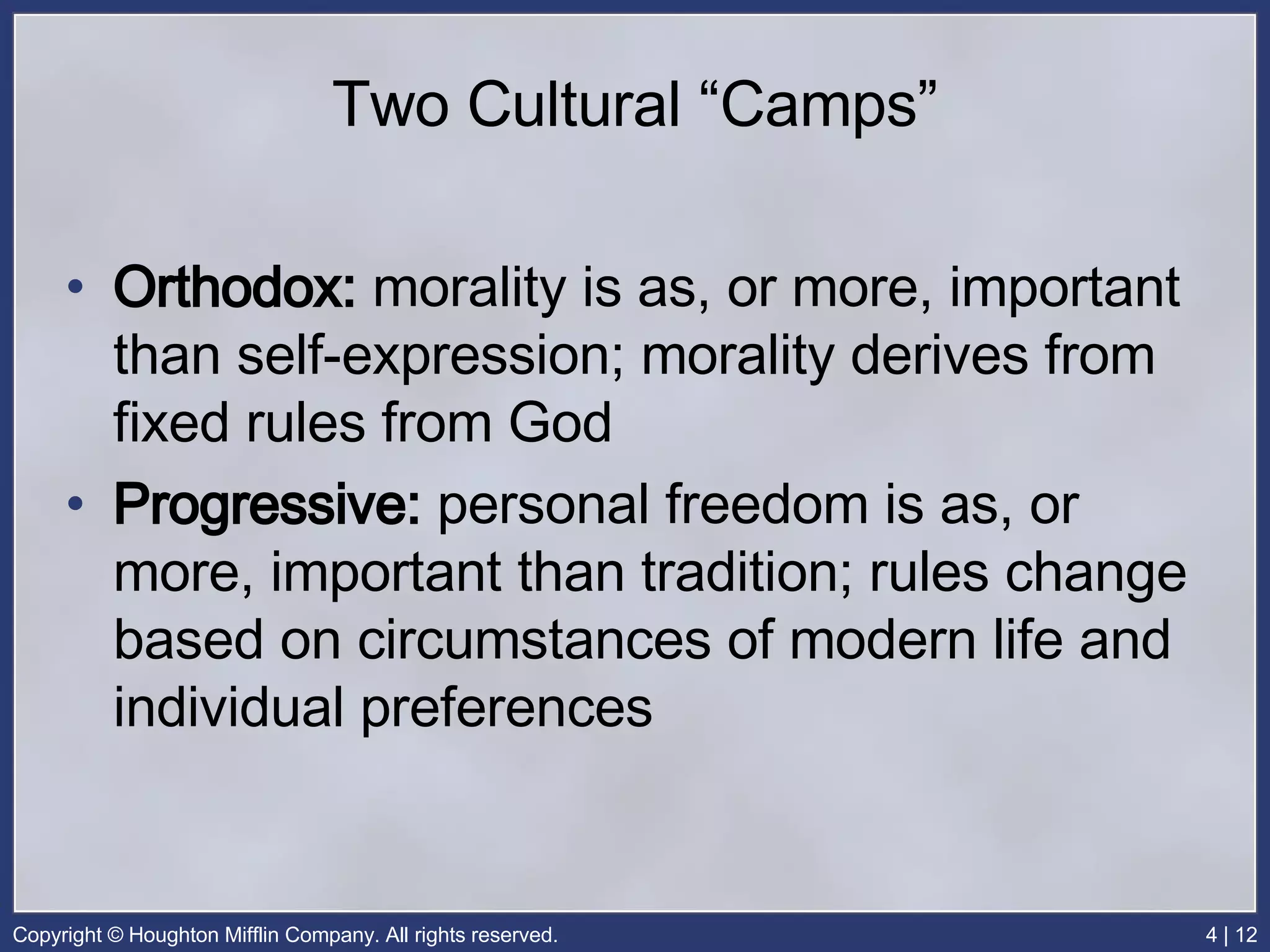
Two Cultural “Camps” Orthodox:  morality is as, or more, important than self-expression; morality derives from fixed rules from God Progressive:  personal freedom is as, or more, important than tradition; rules change based on circumstances of modern life and individual preferences
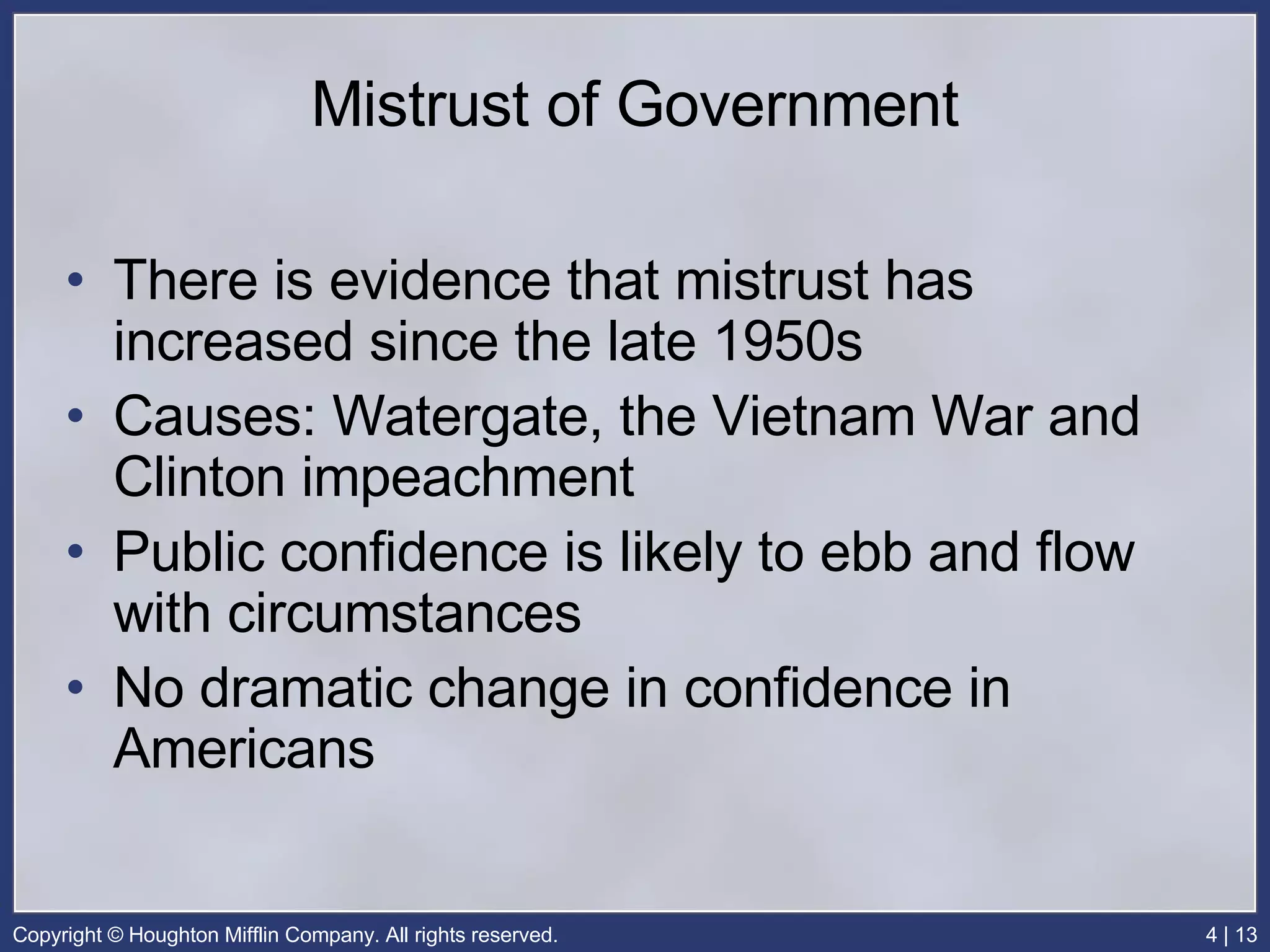
Mistrust of Government There is evidence that mistrust has increased since the late 1950s Causes: Watergate, the Vietnam War and Clinton impeachment Public confidence is likely to ebb and flow with circumstances No dramatic change in confidence in Americans
Figure 4.1: Trust in the Federal Government, 1958-2002 University of Michigan,  The National Election Studies .
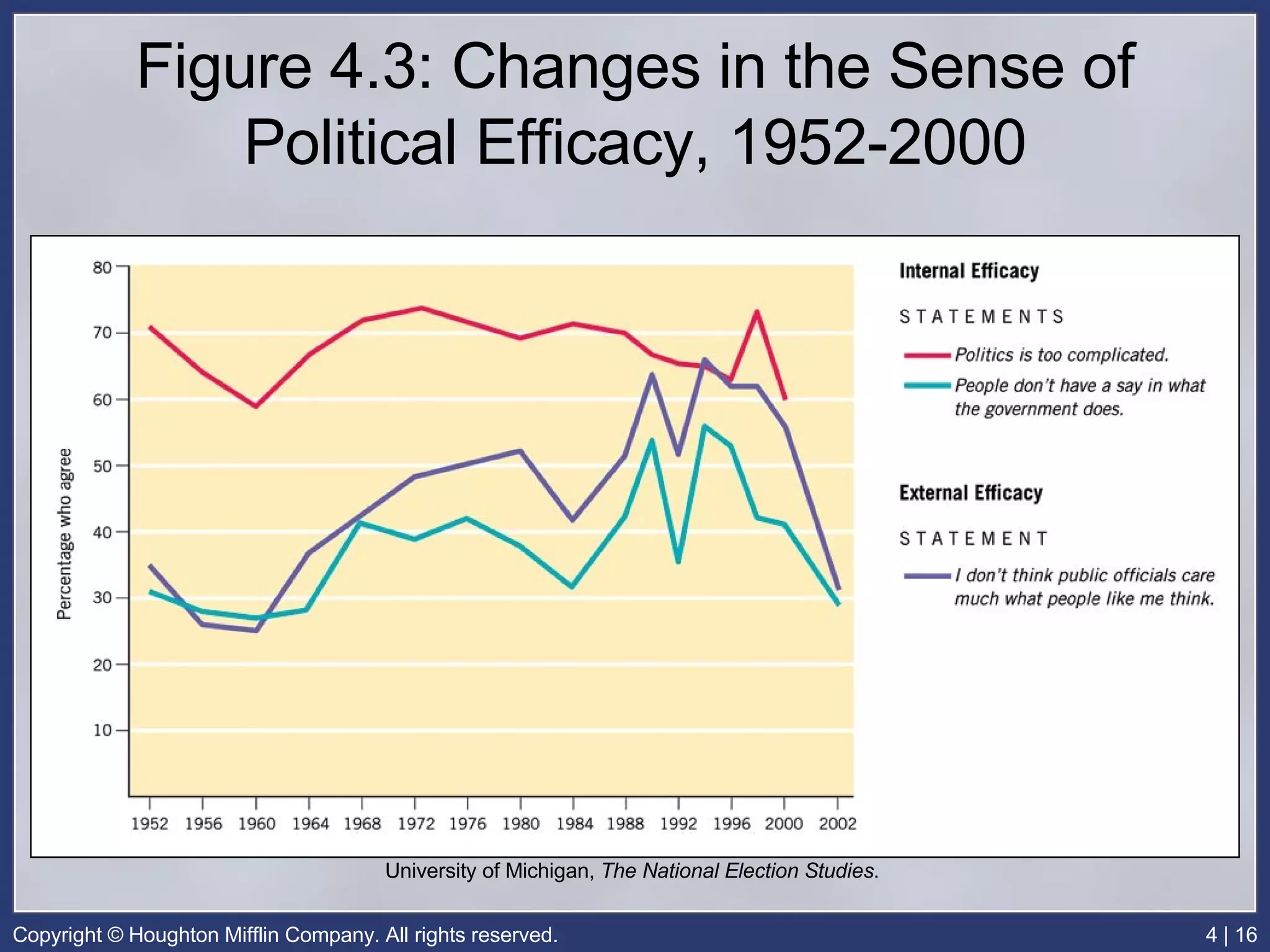
Political Efficacy Political efficacy:  citizen’s capacity to understand and influence political events Internal efficacy:  confidence in one’s ability to understand and influence events External efficacy:  belief that system will respond to citizens
Figure 4.3: Changes in the Sense of Political Efficacy, 1952-2000 University of Michigan,  The National Election Studies .
Political Tolerance A minimal level of tolerance is crucial to democratic politics Most Americans support tolerance in the abstract Most Americans would deny these rights in specific cases
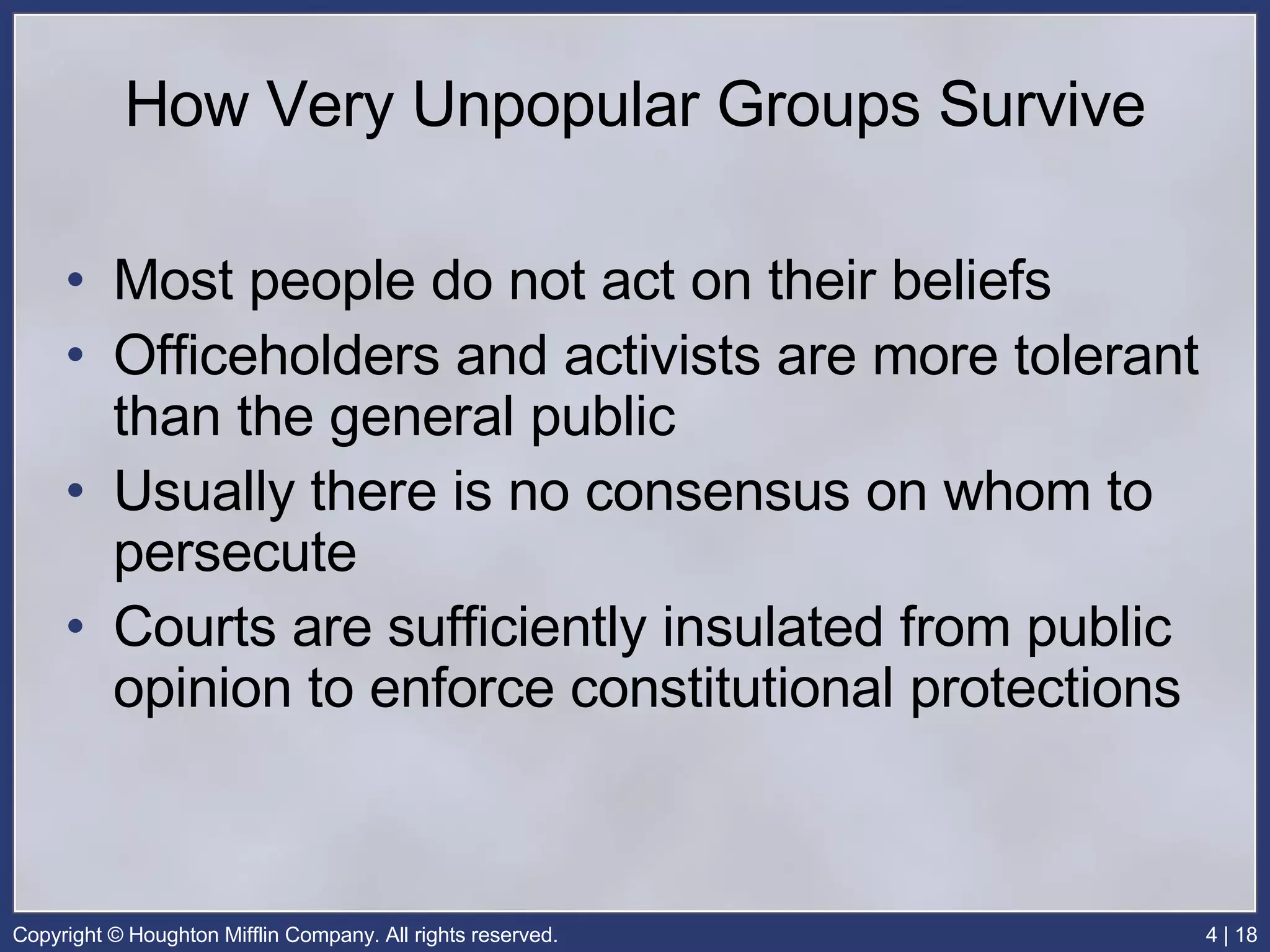
How Very Unpopular Groups Survive Most people do not act on their beliefs Officeholders and activists are more tolerant than the general public Usually there is no consensus on whom to persecute Courts are sufficiently insulated from public opinion to enforce constitutional protections

ap gov chap 4

  • 1.
    Chapter Four AmericanPolitical Culture
  • 2.
    Political Culture PoliticalCulture : A distinctive and patterned way of thinking about how political and economic life ought to be carried out For example, Americans generally believe more strongly in political than in economic equality
  • 3.
    American Political ValuesLiberty – rights Equality – equal vote; equal chance to participate and succeed Democracy – government is accountable to the people Civic duty – take community affairs seriously and become involved when possible Individual responsibility – individuals responsible for their own actions and well-being
  • 4.
    Questions About PoliticalCulture How do we know people share these beliefs? How do we explain behavior inconsistent with these beliefs? Why is there so much political conflict in U.S. history?
  • 5.
    Beliefs About EconomicsAmericans support free enterprise, but support some limits on marketplace freedom Americans believe in equality of opportunity but not equality of result Americans have a widely shared commitment to economic individualism
  • 6.
    American Political CultureAmericans tend to assert their rights Emphasize individualism, competition, equality, following rules, treating others fairly but impersonally Some other countries put more emphasis on harmony and equality
  • 7.
    Table 4.3: AttitudesToward Economic Equality in America and Europe
  • 8.
    Civic Duty andCompetence Civic duty: a belief that one has an obligation to participate in civic and political affairs Civic competence: a belief that one can affect government policies
  • 9.
    Religion and PoliticsReligious beliefs have played an important role in American politics Both liberals and conservatives use the pulpit to promote political change Candidates for national office in most other contemporary democracies rarely mention religion; drastically different in the U.S.
  • 10.
    Sources of PoliticalCulture American Revolution was essentially over liberty—asserting rights Widespread (not universal) participation permitted by Constitution Absence of an established national religion made religious diversity inevitable Family instills how we think about world and politics Not a high degree of class consciousness
  • 11.
    The Culture WarThe cultural clash in America is a battle over values The culture war differs from political disputes The culture conflict is animated by deep differences in people’s beliefs about morality
  • 12.
    Two Cultural “Camps”Orthodox: morality is as, or more, important than self-expression; morality derives from fixed rules from God Progressive: personal freedom is as, or more, important than tradition; rules change based on circumstances of modern life and individual preferences
  • 13.
    Mistrust of GovernmentThere is evidence that mistrust has increased since the late 1950s Causes: Watergate, the Vietnam War and Clinton impeachment Public confidence is likely to ebb and flow with circumstances No dramatic change in confidence in Americans
  • 14.
    Figure 4.1: Trustin the Federal Government, 1958-2002 University of Michigan, The National Election Studies .
  • 15.
    Political Efficacy Politicalefficacy: citizen’s capacity to understand and influence political events Internal efficacy: confidence in one’s ability to understand and influence events External efficacy: belief that system will respond to citizens
  • 16.
    Figure 4.3: Changesin the Sense of Political Efficacy, 1952-2000 University of Michigan, The National Election Studies .
  • 17.
    Political Tolerance Aminimal level of tolerance is crucial to democratic politics Most Americans support tolerance in the abstract Most Americans would deny these rights in specific cases
  • 18.
    How Very UnpopularGroups Survive Most people do not act on their beliefs Officeholders and activists are more tolerant than the general public Usually there is no consensus on whom to persecute Courts are sufficiently insulated from public opinion to enforce constitutional protections