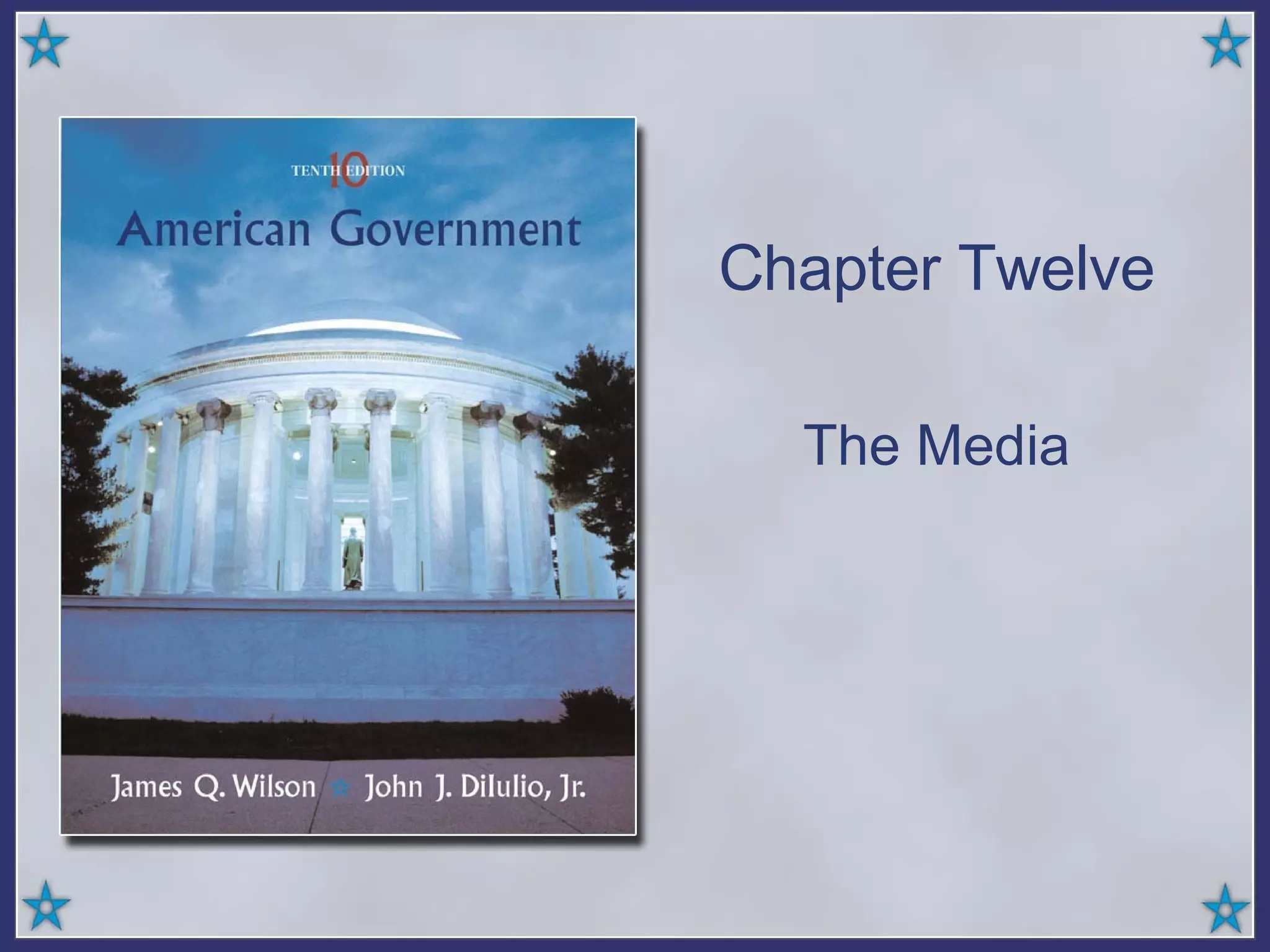
Chapter Twelve The Media
The Media Media: newspapers, television, radio, World Wide Web Most people’s knowledge of politics comes from the media Laws and understandings in the U.S. give the media substantial freedom  There is a long tradition of private media ownership in U.S.
The Media in History Changes in society and technology made possible self-supporting, mass readership daily newspapers The middle class favored new, progressive periodicals Radio arrives in 1920s, television in the late 1940s
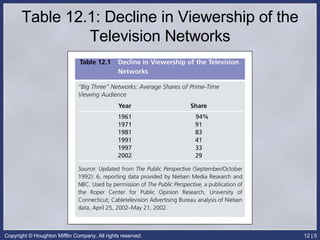
The Media in History Shorter sound bites on the nightly news make it more difficult for candidates and officeholders to convey their message Politicians now have more sources—cable, early-morning news, news magazine shows 40% of American households access the Internet
Table 12.1: Decline in Viewership of the Television Networks
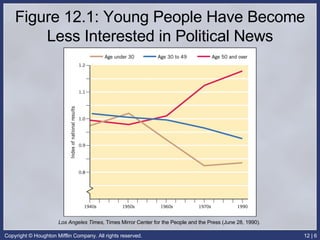
Figure 12.1: Young People Have Become Less Interested in Political News Los Angeles Times , Times Mirror Center for the People and the Press (June 28, 1990).
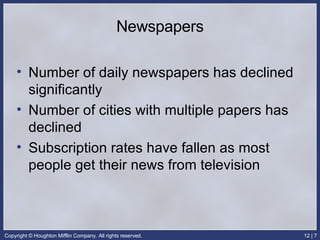
Newspapers Number of daily newspapers has declined significantly Number of cities with multiple papers has declined Subscription rates have fallen as most people get their news from television
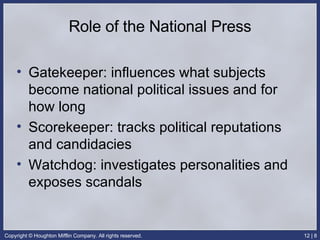
Role of the National Press Gatekeeper: influences what subjects become national political issues and for how long Scorekeeper: tracks political reputations and candidacies Watchdog: investigates personalities and exposes scandals
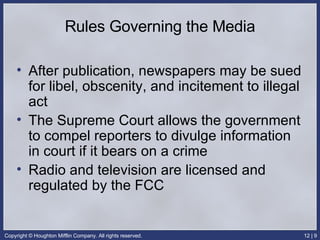
Rules Governing the Media After publication, newspapers may be sued for libel, obscenity, and incitement to illegal act The Supreme Court allows the government to compel reporters to divulge information in court if it bears on a crime Radio and television are licensed and regulated by the FCC
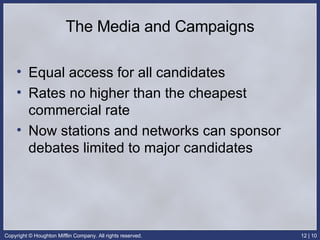
The Media and Campaigns Equal access for all candidates Rates no higher than the cheapest commercial rate Now stations and networks can sponsor debates limited to major candidates
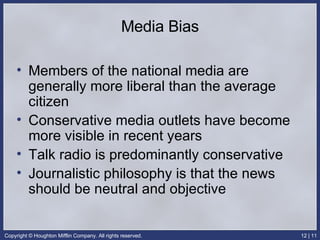
Media Bias Members of the national media are generally more liberal than the average citizen Conservative media outlets have become more visible in recent years Talk radio is predominantly conservative Journalistic philosophy is that the news should be neutral and objective
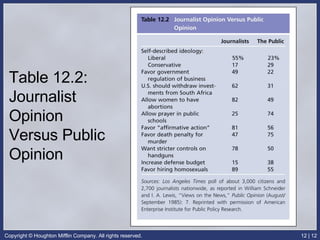
Table 12.2: Journalist Opinion Versus Public Opinion
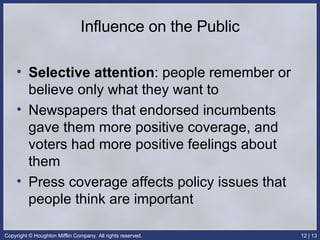
Influence on the Public Selective attention : people remember or believe only what they want to  Newspapers that endorsed incumbents gave them more positive coverage, and voters had more positive feelings about them Press coverage affects policy issues that people think are important
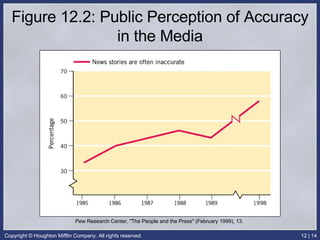
Figure 12.2: Public Perception of Accuracy in the Media Pew Research Center, "The People and the Press" (February 1999), 13.
Coverage of Government The president receives the most coverage Gavel-to-gavel coverage of House proceedings since 1979 (C-SPAN) Senatorial use of televised committee hearings has turned the Senate into a presidential candidate incubator
The Adversarial Press Adversarial press since Vietnam, Watergate, Iran-contra Cynicism created era of attack journalism Adversarial media has made negative campaign advertising more socially acceptable
Sensationalism Intense competition among many media outlets means that each has a small share of the audience Sensationalism draws an audience and is cheaper than investigative reporting Reporters may not be checking sources carefully because there is such competition for stories
Government Constraints on the Media Reporters must strike a balance between expressing critical views and maintaining sources Governmental tools to fight back: numerous press officers, press releases, leaks, bypass the national press in favor of local media, presidential rewards and punishments

ap gov chap 12

  • 1.
  • 2.
    The Media Media:newspapers, television, radio, World Wide Web Most people’s knowledge of politics comes from the media Laws and understandings in the U.S. give the media substantial freedom There is a long tradition of private media ownership in U.S.
  • 3.
    The Media inHistory Changes in society and technology made possible self-supporting, mass readership daily newspapers The middle class favored new, progressive periodicals Radio arrives in 1920s, television in the late 1940s
  • 4.
    The Media inHistory Shorter sound bites on the nightly news make it more difficult for candidates and officeholders to convey their message Politicians now have more sources—cable, early-morning news, news magazine shows 40% of American households access the Internet
  • 5.
    Table 12.1: Declinein Viewership of the Television Networks
  • 6.
    Figure 12.1: YoungPeople Have Become Less Interested in Political News Los Angeles Times , Times Mirror Center for the People and the Press (June 28, 1990).
  • 7.
    Newspapers Number ofdaily newspapers has declined significantly Number of cities with multiple papers has declined Subscription rates have fallen as most people get their news from television
  • 8.
    Role of theNational Press Gatekeeper: influences what subjects become national political issues and for how long Scorekeeper: tracks political reputations and candidacies Watchdog: investigates personalities and exposes scandals
  • 9.
    Rules Governing theMedia After publication, newspapers may be sued for libel, obscenity, and incitement to illegal act The Supreme Court allows the government to compel reporters to divulge information in court if it bears on a crime Radio and television are licensed and regulated by the FCC
  • 10.
    The Media andCampaigns Equal access for all candidates Rates no higher than the cheapest commercial rate Now stations and networks can sponsor debates limited to major candidates
  • 11.
    Media Bias Membersof the national media are generally more liberal than the average citizen Conservative media outlets have become more visible in recent years Talk radio is predominantly conservative Journalistic philosophy is that the news should be neutral and objective
  • 12.
    Table 12.2: JournalistOpinion Versus Public Opinion
  • 13.
    Influence on thePublic Selective attention : people remember or believe only what they want to Newspapers that endorsed incumbents gave them more positive coverage, and voters had more positive feelings about them Press coverage affects policy issues that people think are important
  • 14.
    Figure 12.2: PublicPerception of Accuracy in the Media Pew Research Center, "The People and the Press" (February 1999), 13.
  • 15.
    Coverage of GovernmentThe president receives the most coverage Gavel-to-gavel coverage of House proceedings since 1979 (C-SPAN) Senatorial use of televised committee hearings has turned the Senate into a presidential candidate incubator
  • 16.
    The Adversarial PressAdversarial press since Vietnam, Watergate, Iran-contra Cynicism created era of attack journalism Adversarial media has made negative campaign advertising more socially acceptable
  • 17.
    Sensationalism Intense competitionamong many media outlets means that each has a small share of the audience Sensationalism draws an audience and is cheaper than investigative reporting Reporters may not be checking sources carefully because there is such competition for stories
  • 18.
    Government Constraints onthe Media Reporters must strike a balance between expressing critical views and maintaining sources Governmental tools to fight back: numerous press officers, press releases, leaks, bypass the national press in favor of local media, presidential rewards and punishments