How Congress Works
Part I
Structure, Organization,
& Legislative Process
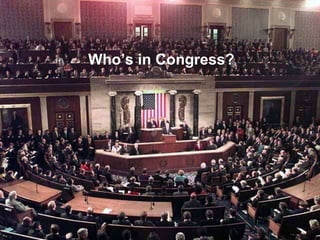
Who’s in Congress?
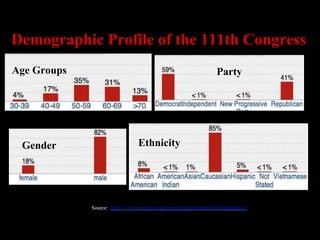
Demographic Profile of the 111th Congress
Age Groups
Source: http://www.congress.org/congressorg/directory/demographics.tt
Party
Gender Ethnicity
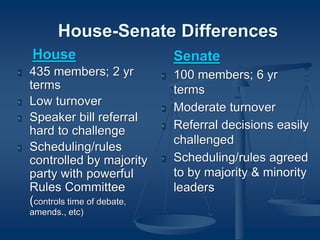
House-Senate Differences
House
 435 members; 2 yr
terms
 Low turnover
 Speaker bill referral
hard to challenge
 Scheduling/rules
controlled by majority
party with powerful
Rules Committee
(controls time of debate,
amends., etc)
Senate
 100 members; 6 yr
terms
 Moderate turnover
 Referral decisions easily
challenged
 Scheduling/rules agreed
to by majority & minority
leaders
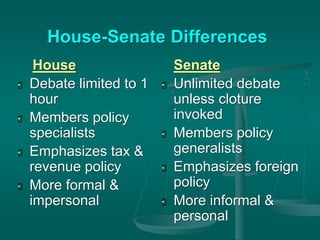
House-Senate Differences
House
 Debate limited to 1
hour
 Members policy
specialists
 Emphasizes tax &
revenue policy
 More formal &
impersonal
Senate
 Unlimited debate
unless cloture
invoked
 Members policy
generalists
 Emphasizes foreign
policy
 More informal &
personal
Party Leadership
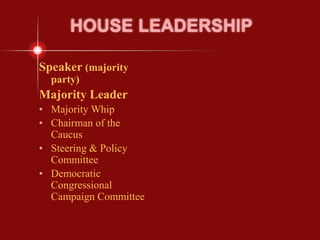
HOUSE LEADERSHIP
Speaker (majority
party)
Majority Leader
• Majority Whip
• Chairman of the
Caucus
• Steering & Policy
Committee
• Democratic
Congressional
Campaign Committee
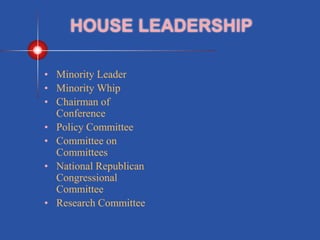
HOUSE LEADERSHIP
• Minority Leader
• Minority Whip
• Chairman of
Conference
• Policy Committee
• Committee on
Committees
• National Republican
Congressional
Committee
• Research Committee
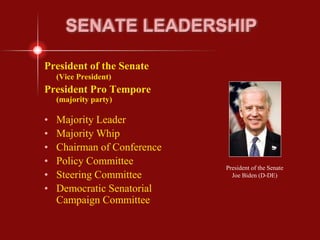
SENATE LEADERSHIP
President of the Senate
(Vice President)
President Pro Tempore
(majority party)
• Majority Leader
• Majority Whip
• Chairman of Conference
• Policy Committee
• Steering Committee
• Democratic Senatorial
Campaign Committee
President of the Senate
Joe Biden (D-DE)
SENATE LEADERSHIP
• Minority Leader
• Minority Whip
• Chairman of
Conference
• Policy Committee
• Committee on
Committees
• Republican Senatorial
Committee
Strength of Party Structure?
• Measure of party strength:
1. Ability of leaders to control party rules
and organization
2. Extent to which party members vote
together in the House and Senate
• Senate: less party-centered and leader
oriented
Party Unity
• Lower today than 100 years ago, but…..
• Ideology important variable explaining party
voting (members vote with their party 80% of
the time)
• Party polarization - vote in which majority of
democrats oppose majority of republicans
• Polarization trends:
o 1976 HR = 36%; S = 37%
o 1995 HR = 73%; S = 69%
o 2000 HR = 43%; S = 49%
CAUCUSES
• Groups (may be bipartisan) meeting to pursue
common legislative objectives
• Rivals to parties in policy formulation
• Examples: Democratic Study Group,
Congressional Black Caucus, Tuesday Lunch
Bunch, Human Rights, Congressional Caucus for
Women’s Issues, Out of Iraq Caucus,
Rural Caucus, Travel & Tourism Caucus, House
Caucus on Missing and Exploited Children
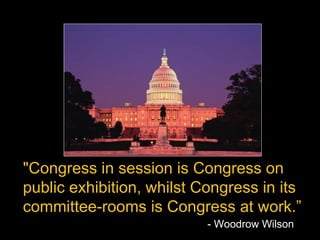
"Congress in session is Congress on
public exhibition, whilst Congress in its
committee-rooms is Congress at work.”
- Woodrow Wilson
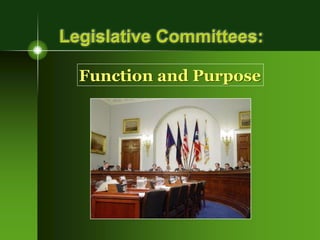
Legislative Committees:
Function and Purpose
Legislative Committees:
Function & Purpose
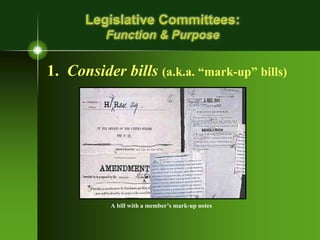
1. Consider bills (a.k.a. “mark-up” bills)
A bill with a member’s mark-up notes
Legislative Committees:
Function & Purpose
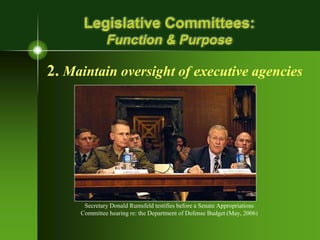
2. Maintain oversight of executive agencies
Secretary Donald Rumsfeld testifies before a Senate Appropriations
Committee hearing re: the Department of Defense Budget (May, 2006)
Legislative Committees:
Function & Purpose
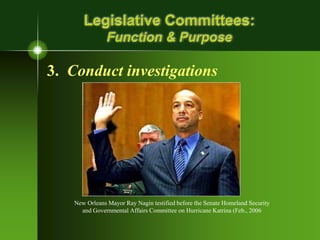
3. Conduct investigations
New Orleans Mayor Ray Nagin testified before the Senate Homeland Security
and Governmental Affairs Committee on Hurricane Katrina (Feb., 2006
Types of Committees
Standing Committees - permanent panel with full
legislative functions and oversight responsibilities
• Subcommittees – formed to tackle very specific tasks
within the jurisdiction of the full committees
Select or Special Committees - groups appointed for a
limited purpose and limited duration
Joint Committees - includes members of both chambers
to conduct studies or perform housekeeping tasks
Conference Committee - includes members of House &
Senate to work out differences between similar bills
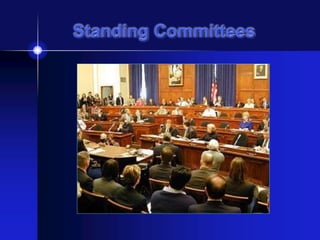
Standing Committees
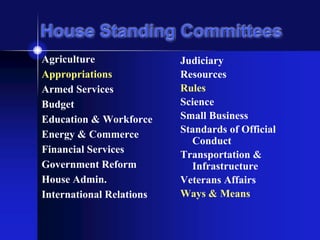
House Standing Committees
Agriculture
Appropriations
Armed Services
Budget
Education & Workforce
Energy & Commerce
Financial Services
Government Reform
House Admin.
International Relations
Judiciary
Resources
Rules
Science
Small Business
Standards of Official
Conduct
Transportation &
Infrastructure
Veterans Affairs
Ways & Means
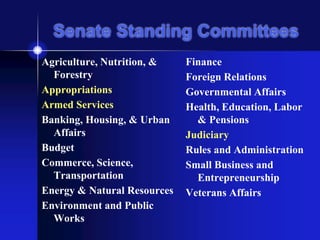
Senate Standing Committees
Agriculture, Nutrition, &
Forestry
Appropriations
Armed Services
Banking, Housing, & Urban
Affairs
Budget
Commerce, Science,
Transportation
Energy & Natural Resources
Environment and Public
Works
Finance
Foreign Relations
Governmental Affairs
Health, Education, Labor
& Pensions
Judiciary
Rules and Administration
Small Business and
Entrepreneurship
Veterans Affairs
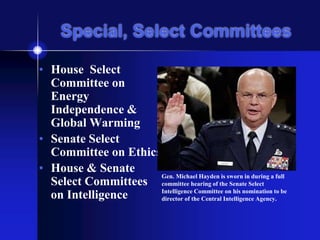
Special, Select Committees
• House Select
Committee on
Energy
Independence &
Global Warming
• Senate Select
Committee on Ethics
• House & Senate
Select Committees
on Intelligence
Gen. Michael Hayden is sworn in during a full
committee hearing of the Senate Select
Intelligence Committee on his nomination to be
director of the Central Intelligence Agency.
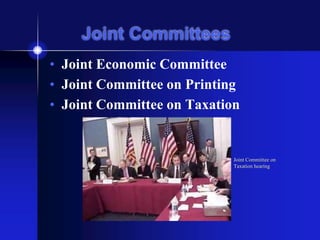
Joint Committees
• Joint Economic Committee
• Joint Committee on Printing
• Joint Committee on Taxation
Joint Committee on
Taxation hearing
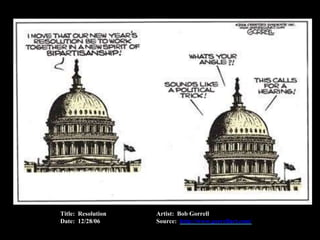
Title: Resolution Artist: Bob Gorrell
Date: 12/28/06 Source: http://www.gorrellart.com/
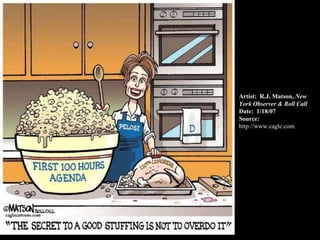
Artist: R.J. Matson, New
York Observer & Roll Call
Date: 1/18/07
Source:
http://www.cagle.com

How Congress Works

  • 1.
    How Congress Works PartI Structure, Organization, & Legislative Process
  • 2.
  • 3.
    Demographic Profile ofthe 111th Congress Age Groups Source: http://www.congress.org/congressorg/directory/demographics.tt Party Gender Ethnicity
  • 4.
    House-Senate Differences House  435members; 2 yr terms  Low turnover  Speaker bill referral hard to challenge  Scheduling/rules controlled by majority party with powerful Rules Committee (controls time of debate, amends., etc) Senate  100 members; 6 yr terms  Moderate turnover  Referral decisions easily challenged  Scheduling/rules agreed to by majority & minority leaders
  • 5.
    House-Senate Differences House  Debatelimited to 1 hour  Members policy specialists  Emphasizes tax & revenue policy  More formal & impersonal Senate  Unlimited debate unless cloture invoked  Members policy generalists  Emphasizes foreign policy  More informal & personal
  • 6.
  • 7.
    HOUSE LEADERSHIP Speaker (majority party) MajorityLeader • Majority Whip • Chairman of the Caucus • Steering & Policy Committee • Democratic Congressional Campaign Committee
  • 8.
    HOUSE LEADERSHIP • MinorityLeader • Minority Whip • Chairman of Conference • Policy Committee • Committee on Committees • National Republican Congressional Committee • Research Committee
  • 9.
    SENATE LEADERSHIP President ofthe Senate (Vice President) President Pro Tempore (majority party) • Majority Leader • Majority Whip • Chairman of Conference • Policy Committee • Steering Committee • Democratic Senatorial Campaign Committee President of the Senate Joe Biden (D-DE)
  • 10.
    SENATE LEADERSHIP • MinorityLeader • Minority Whip • Chairman of Conference • Policy Committee • Committee on Committees • Republican Senatorial Committee
  • 11.
    Strength of PartyStructure? • Measure of party strength: 1. Ability of leaders to control party rules and organization 2. Extent to which party members vote together in the House and Senate • Senate: less party-centered and leader oriented
  • 12.
    Party Unity • Lowertoday than 100 years ago, but….. • Ideology important variable explaining party voting (members vote with their party 80% of the time) • Party polarization - vote in which majority of democrats oppose majority of republicans • Polarization trends: o 1976 HR = 36%; S = 37% o 1995 HR = 73%; S = 69% o 2000 HR = 43%; S = 49%
  • 13.
    CAUCUSES • Groups (maybe bipartisan) meeting to pursue common legislative objectives • Rivals to parties in policy formulation • Examples: Democratic Study Group, Congressional Black Caucus, Tuesday Lunch Bunch, Human Rights, Congressional Caucus for Women’s Issues, Out of Iraq Caucus, Rural Caucus, Travel & Tourism Caucus, House Caucus on Missing and Exploited Children
  • 14.
    "Congress in sessionis Congress on public exhibition, whilst Congress in its committee-rooms is Congress at work.” - Woodrow Wilson
  • 15.
  • 16.
    Legislative Committees: Function &Purpose 1. Consider bills (a.k.a. “mark-up” bills) A bill with a member’s mark-up notes
  • 17.
    Legislative Committees: Function &Purpose 2. Maintain oversight of executive agencies Secretary Donald Rumsfeld testifies before a Senate Appropriations Committee hearing re: the Department of Defense Budget (May, 2006)
  • 18.
    Legislative Committees: Function &Purpose 3. Conduct investigations New Orleans Mayor Ray Nagin testified before the Senate Homeland Security and Governmental Affairs Committee on Hurricane Katrina (Feb., 2006
  • 19.
    Types of Committees StandingCommittees - permanent panel with full legislative functions and oversight responsibilities • Subcommittees – formed to tackle very specific tasks within the jurisdiction of the full committees Select or Special Committees - groups appointed for a limited purpose and limited duration Joint Committees - includes members of both chambers to conduct studies or perform housekeeping tasks Conference Committee - includes members of House & Senate to work out differences between similar bills
  • 20.
  • 21.
    House Standing Committees Agriculture Appropriations ArmedServices Budget Education & Workforce Energy & Commerce Financial Services Government Reform House Admin. International Relations Judiciary Resources Rules Science Small Business Standards of Official Conduct Transportation & Infrastructure Veterans Affairs Ways & Means
  • 22.
    Senate Standing Committees Agriculture,Nutrition, & Forestry Appropriations Armed Services Banking, Housing, & Urban Affairs Budget Commerce, Science, Transportation Energy & Natural Resources Environment and Public Works Finance Foreign Relations Governmental Affairs Health, Education, Labor & Pensions Judiciary Rules and Administration Small Business and Entrepreneurship Veterans Affairs
  • 23.
    Special, Select Committees •House Select Committee on Energy Independence & Global Warming • Senate Select Committee on Ethics • House & Senate Select Committees on Intelligence Gen. Michael Hayden is sworn in during a full committee hearing of the Senate Select Intelligence Committee on his nomination to be director of the Central Intelligence Agency.
  • 24.
    Joint Committees • JointEconomic Committee • Joint Committee on Printing • Joint Committee on Taxation Joint Committee on Taxation hearing
  • 25.
    Title: Resolution Artist:Bob Gorrell Date: 12/28/06 Source: http://www.gorrellart.com/
  • 26.
    Artist: R.J. Matson,New York Observer & Roll Call Date: 1/18/07 Source: http://www.cagle.com