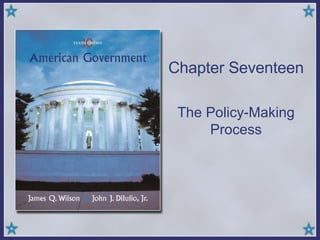
Chapter Seventeen The Policy-Making Process
Setting the Agenda The political agenda : deciding what to make policy about The current political agenda includes taxes, energy, welfare, and civil rights Shared beliefs determine what is legitimate for the government to do
Scope of Government Action Government always gets larger People generally believe that government should continue to do what it is doing now Changes in attitudes and events tend to increase government activities Government growth cannot be attributed to one political party
The Influence of Institutions The courts make decisions that force action by other branches: e.g. school desegregation, abortion The bureaucracy is a source of innovation and forms alliances with senators and staff The Senate is a source of presidential candidates with new ideas
Other Influences Groups may react to a sense of relative deprivation The media helps place issues on the political agenda The national government may later adopt ideas pioneered by the states
Costs, Benefits, and Policy Cost : any burden, monetary or non-monetary, that some people must, or expect, to bear from the policy Benefit : any satisfaction, monetary or non-monetary, that some people must, or expect, to receive from the policy Politics is a process of settling disputes over who benefits/pays and who ought to benefit/pay
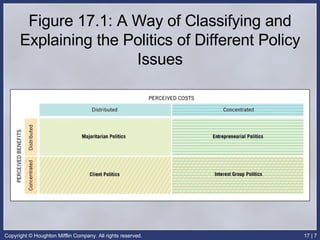
Figure 17.1: A Way of Classifying and Explaining the Politics of Different Policy Issues
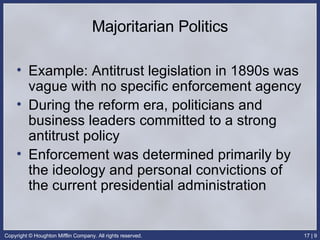
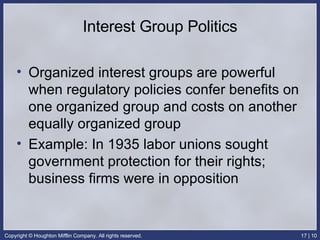
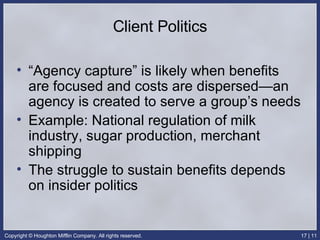
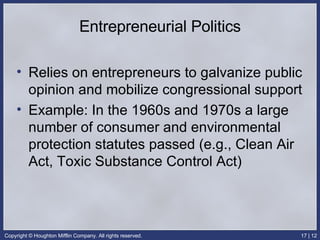
Kinds of Politics Majoritarian politics : distributed benefits, distributed costs Interest group politics : concentrated benefits, concentrated costs Client politics : concentrated benefits, distributed costs Entrepreneurial politics : distributed benefits, concentrated costs
Majoritarian Politics Example: Antitrust legislation in 1890s was vague with no specific enforcement agency During the reform era, politicians and business leaders committed to a strong antitrust policy Enforcement was determined primarily by the ideology and personal convictions of the current presidential administration
Interest Group Politics Organized interest groups are powerful when regulatory policies confer benefits on one organized group and costs on another equally organized group Example: In 1935 labor unions sought government protection for their rights; business firms were in opposition
Client Politics “Agency capture” is likely when benefits are focused and costs are dispersed—an agency is created to serve a group’s needs Example: National regulation of milk industry, sugar production, merchant shipping The struggle to sustain benefits depends on insider politics
Entrepreneurial Politics Relies on entrepreneurs to galvanize public opinion and mobilize congressional support Example: In the 1960s and 1970s a large number of consumer and environmental protection statutes passed (e.g., Clean Air Act, Toxic Substance Control Act)
Deregulation Example: airline fares, long distance telephoning, trucking Deregulation is a challenge to iron triangles and client politics It is based on the idea that governmental regulation was bad in industries that could be competitive

ap gov chap 17

  • 1.
    Chapter Seventeen ThePolicy-Making Process
  • 2.
    Setting the AgendaThe political agenda : deciding what to make policy about The current political agenda includes taxes, energy, welfare, and civil rights Shared beliefs determine what is legitimate for the government to do
  • 3.
    Scope of GovernmentAction Government always gets larger People generally believe that government should continue to do what it is doing now Changes in attitudes and events tend to increase government activities Government growth cannot be attributed to one political party
  • 4.
    The Influence ofInstitutions The courts make decisions that force action by other branches: e.g. school desegregation, abortion The bureaucracy is a source of innovation and forms alliances with senators and staff The Senate is a source of presidential candidates with new ideas
  • 5.
    Other Influences Groupsmay react to a sense of relative deprivation The media helps place issues on the political agenda The national government may later adopt ideas pioneered by the states
  • 6.
    Costs, Benefits, andPolicy Cost : any burden, monetary or non-monetary, that some people must, or expect, to bear from the policy Benefit : any satisfaction, monetary or non-monetary, that some people must, or expect, to receive from the policy Politics is a process of settling disputes over who benefits/pays and who ought to benefit/pay
  • 7.
    Figure 17.1: AWay of Classifying and Explaining the Politics of Different Policy Issues
  • 8.
    Kinds of PoliticsMajoritarian politics : distributed benefits, distributed costs Interest group politics : concentrated benefits, concentrated costs Client politics : concentrated benefits, distributed costs Entrepreneurial politics : distributed benefits, concentrated costs
  • 9.
    Majoritarian Politics Example:Antitrust legislation in 1890s was vague with no specific enforcement agency During the reform era, politicians and business leaders committed to a strong antitrust policy Enforcement was determined primarily by the ideology and personal convictions of the current presidential administration
  • 10.
    Interest Group PoliticsOrganized interest groups are powerful when regulatory policies confer benefits on one organized group and costs on another equally organized group Example: In 1935 labor unions sought government protection for their rights; business firms were in opposition
  • 11.
    Client Politics “Agencycapture” is likely when benefits are focused and costs are dispersed—an agency is created to serve a group’s needs Example: National regulation of milk industry, sugar production, merchant shipping The struggle to sustain benefits depends on insider politics
  • 12.
    Entrepreneurial Politics Relieson entrepreneurs to galvanize public opinion and mobilize congressional support Example: In the 1960s and 1970s a large number of consumer and environmental protection statutes passed (e.g., Clean Air Act, Toxic Substance Control Act)
  • 13.
    Deregulation Example: airlinefares, long distance telephoning, trucking Deregulation is a challenge to iron triangles and client politics It is based on the idea that governmental regulation was bad in industries that could be competitive