Unit 9: Modern U.S.
Politics
SSUSH22 & SSUSH23
Standards
• SSUSH22 Analyze U.S. international and domestic policies
including their influences on technological advancements and
social changes during the Nixon, Ford, and Carter administrations.
• SSUSH23 Assess the political, economic, and technological
changes since 1981.
International Policy
(SSUSH22a)
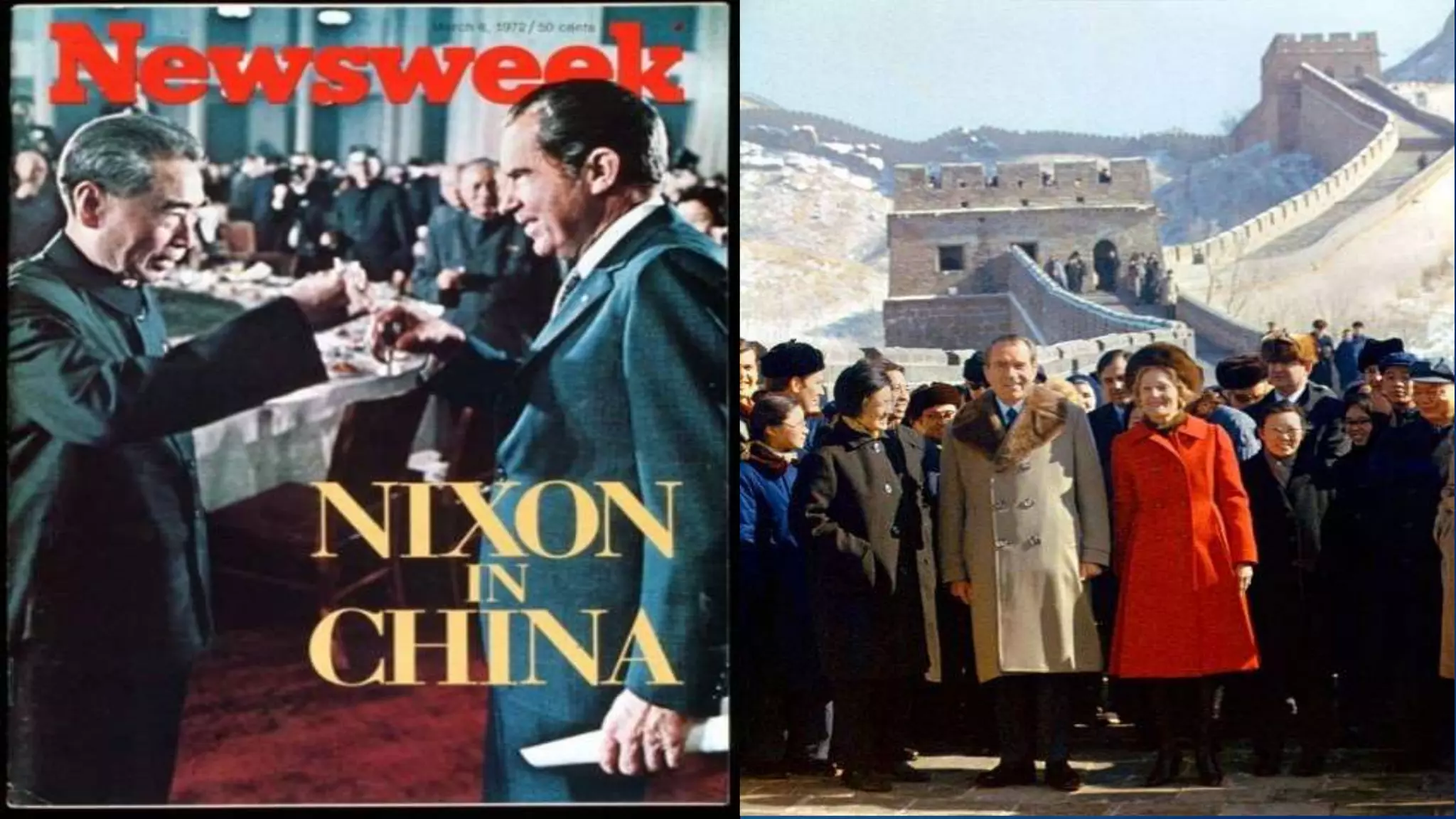
• Richard NixonVisits China (SSUSH22a)
• Visited China to seek scientific, cultural and trade agreements
• Hoped Chinese and the U.S. would become allies against the
Soviet Union
International Policy
(SSUSH22a)
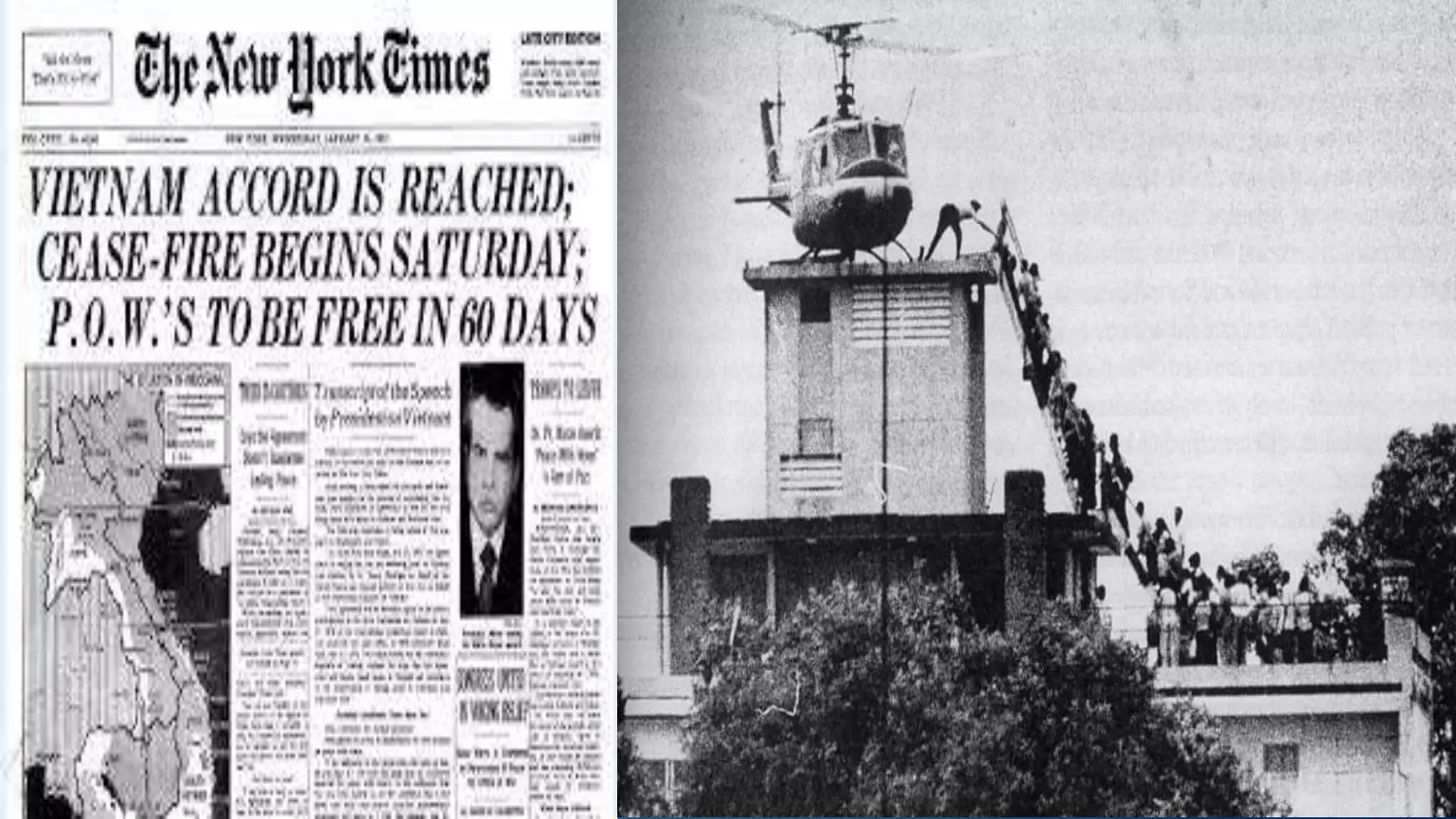
• End ofVietnam War (SSUSH22a)
• The President had been given immense unilateral power
through the Gulf ofTonkin Resolution to take any measures he
deemed necessary to protect the United States.
• The Congress had been powerless through much of theVietnam
War to adjust the level of troop commitment to the region
because of the Gulf ofTonkin's unlimited provisions.
International Policy
(SSUSH22a)
• End ofVietnam War (SSUSH22a)
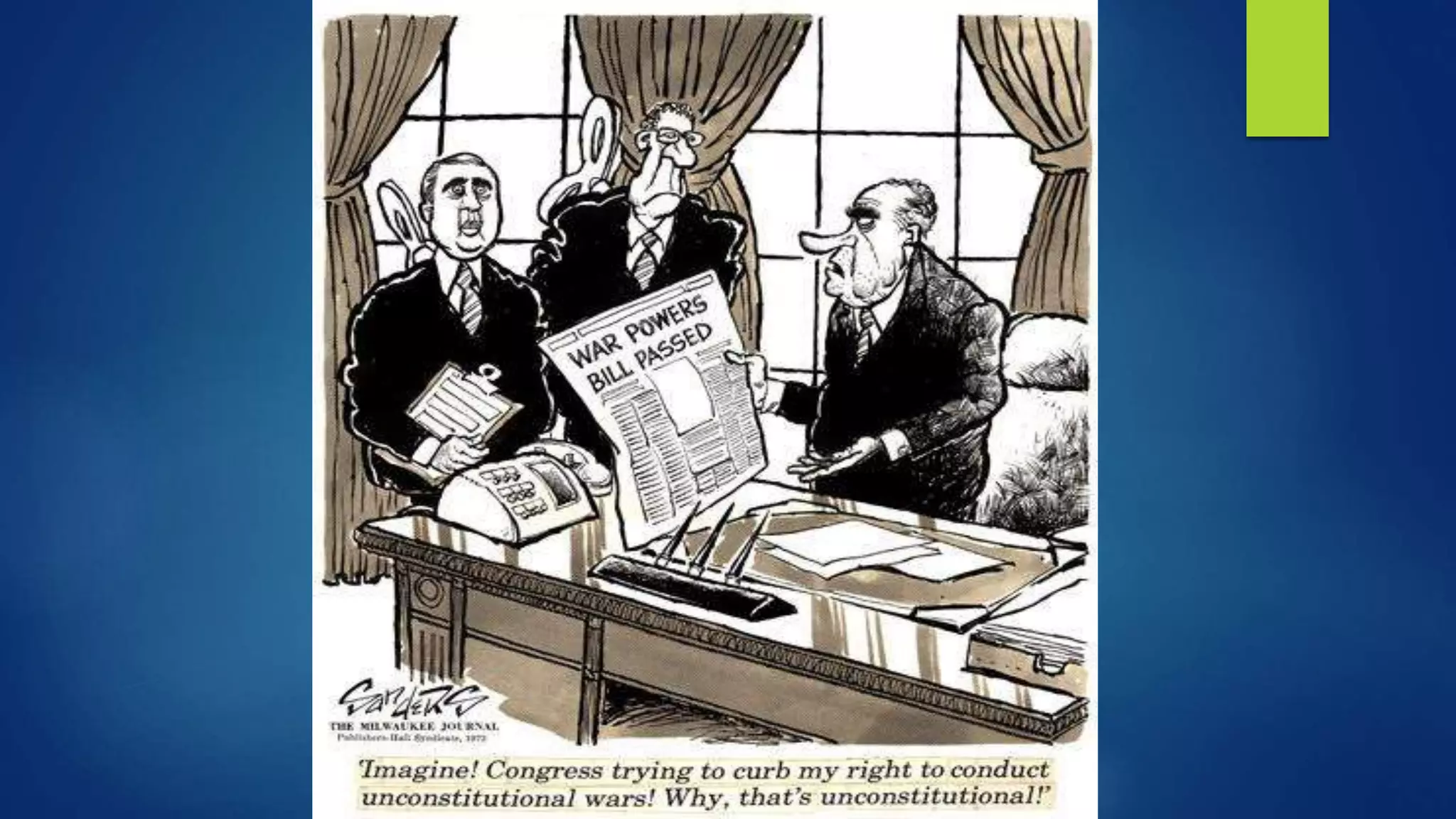
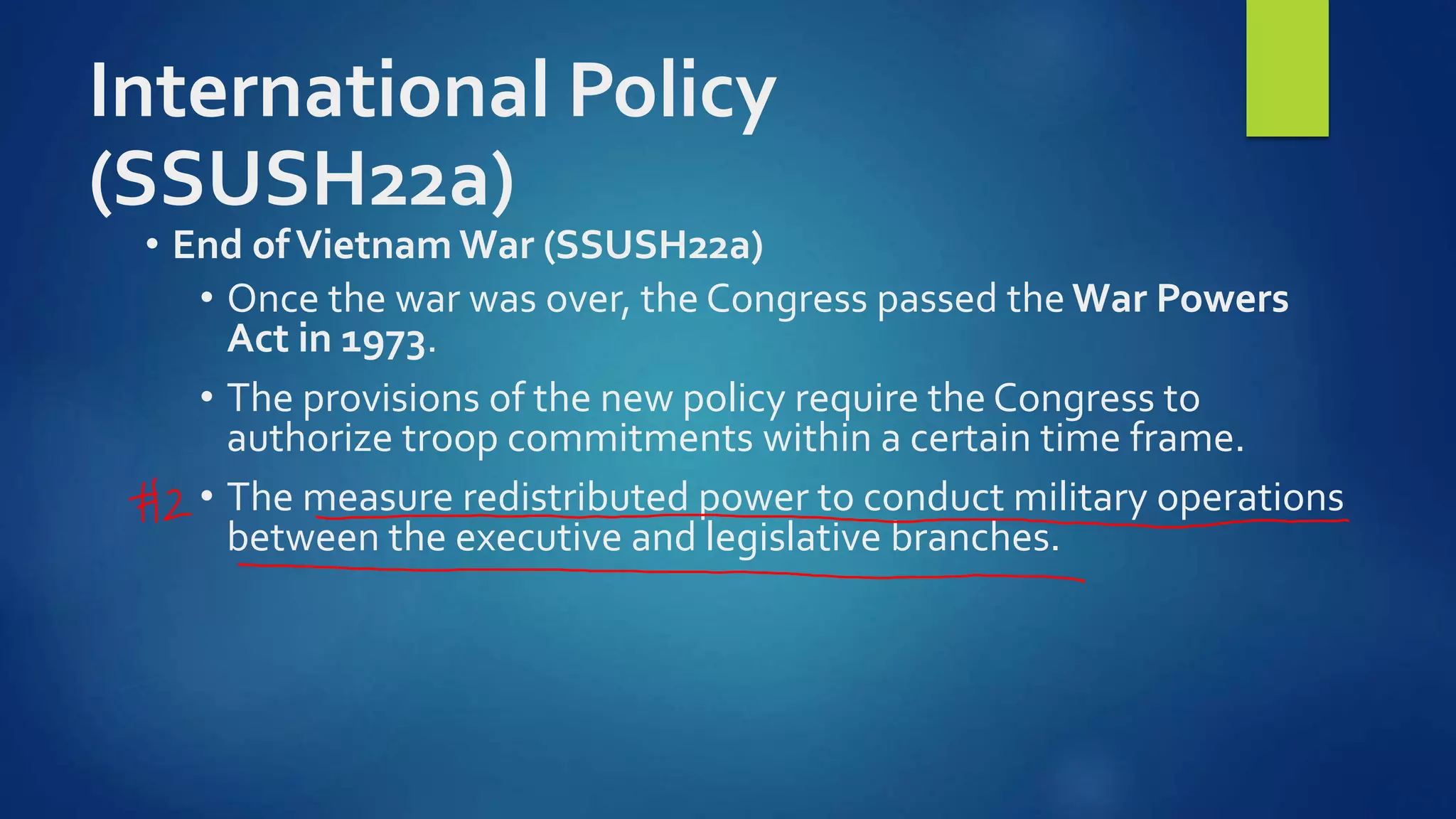
• Once the war was over, the Congress passed the War Powers
Act in 1973.
• The provisions of the new policy require the Congress to
authorize troop commitments within a certain time frame.
• The measure redistributed power to conduct military operations
between the executive and legislative branches.
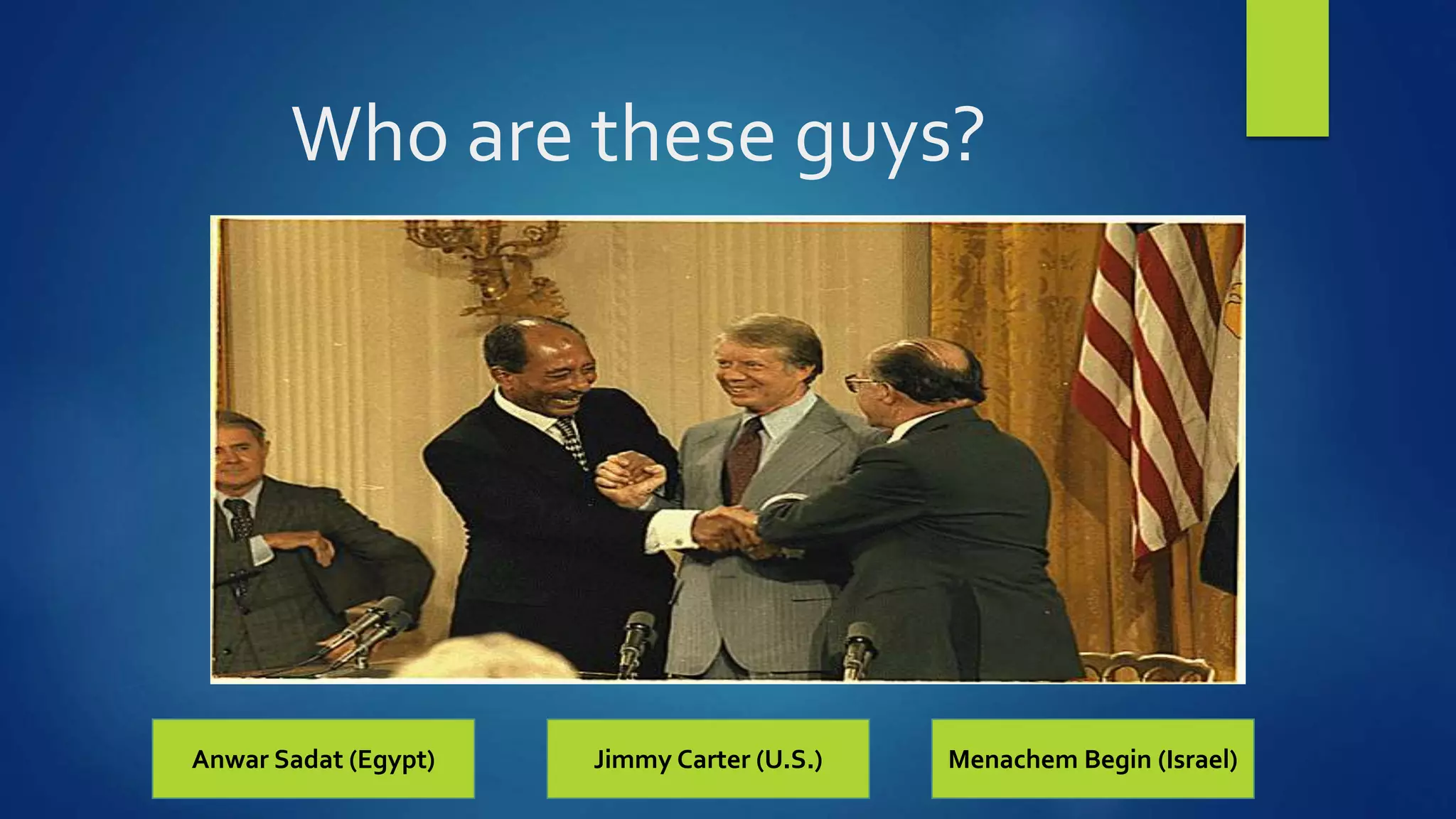
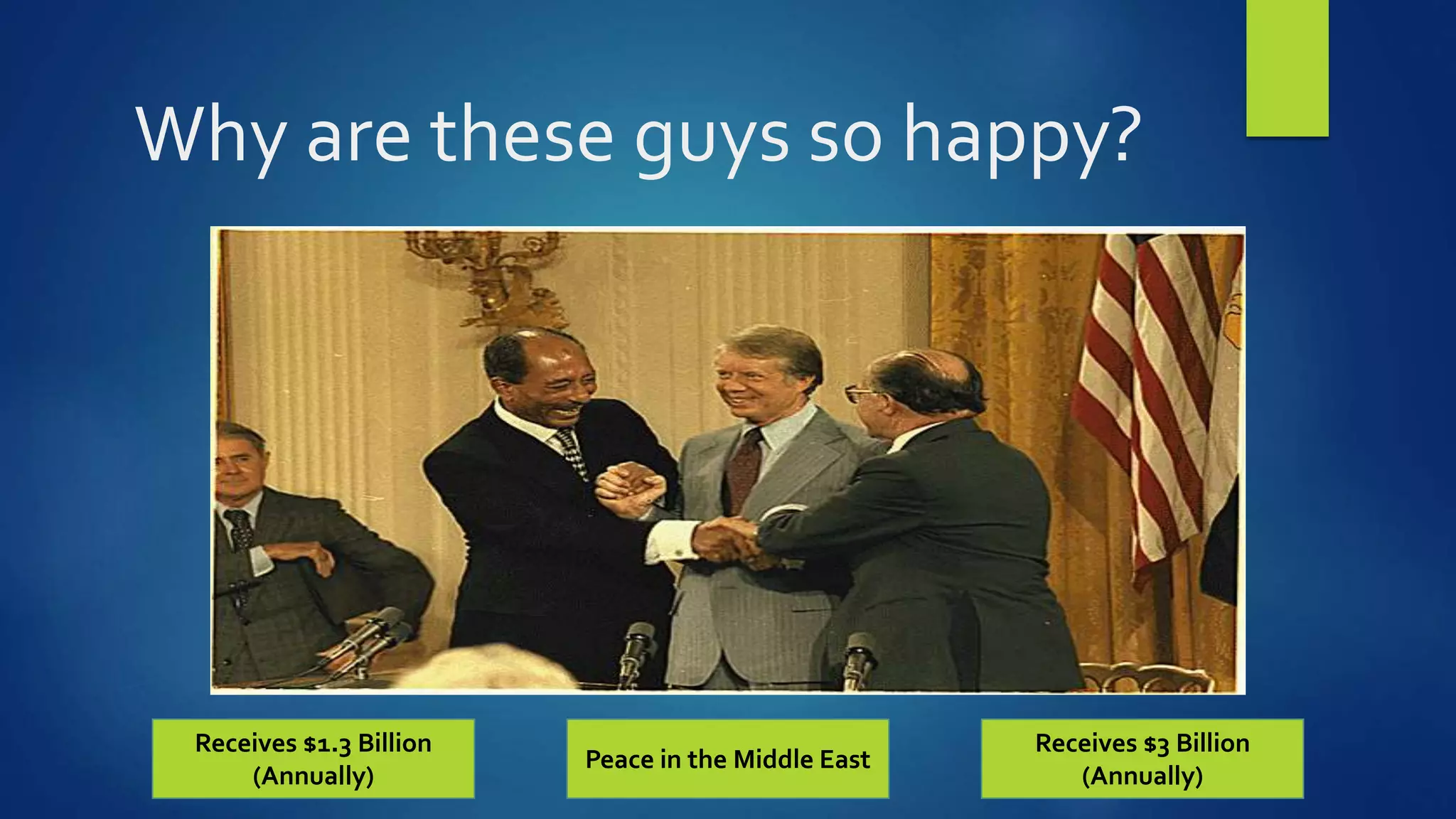
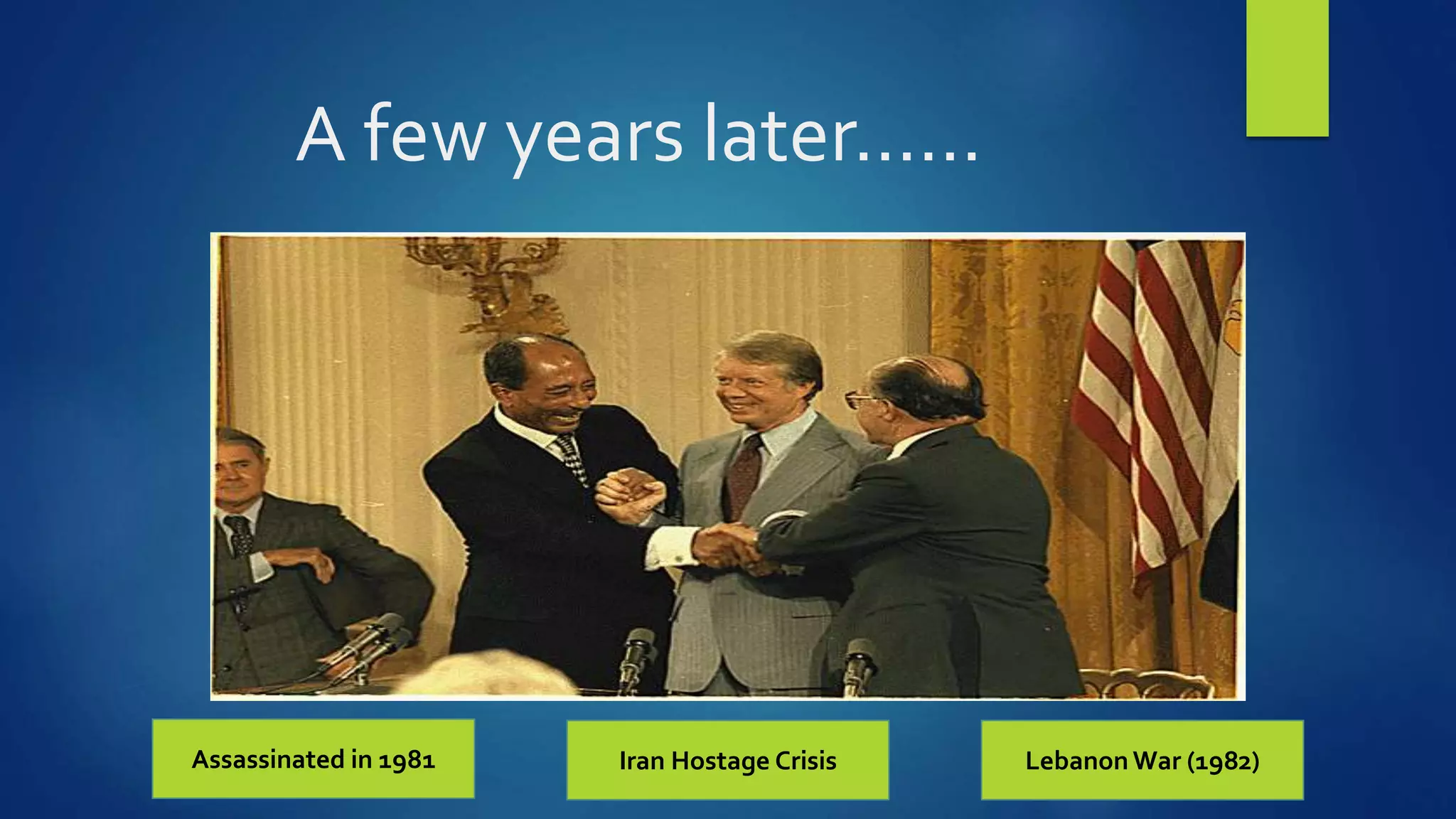
Who are these guys?
Anwar Sadat (Egypt) Jimmy Carter (U.S.) Menachem Begin (Israel)
Why are these guys so happy?
Receives $1.3 Billion
(Annually)
Receives $3 Billion
(Annually)
Peace in the Middle East
A few years later……
Assassinated in 1981 Iran Hostage Crisis Lebanon War (1982)
International Policy
(SSUSH22a)
• The Camp David Accords (SSUSH22a)
• Carter negotiated a peace agreement between the Egyptian
president and the Israeli prime minister
• First peace agreement between Middle Eastern nations.
International Policy
(SSUSH22a)
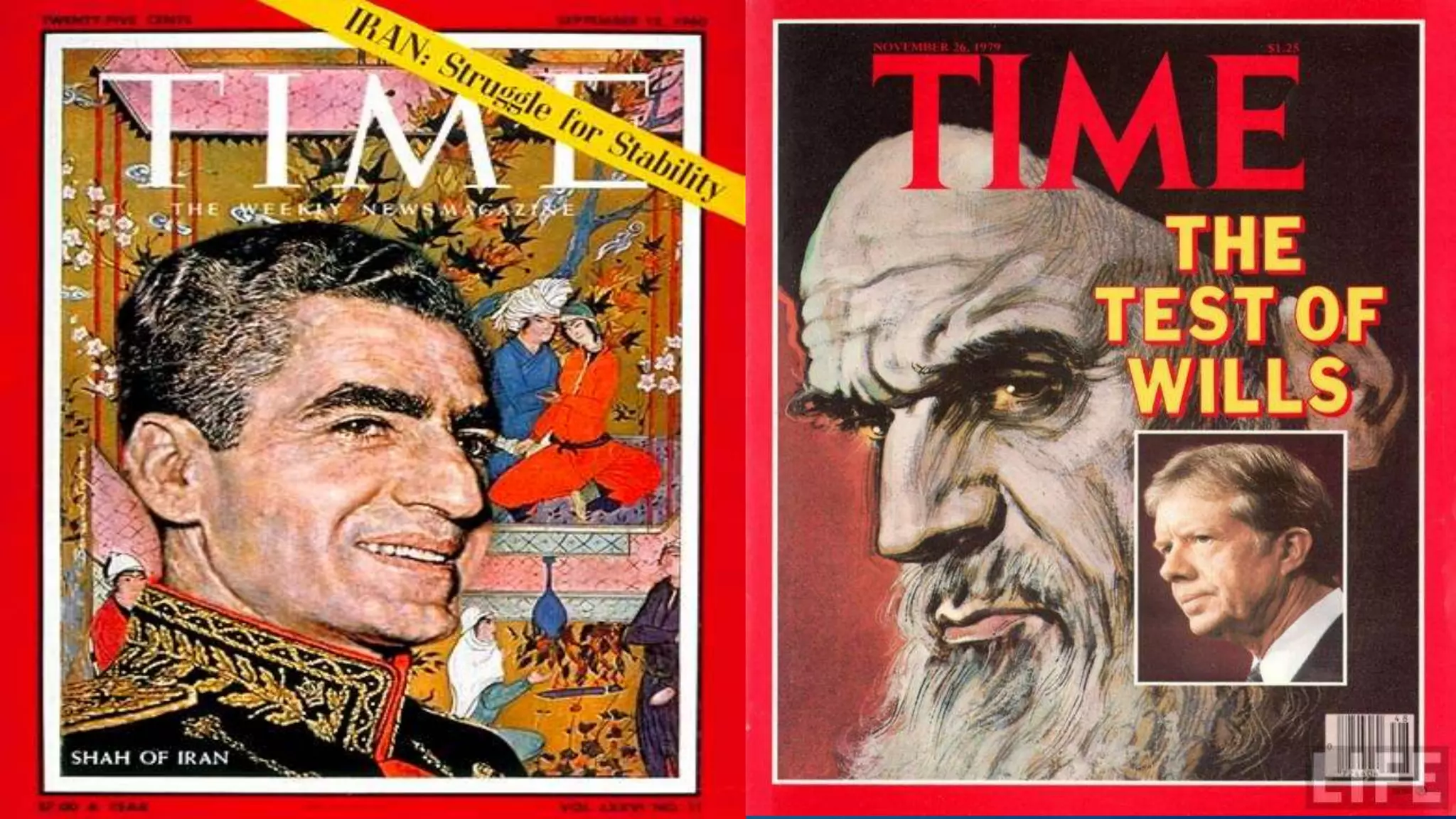
• The Iran Hostage Crisis (SSUSH22a)
• Began with the Iranian Revolution
• The shah (king) of Iran (friendly to Americans) was removed by
the new Ayatollah (Muslim Religious Leader) of Iran.
• Later, the shah seeks medical help from Carter in America
International Policy
(SSUSH22a)
• The Iran Hostage Crisis (SSUSH22a)
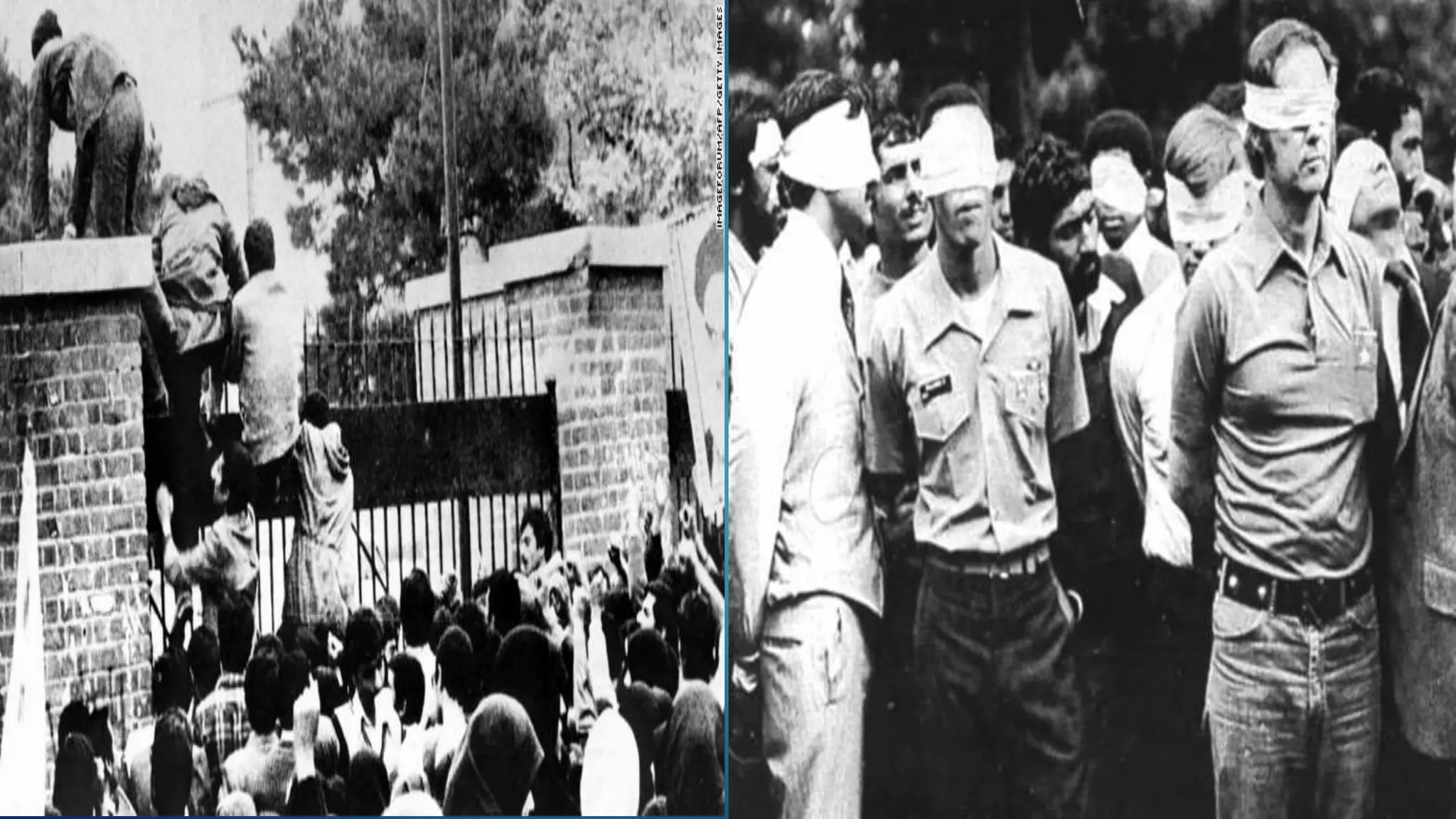
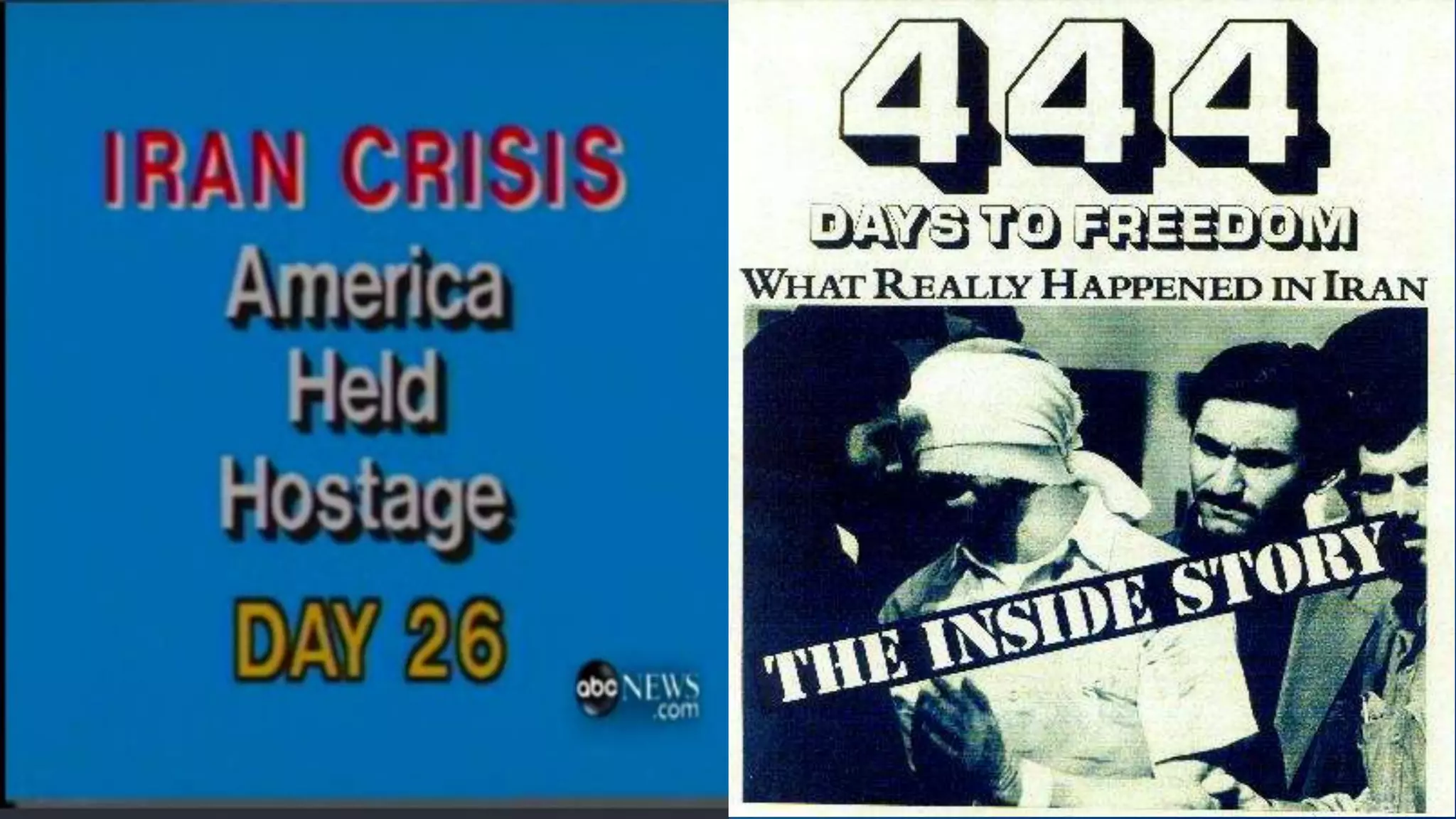
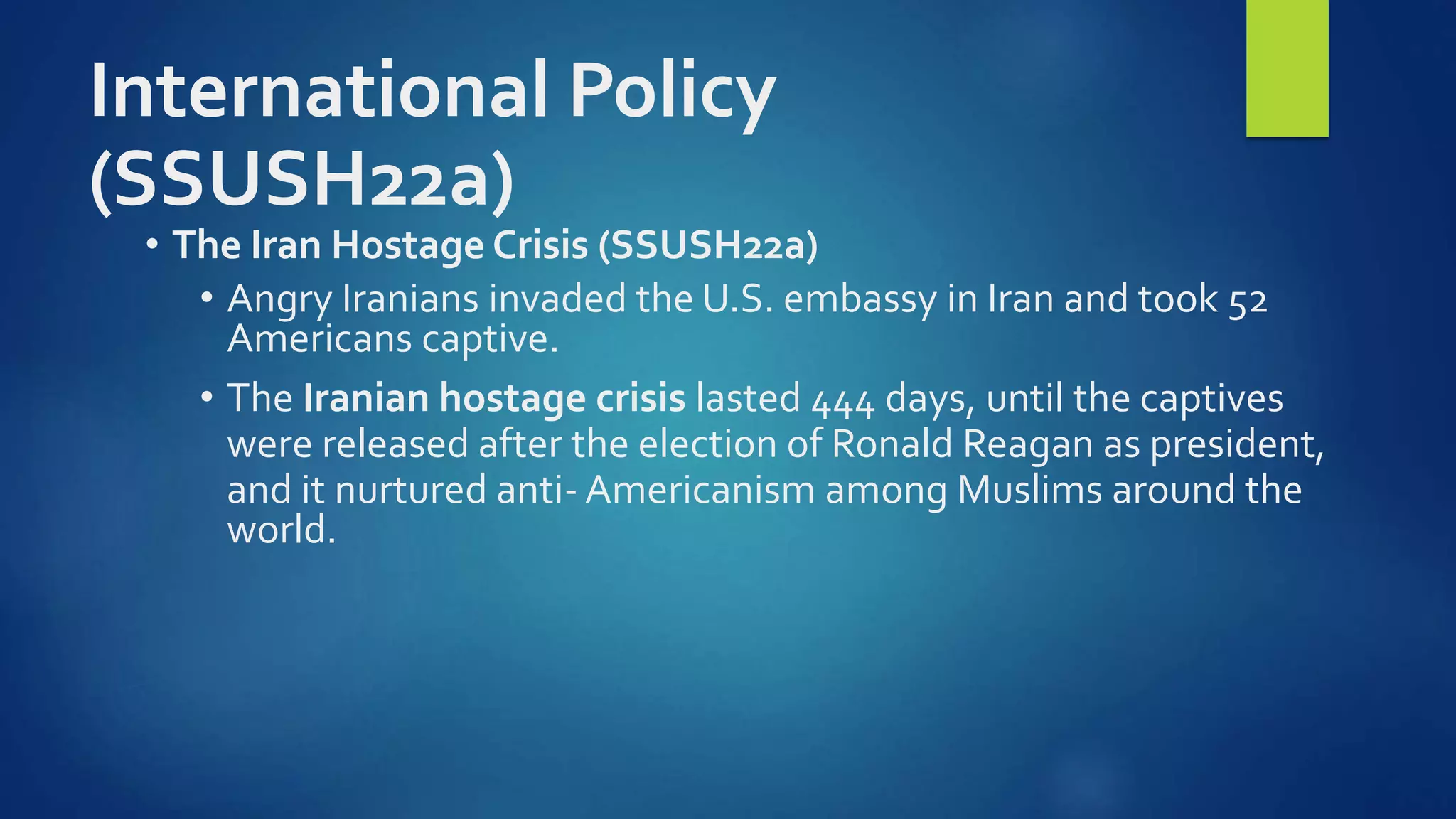
• Angry Iranians invaded the U.S. embassy in Iran and took 52
Americans captive.
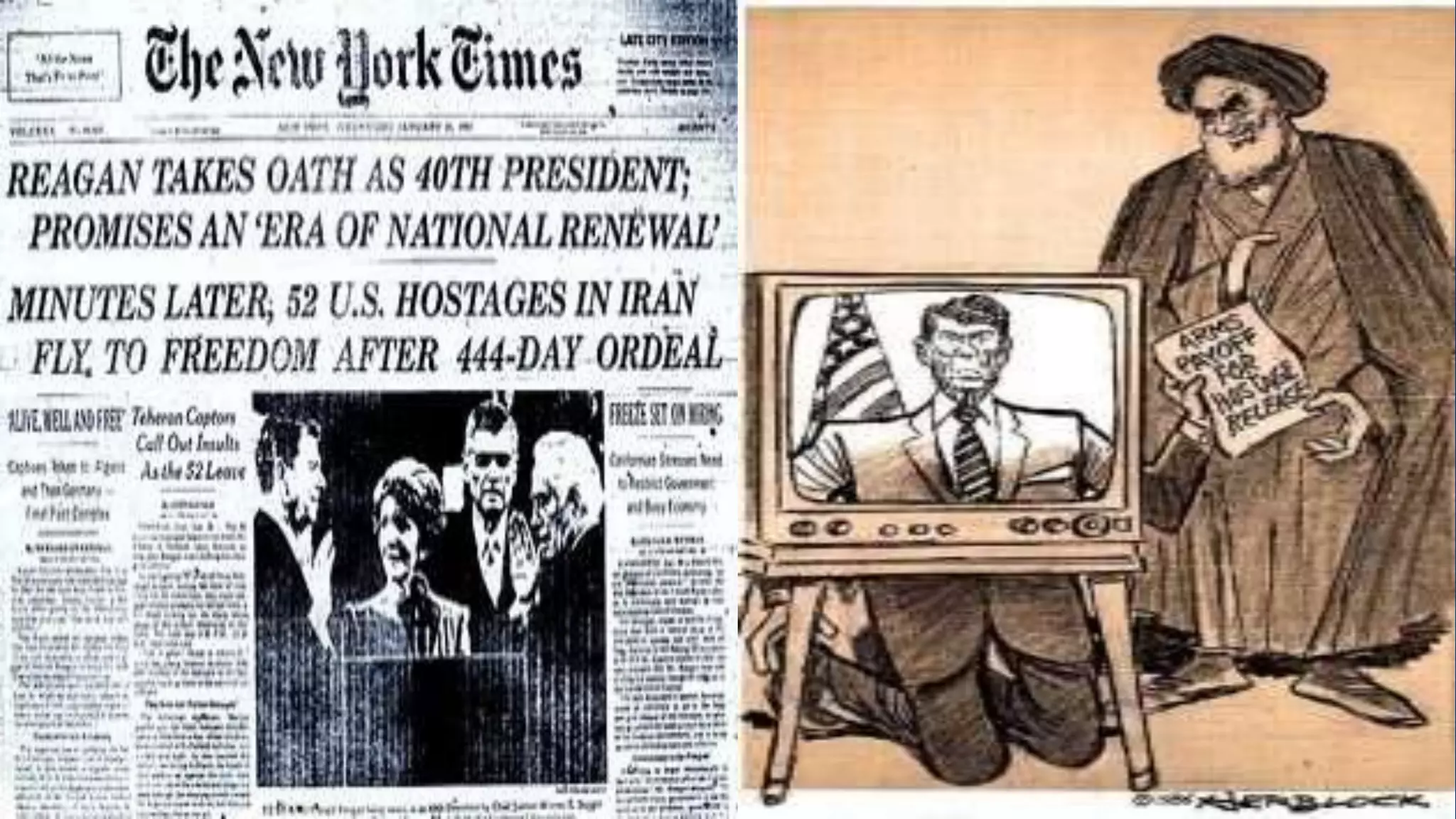
• The Iranian hostage crisis lasted 444 days, until the captives
were released after the election of Ronald Reagan as president,
and it nurtured anti- Americanism among Muslims around the
world.
Review Questions
1. What was the significance of Nixon’s trip to China?
2. What was the significance of theWar Powers Act?
3. What was the significance of Carter’s Camp David Accords?
4. What was the significance of the 1979 Iranian Revolution?
5. What was the significance of the Iranian Hostage Crisis?
Document Analysis
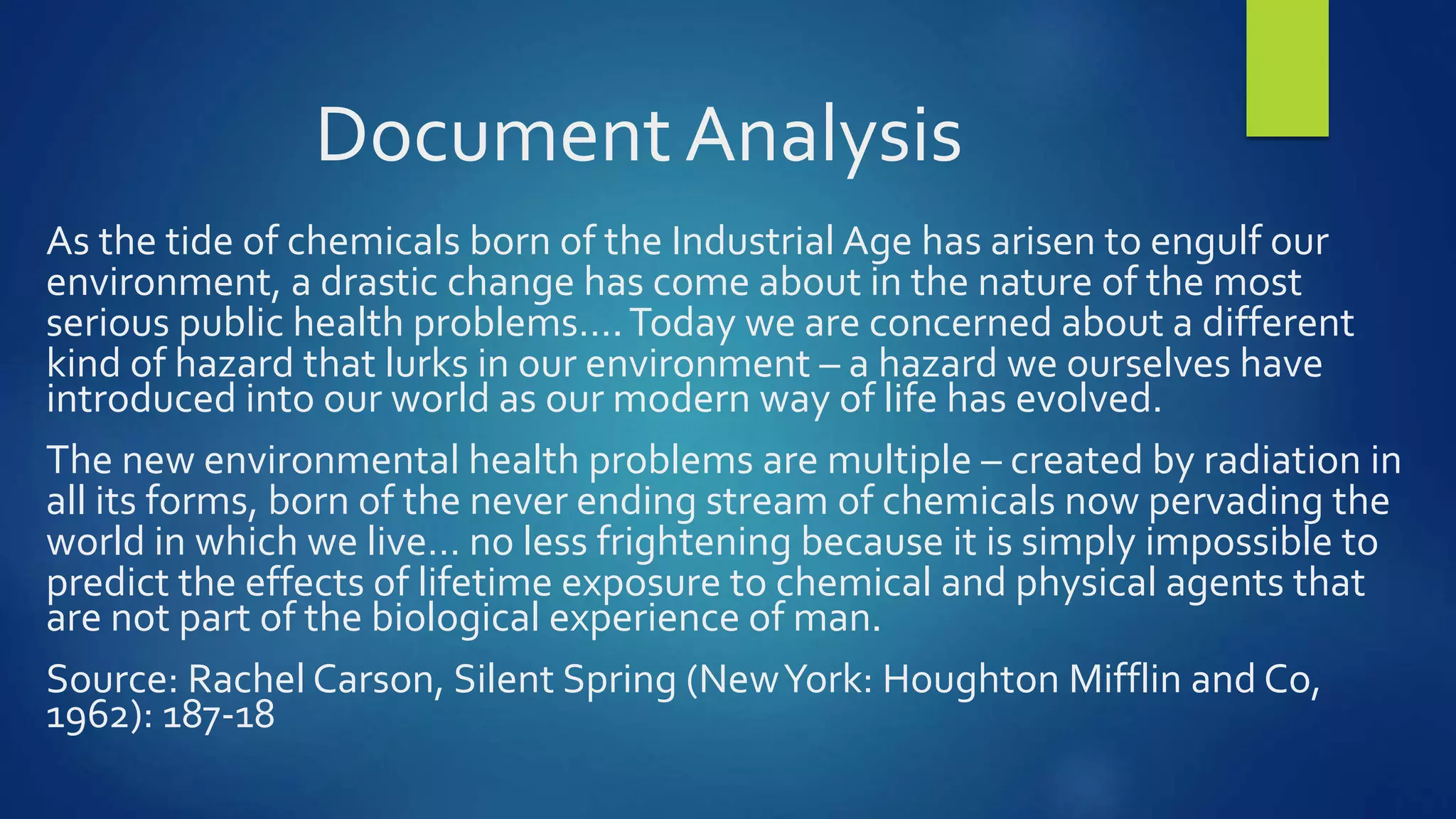
As the tide of chemicals born of the Industrial Age has arisen to engulf our
environment, a drastic change has come about in the nature of the most
serious public health problems….Today we are concerned about a different
kind of hazard that lurks in our environment – a hazard we ourselves have
introduced into our world as our modern way of life has evolved.
The new environmental health problems are multiple – created by radiation in
all its forms, born of the never ending stream of chemicals now pervading the
world in which we live… no less frightening because it is simply impossible to
predict the effects of lifetime exposure to chemical and physical agents that
are not part of the biological experience of man.
Source: Rachel Carson, Silent Spring (NewYork: Houghton Mifflin and Co,
1962): 187-18
Major Domestic Issues
(SSUSH22b)
Creation of the Environmental Protection Agency (SSUSH22b)
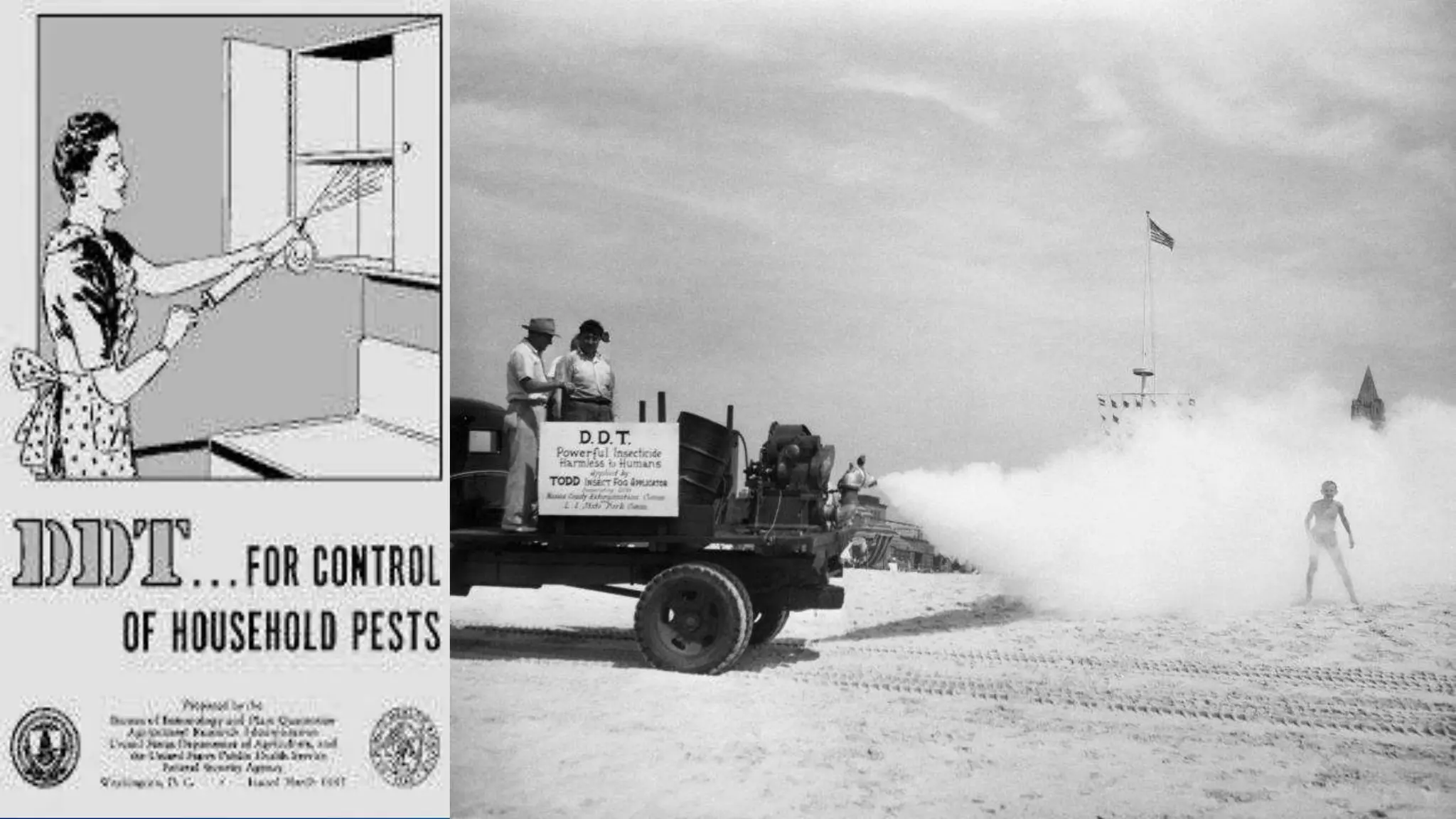
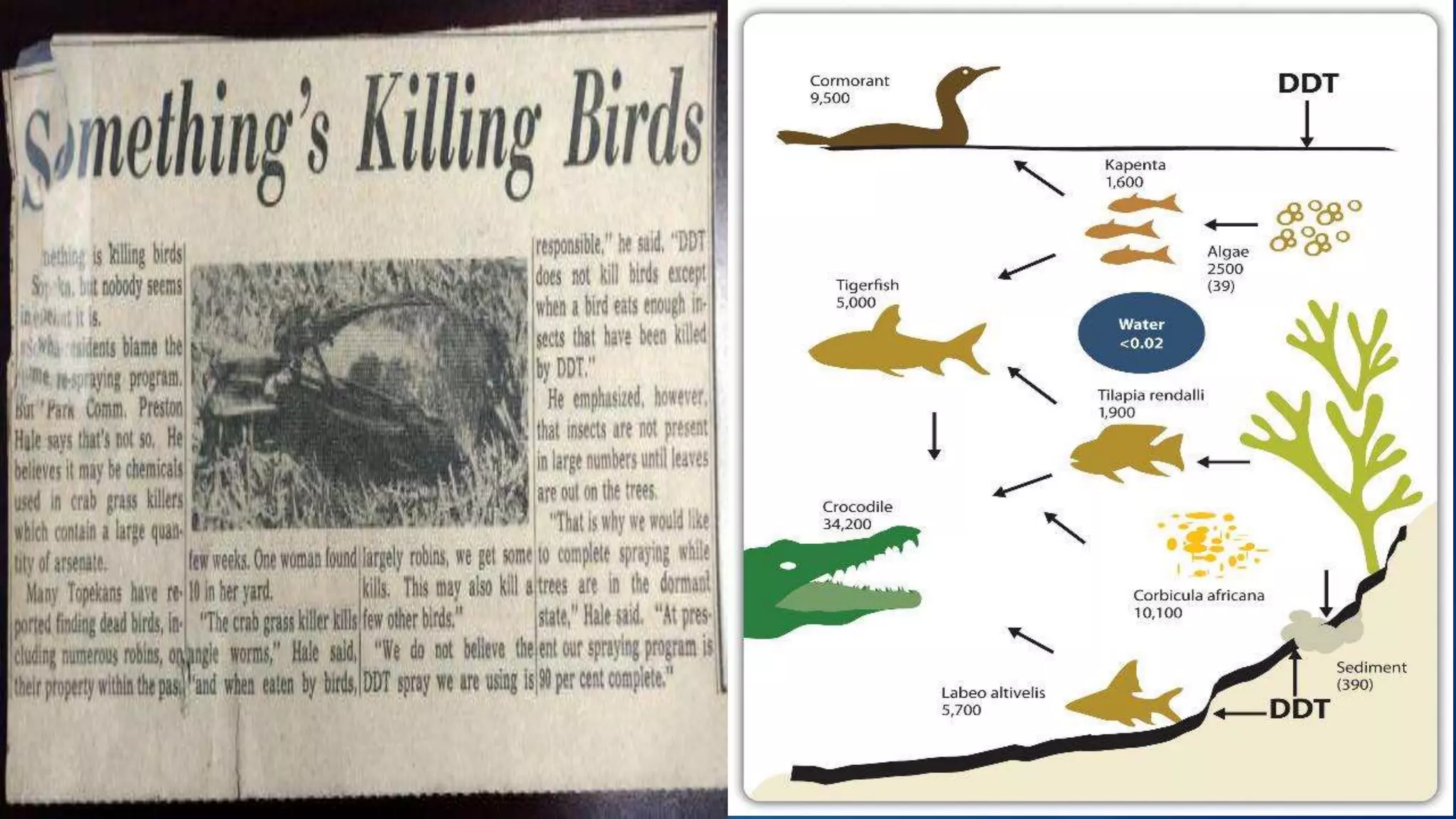
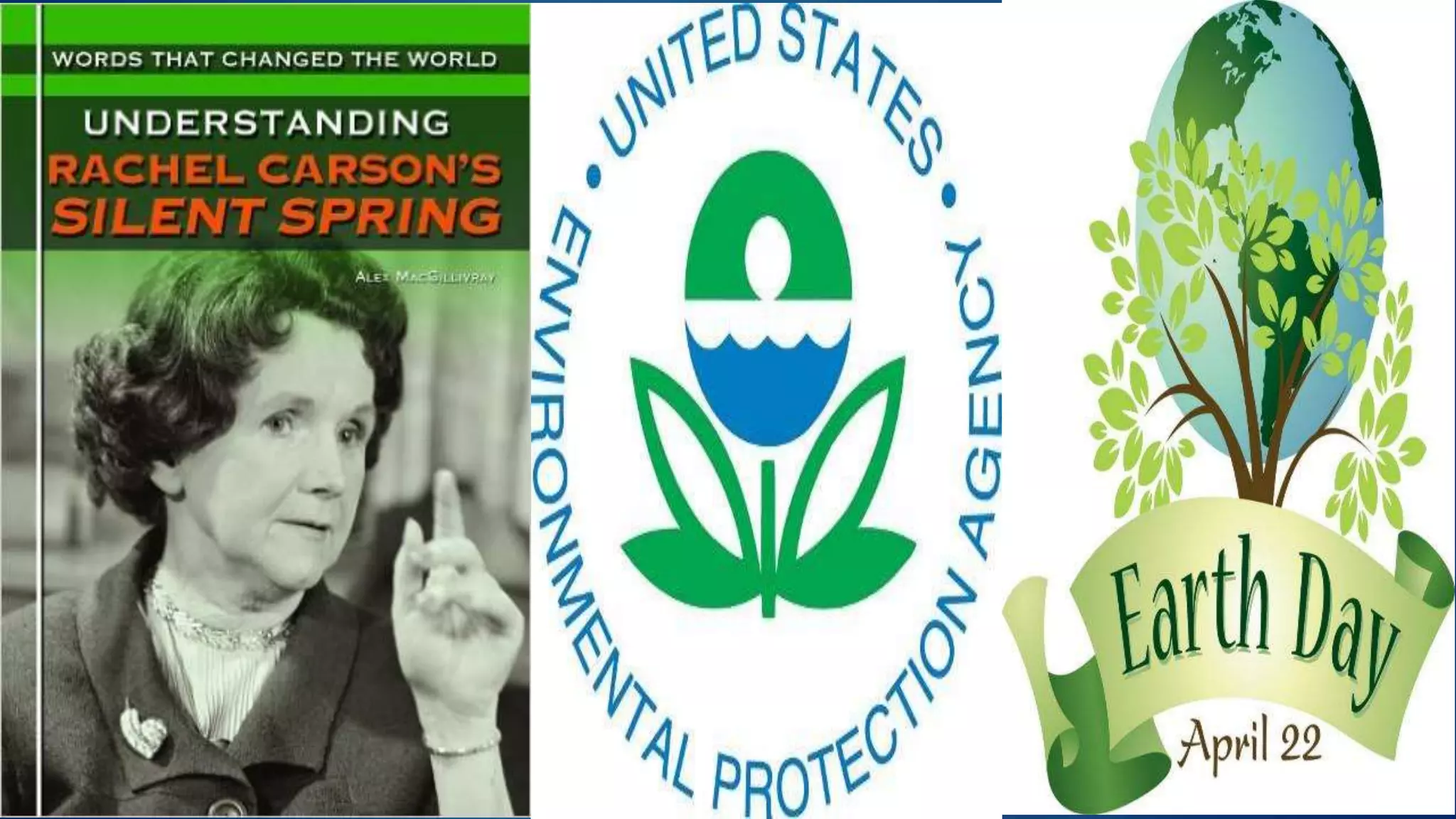
• In 1962, Rachel Carson’s book Silent Spring, exposed
Americans to the dangers of pesticides on the environment.
• As a result of Silent Spring, Nixon creates the Environmental
Protection Agency
• Creation of the Environmental Protection Agency (EPA) to
set limits on pollution, to conduct environmental research,
and to assist state and local governments in the cleanup of
polluted sites.
Major Domestic Issues
(SSUSH22b)
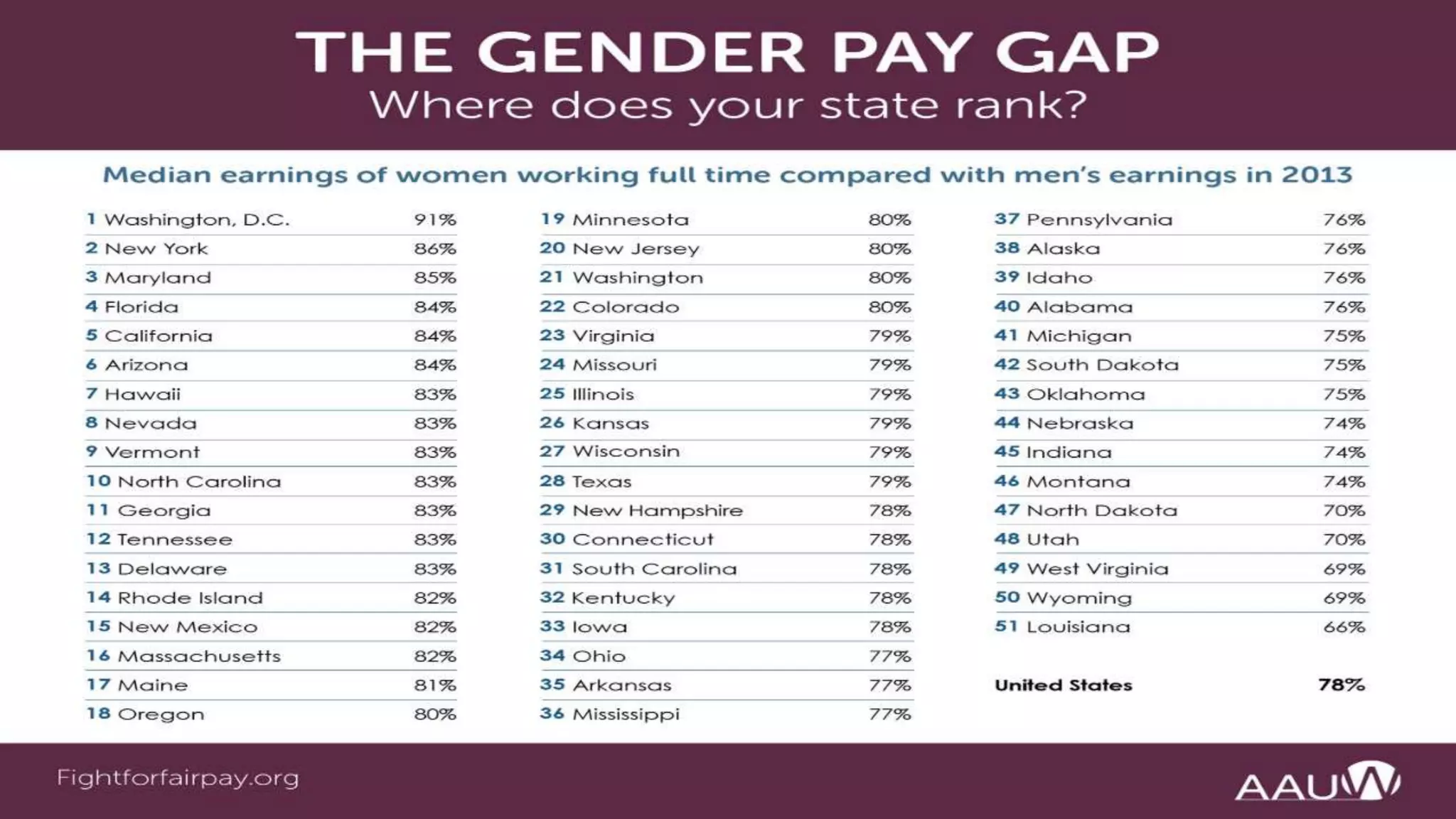
• Emergence of the National Organization
for Women (SSUSH22b)
• The National Organization for Women
(NOW) was founded in 1966 to promote
equal rights and opportunities for
America’s women.
• NOW’s goals included equality in
employment, political and social
equality, and the passage of the equal
rights amendment.
Major Domestic Issues
(SSUSH22b)
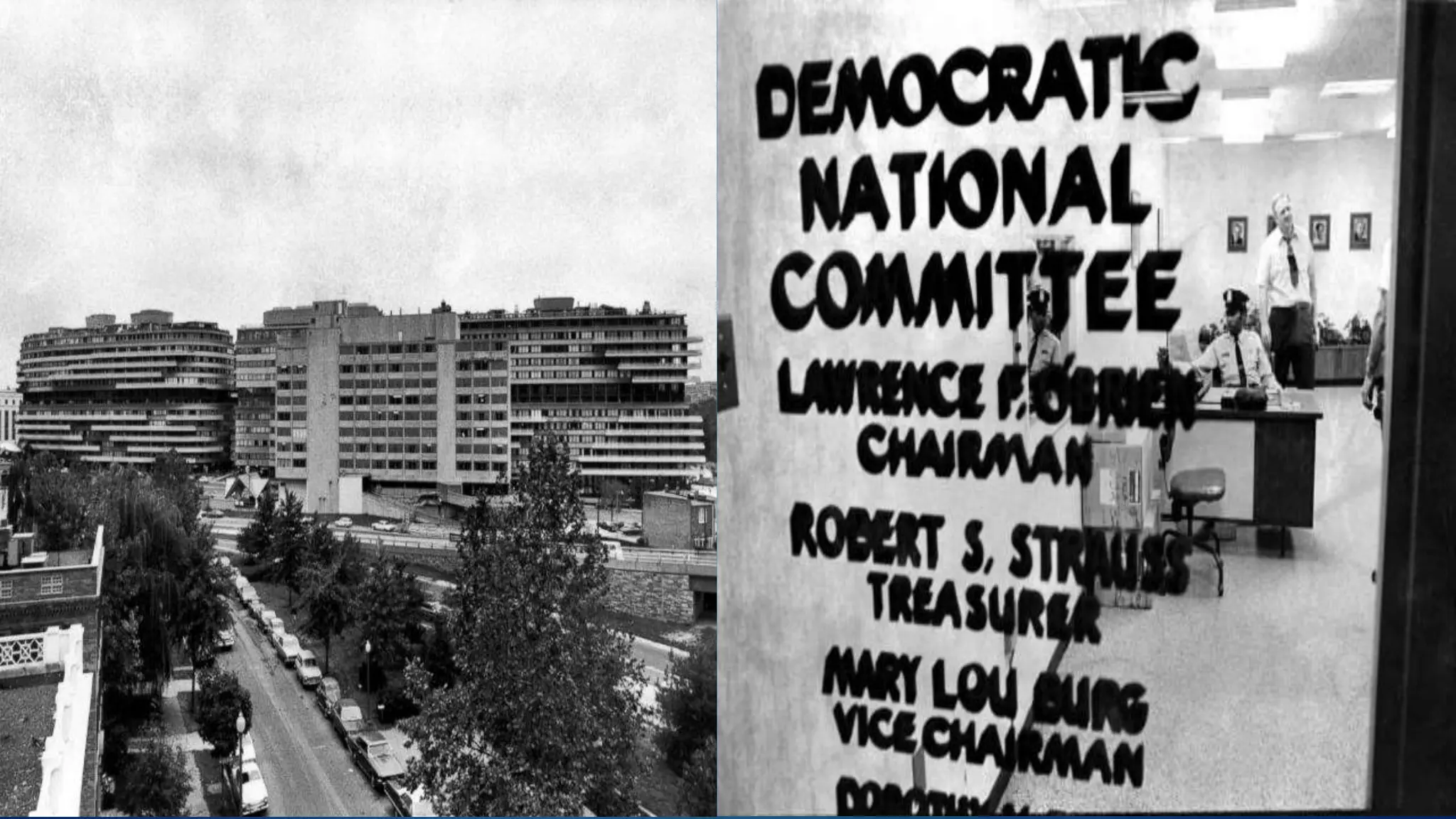
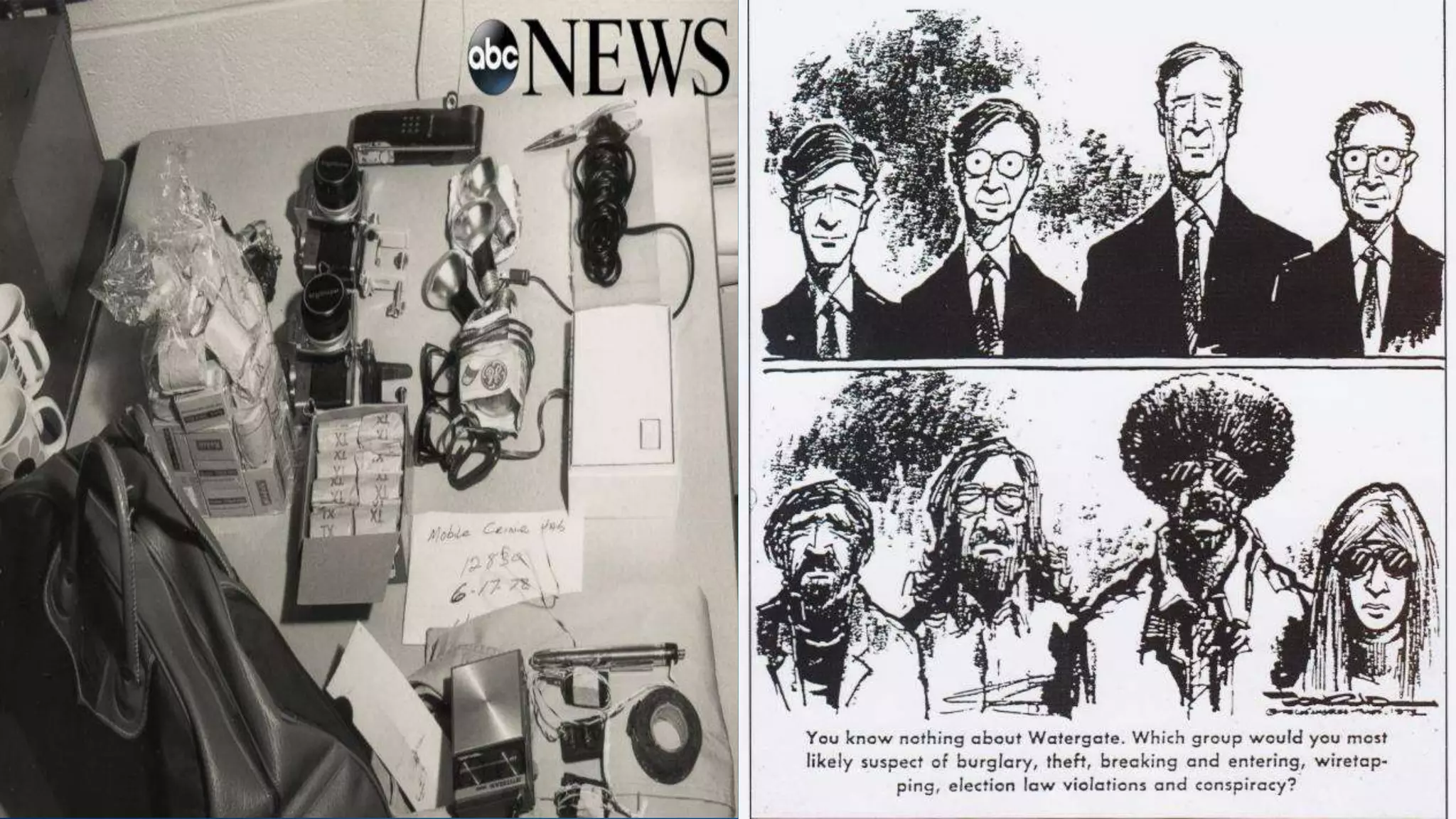
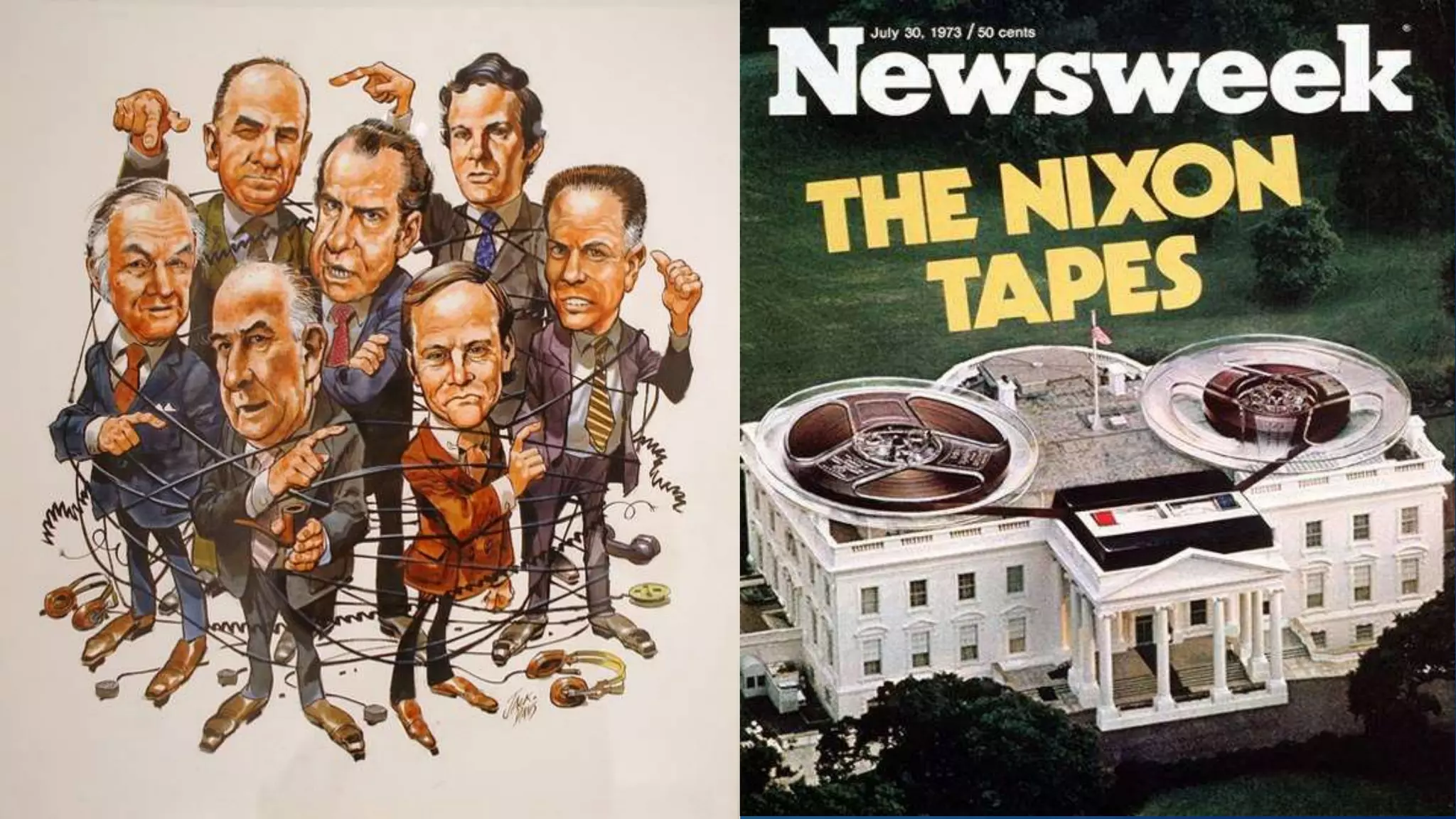
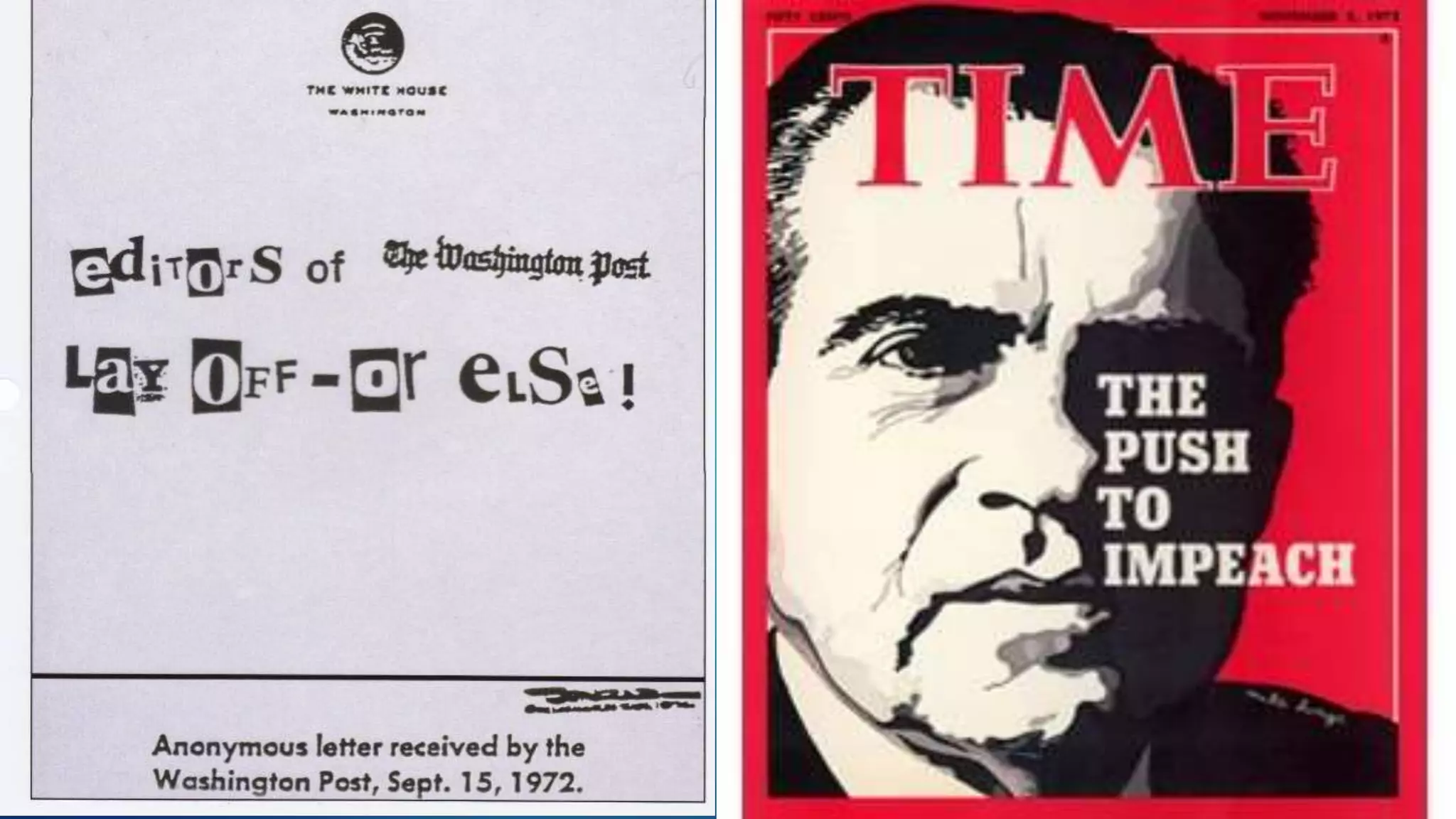
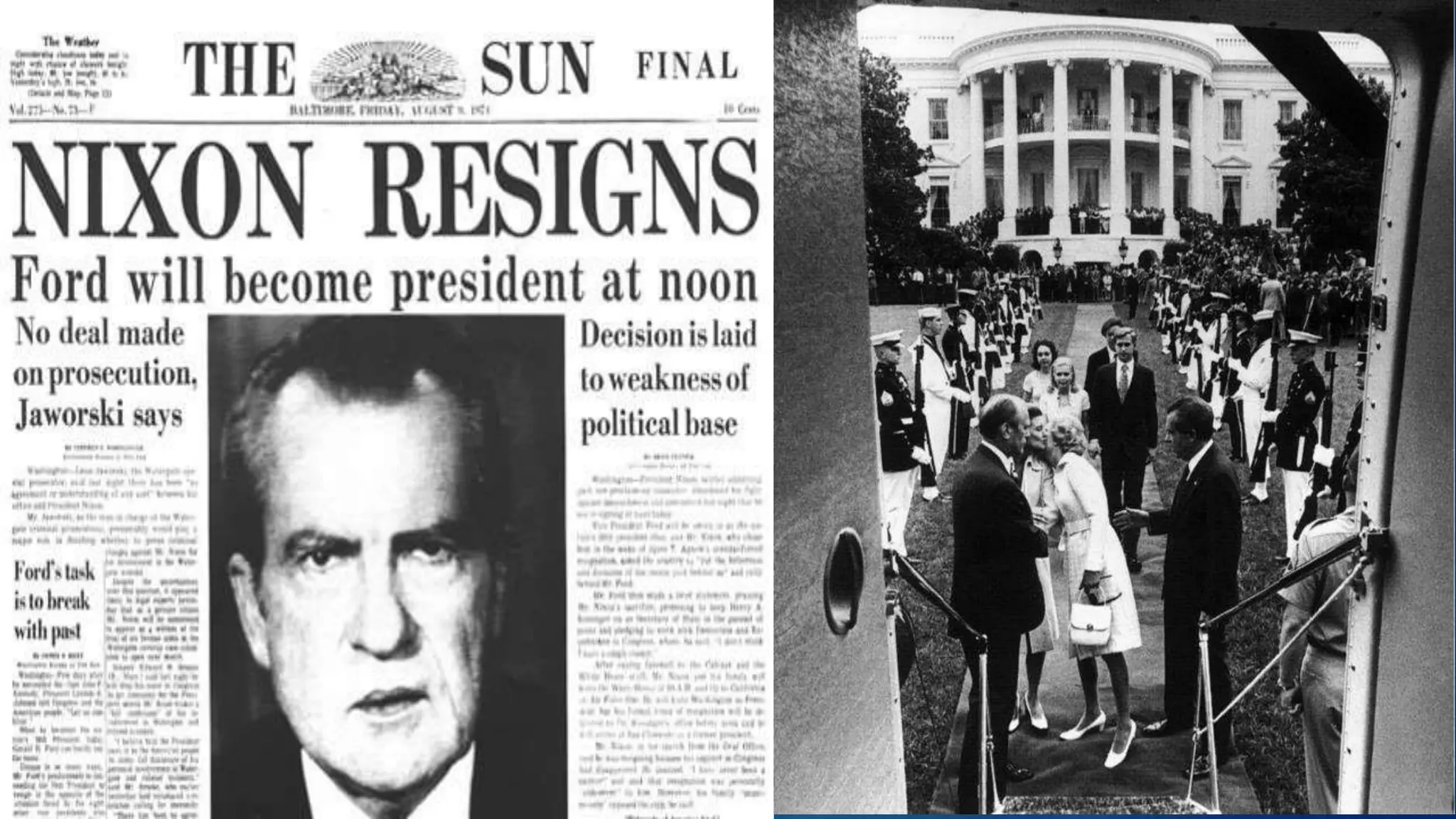
• Nixon and the Watergate Scandal (SSUSH22b)
• Nixon administration’s attempt to cover up a burglary of the offices
of the Democratic Party in the Watergate apartment and office
complex inWashington, D.C.
• Nixon wanted information on Democrats to help him win his
reelection.
• Nixon won reelection in 1972, but his efforts to cover up the crime
soon unraveled and, facing impeachment, he resigned in 1974.
• The result of scandal was a decrease in Americans trust in the
federal government (voting decreases) and government creates
new laws on campaign financing.
Major Domestic Issues
(SSUSH22b)
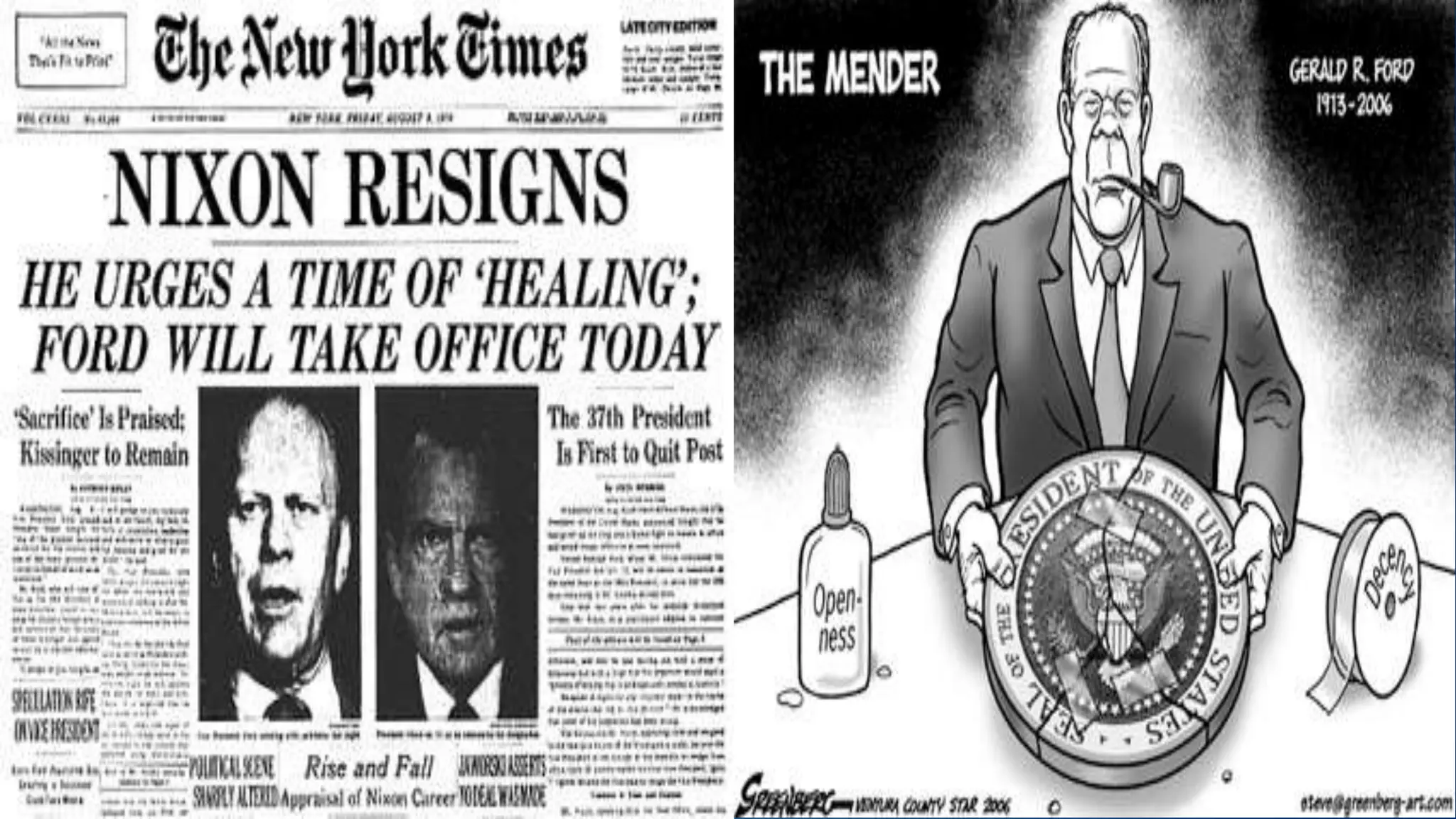
• Gerald Ford Pardons Nixon (SSUSH22b)
• Ford pardon’s Nixon so that he does not have to go to jail
• Ford wants to bring the country back together, but the pardon
only make citizens lose trust in the government and rule of law.
Review Questions
1. What was the significance of the Environmental Protection
Agency?
2. What was the significance of the National Organization for
Women?
3. What was theWatergate Scandal?
4. List two results of theWatergate Scandal
5. Which president pardoned Nixon?
The Collapse of the Soviet Union
(SSUSH23a)
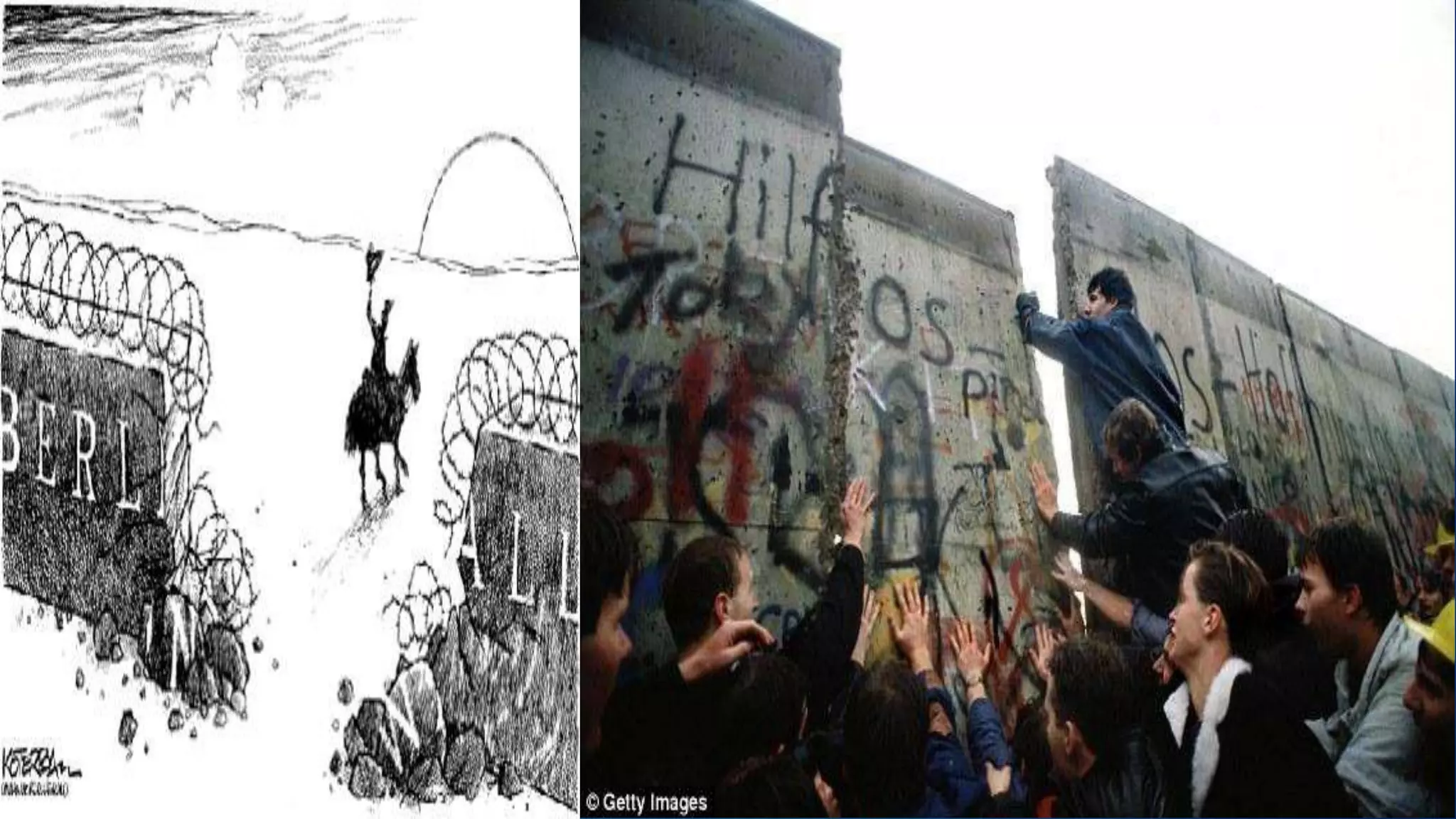
• A foreign policy were Reagan talked the Soviet Union leader (Mikhail Gorbachev) into
allowing free speech (glasnost) and freedom of assembly in the U.S.S.R.
• These policy put the U.S.S.R on the path to a democratic form of government.
• In a 1987 speech, Reagan challenged Gorbachev to “tear down this wall!” as a symbol of
increasing freedom in the U.S.S.R.
• TheWall fell on Nov. 9th 1989 (symbolic end of Soviet Union)
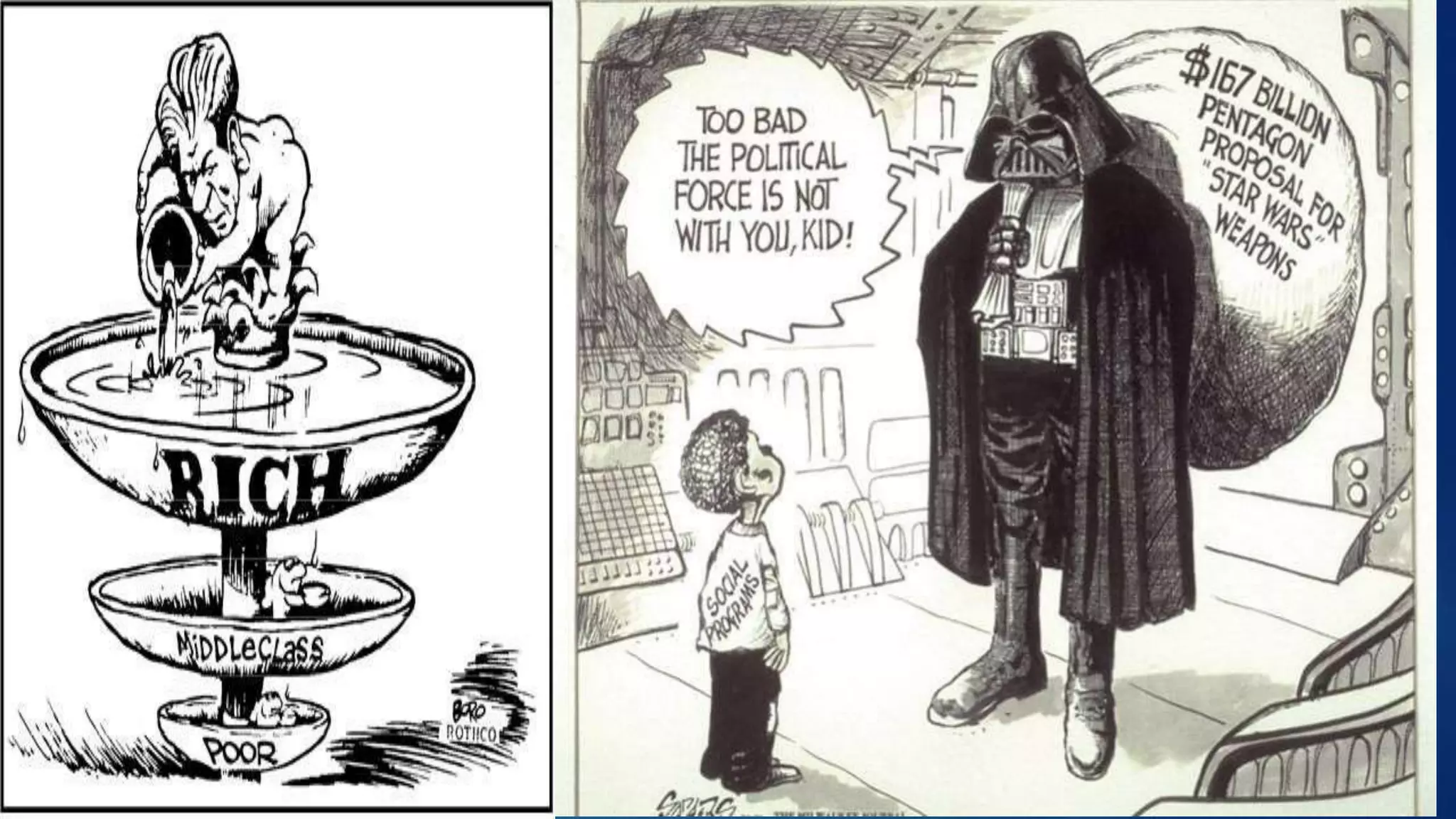
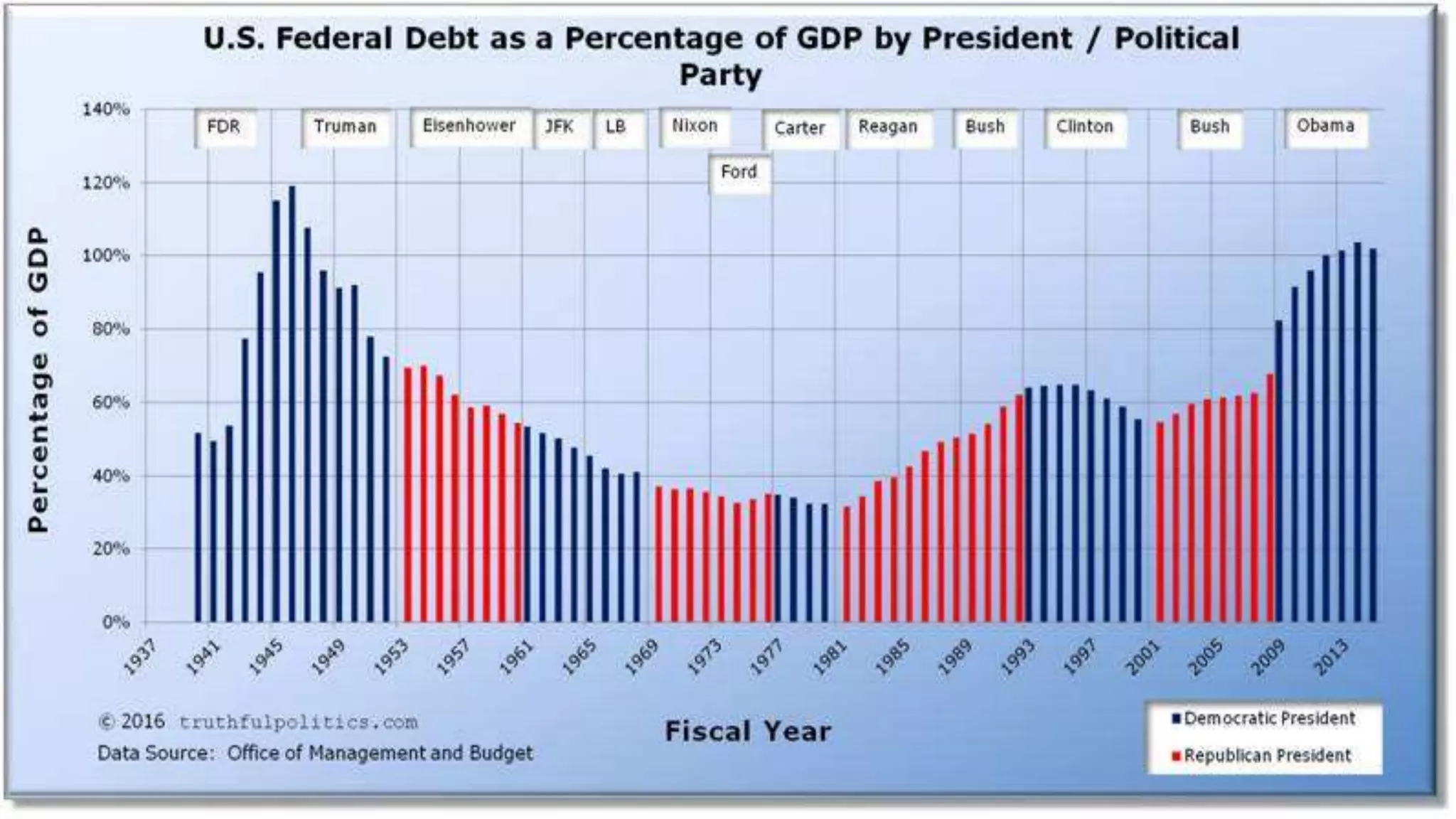
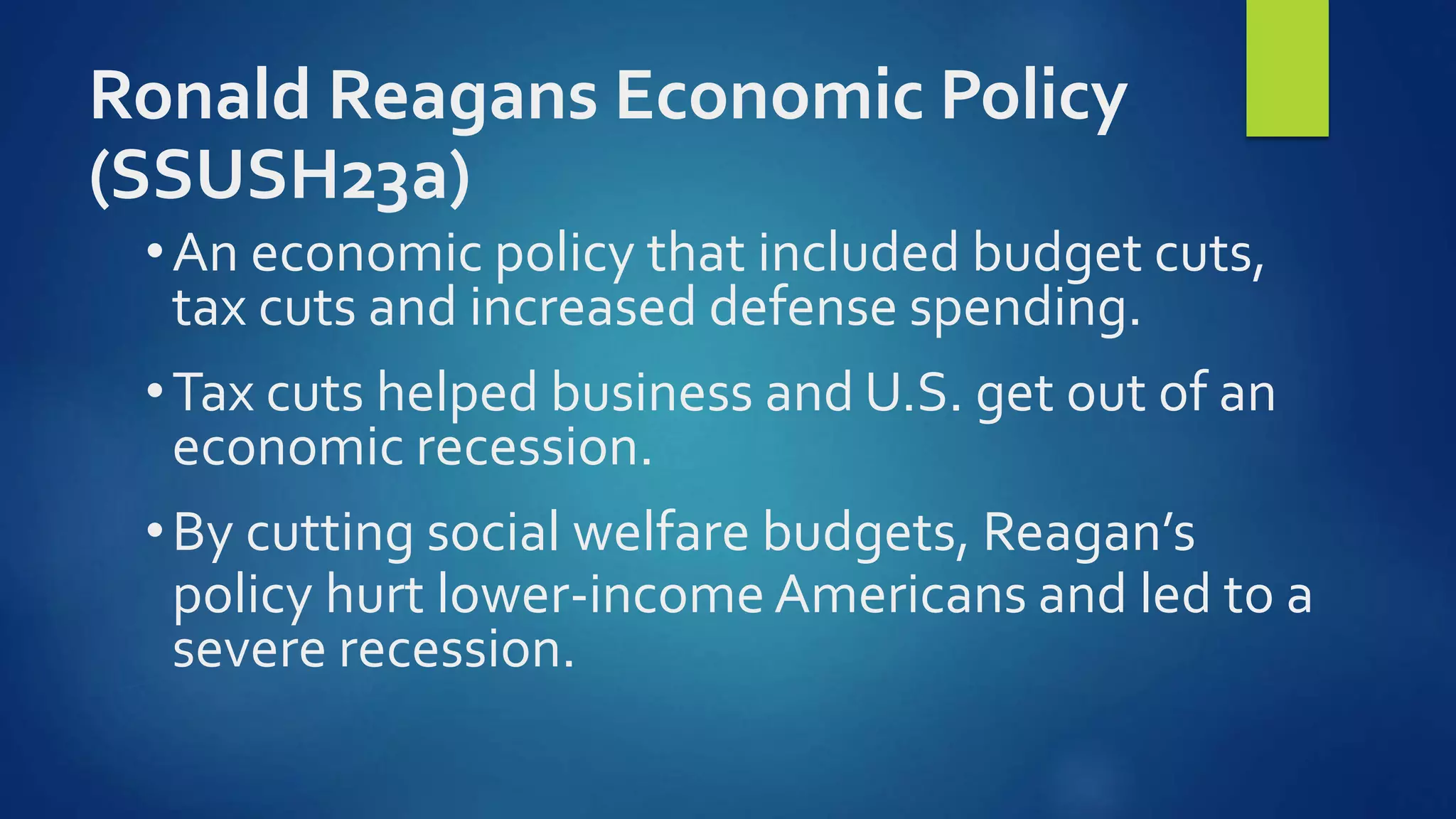
Ronald Reagans Economic Policy
(SSUSH23a)
•An economic policy that included budget cuts,
tax cuts and increased defense spending.
•Tax cuts helped business and U.S. get out of an
economic recession.
•By cutting social welfare budgets, Reagan’s
policy hurt lower-income Americans and led to a
severe recession.
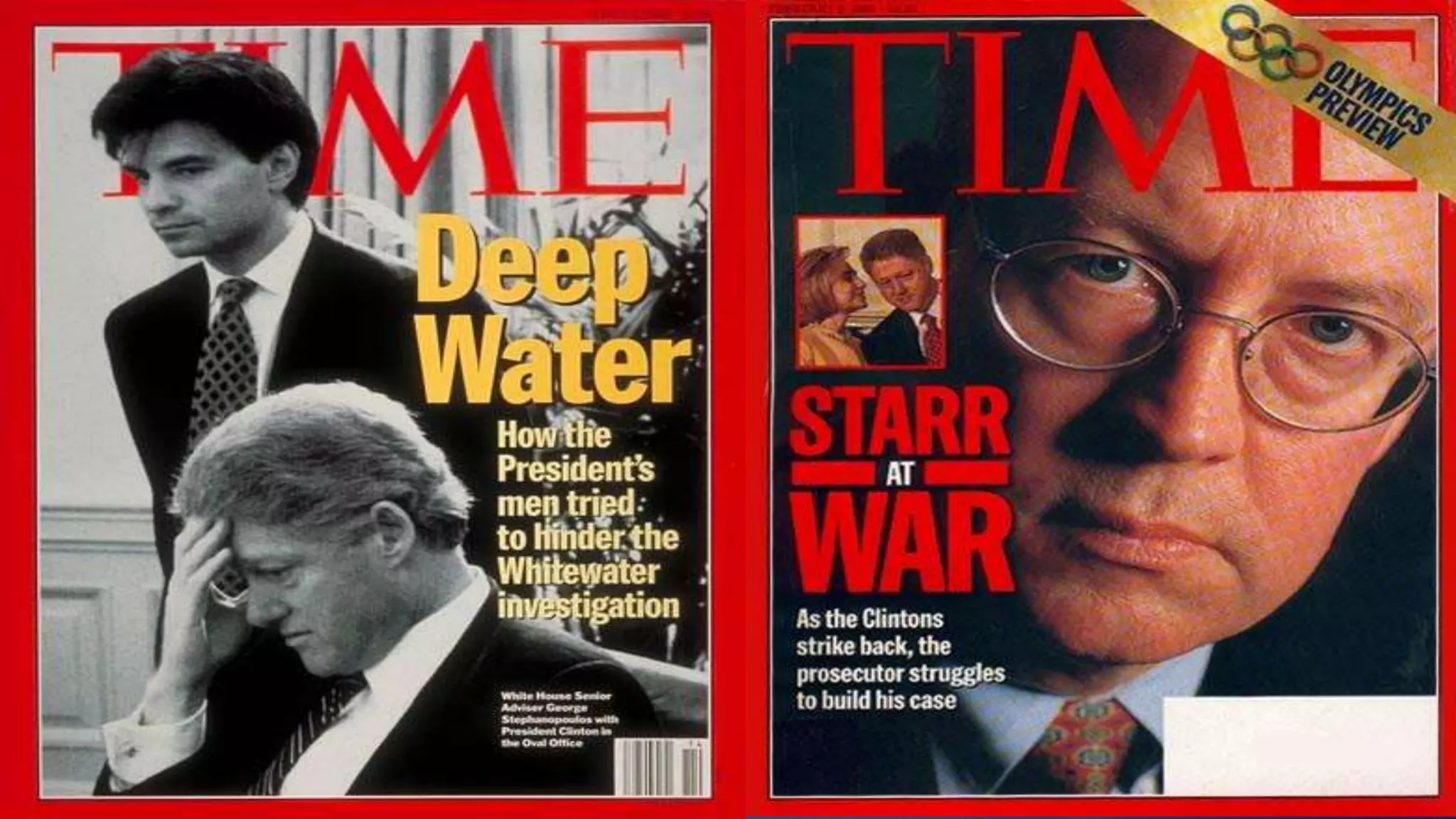
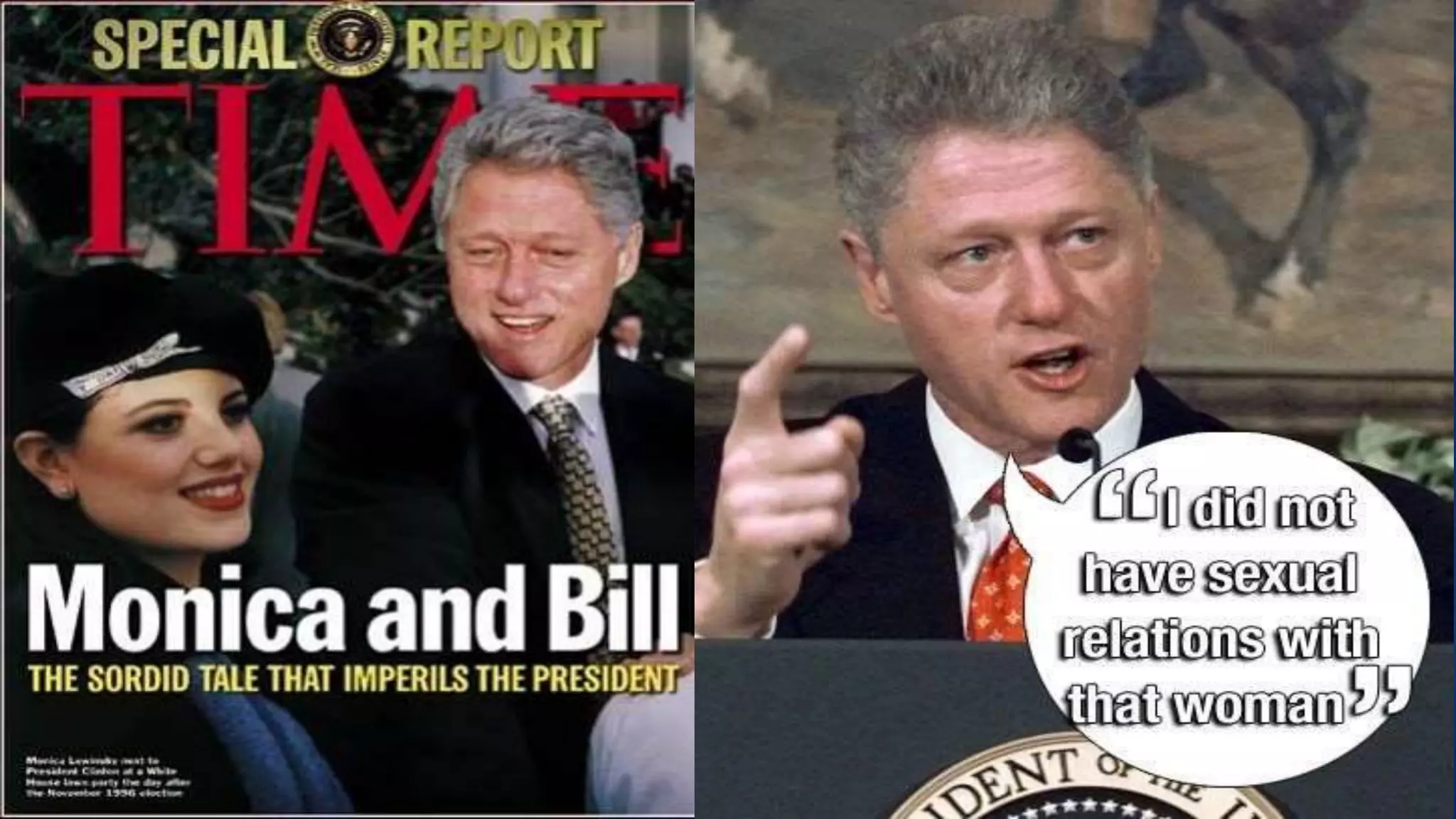
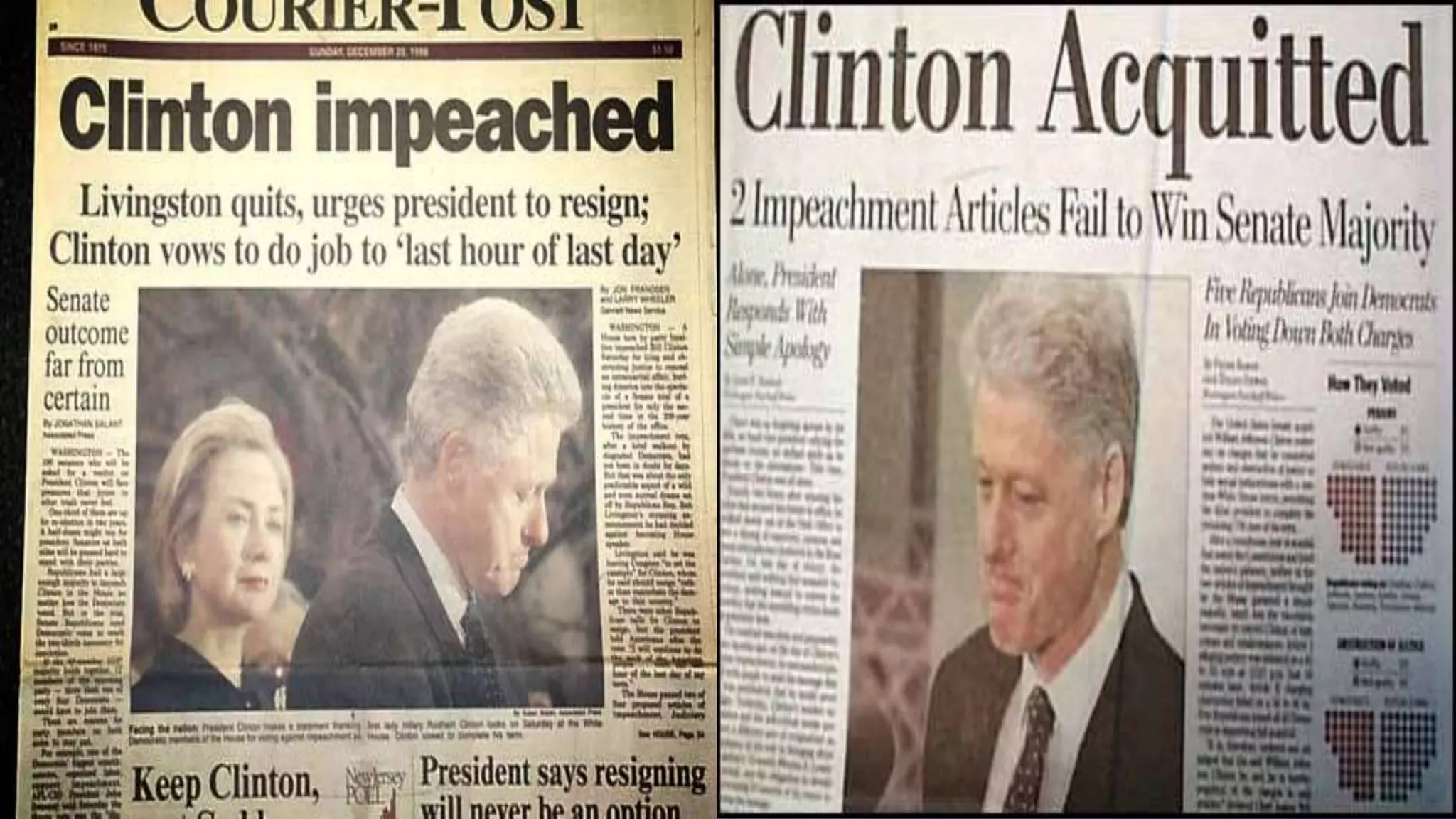
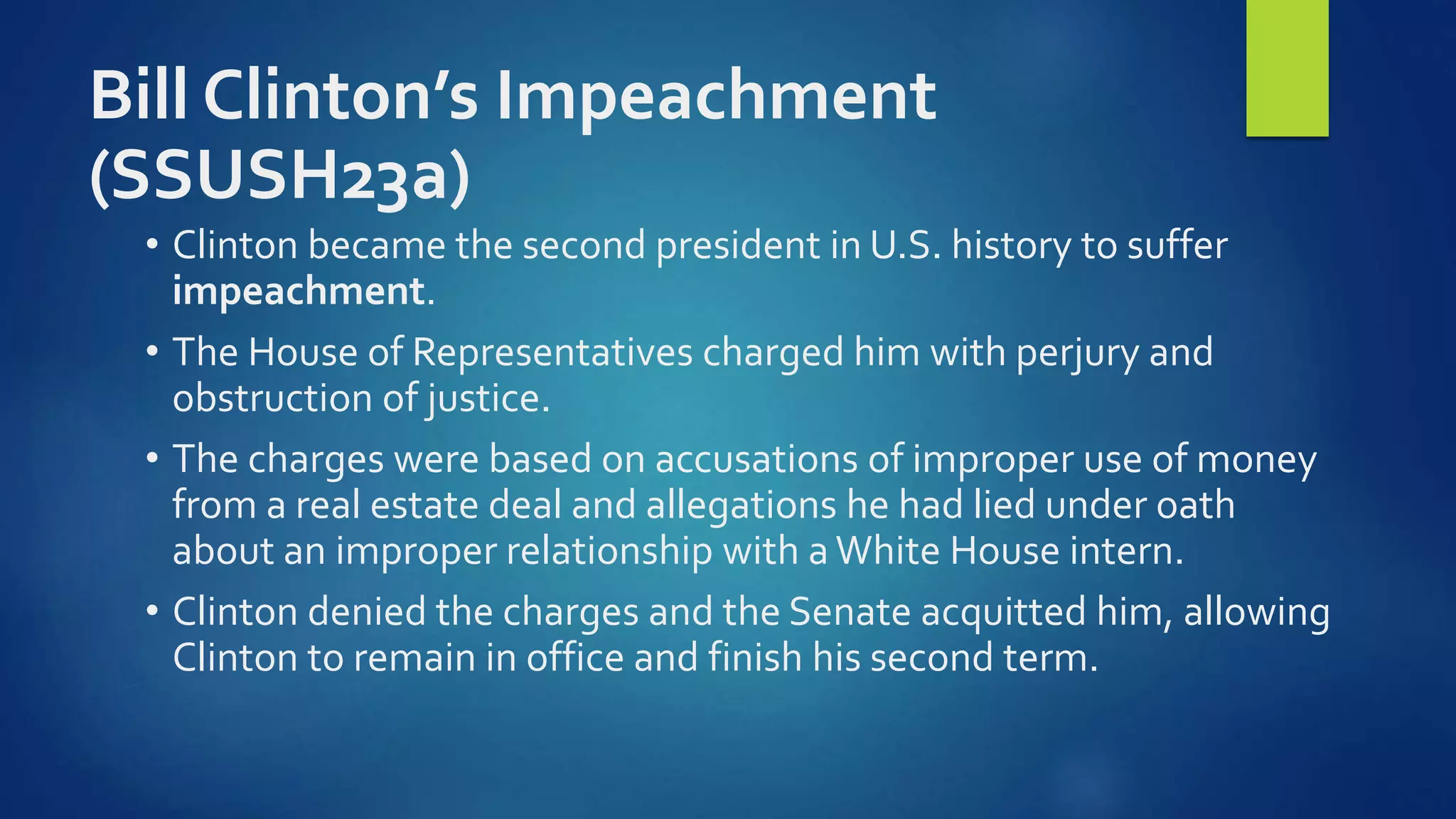
Bill Clinton’s Impeachment
(SSUSH23a)
• Clinton became the second president in U.S. history to suffer
impeachment.
• The House of Representatives charged him with perjury and
obstruction of justice.
• The charges were based on accusations of improper use of money
from a real estate deal and allegations he had lied under oath
about an improper relationship with a White House intern.
• Clinton denied the charges and the Senate acquitted him, allowing
Clinton to remain in office and finish his second term.
Review Questions
1. What happened to the Soviet Union during the Reagan
Administration?
2. What was the significance of Reaganomics?
3. Why was Bill Clinton impeached?
4. What was the result of Bill Clinton’s impeachment?
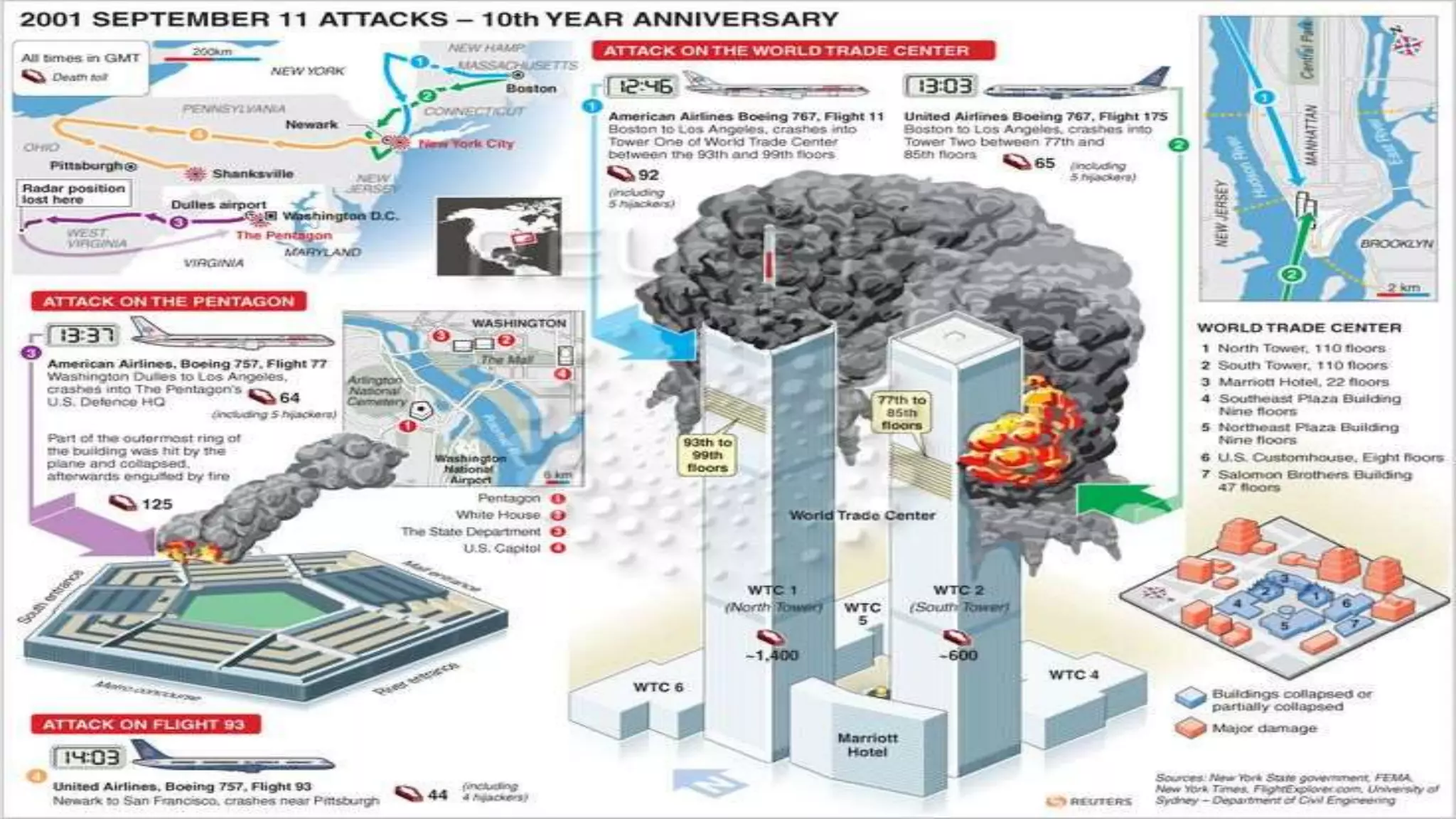
The Attacks of September 11, 2001
and the War onTerrorism
(SSUSH23a)• George W. Bush
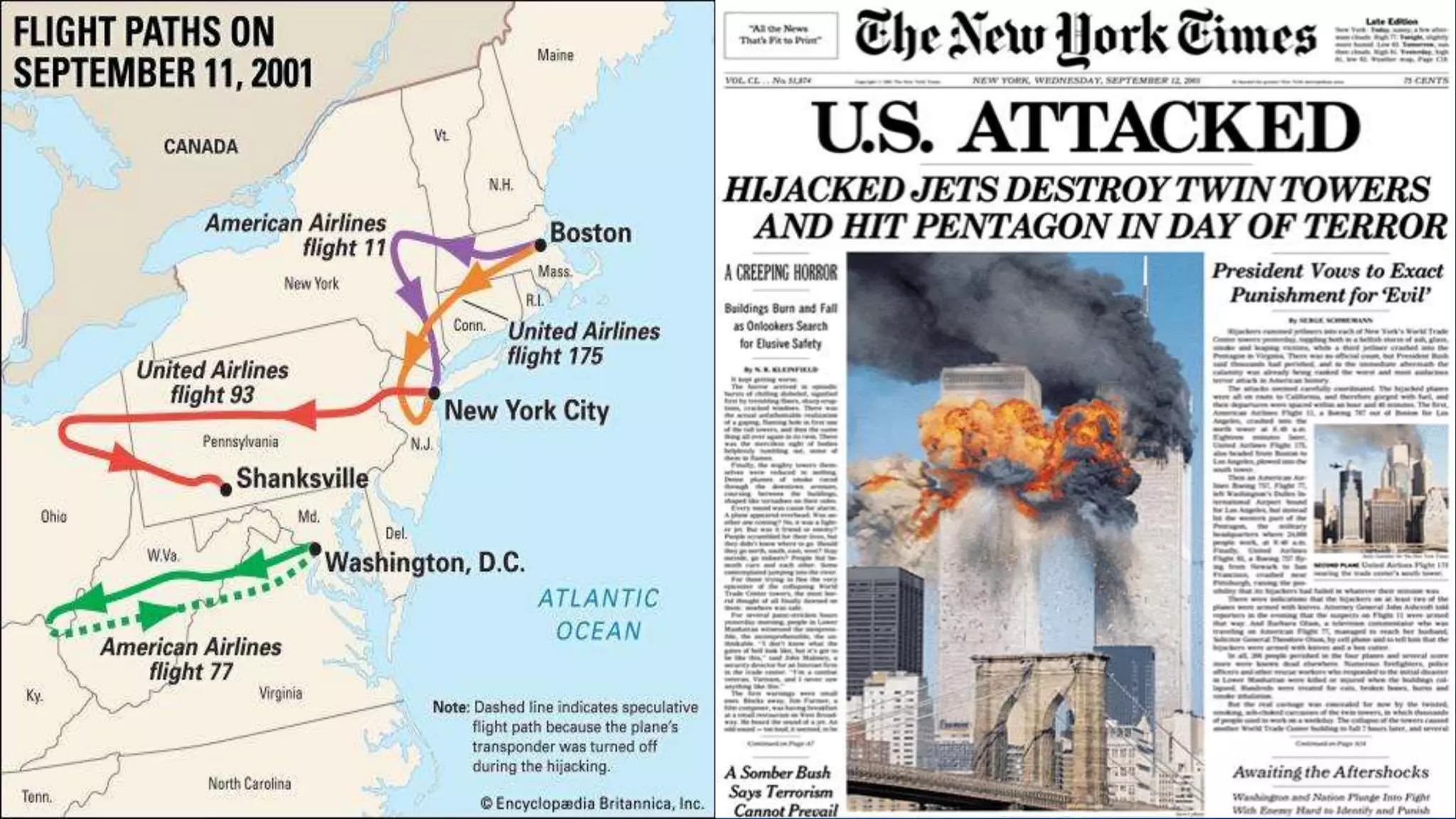
• September 11, 2001, (9/11) al-Qaeda’s attack on theTwin
Towers.
• American Response to 9/11 attack
• Created the Patriot Act, which increased the ability of
American law enforcement agencies can search private
communications and personal records
• Created the Department of Homeland Security (responds
to terrorist attacks and natural disasters)
The Attacks of September 11, 2001
and the War onTerrorism (SSUSH23a)
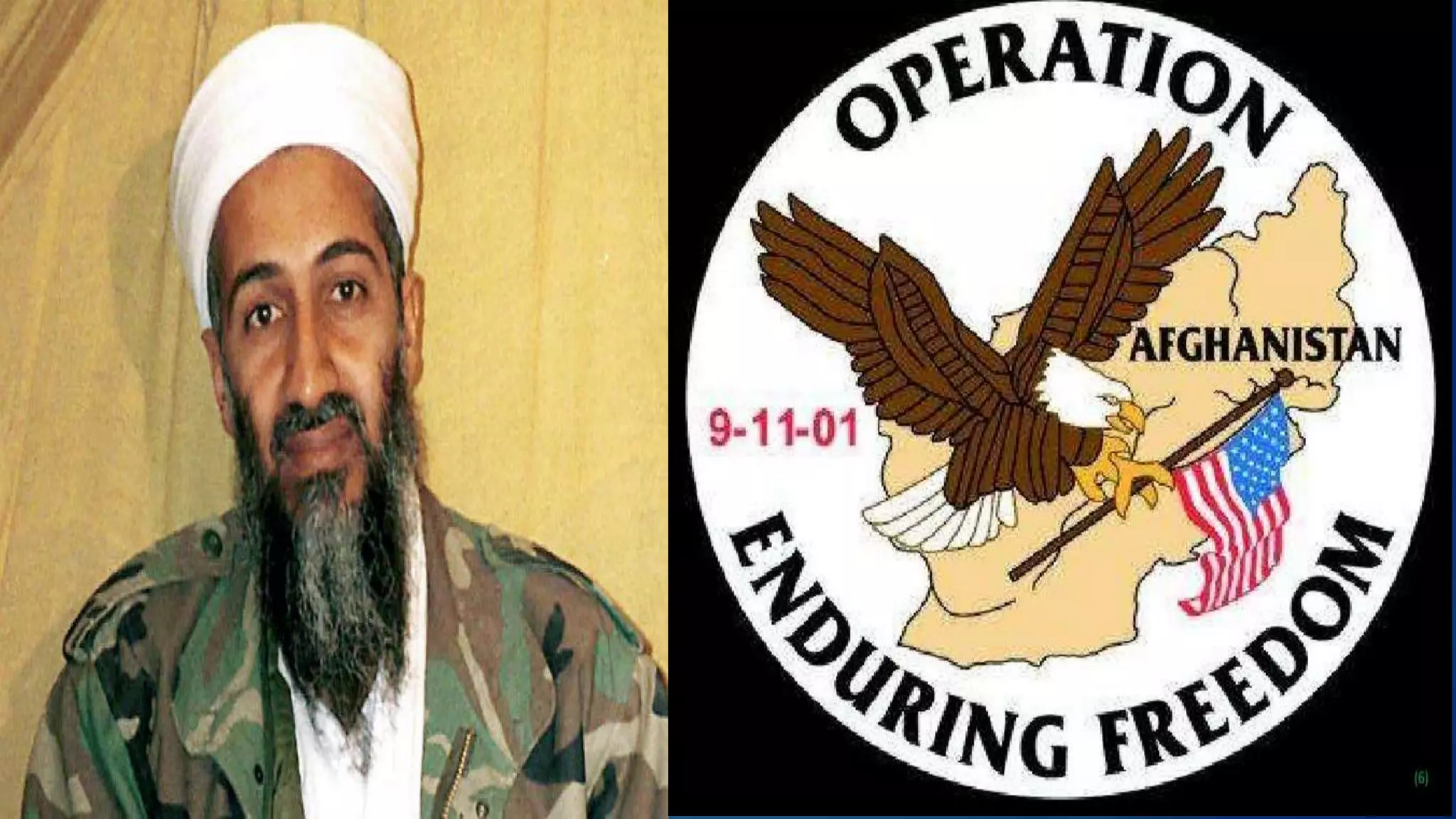
• Operation Enduring Freedom (2001), U.S. invasion of Afghanistan with
allied forces. (for harboring al-Qaeda leader Osama bin Laden and start
of War onTerrorism)
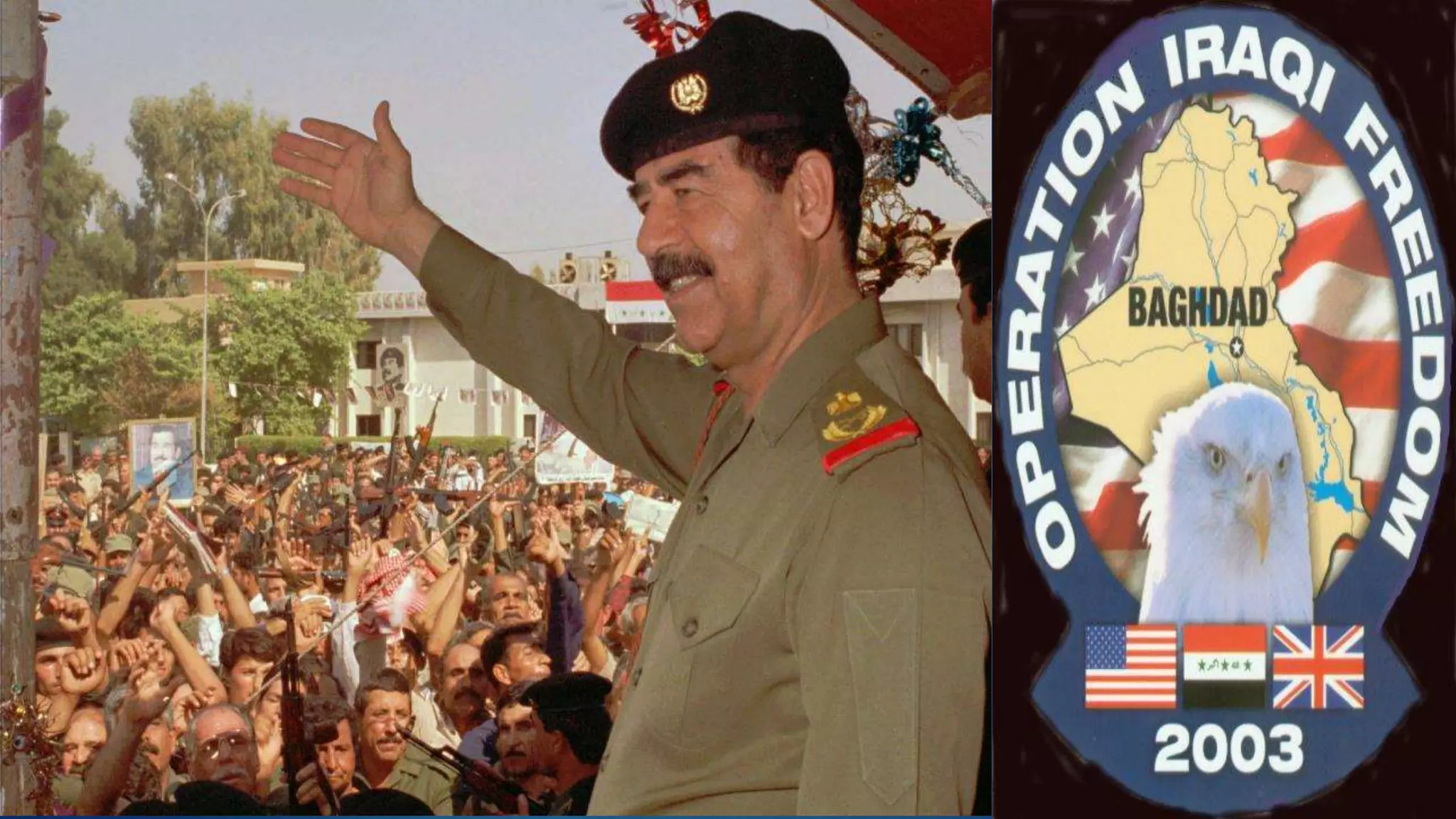
• Operation Iraqi Freedom (2003), U.S. invasion of Iraq to search for
Weapons of Mass Destruction (WMD) and as part of War onTerrorism.
• U.S. captures Iraq’s president, Saddam Hussein. U.S. fears Hussein had
and could supply terrorist in America. (Executed in 2006 for crimes
against humanity)
• U.S. captures al-Qaeda leader, Osama bin Laden. U.S fears bin Laden
had and could supply terrorist in America. (Killed in 2011, ordered by
Barack Obama)
Technological Changes
(SSUSH23a)
• Technologies changes such as the personal computer and the
internet has had a dramatic impact on economic growth of
businesses in the United States.
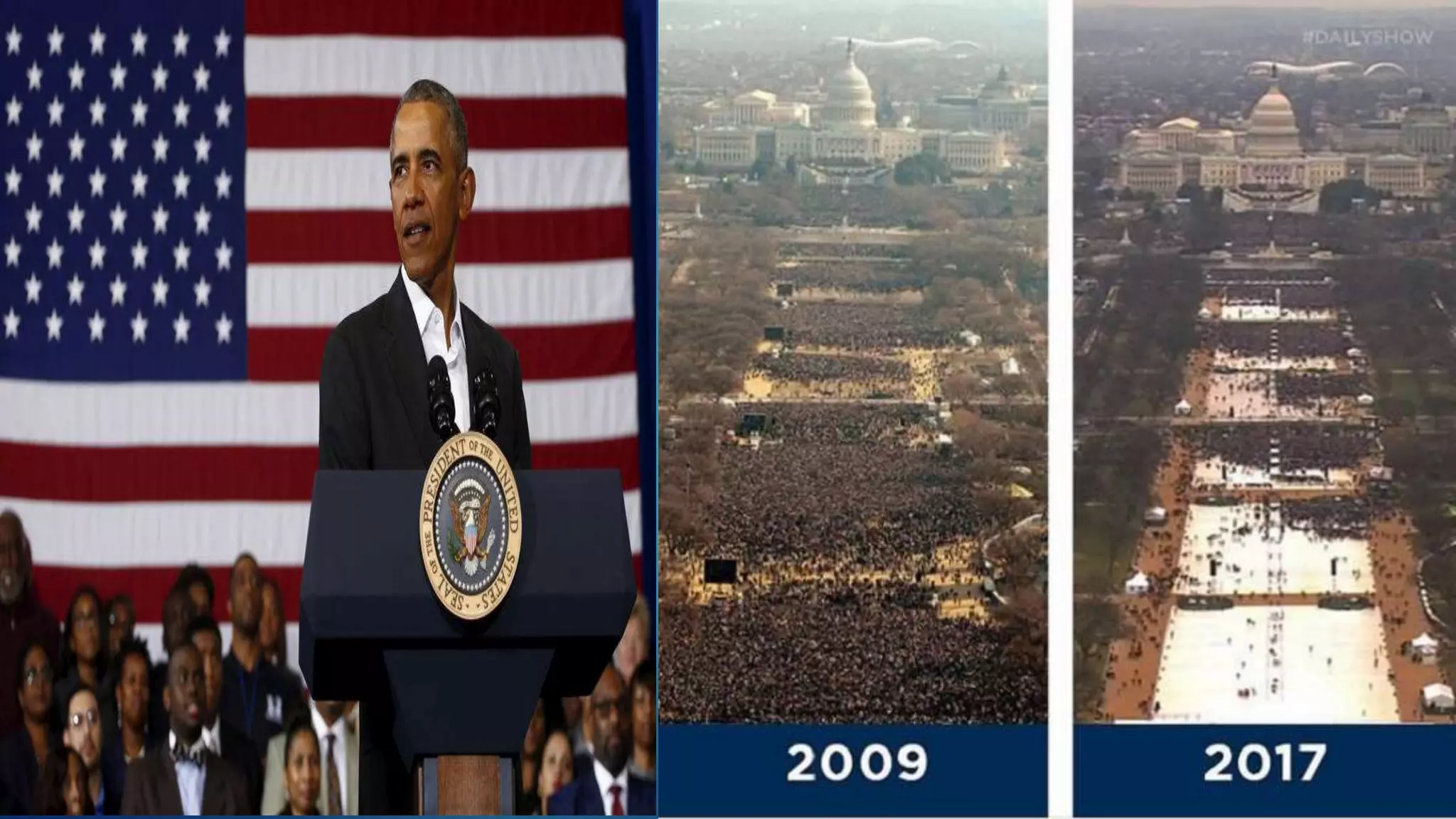
• Social Media such as Facebook have had major impacts on
Presidential Elections. (Obama andTrump)
Presidential Election of 2008
(SSUSH23a)
• Democratic candidate Barack Obama was elected by a wide
margin in the election.
• This made history as Obama become the first African American to
hold the office of presidency of the United States.
Review Questions
1. Describe the attacks of September 11, 2001?
2. What was the result of September 11, 2001?
3. What technologies have impacted American Politics?
4. What was the significance of the Presidential Election of 2008?

Unit 9 Modern US History

  • 1.
    Unit 9: ModernU.S. Politics SSUSH22 & SSUSH23
  • 2.
    Standards • SSUSH22 AnalyzeU.S. international and domestic policies including their influences on technological advancements and social changes during the Nixon, Ford, and Carter administrations. • SSUSH23 Assess the political, economic, and technological changes since 1981.
  • 5.
    International Policy (SSUSH22a) • RichardNixonVisits China (SSUSH22a) • Visited China to seek scientific, cultural and trade agreements • Hoped Chinese and the U.S. would become allies against the Soviet Union
  • 8.
    International Policy (SSUSH22a) • EndofVietnam War (SSUSH22a) • The President had been given immense unilateral power through the Gulf ofTonkin Resolution to take any measures he deemed necessary to protect the United States. • The Congress had been powerless through much of theVietnam War to adjust the level of troop commitment to the region because of the Gulf ofTonkin's unlimited provisions.
  • 11.
    International Policy (SSUSH22a) • EndofVietnam War (SSUSH22a) • Once the war was over, the Congress passed the War Powers Act in 1973. • The provisions of the new policy require the Congress to authorize troop commitments within a certain time frame. • The measure redistributed power to conduct military operations between the executive and legislative branches.
  • 12.
    Who are theseguys? Anwar Sadat (Egypt) Jimmy Carter (U.S.) Menachem Begin (Israel)
  • 13.
    Why are theseguys so happy? Receives $1.3 Billion (Annually) Receives $3 Billion (Annually) Peace in the Middle East
  • 15.
    A few yearslater…… Assassinated in 1981 Iran Hostage Crisis Lebanon War (1982)
  • 16.
    International Policy (SSUSH22a) • TheCamp David Accords (SSUSH22a) • Carter negotiated a peace agreement between the Egyptian president and the Israeli prime minister • First peace agreement between Middle Eastern nations.
  • 21.
    International Policy (SSUSH22a) • TheIran Hostage Crisis (SSUSH22a) • Began with the Iranian Revolution • The shah (king) of Iran (friendly to Americans) was removed by the new Ayatollah (Muslim Religious Leader) of Iran. • Later, the shah seeks medical help from Carter in America
  • 22.
    International Policy (SSUSH22a) • TheIran Hostage Crisis (SSUSH22a) • Angry Iranians invaded the U.S. embassy in Iran and took 52 Americans captive. • The Iranian hostage crisis lasted 444 days, until the captives were released after the election of Ronald Reagan as president, and it nurtured anti- Americanism among Muslims around the world.
  • 23.
    Review Questions 1. Whatwas the significance of Nixon’s trip to China? 2. What was the significance of theWar Powers Act? 3. What was the significance of Carter’s Camp David Accords? 4. What was the significance of the 1979 Iranian Revolution? 5. What was the significance of the Iranian Hostage Crisis?
  • 24.
    Document Analysis As thetide of chemicals born of the Industrial Age has arisen to engulf our environment, a drastic change has come about in the nature of the most serious public health problems….Today we are concerned about a different kind of hazard that lurks in our environment – a hazard we ourselves have introduced into our world as our modern way of life has evolved. The new environmental health problems are multiple – created by radiation in all its forms, born of the never ending stream of chemicals now pervading the world in which we live… no less frightening because it is simply impossible to predict the effects of lifetime exposure to chemical and physical agents that are not part of the biological experience of man. Source: Rachel Carson, Silent Spring (NewYork: Houghton Mifflin and Co, 1962): 187-18
  • 28.
    Major Domestic Issues (SSUSH22b) Creationof the Environmental Protection Agency (SSUSH22b) • In 1962, Rachel Carson’s book Silent Spring, exposed Americans to the dangers of pesticides on the environment. • As a result of Silent Spring, Nixon creates the Environmental Protection Agency • Creation of the Environmental Protection Agency (EPA) to set limits on pollution, to conduct environmental research, and to assist state and local governments in the cleanup of polluted sites.
  • 30.
    Major Domestic Issues (SSUSH22b) •Emergence of the National Organization for Women (SSUSH22b) • The National Organization for Women (NOW) was founded in 1966 to promote equal rights and opportunities for America’s women. • NOW’s goals included equality in employment, political and social equality, and the passage of the equal rights amendment.
  • 36.
    Major Domestic Issues (SSUSH22b) •Nixon and the Watergate Scandal (SSUSH22b) • Nixon administration’s attempt to cover up a burglary of the offices of the Democratic Party in the Watergate apartment and office complex inWashington, D.C. • Nixon wanted information on Democrats to help him win his reelection. • Nixon won reelection in 1972, but his efforts to cover up the crime soon unraveled and, facing impeachment, he resigned in 1974. • The result of scandal was a decrease in Americans trust in the federal government (voting decreases) and government creates new laws on campaign financing.
  • 38.
    Major Domestic Issues (SSUSH22b) •Gerald Ford Pardons Nixon (SSUSH22b) • Ford pardon’s Nixon so that he does not have to go to jail • Ford wants to bring the country back together, but the pardon only make citizens lose trust in the government and rule of law.
  • 39.
    Review Questions 1. Whatwas the significance of the Environmental Protection Agency? 2. What was the significance of the National Organization for Women? 3. What was theWatergate Scandal? 4. List two results of theWatergate Scandal 5. Which president pardoned Nixon?
  • 41.
    The Collapse ofthe Soviet Union (SSUSH23a) • A foreign policy were Reagan talked the Soviet Union leader (Mikhail Gorbachev) into allowing free speech (glasnost) and freedom of assembly in the U.S.S.R. • These policy put the U.S.S.R on the path to a democratic form of government. • In a 1987 speech, Reagan challenged Gorbachev to “tear down this wall!” as a symbol of increasing freedom in the U.S.S.R. • TheWall fell on Nov. 9th 1989 (symbolic end of Soviet Union)
  • 44.
    Ronald Reagans EconomicPolicy (SSUSH23a) •An economic policy that included budget cuts, tax cuts and increased defense spending. •Tax cuts helped business and U.S. get out of an economic recession. •By cutting social welfare budgets, Reagan’s policy hurt lower-income Americans and led to a severe recession.
  • 48.
    Bill Clinton’s Impeachment (SSUSH23a) •Clinton became the second president in U.S. history to suffer impeachment. • The House of Representatives charged him with perjury and obstruction of justice. • The charges were based on accusations of improper use of money from a real estate deal and allegations he had lied under oath about an improper relationship with a White House intern. • Clinton denied the charges and the Senate acquitted him, allowing Clinton to remain in office and finish his second term.
  • 49.
    Review Questions 1. Whathappened to the Soviet Union during the Reagan Administration? 2. What was the significance of Reaganomics? 3. Why was Bill Clinton impeached? 4. What was the result of Bill Clinton’s impeachment?
  • 54.
    The Attacks ofSeptember 11, 2001 and the War onTerrorism (SSUSH23a)• George W. Bush • September 11, 2001, (9/11) al-Qaeda’s attack on theTwin Towers. • American Response to 9/11 attack • Created the Patriot Act, which increased the ability of American law enforcement agencies can search private communications and personal records • Created the Department of Homeland Security (responds to terrorist attacks and natural disasters)
  • 55.
    The Attacks ofSeptember 11, 2001 and the War onTerrorism (SSUSH23a) • Operation Enduring Freedom (2001), U.S. invasion of Afghanistan with allied forces. (for harboring al-Qaeda leader Osama bin Laden and start of War onTerrorism) • Operation Iraqi Freedom (2003), U.S. invasion of Iraq to search for Weapons of Mass Destruction (WMD) and as part of War onTerrorism. • U.S. captures Iraq’s president, Saddam Hussein. U.S. fears Hussein had and could supply terrorist in America. (Executed in 2006 for crimes against humanity) • U.S. captures al-Qaeda leader, Osama bin Laden. U.S fears bin Laden had and could supply terrorist in America. (Killed in 2011, ordered by Barack Obama)
  • 56.
    Technological Changes (SSUSH23a) • Technologieschanges such as the personal computer and the internet has had a dramatic impact on economic growth of businesses in the United States. • Social Media such as Facebook have had major impacts on Presidential Elections. (Obama andTrump)
  • 58.
    Presidential Election of2008 (SSUSH23a) • Democratic candidate Barack Obama was elected by a wide margin in the election. • This made history as Obama become the first African American to hold the office of presidency of the United States.
  • 59.
    Review Questions 1. Describethe attacks of September 11, 2001? 2. What was the result of September 11, 2001? 3. What technologies have impacted American Politics? 4. What was the significance of the Presidential Election of 2008?