Chapter Nineteen Social Welfare
Types of Programs Benefit most citizens, no means test (e.g., Social Security and Medicare) Benefit a few citizens, means tested (e.g. Medicaid and Food Stamps)
Popular Support Majoritarian benefit programs are sacrosanct The appeal of client-based, means-tested programs changes with popular opinion
Social Welfare in the United States The appeal of client-based, means-tested programs changes with popular opinion America has been slower than other nations to embrace the welfare state State and private enterprise play a large role in administering welfare programs Non-governmental organizations play a large role
Who Benefits? The public insists that it be only those who cannot help themselves There is a slow, steady change in popular views, distinguishing between the deserving and the undeserving The American public prefers to give services, not money, to help the “deserving poor”
Non-Governmental Organizations Contracts and grants are awarded to national non-profit organizations, such as Big Brothers Big Sisters, Jewish Federations, and Catholic Charities Charitable Choice : provision that allowed religious non-profit organizations to compete for grants to administer welfare-to-work and related policies Faith-based organizations playing prominent roles in urban welfare-to-work programs
Social Security Act of 1935 Insurance for the unemployed and elderly—workers contribute and benefit Everybody is eligible for insurance programs Assistance for dependent children, the blind, and the elderly Assistance programs are means tested
Medicare Act of 1965 Medical benefits were omitted in 1935 in order to ensure passage of the Social Security Act Covers medical care for the poor and pays doctors’ bills for the elderly
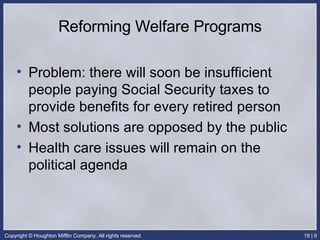
Reforming Welfare Programs Problem: there will soon be insufficient people paying Social Security taxes to provide benefits for every retired person Most solutions are opposed by the public Health care issues will remain on the political agenda
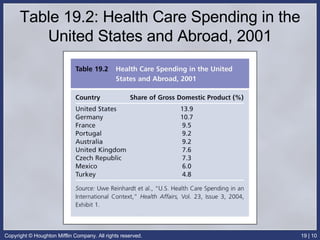
Table 19.2: Health Care Spending in the United States and Abroad, 2001
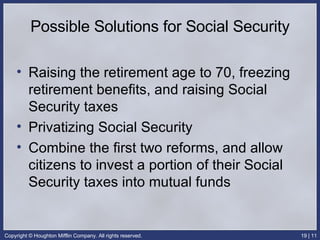
Possible Solutions for Social Security Raising the retirement age to 70, freezing retirement benefits, and raising Social Security taxes Privatizing Social Security Combine the first two reforms, and allow citizens to invest a portion of their Social Security taxes into mutual funds
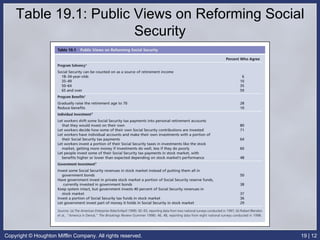
Table 19.1: Public Views on Reforming Social Security
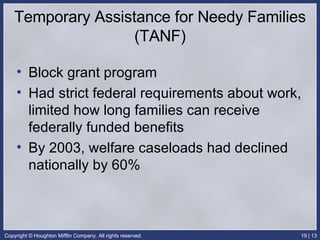
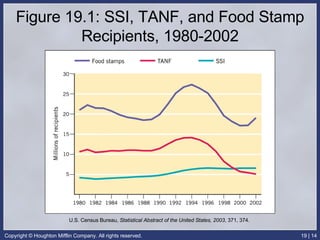
Temporary Assistance for Needy Families (TANF) Block grant program Had strict federal requirements about work, limited how long families can receive federally funded benefits By 2003, welfare caseloads had declined nationally by 60%
Figure 19.1: SSI, TANF, and Food Stamp Recipients, 1980-2002 U.S. Census Bureau,  Statistical Abstract of the United States, 2003 , 371, 374.
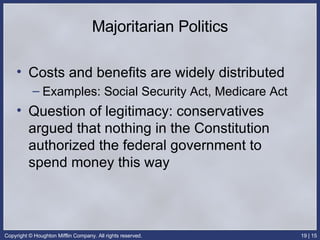
Majoritarian Politics Costs and benefits are widely distributed Examples: Social Security Act, Medicare Act Question of legitimacy: conservatives argued that nothing in the Constitution authorized the federal government to spend money this way
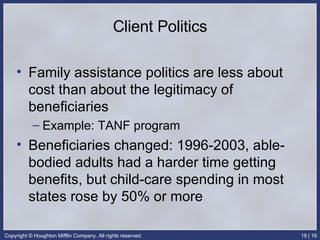
Client Politics Family assistance politics are less about cost than about the legitimacy of beneficiaries Example: TANF program Beneficiaries changed: 1996-2003, able-bodied adults had a harder time getting benefits, but child-care spending in most states rose by 50% or more

ap gov chap 19

  • 1.
  • 2.
    Types of ProgramsBenefit most citizens, no means test (e.g., Social Security and Medicare) Benefit a few citizens, means tested (e.g. Medicaid and Food Stamps)
  • 3.
    Popular Support Majoritarianbenefit programs are sacrosanct The appeal of client-based, means-tested programs changes with popular opinion
  • 4.
    Social Welfare inthe United States The appeal of client-based, means-tested programs changes with popular opinion America has been slower than other nations to embrace the welfare state State and private enterprise play a large role in administering welfare programs Non-governmental organizations play a large role
  • 5.
    Who Benefits? Thepublic insists that it be only those who cannot help themselves There is a slow, steady change in popular views, distinguishing between the deserving and the undeserving The American public prefers to give services, not money, to help the “deserving poor”
  • 6.
    Non-Governmental Organizations Contractsand grants are awarded to national non-profit organizations, such as Big Brothers Big Sisters, Jewish Federations, and Catholic Charities Charitable Choice : provision that allowed religious non-profit organizations to compete for grants to administer welfare-to-work and related policies Faith-based organizations playing prominent roles in urban welfare-to-work programs
  • 7.
    Social Security Actof 1935 Insurance for the unemployed and elderly—workers contribute and benefit Everybody is eligible for insurance programs Assistance for dependent children, the blind, and the elderly Assistance programs are means tested
  • 8.
    Medicare Act of1965 Medical benefits were omitted in 1935 in order to ensure passage of the Social Security Act Covers medical care for the poor and pays doctors’ bills for the elderly
  • 9.
    Reforming Welfare ProgramsProblem: there will soon be insufficient people paying Social Security taxes to provide benefits for every retired person Most solutions are opposed by the public Health care issues will remain on the political agenda
  • 10.
    Table 19.2: HealthCare Spending in the United States and Abroad, 2001
  • 11.
    Possible Solutions forSocial Security Raising the retirement age to 70, freezing retirement benefits, and raising Social Security taxes Privatizing Social Security Combine the first two reforms, and allow citizens to invest a portion of their Social Security taxes into mutual funds
  • 12.
    Table 19.1: PublicViews on Reforming Social Security
  • 13.
    Temporary Assistance forNeedy Families (TANF) Block grant program Had strict federal requirements about work, limited how long families can receive federally funded benefits By 2003, welfare caseloads had declined nationally by 60%
  • 14.
    Figure 19.1: SSI,TANF, and Food Stamp Recipients, 1980-2002 U.S. Census Bureau, Statistical Abstract of the United States, 2003 , 371, 374.
  • 15.
    Majoritarian Politics Costsand benefits are widely distributed Examples: Social Security Act, Medicare Act Question of legitimacy: conservatives argued that nothing in the Constitution authorized the federal government to spend money this way
  • 16.
    Client Politics Familyassistance politics are less about cost than about the legitimacy of beneficiaries Example: TANF program Beneficiaries changed: 1996-2003, able-bodied adults had a harder time getting benefits, but child-care spending in most states rose by 50% or more