Anti-Fungal Drugs
Dr.Arka Mondal
Assistant Professor
(Pharmacology)
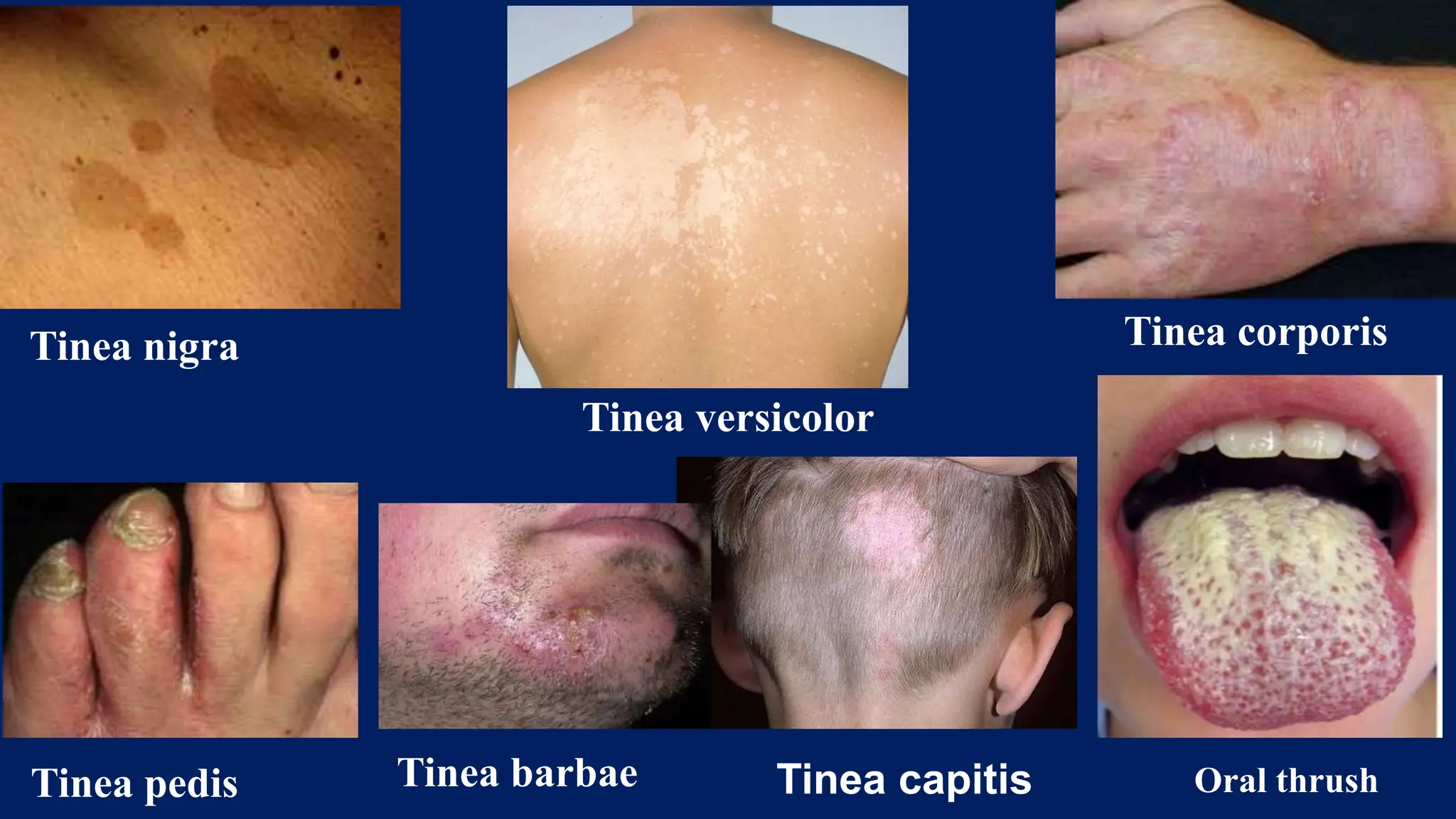
Tinea nigra
Tinea versicolor
Tinea corporis
Tinea pedis Oral thrush
Tinea capitis
Tinea barbae
 Fungal infections, also called as “Mycoses”
 Eukaryotic cell wall consist of –chitin, β-glucan instead of peptidoglycan
 Cell membrane consist of -Ergosterol instead of cholesterol
 Fungi divided into 4 classes
 Antifungal drugs → used for superficial and deep (systemic) fungal infections
 Most of the fungal infections are opportunistic
 Common in-
 Diabetic Mellitus, Cancer, AIDS, Pregnancy
 Patient on Immunosuppressive therapy such as Prolong corticosteroid use ,
Broad spectrum antibiotics ,Anti-cancer drug
Yeasts Yeast like fungi Moulds Dimorphic fungi
Cryptococcus
neoformans
Candida albicans,
Pityrosporom
orbiculare
Trichophyton sp,
Microsporum sp.,
Epidermophyton sp.
Histoplasma
capsulatum,
Blastomyces
dermatides,
Sporothrix sp.
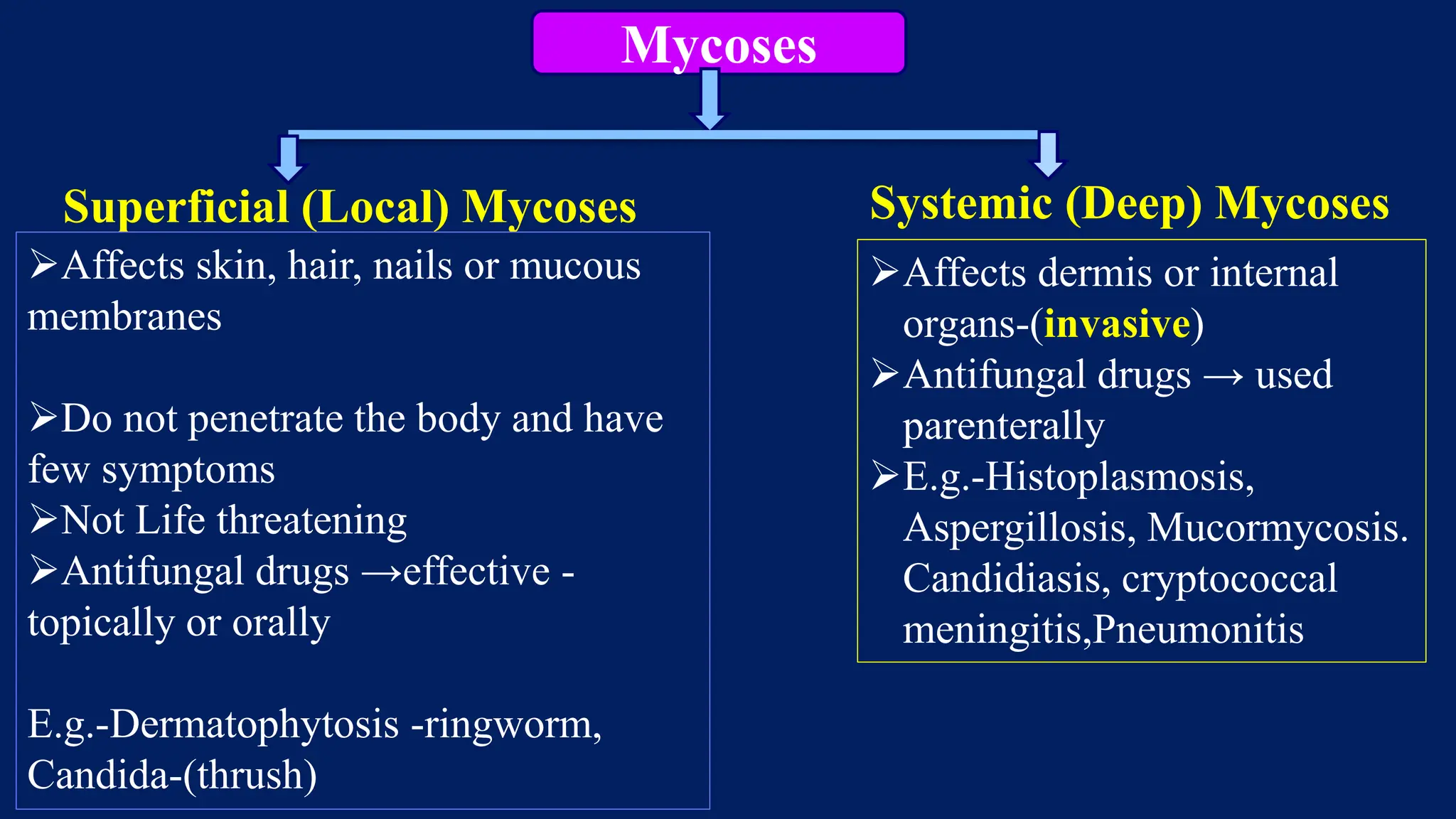
Mycoses
Superficial (Local) Mycoses Systemic (Deep) Mycoses
Affects skin, hair, nails or mucous
membranes
Do not penetrate the body and have
few symptoms
Not Life threatening
Antifungal drugs →effective -
topically or orally
E.g.-Dermatophytosis -ringworm,
Candida-(thrush)
Affects dermis or internal
organs-(invasive)
Antifungal drugs → used
parenterally
E.g.-Histoplasmosis,
Aspergillosis, Mucormycosis.
Candidiasis, cryptococcal
meningitis,Pneumonitis
Fungal Infections / causative orga
1. Antifungal antibiotics:-
A. Polyene Antibiotics- Amphotericin B, Nystatin
B. Echinocandins: Caspofungin, Micafungin, Anidulafungin
C. Heterocyclic benzofuran-Griseofulvin
2. Antimetabolites: Flucytosine
3. Azoles:
A. Imidazoles:-Ketoconazole, Miconazole(T), Clotrimazole(T),
Econazole(T),Oxiconazole(T)
B. Triazoles: Fluconazole, Itraconazole, voriconazole, Posaconazole
4. Allylamine: Terbinafine.
5. Topical agents: Tolnaftate, Benzoic acid, Undecylenic acid,
Butenafine, Ciclopirox olamine
(Contains polysaccharides)
(Contains ergosterol not cholesterol
Inhibits cell wall synthesis
Binds with mitotic spindles & Block mitosis
Binds to Ergosterol & Make Membrane Leaky
Inhibit Ergosterol Biosynthesis
14-α
demethylase
 Amphotericin-B(AMB):-
 Broad-spectrum antifungal antibiotic against systemic mycoses
 Polyene compound with poor aqueous solubility
Bind tightly to ergosterol in fungal cell membrane
Form ‘pore’ and ‘channels’ in the membrane
Permeability of the membrane increases
Leakage of intracellular contents
Death of the fungi
(Fungicidal)
 MOA:-
Amphotericin-B, Nystatin
Spectrum of Activity:-
effective against Cryptococcus,
Coccidioides, Candida, Aspergillus,
Blastomyces, Histoplasma, Sporothrix, fungi
causing Mucormycosis, leishmania etc.
Pharmacokinetics:-
 Absorption-Poor absorption through GIT (slow I.V. infusion)
 Distribution-widely distributed except CNS therefore in fungal meningitis
intrathecal route is preferred
 Metabolism:- liver (T1/2-15days)
 Excretion-kidney
 Formulation:-
 Amphotericin B is poorly water soluble intravenous preparation is made with
deoxycholate—conventional amphotericin B (C-AMB).
 ABCD (AMB colloidal dispersion), ABLC (AMB–lipid complex) and liposomal
AMB (L-AMB) are the lipid-based new formulations of AMB.
 They are less nephrotoxic than C-AMB
 USES:-
1. Systemic fungal infection- DOC like Aspergillosis, Mucormycosis,
Cryptococcosis, Sporotrichosis, Candidiasis, Cryptococcal Meningitis, etc
 Invasive Aspergillosis-ABCD
 Cryptococcosis & Histoplasmosis in AIDS- to prevent relapse (weekly)
 The Azoles (Fluconazole and Itraconazole) preferred over AMB in fungal
diseases
2.Superficial mycoses- as topically in oropharyngeal, cutaneous & vaginal
candidiasis
3. Kala Azar- DOC in visceral leishmaniasis also as Reserve drug for resistance
4. Other use:-
 Corneal ulcer & keratitis- As eye drop
 Otomycosis- as ear drop
 Adverse effects:-
 Nephrotoxicity:-long term dose related toxicity (renal tabular acidosis-
Hypokalemia, Hypomagnesaemia) can be reduced by prior infusion of normal
saline
 Anaemia- common with C-AMB due to ↓production of erythropoietin
 Hepatotoxicity, chills, fever, Hypotension
 Interaction:-
 AMB × Aminoglycosides, vancomycin, Cycloserin-Nephrotoxicity
 Nystatin:- (Topical Polyene Antibiotics)
 Nystatin is poorly absorbed from the GIT, skin and mucous membranes.
 highly toxic for systemic use.(Topical Antifungal agents)
 It is available as suspension, ointment, cream, powder and tablet.
 Uses:-
 Topically in cutaneous & vaginal candidiasis
 Other uses include oropharyngeal thrush, corneal,
conjunctival(Oint.) and cutaneous candidiasis.
 Adverse effects:- Nausea and bitter taste
 Hamycin:- developed in India (Hindustan Antibiotics, Pune).
 It is useful topically for oral, cutaneous and vaginal candidiasis
 Fungistatic drug-with low water solubility
 Derived→ Penicillium griseofulvum
 Used orally for dermatophytic infections.
 It is not effective topically
-:Griseofulvin:-
 MOA:-
 Pharmacokinetics:-
 Administered orally
 ↑BA by taking with fatty food and by using ultrafine preparation.
 t1/2-1 days
 It gets concentrated in keratinized tissues such as skin, hair, nails, etc.
 Metabolism-by liver & Excreted - urine
 Uses:-
 In Dermatophytic infections like tinea (ringworm) infections
 Tinea capitis, Tinea barbae, Tinea corporis, Tinea pedis
 Subcutaneous or deep mycoses- not effective
 Adverse effects:-
 Headache, rashes, peripheral neuritis, vertigo, blurred vision and GI effects such
as nausea, vomiting, diarrhoea, heartburn, etc.
 Interaction:-
 Griseofulvin × warfarin, Oc’s- Therapeutic failure (Enzyme inducer)
 Griseofulvin × Phenobarbitone- ↑metabolism of Griseofulvin
 It has disulfiram-like action, hence can cause intolerance to alcohol
 Flucytosine:-
 Fluorinated pyrimidine antimetabolites
 Prodrug
Flucytosine
Taken up by susceptible fungal cells
5-Fluorouracil(5FU)
5-Fluorouridylic acid
Enzyme Uridine monophosphate pyrophosphorylase (UMP)
5-Fluorodeoxyuridylic acid
Thymidylate synthetase
Inhibit
DNA synthesis interrupted
in fungal cell (Fungistatic)
MOA:-
 Narrow spectrum of activity
and is effective against
Cryptococcus,
Chromoblastomyces and
Candida spp.
 Pharmacokinetics:-
 Well absorbed from GI tract
 Poorly bound to plasma proteins
 T1/2-3-6hr
 Freely crosses BBB and reaches high concentration in CSF
 USES:-
 Cryptococcal meningitis:- Flucytosine +AMB
 Advantages of this Combination :-
1. The entry of flucytosine into the fungal cells is facilitated because of the ↑
Permeability of the membrane due to the action of AMB
2. ↓↓ toxicity of AMB because of reduction in the drug dosage.
3. Less chance for emergence of resistance
 A/E:- bone marrow suppression with anaemia, neutropaenia and
thrombocytopaenia.
 Other Adverse effects:- Nausea, vomiting, diarrhoea, alopecia, skin rashes,
itching and rarely hepatitis
 Azoles:-
 They are synthetic compounds
 Types:- Imidazoles and Triazoles
 Both of them are structurally related compounds, have similar mechanism of
action and Antifungal spectrum
 MOA:- Azoles inhibits 14-α-demethylase
(A Cyp-450 dependent enzyme) which converts
Lanosterol to Ergosterol thus ↓synthesis of
Ergosterol of cell membrane.
Squalene
Lanosterol
Ergosterol
(Fungicidal action)
Squalene 2, 3-epoxidase
14-α-demethylase
Azoles
 Imidazoles:- less specific to fungal CYP-450 hence more AE
 E.g.-Ketoconazole-oral & topical, Miconazole & clotrimazole-topical
 Triazoles:- More specific to fungal CYP-450 hence less AE.e.g.-Itraconazole,
Fluconazole, voriconazole
 Miconazole and Clotrimazole:-
 Used topically for dermatophytic and Candida infections.
 They are available as cream, gel, lotion, solution, spray, vaginal pessary, etc.
Clotrimazole troche is also available.
 Uses:-
 1. Candida infections: frequently used for the treatment of oropharyngeal
candidiasis— used as gel, lotion or troche (troche 10 mg to be allowed to
dissolve in the mouth QID for 14 days).
 vulvovaginal and cutaneous candidiasis:- for treatment Both agent use
 Otomycosis→ Miconazole
 2. Dermatophytic infections: Clotrimazole and miconazole are useful for Tinea
pedis, Tinea cruris, Tinea corporis and Tinea versicolor
 Adverse effects:- local irritation, itching or burning.
 Miconazole →safe in pregnancy
 Ketoconazole(KTZ):- Prototype drug among azoles
 Pharmacokinetics:-
 Absorption:-It is orally effective.
 Acidic environment favors the absorption of ketoconazole
 BA→ is reduced by drugs like H2-blockers, PPI or Antacids.
 Distribution:-highly bound to plasma proteins,
 Metabolized:- liver
 Excretion- Feces
 Adverse effects:-
 Most toxic among azoles but it is less toxic than AMB
 Common AE:- Anorexia, nausea and vomiting, gynaecomastia, oligospermia,
loss of libido and impotence in males menstrual irregularities and amenorrhoea in
females.(due to ↓testosterone & cortisol level)
 Drug interactions:-
 Ketoconazole × Sulfonylureas, warfarin, Phenytoin, Digoxin, Haloperidol
etc.(↓Metabolism of those drugs)
 USES:-
 1. Dermatophytosis:- topically
 2. Candidiasis: KTZ is useful for oral, oesophageal and vulvovaginal candidiasis.
 For Systemic infection- Triazoles preferred over Ketoconazole (due to more
systemic toxicity)
 # Ketoconazole + Amphotericin-B- Irrational Combination
(KTZ inhibits cell membrane synthesis which ↓ effect of AMB)
 Fluconazole:- Triazole
 Formulation:- Oral and i.v. , Topical use in the eye
 It has Broad spectrum of antifungal Agents
 Pharmacokinetics:-
 Absorption:- GIT & high BA. Which not affected by Food or gastric pH
 T1/2-25-30hr
 Distribution:- widely distributed in the body & CSF
 Freely crosses the BBB
 Poor PPB
 Excretion :- Urine unchanged form
 Adverse effects:-
 Common:- -Nausea, vomiting, diarrhoea and abdominal discomfort.
 Other:- headache, alopecia, skin rashes and hepatic necrosis.
 Teratogenic→ Contraindicated in Pregnancy
 Fluconazole has enzyme inhibiting property.
 Ineffective:- against Aspergillosis & Mucormycosis
 Uses:-
 Candidiasis:- Fluconazole is effective in oral (200 mg stat, then 100 mg daily for
next 14 days) Oropharyngeal, oesophageal, Cutaneous and invasive candidiasis
 Cryptococcal and coccidioidal meningitis: I.V. fluconazole
 vaginal candidiasis:- 150mg dose
 Fungal meningitis in AIDS pt.→ for maintenance therapy after i.v. AMB
 Pityriasis versicolor -150 mg weekly for 4 weeks
 Itraconazole:- Triazole
 Administered:- orally as well as by i.v. route.
 Absorption:- ↑ in Gastric acidity & food
 PPB- High & does not cross BBB
 Metabolism:- liver
 It has a broad spectrum of activity against many fungi including Aspergillus.
 Adverse effect:- Nausea, vomiting, diarrhoea, headache, hepatotoxicity and
hypokalemia.
 Interaction:-
 Rifampin, Phenobarbitone, Phenytoin, Carbamazepine × Itraconazole-
↑Metabolism
 Clarithromycin ,PI × Itraconazole- ↓Metabolism &↑Cp levels
 Uses:- 1. Esophageal, Oropharyngeal and vaginal candidiasis but not superior to
fluconazole
 2. I.V. Itraconazole is the DOC in systemic fungal infections like histoplasmosis,
blastomycosis and sporotrichosis.
 3. Onychomycosis- orally preferred
 4. It is also effective in Aspergillosis and Dermatophytosis, Chromomycosis
 Voriconazole:- Triazole
 USES:- DOC for invasive Aspergillosis and fluconazole resistant Candida
 Also effective against- Histoplasmosis and blastomycosis
 T1/2-6hr.
 Administered→ Orally or i.v.
 A/E:-visual and auditory disturbances, prolongation of QT interval, and skin
rashes
 Posaconazole:-
 Broad-spectrum triazole
 Only azole effective against- Mucormycosis
 Expensive-reserved for nonresponsive cases of aspergillosis & invasive
candidiasis
 Absorption:- ↑with fatty food
 Metabolism:- liver by CYP2CI 9
 T1/2->24hr.
 Excretion-feces
 A/E- Nausea, abdominal pain, loose motions, headache, dizziness &
drowsiness
 Allylamine:- Terbinafine
 MOA:-
 Inhibits squalene 2,3-epoxidase &
 blocks ergosterol synthesis
 Administered- Orally, Topically
 Pharmacokinetics:-
 Absorption-well absorbed after oral administration
 Distribution- concentrated in skin, nails (90%- high affinity for keratin) and
adipose tissue & PPB-high ,poorly penetrates the BBB
 First pass metabolism-↓BA 50%
 Metabolism:- in liver and is excreted in urine.
 Adverse effects:- Nausea, diarrhoea, dyspepsia and rarely hepatitis, itching,
rashes, local irritation on topical use
Squalene
Lanosterol
Ergosterol
(Fungicidal Action)
Squalene 2,3-epoxidase
14-α-demethylase
Terbinafine
 Uses:-
 1. Dermatophytosis:-
 Effective against T. pedis, T. corporis and T. cruris. Administered- Topically or
orally
 Onychomycosis of hands and feet→ used orally (more effective than
itraconazole) 250mg OD for 6-12 weeks
2. Candidiasis: Terbinafine is less effective in Candida infections
 Echinocandins:-
 Caspofungin Acetate:- (inhibit cell wall synthesis)
 Semisynthetic antifungal agent effective against Candida and Aspergillus
 MOA:- inhibit 1,3-β-D-glucan synthesis, which is an essential component of the
fungal cell wall which crosslink with chitin & is required for in cellular integrity
 Caspofungin is not absorbed orally (i.v. infusion)
 t½-10hr.
 USES:-
 i.v. infusion for the treatment of Deep & invasive aspergillosis and
candidiasis
 Preferred when pt. not responding to other antifungal agents
 A/E:- Nausea, vomiting, flushing, fever and phlebitis at the site of injection
 Micafungin:-
 t½ - 12-15hr.
 USE:- Prophylaxis of Candida infections in bone marrow transplant patients
 Esophageal candidiasis-use
 Anidulafungin:- T1/2-36hr.
 USE:- Intra-abdominal abscess, Peritonitis, and oesophageal candidiasis
 Other Topical Agents:-
 Indicated for Dermatophytosis
 1. Whitfield’s ointment:
 6% benzoic acid → fungistatic effects
+
 3% Salicylic acid → keratolytic effect
 2. Tolnaftate:- effective drug for tinea cruris and tinea corporis
 Available formulation:- 1% concentration as a cream, gel, powder, aerosol
powder, topical solution, or topical aerosol liquid
 3. Ciclopirox olamine:- affective against Tinea infections, Pityriasis
versicolor, dermal Candidiasis, onychomycosis
 Vaginal candidiasis-1% cream
 Poor systemic absorption
USE:- in the treatment
of T. Pedis
4. Butenafine:- Butenafine hydrochloride is a benzylamine derivative with a
mechanism of action similar to that of terbinafine
 Effective against- tinea cruris/ corporis/pedis
5. Selenium sulphide: It is useful for T. versicolor.
Anti-fungal drugs

Anti-fungal drugs

  • 1.
  • 2.
    Tinea nigra Tinea versicolor Tineacorporis Tinea pedis Oral thrush Tinea capitis Tinea barbae
  • 3.
     Fungal infections,also called as “Mycoses”  Eukaryotic cell wall consist of –chitin, β-glucan instead of peptidoglycan  Cell membrane consist of -Ergosterol instead of cholesterol  Fungi divided into 4 classes  Antifungal drugs → used for superficial and deep (systemic) fungal infections  Most of the fungal infections are opportunistic  Common in-  Diabetic Mellitus, Cancer, AIDS, Pregnancy  Patient on Immunosuppressive therapy such as Prolong corticosteroid use , Broad spectrum antibiotics ,Anti-cancer drug Yeasts Yeast like fungi Moulds Dimorphic fungi Cryptococcus neoformans Candida albicans, Pityrosporom orbiculare Trichophyton sp, Microsporum sp., Epidermophyton sp. Histoplasma capsulatum, Blastomyces dermatides, Sporothrix sp.
  • 4.
    Mycoses Superficial (Local) MycosesSystemic (Deep) Mycoses Affects skin, hair, nails or mucous membranes Do not penetrate the body and have few symptoms Not Life threatening Antifungal drugs →effective - topically or orally E.g.-Dermatophytosis -ringworm, Candida-(thrush) Affects dermis or internal organs-(invasive) Antifungal drugs → used parenterally E.g.-Histoplasmosis, Aspergillosis, Mucormycosis. Candidiasis, cryptococcal meningitis,Pneumonitis
  • 5.
    Fungal Infections /causative orga
  • 6.
    1. Antifungal antibiotics:- A.Polyene Antibiotics- Amphotericin B, Nystatin B. Echinocandins: Caspofungin, Micafungin, Anidulafungin C. Heterocyclic benzofuran-Griseofulvin 2. Antimetabolites: Flucytosine 3. Azoles: A. Imidazoles:-Ketoconazole, Miconazole(T), Clotrimazole(T), Econazole(T),Oxiconazole(T) B. Triazoles: Fluconazole, Itraconazole, voriconazole, Posaconazole 4. Allylamine: Terbinafine. 5. Topical agents: Tolnaftate, Benzoic acid, Undecylenic acid, Butenafine, Ciclopirox olamine
  • 7.
    (Contains polysaccharides) (Contains ergosterolnot cholesterol Inhibits cell wall synthesis Binds with mitotic spindles & Block mitosis Binds to Ergosterol & Make Membrane Leaky Inhibit Ergosterol Biosynthesis Inhibit Ergosterol Biosynthesis 14-α demethylase
  • 8.
     Amphotericin-B(AMB):-  Broad-spectrumantifungal antibiotic against systemic mycoses  Polyene compound with poor aqueous solubility Bind tightly to ergosterol in fungal cell membrane Form ‘pore’ and ‘channels’ in the membrane Permeability of the membrane increases Leakage of intracellular contents Death of the fungi (Fungicidal)  MOA:- Amphotericin-B, Nystatin Spectrum of Activity:- effective against Cryptococcus, Coccidioides, Candida, Aspergillus, Blastomyces, Histoplasma, Sporothrix, fungi causing Mucormycosis, leishmania etc.
  • 9.
    Pharmacokinetics:-  Absorption-Poor absorptionthrough GIT (slow I.V. infusion)  Distribution-widely distributed except CNS therefore in fungal meningitis intrathecal route is preferred  Metabolism:- liver (T1/2-15days)  Excretion-kidney  Formulation:-  Amphotericin B is poorly water soluble intravenous preparation is made with deoxycholate—conventional amphotericin B (C-AMB).  ABCD (AMB colloidal dispersion), ABLC (AMB–lipid complex) and liposomal AMB (L-AMB) are the lipid-based new formulations of AMB.  They are less nephrotoxic than C-AMB
  • 10.
     USES:- 1. Systemicfungal infection- DOC like Aspergillosis, Mucormycosis, Cryptococcosis, Sporotrichosis, Candidiasis, Cryptococcal Meningitis, etc  Invasive Aspergillosis-ABCD  Cryptococcosis & Histoplasmosis in AIDS- to prevent relapse (weekly)  The Azoles (Fluconazole and Itraconazole) preferred over AMB in fungal diseases 2.Superficial mycoses- as topically in oropharyngeal, cutaneous & vaginal candidiasis 3. Kala Azar- DOC in visceral leishmaniasis also as Reserve drug for resistance 4. Other use:-  Corneal ulcer & keratitis- As eye drop  Otomycosis- as ear drop
  • 11.
     Adverse effects:- Nephrotoxicity:-long term dose related toxicity (renal tabular acidosis- Hypokalemia, Hypomagnesaemia) can be reduced by prior infusion of normal saline  Anaemia- common with C-AMB due to ↓production of erythropoietin  Hepatotoxicity, chills, fever, Hypotension  Interaction:-  AMB × Aminoglycosides, vancomycin, Cycloserin-Nephrotoxicity  Nystatin:- (Topical Polyene Antibiotics)  Nystatin is poorly absorbed from the GIT, skin and mucous membranes.  highly toxic for systemic use.(Topical Antifungal agents)  It is available as suspension, ointment, cream, powder and tablet.
  • 12.
     Uses:-  Topicallyin cutaneous & vaginal candidiasis  Other uses include oropharyngeal thrush, corneal, conjunctival(Oint.) and cutaneous candidiasis.  Adverse effects:- Nausea and bitter taste  Hamycin:- developed in India (Hindustan Antibiotics, Pune).  It is useful topically for oral, cutaneous and vaginal candidiasis  Fungistatic drug-with low water solubility  Derived→ Penicillium griseofulvum  Used orally for dermatophytic infections.  It is not effective topically -:Griseofulvin:-
  • 13.
     MOA:-  Pharmacokinetics:- Administered orally  ↑BA by taking with fatty food and by using ultrafine preparation.  t1/2-1 days  It gets concentrated in keratinized tissues such as skin, hair, nails, etc.  Metabolism-by liver & Excreted - urine  Uses:-  In Dermatophytic infections like tinea (ringworm) infections  Tinea capitis, Tinea barbae, Tinea corporis, Tinea pedis
  • 14.
     Subcutaneous ordeep mycoses- not effective  Adverse effects:-  Headache, rashes, peripheral neuritis, vertigo, blurred vision and GI effects such as nausea, vomiting, diarrhoea, heartburn, etc.  Interaction:-  Griseofulvin × warfarin, Oc’s- Therapeutic failure (Enzyme inducer)  Griseofulvin × Phenobarbitone- ↑metabolism of Griseofulvin  It has disulfiram-like action, hence can cause intolerance to alcohol  Flucytosine:-  Fluorinated pyrimidine antimetabolites  Prodrug
  • 15.
    Flucytosine Taken up bysusceptible fungal cells 5-Fluorouracil(5FU) 5-Fluorouridylic acid Enzyme Uridine monophosphate pyrophosphorylase (UMP) 5-Fluorodeoxyuridylic acid Thymidylate synthetase Inhibit DNA synthesis interrupted in fungal cell (Fungistatic) MOA:-  Narrow spectrum of activity and is effective against Cryptococcus, Chromoblastomyces and Candida spp.
  • 16.
     Pharmacokinetics:-  Wellabsorbed from GI tract  Poorly bound to plasma proteins  T1/2-3-6hr  Freely crosses BBB and reaches high concentration in CSF  USES:-  Cryptococcal meningitis:- Flucytosine +AMB  Advantages of this Combination :- 1. The entry of flucytosine into the fungal cells is facilitated because of the ↑ Permeability of the membrane due to the action of AMB 2. ↓↓ toxicity of AMB because of reduction in the drug dosage. 3. Less chance for emergence of resistance
  • 17.
     A/E:- bonemarrow suppression with anaemia, neutropaenia and thrombocytopaenia.  Other Adverse effects:- Nausea, vomiting, diarrhoea, alopecia, skin rashes, itching and rarely hepatitis  Azoles:-  They are synthetic compounds  Types:- Imidazoles and Triazoles  Both of them are structurally related compounds, have similar mechanism of action and Antifungal spectrum  MOA:- Azoles inhibits 14-α-demethylase (A Cyp-450 dependent enzyme) which converts Lanosterol to Ergosterol thus ↓synthesis of Ergosterol of cell membrane. Squalene Lanosterol Ergosterol (Fungicidal action) Squalene 2, 3-epoxidase 14-α-demethylase Azoles
  • 18.
     Imidazoles:- lessspecific to fungal CYP-450 hence more AE  E.g.-Ketoconazole-oral & topical, Miconazole & clotrimazole-topical  Triazoles:- More specific to fungal CYP-450 hence less AE.e.g.-Itraconazole, Fluconazole, voriconazole  Miconazole and Clotrimazole:-  Used topically for dermatophytic and Candida infections.  They are available as cream, gel, lotion, solution, spray, vaginal pessary, etc. Clotrimazole troche is also available.  Uses:-  1. Candida infections: frequently used for the treatment of oropharyngeal candidiasis— used as gel, lotion or troche (troche 10 mg to be allowed to dissolve in the mouth QID for 14 days).  vulvovaginal and cutaneous candidiasis:- for treatment Both agent use  Otomycosis→ Miconazole
  • 19.
     2. Dermatophyticinfections: Clotrimazole and miconazole are useful for Tinea pedis, Tinea cruris, Tinea corporis and Tinea versicolor  Adverse effects:- local irritation, itching or burning.  Miconazole →safe in pregnancy  Ketoconazole(KTZ):- Prototype drug among azoles  Pharmacokinetics:-  Absorption:-It is orally effective.  Acidic environment favors the absorption of ketoconazole  BA→ is reduced by drugs like H2-blockers, PPI or Antacids.  Distribution:-highly bound to plasma proteins,  Metabolized:- liver  Excretion- Feces
  • 20.
     Adverse effects:- Most toxic among azoles but it is less toxic than AMB  Common AE:- Anorexia, nausea and vomiting, gynaecomastia, oligospermia, loss of libido and impotence in males menstrual irregularities and amenorrhoea in females.(due to ↓testosterone & cortisol level)  Drug interactions:-  Ketoconazole × Sulfonylureas, warfarin, Phenytoin, Digoxin, Haloperidol etc.(↓Metabolism of those drugs)  USES:-  1. Dermatophytosis:- topically  2. Candidiasis: KTZ is useful for oral, oesophageal and vulvovaginal candidiasis.  For Systemic infection- Triazoles preferred over Ketoconazole (due to more systemic toxicity)
  • 21.
     # Ketoconazole+ Amphotericin-B- Irrational Combination (KTZ inhibits cell membrane synthesis which ↓ effect of AMB)  Fluconazole:- Triazole  Formulation:- Oral and i.v. , Topical use in the eye  It has Broad spectrum of antifungal Agents  Pharmacokinetics:-  Absorption:- GIT & high BA. Which not affected by Food or gastric pH  T1/2-25-30hr  Distribution:- widely distributed in the body & CSF  Freely crosses the BBB  Poor PPB  Excretion :- Urine unchanged form
  • 22.
     Adverse effects:- Common:- -Nausea, vomiting, diarrhoea and abdominal discomfort.  Other:- headache, alopecia, skin rashes and hepatic necrosis.  Teratogenic→ Contraindicated in Pregnancy  Fluconazole has enzyme inhibiting property.  Ineffective:- against Aspergillosis & Mucormycosis  Uses:-  Candidiasis:- Fluconazole is effective in oral (200 mg stat, then 100 mg daily for next 14 days) Oropharyngeal, oesophageal, Cutaneous and invasive candidiasis  Cryptococcal and coccidioidal meningitis: I.V. fluconazole  vaginal candidiasis:- 150mg dose  Fungal meningitis in AIDS pt.→ for maintenance therapy after i.v. AMB  Pityriasis versicolor -150 mg weekly for 4 weeks
  • 23.
     Itraconazole:- Triazole Administered:- orally as well as by i.v. route.  Absorption:- ↑ in Gastric acidity & food  PPB- High & does not cross BBB  Metabolism:- liver  It has a broad spectrum of activity against many fungi including Aspergillus.  Adverse effect:- Nausea, vomiting, diarrhoea, headache, hepatotoxicity and hypokalemia.  Interaction:-  Rifampin, Phenobarbitone, Phenytoin, Carbamazepine × Itraconazole- ↑Metabolism  Clarithromycin ,PI × Itraconazole- ↓Metabolism &↑Cp levels
  • 24.
     Uses:- 1.Esophageal, Oropharyngeal and vaginal candidiasis but not superior to fluconazole  2. I.V. Itraconazole is the DOC in systemic fungal infections like histoplasmosis, blastomycosis and sporotrichosis.  3. Onychomycosis- orally preferred  4. It is also effective in Aspergillosis and Dermatophytosis, Chromomycosis  Voriconazole:- Triazole  USES:- DOC for invasive Aspergillosis and fluconazole resistant Candida  Also effective against- Histoplasmosis and blastomycosis  T1/2-6hr.  Administered→ Orally or i.v.  A/E:-visual and auditory disturbances, prolongation of QT interval, and skin rashes
  • 25.
     Posaconazole:-  Broad-spectrumtriazole  Only azole effective against- Mucormycosis  Expensive-reserved for nonresponsive cases of aspergillosis & invasive candidiasis  Absorption:- ↑with fatty food  Metabolism:- liver by CYP2CI 9  T1/2->24hr.  Excretion-feces  A/E- Nausea, abdominal pain, loose motions, headache, dizziness & drowsiness
  • 26.
     Allylamine:- Terbinafine MOA:-  Inhibits squalene 2,3-epoxidase &  blocks ergosterol synthesis  Administered- Orally, Topically  Pharmacokinetics:-  Absorption-well absorbed after oral administration  Distribution- concentrated in skin, nails (90%- high affinity for keratin) and adipose tissue & PPB-high ,poorly penetrates the BBB  First pass metabolism-↓BA 50%  Metabolism:- in liver and is excreted in urine.  Adverse effects:- Nausea, diarrhoea, dyspepsia and rarely hepatitis, itching, rashes, local irritation on topical use Squalene Lanosterol Ergosterol (Fungicidal Action) Squalene 2,3-epoxidase 14-α-demethylase Terbinafine
  • 27.
     Uses:-  1.Dermatophytosis:-  Effective against T. pedis, T. corporis and T. cruris. Administered- Topically or orally  Onychomycosis of hands and feet→ used orally (more effective than itraconazole) 250mg OD for 6-12 weeks 2. Candidiasis: Terbinafine is less effective in Candida infections  Echinocandins:-  Caspofungin Acetate:- (inhibit cell wall synthesis)  Semisynthetic antifungal agent effective against Candida and Aspergillus  MOA:- inhibit 1,3-β-D-glucan synthesis, which is an essential component of the fungal cell wall which crosslink with chitin & is required for in cellular integrity
  • 28.
     Caspofungin isnot absorbed orally (i.v. infusion)  t½-10hr.  USES:-  i.v. infusion for the treatment of Deep & invasive aspergillosis and candidiasis  Preferred when pt. not responding to other antifungal agents  A/E:- Nausea, vomiting, flushing, fever and phlebitis at the site of injection  Micafungin:-  t½ - 12-15hr.  USE:- Prophylaxis of Candida infections in bone marrow transplant patients  Esophageal candidiasis-use  Anidulafungin:- T1/2-36hr.  USE:- Intra-abdominal abscess, Peritonitis, and oesophageal candidiasis
  • 29.
     Other TopicalAgents:-  Indicated for Dermatophytosis  1. Whitfield’s ointment:  6% benzoic acid → fungistatic effects +  3% Salicylic acid → keratolytic effect  2. Tolnaftate:- effective drug for tinea cruris and tinea corporis  Available formulation:- 1% concentration as a cream, gel, powder, aerosol powder, topical solution, or topical aerosol liquid  3. Ciclopirox olamine:- affective against Tinea infections, Pityriasis versicolor, dermal Candidiasis, onychomycosis  Vaginal candidiasis-1% cream  Poor systemic absorption USE:- in the treatment of T. Pedis
  • 30.
    4. Butenafine:- Butenafinehydrochloride is a benzylamine derivative with a mechanism of action similar to that of terbinafine  Effective against- tinea cruris/ corporis/pedis 5. Selenium sulphide: It is useful for T. versicolor.

Editor's Notes

  • #4 Yest-reproduced by budding Yest like via Hyphae Moulds-filamentous fungi reproduced by spores
  • #8 Nuclic acid includes-DNA synthesis A Cyp-450 dependent enzyme-14α-demethylase Fungicidal-Amphotericin, Azoles, Terbinafine
  • #12 Dry lesion- as ointment or cream, moist lesions-groin as powder form
  • #15 For conversion enzyme required cytosine deaminase (not found in mammalian cell)
  • #18 Imidazole – 2 nitrogen in azole ring Where as triazoles-3 nitrogen ring
  • #19 Clotrimazole lozenge=Clotrimazole troche
  • #21 Amenorrhoea= the absence of menstruation during the reproductive years of a woman's life
  • #25 Chromomycosis=chronic granulomatous infection of the ski and Subcutaneous tissue
  • #30 Topical agents use in superficial fungal infections, such as those confined to the stratum corneum, squamous mucosa, or cornea