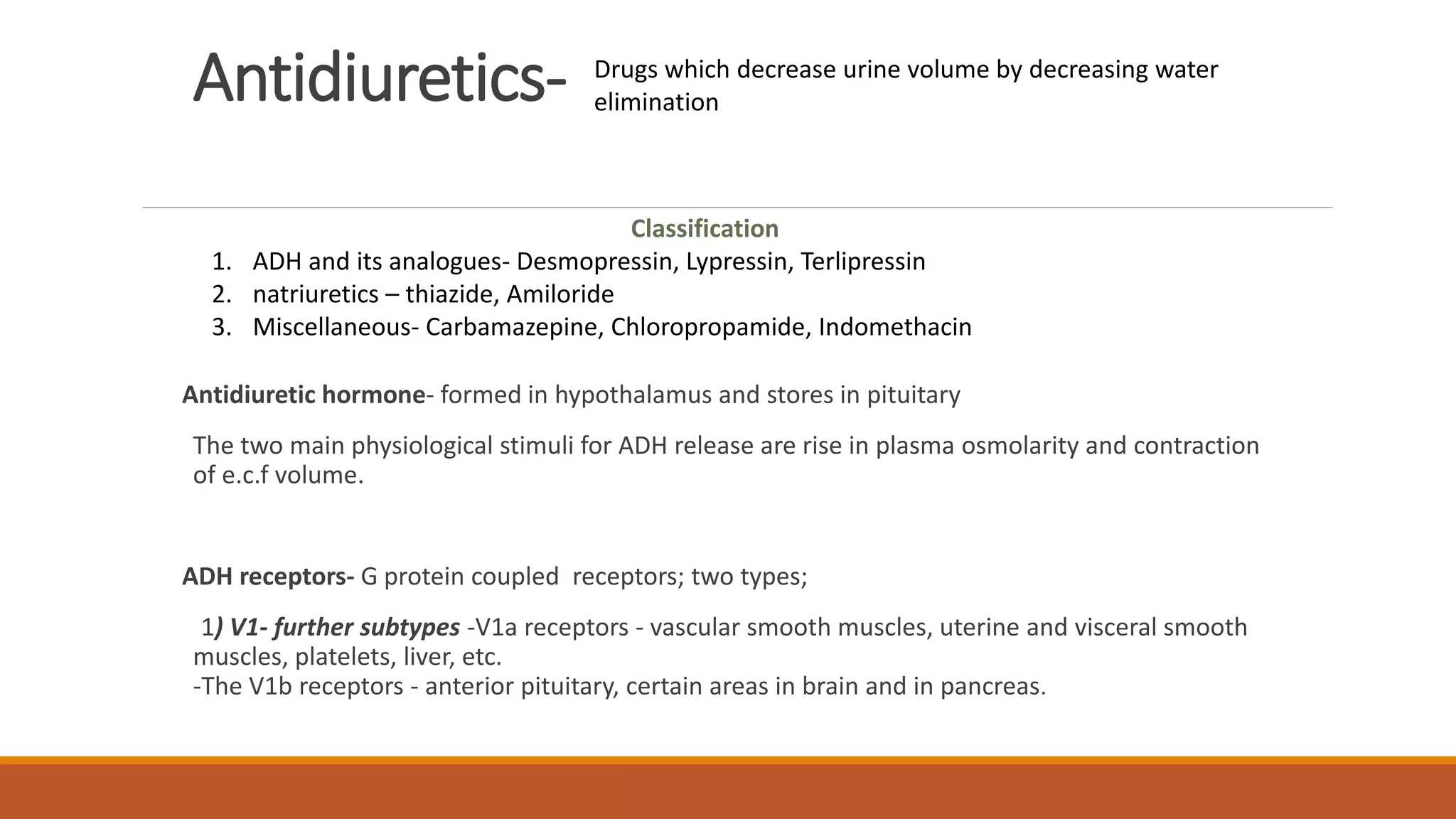
Antidiuretics-
Antidiuretic hormone- formed in hypothalamus and stores in pituitary
The two main physiological stimuli for ADH release are rise in plasma osmolarity and contraction
of e.c.f volume.
ADH receptors- G protein coupled receptors; two types;
1) V1- further subtypes -V1a receptors - vascular smooth muscles, uterine and visceral smooth
muscles, platelets, liver, etc.
-The V1b receptors - anterior pituitary, certain areas in brain and in pancreas.
Drugs which decrease urine volume by decreasing water
elimination
Classification
1. ADH and its analogues- Desmopressin, Lypressin, Terlipressin
2. natriuretics – thiazide, Amiloride
3. Miscellaneous- Carbamazepine, Chloropropamide, Indomethacin
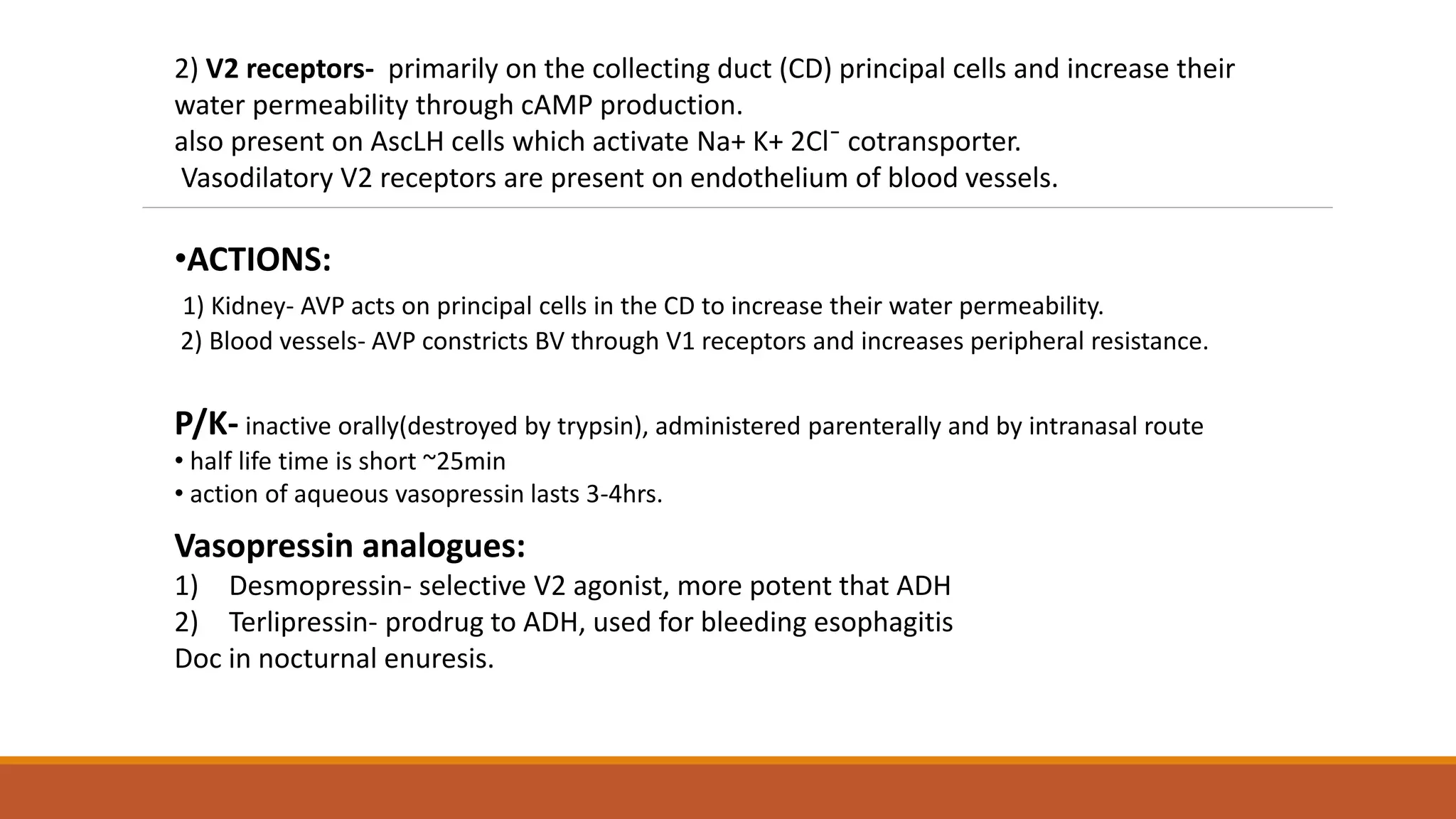
2) V2 receptors- primarily on the collecting duct (CD) principal cells and increase their
water permeability through cAMP production.
also present on AscLH cells which activate Na+ K+ 2Cl¯ cotransporter.
Vasodilatory V2 receptors are present on endothelium of blood vessels.
•ACTIONS:
1) Kidney- AVP acts on principal cells in the CD to increase their water permeability.
2) Blood vessels- AVP constricts BV through V1 receptors and increases peripheral resistance.
P/K- inactive orally(destroyed by trypsin), administered parenterally and by intranasal route
• half life time is short ~25min
• action of aqueous vasopressin lasts 3-4hrs.
Vasopressin analogues:
1) Desmopressin- selective V2 agonist, more potent that ADH
2) Terlipressin- prodrug to ADH, used for bleeding esophagitis
Doc in nocturnal enuresis.
Uses
1) based on V2 actions
- Diabetes insipidus
- bedwetting in children and nocturia in adults. (DOC- Desmopressin)
- bleeding disorders haemophilia , von willebrand disease etc.
2)Based on V1 actions
- Bleeding oesophageal varices.
-before abdominal radiography.
Adverse effects:
-transient headache and flushing are frequent.
-Nasal irritation, congestion, rhinitis, ulceration and epistaxis can occur on local application.
Systemic side effects are: belching, nausea, abdominal cramps, pallor, urge to defecate.
Natriuretics and Miscellaneous
1) Thiazides:
-Diuretic thiazides paradoxically exert an antidiuretic effect in DI.
Thiazides reduce urine volume in both pituitary origin as well as renal DI.
It decreases glomerular filtration of water.
2) Amiloride- drug of choice for lithium induced nephrogenic DI, because
it blocks Li+ entry along with Na+.
3) Chloropromide- reduce urine volume in DI of pituitary origin but not in renal DI. It
sensitizes the kidney to ADH action; thus its efficacy depends on small amounts of the
circulating hormone; it is not active when ADH is totally absent.
4) Carbamazepine- It is an antiepileptic, which reduces urine volume in DI of
pituitary origin.

antidiuretic drugs

  • 1.
    Antidiuretics- Antidiuretic hormone- formedin hypothalamus and stores in pituitary The two main physiological stimuli for ADH release are rise in plasma osmolarity and contraction of e.c.f volume. ADH receptors- G protein coupled receptors; two types; 1) V1- further subtypes -V1a receptors - vascular smooth muscles, uterine and visceral smooth muscles, platelets, liver, etc. -The V1b receptors - anterior pituitary, certain areas in brain and in pancreas. Drugs which decrease urine volume by decreasing water elimination Classification 1. ADH and its analogues- Desmopressin, Lypressin, Terlipressin 2. natriuretics – thiazide, Amiloride 3. Miscellaneous- Carbamazepine, Chloropropamide, Indomethacin
  • 2.
    2) V2 receptors-primarily on the collecting duct (CD) principal cells and increase their water permeability through cAMP production. also present on AscLH cells which activate Na+ K+ 2Cl¯ cotransporter. Vasodilatory V2 receptors are present on endothelium of blood vessels. •ACTIONS: 1) Kidney- AVP acts on principal cells in the CD to increase their water permeability. 2) Blood vessels- AVP constricts BV through V1 receptors and increases peripheral resistance. P/K- inactive orally(destroyed by trypsin), administered parenterally and by intranasal route • half life time is short ~25min • action of aqueous vasopressin lasts 3-4hrs. Vasopressin analogues: 1) Desmopressin- selective V2 agonist, more potent that ADH 2) Terlipressin- prodrug to ADH, used for bleeding esophagitis Doc in nocturnal enuresis.
  • 3.
    Uses 1) based onV2 actions - Diabetes insipidus - bedwetting in children and nocturia in adults. (DOC- Desmopressin) - bleeding disorders haemophilia , von willebrand disease etc. 2)Based on V1 actions - Bleeding oesophageal varices. -before abdominal radiography. Adverse effects: -transient headache and flushing are frequent. -Nasal irritation, congestion, rhinitis, ulceration and epistaxis can occur on local application. Systemic side effects are: belching, nausea, abdominal cramps, pallor, urge to defecate.
  • 4.
    Natriuretics and Miscellaneous 1)Thiazides: -Diuretic thiazides paradoxically exert an antidiuretic effect in DI. Thiazides reduce urine volume in both pituitary origin as well as renal DI. It decreases glomerular filtration of water. 2) Amiloride- drug of choice for lithium induced nephrogenic DI, because it blocks Li+ entry along with Na+. 3) Chloropromide- reduce urine volume in DI of pituitary origin but not in renal DI. It sensitizes the kidney to ADH action; thus its efficacy depends on small amounts of the circulating hormone; it is not active when ADH is totally absent. 4) Carbamazepine- It is an antiepileptic, which reduces urine volume in DI of pituitary origin.