The Beta-Lactam Antibiotics


 Cell   wall active agents
   Prevent  the final step in the synthesis of the
    bacterial cell wall

 Range from very narrow spectrum to very
 broad spectrum
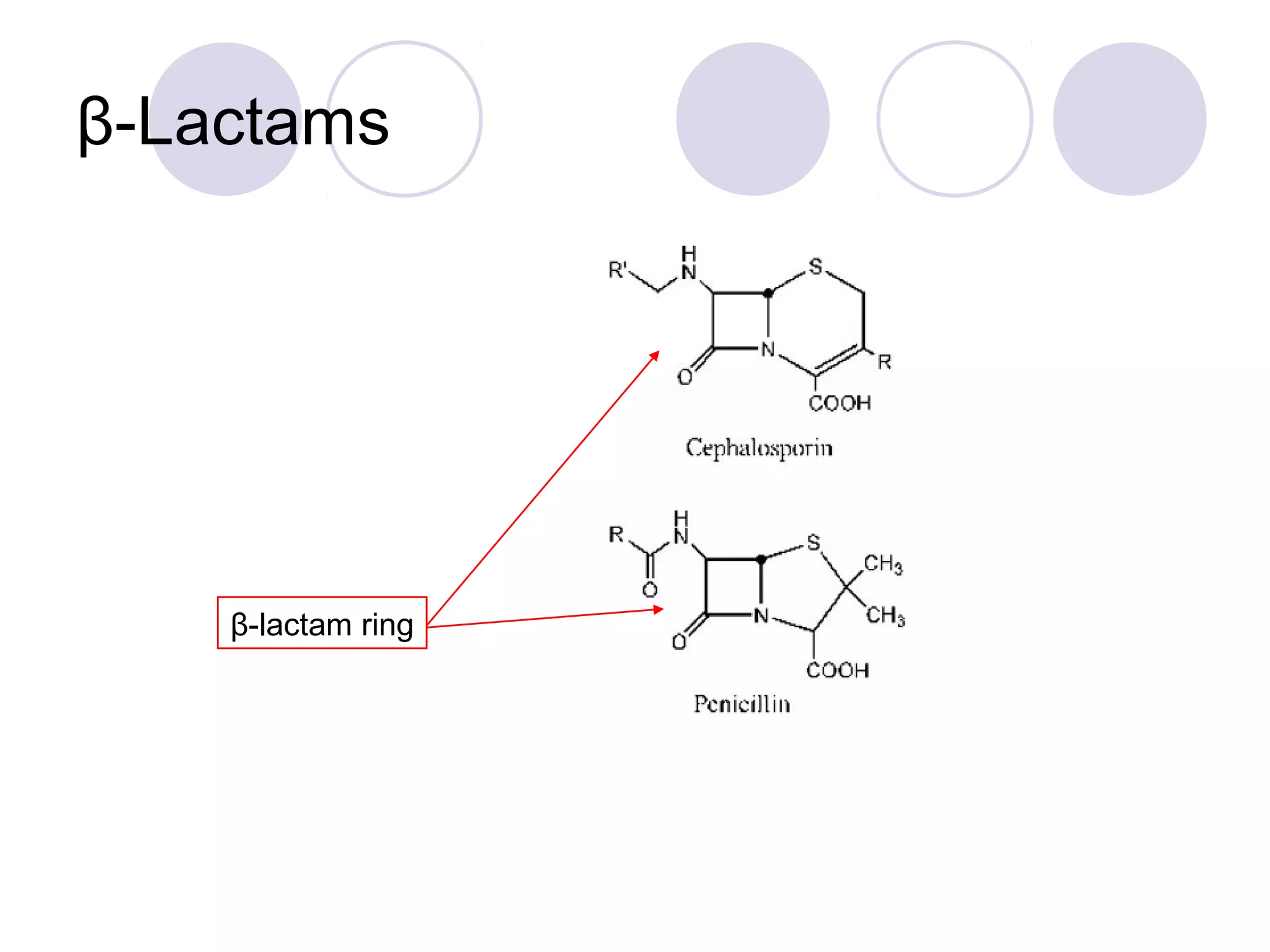
β-Lactams


    β-lactam ring
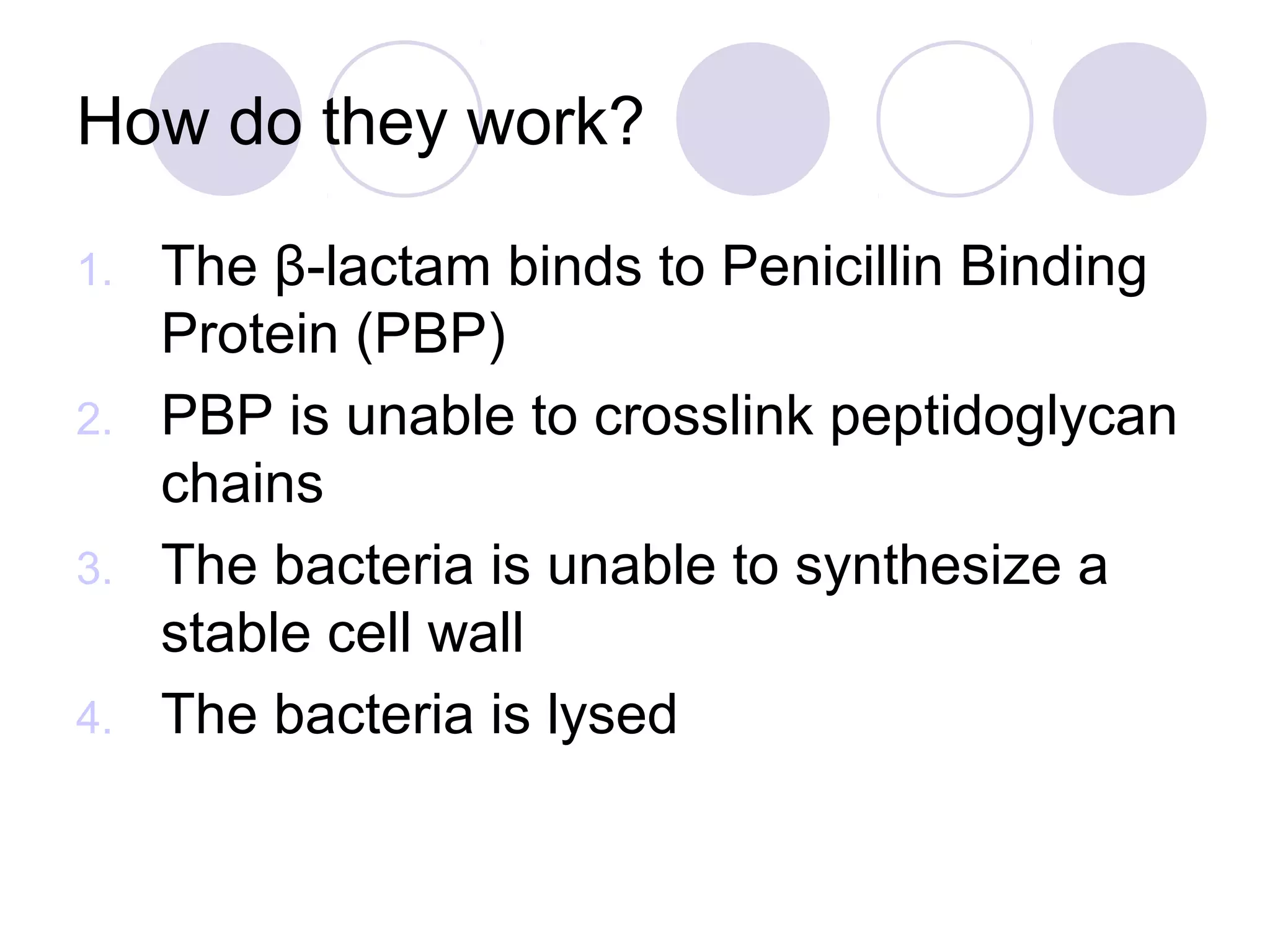
How do they work?

1. The β-lactam binds to Penicillin Binding
   Protein (PBP)
2. PBP is unable to crosslink peptidoglycan
   chains
3. The bacteria is unable to synthesize a
   stable cell wall
4. The bacteria is lysed
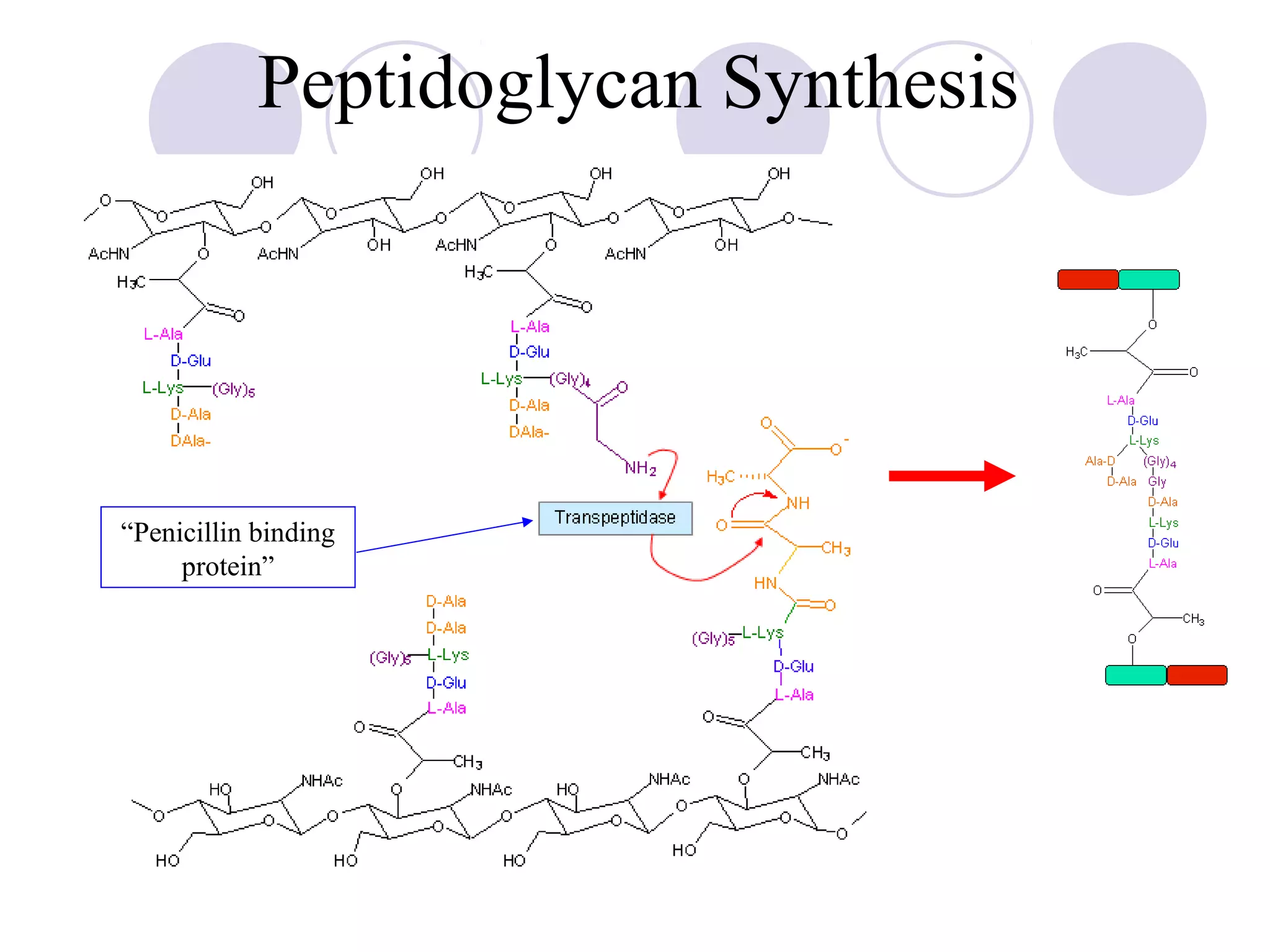
Peptidoglycan Synthesis


“Penicillin binding
     protein”
PK/PD
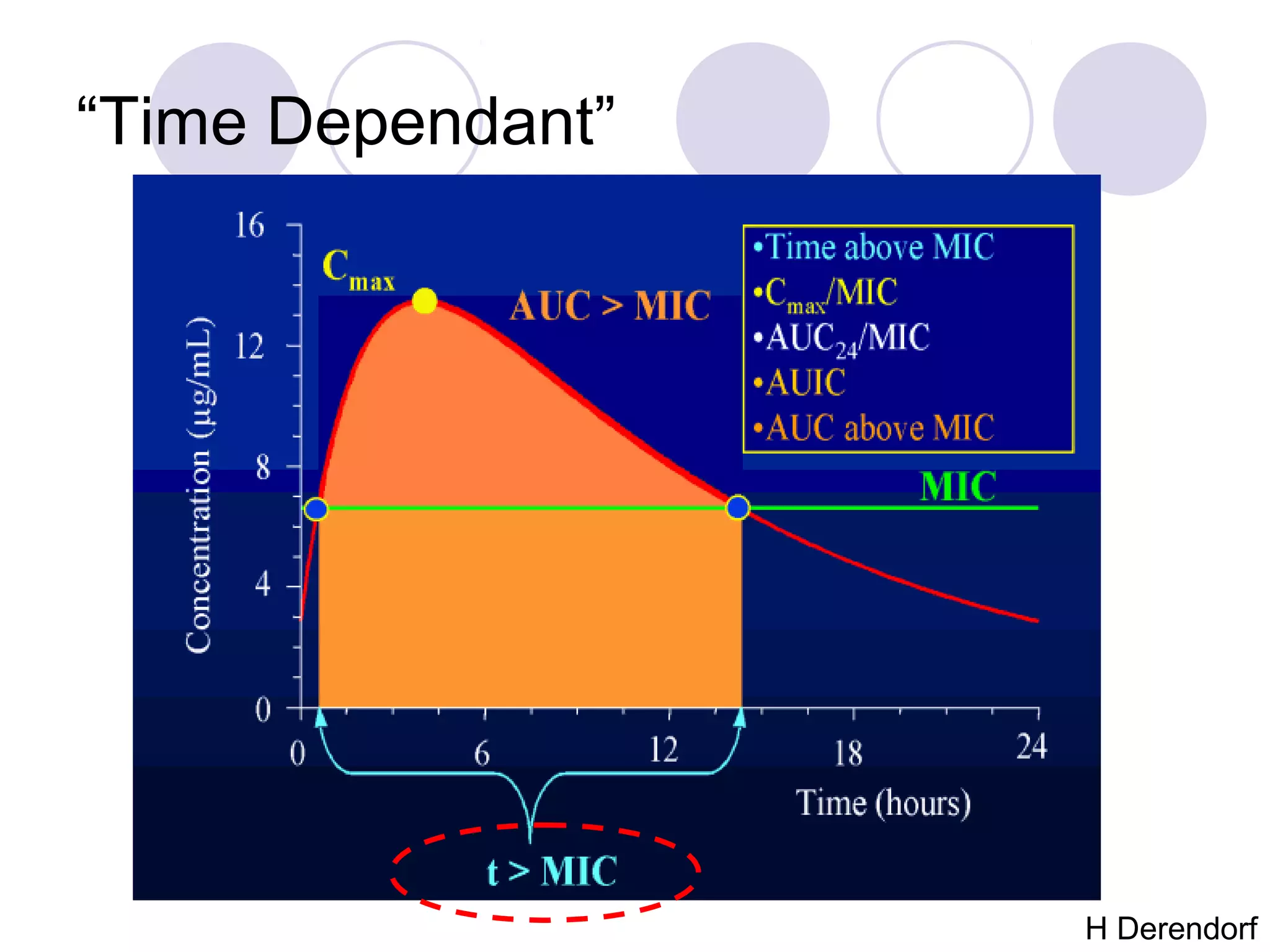
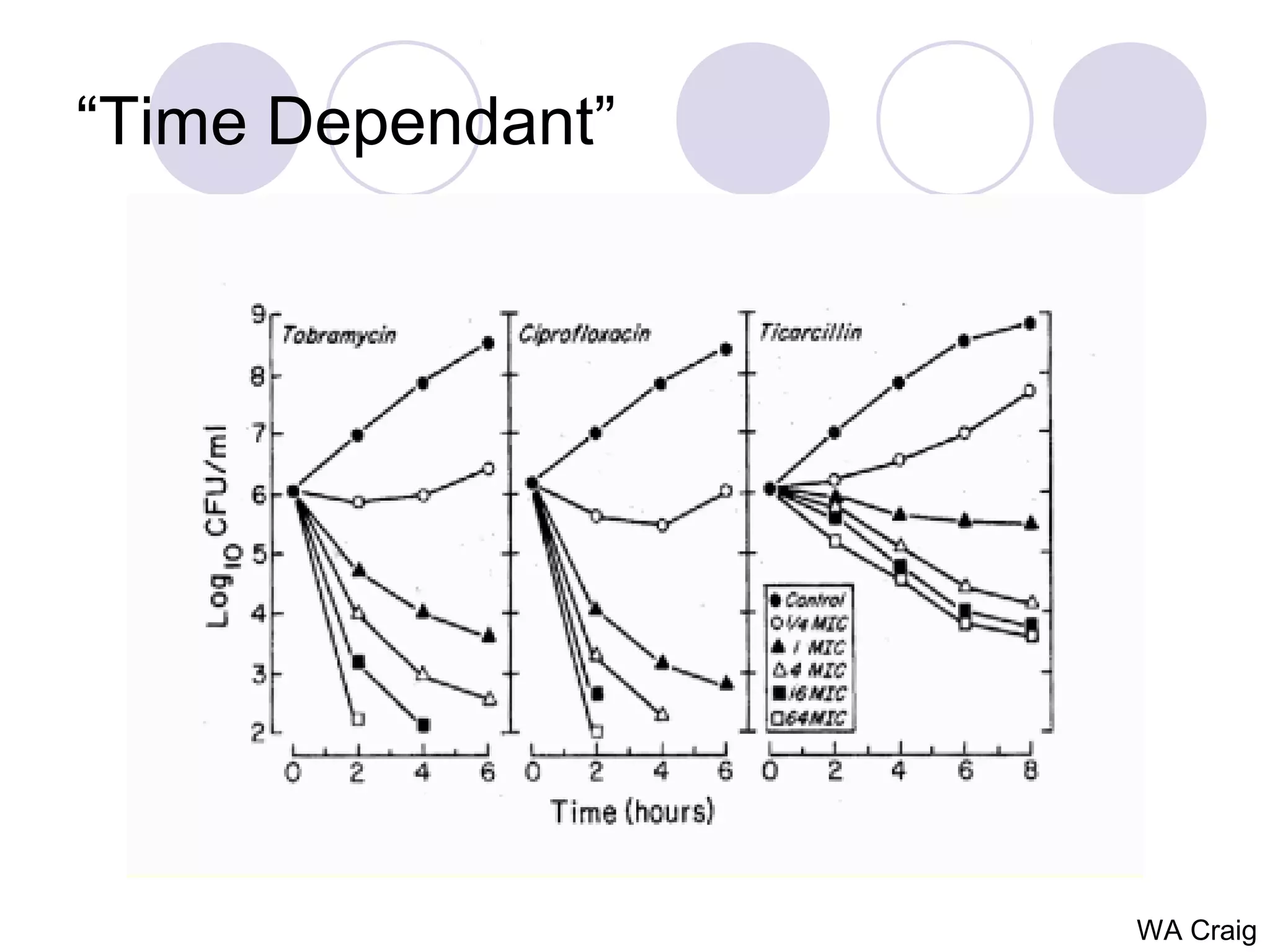
 The   β-lactams are “time-dependent” killers
   The  effect is directly proportional to the amount
    of TIME the concentration of the antibiotic at the
    site of infection is ABOVE the MIC of the
    organism.


 The   β-lactams are BACTERIOCIDAL…
 (at therapeutically attainable levels)
“Time Dependant”


                   H Derendorf
“Time Dependant”


                   WA Craig
So many choices…
which one to pick?


 What is the likely organism?
 What’s its major mode of resistance?
 Where’s the infection?
 What’s my local environment?
       the UNC Hospital antibiogram
   What does the micro lab say?
       in vitro sensitivity testing
Classification
 Penicillins
   Natural   penicillins
      PenG,   PenVK, Benzathine Pen, Procaine Pen
   Aminopenicillins
      Ampicillin,   Amoxicillin
   Anti-Staph      penicillins
      Oxacillin,   Dicloxacillin
   Anti-Pseudomonal
      [Carboxy] Ticarcillin
      [Ureido] Piperacillin
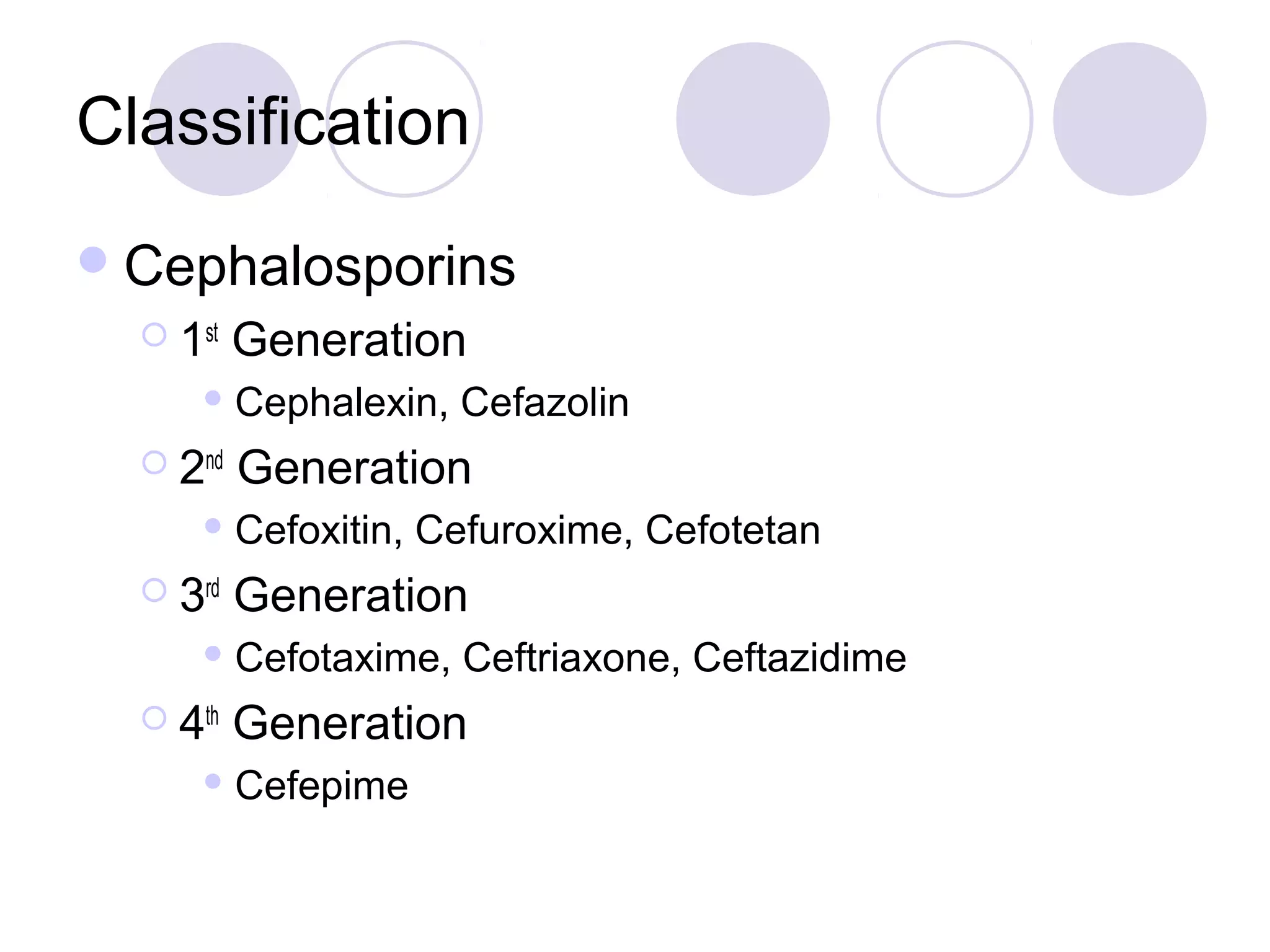
Classification
 Cephalosporins
   1st   Generation
       Cephalexin,    Cefazolin
   2nd   Generation
       Cefoxitin,   Cefuroxime, Cefotetan
   3rd   Generation
       Cefotaxime,    Ceftriaxone, Ceftazidime
   4th   Generation
       Cefepime
Penicillin G
 AvailablePO, IM, IV (dosed in units)
 Drug of Choice (DoC) [2-4 MU IV q4h]
     T. pallidum, N. meningitidis, Group A Strep, and
      Actinomycosis
 Long-acting     forms
     Procaine PenG (12 hrs)
     Benzathine Pen (5 days) [2.4 MU IM for syphilis]
 Adverse    Reactions – other than skin rash
     Penicillin “serum sickness”/drug fever
     Jarisch-Herxheimer reaction (1° and 2° syphilis)
     Hemolytic anemia, pancytopenia, neutropenia
Ampicillin/Amoxicillin
   Amp (IV, PO)     Amox (PO)
   Spectrum: PenG + H. flu and some E. coli
   DoC: Listeria monocytogenes and
         Enterococcus [Amp 2g IV q4h]
   Dental Prophylaxis
       Amox 1 gram PO x 1 prior to appt.
   Integral in H. pylori regimens
   ADRs
       Non-allergic rashes (9%) – esp. when associated with a viral
        illness (mononucleosis - EBV)
       Amox better tolerated PO and better absorbed (Amp must be
        taken on empty stomach)
Oxacillin
 IV
 DoC     – MSSA, MSSE [2g IV q4h]
      Actually less active against Pen susceptible isolates
       than Pen
      More active than Vanc vs. MSSA
 Significant    hepatic metabolism
      No need to dose adjust for renal impairment
 ADRs
      Hepatotoxicity (cholestatic hepatitis)
      Neutropenia
      Kernicterus in neonates
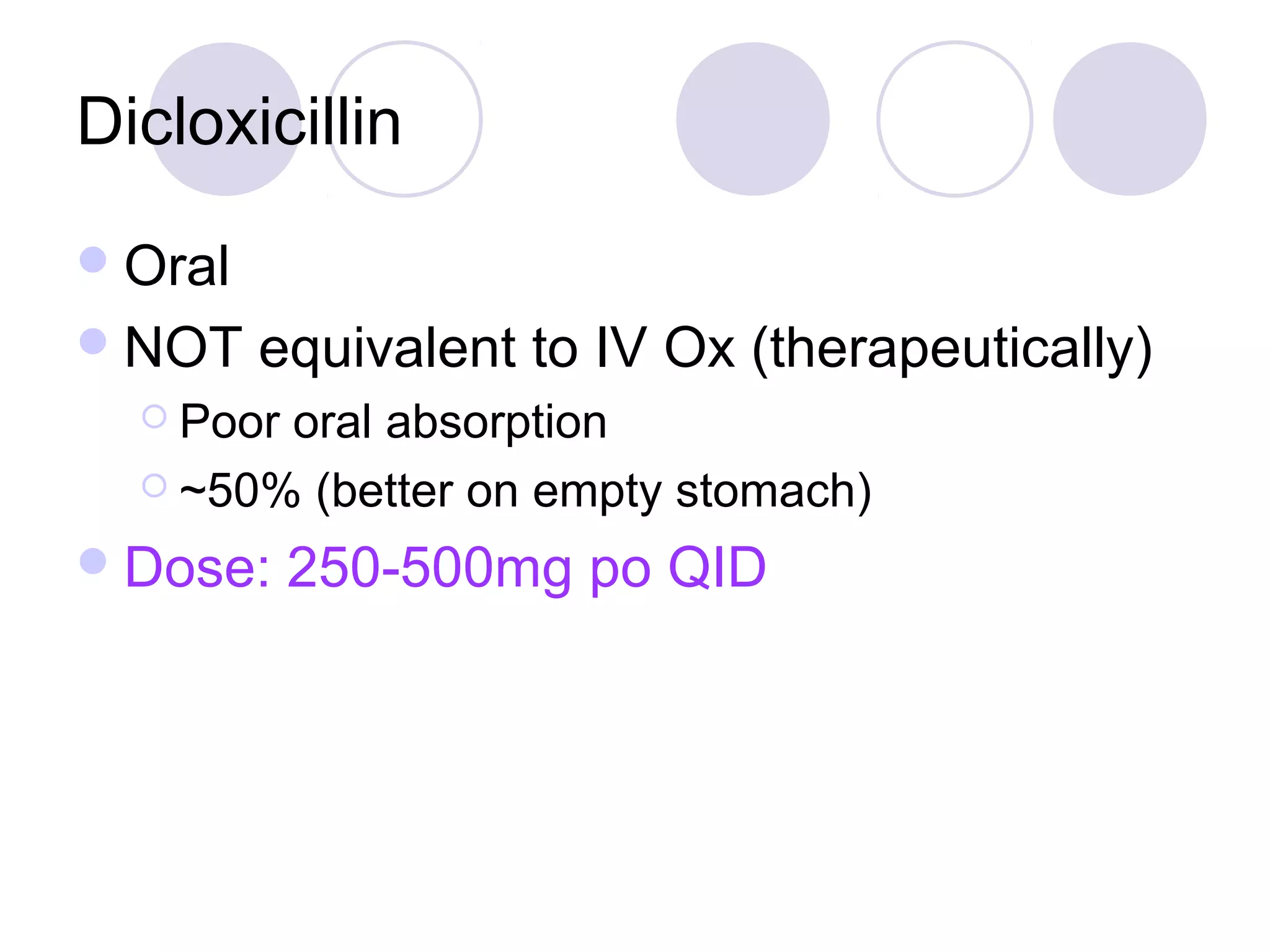
Dicloxicillin
 Oral
 NOT    equivalent to IV Ox (therapeutically)
   Poororal absorption
   ~50% (better on empty stomach)

 Dose:    250-500mg po QID
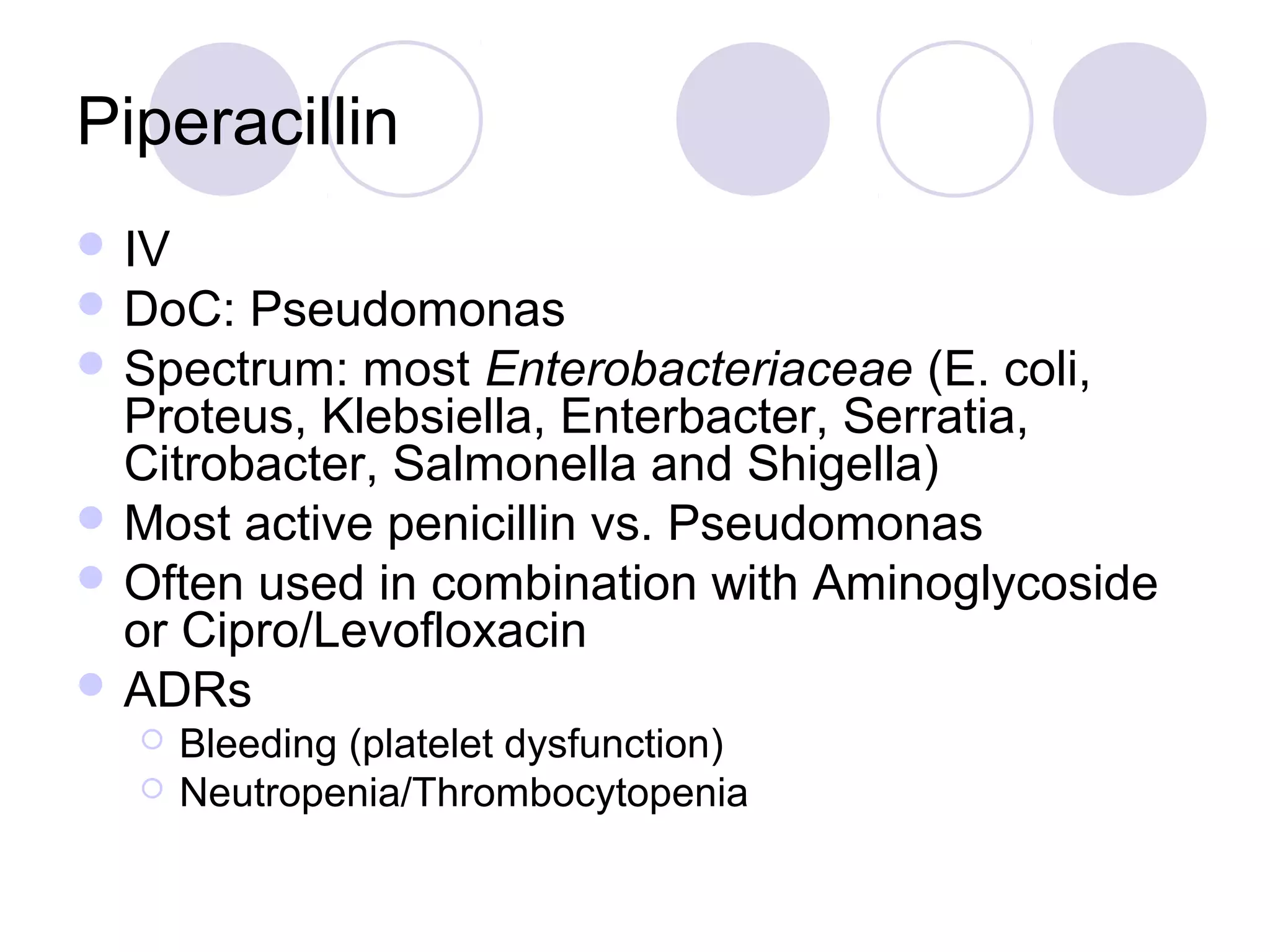
Piperacillin
 IV
 DoC:  Pseudomonas
 Spectrum: most Enterobacteriaceae (E. coli,
  Proteus, Klebsiella, Enterbacter, Serratia,
  Citrobacter, Salmonella and Shigella)
 Most active penicillin vs. Pseudomonas
 Often used in combination with Aminoglycoside
  or Cipro/Levofloxacin
 ADRs
      Bleeding (platelet dysfunction)
      Neutropenia/Thrombocytopenia
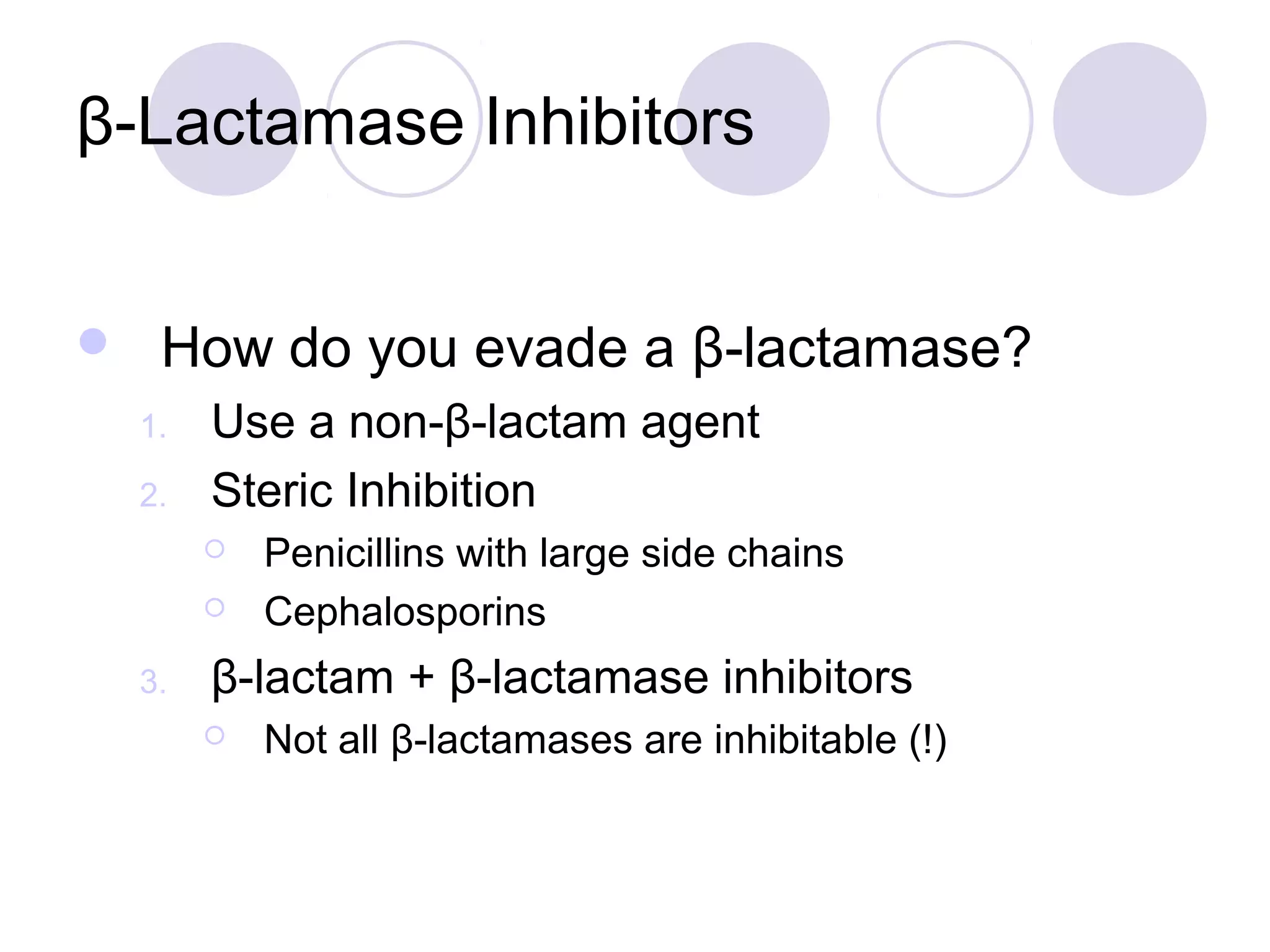
β-Lactamase Inhibitors


    How do you evade a β-lactamase?
    1.   Use a non-β-lactam agent
    2.   Steric Inhibition
            Penicillins with large side chains
            Cephalosporins
    3.   β-lactam + β-lactamase inhibitors
            Not all β-lactamases are inhibitable (!)
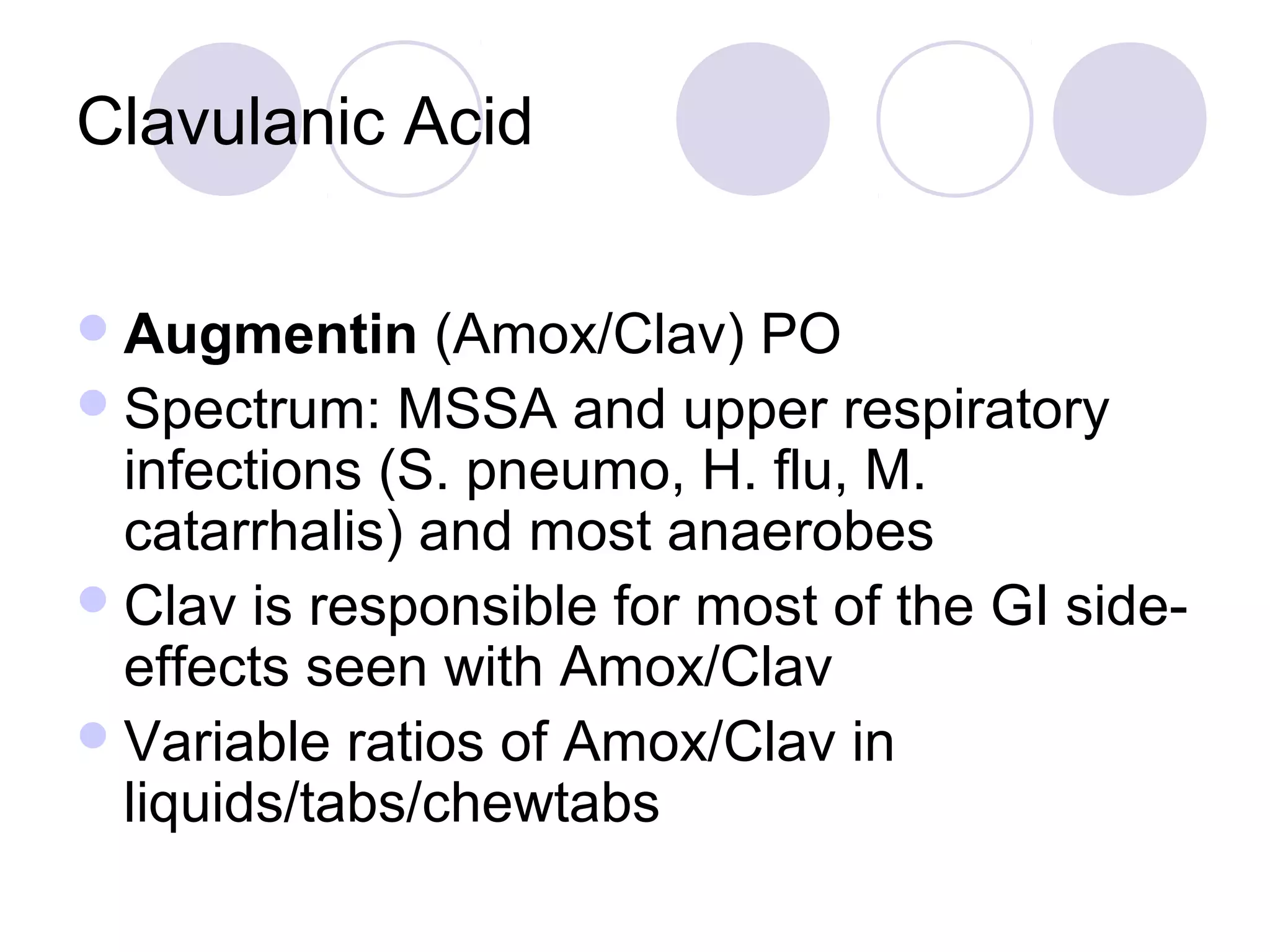
Clavulanic Acid

 Augmentin    (Amox/Clav) PO
 Spectrum: MSSA and upper respiratory
  infections (S. pneumo, H. flu, M.
  catarrhalis) and most anaerobes
 Clav is responsible for most of the GI side-
  effects seen with Amox/Clav
 Variable ratios of Amox/Clav in
  liquids/tabs/chewtabs
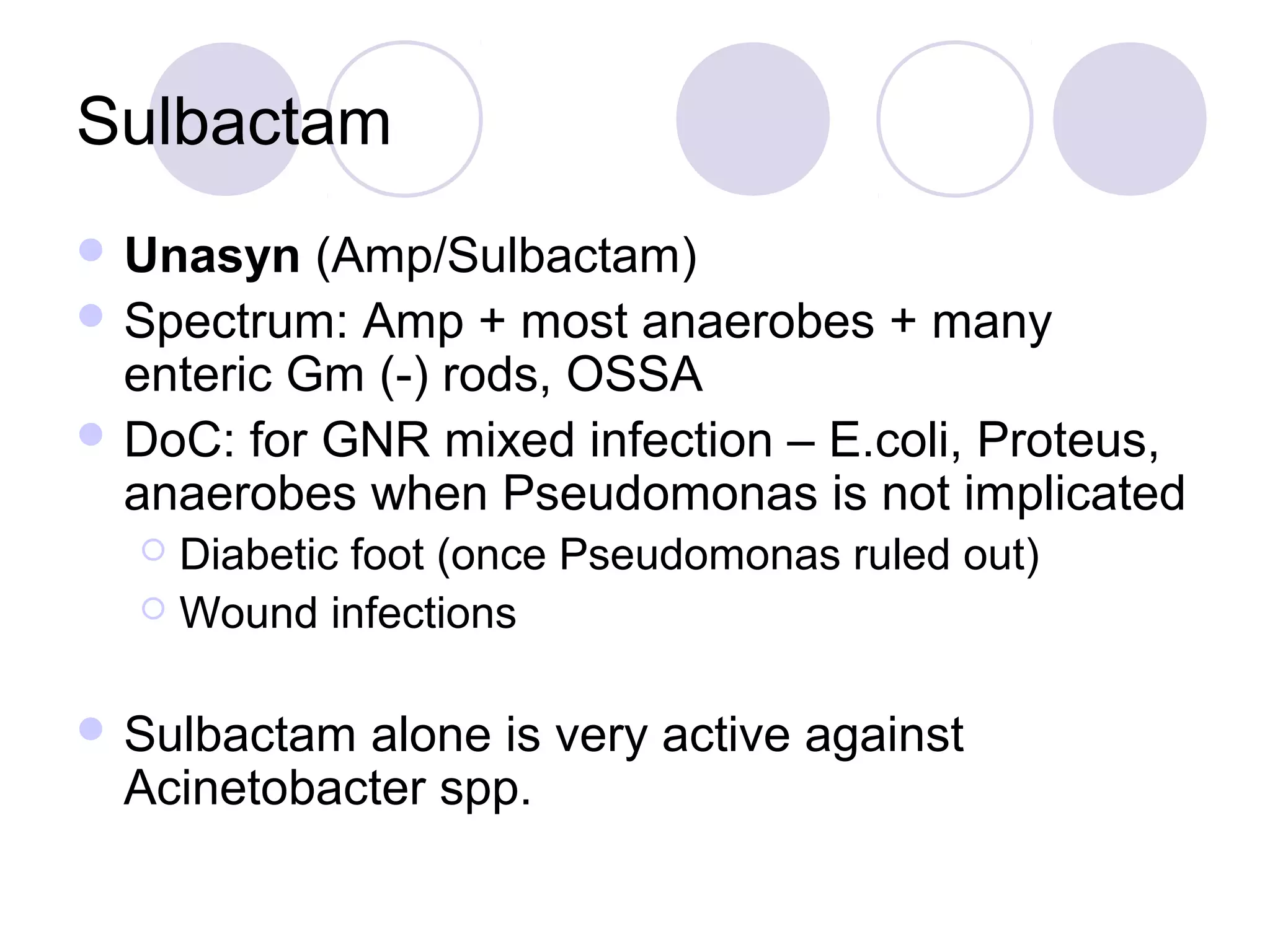
Sulbactam
 Unasyn   (Amp/Sulbactam)
 Spectrum: Amp + most anaerobes + many
  enteric Gm (-) rods, OSSA
 DoC: for GNR mixed infection – E.coli, Proteus,
  anaerobes when Pseudomonas is not implicated
   Diabetic foot (once Pseudomonas ruled out)
   Wound infections


 Sulbactam alone is very active against
  Acinetobacter spp.
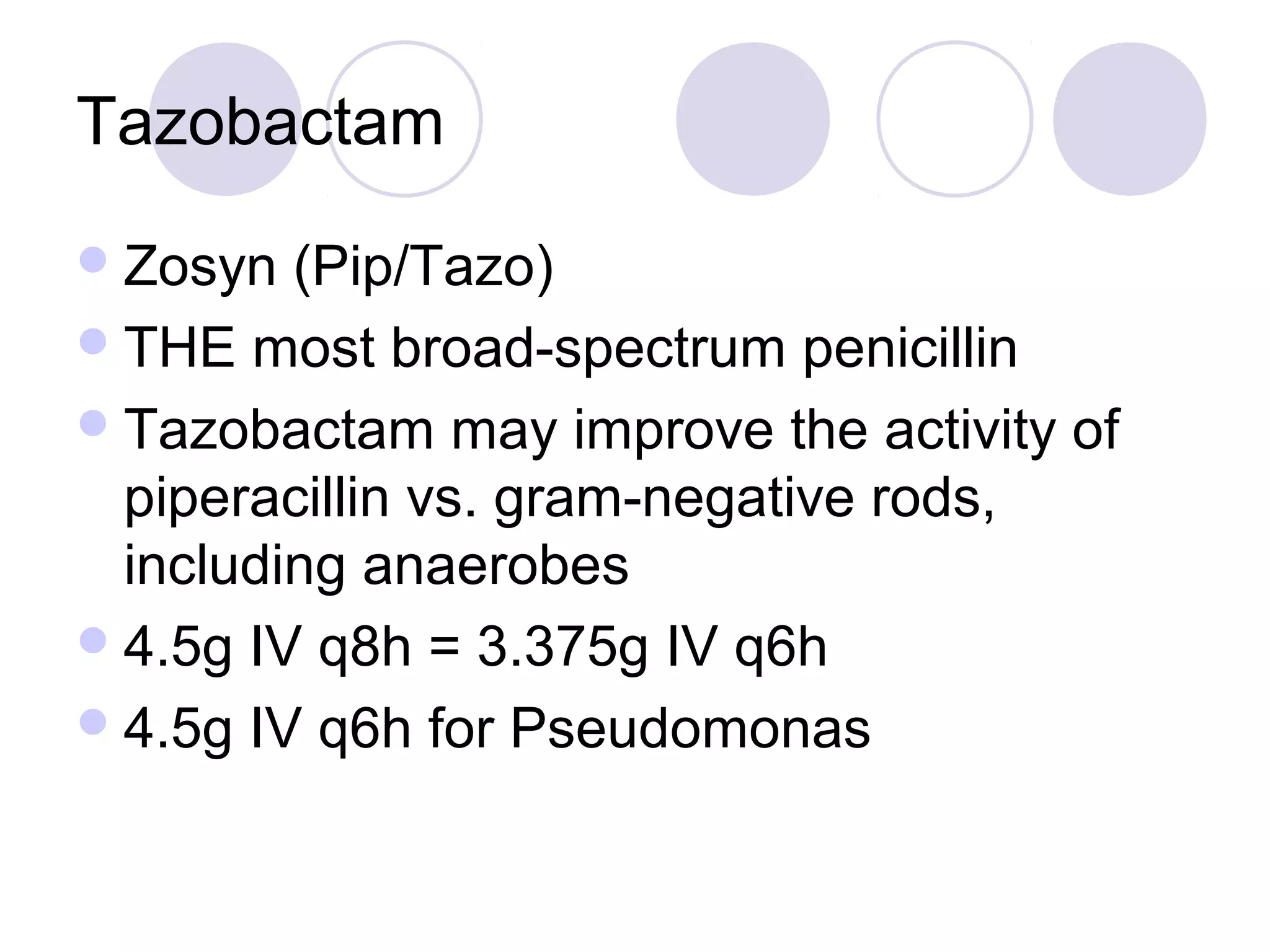
Tazobactam
 Zosyn  (Pip/Tazo)
 THE most broad-spectrum penicillin
 Tazobactam may improve the activity of
  piperacillin vs. gram-negative rods,
  including anaerobes
 4.5g IV q8h = 3.375g IV q6h
 4.5g IV q6h for Pseudomonas
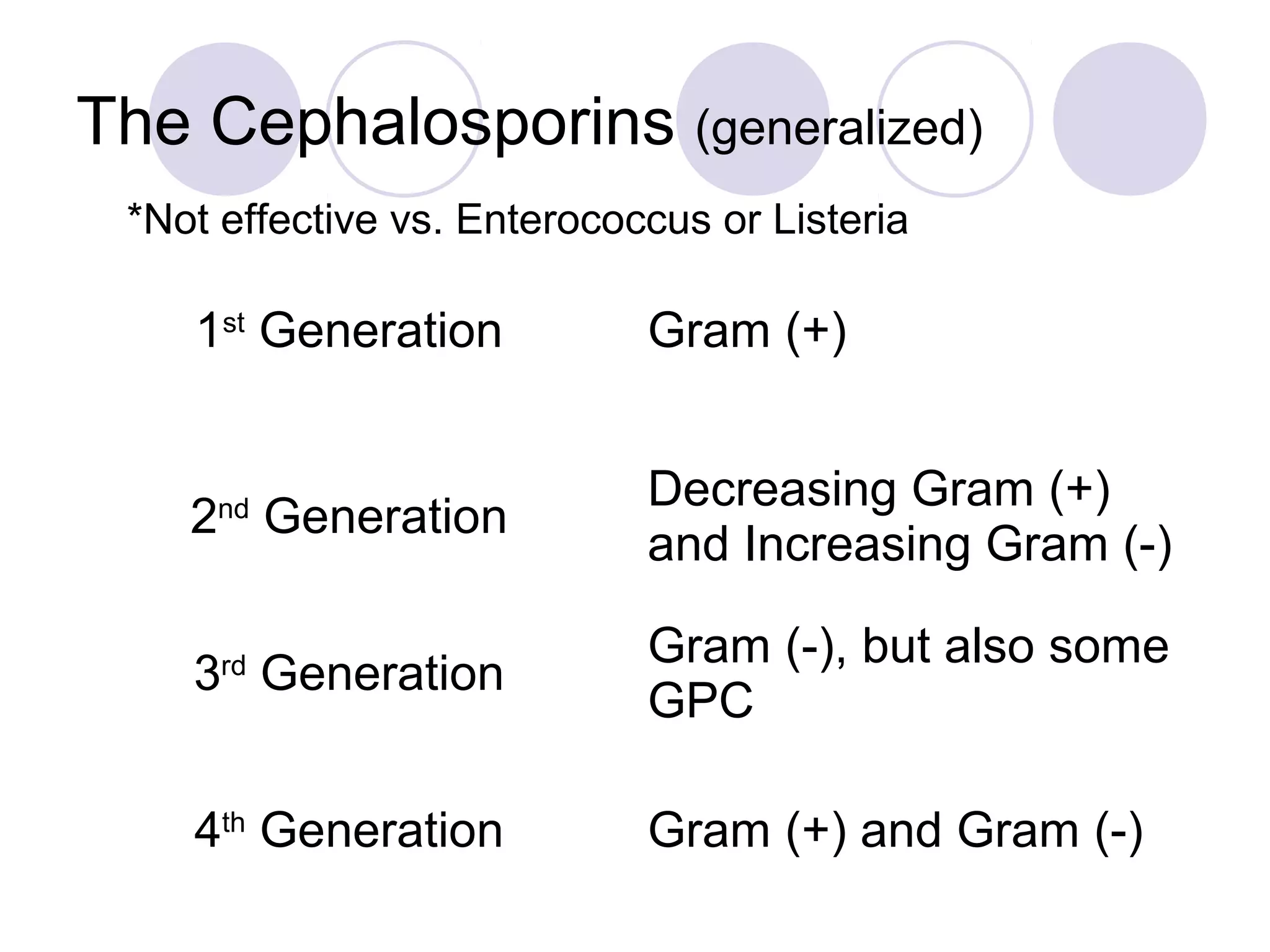
The Cephalosporins (generalized)
 *Not effective vs. Enterococcus or Listeria

    1st Generation           Gram (+)


                             Decreasing Gram (+)
    2 Generation
      nd
                             and Increasing Gram (-)

                             Gram (-), but also some
    3 Generation
      rd
                             GPC

    4th Generation           Gram (+) and Gram (-)
Cephalexin/Cefazolin
 PO/IV
 Stablevs Staph penicillinase
 Spectrum: MSSA, PSSP, most E. coli, and some
  Klebs
 Can be dose thrice weekly in HD pts
      [1.5 grams IV TIW]
 DoC:surgical prophylaxis, bacterial peritonitis in
  CAPD pts [1 gm in the dwell bag]
 ADRs
      Positive Coombs’ test (though, hemolytic anemia is
       rare)
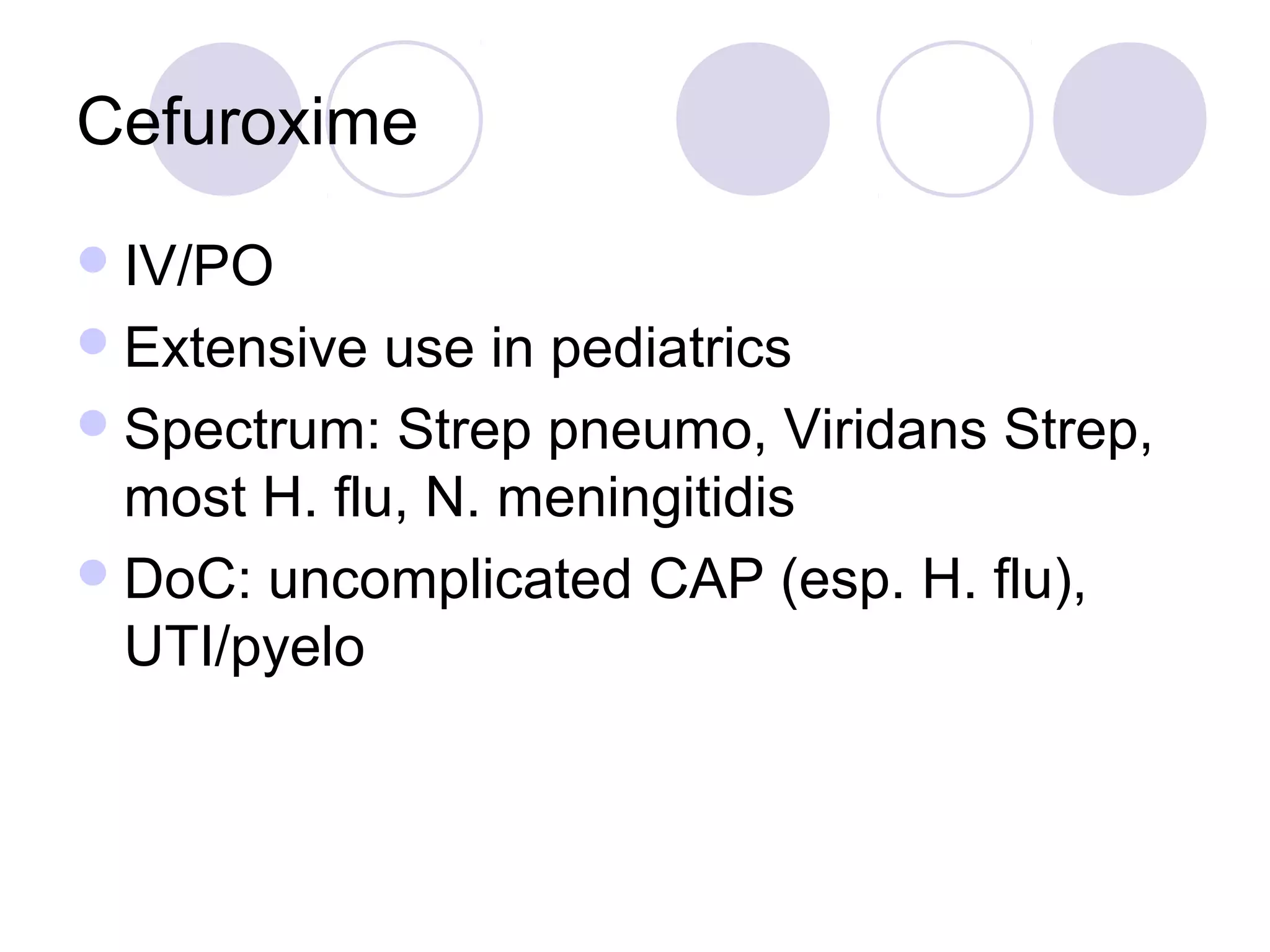
Cefuroxime
 IV/PO
 Extensive  use in pediatrics
 Spectrum: Strep pneumo, Viridans Strep,
  most H. flu, N. meningitidis
 DoC: uncomplicated CAP (esp. H. flu),
  UTI/pyelo
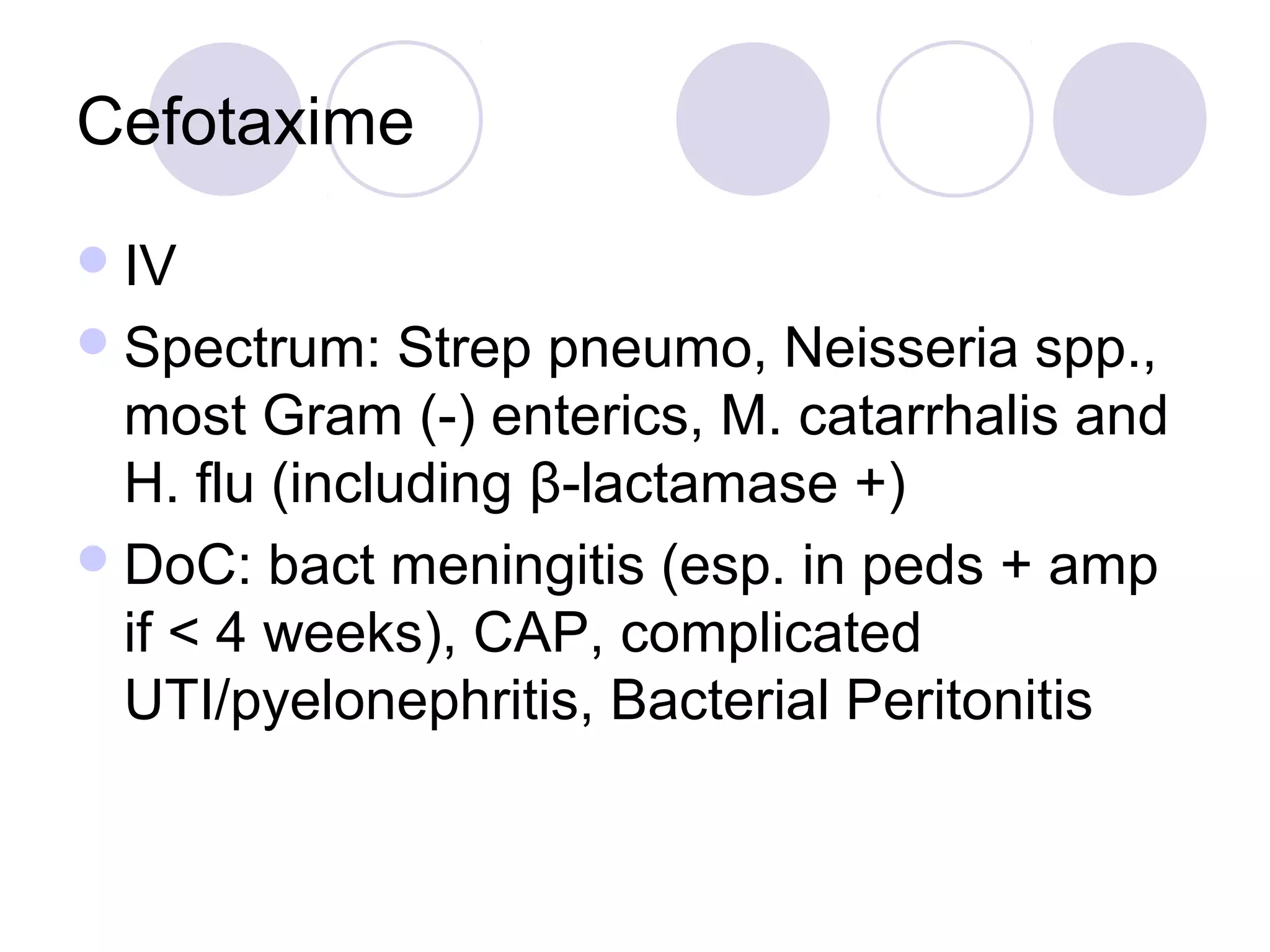
Cefotaxime
 IV
 Spectrum:    Strep pneumo, Neisseria spp.,
  most Gram (-) enterics, M. catarrhalis and
  H. flu (including β-lactamase +)
 DoC: bact meningitis (esp. in peds + amp
  if < 4 weeks), CAP, complicated
  UTI/pyelonephritis, Bacterial Peritonitis
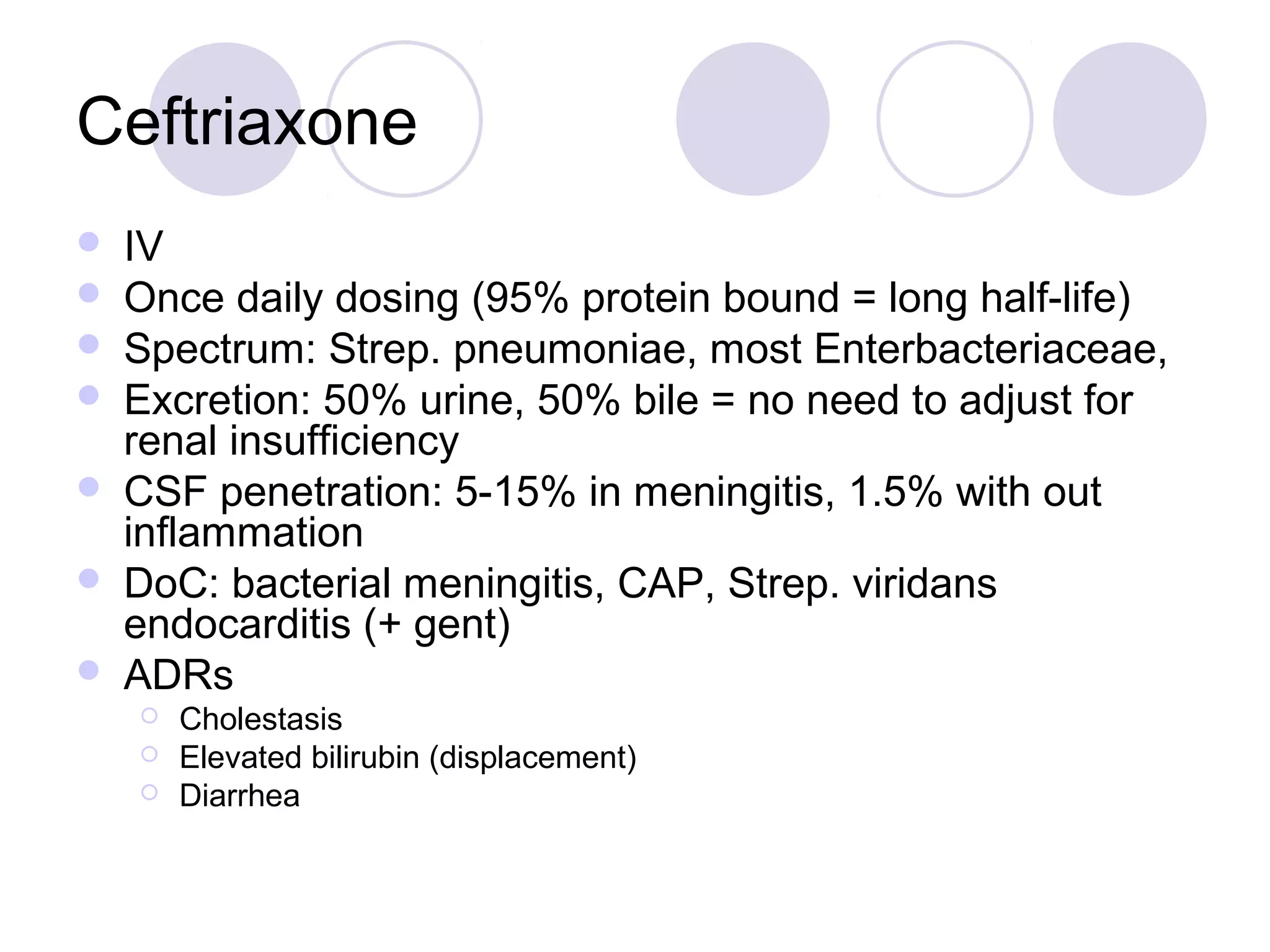
Ceftriaxone
   IV
   Once daily dosing (95% protein bound = long half-life)
   Spectrum: Strep. pneumoniae, most Enterbacteriaceae,
   Excretion: 50% urine, 50% bile = no need to adjust for
    renal insufficiency
   CSF penetration: 5-15% in meningitis, 1.5% with out
    inflammation
   DoC: bacterial meningitis, CAP, Strep. viridans
    endocarditis (+ gent)
   ADRs
       Cholestasis
       Elevated bilirubin (displacement)
       Diarrhea
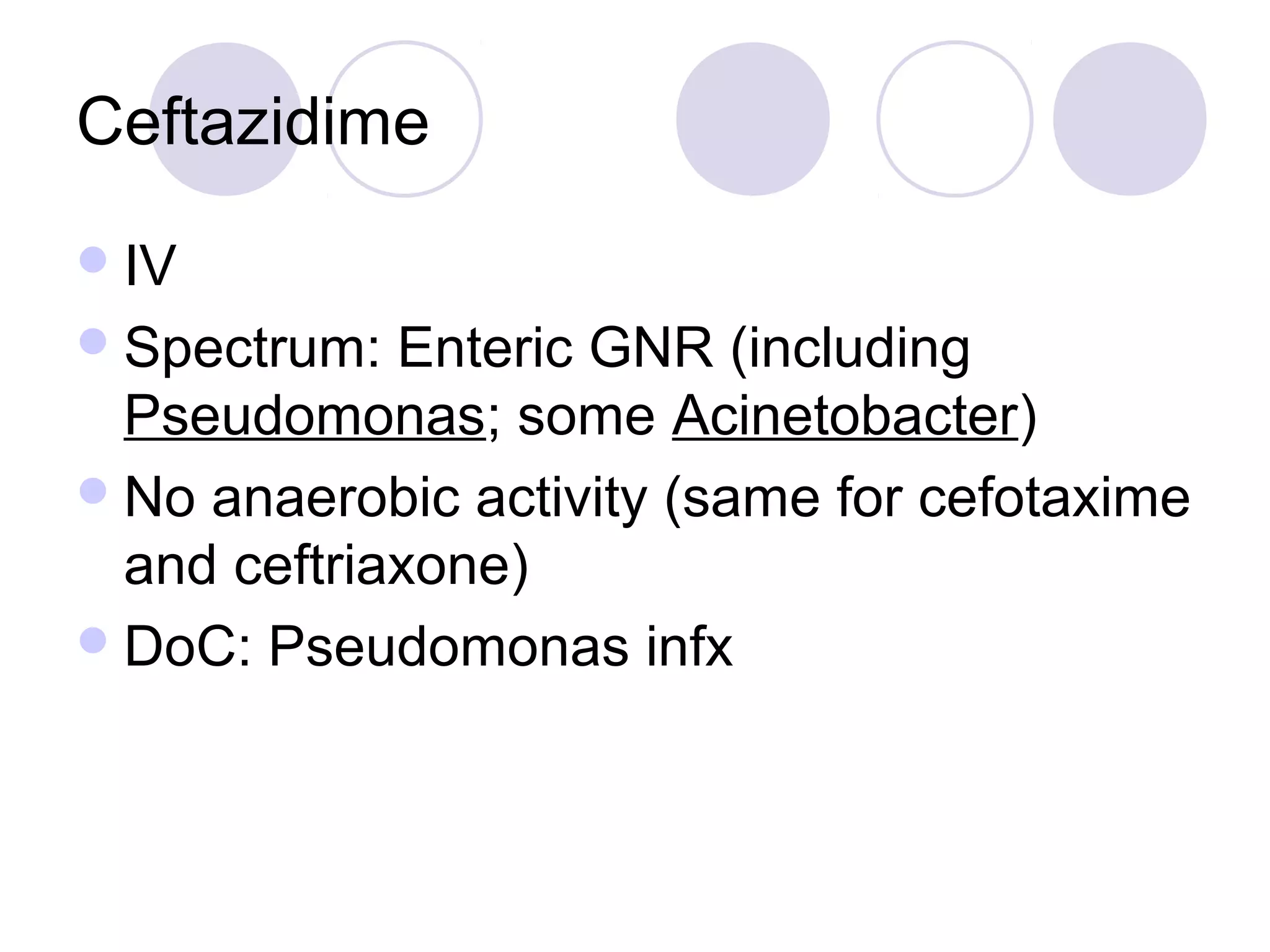
Ceftazidime
 IV
 Spectrum:  Enteric GNR (including
  Pseudomonas; some Acinetobacter)
 No anaerobic activity (same for cefotaxime
  and ceftriaxone)
 DoC: Pseudomonas infx
Third Generation Cephs: Issues


 β-lactamase   induction?
   ESBLs

   De-repression   of chromosomal β-lactamases

 Selective   pressure for VRE?
Cefepime
 IV
 NON-Spectrum:    MRSA, C. diff,
  Burkholderia, Stenotrophomonas, gram-
  negative anaerobes
 Stable vs. de-repressed chromosomal β-
  lactamases, but not ESBL
 Less β-lactamase induction than 3 rd Cephs
 DoC: HAP, febrile neutropenia
Carbapenems
 Imipenem, Meropenem, Ertapenem
 Broad-spectrum coverage:
   Gram  positive: PSSP, MSSA, VSE
   Gram negative: most gram-negative organisms
    (Acinetobacter sp., Pseudomonas sp.)
 Lack   of coverage:
   Ertapenem:   Pseudomonas sp., Acinetobacter
    sp.
   All: Stenotrophomonas, Legionella sp., MRSA,
    VRE
Carbapenems
 Distribution:similar to penicillins
 Excretion: renal clearance
 Adverse reactions:
   Hypersensitivity:
                    rash, urticaria, cross-reactivity
   Imipenem: seizures (rare)
      High doses
      Renal dysfunction

      Most likely can occur with all carbapenems at high

       doses
Carbapenems
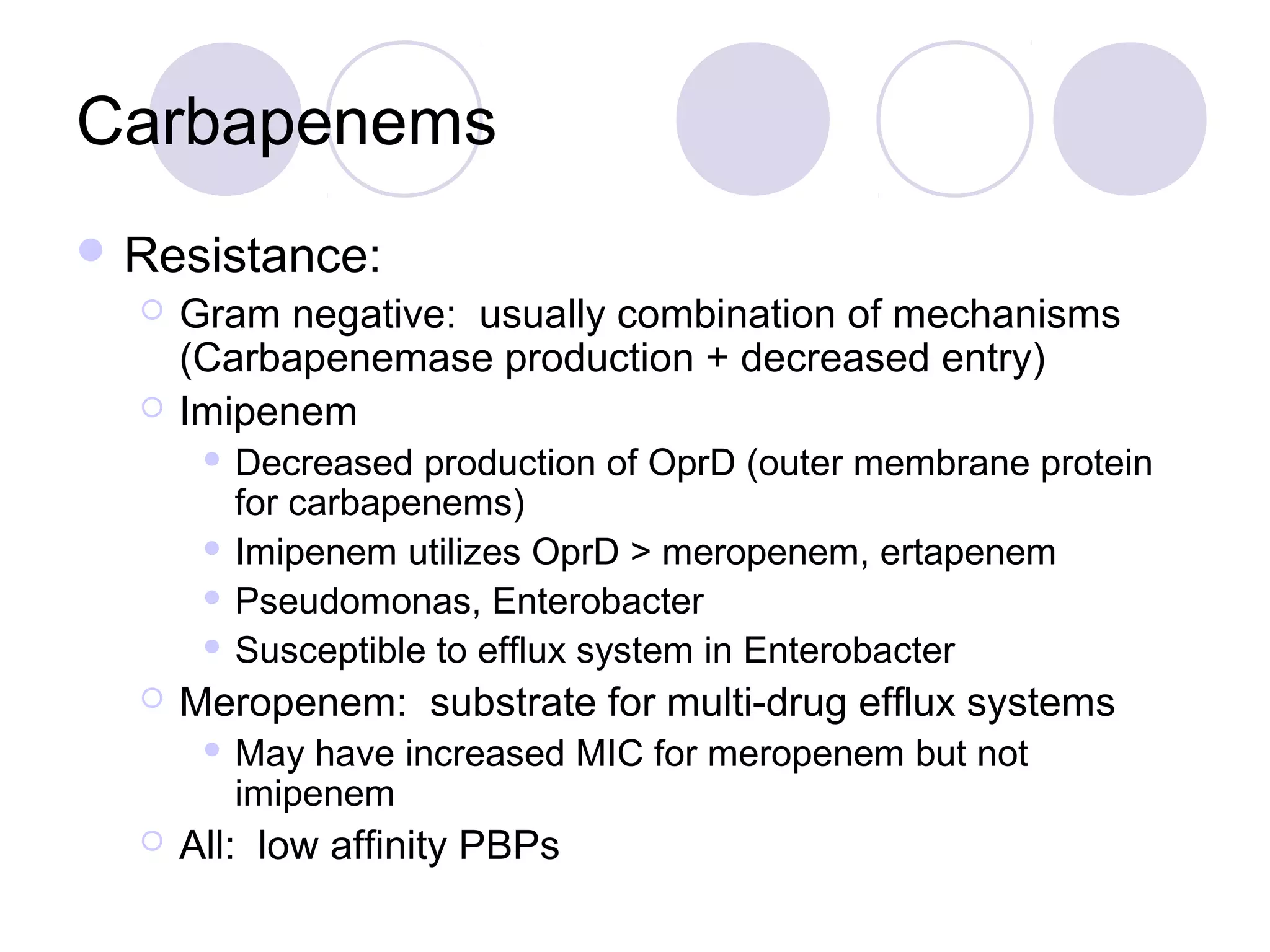
 Resistance:
     Gram negative: usually combination of mechanisms
      (Carbapenemase production + decreased entry)
     Imipenem
        Decreased production of OprD (outer membrane protein
         for carbapenems)
        Imipenem utilizes OprD > meropenem, ertapenem

        Pseudomonas, Enterobacter

        Susceptible to efflux system in Enterobacter

     Meropenem: substrate for multi-drug efflux systems
          May have increased MIC for meropenem but not
           imipenem
     All: low affinity PBPs
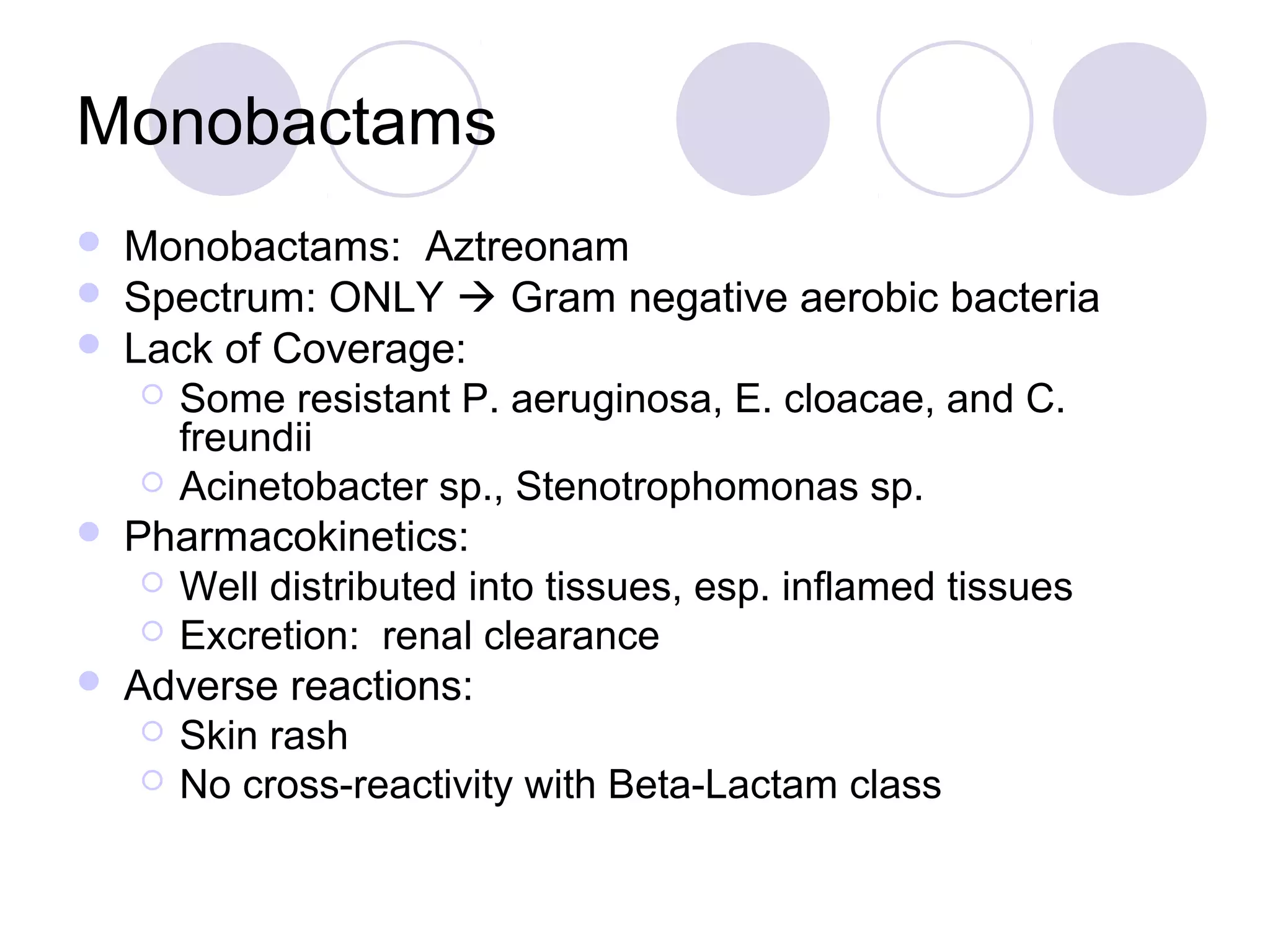
Monobactams
   Monobactams: Aztreonam
   Spectrum: ONLY  Gram negative aerobic bacteria
   Lack of Coverage:
      Some resistant P. aeruginosa, E. cloacae, and C.
       freundii
      Acinetobacter sp., Stenotrophomonas sp.
   Pharmacokinetics:
      Well distributed into tissues, esp. inflamed tissues
      Excretion: renal clearance
   Adverse reactions:
      Skin rash
      No cross-reactivity with Beta-Lactam class
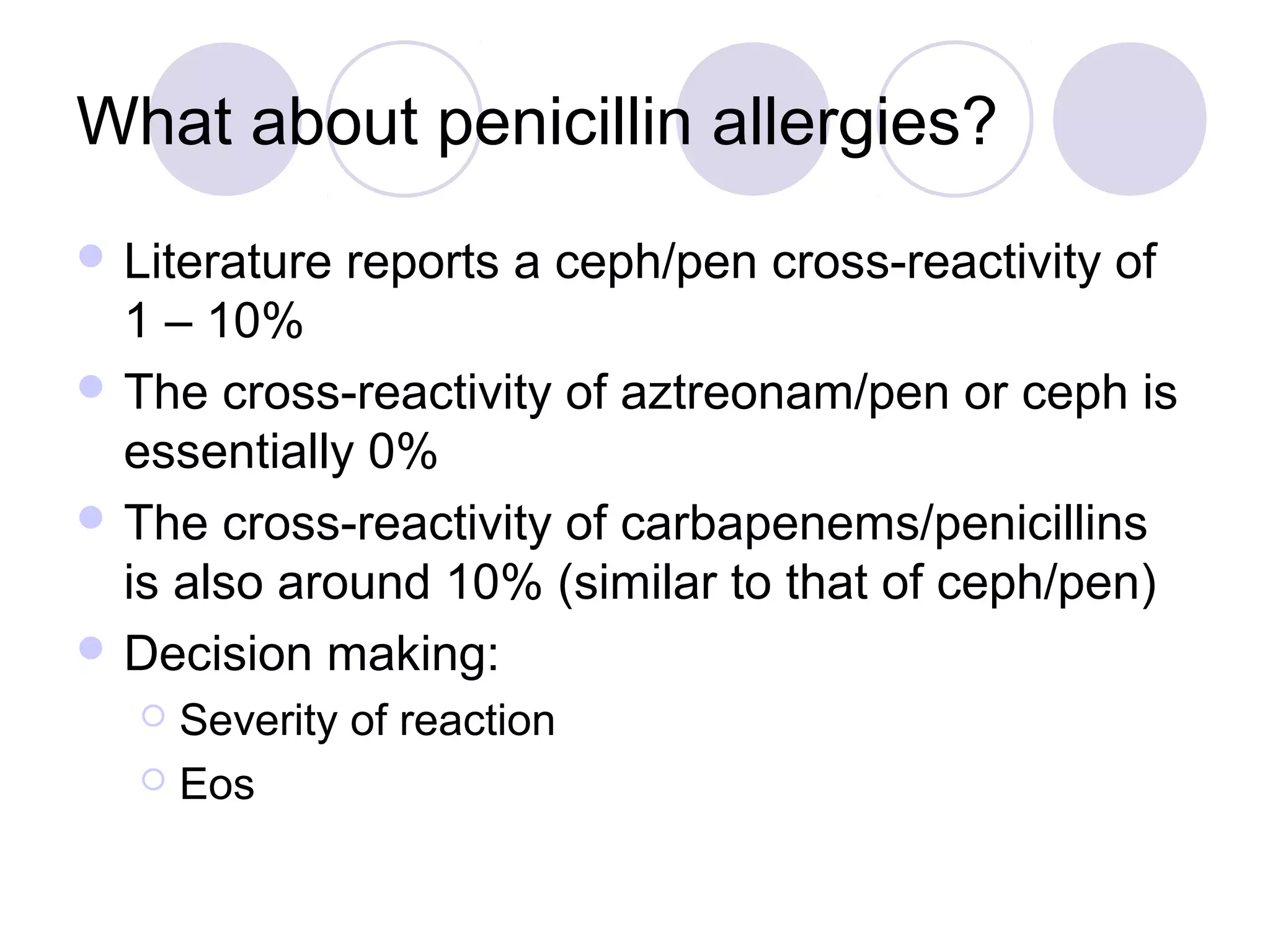
What about penicillin allergies?
 Literature   reports a ceph/pen cross-reactivity of
  1 – 10%
 The cross-reactivity of aztreonam/pen or ceph is
  essentially 0%
 The cross-reactivity of carbapenems/penicillins
  is also around 10% (similar to that of ceph/pen)
 Decision making:
   Severity of reaction
   Eos

Antibacterials summary by Laith Yahya

  • 1.
    The Beta-Lactam Antibiotics Cell wall active agents  Prevent the final step in the synthesis of the bacterial cell wall  Range from very narrow spectrum to very broad spectrum
  • 2.
    β-Lactams β-lactam ring
  • 3.
    How do theywork? 1. The β-lactam binds to Penicillin Binding Protein (PBP) 2. PBP is unable to crosslink peptidoglycan chains 3. The bacteria is unable to synthesize a stable cell wall 4. The bacteria is lysed
  • 4.
  • 5.
    PK/PD  The β-lactams are “time-dependent” killers  The effect is directly proportional to the amount of TIME the concentration of the antibiotic at the site of infection is ABOVE the MIC of the organism.  The β-lactams are BACTERIOCIDAL… (at therapeutically attainable levels)
  • 6.
  • 7.
  • 8.
    So many choices… whichone to pick?  What is the likely organism?  What’s its major mode of resistance?  Where’s the infection?  What’s my local environment?  the UNC Hospital antibiogram  What does the micro lab say?  in vitro sensitivity testing
  • 9.
    Classification  Penicillins  Natural penicillins  PenG, PenVK, Benzathine Pen, Procaine Pen  Aminopenicillins  Ampicillin, Amoxicillin  Anti-Staph penicillins  Oxacillin, Dicloxacillin  Anti-Pseudomonal  [Carboxy] Ticarcillin  [Ureido] Piperacillin
  • 10.
    Classification  Cephalosporins  1st Generation  Cephalexin, Cefazolin  2nd Generation  Cefoxitin, Cefuroxime, Cefotetan  3rd Generation  Cefotaxime, Ceftriaxone, Ceftazidime  4th Generation  Cefepime
  • 11.
    Penicillin G  AvailablePO,IM, IV (dosed in units)  Drug of Choice (DoC) [2-4 MU IV q4h]  T. pallidum, N. meningitidis, Group A Strep, and Actinomycosis  Long-acting forms  Procaine PenG (12 hrs)  Benzathine Pen (5 days) [2.4 MU IM for syphilis]  Adverse Reactions – other than skin rash  Penicillin “serum sickness”/drug fever  Jarisch-Herxheimer reaction (1° and 2° syphilis)  Hemolytic anemia, pancytopenia, neutropenia
  • 12.
    Ampicillin/Amoxicillin  Amp (IV, PO) Amox (PO)  Spectrum: PenG + H. flu and some E. coli  DoC: Listeria monocytogenes and Enterococcus [Amp 2g IV q4h]  Dental Prophylaxis  Amox 1 gram PO x 1 prior to appt.  Integral in H. pylori regimens  ADRs  Non-allergic rashes (9%) – esp. when associated with a viral illness (mononucleosis - EBV)  Amox better tolerated PO and better absorbed (Amp must be taken on empty stomach)
  • 13.
    Oxacillin  IV  DoC – MSSA, MSSE [2g IV q4h]  Actually less active against Pen susceptible isolates than Pen  More active than Vanc vs. MSSA  Significant hepatic metabolism  No need to dose adjust for renal impairment  ADRs  Hepatotoxicity (cholestatic hepatitis)  Neutropenia  Kernicterus in neonates
  • 14.
    Dicloxicillin  Oral  NOT equivalent to IV Ox (therapeutically)  Poororal absorption  ~50% (better on empty stomach)  Dose: 250-500mg po QID
  • 15.
    Piperacillin  IV  DoC: Pseudomonas  Spectrum: most Enterobacteriaceae (E. coli, Proteus, Klebsiella, Enterbacter, Serratia, Citrobacter, Salmonella and Shigella)  Most active penicillin vs. Pseudomonas  Often used in combination with Aminoglycoside or Cipro/Levofloxacin  ADRs  Bleeding (platelet dysfunction)  Neutropenia/Thrombocytopenia
  • 16.
    β-Lactamase Inhibitors  How do you evade a β-lactamase? 1. Use a non-β-lactam agent 2. Steric Inhibition  Penicillins with large side chains  Cephalosporins 3. β-lactam + β-lactamase inhibitors  Not all β-lactamases are inhibitable (!)
  • 17.
    Clavulanic Acid  Augmentin (Amox/Clav) PO  Spectrum: MSSA and upper respiratory infections (S. pneumo, H. flu, M. catarrhalis) and most anaerobes  Clav is responsible for most of the GI side- effects seen with Amox/Clav  Variable ratios of Amox/Clav in liquids/tabs/chewtabs
  • 18.
    Sulbactam  Unasyn (Amp/Sulbactam)  Spectrum: Amp + most anaerobes + many enteric Gm (-) rods, OSSA  DoC: for GNR mixed infection – E.coli, Proteus, anaerobes when Pseudomonas is not implicated  Diabetic foot (once Pseudomonas ruled out)  Wound infections  Sulbactam alone is very active against Acinetobacter spp.
  • 19.
    Tazobactam  Zosyn (Pip/Tazo)  THE most broad-spectrum penicillin  Tazobactam may improve the activity of piperacillin vs. gram-negative rods, including anaerobes  4.5g IV q8h = 3.375g IV q6h  4.5g IV q6h for Pseudomonas
  • 20.
    The Cephalosporins (generalized) *Not effective vs. Enterococcus or Listeria 1st Generation Gram (+) Decreasing Gram (+) 2 Generation nd and Increasing Gram (-) Gram (-), but also some 3 Generation rd GPC 4th Generation Gram (+) and Gram (-)
  • 21.
    Cephalexin/Cefazolin  PO/IV  StablevsStaph penicillinase  Spectrum: MSSA, PSSP, most E. coli, and some Klebs  Can be dose thrice weekly in HD pts  [1.5 grams IV TIW]  DoC:surgical prophylaxis, bacterial peritonitis in CAPD pts [1 gm in the dwell bag]  ADRs  Positive Coombs’ test (though, hemolytic anemia is rare)
  • 22.
    Cefuroxime  IV/PO  Extensive use in pediatrics  Spectrum: Strep pneumo, Viridans Strep, most H. flu, N. meningitidis  DoC: uncomplicated CAP (esp. H. flu), UTI/pyelo
  • 23.
    Cefotaxime  IV  Spectrum: Strep pneumo, Neisseria spp., most Gram (-) enterics, M. catarrhalis and H. flu (including β-lactamase +)  DoC: bact meningitis (esp. in peds + amp if < 4 weeks), CAP, complicated UTI/pyelonephritis, Bacterial Peritonitis
  • 24.
    Ceftriaxone  IV  Once daily dosing (95% protein bound = long half-life)  Spectrum: Strep. pneumoniae, most Enterbacteriaceae,  Excretion: 50% urine, 50% bile = no need to adjust for renal insufficiency  CSF penetration: 5-15% in meningitis, 1.5% with out inflammation  DoC: bacterial meningitis, CAP, Strep. viridans endocarditis (+ gent)  ADRs  Cholestasis  Elevated bilirubin (displacement)  Diarrhea
  • 25.
    Ceftazidime  IV  Spectrum: Enteric GNR (including Pseudomonas; some Acinetobacter)  No anaerobic activity (same for cefotaxime and ceftriaxone)  DoC: Pseudomonas infx
  • 26.
    Third Generation Cephs:Issues  β-lactamase induction?  ESBLs  De-repression of chromosomal β-lactamases  Selective pressure for VRE?
  • 27.
    Cefepime  IV  NON-Spectrum: MRSA, C. diff, Burkholderia, Stenotrophomonas, gram- negative anaerobes  Stable vs. de-repressed chromosomal β- lactamases, but not ESBL  Less β-lactamase induction than 3 rd Cephs  DoC: HAP, febrile neutropenia
  • 28.
    Carbapenems  Imipenem, Meropenem,Ertapenem  Broad-spectrum coverage:  Gram positive: PSSP, MSSA, VSE  Gram negative: most gram-negative organisms (Acinetobacter sp., Pseudomonas sp.)  Lack of coverage:  Ertapenem: Pseudomonas sp., Acinetobacter sp.  All: Stenotrophomonas, Legionella sp., MRSA, VRE
  • 29.
    Carbapenems  Distribution:similar topenicillins  Excretion: renal clearance  Adverse reactions:  Hypersensitivity: rash, urticaria, cross-reactivity  Imipenem: seizures (rare)  High doses  Renal dysfunction  Most likely can occur with all carbapenems at high doses
  • 30.
    Carbapenems  Resistance:  Gram negative: usually combination of mechanisms (Carbapenemase production + decreased entry)  Imipenem  Decreased production of OprD (outer membrane protein for carbapenems)  Imipenem utilizes OprD > meropenem, ertapenem  Pseudomonas, Enterobacter  Susceptible to efflux system in Enterobacter  Meropenem: substrate for multi-drug efflux systems  May have increased MIC for meropenem but not imipenem  All: low affinity PBPs
  • 31.
    Monobactams  Monobactams: Aztreonam  Spectrum: ONLY  Gram negative aerobic bacteria  Lack of Coverage:  Some resistant P. aeruginosa, E. cloacae, and C. freundii  Acinetobacter sp., Stenotrophomonas sp.  Pharmacokinetics:  Well distributed into tissues, esp. inflamed tissues  Excretion: renal clearance  Adverse reactions:  Skin rash  No cross-reactivity with Beta-Lactam class
  • 32.
    What about penicillinallergies?  Literature reports a ceph/pen cross-reactivity of 1 – 10%  The cross-reactivity of aztreonam/pen or ceph is essentially 0%  The cross-reactivity of carbapenems/penicillins is also around 10% (similar to that of ceph/pen)  Decision making:  Severity of reaction  Eos

Editor's Notes

  • #5 Note the D-ala-D-ala vancomycin binding site This crosslinking gives stability and strength to the cell wall
  • #29 Listeria monocytogenes Imipenem: usually has better activity against enterococcus than meropenem or ertapenem. It is bacteriostatic not cidal.
  • #30 Cilastatin: reversible, competitive inhibitor of dehydropeptidase-1 (DHP—1) (enzyme found in the brush border of the proximal tubular cells of the kidneys) Prevents the breakdown of imipenem to inactive metabolites
  • #31 OprD: is different than the one used for cephalosporins