Beta Lactam Antibiotics
Dr Mohit Kher
Assistant Professor
Pharmacology, ESIC
Antimicrobial agents
• Antibiotics
• Antivirals
• Antifungals
• Antiparasitic
Antibiotics
Beta Lactamase Inhibitors
• Amoxicillin is combined with clavulanic acid (Co-amoxy-clav)
• Ampicillin is combined with sulbactam (Sultamicin)
• Piperacillin is combined with tazobactam
• Ceftazidime-avibactam combination is approved for complicated UTI
(including pyelonephritis) and complicated intra-abdominal infections
• Meropenem-vaborbactam is a new combination approved for complicated
UTI
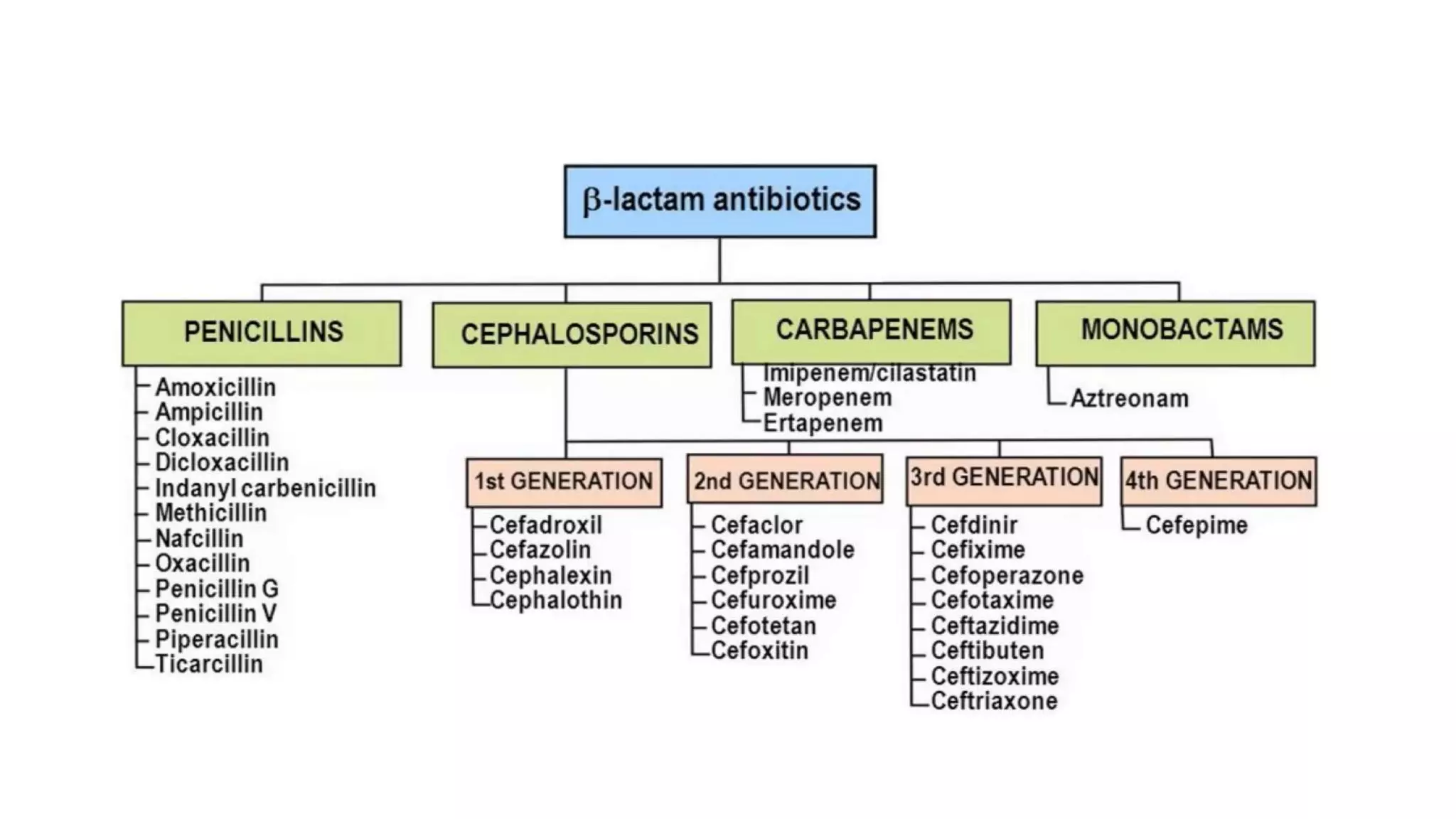
PENICILLIN
• First Antibiotic to be used clinically
• Obtained from a fungus: Penicillium notatum
• Bacteriocidal drug
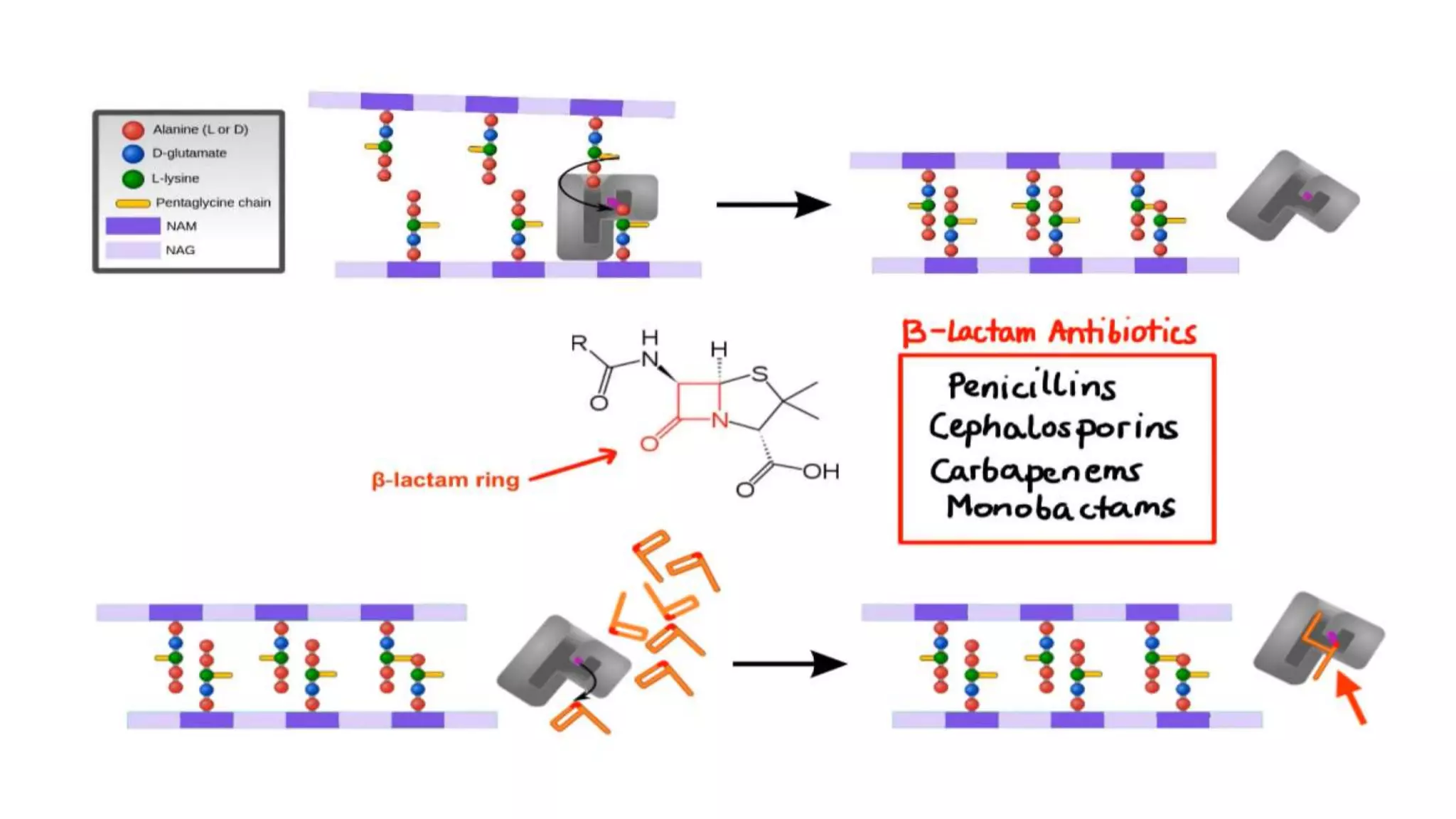
• MOA: Inhibit transpeptidase enzyme
Antibiotic Spectrum
Penicillin-G
• Oldest drug
• Other name: Benzyl penicillin
• Not used now commonly
• Problems with the drug:
- Acid labile
- Short acting drug
- Resistance developed (penicillinase and beta-lactamase strains)
- Narrow spectrum
- Allergic reactions: Jarisch Herxheimer reaction
Penicillin-G is DOC for:
B: Bacillus (Anthrax)
L: Leptospira (Rat bite fever)
A: Actinomyces
S: Streptococcus
T: Treponema pallidum (Syphilis)
P: Pertunae (Yaws), Pasteurella multocida
G: Gas gangrene
Newer Penicillin designed to overcome
shortcomings
• Acid resistant Penicillin: Penicillin V, oxacillin, dicloxacillin,
cloxacillin, amoxycillin and ampicillin.
• Benzathine and procaine group can be added to penicillin G to make it
long acting.
• Probenecid can be administered with penicillins. Former inhibits the
tubular secretion.
Recommended treatment for syphilis
Semi-Synthetic Penicillin
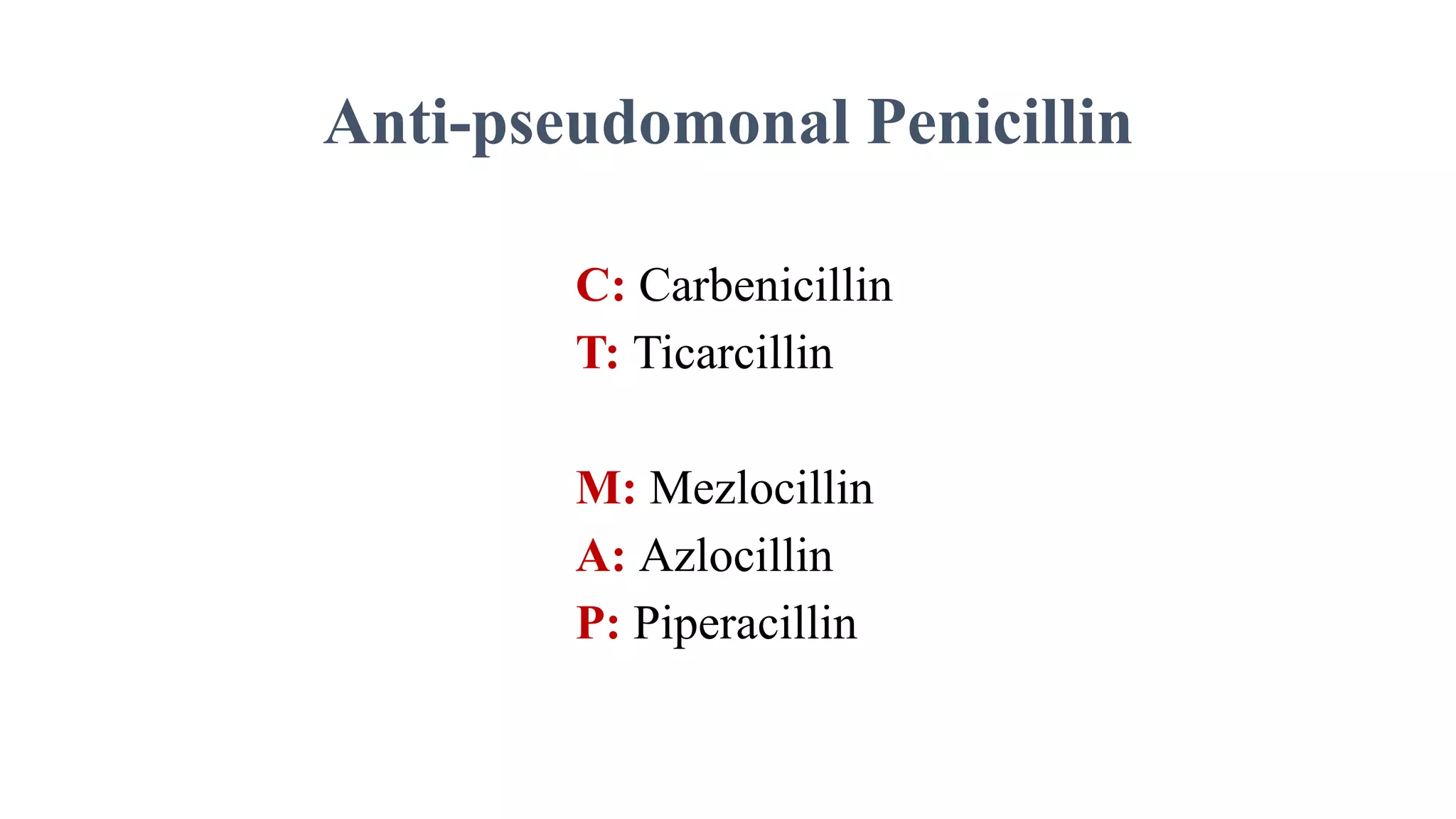
Anti-pseudomonal Penicillin
C: Carbenicillin
T: Ticarcillin
M: Mezlocillin
A: Azlocillin
P: Piperacillin
Acid Resistant Penicillin
• Penicillin-V (Phenoxymethyl Penicillin)
• Oral absorption is better
• But spectrum is just same as penicillin-G (Narrow spectrum: Mostly gram
positive)
• It can not be dependent for more serious infections
• USES: Pharyngitis, sinusitis, otitis media, rheumatic fever
Aminopenicillins
• Ampicillin
• Prodrugs: Amoxicillin, Bacampicillin
• Active against all gram positive and many gram negative bacilli
• Eg. H. influenzae, E.coli, Proteus, Salmonella, Shigella & H. pylori
• Amoxycillin: More active, Better oral absorption
• Becampicillin: Less used now
• Acid resistant, penicillinase resistant
• But Beta-lactamase sensitive
USES
• Meningitis
• RTI
• Typhoid fever
• Bacillary Dysentry
• Cholecystitis
• Inhibits H.pylori
• UTI
• Gonorrhoea
Carboxypenicillins
Carbenicillin
• Active against pseudomonas aeruginosa
• A/E: Fluid retention, CHF
Ticarcillin
• Active against pseudomonas & proteus
• Less A/E
Ureidopenicillins
Piperacillin
• Active against pseudomonas
• 8 times more active than carbenicillin
Resistance to Penicillins
• Beta lactamase production
• Alteration of penicillin binding protein (PBP)
• Decreased Porin production
• Drug efflux
Cephalosporins
• Obtained from fungus cephalosporium
• Bactericidal
• Same MOA as penicillin
Cephalosporins Spectrum
Cephalosporin Classification
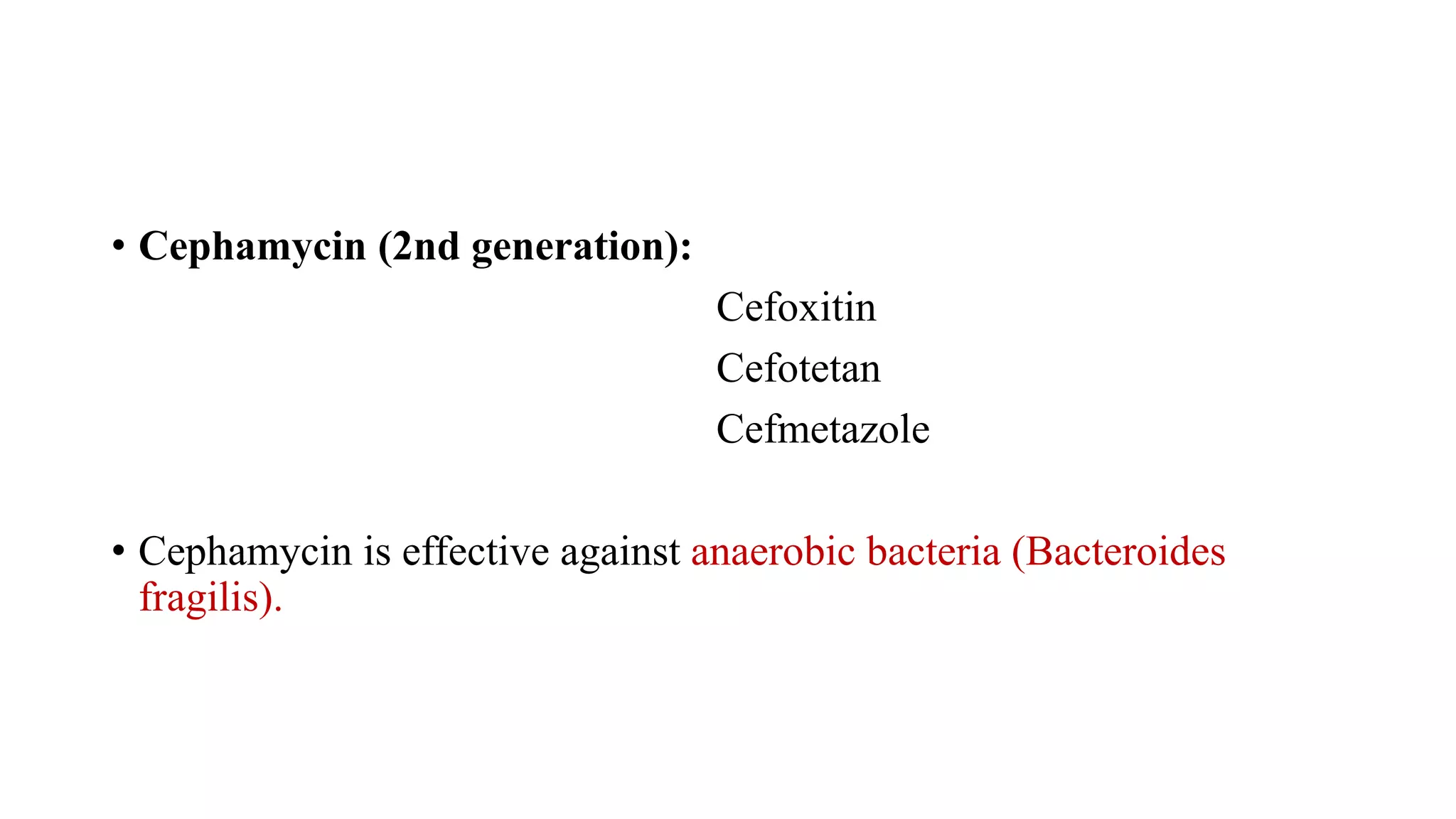
• Cephamycin (2nd generation):
Cefoxitin
Cefotetan
Cefmetazole
• Cephamycin is effective against anaerobic bacteria (Bacteroides
fragilis).
Cephalosporins secreted in bile
Safe in Renal Failure:
• Cefoperazone
• Ceftriaxone
Anti-pseudomonal Cephalosporins
• Cefepime
• Cefpirome
• Cefoperazone
• Ceftazidime (Most effective)
Decrease prothrombin time & Disulfiram
like reaction
• Moxolactam
• Cefoperazone
• Cefotetan
• Cefomandole
USES
• Spectrum cover wide range of gram positive and gram negative
bacteria.
• ENT, URTI, cutaneous infections: Alternative to penicillins
• DOC in: Typhoid
Meningitis
Septicemia
Gonorrhea
Meningitis treatment
• Meningococcus → DOC: Penicillin-G → Resistance → Ceftriaxone
• Pneumococci → DOC: Penicillin-G → Resistance → Ceftriaxone +
Vancomycin
Carbapenems
• Wide spectrum: Gram positive cocci, gram negative rods, pseudomonas as well as
anaerobes.
• Imipenem is rapidly inactivated by renal dehydropeptidase I, so it is combined with
cilastatin, an inhibitor of this enzyme.
• Cilastatin increases the half life of imipenem and also inhibits the formation of
nephrotoxic metabolite.
• A/E: Seizures & GI distress
Other drugs (less likely to cause seizure): Do not require to combine
with cilastatin
• Meropenem
• Ertapenem (very long acting)
• Doripenem
• Faropenem (oral)
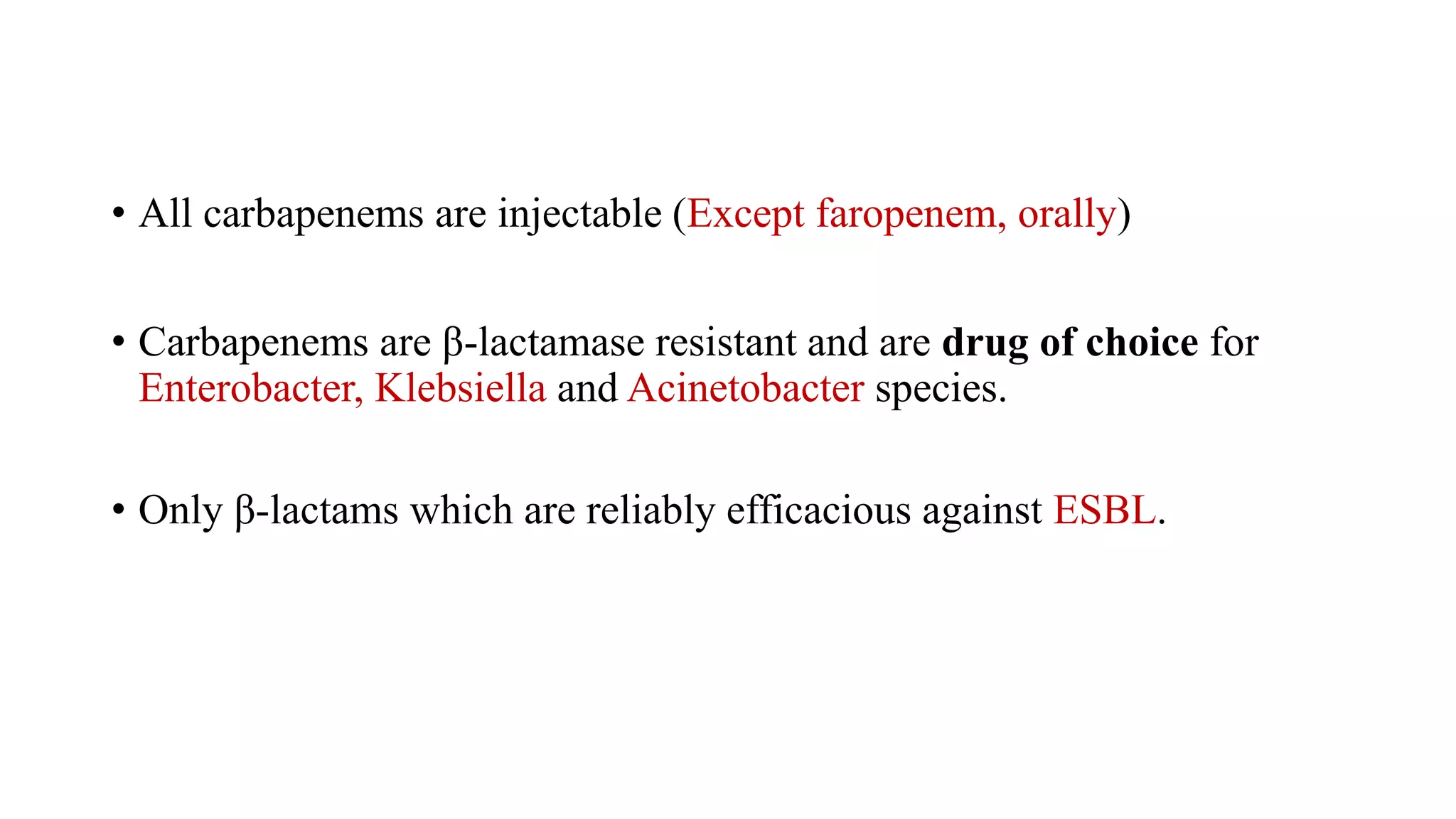
• All carbapenems are injectable (Except faropenem, orally)
• Carbapenems are β-lactamase resistant and are drug of choice for
Enterobacter, Klebsiella and Acinetobacter species.
• Only β-lactams which are reliably efficacious against ESBL.
Drugs used in Typhoid
• Ceftriaxone: Injectable DOC
• Cefixime: Oral DOC
• Ciprofloxacin: DOC for carriers
• Cotrimoxazole/Amoxicillin/Ampicillin/Chloramphenicol: Widespread
resistance
MONOBACTAMS
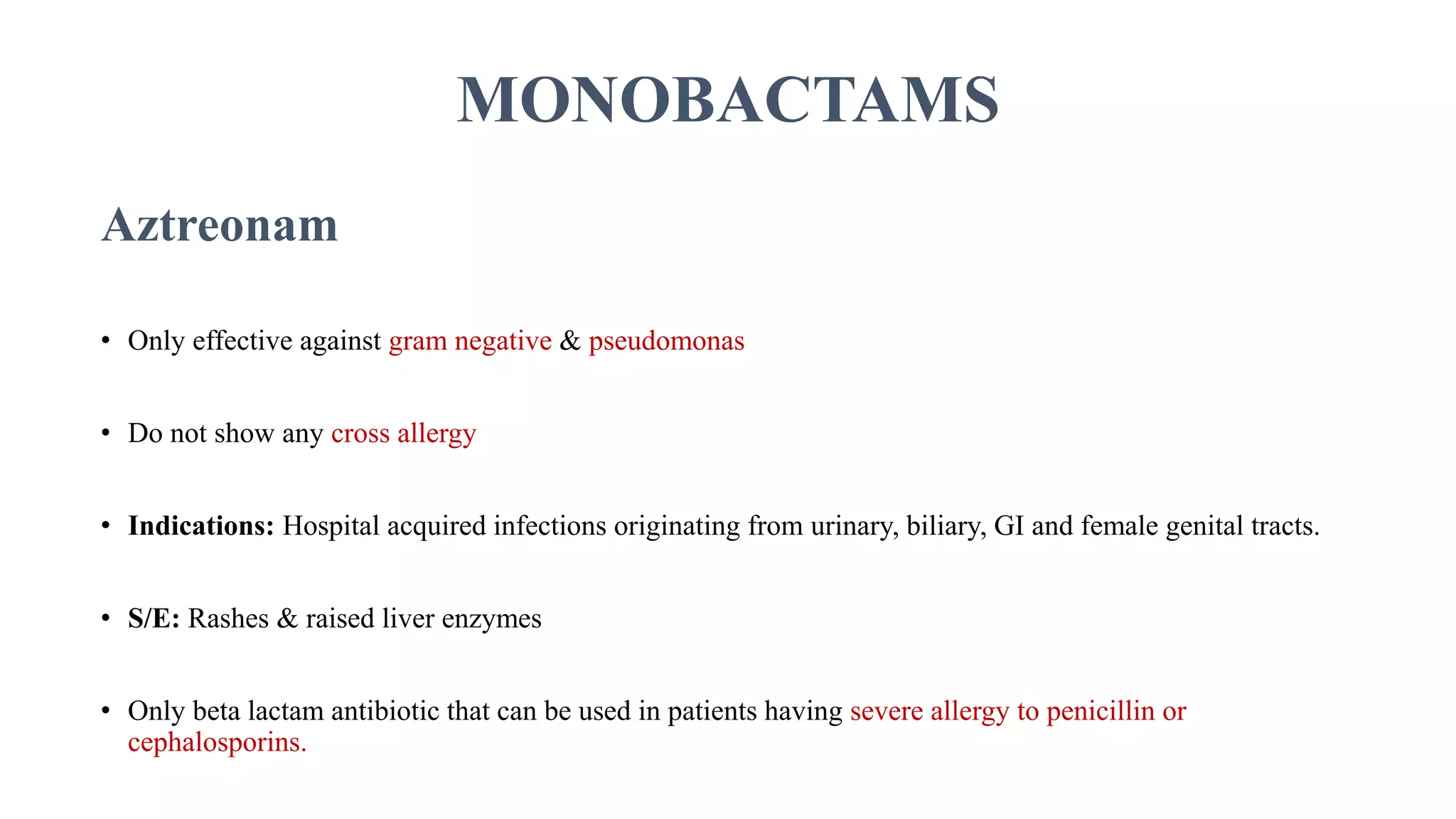
Aztreonam
• Only effective against gram negative & pseudomonas
• Do not show any cross allergy
• Indications: Hospital acquired infections originating from urinary, biliary, GI and female genital tracts.
• S/E: Rashes & raised liver enzymes
• Only beta lactam antibiotic that can be used in patients having severe allergy to penicillin or
cephalosporins.
Miscellaneous points
• Bactericidal drugs kill the bacteria whereas bacteriostatic drugs only inhibits bacterial
growth. Bacteriostatic activity is adequate for the treatment of most infections,
bactericidal activity may be necessary for cure in patients with altered immune
systems like: neutropenias, HIV and other immunosuppressive conditions.
• Vancomycin resistance occurs due to altered binding site whose structure changes
from Alanine-Alanine to Alanine-Lactate.
• Methicillin resistance occurs due to altered PBPs.
• Combination of a bactericidal (ampicillin) and a bacteriostatic drug
(chloramphenicol) is usually antagonistic in nature. This is because cidal
drugs are usually acting on a fast multiplying organisms whereas static
drugs decrease this multiplication.
• Beta lactamase break this ring between N and C=O group and can result
in resistance.
• Beta lactamases are encoded by plasmids that can be transferred with the
help of bacteriophage (transduction) in staphylococci and by
transformation in Pneumococci.
• Cefotaxime or amoxicillin-clavulanic acid and azithromycin: Effective in
H. influenza infections.
• Cefuroxime has good CSF penetration. It can be used for meningitis,
however ceftriaxone is superior. Cefuroxime is not effective against
anaerobes.
• Fifth generation cephalosporins (ceftobiprole and ceftaroline) are the
only beta-lactams active against MRSA.
• Penicillins increase the bactericidal activity of aminoglycosides. Combination of
penicillins/cephalosporins and aminoglycosides is the treatment of choice for
pseudomonas infections.
• Meningococcal meningitis:
DOC: Penicillin-G
Empirical treatment: Ceftriaxone
• The only acceptable treatment for syphilis in pregnancy is penicillin. In penicillin
allergy patients, DOC is doxycycline but it is C/I in pregnancy. Therefore,
desensitization is done and penicillin is given.
Antibiotics Used in Empirical Therapy of
Bacterial Meningitis and Focal CNS Infections
• Frequent cause of mastitis is Staphylococcus aureus which may be
penicillinase producing. Therefore, penicillinase resistant penicillins like
cloxacillin are preferred for treatment of mastitis.
• Enterococcal endocarditis:
DOC: Ampicillin + Gentamicin → if history of allergy → Vancomycin +
Gentamicin
Extended spectrum beta-lactamases
(ESBL)
Beta-lactamases that breaks down:
• 3Rd generation cephalosporins and monobactams
DOC in ESBL:
• Carbapenems
• 2nd gen is preferred over 4th gen cephalosporins
• Beta lactams + beta lactamase inhibitors
Thank You
Glycopeptides
• Vancomycin is DOC for:
MRSA
Corynebacterium jeikeium
Serious infections in penicillin allergic patients
• Rapid i.v. infusion of high doses of vancomycin can cause RED MAN
SYNDROME.
• Vancomycin is used ORALLY to treat pseudomembranous colitis.
Beta lactam antibiotics

Beta lactam antibiotics

  • 1.
    Beta Lactam Antibiotics DrMohit Kher Assistant Professor Pharmacology, ESIC
  • 2.
    Antimicrobial agents • Antibiotics •Antivirals • Antifungals • Antiparasitic
  • 3.
  • 11.
    Beta Lactamase Inhibitors •Amoxicillin is combined with clavulanic acid (Co-amoxy-clav) • Ampicillin is combined with sulbactam (Sultamicin) • Piperacillin is combined with tazobactam • Ceftazidime-avibactam combination is approved for complicated UTI (including pyelonephritis) and complicated intra-abdominal infections • Meropenem-vaborbactam is a new combination approved for complicated UTI
  • 12.
    PENICILLIN • First Antibioticto be used clinically • Obtained from a fungus: Penicillium notatum • Bacteriocidal drug • MOA: Inhibit transpeptidase enzyme
  • 13.
  • 14.
    Penicillin-G • Oldest drug •Other name: Benzyl penicillin • Not used now commonly • Problems with the drug: - Acid labile - Short acting drug - Resistance developed (penicillinase and beta-lactamase strains) - Narrow spectrum - Allergic reactions: Jarisch Herxheimer reaction
  • 15.
    Penicillin-G is DOCfor: B: Bacillus (Anthrax) L: Leptospira (Rat bite fever) A: Actinomyces S: Streptococcus T: Treponema pallidum (Syphilis) P: Pertunae (Yaws), Pasteurella multocida G: Gas gangrene
  • 16.
    Newer Penicillin designedto overcome shortcomings • Acid resistant Penicillin: Penicillin V, oxacillin, dicloxacillin, cloxacillin, amoxycillin and ampicillin. • Benzathine and procaine group can be added to penicillin G to make it long acting. • Probenecid can be administered with penicillins. Former inhibits the tubular secretion.
  • 17.
  • 18.
  • 19.
    Anti-pseudomonal Penicillin C: Carbenicillin T:Ticarcillin M: Mezlocillin A: Azlocillin P: Piperacillin
  • 20.
    Acid Resistant Penicillin •Penicillin-V (Phenoxymethyl Penicillin) • Oral absorption is better • But spectrum is just same as penicillin-G (Narrow spectrum: Mostly gram positive) • It can not be dependent for more serious infections • USES: Pharyngitis, sinusitis, otitis media, rheumatic fever
  • 21.
    Aminopenicillins • Ampicillin • Prodrugs:Amoxicillin, Bacampicillin • Active against all gram positive and many gram negative bacilli • Eg. H. influenzae, E.coli, Proteus, Salmonella, Shigella & H. pylori • Amoxycillin: More active, Better oral absorption • Becampicillin: Less used now • Acid resistant, penicillinase resistant • But Beta-lactamase sensitive
  • 22.
    USES • Meningitis • RTI •Typhoid fever • Bacillary Dysentry • Cholecystitis • Inhibits H.pylori • UTI • Gonorrhoea
  • 23.
    Carboxypenicillins Carbenicillin • Active againstpseudomonas aeruginosa • A/E: Fluid retention, CHF Ticarcillin • Active against pseudomonas & proteus • Less A/E
  • 24.
    Ureidopenicillins Piperacillin • Active againstpseudomonas • 8 times more active than carbenicillin
  • 25.
    Resistance to Penicillins •Beta lactamase production • Alteration of penicillin binding protein (PBP) • Decreased Porin production • Drug efflux
  • 26.
    Cephalosporins • Obtained fromfungus cephalosporium • Bactericidal • Same MOA as penicillin
  • 27.
  • 28.
  • 29.
    • Cephamycin (2ndgeneration): Cefoxitin Cefotetan Cefmetazole • Cephamycin is effective against anaerobic bacteria (Bacteroides fragilis).
  • 30.
    Cephalosporins secreted inbile Safe in Renal Failure: • Cefoperazone • Ceftriaxone
  • 31.
    Anti-pseudomonal Cephalosporins • Cefepime •Cefpirome • Cefoperazone • Ceftazidime (Most effective)
  • 32.
    Decrease prothrombin time& Disulfiram like reaction • Moxolactam • Cefoperazone • Cefotetan • Cefomandole
  • 33.
    USES • Spectrum coverwide range of gram positive and gram negative bacteria. • ENT, URTI, cutaneous infections: Alternative to penicillins • DOC in: Typhoid Meningitis Septicemia Gonorrhea
  • 34.
    Meningitis treatment • Meningococcus→ DOC: Penicillin-G → Resistance → Ceftriaxone • Pneumococci → DOC: Penicillin-G → Resistance → Ceftriaxone + Vancomycin
  • 35.
    Carbapenems • Wide spectrum:Gram positive cocci, gram negative rods, pseudomonas as well as anaerobes. • Imipenem is rapidly inactivated by renal dehydropeptidase I, so it is combined with cilastatin, an inhibitor of this enzyme. • Cilastatin increases the half life of imipenem and also inhibits the formation of nephrotoxic metabolite. • A/E: Seizures & GI distress
  • 36.
    Other drugs (lesslikely to cause seizure): Do not require to combine with cilastatin • Meropenem • Ertapenem (very long acting) • Doripenem • Faropenem (oral)
  • 37.
    • All carbapenemsare injectable (Except faropenem, orally) • Carbapenems are β-lactamase resistant and are drug of choice for Enterobacter, Klebsiella and Acinetobacter species. • Only β-lactams which are reliably efficacious against ESBL.
  • 39.
    Drugs used inTyphoid • Ceftriaxone: Injectable DOC • Cefixime: Oral DOC • Ciprofloxacin: DOC for carriers • Cotrimoxazole/Amoxicillin/Ampicillin/Chloramphenicol: Widespread resistance
  • 40.
    MONOBACTAMS Aztreonam • Only effectiveagainst gram negative & pseudomonas • Do not show any cross allergy • Indications: Hospital acquired infections originating from urinary, biliary, GI and female genital tracts. • S/E: Rashes & raised liver enzymes • Only beta lactam antibiotic that can be used in patients having severe allergy to penicillin or cephalosporins.
  • 45.
    Miscellaneous points • Bactericidaldrugs kill the bacteria whereas bacteriostatic drugs only inhibits bacterial growth. Bacteriostatic activity is adequate for the treatment of most infections, bactericidal activity may be necessary for cure in patients with altered immune systems like: neutropenias, HIV and other immunosuppressive conditions. • Vancomycin resistance occurs due to altered binding site whose structure changes from Alanine-Alanine to Alanine-Lactate. • Methicillin resistance occurs due to altered PBPs.
  • 46.
    • Combination ofa bactericidal (ampicillin) and a bacteriostatic drug (chloramphenicol) is usually antagonistic in nature. This is because cidal drugs are usually acting on a fast multiplying organisms whereas static drugs decrease this multiplication. • Beta lactamase break this ring between N and C=O group and can result in resistance. • Beta lactamases are encoded by plasmids that can be transferred with the help of bacteriophage (transduction) in staphylococci and by transformation in Pneumococci.
  • 47.
    • Cefotaxime oramoxicillin-clavulanic acid and azithromycin: Effective in H. influenza infections. • Cefuroxime has good CSF penetration. It can be used for meningitis, however ceftriaxone is superior. Cefuroxime is not effective against anaerobes. • Fifth generation cephalosporins (ceftobiprole and ceftaroline) are the only beta-lactams active against MRSA.
  • 48.
    • Penicillins increasethe bactericidal activity of aminoglycosides. Combination of penicillins/cephalosporins and aminoglycosides is the treatment of choice for pseudomonas infections. • Meningococcal meningitis: DOC: Penicillin-G Empirical treatment: Ceftriaxone • The only acceptable treatment for syphilis in pregnancy is penicillin. In penicillin allergy patients, DOC is doxycycline but it is C/I in pregnancy. Therefore, desensitization is done and penicillin is given.
  • 49.
    Antibiotics Used inEmpirical Therapy of Bacterial Meningitis and Focal CNS Infections
  • 50.
    • Frequent causeof mastitis is Staphylococcus aureus which may be penicillinase producing. Therefore, penicillinase resistant penicillins like cloxacillin are preferred for treatment of mastitis. • Enterococcal endocarditis: DOC: Ampicillin + Gentamicin → if history of allergy → Vancomycin + Gentamicin
  • 51.
    Extended spectrum beta-lactamases (ESBL) Beta-lactamasesthat breaks down: • 3Rd generation cephalosporins and monobactams DOC in ESBL: • Carbapenems • 2nd gen is preferred over 4th gen cephalosporins • Beta lactams + beta lactamase inhibitors
  • 53.
  • 60.
    Glycopeptides • Vancomycin isDOC for: MRSA Corynebacterium jeikeium Serious infections in penicillin allergic patients • Rapid i.v. infusion of high doses of vancomycin can cause RED MAN SYNDROME. • Vancomycin is used ORALLY to treat pseudomembranous colitis.

Editor's Notes

  • #4 Bactericidal drugs kill the bacteria whereas bacteriostatic drugs only inhibits bacterial growth. Bacteriostatic activity is adequate for the treatment of most infections, bactericidal activity may be necessary for cure in patients with altered immune systems like: neutropenias, HIV and other immunosuppressive conditions.
  • #8 Beta lactamase break this ring between N and C=O group and can result in resistance.
  • #12 Combination of a bactericidal (ampicillin) and a bacteriostatic drug (chloramphenicol) is usually antagonistic in nature. This is because cidal drugs are usually acting on a fast multiplying organisms whereas static drugs decrease this multiplication.
  • #19 Methicillin resistance occurs due to altered PBPs, thus no penicillin, (infact no beta-lactam antibiotic) is useful against methicillin-resistant Staphylococcus aureus (MRSA) infections.
  • #60 Vancomycin resistance occurs due to altered binding site whose structure changes from Alanine-Alanine to Alanine-Lactate