Download to read offline
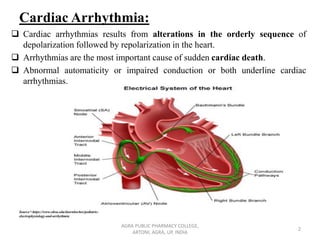
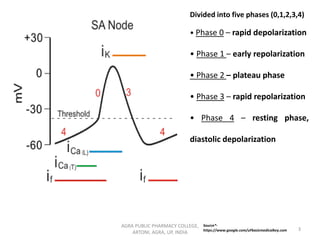
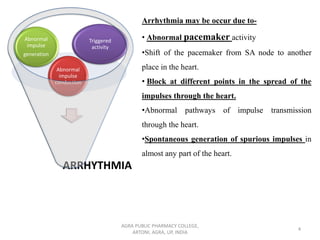
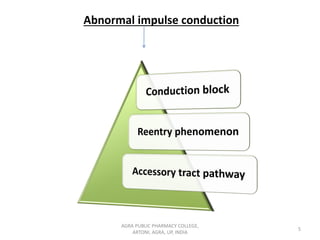
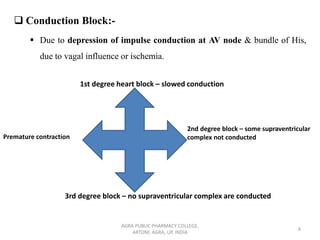
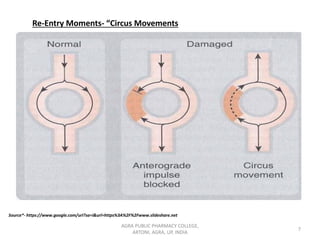

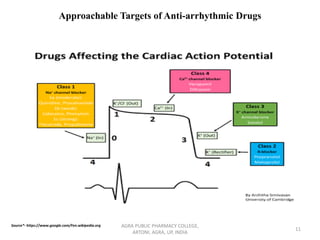
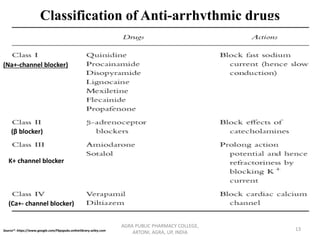
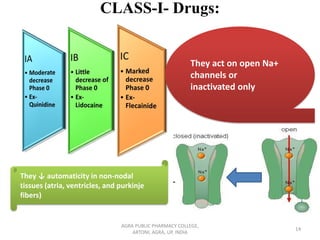
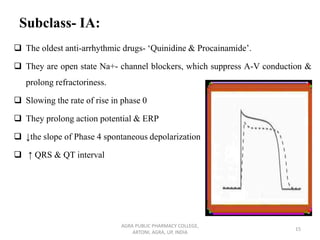
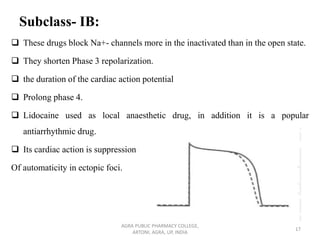
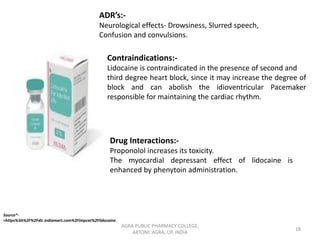
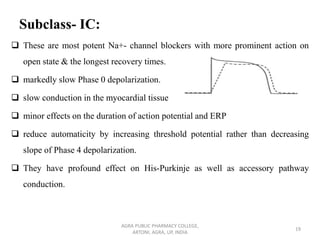
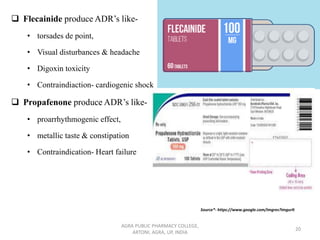
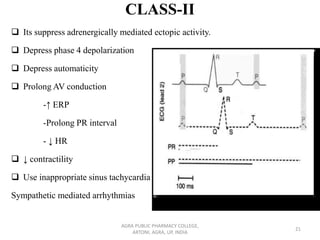
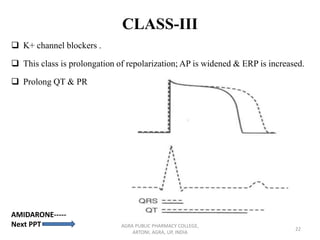
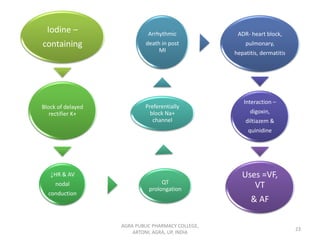
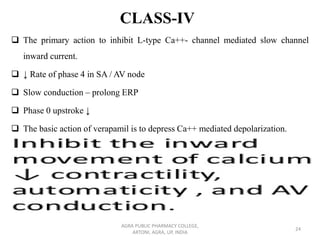
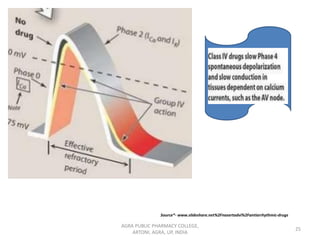


This document discusses anti-arrhythmic drugs and their mechanisms and classifications. It summarizes that anti-arrhythmic drugs work by blocking sodium, potassium, calcium, or beta receptor channels to normalize abnormal electrical conduction in the heart and treat arrhythmias. The drugs are classified into four main classes based on their ion channel targets and actions. Class I drugs block sodium channels, Class II block beta receptors, Class III prolong repolarization by blocking potassium channels, and Class IV block calcium channels. Each class has subgroups that differ in their specific channel blocking profiles and effects on heart rhythms.


