RATIONAL USE OF OTC {OVER THE
COUNTER) DRUGS & ITS SALES
By:- Dr. Manish Pal Singh,
Associate Professor
1Agra Public Pharmacy College, Agra
Source*- https%3A%2F%2Fbusiness.medicaldialogues.in
What is OTC-Drugs?
According to FDA-
“OTC drug is safe when it has low incidence of ADR’s & Side effects
under conditions of widespread availability”
➢ It’s a Non-prescription medicines.
➢ In broader sense all non-prescriptional medicines including traditional
herbal medicines or nutritional supplements (pharmaceutical care
meaning).
➢ An Simply say to OTC-
“An OTC drug product is a Product marketed for use by the
consumer without the intervention of a health care professional.”
Agra Public Pharmacy College, Agra 2
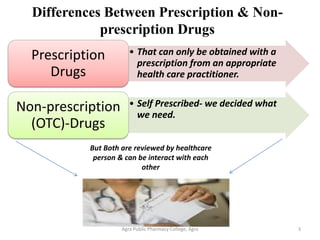
Differences Between Prescription & Non-
prescription Drugs
Agra Public Pharmacy College, Agra 3
• That can only be obtained with a
prescription from an appropriate
health care practitioner.
Prescription
Drugs
• Self Prescribed- we decided what
we need.
Non-prescription
(OTC)-Drugs
But Both are reviewed by healthcare
person & can be interact with each
other
Agra Public Pharmacy College, Agra 4
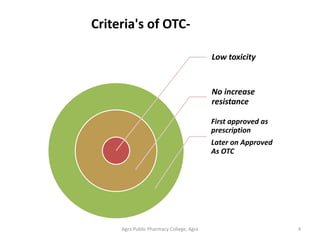
Criteria's of OTC-
Low toxicity
No increase
resistance
First approved as
prescription
Later on Approved
As OTC
Agra Public Pharmacy College, Agra 5
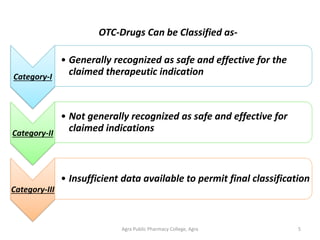
OTC-Drugs Can be Classified as-
Category-I
• Generally recognized as safe and effective for the
claimed therapeutic indication
Category-II
• Not generally recognized as safe and effective for
claimed indications
Category-III
• Insufficient data available to permit final classification
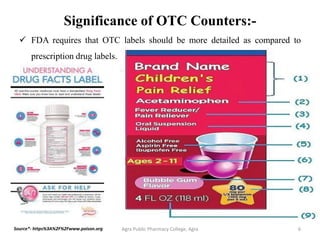
Significance of OTC Counters:-
✓ FDA requires that OTC labels should be more detailed as compared to
prescription drug labels.
Agra Public Pharmacy College, Agra 6Source*- https%3A%2F%2Fwww.poison.org
Agra Public Pharmacy College, Agra 7
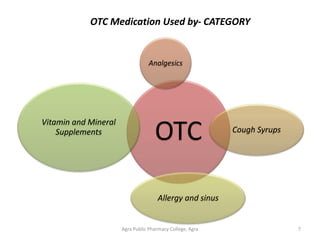
OTC Medication Used by- CATEGORY
OTC
Analgesics
Cough Syrups
Allergy and sinus
Vitamin and Mineral
Supplements
Agra Public Pharmacy College, Agra 8
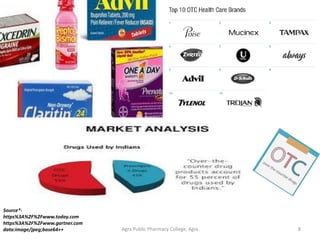
Source*-
https%3A%2F%2Fwww.today.com
https%3A%2F%2Fwww.gartner.com
data:image/jpeg;base64++
Agra Public Pharmacy College, Agra 9
Phase’s of OTC Drug Review
• The first phase was accomplished by advisory review
panels.
• In this determine drug ingredients could be generally
recognized as safe and effective for use in self-
treatment.
Ist-Phase
• The second phase of the OTC drug review phase.
• Review of ingredients in each class of drugs, based
on the panel’s findings, on public comment, and on
new data that may have become available.
• The agency, in turn, publishes its conclusions in the
Federal Register in the form of a tentative final
monograph.
• Requests to be submitted for a hearing before the
Commissioner of FDA.
IInd-Phase
Agra Public Pharmacy College, Agra 10
The monographs establish
conditions under which certain
OTC drug products are generally
recognized as safe and effective.
The publication of final
regulations in the form of
drug monographs
IIIrd
Phase
FDA approved these products for general
use.
Agra Public Pharmacy College, Agra 11
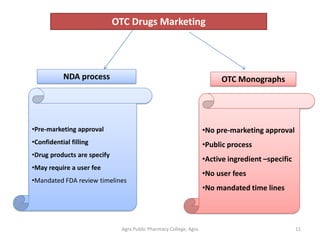
OTC Drugs Marketing
NDA process OTC Monographs
•Pre-marketing approval
•Confidential filling
•Drug products are specify
•May require a user fee
•Mandated FDA review timelines
•No pre-marketing approval
•Public process
•Active ingredient –specific
•No user fees
•No mandated time lines
➢ Purchase and use of OTC drugs without full knowledge is not only a waste of
resources for all stakeholders but can be harmful for consumers.
➢ Creating awareness of rational drug use is only possible through continued
public education with a broad vision of good health and wellbeing of the
society.
➢ The availability of over-the counter medications makes it possible for
consumers to treat numerous ailments without the supervision of a health
care professional.
➢ Patient education and counseling are particularly important to promote safe and
effective use of over-the counter products.
➢ Don’t mix Rx and OTCs including herbals.
➢ Give your doctor a list of ALL meds.
Agra Public Pharmacy College, Agra 12
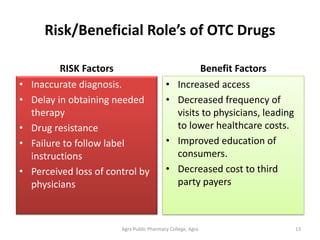
Risk/Beneficial Role’s of OTC Drugs
RISK Factors
• Inaccurate diagnosis.
• Delay in obtaining needed
therapy
• Drug resistance
• Failure to follow label
instructions
• Perceived loss of control by
physicians
Benefit Factors
• Increased access
• Decreased frequency of
visits to physicians, leading
to lower healthcare costs.
• Improved education of
consumers.
• Decreased cost to third
party payers
Agra Public Pharmacy College, Agra 13
Agra Public Pharmacy College, Agra 14
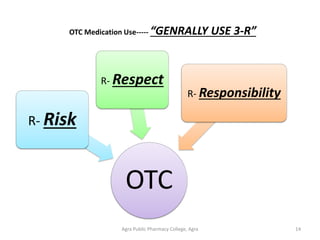
OTC Medication Use----- “GENRALLY USE 3-R”
OTC
R- Risk
R- Respect
R- Responsibility
Agra Public Pharmacy College, Agra 15
Source*- https%3A%2F%2Fwww.slideshare.net%2Fmshubhankar%2Fotc-drug-market-future-growth-driver-for-ipm-

Otc drugs use & sales

  • 1.
    RATIONAL USE OFOTC {OVER THE COUNTER) DRUGS & ITS SALES By:- Dr. Manish Pal Singh, Associate Professor 1Agra Public Pharmacy College, Agra Source*- https%3A%2F%2Fbusiness.medicaldialogues.in
  • 2.
    What is OTC-Drugs? Accordingto FDA- “OTC drug is safe when it has low incidence of ADR’s & Side effects under conditions of widespread availability” ➢ It’s a Non-prescription medicines. ➢ In broader sense all non-prescriptional medicines including traditional herbal medicines or nutritional supplements (pharmaceutical care meaning). ➢ An Simply say to OTC- “An OTC drug product is a Product marketed for use by the consumer without the intervention of a health care professional.” Agra Public Pharmacy College, Agra 2
  • 3.
    Differences Between Prescription& Non- prescription Drugs Agra Public Pharmacy College, Agra 3 • That can only be obtained with a prescription from an appropriate health care practitioner. Prescription Drugs • Self Prescribed- we decided what we need. Non-prescription (OTC)-Drugs But Both are reviewed by healthcare person & can be interact with each other
  • 4.
    Agra Public PharmacyCollege, Agra 4 Criteria's of OTC- Low toxicity No increase resistance First approved as prescription Later on Approved As OTC
  • 5.
    Agra Public PharmacyCollege, Agra 5 OTC-Drugs Can be Classified as- Category-I • Generally recognized as safe and effective for the claimed therapeutic indication Category-II • Not generally recognized as safe and effective for claimed indications Category-III • Insufficient data available to permit final classification
  • 6.
    Significance of OTCCounters:- ✓ FDA requires that OTC labels should be more detailed as compared to prescription drug labels. Agra Public Pharmacy College, Agra 6Source*- https%3A%2F%2Fwww.poison.org
  • 7.
    Agra Public PharmacyCollege, Agra 7 OTC Medication Used by- CATEGORY OTC Analgesics Cough Syrups Allergy and sinus Vitamin and Mineral Supplements
  • 8.
    Agra Public PharmacyCollege, Agra 8 Source*- https%3A%2F%2Fwww.today.com https%3A%2F%2Fwww.gartner.com data:image/jpeg;base64++
  • 9.
    Agra Public PharmacyCollege, Agra 9 Phase’s of OTC Drug Review • The first phase was accomplished by advisory review panels. • In this determine drug ingredients could be generally recognized as safe and effective for use in self- treatment. Ist-Phase • The second phase of the OTC drug review phase. • Review of ingredients in each class of drugs, based on the panel’s findings, on public comment, and on new data that may have become available. • The agency, in turn, publishes its conclusions in the Federal Register in the form of a tentative final monograph. • Requests to be submitted for a hearing before the Commissioner of FDA. IInd-Phase
  • 10.
    Agra Public PharmacyCollege, Agra 10 The monographs establish conditions under which certain OTC drug products are generally recognized as safe and effective. The publication of final regulations in the form of drug monographs IIIrd Phase FDA approved these products for general use.
  • 11.
    Agra Public PharmacyCollege, Agra 11 OTC Drugs Marketing NDA process OTC Monographs •Pre-marketing approval •Confidential filling •Drug products are specify •May require a user fee •Mandated FDA review timelines •No pre-marketing approval •Public process •Active ingredient –specific •No user fees •No mandated time lines
  • 12.
    ➢ Purchase anduse of OTC drugs without full knowledge is not only a waste of resources for all stakeholders but can be harmful for consumers. ➢ Creating awareness of rational drug use is only possible through continued public education with a broad vision of good health and wellbeing of the society. ➢ The availability of over-the counter medications makes it possible for consumers to treat numerous ailments without the supervision of a health care professional. ➢ Patient education and counseling are particularly important to promote safe and effective use of over-the counter products. ➢ Don’t mix Rx and OTCs including herbals. ➢ Give your doctor a list of ALL meds. Agra Public Pharmacy College, Agra 12
  • 13.
    Risk/Beneficial Role’s ofOTC Drugs RISK Factors • Inaccurate diagnosis. • Delay in obtaining needed therapy • Drug resistance • Failure to follow label instructions • Perceived loss of control by physicians Benefit Factors • Increased access • Decreased frequency of visits to physicians, leading to lower healthcare costs. • Improved education of consumers. • Decreased cost to third party payers Agra Public Pharmacy College, Agra 13
  • 14.
    Agra Public PharmacyCollege, Agra 14 OTC Medication Use----- “GENRALLY USE 3-R” OTC R- Risk R- Respect R- Responsibility
  • 15.
    Agra Public PharmacyCollege, Agra 15 Source*- https%3A%2F%2Fwww.slideshare.net%2Fmshubhankar%2Fotc-drug-market-future-growth-driver-for-ipm-