ANTICHOLINERGIC
DRUGS
- Dr. JERIN
INTRODUCTION :
• Agents which block the effects of Ach on cholinergic
receptors.
• Commonly antimuscarinic drugs are considered as
anticholinergic drugs.
• [PARASYMPATHOLYTIC DRUGS]
• Atropine is the prototype drug.
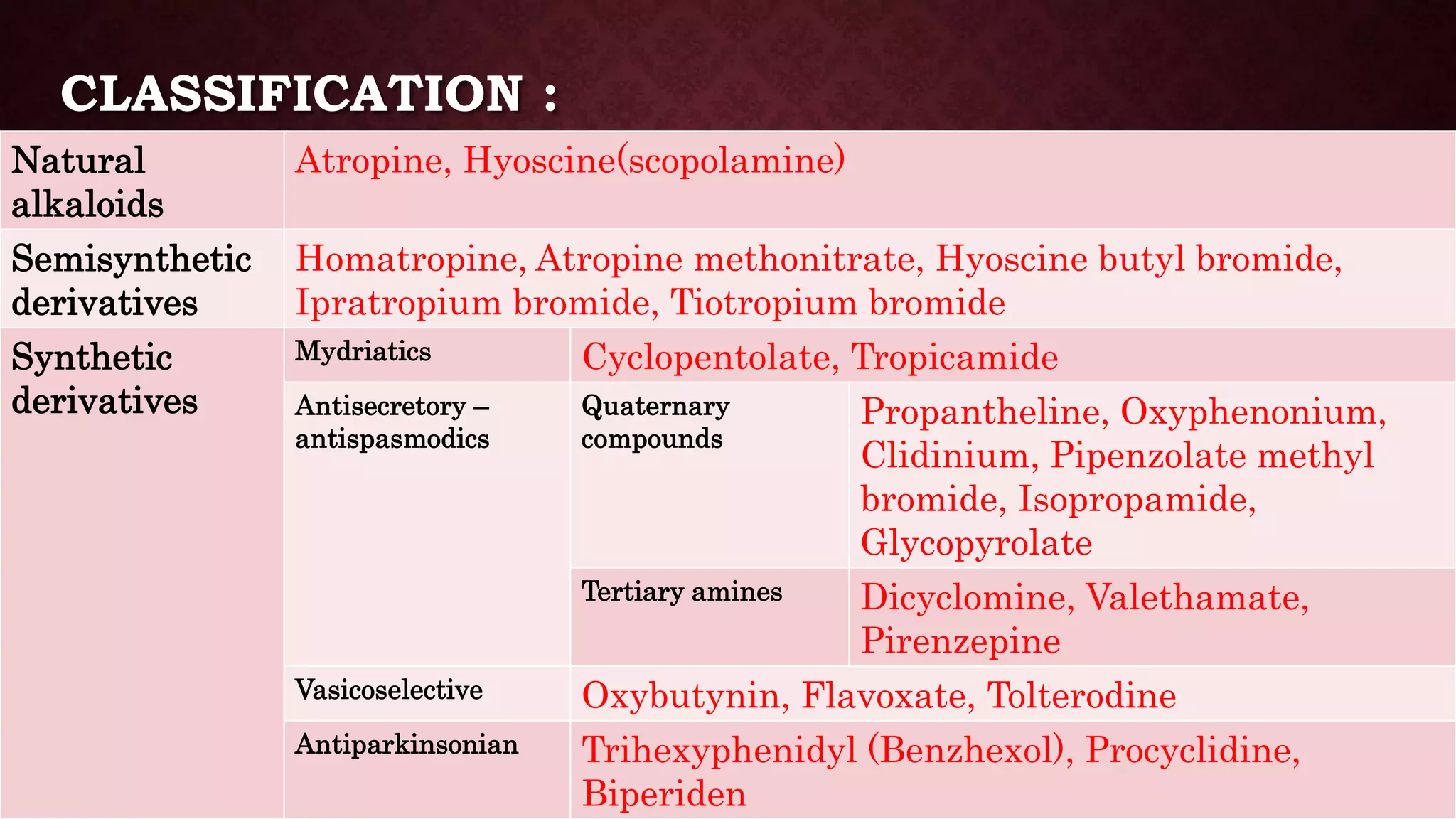
CLASSIFICATION :
Natural
alkaloids
Atropine, Hyoscine(scopolamine)
Semisynthetic
derivatives
Homatropine, Atropine methonitrate, Hyoscine butyl bromide,
Ipratropium bromide, Tiotropium bromide
Synthetic
derivatives
Mydriatics Cyclopentolate, Tropicamide
Antisecretory –
antispasmodics
Quaternary
compounds
Propantheline, Oxyphenonium,
Clidinium, Pipenzolate methyl
bromide, Isopropamide,
Glycopyrolate
Tertiary amines Dicyclomine, Valethamate,
Pirenzepine
Vasicoselective Oxybutynin, Flavoxate, Tolterodine
Antiparkinsonian Trihexyphenidyl (Benzhexol), Procyclidine,
Biperiden
ATROPINE
• It is a natural alkaloid Obtained from atropine
belladonna.
• They are muscarinic antagonist.
MECHANISM OF ACTION :
• Bind to muscarinic receptors & block the effects of acetylcholine at
the receptors.
• Competitive antagonist.
• Antagonism reversible by increasing the concentration of agonist.
• Acetylcholine & scopolamine are non- selective antagonist & block
all the sub types (M1 to M5)
ACTIONS :
• CVS :
oHeart - ↑ heart rate by blocking M2
receptor in SA node.
• Secretions :
oReduces all secretions except milk.
• Smooth muscle :
• GIT – reduces the tone & motility &
relives spasm
• Biliary tract – relives biliary spasm
• Bronchi : Bronchodilation
• Genitourinary bladder – relaxes
ureters & bladders.
• Eye :
• Mydriasis (passive) – relaxing
sphincter pupillae
• Cyclopegia – paralysis of ciliary
muscle
• ↑ IOP – block the drainage of
aqueous humor.
• CNS :
• Restlessness, disorientation,
hallucination, delirium.
PHARMACOKINETICS :
• Well absorbed
• Cross BBB
• Metabolised in the liver.
• T
1
2
: 3-4 hrs
ADVERSE EFFECTS :
• Blurring of vision
• Dry mouth
• Dysphagia
• Dry skin
• Fever
• Constipation
• Urinary retention
BELLADONNA POISONING :
• Symptoms :
• Palpitation, flushing, restlessness, delirium, hallucination,
psychosis, circulatory collapse, respiratory failure, convulsion,
coma.
• Rx.
• Symptomatic
• Gastric lavage
• Physostigmine can also be administered.
USES :
• Cardiovascular disease – bradycardia due to excessive vagal
stimulation
• Eye
• Diagnostic (testing of errors of refraction & fundoscopic examination
• Therapeutic : mydriatics + miotics – to break adhesion between iris & lens
• To provide rest to iris in iritis, iridocyclitis, keratitis
• Antispasmodic : renal colic, biliary colic, abdominal colic
• Pre- anaesthetic medication : ↓ salivary secretion & prevent
laryngospasm, bradycardia, aspiration pneumonia
• Poisoning : Organophosphorus, curare
• Motion sickness - hyoscine
THANK YOU…

Anticholinergic drugs

  • 1.
  • 2.
    INTRODUCTION : • Agentswhich block the effects of Ach on cholinergic receptors. • Commonly antimuscarinic drugs are considered as anticholinergic drugs. • [PARASYMPATHOLYTIC DRUGS] • Atropine is the prototype drug.
  • 3.
    CLASSIFICATION : Natural alkaloids Atropine, Hyoscine(scopolamine) Semisynthetic derivatives Homatropine,Atropine methonitrate, Hyoscine butyl bromide, Ipratropium bromide, Tiotropium bromide Synthetic derivatives Mydriatics Cyclopentolate, Tropicamide Antisecretory – antispasmodics Quaternary compounds Propantheline, Oxyphenonium, Clidinium, Pipenzolate methyl bromide, Isopropamide, Glycopyrolate Tertiary amines Dicyclomine, Valethamate, Pirenzepine Vasicoselective Oxybutynin, Flavoxate, Tolterodine Antiparkinsonian Trihexyphenidyl (Benzhexol), Procyclidine, Biperiden
  • 4.
    ATROPINE • It isa natural alkaloid Obtained from atropine belladonna. • They are muscarinic antagonist.
  • 5.
    MECHANISM OF ACTION: • Bind to muscarinic receptors & block the effects of acetylcholine at the receptors. • Competitive antagonist. • Antagonism reversible by increasing the concentration of agonist. • Acetylcholine & scopolamine are non- selective antagonist & block all the sub types (M1 to M5)
  • 6.
    ACTIONS : • CVS: oHeart - ↑ heart rate by blocking M2 receptor in SA node. • Secretions : oReduces all secretions except milk. • Smooth muscle : • GIT – reduces the tone & motility & relives spasm • Biliary tract – relives biliary spasm • Bronchi : Bronchodilation • Genitourinary bladder – relaxes ureters & bladders. • Eye : • Mydriasis (passive) – relaxing sphincter pupillae • Cyclopegia – paralysis of ciliary muscle • ↑ IOP – block the drainage of aqueous humor. • CNS : • Restlessness, disorientation, hallucination, delirium.
  • 7.
    PHARMACOKINETICS : • Wellabsorbed • Cross BBB • Metabolised in the liver. • T 1 2 : 3-4 hrs
  • 8.
    ADVERSE EFFECTS : •Blurring of vision • Dry mouth • Dysphagia • Dry skin • Fever • Constipation • Urinary retention
  • 9.
    BELLADONNA POISONING : •Symptoms : • Palpitation, flushing, restlessness, delirium, hallucination, psychosis, circulatory collapse, respiratory failure, convulsion, coma. • Rx. • Symptomatic • Gastric lavage • Physostigmine can also be administered.
  • 10.
    USES : • Cardiovasculardisease – bradycardia due to excessive vagal stimulation • Eye • Diagnostic (testing of errors of refraction & fundoscopic examination • Therapeutic : mydriatics + miotics – to break adhesion between iris & lens • To provide rest to iris in iritis, iridocyclitis, keratitis • Antispasmodic : renal colic, biliary colic, abdominal colic • Pre- anaesthetic medication : ↓ salivary secretion & prevent laryngospasm, bradycardia, aspiration pneumonia • Poisoning : Organophosphorus, curare • Motion sickness - hyoscine
  • 12.