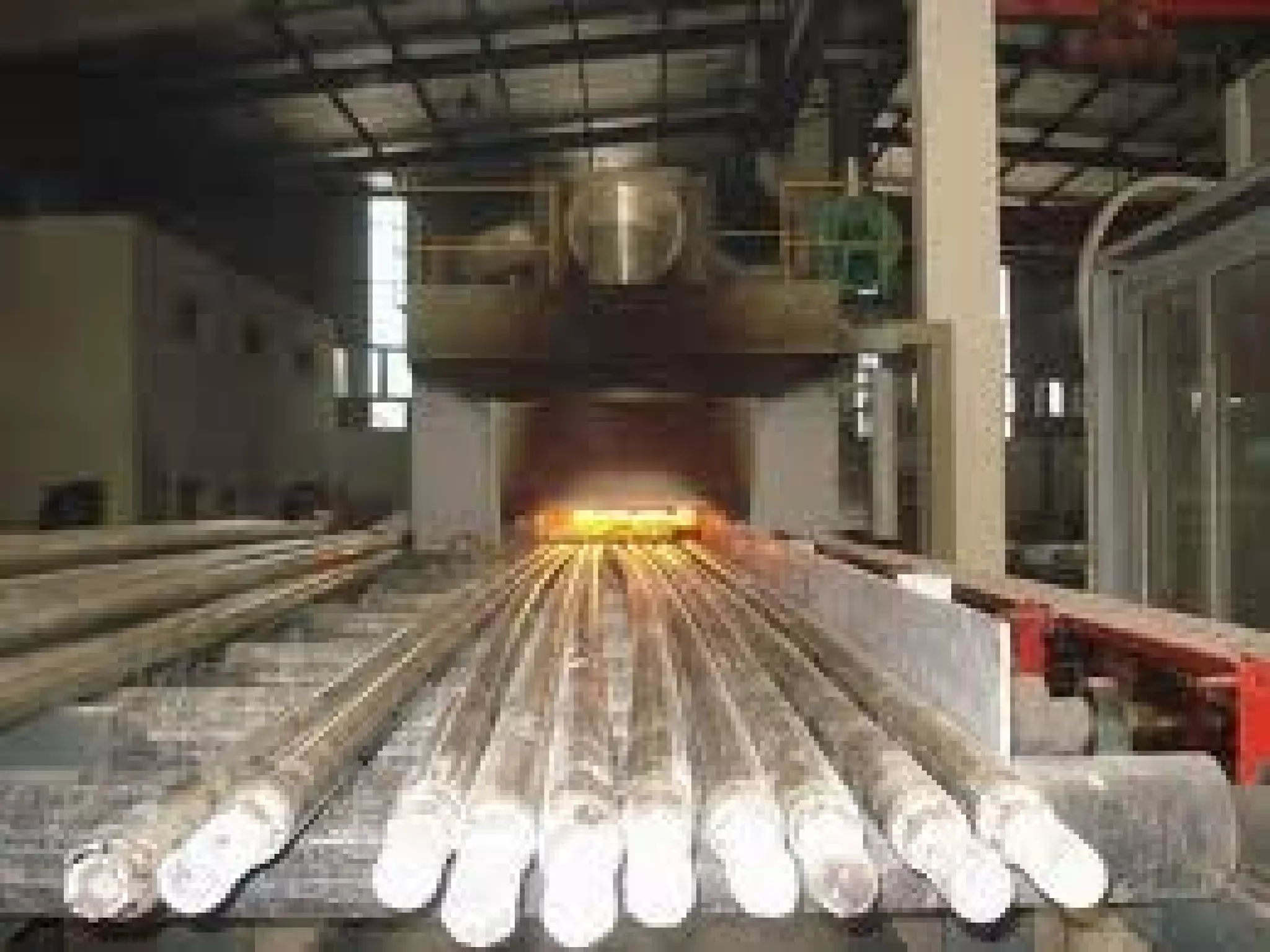
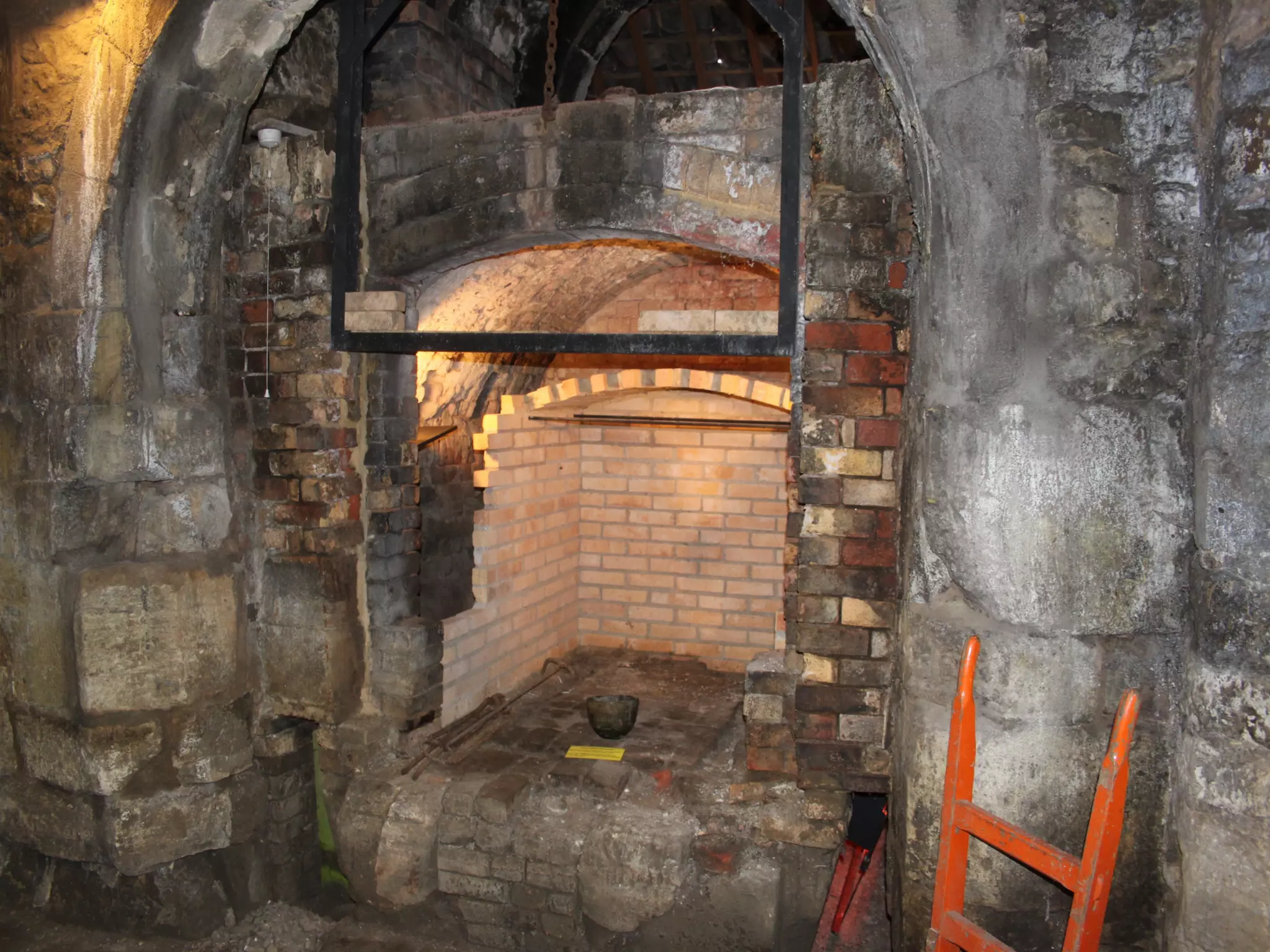
Annealing is a heat treatment that involves heating a material to above its critical temperature, maintaining that temperature, and then slowly cooling. This process allows atoms to migrate and break up dislocations within the material's crystal lattice. As a result, the material becomes softer and more ductile as hardness decreases and internal stresses are reduced. There are three main stages of annealing: recovery, where defects are removed; recrystallization, where new defect-free grains nucleate and grow; and grain growth, where the grain size increases. Annealing is commonly used to improve the workability and machinability of metals like steel and copper.
Overview of annealing as a heat treatment process in metallurgy, emphasizing its purpose to enhance ductility.
Discussion on atomic diffusion and the effects of heat on bond breaking, resulting in increased ductility and altered mechanical properties of materials.
Description of the three stages: recovery, recrystallization, and grain growth, detailing their impacts on metal properties.
Different annealing processes for steel, including full annealing with specific temperature ranges and effects on steel properties.
Practical uses of annealing to improve machinability and ductility in copper and aluminum, highlighting its industrial relevance.
Introduction
Annealing, inmetallurgy and materials science, is a
heat treatment that alters a material to increase its
ductility and to make it more workable.
It involves heating material to above its critical
temperature, maintaining a suitable temperature, and
then cooling.
Annealing can induce ductility, soften material, refine the
structure by making it homogeneous, and improve cold
working properties.
3.
Thermodynamics
Annealing occursby the diffusion of atoms within
a solid material.
Heat increases the rate of diffusion by providing
the energy needed to break bonds.
The movement of atoms has the effect of
redistributing and destroying the dislocations in
metals which allows metals to deform more
easily, so increases their ductility.
4.
On heatingto a specific temperature atoms will
migrate within the lattice and it increases
mechanical properties.
Hardness decreases and ductility increases,
because dislocations are eliminated and the
metal's crystal lattice is altered.
The amount of process-initiating Gibbs free
energy in a deformed metal is also reduced by
the annealing process
5.
Process of Annealing
“In simple words the annealing is the process in which the
metal is heated above the recrystallizion temperature for
enough time and then cooling is done in air up to room
temperature.”
The three stages of the annealing process are as follows :-
1. Recovery
2. Recrystallization
3. Grain growth
6.
Recovery
Recovery isa process by which deformed grains can
reduce their stored energy by the removal or
rearrangement of defects in their crystal structure.
It occurs with softening of the metal through removal of
primarily linear defects called dislocations and the
internal stresses they cause.
Recovery occurs at the lower temperature stage of all
annealing processes and before the appearance of new
strain-free grains.
7.
Recrystallization
Recrystallization isa process by which deformed grains
are replaced by a new set of undeformed grains
In this stage new strain-free grains nucleate and grow to
replace those deformed by internal stresses.
If annealing is allowed to continue once recrystallization
has completed, then grain growth (the third stage)
occurs.
8.
Grain Growth
Graingrowth is the increase in size of grains (crystallites) in a
material at high temperature.
In grain growth, the microstructure starts to coarsen and may cause
the metal to lose a substantial part of its original strength. This can
however be regained with Hardening(metallurgy).
9.
Types of annealingprocess for
steel
1. Full annealing
2. Process annealing
3. Spheroidise annealing
4. Stress relief annealing
Full annealingis the
process of slowly raising
the temperature about 50
ºC above the Austenitic
temperature in the case
of Hypoeutectoid steels
(steels with < 0.77%
Carbon) and 50 ºC into
the Austenite-Cementite
region in the case of
Hypereutectoid steels
(steels with > 0.77%
Carbon).
12.
It isthen slowly cooled at the rate of about 20 ºC/hr (36
ºF/hr) in a furnace to about 50 ºC into the Ferrite-
Cementite range.
At this point, it can be cooled in room temperature air
with natural convection.
The grain structure has coarse Pearlite with ferrite or
Cementite (depending on whether hypo or hyper
eutectoid). The steel becomes soft and ductile.
In any case the result is a more ductile material but a
lower yield strength and a lower tensile strength. This
process is also called LP annealing
13.
Uses
1. To improvemachinability.
2. To soften the Steel.
3. To remove Gases.
4. To induce stable structure.
5. To improve mechanical property.
14.
Industrial Application
Dueto annealing the ductility of copper increases so the
copper is use to make copper wire.
By the annealing, aluminium become soften so that it is
use as aluminium coil.