



Arshed Mehmood     08-ME-05
  Usman Hafeez     08-ME-10
     Asad Munir    08-ME-14
       Ali Adnan   08-ME-16
Steel can be classified according to,

   American’s Standard

   % age of Carbon content
The Society of Automotive Engineers
(SAE) has established standards for
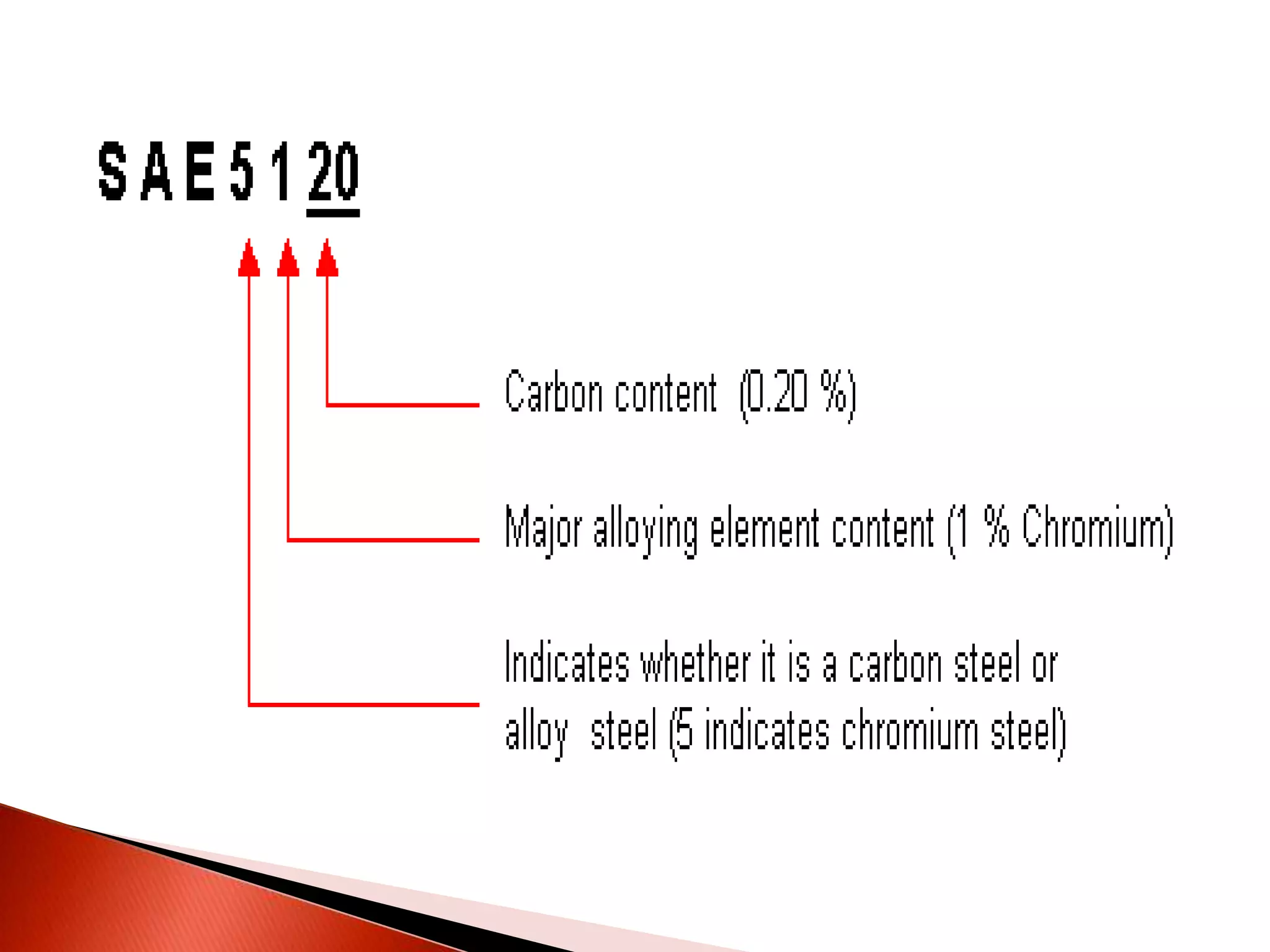
specific analysis of steels. In the 10XX
series, the first digit indicates a plain
carbon steel. The second digit indicates
a modification in the alloys. 10XX means
that it is a plain carbon steel where the
second digit (zero ) indicates that there
is no modification in the alloys. The last
two digits denote the carbon content in
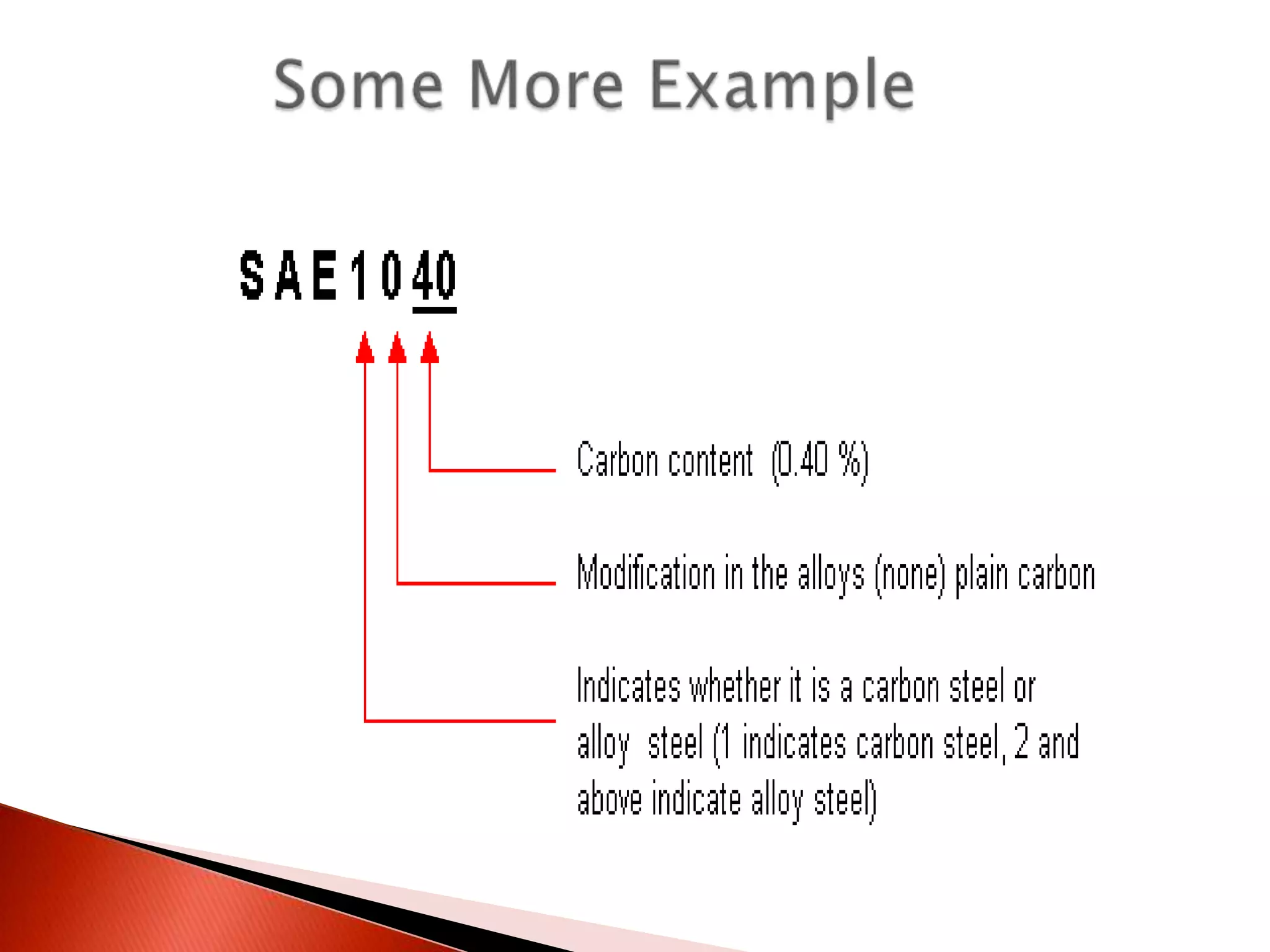
points. For example SAE 1040 is a
carbon steel where 40 points represent
0.40 % Carbon content. Alloy steels are
indicated by 2XXX, 3XXX, 4XXX, etc..
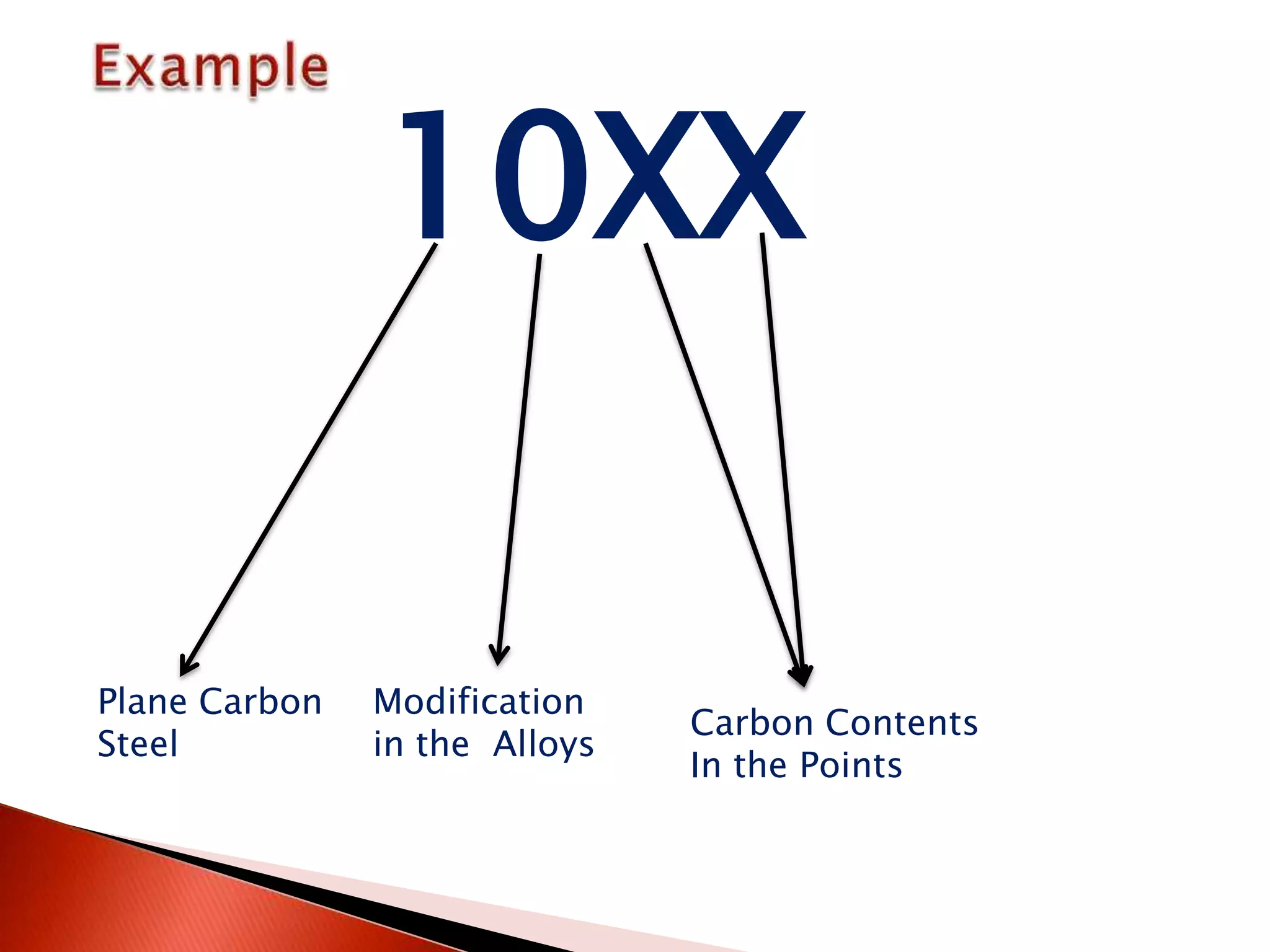
10XX

Plane Carbon   Modification
                               Carbon Contents
Steel          in the Alloys
                               In the Points
SAE - AISI
 Number
                             Classification


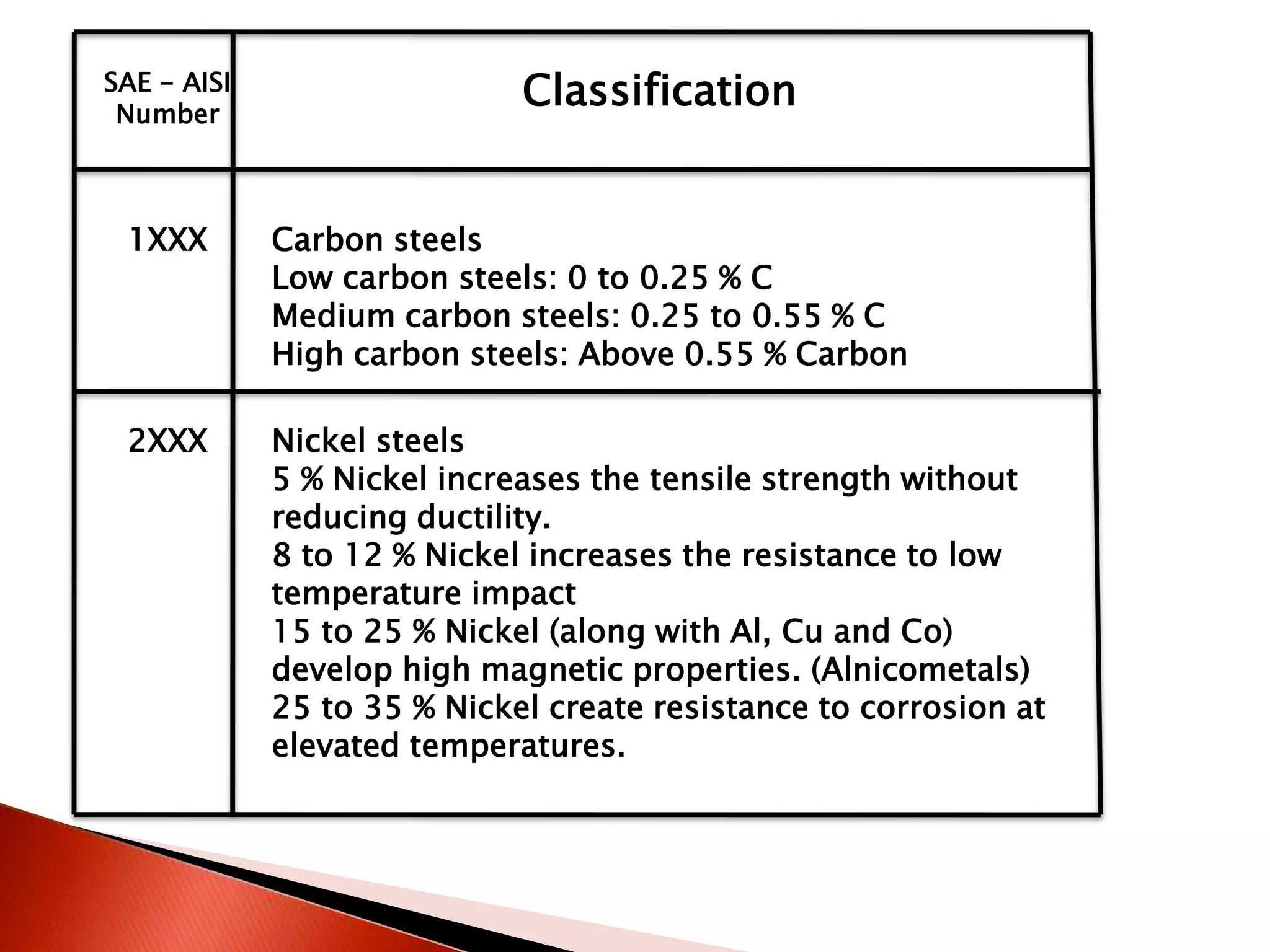
 1XXX        Carbon steels
             Low carbon steels: 0 to 0.25 % C
             Medium carbon steels: 0.25 to 0.55 % C
             High carbon steels: Above 0.55 % Carbon

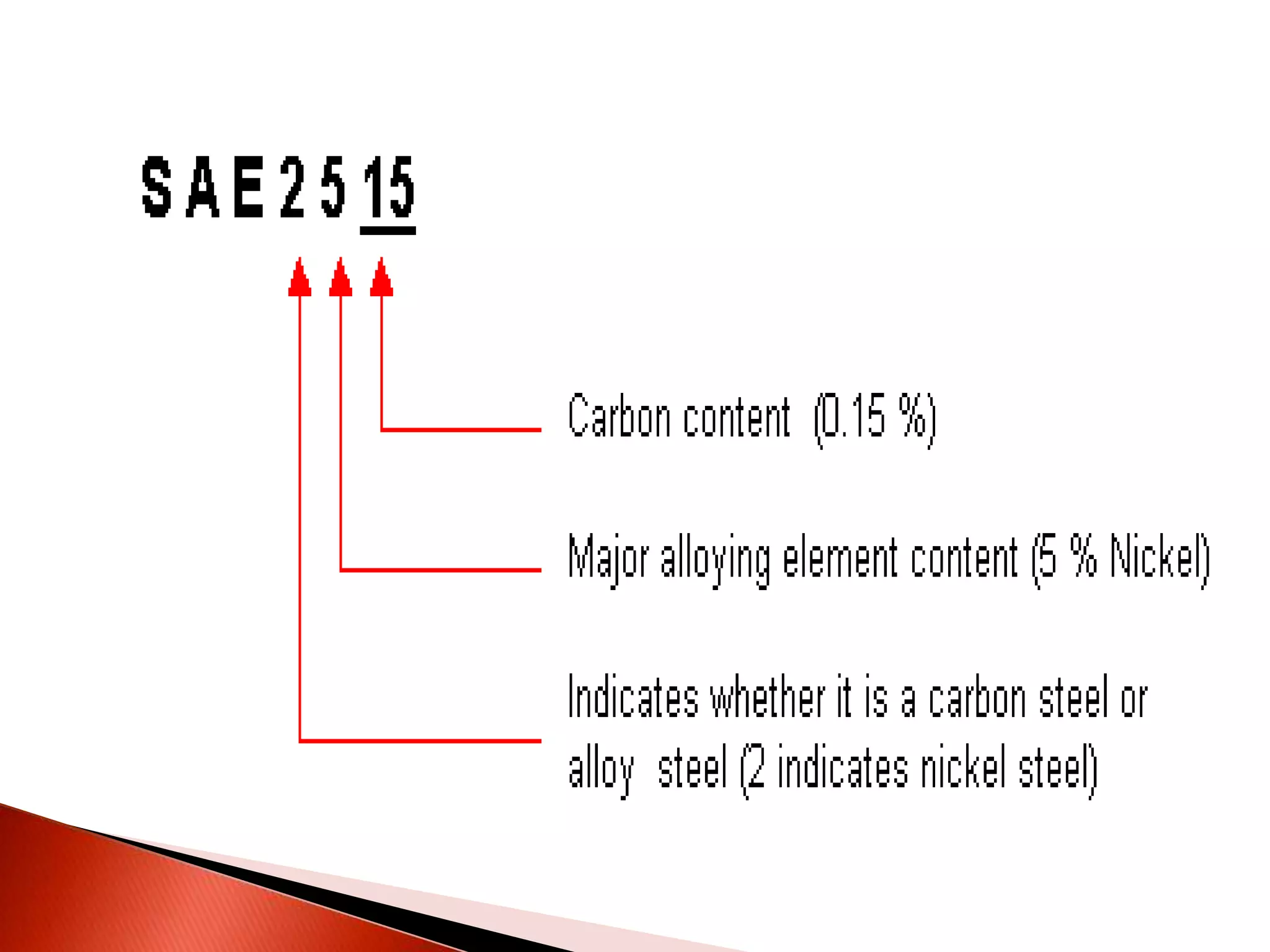
 2XXX        Nickel steels
             5 % Nickel increases the tensile strength without
             reducing ductility.
             8 to 12 % Nickel increases the resistance to low
             temperature impact
             15 to 25 % Nickel (along with Al, Cu and Co)
             develop high magnetic properties. (Alnicometals)
             25 to 35 % Nickel create resistance to corrosion at
             elevated temperatures.
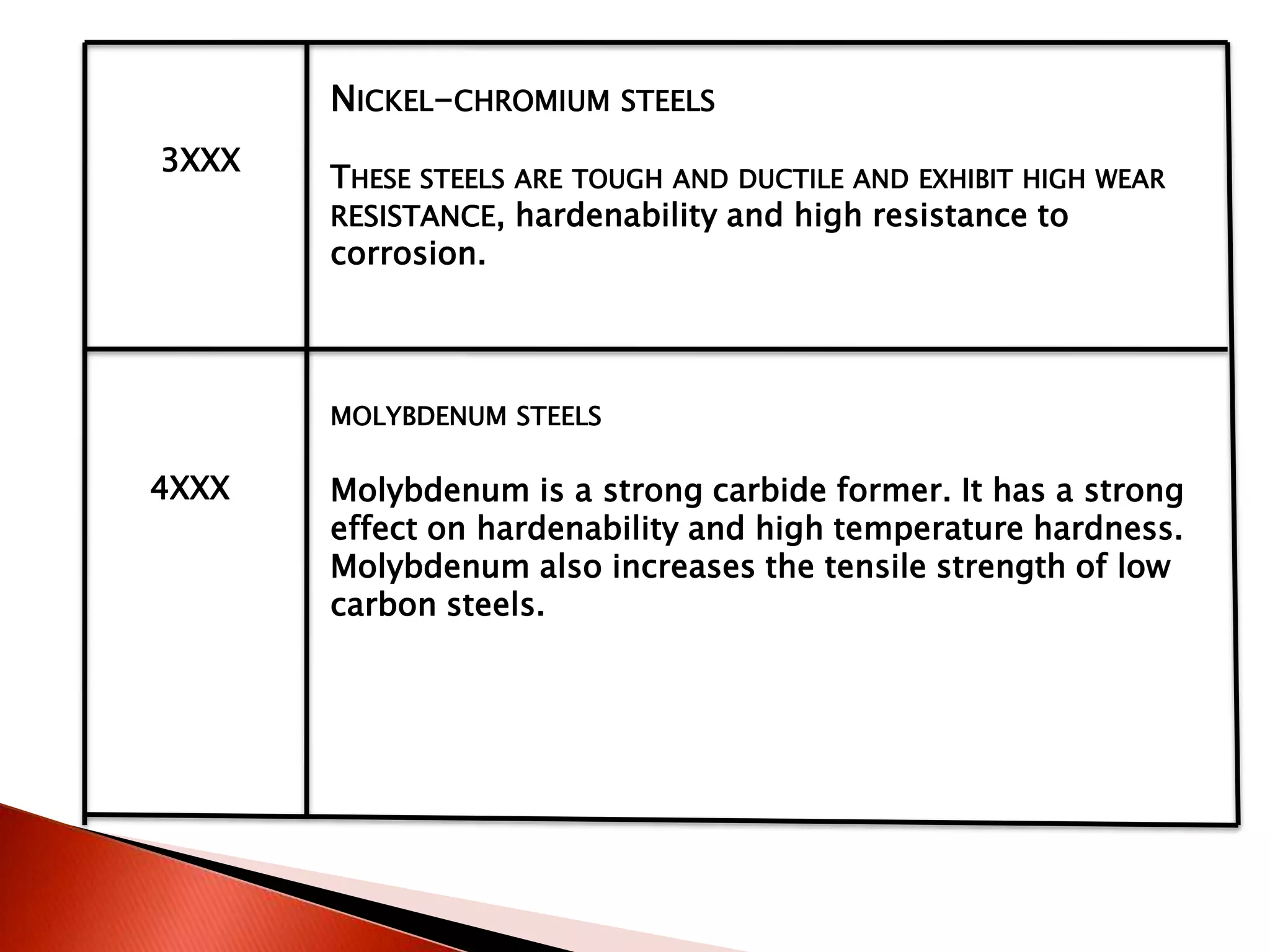
NICKEL-CHROMIUM STEELS
3XXX
       THESE STEELS ARE TOUGH AND DUCTILE AND EXHIBIT HIGH WEAR
       RESISTANCE, hardenability and high resistance to
       corrosion.


       MOLYBDENUM STEELS

4XXX   Molybdenum is a strong carbide former. It has a strong
       effect on hardenability and high temperature hardness.
       Molybdenum also increases the tensile strength of low
       carbon steels.
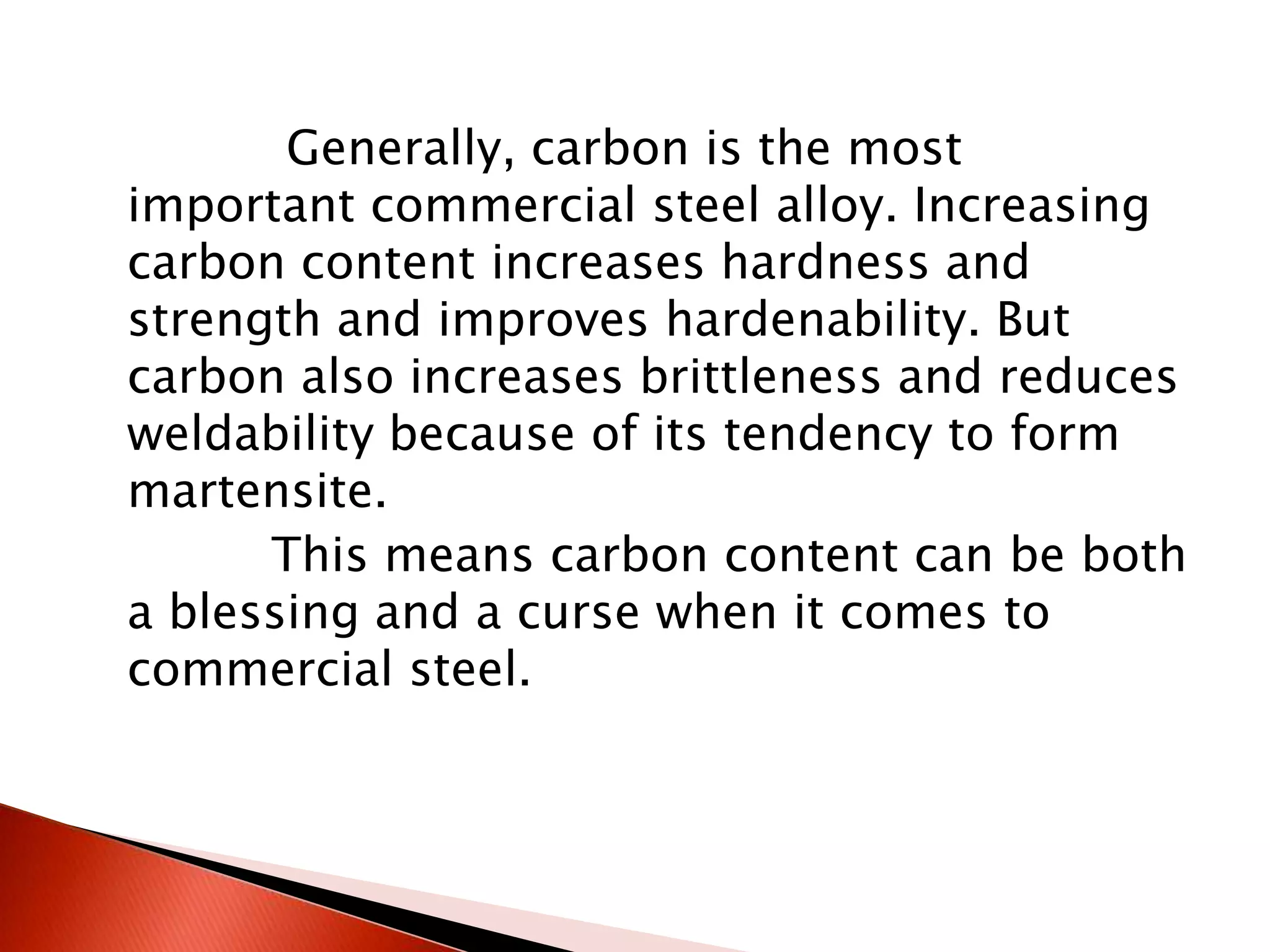
Generally, carbon is the most
important commercial steel alloy. Increasing
carbon content increases hardness and
strength and improves hardenability. But
carbon also increases brittleness and reduces
weldability because of its tendency to form
martensite.
      This means carbon content can be both
a blessing and a curse when it comes to
commercial steel.
Most commercial steels are classified into
    one of three groups:

   Plain carbon steels

   Low-alloy steels

   High-alloy steels
These steels usually are iron with less
than 1 percent carbon, plus small amounts of
manganese, phosphorus, sulfur, and silicon.

     The weldability and other characteristics
of these steels are primarily a product of
carbon content, although the alloying and
residual elements do have a minor influence.
   Low

   Medium

   High

   Very high
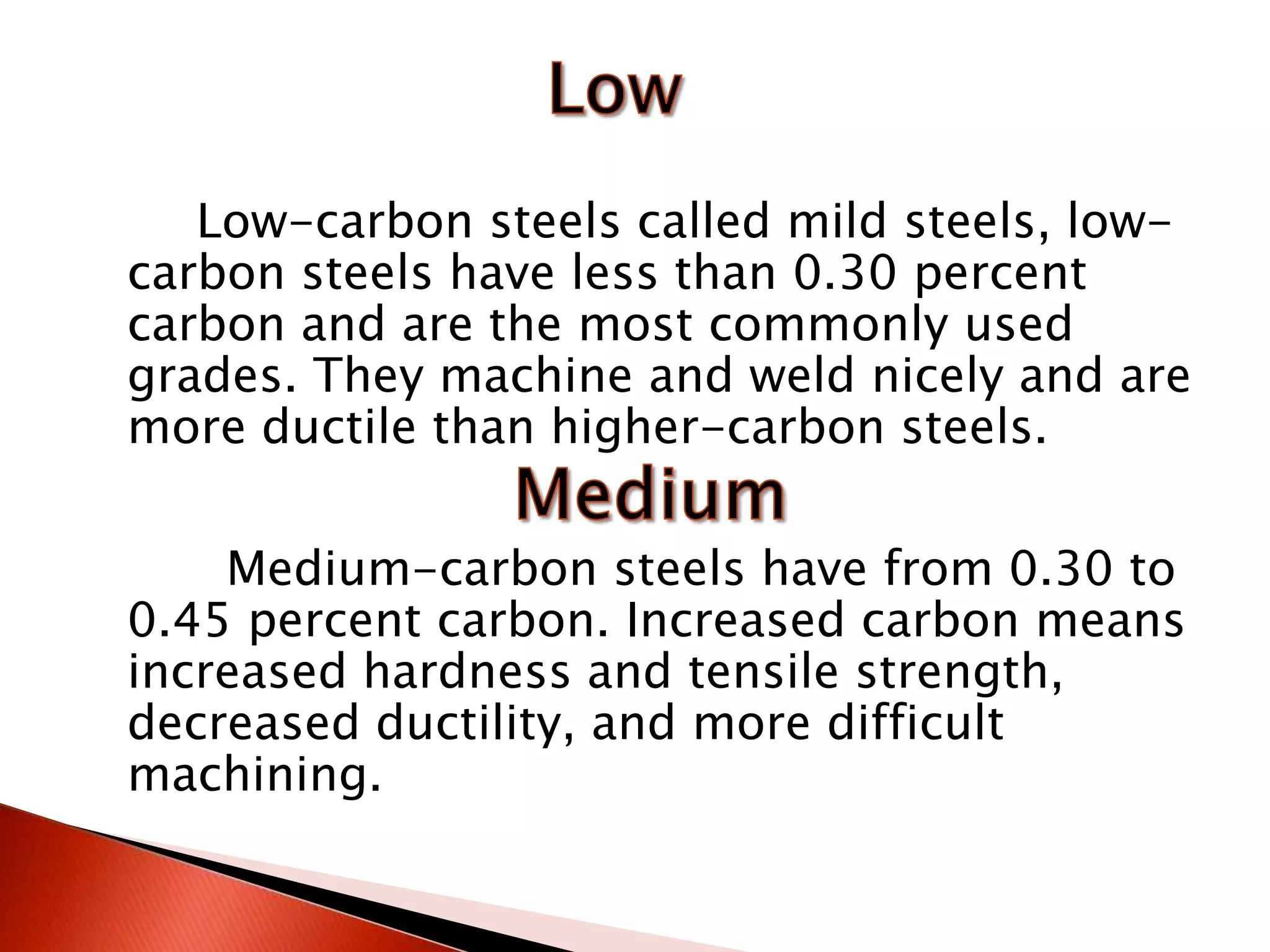
Low-carbon steels called mild steels, low-
carbon steels have less than 0.30 percent
carbon and are the most commonly used
grades. They machine and weld nicely and are
more ductile than higher-carbon steels.

    Medium-carbon steels have from 0.30 to
0.45 percent carbon. Increased carbon means
increased hardness and tensile strength,
decreased ductility, and more difficult
machining.
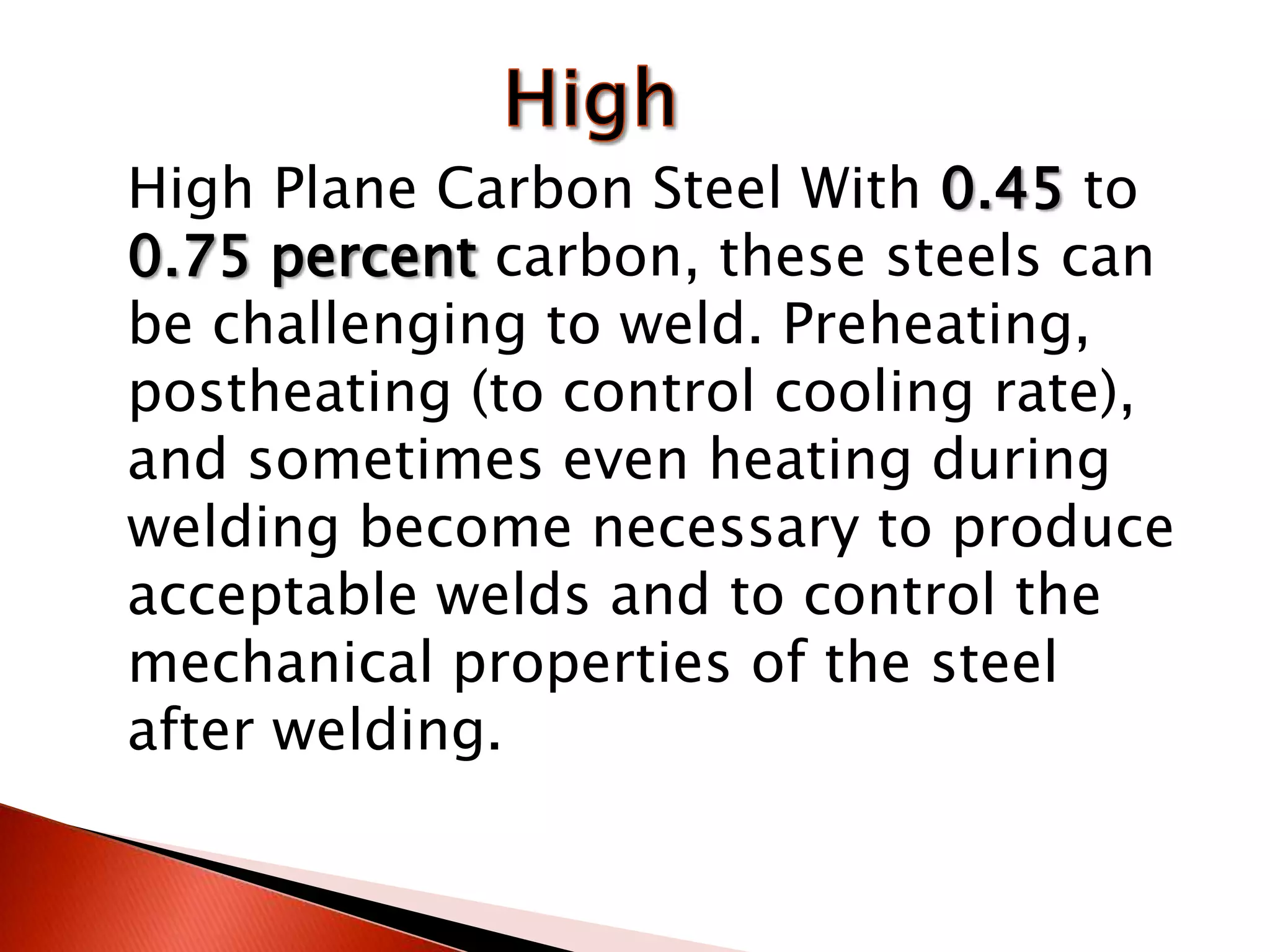
High Plane Carbon Steel With 0.45 to
0.75 percent carbon, these steels can
be challenging to weld. Preheating,
postheating (to control cooling rate),
and sometimes even heating during
welding become necessary to produce
acceptable welds and to control the
mechanical properties of the steel
after welding.
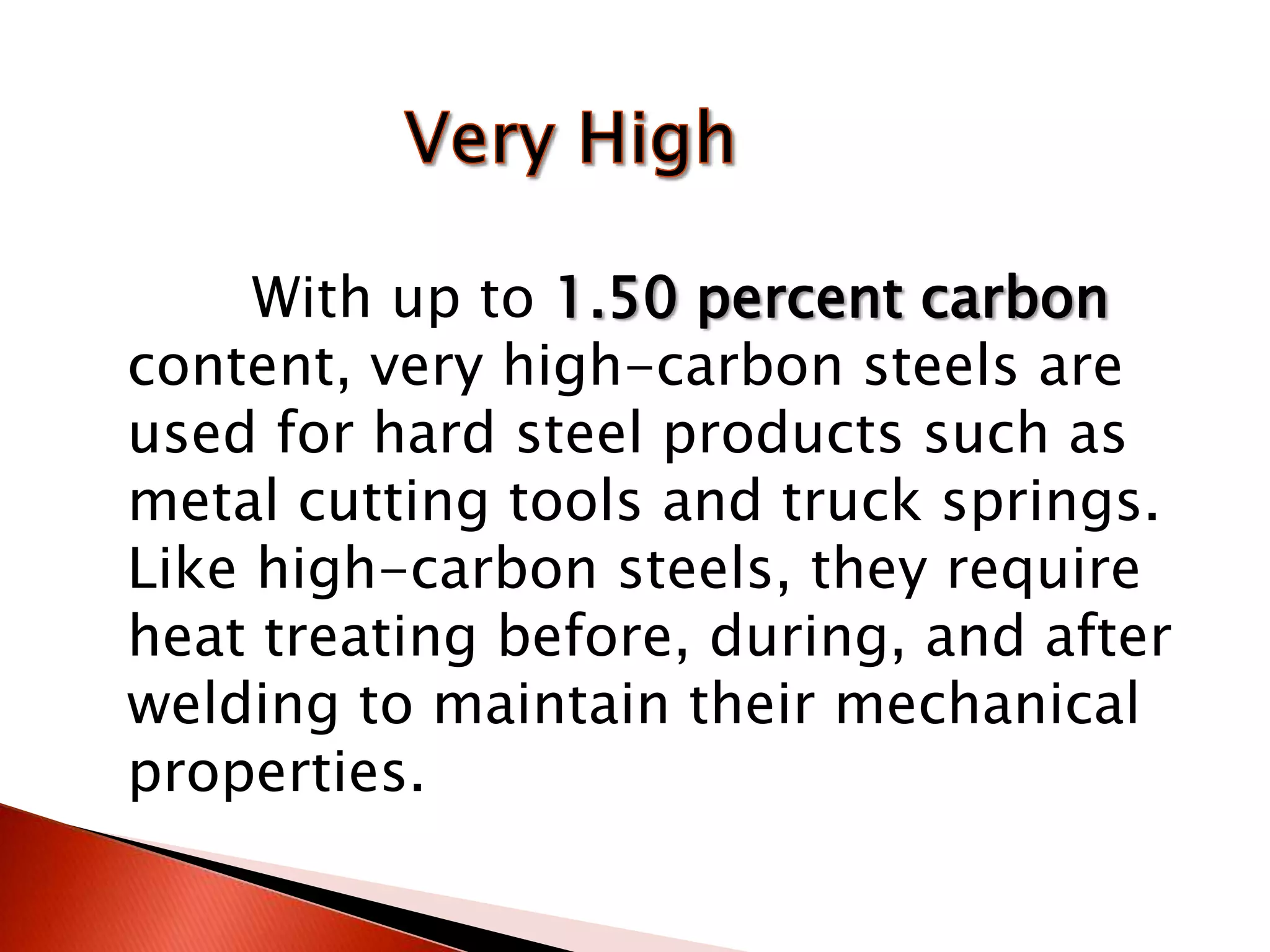
With up to 1.50 percent carbon
content, very high-carbon steels are
used for hard steel products such as
metal cutting tools and truck springs.
Like high-carbon steels, they require
heat treating before, during, and after
welding to maintain their mechanical
properties.
When these steels are designed
for welded applications, their carbon
content is usually below 0.25 percent
and often below 0.15 percent. Typical
alloys include nickel, chromium,
molybdenum, manganese, and silicon,
which add strength at room
temperatures and increase low-
temperature notch toughness.
These alloys can, in the right
combination, improve corrosion
resistance and influence the steel's
response to heat treatment. But the
alloys added can also negatively
influence crack susceptibility, so it's a
good idea to use low-hydrogen
welding processes with them.
Preheating might also prove
necessary. This can be determined by
using the carbon equivalent formula,
which we'll cover in a later issue.
For the most part, we're talking
about stainless steel here, the most
important commercial high-alloy
steel. Stainless steels are at least 12
percent chromium and many have
high nickel contents.
   Austenitic

   Ferritic

   Martensitic
Austenitic stainless steels offer
excellent weldability, but austenite
isn't stable at room temperature.
        Consequently, specific alloys
must be added to stabilize austenite.
The most important austenite
stabilizer is nickel, and others include
carbon, manganese, and nitrogen.
Ferritic
     Ferritic stainless steels have 12 to 27
percent chromium with small amounts of
austenite-forming alloys.
             Martensitic
Martensitic stainless steels make up the
cutlery grades. They have the least
amount of chromium, offer high
hardenability, and require both pre- and
postheating when welding to prevent
cracking in the heat-affected zone (HAZ).
Engineering matrerials

Engineering matrerials

  • 2.
    Arshed Mehmood 08-ME-05 Usman Hafeez 08-ME-10 Asad Munir 08-ME-14 Ali Adnan 08-ME-16
  • 4.
    Steel can beclassified according to,  American’s Standard  % age of Carbon content
  • 6.
    The Society ofAutomotive Engineers (SAE) has established standards for specific analysis of steels. In the 10XX series, the first digit indicates a plain carbon steel. The second digit indicates a modification in the alloys. 10XX means that it is a plain carbon steel where the second digit (zero ) indicates that there is no modification in the alloys. The last two digits denote the carbon content in points. For example SAE 1040 is a carbon steel where 40 points represent 0.40 % Carbon content. Alloy steels are indicated by 2XXX, 3XXX, 4XXX, etc..
  • 7.
    10XX Plane Carbon Modification Carbon Contents Steel in the Alloys In the Points
  • 11.
    SAE - AISI Number Classification 1XXX Carbon steels Low carbon steels: 0 to 0.25 % C Medium carbon steels: 0.25 to 0.55 % C High carbon steels: Above 0.55 % Carbon 2XXX Nickel steels 5 % Nickel increases the tensile strength without reducing ductility. 8 to 12 % Nickel increases the resistance to low temperature impact 15 to 25 % Nickel (along with Al, Cu and Co) develop high magnetic properties. (Alnicometals) 25 to 35 % Nickel create resistance to corrosion at elevated temperatures.
  • 12.
    NICKEL-CHROMIUM STEELS 3XXX THESE STEELS ARE TOUGH AND DUCTILE AND EXHIBIT HIGH WEAR RESISTANCE, hardenability and high resistance to corrosion. MOLYBDENUM STEELS 4XXX Molybdenum is a strong carbide former. It has a strong effect on hardenability and high temperature hardness. Molybdenum also increases the tensile strength of low carbon steels.
  • 15.
    Generally, carbon isthe most important commercial steel alloy. Increasing carbon content increases hardness and strength and improves hardenability. But carbon also increases brittleness and reduces weldability because of its tendency to form martensite. This means carbon content can be both a blessing and a curse when it comes to commercial steel.
  • 16.
    Most commercial steelsare classified into one of three groups:  Plain carbon steels  Low-alloy steels  High-alloy steels
  • 17.
    These steels usuallyare iron with less than 1 percent carbon, plus small amounts of manganese, phosphorus, sulfur, and silicon. The weldability and other characteristics of these steels are primarily a product of carbon content, although the alloying and residual elements do have a minor influence.
  • 18.
    Low  Medium  High  Very high
  • 20.
    Low-carbon steels calledmild steels, low- carbon steels have less than 0.30 percent carbon and are the most commonly used grades. They machine and weld nicely and are more ductile than higher-carbon steels. Medium-carbon steels have from 0.30 to 0.45 percent carbon. Increased carbon means increased hardness and tensile strength, decreased ductility, and more difficult machining.
  • 21.
    High Plane CarbonSteel With 0.45 to 0.75 percent carbon, these steels can be challenging to weld. Preheating, postheating (to control cooling rate), and sometimes even heating during welding become necessary to produce acceptable welds and to control the mechanical properties of the steel after welding.
  • 22.
    With up to1.50 percent carbon content, very high-carbon steels are used for hard steel products such as metal cutting tools and truck springs. Like high-carbon steels, they require heat treating before, during, and after welding to maintain their mechanical properties.
  • 24.
    When these steelsare designed for welded applications, their carbon content is usually below 0.25 percent and often below 0.15 percent. Typical alloys include nickel, chromium, molybdenum, manganese, and silicon, which add strength at room temperatures and increase low- temperature notch toughness.
  • 25.
    These alloys can,in the right combination, improve corrosion resistance and influence the steel's response to heat treatment. But the alloys added can also negatively influence crack susceptibility, so it's a good idea to use low-hydrogen welding processes with them. Preheating might also prove necessary. This can be determined by using the carbon equivalent formula, which we'll cover in a later issue.
  • 26.
    For the mostpart, we're talking about stainless steel here, the most important commercial high-alloy steel. Stainless steels are at least 12 percent chromium and many have high nickel contents.
  • 27.
    Austenitic  Ferritic  Martensitic
  • 28.
    Austenitic stainless steelsoffer excellent weldability, but austenite isn't stable at room temperature. Consequently, specific alloys must be added to stabilize austenite. The most important austenite stabilizer is nickel, and others include carbon, manganese, and nitrogen.
  • 29.
    Ferritic Ferritic stainless steels have 12 to 27 percent chromium with small amounts of austenite-forming alloys. Martensitic Martensitic stainless steels make up the cutlery grades. They have the least amount of chromium, offer high hardenability, and require both pre- and postheating when welding to prevent cracking in the heat-affected zone (HAZ).