DR.PRIYANKA CHOUDHARY
JR-2 OPHTHALMLOGY DEPT
MODERATOR:-DR.ABHA SHUKLA
ASST. PROFF DEPT OF OPHTHALMOLOGY
 Size 3-4mm
 Muscles controlling pupil
Sphincter pupillae
Dilator pupillae
 AFFERENT FIBRES- these fibres extend from retina to
pretectal nucleus in midbrain
 RODS AND CONES
GANGLION CELLS
OPTIC NERVE
CHIASMA
PRETECTAL NUCLEUS
INTERNUNCIAL FIBRES
Pretectal nucleus to EWN.
 parasympathetic ganglion.
 The oculomotor nerve coming into the ganglion contains
= preganglionic axons from the EWN which form synapses with the
ciliary neurons.
=The postganglionic axons run in the short ciliar nerves and
innervate two muscles:
sphicter pupliae, ciliaris( accommodation) muscles
are involuntary – they are controlled by the ANS.
HAS THREE ROOTS
 parasympathetic root of ciliary ganglion originating from Edinger
westphal nucleus (or motor root)
 a sympathetic root of ciliary ganglion from internal carotid
plexus
 a sensory root of ciliary ganglion
DISEASES
 Adie tonic pupil
 Adie syndrome[ (tonic pupil plus absent deep tendon reflexes).
 Light-near dissociation(no reaction of pupil to light but reaction to
accomodation present)
 AFFERENT FIBRES- these fibres extend from retina to
pretectal nucleus in midbrain
 RODS AND CONES
GANGLION CELLS
OPTIC NERVE
CHIASMA
PRETECTAL NUCLEUS
INTERNUNCIAL FIBRES
Pretectal nucleus to EWN.
 Consists of parasympathetic fibres which
arise from EWN and travel along 3RDnerve.
 Preganglionic fibres enter the inferior
division of 3RD nerve and via the nerve to IO
and relay in ciliary ganglion.
 Postganglionic fibres travel along short ciliary
nerves and supply sphincter pupillae
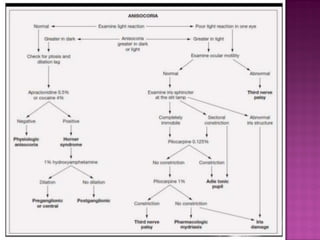
 Difference between the size of two pupil.
TYPE OF ANISOCORIA
 1.PHYSIOLOGIC ANISOCORIA:-
1. Simple/central/essential
2. Minimal anisocoria [<0.4mm]
3. Both pupils react well to light
4. No dilatation lag
5. Isolated condition
2.MIOSIS OF ONE PUPIL
 Effect of local miotic
drug
 Effect of systemic
morphine
 Iridocyclitis
 Horner’s syndrome
 Head injury
 Effect of strong light
3.MYDRIASIS OF ONE PUPIL
 Effect of topical
sympathomimetic drug
 Effect of topical
parasympatholytic drug
 Sphincter damage
 Internal ophthalmoplegia
 Third nerve paralysis
 Belladona poisoning
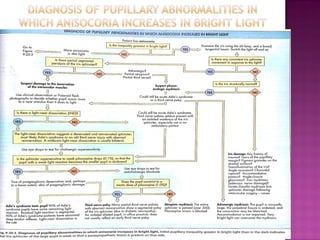
 Difference in pupil size >2mm is considered
pathological and warrants further evaluation.
 Anisocoria is not caused by optic nerve or
afferent pupil pathway dysfunction.
 Assuming sphincter is structurally normal on slit
lamp examination, anisocoria is a sign of
autonomic dysfunction.
 A pupil with a brisk sustained light reflex is a
normal pupil whether or not it appears larger or
smaller than its fellow
 In case pupil which is constricted or
dilated,check for consensual reflex in the other
pupil.presence of consensual reflex indicates
integrity of afferent system in that eye is normal
POSTGANGLIONIC-
postganglionic
fibres in the head
Causes- benign
vascular
headache
syndrome , head
trauma, intraaural
or retro parotid
trauma and
cavernous sinus
lesion
CENTRAL-
hypothalamus to
the ciliospinal
centre of budge
at C8-T2
Causes-
brainstem
vascular
lesions,demyeli
nation and
tumors,syringo
myelia and
spinal cord
lesions at C8-T2
PREGANGLIONIC-
C8-T2 of spinal cord
to the course of
preganglionic fibres
to the superior
cervical ganglion
Causes- pancoast’s
tumor , carotid and
aortic aneurysm,
malignant cervical
lymph nodes ,
congenital (birth
trauma)
Oculosympathetic paresis
3 TYPES
CLINICAL FEATURES
1. Ptosis
2. Apparent enopthalmos
3. Miosis
4. Dilatation lag
5. Facial anhydrosis
6. Heterochromia iridis
 Tonicity caused by damage to ciliary ganglion or
short ciliary nerves (postganglionic
parasympathetic nerve injury)
Characterised by-
 Sectoral iris sphincter palsy
 Poor reaction to light
 Denervation cholinergic supersensitivity
 Strong and tonic response to near vision i.e light
–near dissociation followed by slow redilation
 Idiopathic tonic pupil-adies pupil
 70% patients are female
 Accomodative paresis
 Difficulty refocussing for distance
 Neurosurgical emergency
 Complete/partial palsy with or without pupil
involvement
 Complete/partial ptosis which may mask
diplopia
 Clinical presentation depends on location of
dysfunctionalong pathway between 3rd nerve
nucleus in midbrain and its branches of 3rd
nerve
 Diagnosis is critical if pupil is involved
Anisocoria
Anisocoria
Anisocoria

Anisocoria

  • 1.
    DR.PRIYANKA CHOUDHARY JR-2 OPHTHALMLOGYDEPT MODERATOR:-DR.ABHA SHUKLA ASST. PROFF DEPT OF OPHTHALMOLOGY
  • 2.
     Size 3-4mm Muscles controlling pupil Sphincter pupillae Dilator pupillae
  • 3.
     AFFERENT FIBRES-these fibres extend from retina to pretectal nucleus in midbrain  RODS AND CONES GANGLION CELLS OPTIC NERVE CHIASMA PRETECTAL NUCLEUS INTERNUNCIAL FIBRES Pretectal nucleus to EWN.
  • 7.
     parasympathetic ganglion. The oculomotor nerve coming into the ganglion contains = preganglionic axons from the EWN which form synapses with the ciliary neurons. =The postganglionic axons run in the short ciliar nerves and innervate two muscles: sphicter pupliae, ciliaris( accommodation) muscles are involuntary – they are controlled by the ANS. HAS THREE ROOTS  parasympathetic root of ciliary ganglion originating from Edinger westphal nucleus (or motor root)  a sympathetic root of ciliary ganglion from internal carotid plexus  a sensory root of ciliary ganglion DISEASES  Adie tonic pupil  Adie syndrome[ (tonic pupil plus absent deep tendon reflexes).  Light-near dissociation(no reaction of pupil to light but reaction to accomodation present)
  • 8.
     AFFERENT FIBRES-these fibres extend from retina to pretectal nucleus in midbrain  RODS AND CONES GANGLION CELLS OPTIC NERVE CHIASMA PRETECTAL NUCLEUS INTERNUNCIAL FIBRES Pretectal nucleus to EWN.
  • 9.
     Consists ofparasympathetic fibres which arise from EWN and travel along 3RDnerve.  Preganglionic fibres enter the inferior division of 3RD nerve and via the nerve to IO and relay in ciliary ganglion.  Postganglionic fibres travel along short ciliary nerves and supply sphincter pupillae
  • 10.
     Difference betweenthe size of two pupil. TYPE OF ANISOCORIA  1.PHYSIOLOGIC ANISOCORIA:- 1. Simple/central/essential 2. Minimal anisocoria [<0.4mm] 3. Both pupils react well to light 4. No dilatation lag 5. Isolated condition
  • 11.
    2.MIOSIS OF ONEPUPIL  Effect of local miotic drug  Effect of systemic morphine  Iridocyclitis  Horner’s syndrome  Head injury  Effect of strong light 3.MYDRIASIS OF ONE PUPIL  Effect of topical sympathomimetic drug  Effect of topical parasympatholytic drug  Sphincter damage  Internal ophthalmoplegia  Third nerve paralysis  Belladona poisoning
  • 12.
     Difference inpupil size >2mm is considered pathological and warrants further evaluation.  Anisocoria is not caused by optic nerve or afferent pupil pathway dysfunction.  Assuming sphincter is structurally normal on slit lamp examination, anisocoria is a sign of autonomic dysfunction.  A pupil with a brisk sustained light reflex is a normal pupil whether or not it appears larger or smaller than its fellow  In case pupil which is constricted or dilated,check for consensual reflex in the other pupil.presence of consensual reflex indicates integrity of afferent system in that eye is normal
  • 15.
    POSTGANGLIONIC- postganglionic fibres in thehead Causes- benign vascular headache syndrome , head trauma, intraaural or retro parotid trauma and cavernous sinus lesion CENTRAL- hypothalamus to the ciliospinal centre of budge at C8-T2 Causes- brainstem vascular lesions,demyeli nation and tumors,syringo myelia and spinal cord lesions at C8-T2 PREGANGLIONIC- C8-T2 of spinal cord to the course of preganglionic fibres to the superior cervical ganglion Causes- pancoast’s tumor , carotid and aortic aneurysm, malignant cervical lymph nodes , congenital (birth trauma) Oculosympathetic paresis 3 TYPES
  • 16.
    CLINICAL FEATURES 1. Ptosis 2.Apparent enopthalmos 3. Miosis 4. Dilatation lag 5. Facial anhydrosis 6. Heterochromia iridis
  • 20.
     Tonicity causedby damage to ciliary ganglion or short ciliary nerves (postganglionic parasympathetic nerve injury) Characterised by-  Sectoral iris sphincter palsy  Poor reaction to light  Denervation cholinergic supersensitivity  Strong and tonic response to near vision i.e light –near dissociation followed by slow redilation  Idiopathic tonic pupil-adies pupil  70% patients are female
  • 21.
     Accomodative paresis Difficulty refocussing for distance
  • 22.
     Neurosurgical emergency Complete/partial palsy with or without pupil involvement  Complete/partial ptosis which may mask diplopia  Clinical presentation depends on location of dysfunctionalong pathway between 3rd nerve nucleus in midbrain and its branches of 3rd nerve  Diagnosis is critical if pupil is involved