ANIMAL MODELS FOR
DEVELOPMENTAL THERAPEUTICS
By
DR.BHAVIN VADODARIYA
DNB Surgical Oncology 1st year Resident,
Apollo CBCC Cancer Care,
Ahmedabad
Date-0408/2017
INTRODUCTION
 Cancer drug discovery continues to evolve at a phenomenal
pace and enormous amounts of recourses are engaged for
drug discovery and design.
 The evaluation of any such hopefully designed drug
molecule is the critical stage of drug discovery program.
 Improper selection of an evaluation method may result in
dropping of a potential agent from further development.
INTRODUCTION(CONTD..)
 Use of cell lines with high throughput screening is the
primary screening method. But due to limitations like less
relevance with clinical condition further screening using
suitable in vivo model is mandatory.
 In such condition, the selection of animal model becomes
crucial. The animal model should represent the human
disease as closely as possible.
 At the same time its feasibility as well as economy -to be
used in large drug screening programs- are also important
factors
ANIMAL MODELS OF CANCER
1. Spontaneous tumor models
. 2. Virus induced tumor models
3. Radiation induced tumor models
4. Chemically induced tumor models
5. Transplantable tumor models
ANIMAL MODELS OF CANCER
 Methods of transplantation
i. Heterotopic transplantation
ii. Orthotopic transplantation
Depending on host used
i. Syngenic models
ii. Xenogenic models
6. Genetically Engineered Mice (GEMs)
i. Transgenic animals
ii. Knockout animals
WHY DO WE USE MOUSE MODELS?
 genetics
 progression
 prevention
 diagnostics
 therapeutics
 physiologically complex vs in vitro studies
 cost effective
 develop human clinical protocols
To prevent, diagnose and treat human disease
WHY MICE?
 Mice are small, easy to handle.
 Short generation time & accelerated
lifespan,manageable costs, space, and time.
 Striking similarity to humans in anatomy,
physiology, and genetics.
 Over 95% of the mouse genome is similar to
humans.
 Many of the genes responsible for complex
diseases are shared between mice and humans.
 Mouse genome can be directly manipulated.
5/4/2014Evaluation of anticancer agents - Dr.
Anup Thorat
7
WHAT MODELS ARE AVAILABLE?
 Spontaneous
 Virus-induced
 Transgenic
 Knock-out/in
 Induced/carcinogens
 Transplanted
SPONTANEOUS MODELS
 Natural history is most “normal”
 Random tumors
 Difficult to predict occurrence
 Monitor through lifespan ~ 2 yr in mice
 Large number of animals may be required
for a small experiment
 Tumors may be heterogeneous
 Significant animal holding space needed
These allow the study of the biological history of natural disease. They can be
applied to many types of studies.
SPONTANEOUS TUMOR MODELS:
 It includes selection and use of animals with natural incidence of cancer
e.g. Mice of some inbred strains are particularly liable to develop
distinct forms of cancer.
 Particularly, leukemia, mammary cancer, pulmonary adenomas and
hepatomas . In DA/Han rats more than 60% of female animals die from
endometrial adenocarcinoma.
 In BDII/Han rats 87 to 90% animals die from endometrial
adenocarcinoma .
 These models mimic the clinical situation most closely.
They resemble human cancers in kinetics and antigenicity.
LIMITATIONS.
 It is impracticable to obtain at any one time sufficient numbers of such
tumors of comparable size for screening purposes.
 Usually the tumors become measurable only late in their course and the
metastatic pattern is not uniformity is difficult to establish accurate
staging.
 These models are usually not reproducible and most of them are
discovered
to have viral origin.
 However, such tumors provide a stringent test of antitumor activity and
are not normally used for primary screening.
VIRUS INDUCED TUMOR MODELS:
 Friend leukaemia:
 This tumor was first discovered by Friend in adult Swiss mice. It
can be transmitted to other mice by injection of cell-free filtrates of
leukemic –spleen homogenates.
 Inhibition of splenic weight gain, decrease in titre of viable virus
(assessed by bioassay) and prolongation of survival time are
various evaluation parameters.
 The 2-4 month interval between inoculation of the virus and
appearance of leukemia and laborious and time consuming
evaluation parameters are the factors which hinder use of these
models in anticancer screening research.
VIRAL INFECTION MODELS
 Mouse Mammary Tumor Virus (MMTV) was
the first mouse virus, isolated at Jackson labs
as the “non-chromosomal factor” that caused
mammary tumors in the C3H strain of mice.
 Some viruses cause cancer via random
integration in certain cells
 Some viruses carry cellular oncogenes
 Abelson murine leukemia virus – Abl
 Moloneymurine sarcoma virus – Raf
 Engineered viruses now used routinely in the
laboratory to induce cancer.
5/4/2014Evaluation of anticancer agents - Dr.
Anup Thorat
13
ROUS SARCOMA
 This tumor was first described by Rous in young chicks.
 It can be transmitted by implantation of tumor fragments or
inoculation of cell free material from tumor homogenates.
 Inhibition of tumor growth and survival time, are the commonly
employed evaluation parameters.
 This is a local tumor, so assessment of the tumor growth is easy.
 However, it is insensitive to many types of
agents so many important compounds may be
missed.
RADIATION INDUCED TUMORS
 UV radiation is an established carcinogen. This fact is exploited for
inducing cancer in experimental animals by exposing them to
predetermined doses of radiation.
 These models mainly are skin tumor models. Sometimes radiation is
used in combination with other chemical agent, like TPA or DMBA.
 UV induced skin tumorigenesis in SKH-1 hairless mouse. Two stage
models for skin tumorigenesis etc are the examples of this type of
models.
 Merits of these models include that tumors appear on the skin, so they
are easily assessable. Use of radiation may pose a radiation
hazard to the researcher.
RADIATION INDUCED TUMORS
 Moreover, long tumor induction time and tedious
evaluation parameters are the demerits of this
type of models.
 However, this type of models can used to predict a general antitumor
activity, depending on the evaluation parameters used.
These models are not used in routine screening
programs
CHEMICALLY INDUCED TUMORS
 Tumors induced by means of chemical carcinogens arise
from the host’s own cells and therefore resemble human
clinical cancer more closely than do transplantable
neoplasms.
 Limitations with chemically induced tumors are the
possible effects of carcinogen upon
the behavior of the tumor and the hazards to other animals
and to personnel which may arise from the excreted
carcinogen and its metabolites in feces
and urine of the animal
CHEMICAL CARCINOGEN MODEL
DMBA induced mouse skin papillomas
 Two stage experimental carcinogenesis
 Initiator – DMBA (dimethylbenz[a]anthracene),
 Promotor – TPA. (12-O-tetradecanoyl-phorbol-13-
acetate)
 Mice : Single dose – 2.5 µg of DMBA f/b 5 to
10 μg of TPA in 0.2 ml of acetone twice
weekly.
 Papilloma begins to appear after 8 to 10 wks
- Tumor incidence & multiplicity of treatment
group is compared with DMBA control group
5/4/2014Evaluation of anticancer agents - Dr.
Anup Thorat
18
MOUSE SKIN PAPILLOMAS
5/4/2014Evaluation of anticancer agents - Dr.
Anup Thorat
19
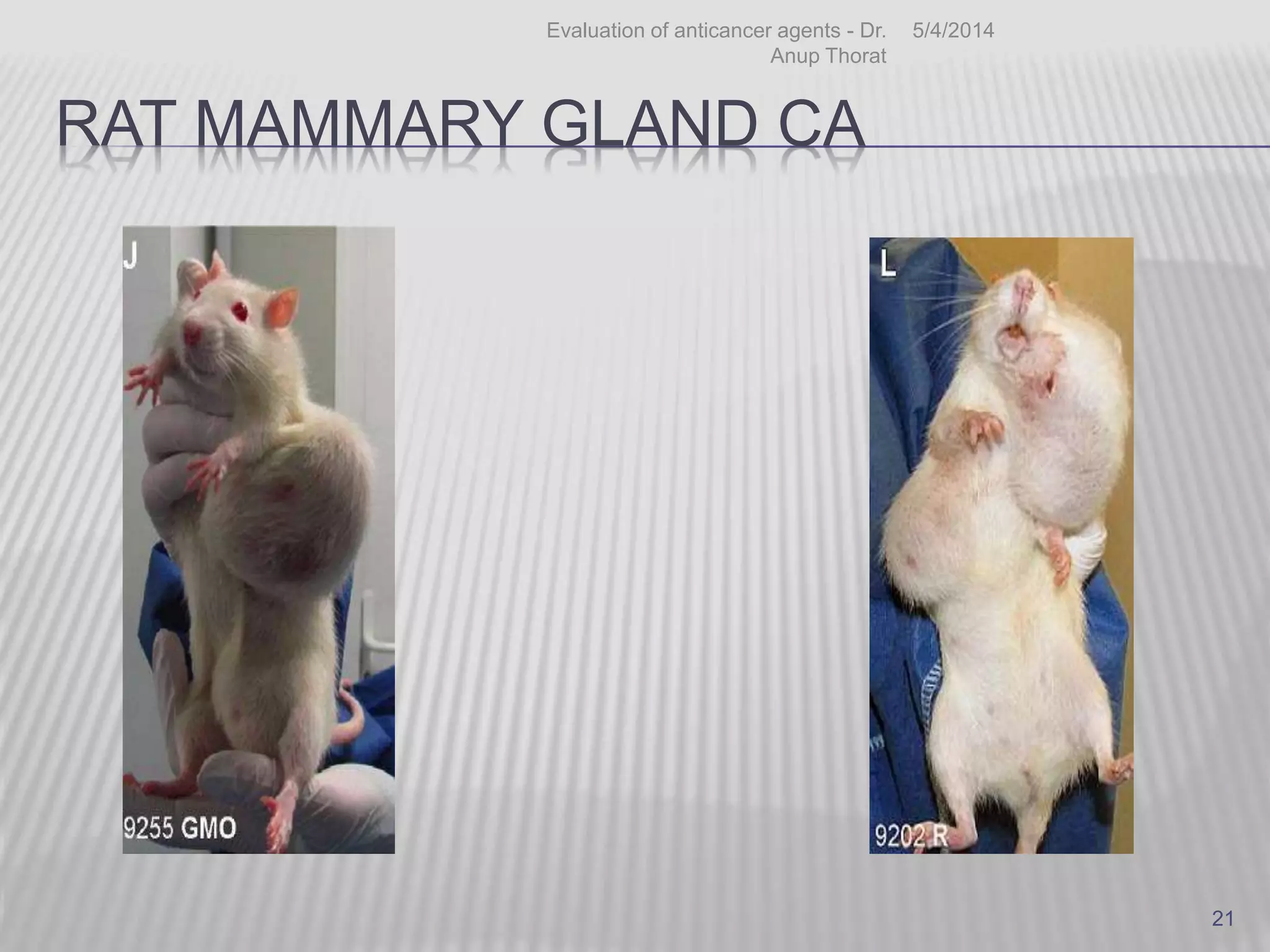
MNU INDUCED RAT MAMMARY GLAND CA
 Induces hormone dependent tumors.
 Single i.v of 50 mg/kg of methylnitrosourea -
50 days old SD rats.
 Adenocarcinoma will be produced within 180
days of post – carcinogen – 75 to 95%
 Reduction in tumor size is compared
 Drawback – cannot detect inhibition of
carcinogen activation.
5/4/2014Evaluation of anticancer agents - Dr.
Anup Thorat
20
RAT MAMMARY GLAND CA
5/4/2014Evaluation of anticancer agents - Dr.
Anup Thorat
21
DMBA INDUCED RAT MAMMARY GLAND CA
 Sprague dawley rats
 Intragastric injection of 12 mg / kg of DMBA at
50 days of age
 Cancer appears within 120 days – 80 to 100%
 Detect the drugs inhibiting carcinogen
activation.
5/4/2014Evaluation of anticancer agents - Dr.
Anup Thorat
22
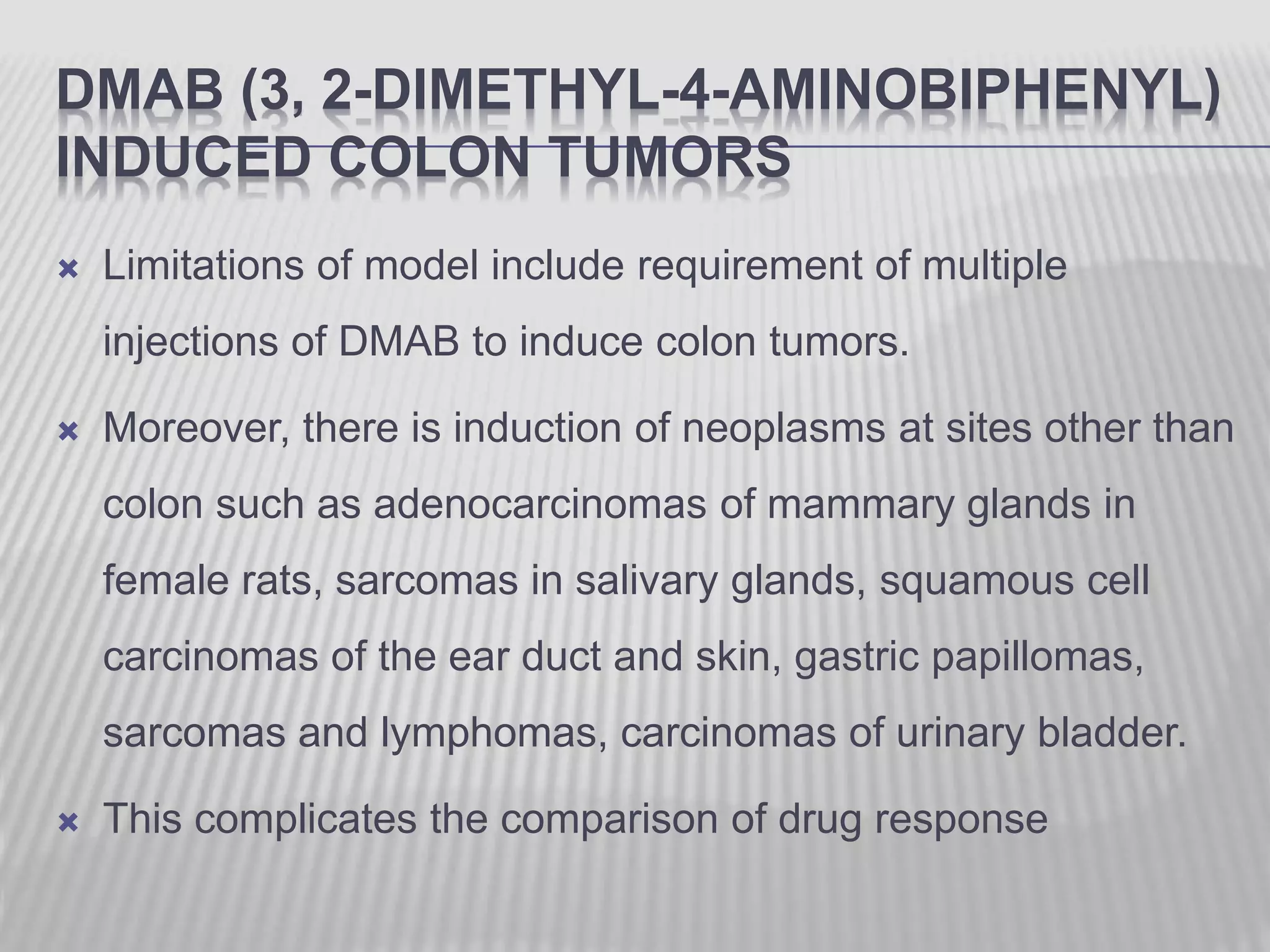
DMAB (3, 2-DIMETHYL-4-AMINOBIPHENYL)
INDUCED COLON TUMORS
 Limitations of model include requirement of multiple
injections of DMAB to induce colon tumors.
 Moreover, there is induction of neoplasms at sites other than
colon such as adenocarcinomas of mammary glands in
female rats, sarcomas in salivary glands, squamous cell
carcinomas of the ear duct and skin, gastric papillomas,
sarcomas and lymphomas, carcinomas of urinary bladder.
 This complicates the comparison of drug response
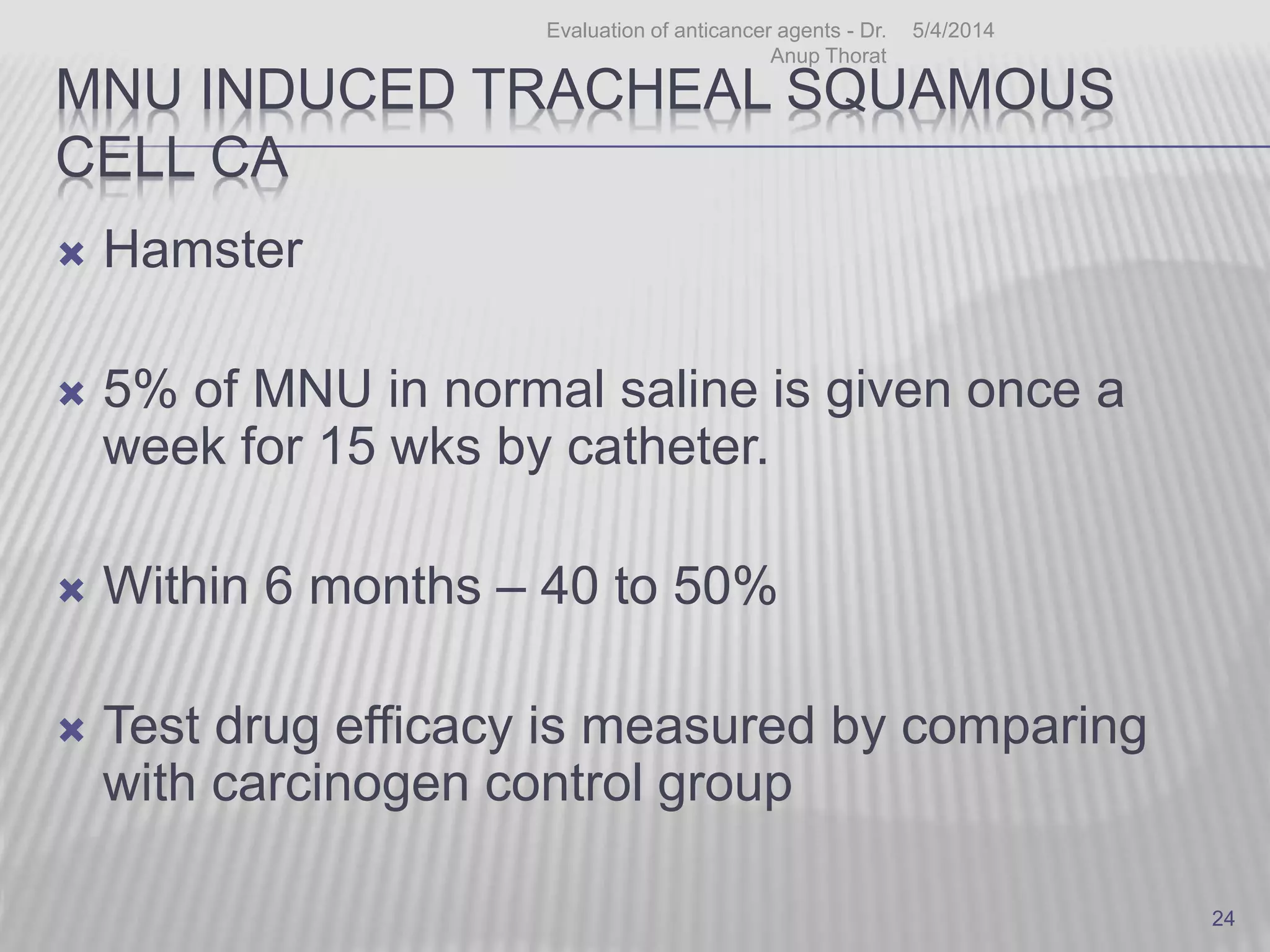
MNU INDUCED TRACHEAL SQUAMOUS
CELL CA
 Hamster
 5% of MNU in normal saline is given once a
week for 15 wks by catheter.
 Within 6 months – 40 to 50%
 Test drug efficacy is measured by comparing
with carcinogen control group
5/4/2014Evaluation of anticancer agents - Dr.
Anup Thorat
24
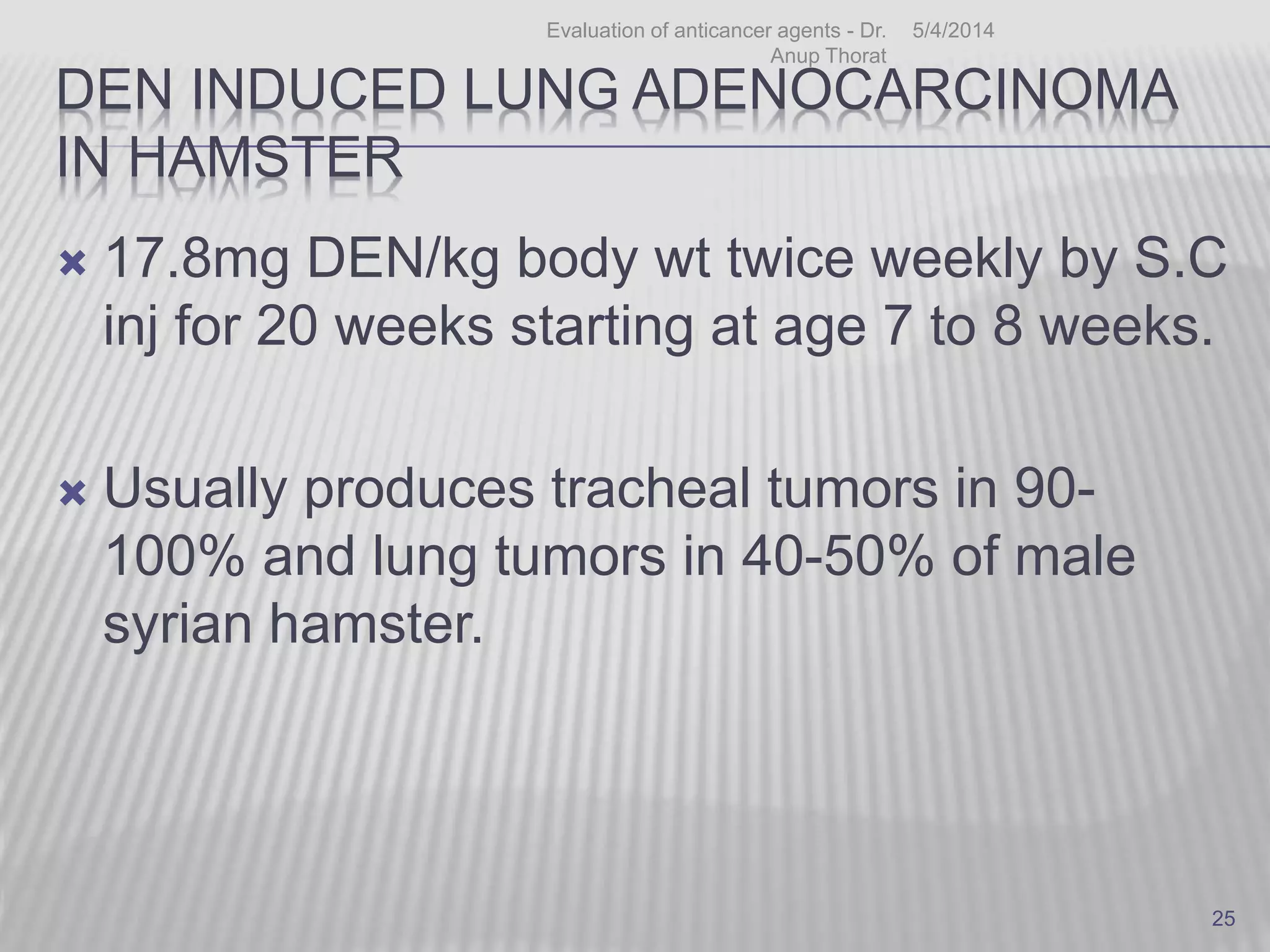
DEN INDUCED LUNG ADENOCARCINOMA
IN HAMSTER
 17.8mg DEN/kg body wt twice weekly by S.C
inj for 20 weeks starting at age 7 to 8 weeks.
 Usually produces tracheal tumors in 90-
100% and lung tumors in 40-50% of male
syrian hamster.
5/4/2014Evaluation of anticancer agents - Dr.
Anup Thorat
25
26
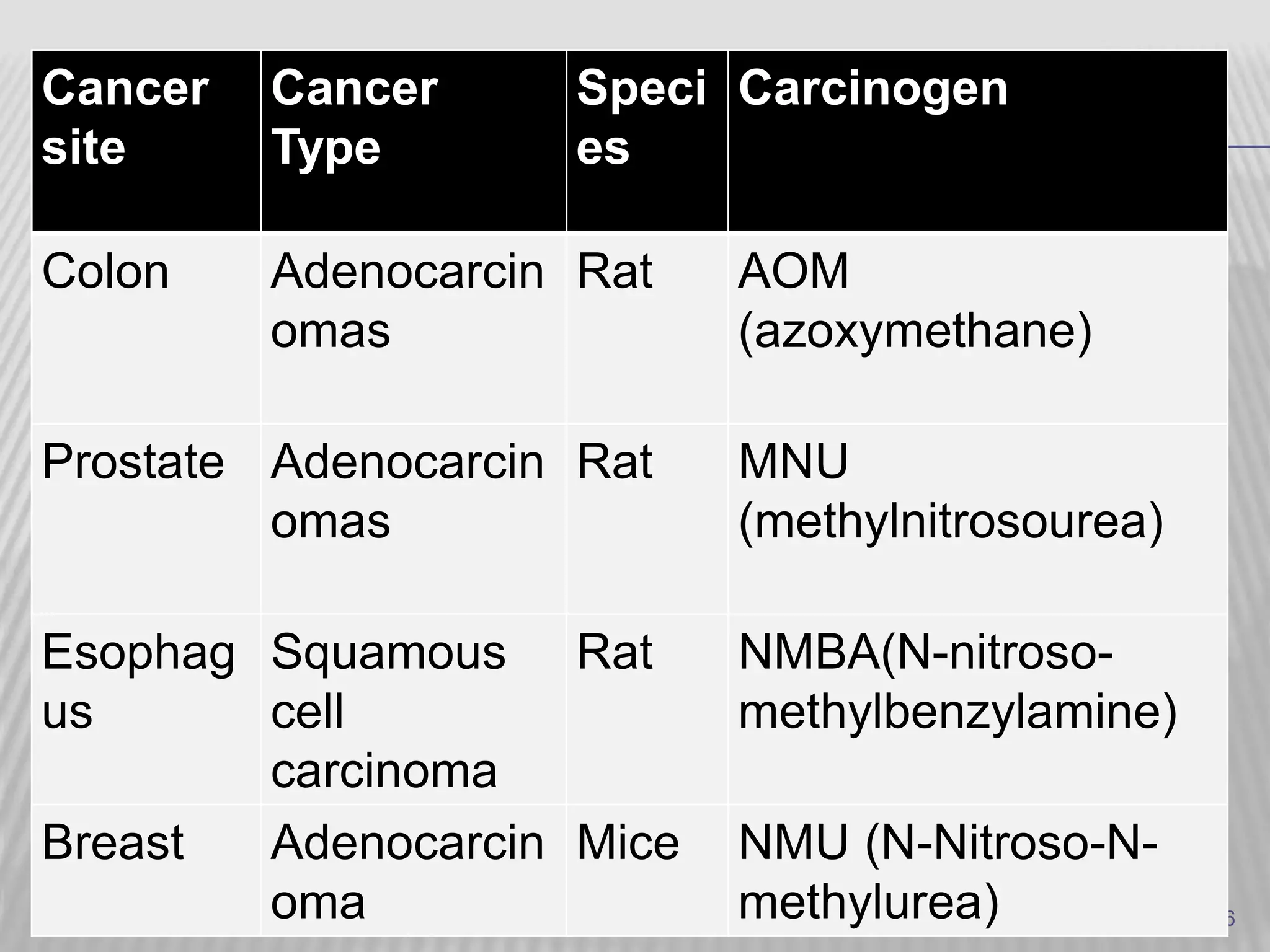
Cancer
site
Cancer
Type
Speci
es
Carcinogen
Colon Adenocarcin
omas
Rat AOM
(azoxymethane)
Prostate Adenocarcin
omas
Rat MNU
(methylnitrosourea)
Esophag
us
Squamous
cell
carcinoma
Rat NMBA(N-nitroso-
methylbenzylamine)
Breast Adenocarcin
oma
Mice NMU (N-Nitroso-N-
methylurea)
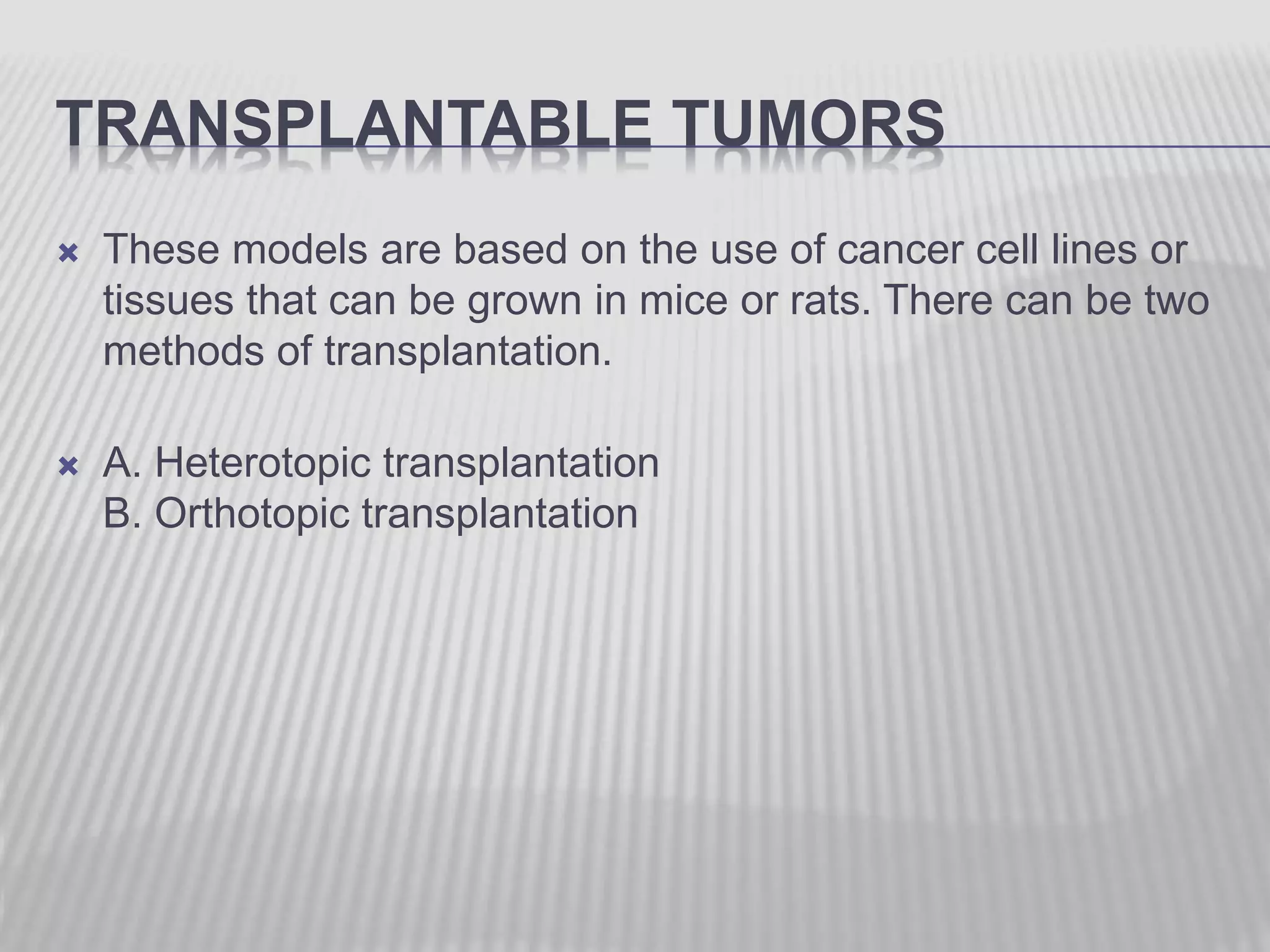
TRANSPLANTABLE TUMORS
 These models are based on the use of cancer cell lines or
tissues that can be grown in mice or rats. There can be two
methods of transplantation.
 A. Heterotopic transplantation
B. Orthotopic transplantation
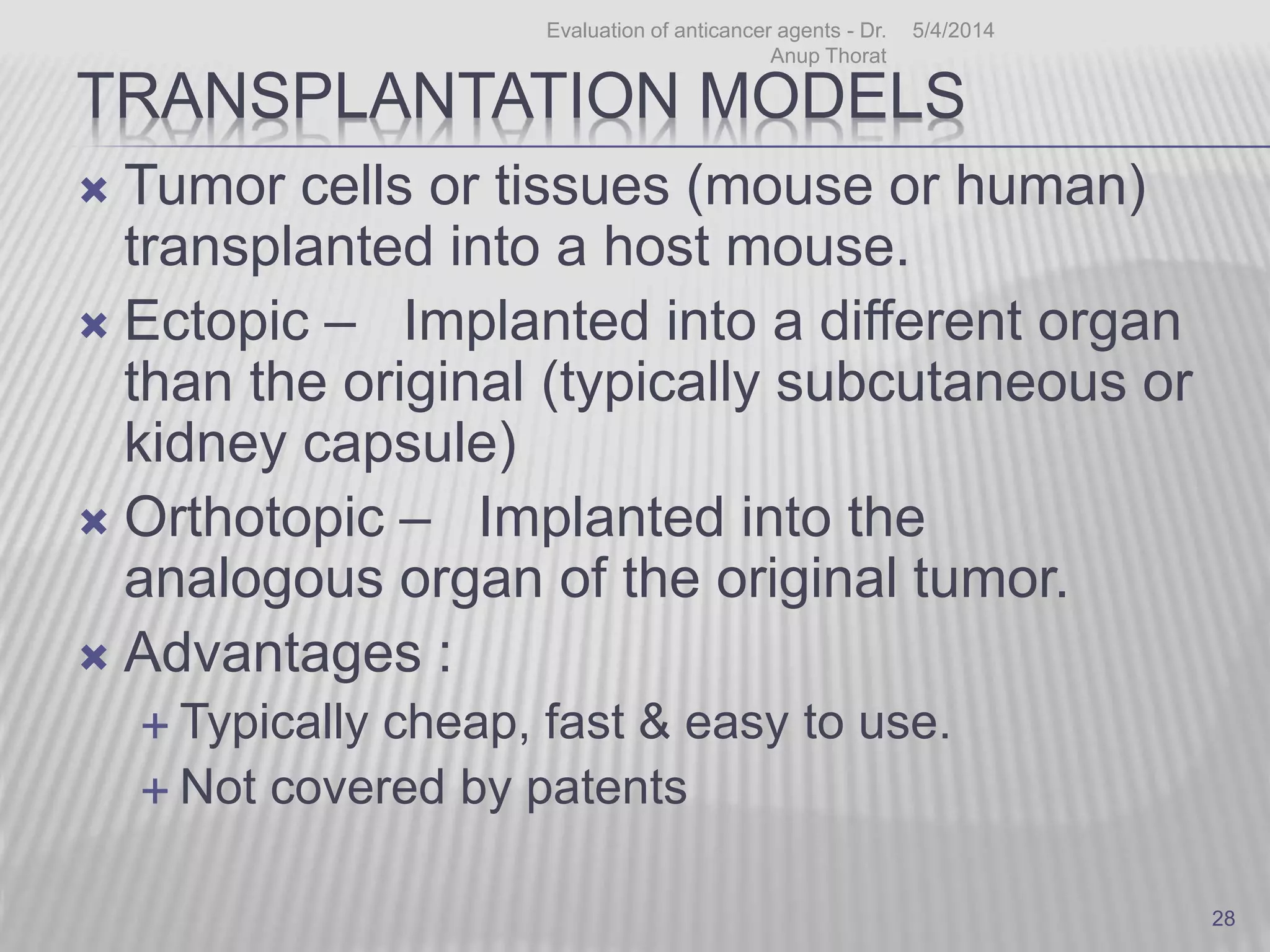
TRANSPLANTATION MODELS
 Tumor cells or tissues (mouse or human)
transplanted into a host mouse.
 Ectopic – Implanted into a different organ
than the original (typically subcutaneous or
kidney capsule)
 Orthotopic – Implanted into the
analogous organ of the original tumor.
 Advantages :
 Typically cheap, fast & easy to use.
 Not covered by patents
5/4/2014Evaluation of anticancer agents - Dr.
Anup Thorat
28
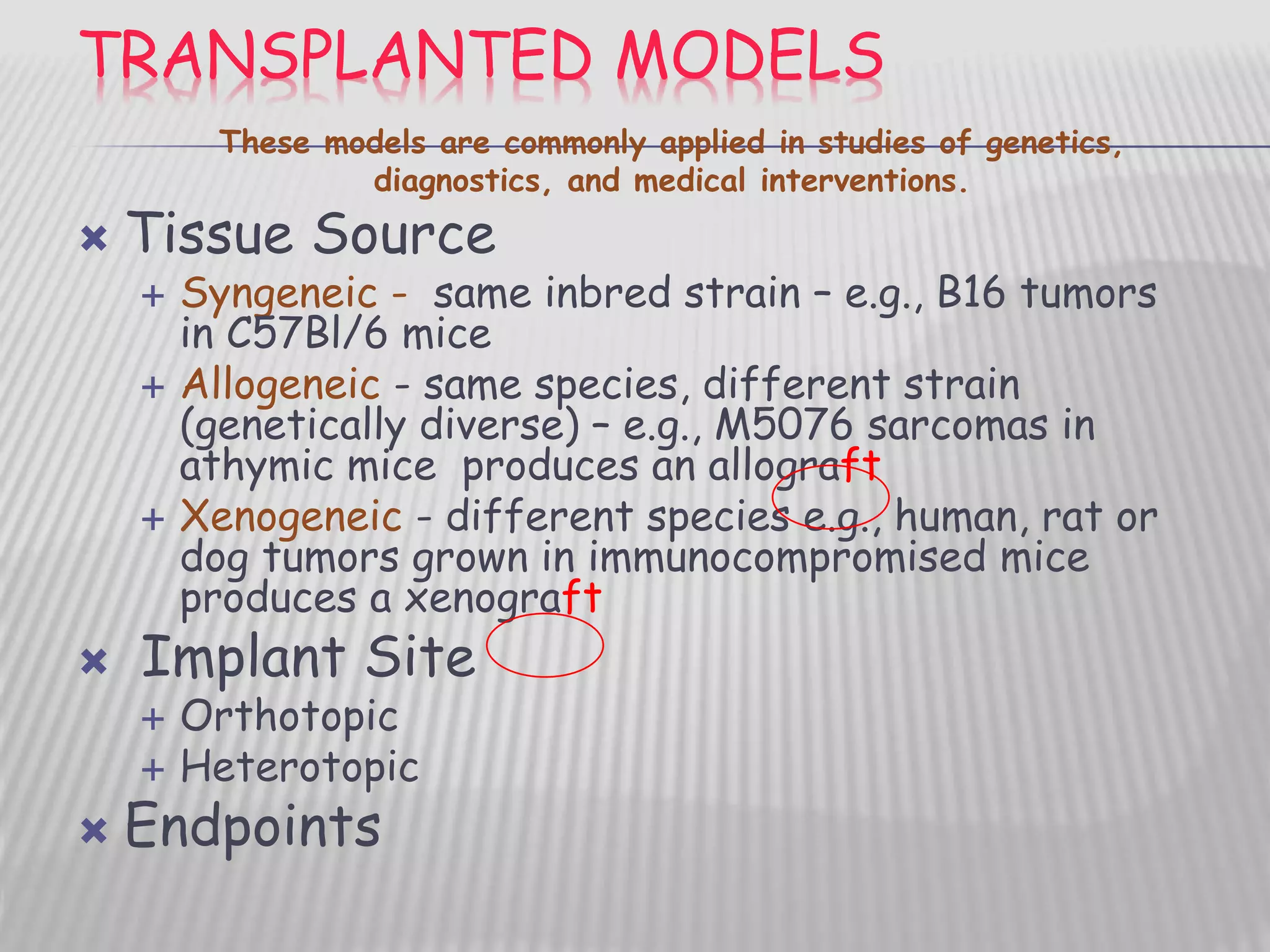
TRANSPLANTED MODELS
 Tissue Source
 Syngeneic - same inbred strain – e.g., B16 tumors
in C57Bl/6 mice
 Allogeneic - same species, different strain
(genetically diverse) – e.g., M5076 sarcomas in
athymic mice produces an allograft
 Xenogeneic - different species e.g., human, rat or
dog tumors grown in immunocompromised mice
produces a xenograft
 Implant Site
 Orthotopic
 Heterotopic
 Endpoints
These models are commonly applied in studies of genetics,
diagnostics, and medical interventions.
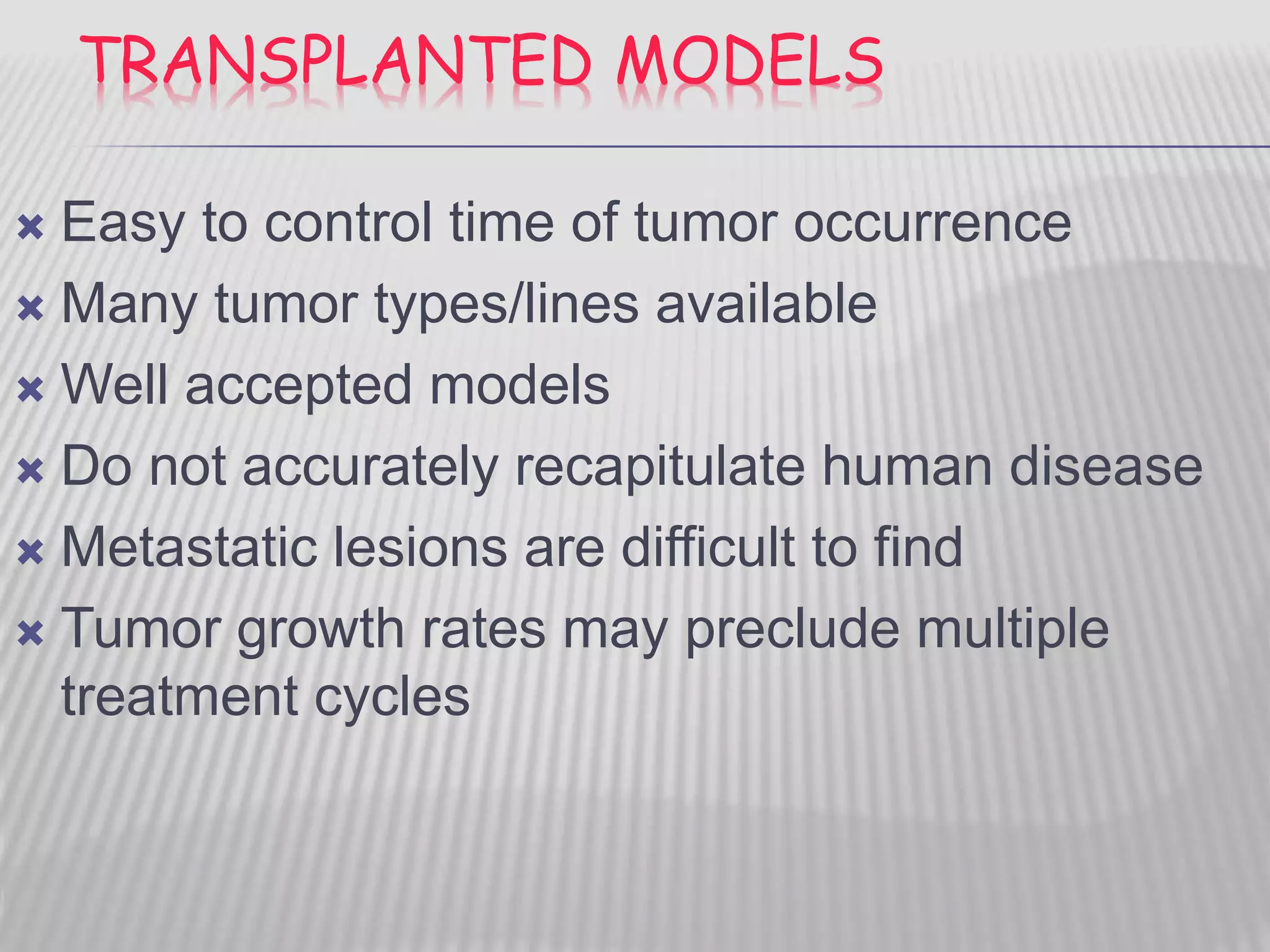
TRANSPLANTED MODELS
 Easy to control time of tumor occurrence
 Many tumor types/lines available
 Well accepted models
 Do not accurately recapitulate human disease
 Metastatic lesions are difficult to find
 Tumor growth rates may preclude multiple
treatment cycles
HETEROTOPIC TRANSPLANTATION
 It involves transplantation of tumor cells or tissue at the site
other than its site of origin. e.g. Carcinoma transplanted
intraperitoneally or subcutaneously.
 This method generally involves i.p. or s.c transplantation,
where the tumor proliferates in the form of ascites or solid
tumor, respectively.
 This inoculation procedure is simple and less time
consuming.
ORTHOTOPIC TRANSPLANTATION
 It refers to the transplantation of cancer cells to the anatomic location or
tissue from which a tumor was derived. For example, lung tumor is
transplanted in lungs.
 The use of this method has resulted in tumor models that may more
closely resemble human cancers, including tumor histology, vascularity,
gene expression, responsiveness to chemotherapy and metastatic
biology.
 As more has been known about host-microenvironment interaction, it is
clear why orthotopic tumors are preferred over conventional flank (s.c.
transplant) models.
ORTHOTOPIC TRANSPLANTATION
 Orthotopic transplantation of cancer cells may be
accomplished by
(i) direct injection of tumor cells or
(ii) the surgical orthotopic implantation (SOI) i.e. implantation
of the intact fragments of tumor orthotopically by surgery.
 Use of SOI improves the reproducibility and metastatic
outcome of the model
 In addition to this, transplantable models can be
divided into two broad groups depending upon the
origin of the tumor and the host used:
TRANSPLANTATION MODELS
 Disadvantages:
 Histopathology cannot be exactly correlated
to human tumors
 Lack of step-wise progression through pre-
neoplastic stages
 Evolution of tumor cells during passaging
 Requirement for angiogenesis to support the
newly transplanted tumor
5/4/2014Evaluation of anticancer agents - Dr.
Anup Thorat
34
TRANSPLANTATION MODELS :
HUMAN TUMOR XENOGRAFTS
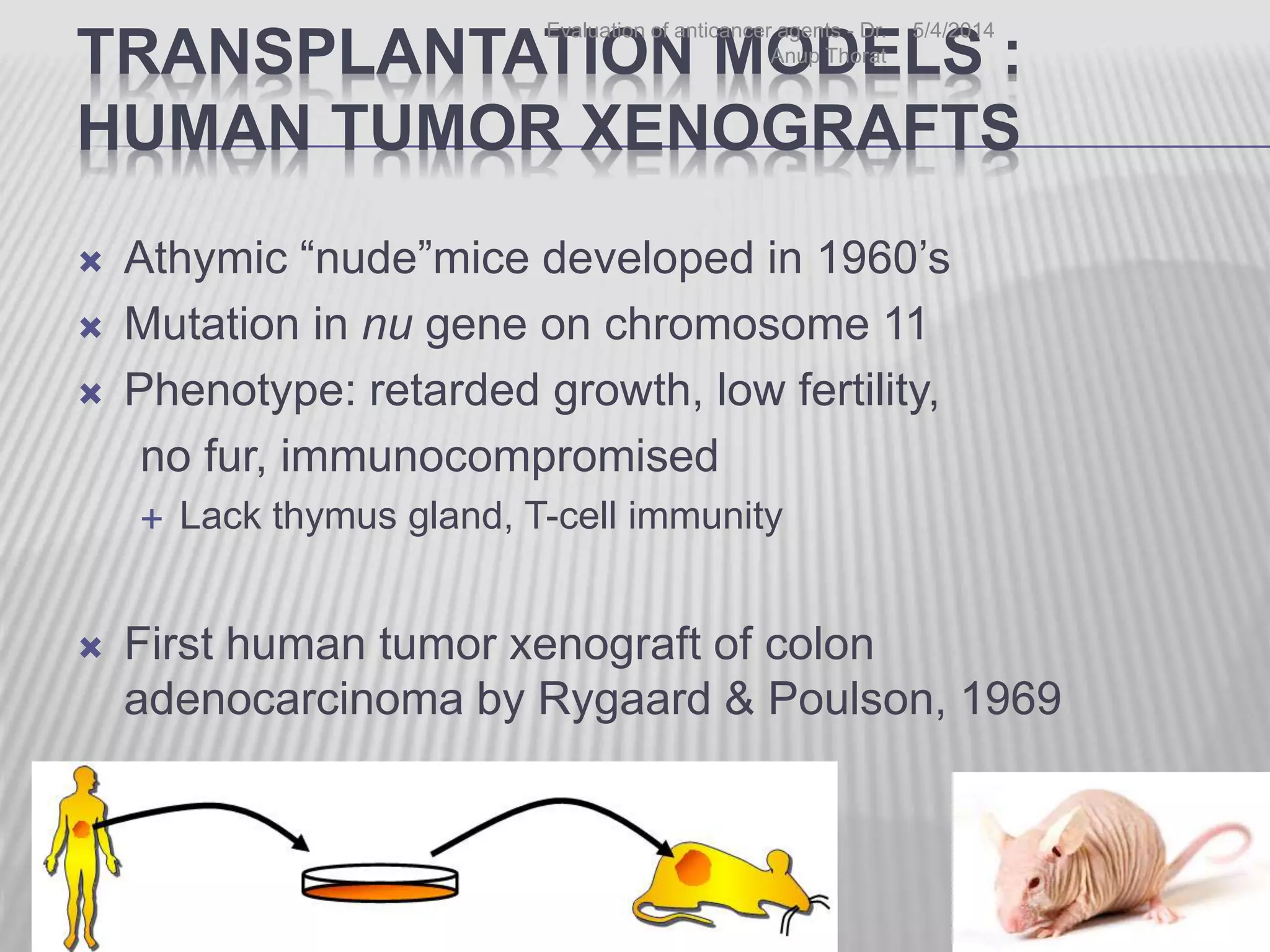
 Athymic “nude”mice developed in 1960’s
 Mutation in nu gene on chromosome 11
 Phenotype: retarded growth, low fertility,
no fur, immunocompromised
 Lack thymus gland, T-cell immunity
 First human tumor xenograft of colon
adenocarcinoma by Rygaard & Poulson, 1969
5/4/2014Evaluation of anticancer agents - Dr.
Anup Thorat
35
XENOGRAFT SITES
 Subcutaneous tumor (NCI method of choice)
with IP drug administration
 Intraperitoneal
 Intracranial
 Intrasplenic
 Renal subcapsule
 Site-specific (orthotopic) organ inoculation
5/4/2014Evaluation of anticancer agents - Dr.
Anup Thorat
36
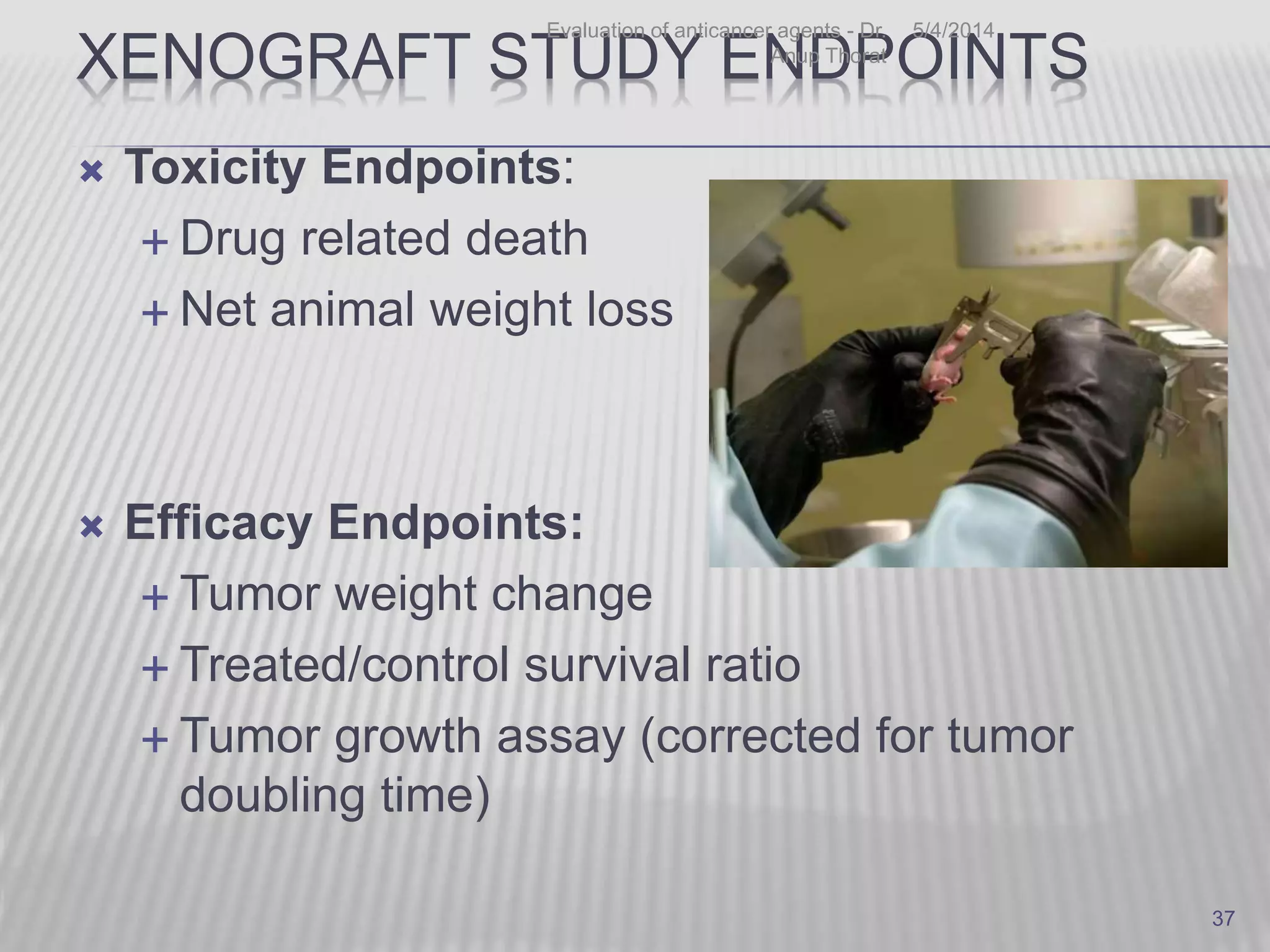
XENOGRAFT STUDY ENDPOINTS
 Toxicity Endpoints:
 Drug related death
 Net animal weight loss
 Efficacy Endpoints:
 Tumor weight change
 Treated/control survival ratio
 Tumor growth assay (corrected for tumor
doubling time)
5/4/2014Evaluation of anticancer agents - Dr.
Anup Thorat
37
XENOGRAFT TUMOR WEIGHT CHANGE
 Tumor weight change ratio (used by the NCI
in xenograft evaluation)
 Defined as: treated/control x 100%
 Tumor weight in mg = (a x b2)/2
 a = tumor length
 b = tumor width
 T/C < 40-50% is considered significant
5/4/2014Evaluation of anticancer agents - Dr.
Anup Thorat
38
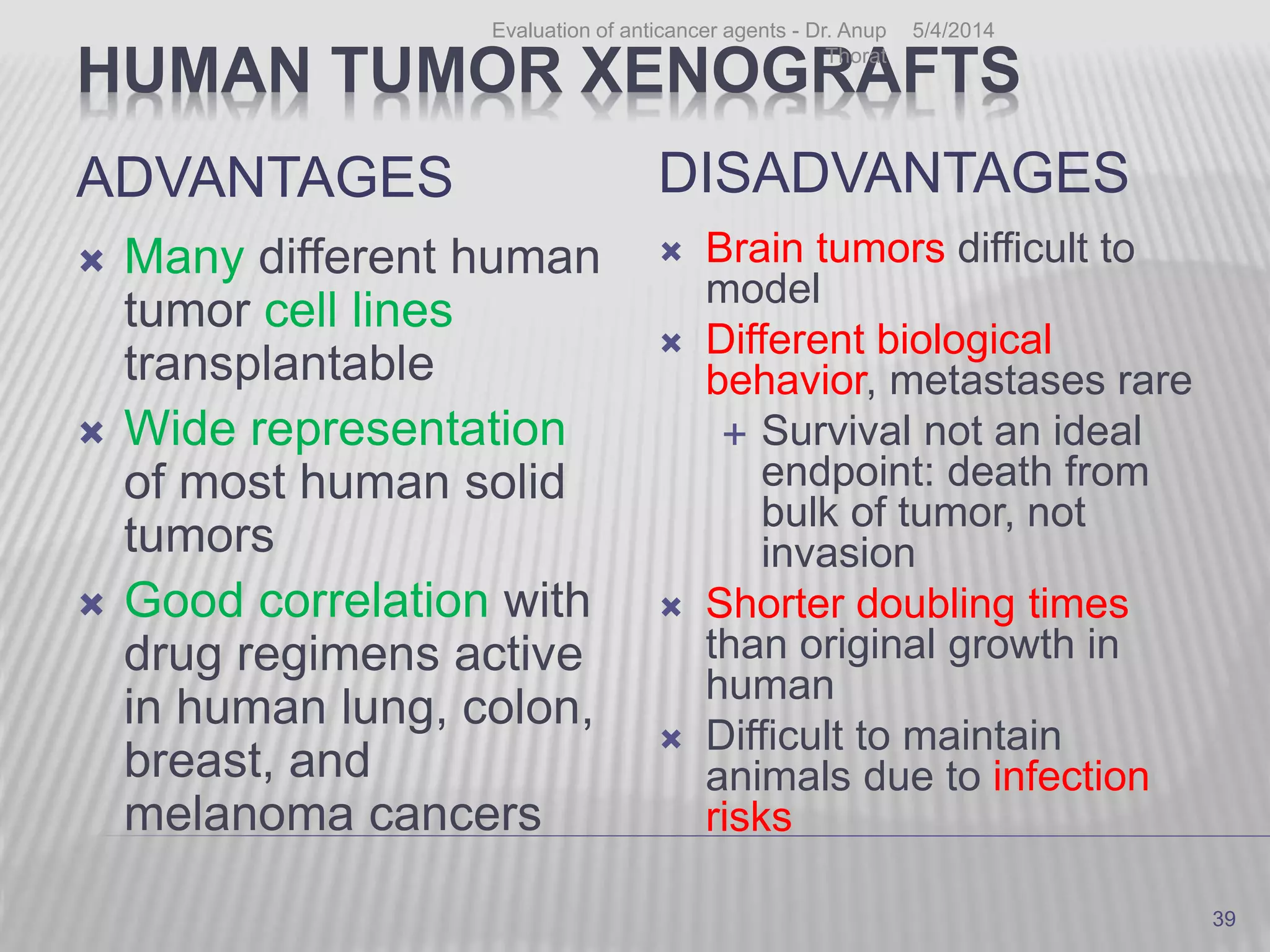
HUMAN TUMOR XENOGRAFTS
ADVANTAGES
 Many different human
tumor cell lines
transplantable
 Wide representation
of most human solid
tumors
 Good correlation with
drug regimens active
in human lung, colon,
breast, and
melanoma cancers
DISADVANTAGES
 Brain tumors difficult to
model
 Different biological
behavior, metastases rare
 Survival not an ideal
endpoint: death from
bulk of tumor, not
invasion
 Shorter doubling times
than original growth in
human
 Difficult to maintain
animals due to infection
risks
5/4/2014Evaluation of anticancer agents - Dr. Anup
Thorat
39
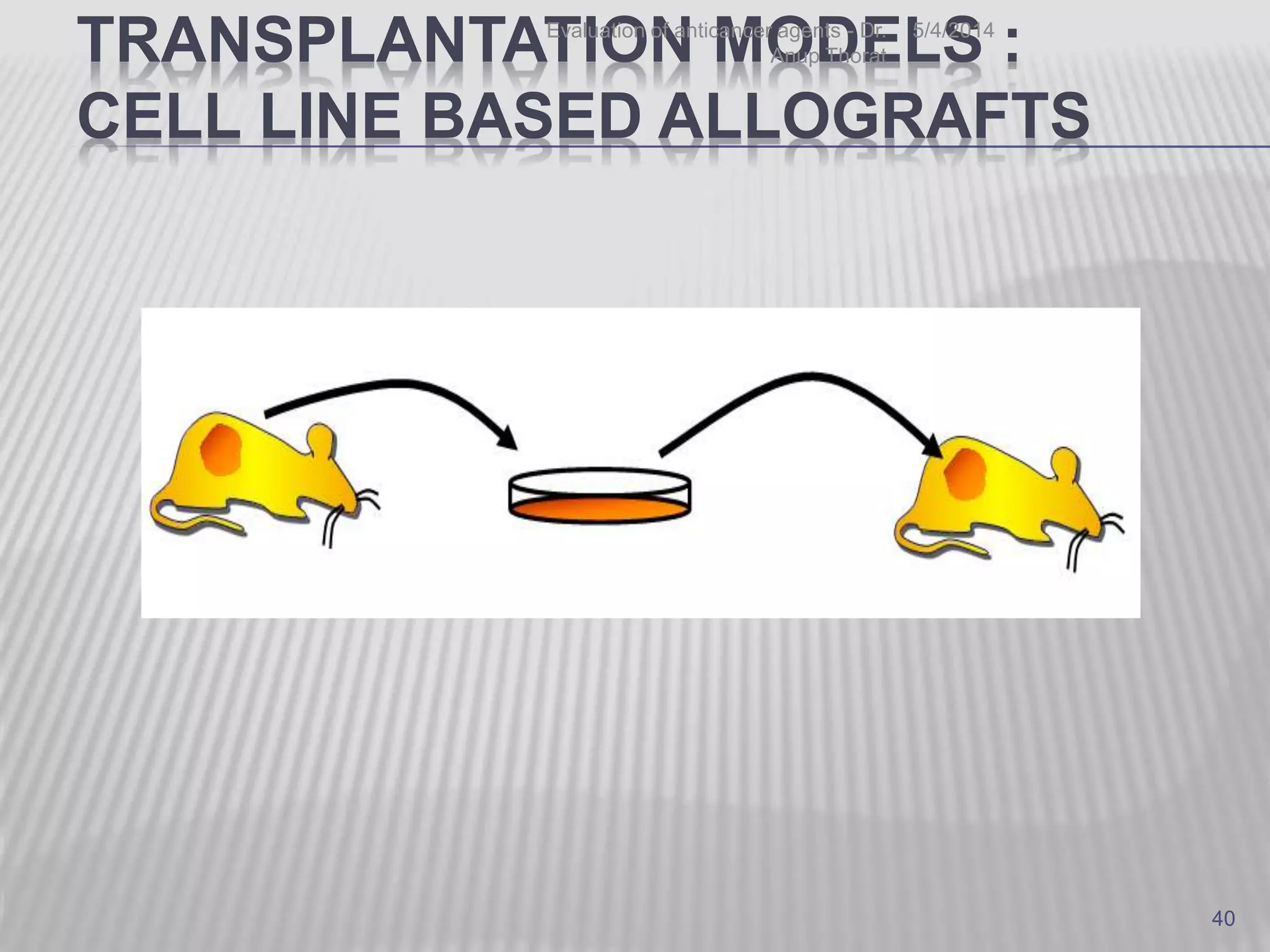
TRANSPLANTATION MODELS :
CELL LINE BASED ALLOGRAFTS
5/4/2014Evaluation of anticancer agents - Dr.
Anup Thorat
40
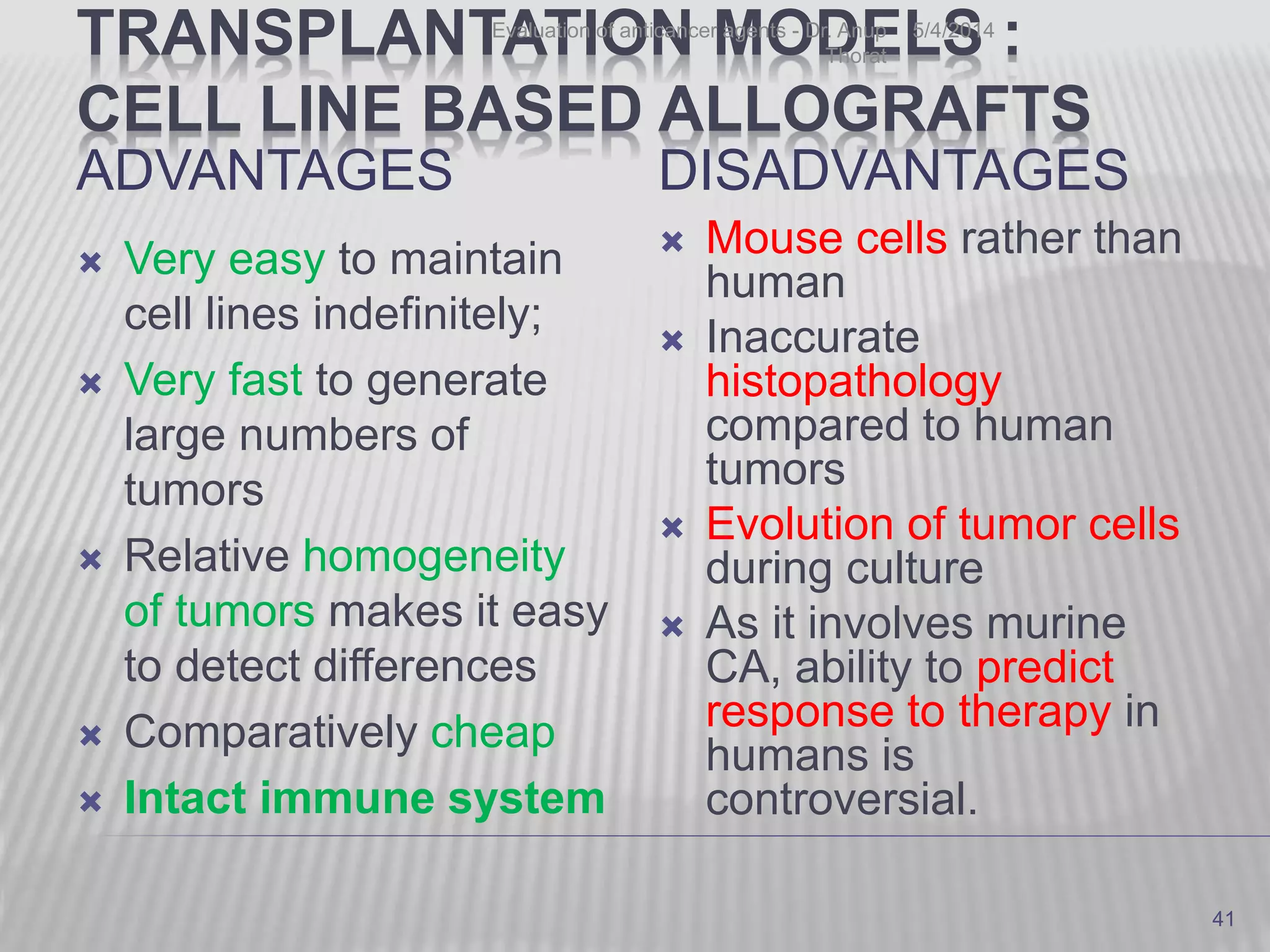
TRANSPLANTATION MODELS :
CELL LINE BASED ALLOGRAFTS
ADVANTAGES
 Very easy to maintain
cell lines indefinitely;
 Very fast to generate
large numbers of
tumors
 Relative homogeneity
of tumors makes it easy
to detect differences
 Comparatively cheap
 Intact immune system
DISADVANTAGES
 Mouse cells rather than
human
 Inaccurate
histopathology
compared to human
tumors
 Evolution of tumor cells
during culture
 As it involves murine
CA, ability to predict
response to therapy in
humans is
controversial.
5/4/2014Evaluation of anticancer agents - Dr. Anup
Thorat
41
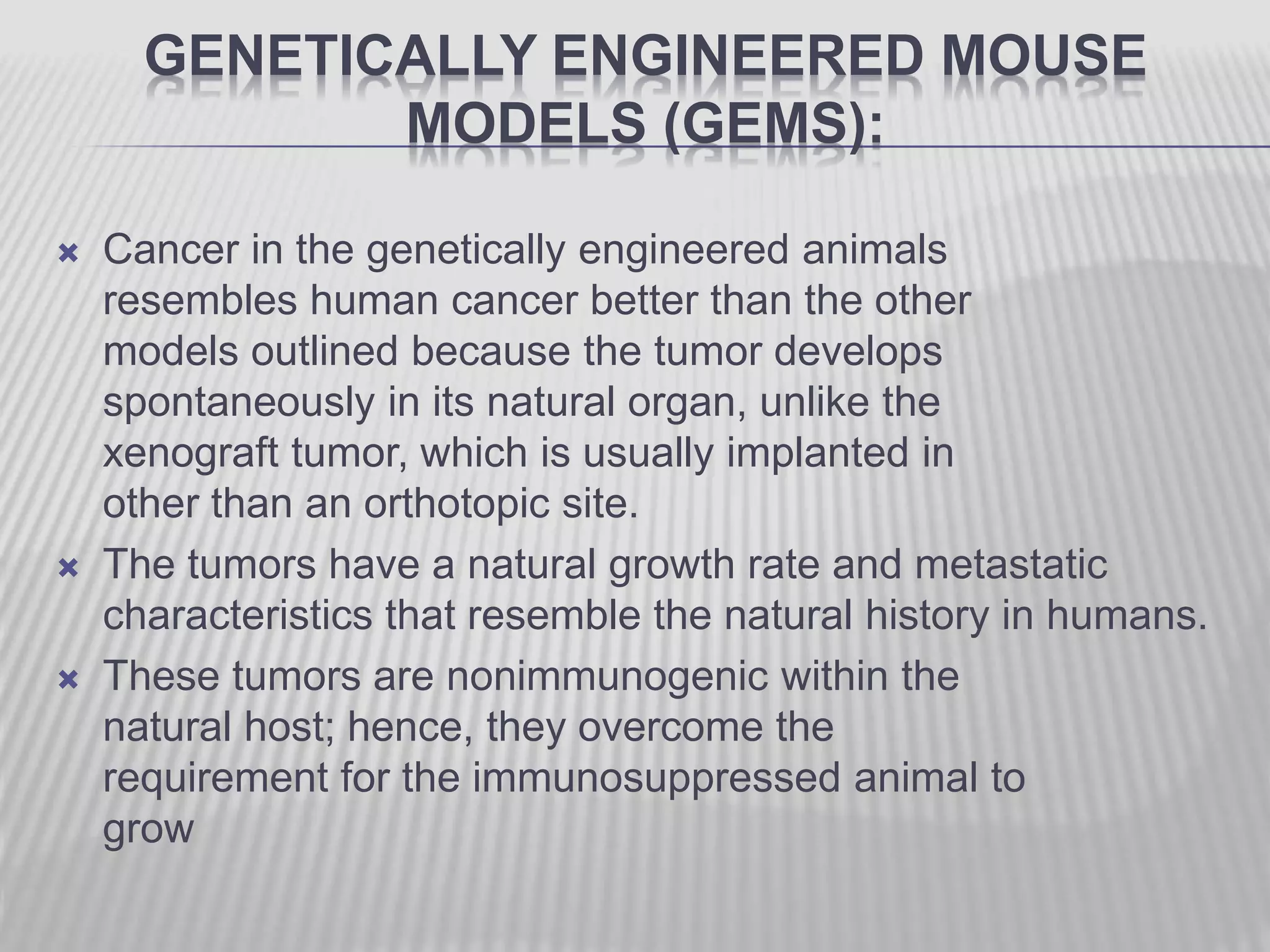
GENETICALLY ENGINEERED MOUSE
MODELS (GEMS):
 Cancer in the genetically engineered animals
resembles human cancer better than the other
models outlined because the tumor develops
spontaneously in its natural organ, unlike the
xenograft tumor, which is usually implanted in
other than an orthotopic site.
 The tumors have a natural growth rate and metastatic
characteristics that resemble the natural history in humans.
 These tumors are nonimmunogenic within the
natural host; hence, they overcome the
requirement for the immunosuppressed animal to
grow
TRANSGENIC MODELS
 Many available through commercial and collaborative arrangements
 http://emice.nci.nih.gov/emice/mouse_models
 http://mouse.ncifcrf.gov/
 http://jaxmice.jax.org/query/f?p=205:1:1510299228434659165
 Not all patents have expired - check with OTT regarding legalities
 Remember MTAs are needed to receive or ship material that may
have patent or licensing rights. This also applies to mice.
 Rate of tumor occurrence may be low
 Time to tumor occurrence may be difficult to predict
 Breeding schemes may be complex e.g., 3, 4 or more
intermediate genetic crosses
 Genetic error(s) are generally well characterized
 Disease may follow a more natural course e.g., time to
significant tumor burden may more accurately mimic the
human; lesions likely relevant to their site of occurrence
Transgenic models aid our understanding of the genetics of cancer and are
being pursued as models for intervention.
 GEMs can be devided into two categories:
1 Transgenic mice
2 Knockout mice
TRANSGENIC MICE
 The transgenic mouse is the resultant progeny of the pronucleus of a
fertilized egg that is injected with a foreign gene.
 This progeny then carries and expresses this exogenous gene and
passes it on to its descendents. Genes can be transferred to the
pronucleus by microinjection, retroviral infection, or embryonal stem cell
(ESC) transfer.
 Transgenic animals are excellent models for studying the oncogenic
phenotype that results from the disregulation of a known gene.
 Examples in transgenic mice, which provided invaluable information
regarding the characteristics of oncogenes, include the NF1 gene in the
case of neurofibromatosis, c-fos, N-myc, erb B2, and others.
 Oncogene-expressing transgenic animals that develop
spontaneous tumors as a result of a known pathway defect are
an excellent model for testing directed drugs targeted to a specific
molecular pathway.
 For example, it is known that ras inactivation plays a major role in
the pathogenesis of many cancers, including breast cancer.
 Transgenic mice carrying ras mutations that develop mammary
tumors have been used to screen for the efficacy of new
chemotherapeutic agents specifically active in breast cancer.
 The TRAMP transgenic Mice:
 This consists of a minimal probasin promoter that drives expression of
SV40 tumor antigens.
 These mice develop prostate cancer within 12 weeks of age and
ultimately develop metastasis by 30 weeks.
 The TRAMP mice recapitulate many salient aspects of human prostate
cancer.
 p53+/- Wnt-1 transgenic mice:
 p53+/- mice have been crossed with MMTV- Wnt-1 transgenic mice to
develop a model of mammary tumorigenesis where MMTV is the mouse
mammary tumor virus promoter .
 Apc deficient mice:
 These mice spontaneously develop preneoplastic intestinal polyps due
to a dominant mutation of a Apc (adenomatous polyposis coli) gene.
Mutation of this gene is common to most human colon cancers
KNOCKOUT MICE:
 A knockout is an animal model that is generated by
omitting both alleles of a specific gene.
 The Nkx 3.1 knockout mice:
 Nkx 3.1 is a prostate specific tumor suppressor gene. It is
essential for prostate differentiation and function.
 Loss of function of this gene results in histopathological
defects that resemble prostate cancer in humans.
 This model provides a model for studying mechanism of
prostate cancer initiation as well as to explore the tissue
specific features of the disease.
 Homozygous p53 knockout mice:
 Mutation of p53 tumor suppressor gene is the most
frequently observed genetic lesion in human cancer.
 Over 50% of all human tumors have identifiable p53 gene
point mutation or deletions.
 These mice are highly susceptible to spontaneous
tumorigenesis particularly lymphomas.
 Brca1 conditional knockout model:
 Brca1 deletion is induced using Cre Ioxp system by
expressing Cre under the control of MMTVLTR or WAP.
Animal develop mammary tumor by the age of 10 to 13
months.
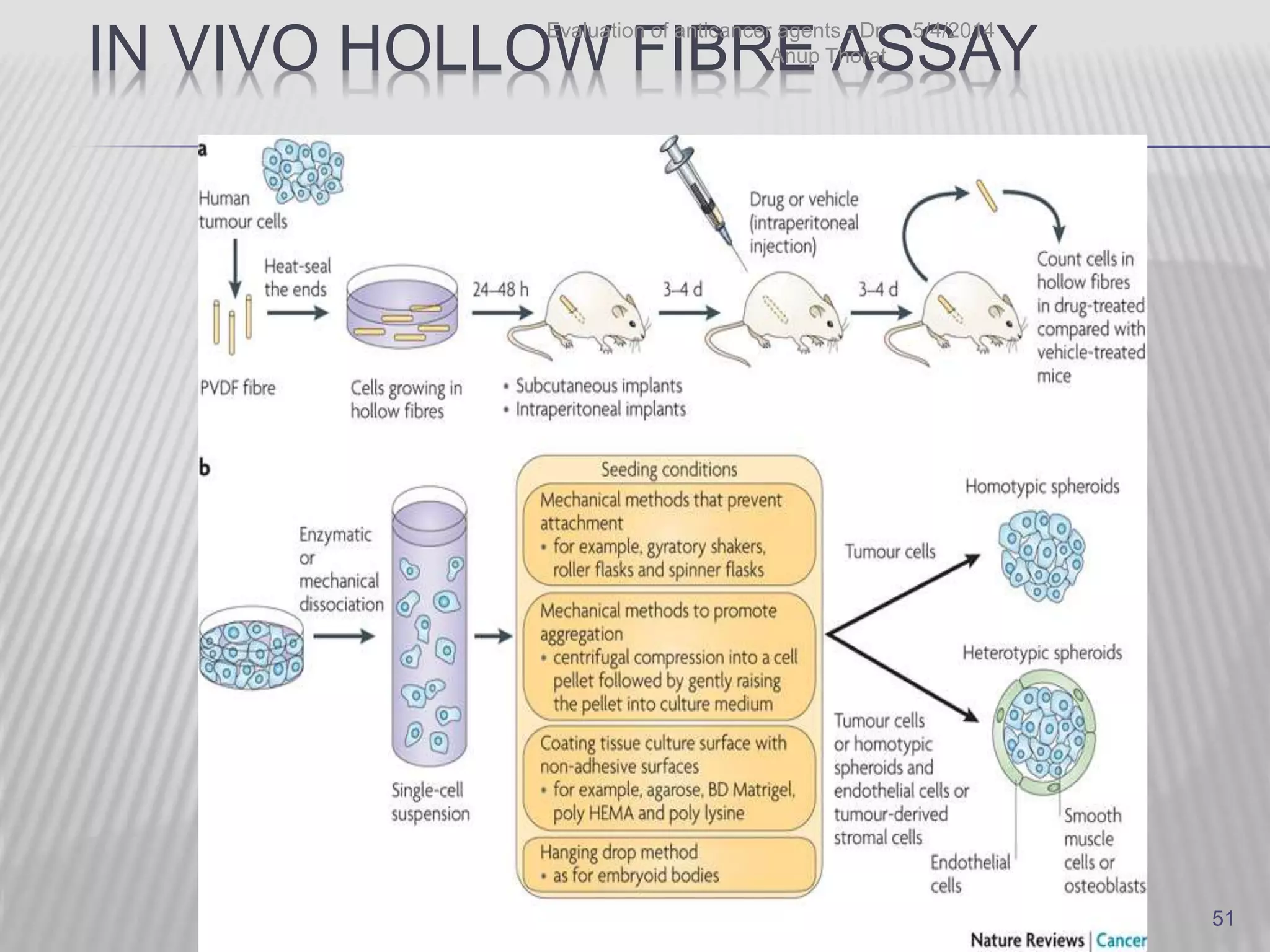
IN VIVO HOLLOW FIBRE ASSAY
 In vivo screening tool implemented in 1995
by NCI
 12 human tumor cell lines (lung, breast,
colon, melanoma, ovary, and glioma
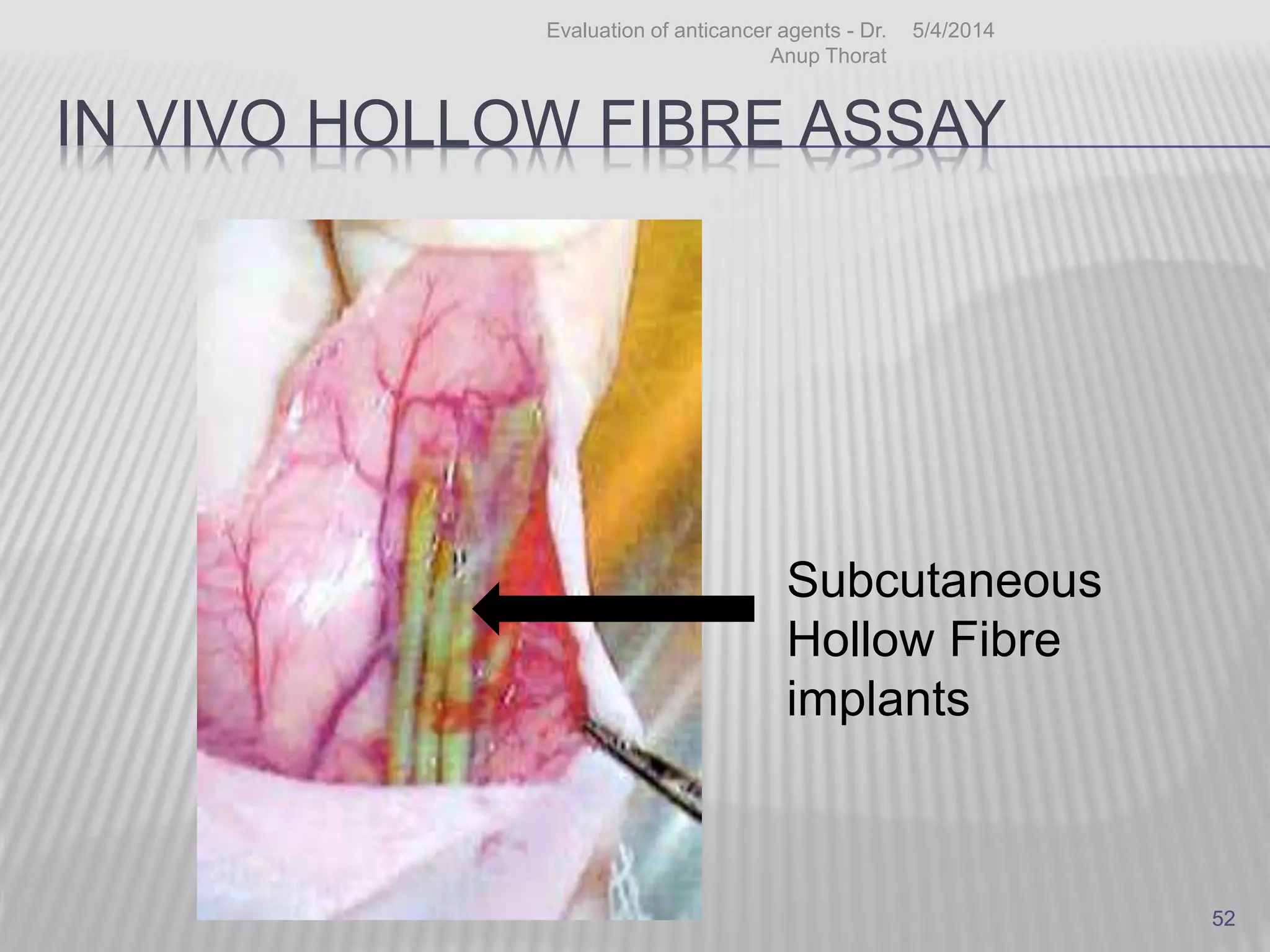
 Cells suspended into hollow polyvinylidene
fluoride fibers implanted IP or SC in lab mice
 After in vivo drug treatment, fibers are
removed and analyzed in vitro
 Antitumor (growth inhibitory) activity
assessed
5/4/2014Evaluation of anticancer agents - Dr.
Anup Thorat
50
IN VIVO HOLLOW FIBRE ASSAY
5/4/2014Evaluation of anticancer agents - Dr.
Anup Thorat
51
IN VIVO HOLLOW FIBRE ASSAY
Subcutaneous
Hollow Fibre
implants
5/4/2014Evaluation of anticancer agents - Dr.
Anup Thorat
52
CONCLUSION
 Spontaneous tumors were the most primitive models of
cancer.
 Though not much useful in study of drugs, these models
have provided great insight in studying natural progression
of disease.
 Use of virus-induced tumor is rare now.
 Chemically induced and radiation induced tumors are
having their own place in drug screening and evaluation.
However, due to some of their limitations (especially long
induction period) it is impracticable to use them in
large scale screening programs.
 In such set up, which requires short term, reproducible and
cheaper techniques.
 transplantable tumor provides the best option. Thus,
transplantable tumors have got their main application in
drug screening.
 Another important aspect of cancer research is investigating
the activity of a drug on specific type of cancer. (Disease
Oriented Approach).
 Use of cell lines (in vitro or in transplantable tumor)
provides a great flexibility for this type of screening.
 Genetically Altered Mice models also have potential to be
used for disease-oriented screening.
 (However, cell lines are preferred over them with obvious
reasons) But, they are mainly used for study of
carcinogenesis.
 Use of these models has resulted in a number of
hopeful targeted drug molecules, which are showing
exciting results in clinical studies.
 Thus, every model has its own merits and demerits. No one
is ideal. So the thorough understanding of the
available models and its rationale use becomes the
important thing
Many Models – Many Options
With few exceptions, every rodent model, even if
conducted with hundreds of experimental mice,
represents a single patient. Interpreting the
preclinical results and applying these outcomes to
human clinical trials continues to prove challenging
for those charged with translating the preclinical
experience into viable drug candidates.
Statistically valid model assessing
relevant endpoints on an optimal schedule
with clinically appropriate doses.

Animal models in developmental therapeitocs

  • 1.
    ANIMAL MODELS FOR DEVELOPMENTALTHERAPEUTICS By DR.BHAVIN VADODARIYA DNB Surgical Oncology 1st year Resident, Apollo CBCC Cancer Care, Ahmedabad Date-0408/2017
  • 2.
    INTRODUCTION  Cancer drugdiscovery continues to evolve at a phenomenal pace and enormous amounts of recourses are engaged for drug discovery and design.  The evaluation of any such hopefully designed drug molecule is the critical stage of drug discovery program.  Improper selection of an evaluation method may result in dropping of a potential agent from further development.
  • 3.
    INTRODUCTION(CONTD..)  Use ofcell lines with high throughput screening is the primary screening method. But due to limitations like less relevance with clinical condition further screening using suitable in vivo model is mandatory.  In such condition, the selection of animal model becomes crucial. The animal model should represent the human disease as closely as possible.  At the same time its feasibility as well as economy -to be used in large drug screening programs- are also important factors
  • 4.
    ANIMAL MODELS OFCANCER 1. Spontaneous tumor models . 2. Virus induced tumor models 3. Radiation induced tumor models 4. Chemically induced tumor models 5. Transplantable tumor models
  • 5.
    ANIMAL MODELS OFCANCER  Methods of transplantation i. Heterotopic transplantation ii. Orthotopic transplantation Depending on host used i. Syngenic models ii. Xenogenic models 6. Genetically Engineered Mice (GEMs) i. Transgenic animals ii. Knockout animals
  • 6.
    WHY DO WEUSE MOUSE MODELS?  genetics  progression  prevention  diagnostics  therapeutics  physiologically complex vs in vitro studies  cost effective  develop human clinical protocols To prevent, diagnose and treat human disease
  • 7.
    WHY MICE?  Miceare small, easy to handle.  Short generation time & accelerated lifespan,manageable costs, space, and time.  Striking similarity to humans in anatomy, physiology, and genetics.  Over 95% of the mouse genome is similar to humans.  Many of the genes responsible for complex diseases are shared between mice and humans.  Mouse genome can be directly manipulated. 5/4/2014Evaluation of anticancer agents - Dr. Anup Thorat 7
  • 8.
    WHAT MODELS AREAVAILABLE?  Spontaneous  Virus-induced  Transgenic  Knock-out/in  Induced/carcinogens  Transplanted
  • 9.
    SPONTANEOUS MODELS  Naturalhistory is most “normal”  Random tumors  Difficult to predict occurrence  Monitor through lifespan ~ 2 yr in mice  Large number of animals may be required for a small experiment  Tumors may be heterogeneous  Significant animal holding space needed These allow the study of the biological history of natural disease. They can be applied to many types of studies.
  • 10.
    SPONTANEOUS TUMOR MODELS: It includes selection and use of animals with natural incidence of cancer e.g. Mice of some inbred strains are particularly liable to develop distinct forms of cancer.  Particularly, leukemia, mammary cancer, pulmonary adenomas and hepatomas . In DA/Han rats more than 60% of female animals die from endometrial adenocarcinoma.  In BDII/Han rats 87 to 90% animals die from endometrial adenocarcinoma .  These models mimic the clinical situation most closely. They resemble human cancers in kinetics and antigenicity.
  • 11.
    LIMITATIONS.  It isimpracticable to obtain at any one time sufficient numbers of such tumors of comparable size for screening purposes.  Usually the tumors become measurable only late in their course and the metastatic pattern is not uniformity is difficult to establish accurate staging.  These models are usually not reproducible and most of them are discovered to have viral origin.  However, such tumors provide a stringent test of antitumor activity and are not normally used for primary screening.
  • 12.
    VIRUS INDUCED TUMORMODELS:  Friend leukaemia:  This tumor was first discovered by Friend in adult Swiss mice. It can be transmitted to other mice by injection of cell-free filtrates of leukemic –spleen homogenates.  Inhibition of splenic weight gain, decrease in titre of viable virus (assessed by bioassay) and prolongation of survival time are various evaluation parameters.  The 2-4 month interval between inoculation of the virus and appearance of leukemia and laborious and time consuming evaluation parameters are the factors which hinder use of these models in anticancer screening research.
  • 13.
    VIRAL INFECTION MODELS Mouse Mammary Tumor Virus (MMTV) was the first mouse virus, isolated at Jackson labs as the “non-chromosomal factor” that caused mammary tumors in the C3H strain of mice.  Some viruses cause cancer via random integration in certain cells  Some viruses carry cellular oncogenes  Abelson murine leukemia virus – Abl  Moloneymurine sarcoma virus – Raf  Engineered viruses now used routinely in the laboratory to induce cancer. 5/4/2014Evaluation of anticancer agents - Dr. Anup Thorat 13
  • 14.
    ROUS SARCOMA  Thistumor was first described by Rous in young chicks.  It can be transmitted by implantation of tumor fragments or inoculation of cell free material from tumor homogenates.  Inhibition of tumor growth and survival time, are the commonly employed evaluation parameters.  This is a local tumor, so assessment of the tumor growth is easy.  However, it is insensitive to many types of agents so many important compounds may be missed.
  • 15.
    RADIATION INDUCED TUMORS UV radiation is an established carcinogen. This fact is exploited for inducing cancer in experimental animals by exposing them to predetermined doses of radiation.  These models mainly are skin tumor models. Sometimes radiation is used in combination with other chemical agent, like TPA or DMBA.  UV induced skin tumorigenesis in SKH-1 hairless mouse. Two stage models for skin tumorigenesis etc are the examples of this type of models.  Merits of these models include that tumors appear on the skin, so they are easily assessable. Use of radiation may pose a radiation hazard to the researcher.
  • 16.
    RADIATION INDUCED TUMORS Moreover, long tumor induction time and tedious evaluation parameters are the demerits of this type of models.  However, this type of models can used to predict a general antitumor activity, depending on the evaluation parameters used. These models are not used in routine screening programs
  • 17.
    CHEMICALLY INDUCED TUMORS Tumors induced by means of chemical carcinogens arise from the host’s own cells and therefore resemble human clinical cancer more closely than do transplantable neoplasms.  Limitations with chemically induced tumors are the possible effects of carcinogen upon the behavior of the tumor and the hazards to other animals and to personnel which may arise from the excreted carcinogen and its metabolites in feces and urine of the animal
  • 18.
    CHEMICAL CARCINOGEN MODEL DMBAinduced mouse skin papillomas  Two stage experimental carcinogenesis  Initiator – DMBA (dimethylbenz[a]anthracene),  Promotor – TPA. (12-O-tetradecanoyl-phorbol-13- acetate)  Mice : Single dose – 2.5 µg of DMBA f/b 5 to 10 μg of TPA in 0.2 ml of acetone twice weekly.  Papilloma begins to appear after 8 to 10 wks - Tumor incidence & multiplicity of treatment group is compared with DMBA control group 5/4/2014Evaluation of anticancer agents - Dr. Anup Thorat 18
  • 19.
    MOUSE SKIN PAPILLOMAS 5/4/2014Evaluationof anticancer agents - Dr. Anup Thorat 19
  • 20.
    MNU INDUCED RATMAMMARY GLAND CA  Induces hormone dependent tumors.  Single i.v of 50 mg/kg of methylnitrosourea - 50 days old SD rats.  Adenocarcinoma will be produced within 180 days of post – carcinogen – 75 to 95%  Reduction in tumor size is compared  Drawback – cannot detect inhibition of carcinogen activation. 5/4/2014Evaluation of anticancer agents - Dr. Anup Thorat 20
  • 21.
    RAT MAMMARY GLANDCA 5/4/2014Evaluation of anticancer agents - Dr. Anup Thorat 21
  • 22.
    DMBA INDUCED RATMAMMARY GLAND CA  Sprague dawley rats  Intragastric injection of 12 mg / kg of DMBA at 50 days of age  Cancer appears within 120 days – 80 to 100%  Detect the drugs inhibiting carcinogen activation. 5/4/2014Evaluation of anticancer agents - Dr. Anup Thorat 22
  • 23.
    DMAB (3, 2-DIMETHYL-4-AMINOBIPHENYL) INDUCEDCOLON TUMORS  Limitations of model include requirement of multiple injections of DMAB to induce colon tumors.  Moreover, there is induction of neoplasms at sites other than colon such as adenocarcinomas of mammary glands in female rats, sarcomas in salivary glands, squamous cell carcinomas of the ear duct and skin, gastric papillomas, sarcomas and lymphomas, carcinomas of urinary bladder.  This complicates the comparison of drug response
  • 24.
    MNU INDUCED TRACHEALSQUAMOUS CELL CA  Hamster  5% of MNU in normal saline is given once a week for 15 wks by catheter.  Within 6 months – 40 to 50%  Test drug efficacy is measured by comparing with carcinogen control group 5/4/2014Evaluation of anticancer agents - Dr. Anup Thorat 24
  • 25.
    DEN INDUCED LUNGADENOCARCINOMA IN HAMSTER  17.8mg DEN/kg body wt twice weekly by S.C inj for 20 weeks starting at age 7 to 8 weeks.  Usually produces tracheal tumors in 90- 100% and lung tumors in 40-50% of male syrian hamster. 5/4/2014Evaluation of anticancer agents - Dr. Anup Thorat 25
  • 26.
    26 Cancer site Cancer Type Speci es Carcinogen Colon Adenocarcin omas Rat AOM (azoxymethane) ProstateAdenocarcin omas Rat MNU (methylnitrosourea) Esophag us Squamous cell carcinoma Rat NMBA(N-nitroso- methylbenzylamine) Breast Adenocarcin oma Mice NMU (N-Nitroso-N- methylurea)
  • 27.
    TRANSPLANTABLE TUMORS  Thesemodels are based on the use of cancer cell lines or tissues that can be grown in mice or rats. There can be two methods of transplantation.  A. Heterotopic transplantation B. Orthotopic transplantation
  • 28.
    TRANSPLANTATION MODELS  Tumorcells or tissues (mouse or human) transplanted into a host mouse.  Ectopic – Implanted into a different organ than the original (typically subcutaneous or kidney capsule)  Orthotopic – Implanted into the analogous organ of the original tumor.  Advantages :  Typically cheap, fast & easy to use.  Not covered by patents 5/4/2014Evaluation of anticancer agents - Dr. Anup Thorat 28
  • 29.
    TRANSPLANTED MODELS  TissueSource  Syngeneic - same inbred strain – e.g., B16 tumors in C57Bl/6 mice  Allogeneic - same species, different strain (genetically diverse) – e.g., M5076 sarcomas in athymic mice produces an allograft  Xenogeneic - different species e.g., human, rat or dog tumors grown in immunocompromised mice produces a xenograft  Implant Site  Orthotopic  Heterotopic  Endpoints These models are commonly applied in studies of genetics, diagnostics, and medical interventions.
  • 30.
    TRANSPLANTED MODELS  Easyto control time of tumor occurrence  Many tumor types/lines available  Well accepted models  Do not accurately recapitulate human disease  Metastatic lesions are difficult to find  Tumor growth rates may preclude multiple treatment cycles
  • 31.
    HETEROTOPIC TRANSPLANTATION  Itinvolves transplantation of tumor cells or tissue at the site other than its site of origin. e.g. Carcinoma transplanted intraperitoneally or subcutaneously.  This method generally involves i.p. or s.c transplantation, where the tumor proliferates in the form of ascites or solid tumor, respectively.  This inoculation procedure is simple and less time consuming.
  • 32.
    ORTHOTOPIC TRANSPLANTATION  Itrefers to the transplantation of cancer cells to the anatomic location or tissue from which a tumor was derived. For example, lung tumor is transplanted in lungs.  The use of this method has resulted in tumor models that may more closely resemble human cancers, including tumor histology, vascularity, gene expression, responsiveness to chemotherapy and metastatic biology.  As more has been known about host-microenvironment interaction, it is clear why orthotopic tumors are preferred over conventional flank (s.c. transplant) models.
  • 33.
    ORTHOTOPIC TRANSPLANTATION  Orthotopictransplantation of cancer cells may be accomplished by (i) direct injection of tumor cells or (ii) the surgical orthotopic implantation (SOI) i.e. implantation of the intact fragments of tumor orthotopically by surgery.  Use of SOI improves the reproducibility and metastatic outcome of the model  In addition to this, transplantable models can be divided into two broad groups depending upon the origin of the tumor and the host used:
  • 34.
    TRANSPLANTATION MODELS  Disadvantages: Histopathology cannot be exactly correlated to human tumors  Lack of step-wise progression through pre- neoplastic stages  Evolution of tumor cells during passaging  Requirement for angiogenesis to support the newly transplanted tumor 5/4/2014Evaluation of anticancer agents - Dr. Anup Thorat 34
  • 35.
    TRANSPLANTATION MODELS : HUMANTUMOR XENOGRAFTS  Athymic “nude”mice developed in 1960’s  Mutation in nu gene on chromosome 11  Phenotype: retarded growth, low fertility, no fur, immunocompromised  Lack thymus gland, T-cell immunity  First human tumor xenograft of colon adenocarcinoma by Rygaard & Poulson, 1969 5/4/2014Evaluation of anticancer agents - Dr. Anup Thorat 35
  • 36.
    XENOGRAFT SITES  Subcutaneoustumor (NCI method of choice) with IP drug administration  Intraperitoneal  Intracranial  Intrasplenic  Renal subcapsule  Site-specific (orthotopic) organ inoculation 5/4/2014Evaluation of anticancer agents - Dr. Anup Thorat 36
  • 37.
    XENOGRAFT STUDY ENDPOINTS Toxicity Endpoints:  Drug related death  Net animal weight loss  Efficacy Endpoints:  Tumor weight change  Treated/control survival ratio  Tumor growth assay (corrected for tumor doubling time) 5/4/2014Evaluation of anticancer agents - Dr. Anup Thorat 37
  • 38.
    XENOGRAFT TUMOR WEIGHTCHANGE  Tumor weight change ratio (used by the NCI in xenograft evaluation)  Defined as: treated/control x 100%  Tumor weight in mg = (a x b2)/2  a = tumor length  b = tumor width  T/C < 40-50% is considered significant 5/4/2014Evaluation of anticancer agents - Dr. Anup Thorat 38
  • 39.
    HUMAN TUMOR XENOGRAFTS ADVANTAGES Many different human tumor cell lines transplantable  Wide representation of most human solid tumors  Good correlation with drug regimens active in human lung, colon, breast, and melanoma cancers DISADVANTAGES  Brain tumors difficult to model  Different biological behavior, metastases rare  Survival not an ideal endpoint: death from bulk of tumor, not invasion  Shorter doubling times than original growth in human  Difficult to maintain animals due to infection risks 5/4/2014Evaluation of anticancer agents - Dr. Anup Thorat 39
  • 40.
    TRANSPLANTATION MODELS : CELLLINE BASED ALLOGRAFTS 5/4/2014Evaluation of anticancer agents - Dr. Anup Thorat 40
  • 41.
    TRANSPLANTATION MODELS : CELLLINE BASED ALLOGRAFTS ADVANTAGES  Very easy to maintain cell lines indefinitely;  Very fast to generate large numbers of tumors  Relative homogeneity of tumors makes it easy to detect differences  Comparatively cheap  Intact immune system DISADVANTAGES  Mouse cells rather than human  Inaccurate histopathology compared to human tumors  Evolution of tumor cells during culture  As it involves murine CA, ability to predict response to therapy in humans is controversial. 5/4/2014Evaluation of anticancer agents - Dr. Anup Thorat 41
  • 42.
    GENETICALLY ENGINEERED MOUSE MODELS(GEMS):  Cancer in the genetically engineered animals resembles human cancer better than the other models outlined because the tumor develops spontaneously in its natural organ, unlike the xenograft tumor, which is usually implanted in other than an orthotopic site.  The tumors have a natural growth rate and metastatic characteristics that resemble the natural history in humans.  These tumors are nonimmunogenic within the natural host; hence, they overcome the requirement for the immunosuppressed animal to grow
  • 43.
    TRANSGENIC MODELS  Manyavailable through commercial and collaborative arrangements  http://emice.nci.nih.gov/emice/mouse_models  http://mouse.ncifcrf.gov/  http://jaxmice.jax.org/query/f?p=205:1:1510299228434659165  Not all patents have expired - check with OTT regarding legalities  Remember MTAs are needed to receive or ship material that may have patent or licensing rights. This also applies to mice.  Rate of tumor occurrence may be low  Time to tumor occurrence may be difficult to predict  Breeding schemes may be complex e.g., 3, 4 or more intermediate genetic crosses  Genetic error(s) are generally well characterized  Disease may follow a more natural course e.g., time to significant tumor burden may more accurately mimic the human; lesions likely relevant to their site of occurrence Transgenic models aid our understanding of the genetics of cancer and are being pursued as models for intervention.
  • 44.
     GEMs canbe devided into two categories: 1 Transgenic mice 2 Knockout mice
  • 45.
    TRANSGENIC MICE  Thetransgenic mouse is the resultant progeny of the pronucleus of a fertilized egg that is injected with a foreign gene.  This progeny then carries and expresses this exogenous gene and passes it on to its descendents. Genes can be transferred to the pronucleus by microinjection, retroviral infection, or embryonal stem cell (ESC) transfer.  Transgenic animals are excellent models for studying the oncogenic phenotype that results from the disregulation of a known gene.  Examples in transgenic mice, which provided invaluable information regarding the characteristics of oncogenes, include the NF1 gene in the case of neurofibromatosis, c-fos, N-myc, erb B2, and others.
  • 46.
     Oncogene-expressing transgenicanimals that develop spontaneous tumors as a result of a known pathway defect are an excellent model for testing directed drugs targeted to a specific molecular pathway.  For example, it is known that ras inactivation plays a major role in the pathogenesis of many cancers, including breast cancer.  Transgenic mice carrying ras mutations that develop mammary tumors have been used to screen for the efficacy of new chemotherapeutic agents specifically active in breast cancer.
  • 47.
     The TRAMPtransgenic Mice:  This consists of a minimal probasin promoter that drives expression of SV40 tumor antigens.  These mice develop prostate cancer within 12 weeks of age and ultimately develop metastasis by 30 weeks.  The TRAMP mice recapitulate many salient aspects of human prostate cancer.  p53+/- Wnt-1 transgenic mice:  p53+/- mice have been crossed with MMTV- Wnt-1 transgenic mice to develop a model of mammary tumorigenesis where MMTV is the mouse mammary tumor virus promoter .  Apc deficient mice:  These mice spontaneously develop preneoplastic intestinal polyps due to a dominant mutation of a Apc (adenomatous polyposis coli) gene. Mutation of this gene is common to most human colon cancers
  • 48.
    KNOCKOUT MICE:  Aknockout is an animal model that is generated by omitting both alleles of a specific gene.  The Nkx 3.1 knockout mice:  Nkx 3.1 is a prostate specific tumor suppressor gene. It is essential for prostate differentiation and function.  Loss of function of this gene results in histopathological defects that resemble prostate cancer in humans.  This model provides a model for studying mechanism of prostate cancer initiation as well as to explore the tissue specific features of the disease.
  • 49.
     Homozygous p53knockout mice:  Mutation of p53 tumor suppressor gene is the most frequently observed genetic lesion in human cancer.  Over 50% of all human tumors have identifiable p53 gene point mutation or deletions.  These mice are highly susceptible to spontaneous tumorigenesis particularly lymphomas.  Brca1 conditional knockout model:  Brca1 deletion is induced using Cre Ioxp system by expressing Cre under the control of MMTVLTR or WAP. Animal develop mammary tumor by the age of 10 to 13 months.
  • 50.
    IN VIVO HOLLOWFIBRE ASSAY  In vivo screening tool implemented in 1995 by NCI  12 human tumor cell lines (lung, breast, colon, melanoma, ovary, and glioma  Cells suspended into hollow polyvinylidene fluoride fibers implanted IP or SC in lab mice  After in vivo drug treatment, fibers are removed and analyzed in vitro  Antitumor (growth inhibitory) activity assessed 5/4/2014Evaluation of anticancer agents - Dr. Anup Thorat 50
  • 51.
    IN VIVO HOLLOWFIBRE ASSAY 5/4/2014Evaluation of anticancer agents - Dr. Anup Thorat 51
  • 52.
    IN VIVO HOLLOWFIBRE ASSAY Subcutaneous Hollow Fibre implants 5/4/2014Evaluation of anticancer agents - Dr. Anup Thorat 52
  • 53.
    CONCLUSION  Spontaneous tumorswere the most primitive models of cancer.  Though not much useful in study of drugs, these models have provided great insight in studying natural progression of disease.  Use of virus-induced tumor is rare now.  Chemically induced and radiation induced tumors are having their own place in drug screening and evaluation. However, due to some of their limitations (especially long induction period) it is impracticable to use them in large scale screening programs.  In such set up, which requires short term, reproducible and cheaper techniques.
  • 54.
     transplantable tumorprovides the best option. Thus, transplantable tumors have got their main application in drug screening.  Another important aspect of cancer research is investigating the activity of a drug on specific type of cancer. (Disease Oriented Approach).  Use of cell lines (in vitro or in transplantable tumor) provides a great flexibility for this type of screening.
  • 55.
     Genetically AlteredMice models also have potential to be used for disease-oriented screening.  (However, cell lines are preferred over them with obvious reasons) But, they are mainly used for study of carcinogenesis.  Use of these models has resulted in a number of hopeful targeted drug molecules, which are showing exciting results in clinical studies.  Thus, every model has its own merits and demerits. No one is ideal. So the thorough understanding of the available models and its rationale use becomes the important thing
  • 56.
    Many Models –Many Options With few exceptions, every rodent model, even if conducted with hundreds of experimental mice, represents a single patient. Interpreting the preclinical results and applying these outcomes to human clinical trials continues to prove challenging for those charged with translating the preclinical experience into viable drug candidates. Statistically valid model assessing relevant endpoints on an optimal schedule with clinically appropriate doses.

Editor's Notes

  • #8 Dogs, cats, horses, pigs, and goats. baboons, chimpanzees, macaques, marmosets and tamarins Accelerated lifespan (one mouse year equals about 30 human years),
  • #21  MNU, methylnitrosourea
  • #26 DEN : diethylnitrosamine
  • #27 Summarise
  • #40 Patient-derived xenografts