
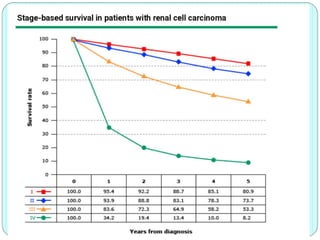
DR.BHAVIN VADODARIYA
DNB Surgical Oncology 2nd year Resident,
Apollo CBCC Cancer Care,
Ahmedabad
Date-21/07/2018
Risk Stratification in Renal Cell
Carcinoma
Outline
 Prognostic Factors
 Staging
 Histopathology
 MSKCC Criteria
 HENG Criteria
Why ?
 Important for patient counseling-
-Will you live < 1 year or > 1 year?
 Important for planning therapy
- TKIs for poor risk patients
- Is cytoreductive nephrectomy appropriate?
 Important for clinical trial Study Design
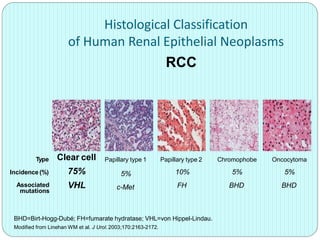
BHD=Birt-Hogg-Dubé; FH=fumarate hydratase; VHL=von Hippel-Lindau.
Modified from Linehan WM et al. J Urol. 2003;170:2163-2172.
Histological Classification
of Human Renal Epithelial Neoplasms
RCC
Type
Incidence (%)
Associated
mutations
Clear cell
75%
VHL
Papillary type 1
5%
c-Met
Papillary type 2
10%
FH
Chromophobe
5%
BHD
Oncocytoma
5%
BHD
HISTOPATHOLOGY
 Tumor type
Multivariate analyses of single-institution series from the
Mayo Clinic and from Memorial Sloan Kettering Cancer
Center (MSKCC) including 3062 and 1668 patients,
respectively, both found that patients with clear cell
histology had significantly poorer cancer-specific survival
Histological subtype is an independent predictor of outcome for patients with renal cell carcinoma.AU Leibovich BC, Lohse CM, Crispen PL, Boorjian
SA, Thompson RH, Blute ML, Cheville JC SOJ Urol. 2010;183(4):1309.
Prognostic impact of histological subtype on surgically treated localized renal cell carcinoma.AUTeloken PE, Thompson RH, Tickoo SK, Cronin A,
Savage C, Reuter VE, Russo P SOJ Urol. 2009;182(5):2132. Epub 2009 Sep 16.
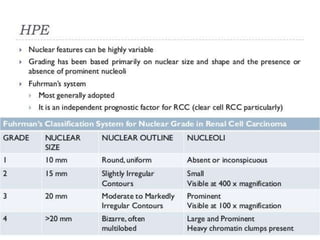
Tumor grade
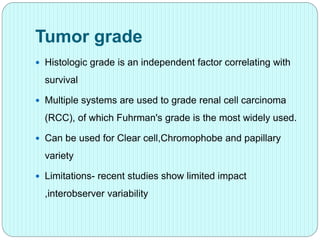
 Histologic grade is an independent factor correlating with
survival
 Multiple systems are used to grade renal cell carcinoma
(RCC), of which Fuhrman's grade is the most widely used.
 Can be used for Clear cell,Chromophobe and papillary
variety
 Limitations- recent studies show limited impact
,interobserver variability
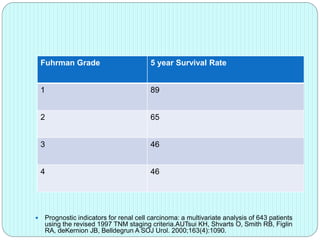
 Prognostic indicators for renal cell carcinoma: a multivariate analysis of 643 patients
using the revised 1997 TNM staging criteria.AUTsui KH, Shvarts O, Smith RB, Figlin
RA, deKernion JB, Belldegrun A SOJ Urol. 2000;163(4):1090.
Fuhrman Grade 5 year Survival Rate
1 89
2 65
3 46
4 46
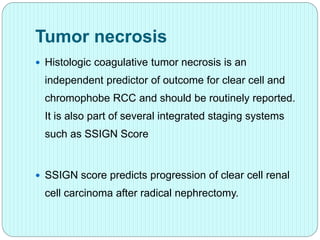
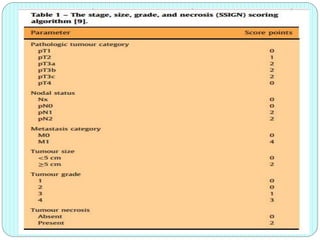
Tumor necrosis
 Histologic coagulative tumor necrosis is an
independent predictor of outcome for clear cell and
chromophobe RCC and should be routinely reported.
It is also part of several integrated staging systems
such as SSIGN Score
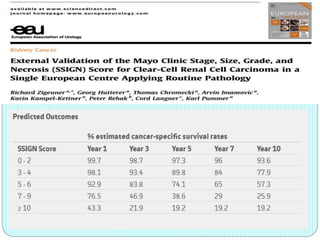
 SSIGN score predicts progression of clear cell renal
cell carcinoma after radical nephrectomy.
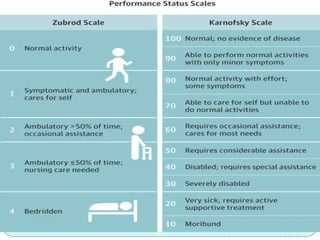
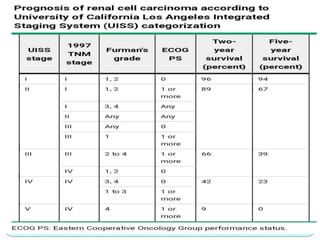
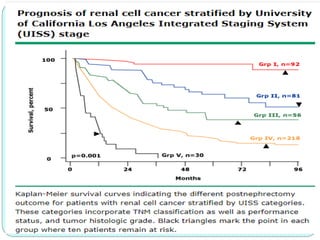
University
of
California,
Los
Angeles
(UCLA)
integrated
staging
system
(UISS)
Prognostic factors
Metastatic Renal Cell Carcinoma
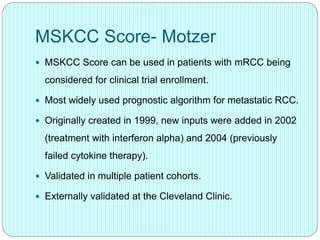
MSKCC Score- Motzer
 MSKCC Score can be used in patients with mRCC being
considered for clinical trial enrollment.
 Most widely used prognostic algorithm for metastatic RCC.
 Originally created in 1999, new inputs were added in 2002
(treatment with interferon alpha) and 2004 (previously
failed cytokine therapy).
 Validated in multiple patient cohorts.
 Externally validated at the Cleveland Clinic.
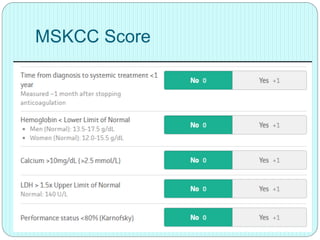
MSKCC Score
Age
Motzer score
LDH
Hb
Ca++
Prior history of nephrectomy
ECOG status
Nuclear grade 1 through 4 tumours
Stage
Histology
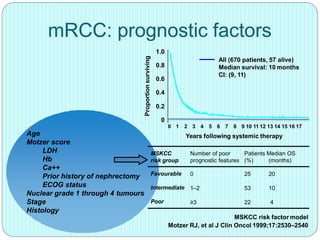
mRCC: prognostic factors
1.0
0.8
0.6
0.4
0.2
0
0 1 2 3 4 5 6 7 8 9 10 11 12 13 14 15 16 17
Years following systemic therapy
Proportionsurviving
All (670 patients, 57 alive)
Median survival: 10 months
CI: (9, 11)
MSKCC risk factor model
Motzer RJ, et al J Clin Oncol 1999;17:2530–2540
Poor
Intermediate
Favourable
MSKCC
risk group
Number of poor Patients Median OS
prognostic features (%) (months)
0 25 20
1–2 53 10
≥3 22 4
Limitations
 As groups of patients treated with chemotherapy as
well as IFN-a-containing therapy were also included in
the development of this model, the prognosis of
patients undergoing cytokine therapy could not be
accurately predicted.

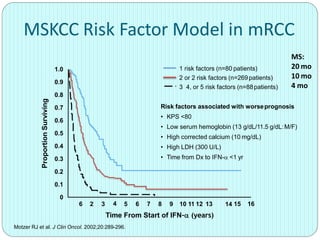
MSKCC Risk Factor Model in mRCC
1 risk factors (n=80 patients)
2 or 2 risk factors (n=269patients)
3 4, or 5 risk factors (n=88patients)
Risk factors associated with worseprognosis
• KPS <80
• Low serum hemoglobin (13 g/dL/11.5 g/dL:M/F)
• High corrected calcium (10 mg/dL)
• High LDH (300 U/L)
• Time from Dx to IFN- <1 yr
ProportionSurviving
1.0
0.9
0.8
0.7
0.6
0.5
0.4
0.3
0.2
0.1
0
1614 156 2 3 4 5 6 7 8 9 10 11 12 13
Time From Start of IFN- (years)
Motzer RJ et al. J Clin Oncol. 2002;20:289-296.
MS:
20 mo
10 mo
4 mo
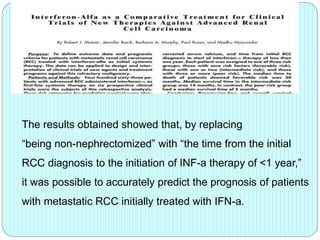
The results obtained showed that, by replacing
“being non-nephrectomized” with “the time from the initial
RCC diagnosis to the initiation of INF-a therapy of <1 year,”
it was possible to accurately predict the prognosis of patients
with metastatic RCC initially treated with IFN-a.
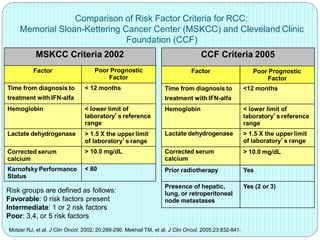
Comparison of Risk Factor Criteria for RCC:
Memorial Sloan-Kettering Cancer Center (MSKCC) and Cleveland Clinic
Foundation (CCF)
Risk groups are defined as follows:
Favorable: 0 risk factors present
Intermediate: 1 or 2 risk factors
Poor: 3,4, or 5 risk factors
Motzer RJ, et al. J Clin Oncol. 2002; 20:289-296. Mekhail TM, et al. J Clin Oncol. 2005;23:832-841.
MSKCC Criteria 2002
Factor Poor Prognostic
Factor
Time from diagnosis to
treatment with IFN-alfa
< 12 months
Hemoglobin < lower limit of
laboratory’s reference
range
Lactate dehydrogenase > 1.5 X the upper limit
of laboratory’s range
Corrected serum
calcium
> 10.0 mg/dL
Karnofsky Performance
Status
< 80
CCF Criteria 2005
Factor Poor Prognostic
Factor
Time from diagnosis to
treatment with IFN-alfa
<12 months
Hemoglobin < lower limit of
laboratory’s reference
range
Lactate dehydrogenase > 1.5 X the upper limit
of laboratory’s range
Corrected serum
calcium
> 10.0 mg/dL
Prior radiotherapy Yes
Presence of hepatic,
lung, or retroperitoneal
node metastases
Yes (2 or 3)
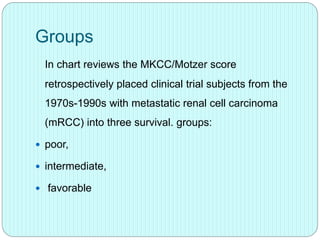
Groups
In chart reviews the MKCC/Motzer score
retrospectively placed clinical trial subjects from the
1970s-1990s with metastatic renal cell carcinoma
(mRCC) into three survival. groups:
 poor,
 intermediate,
 favorable
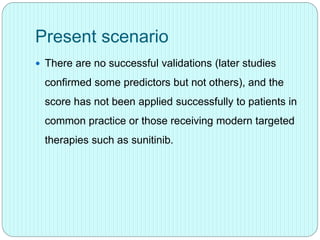
Present scenario
 There are no successful validations (later studies
confirmed some predictors but not others), and the
score has not been applied successfully to patients in
common practice or those receiving modern targeted
therapies such as sunitinib.
IMDC Heng Criteria
International mRCC Databse consortium
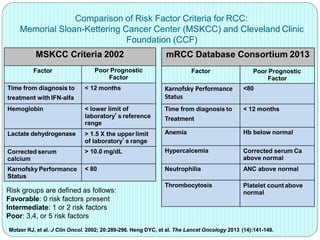
Comparison of Risk Factor Criteria for RCC:
Memorial Sloan-Kettering Cancer Center (MSKCC) and Cleveland Clinic
Foundation (CCF)
Risk groups are defined as follows:
Favorable: 0 risk factors present
Intermediate: 1 or 2 risk factors
Poor: 3,4, or 5 risk factors
Motzer RJ, et al. J Clin Oncol. 2002; 20:289-296. Heng DYC, et al. The Lancet Oncology 2013 (14):141-148.
mRCC Database Consortium 2013
Factor Poor Prognostic
Factor
Karnofsky Performance
Status
<80
Time from diagnosis to
Treatment
< 12 months
Anemia Hb below normal
Hypercalcemia Corrected serum Ca
above normal
Neutrophilia ANC above normal
Thrombocytosis Platelet countabove
normal
MSKCC Criteria 2002
Factor Poor Prognostic
Factor
Time from diagnosis to
treatment with IFN-alfa
< 12 months
Hemoglobin < lower limit of
laboratory’s reference
range
Lactate dehydrogenase > 1.5 X the upper limit
of laboratory’s range
Corrected serum
calcium
> 10.0 mg/dL
Karnofsky Performance
Status
< 80
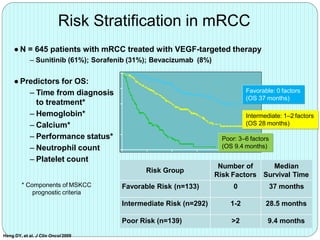
Risk Stratification in mRCC
Heng DY, et al. J Clin Oncol 2009
● N = 645 patients with mRCC treated with VEGF-targeted therapy
– Sunitinib (61%); Sorafenib (31%); Bevacizumab (8%)
● Predictors for OS:
– Time from diagnosis
to treatment*
– Hemoglobin*
– Calcium*
– Performance status*
– Neutrophil count
– Platelet count
* Components of MSKCC
prognostic criteria
Risk Group
Number of
Risk Factors
Median
Survival Time
Favorable Risk (n=133) 0 37 months
Intermediate Risk (n=292) 1-2 28.5 months
Poor Risk (n=139) >2 9.4 months
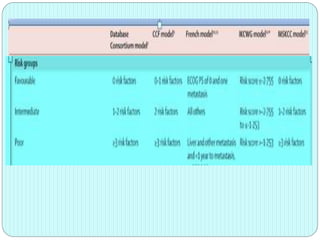
Favorable: 0 factors
(OS 37 months)
Intermediate: 1–2 factors
(OS 28 months)
Poor: 3–6 factors
(OS 9.4 months)
Heng DYC, et al. The Lancet Oncology 2013 (14):141-148.
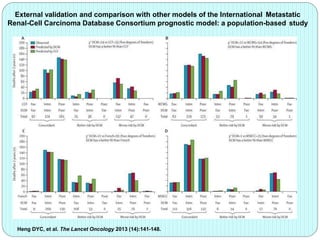
External validation and comparison with other models of the International Metastatic
Renal-Cell Carcinoma Database Consortium prognostic model: a population-based study
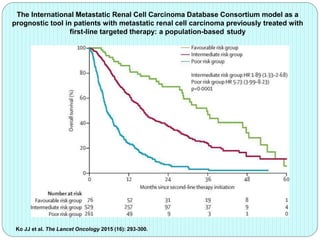
The International Metastatic Renal Cell Carcinoma Database Consortium model as a
prognostic tool in patients with metastatic renal cell carcinoma previously treated with
first-line targeted therapy: a population-based study
Ko JJ et al. The Lancet Oncology 2015 (16): 293-300.
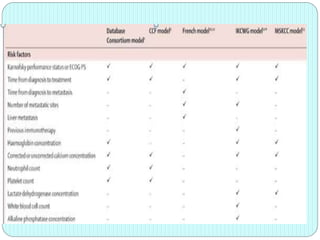
 Determines overall survival in patients treated with
VEGF–targeted therapy.
 Focus on those receiving modern treatments in
common practice.
 Unlike other models, the IMDC model utilizes the
same baseline prognostic factors for previously
treated and untreated patients.
 The IMDC model was shown to improve
prognostication compared with other prognostic
models, such as the Cleveland Clinic Foundation
(CCF) model the International Kidney Cancer Working
Group (IKCWG) the French model , and the MSKCC
model.
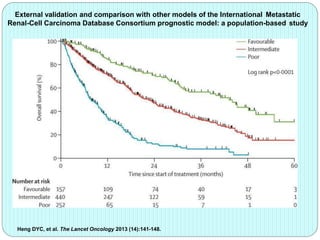
External validation and comparison with other models of the International Metastatic
Renal-Cell Carcinoma Database Consortium prognostic model: a population-based study
Heng DYC, et al. The Lancet Oncology 2013 (14):141-148.
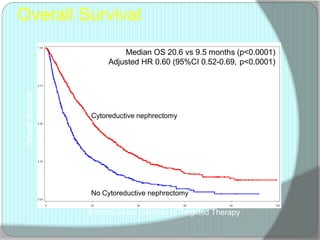
Overall Survival
Cytoreductive nephrectomy
Median OS 20.6 vs 9.5 months (p<0.0001)
Adjusted HR 0.60 (95%CI 0.52-0.69, p<0.0001)
OverallSurvival
No Cytoreductive nephrectomy
Months Since Initiation of Targeted Therapy
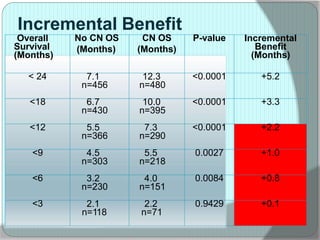
Incremental Benefit
Overall
Survival
(Months)
No CN OS
(Months)
CN OS
(Months)
P-value Incremental
Benefit
(Months)
< 24 7.1
n=456
12.3
n=480
<0.0001 +5.2
<18 6.7
n=430
10.0
n=395
<0.0001 +3.3
<12 5.5
n=366
7.3
n=290
<0.0001 +2.2
<9 4.5
n=303
5.5
n=218
0.0027 +1.0
<6 3.2
n=230
4.0
n=151
0.0084 +0.8
<3 2.1
n=118
2.2
n=71
0.9429 +0.1
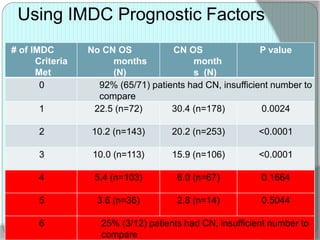
Using IMDC Prognostic Factors
# of IMDC
Criteria
Met
No CN OS
months
(N)
CN OS
month
s (N)
P value
0 92% (65/71) patients had CN, insufficient number to
compare
1 22.5 (n=72) 30.4 (n=178) 0.0024
2 10.2 (n=143) 20.2 (n=253) <0.0001
3 10.0 (n=113) 15.9 (n=106) <0.0001
4 5.4 (n=103) 6.0 (n=67) 0.1664
5 3.6 (n=36) 2.8 (n=14) 0.5044
6 25% (3/12) patients had CN, insufficient number to
compare
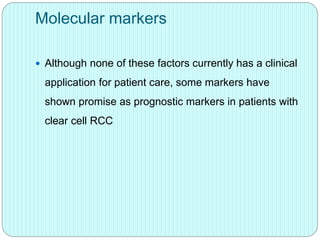
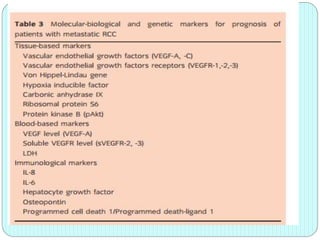
Molecular markers
 Although none of these factors currently has a clinical
application for patient care, some markers have
shown promise as prognostic markers in patients with
clear cell RCC
Mol
ecul
ar
mar
kers
Why ?
 Important for patient counseling-
-Will you live < 1 year or > 1 year?
 Important for planning therapy
- TKIs for poor risk patients
- Is cytoreductive nephrectomy appropriate?
 Important for clinical trial Study Design
Take Home message
 For patients presenting with localized renal cell
carcinoma (RCC), the tumor, node, metastasis (TNM)
staging system provides the primary prognostic
information
 ●Additional prognostic information can be provided by
incorporating parameters such as performance status
and Fuhrman's histologic grade.

 The introduction of molecular-targeted therapy has
improved the prognosis of patients with metastatic
RCC.
 During this process, various prognostic models have
been developed, and are being clinically used.
However, their quality is insufficient in clinical practice
and, thus, requires further improvements.
 In order to achieve advances in the treatment of
metastatic RCC, it appeared to be necessary to
develop appropriate prognostic models and identify
predictive factors useful for the selection of
therapeutic agents

Renal Cell Carcinoma Risk Stratification

  • 1.
    DR.BHAVIN VADODARIYA DNB SurgicalOncology 2nd year Resident, Apollo CBCC Cancer Care, Ahmedabad Date-21/07/2018 Risk Stratification in Renal Cell Carcinoma
  • 2.
    Outline  Prognostic Factors Staging  Histopathology  MSKCC Criteria  HENG Criteria
  • 3.
    Why ?  Importantfor patient counseling- -Will you live < 1 year or > 1 year?  Important for planning therapy - TKIs for poor risk patients - Is cytoreductive nephrectomy appropriate?  Important for clinical trial Study Design
  • 5.
    BHD=Birt-Hogg-Dubé; FH=fumarate hydratase;VHL=von Hippel-Lindau. Modified from Linehan WM et al. J Urol. 2003;170:2163-2172. Histological Classification of Human Renal Epithelial Neoplasms RCC Type Incidence (%) Associated mutations Clear cell 75% VHL Papillary type 1 5% c-Met Papillary type 2 10% FH Chromophobe 5% BHD Oncocytoma 5% BHD
  • 11.
    HISTOPATHOLOGY  Tumor type Multivariateanalyses of single-institution series from the Mayo Clinic and from Memorial Sloan Kettering Cancer Center (MSKCC) including 3062 and 1668 patients, respectively, both found that patients with clear cell histology had significantly poorer cancer-specific survival Histological subtype is an independent predictor of outcome for patients with renal cell carcinoma.AU Leibovich BC, Lohse CM, Crispen PL, Boorjian SA, Thompson RH, Blute ML, Cheville JC SOJ Urol. 2010;183(4):1309. Prognostic impact of histological subtype on surgically treated localized renal cell carcinoma.AUTeloken PE, Thompson RH, Tickoo SK, Cronin A, Savage C, Reuter VE, Russo P SOJ Urol. 2009;182(5):2132. Epub 2009 Sep 16.
  • 12.
    Tumor grade  Histologicgrade is an independent factor correlating with survival  Multiple systems are used to grade renal cell carcinoma (RCC), of which Fuhrman's grade is the most widely used.  Can be used for Clear cell,Chromophobe and papillary variety  Limitations- recent studies show limited impact ,interobserver variability
  • 13.
     Prognostic indicatorsfor renal cell carcinoma: a multivariate analysis of 643 patients using the revised 1997 TNM staging criteria.AUTsui KH, Shvarts O, Smith RB, Figlin RA, deKernion JB, Belldegrun A SOJ Urol. 2000;163(4):1090. Fuhrman Grade 5 year Survival Rate 1 89 2 65 3 46 4 46
  • 15.
    Tumor necrosis  Histologiccoagulative tumor necrosis is an independent predictor of outcome for clear cell and chromophobe RCC and should be routinely reported. It is also part of several integrated staging systems such as SSIGN Score  SSIGN score predicts progression of clear cell renal cell carcinoma after radical nephrectomy.
  • 19.
  • 21.
  • 22.
    MSKCC Score- Motzer MSKCC Score can be used in patients with mRCC being considered for clinical trial enrollment.  Most widely used prognostic algorithm for metastatic RCC.  Originally created in 1999, new inputs were added in 2002 (treatment with interferon alpha) and 2004 (previously failed cytokine therapy).  Validated in multiple patient cohorts.  Externally validated at the Cleveland Clinic.
  • 23.
  • 25.
    Age Motzer score LDH Hb Ca++ Prior historyof nephrectomy ECOG status Nuclear grade 1 through 4 tumours Stage Histology mRCC: prognostic factors 1.0 0.8 0.6 0.4 0.2 0 0 1 2 3 4 5 6 7 8 9 10 11 12 13 14 15 16 17 Years following systemic therapy Proportionsurviving All (670 patients, 57 alive) Median survival: 10 months CI: (9, 11) MSKCC risk factor model Motzer RJ, et al J Clin Oncol 1999;17:2530–2540 Poor Intermediate Favourable MSKCC risk group Number of poor Patients Median OS prognostic features (%) (months) 0 25 20 1–2 53 10 ≥3 22 4
  • 26.
    Limitations  As groupsof patients treated with chemotherapy as well as IFN-a-containing therapy were also included in the development of this model, the prognosis of patients undergoing cytokine therapy could not be accurately predicted. 
  • 27.
    MSKCC Risk FactorModel in mRCC 1 risk factors (n=80 patients) 2 or 2 risk factors (n=269patients) 3 4, or 5 risk factors (n=88patients) Risk factors associated with worseprognosis • KPS <80 • Low serum hemoglobin (13 g/dL/11.5 g/dL:M/F) • High corrected calcium (10 mg/dL) • High LDH (300 U/L) • Time from Dx to IFN- <1 yr ProportionSurviving 1.0 0.9 0.8 0.7 0.6 0.5 0.4 0.3 0.2 0.1 0 1614 156 2 3 4 5 6 7 8 9 10 11 12 13 Time From Start of IFN- (years) Motzer RJ et al. J Clin Oncol. 2002;20:289-296. MS: 20 mo 10 mo 4 mo
  • 28.
    The results obtainedshowed that, by replacing “being non-nephrectomized” with “the time from the initial RCC diagnosis to the initiation of INF-a therapy of <1 year,” it was possible to accurately predict the prognosis of patients with metastatic RCC initially treated with IFN-a.
  • 30.
    Comparison of RiskFactor Criteria for RCC: Memorial Sloan-Kettering Cancer Center (MSKCC) and Cleveland Clinic Foundation (CCF) Risk groups are defined as follows: Favorable: 0 risk factors present Intermediate: 1 or 2 risk factors Poor: 3,4, or 5 risk factors Motzer RJ, et al. J Clin Oncol. 2002; 20:289-296. Mekhail TM, et al. J Clin Oncol. 2005;23:832-841. MSKCC Criteria 2002 Factor Poor Prognostic Factor Time from diagnosis to treatment with IFN-alfa < 12 months Hemoglobin < lower limit of laboratory’s reference range Lactate dehydrogenase > 1.5 X the upper limit of laboratory’s range Corrected serum calcium > 10.0 mg/dL Karnofsky Performance Status < 80 CCF Criteria 2005 Factor Poor Prognostic Factor Time from diagnosis to treatment with IFN-alfa <12 months Hemoglobin < lower limit of laboratory’s reference range Lactate dehydrogenase > 1.5 X the upper limit of laboratory’s range Corrected serum calcium > 10.0 mg/dL Prior radiotherapy Yes Presence of hepatic, lung, or retroperitoneal node metastases Yes (2 or 3)
  • 31.
    Groups In chart reviewsthe MKCC/Motzer score retrospectively placed clinical trial subjects from the 1970s-1990s with metastatic renal cell carcinoma (mRCC) into three survival. groups:  poor,  intermediate,  favorable
  • 32.
    Present scenario  Thereare no successful validations (later studies confirmed some predictors but not others), and the score has not been applied successfully to patients in common practice or those receiving modern targeted therapies such as sunitinib.
  • 33.
    IMDC Heng Criteria InternationalmRCC Databse consortium
  • 34.
    Comparison of RiskFactor Criteria for RCC: Memorial Sloan-Kettering Cancer Center (MSKCC) and Cleveland Clinic Foundation (CCF) Risk groups are defined as follows: Favorable: 0 risk factors present Intermediate: 1 or 2 risk factors Poor: 3,4, or 5 risk factors Motzer RJ, et al. J Clin Oncol. 2002; 20:289-296. Heng DYC, et al. The Lancet Oncology 2013 (14):141-148. mRCC Database Consortium 2013 Factor Poor Prognostic Factor Karnofsky Performance Status <80 Time from diagnosis to Treatment < 12 months Anemia Hb below normal Hypercalcemia Corrected serum Ca above normal Neutrophilia ANC above normal Thrombocytosis Platelet countabove normal MSKCC Criteria 2002 Factor Poor Prognostic Factor Time from diagnosis to treatment with IFN-alfa < 12 months Hemoglobin < lower limit of laboratory’s reference range Lactate dehydrogenase > 1.5 X the upper limit of laboratory’s range Corrected serum calcium > 10.0 mg/dL Karnofsky Performance Status < 80
  • 35.
    Risk Stratification inmRCC Heng DY, et al. J Clin Oncol 2009 ● N = 645 patients with mRCC treated with VEGF-targeted therapy – Sunitinib (61%); Sorafenib (31%); Bevacizumab (8%) ● Predictors for OS: – Time from diagnosis to treatment* – Hemoglobin* – Calcium* – Performance status* – Neutrophil count – Platelet count * Components of MSKCC prognostic criteria Risk Group Number of Risk Factors Median Survival Time Favorable Risk (n=133) 0 37 months Intermediate Risk (n=292) 1-2 28.5 months Poor Risk (n=139) >2 9.4 months Favorable: 0 factors (OS 37 months) Intermediate: 1–2 factors (OS 28 months) Poor: 3–6 factors (OS 9.4 months)
  • 37.
    Heng DYC, etal. The Lancet Oncology 2013 (14):141-148. External validation and comparison with other models of the International Metastatic Renal-Cell Carcinoma Database Consortium prognostic model: a population-based study
  • 38.
    The International MetastaticRenal Cell Carcinoma Database Consortium model as a prognostic tool in patients with metastatic renal cell carcinoma previously treated with first-line targeted therapy: a population-based study Ko JJ et al. The Lancet Oncology 2015 (16): 293-300.
  • 39.
     Determines overallsurvival in patients treated with VEGF–targeted therapy.  Focus on those receiving modern treatments in common practice.  Unlike other models, the IMDC model utilizes the same baseline prognostic factors for previously treated and untreated patients.
  • 40.
     The IMDCmodel was shown to improve prognostication compared with other prognostic models, such as the Cleveland Clinic Foundation (CCF) model the International Kidney Cancer Working Group (IKCWG) the French model , and the MSKCC model.
  • 41.
    External validation andcomparison with other models of the International Metastatic Renal-Cell Carcinoma Database Consortium prognostic model: a population-based study Heng DYC, et al. The Lancet Oncology 2013 (14):141-148.
  • 45.
    Overall Survival Cytoreductive nephrectomy MedianOS 20.6 vs 9.5 months (p<0.0001) Adjusted HR 0.60 (95%CI 0.52-0.69, p<0.0001) OverallSurvival No Cytoreductive nephrectomy Months Since Initiation of Targeted Therapy
  • 46.
    Incremental Benefit Overall Survival (Months) No CNOS (Months) CN OS (Months) P-value Incremental Benefit (Months) < 24 7.1 n=456 12.3 n=480 <0.0001 +5.2 <18 6.7 n=430 10.0 n=395 <0.0001 +3.3 <12 5.5 n=366 7.3 n=290 <0.0001 +2.2 <9 4.5 n=303 5.5 n=218 0.0027 +1.0 <6 3.2 n=230 4.0 n=151 0.0084 +0.8 <3 2.1 n=118 2.2 n=71 0.9429 +0.1
  • 47.
    Using IMDC PrognosticFactors # of IMDC Criteria Met No CN OS months (N) CN OS month s (N) P value 0 92% (65/71) patients had CN, insufficient number to compare 1 22.5 (n=72) 30.4 (n=178) 0.0024 2 10.2 (n=143) 20.2 (n=253) <0.0001 3 10.0 (n=113) 15.9 (n=106) <0.0001 4 5.4 (n=103) 6.0 (n=67) 0.1664 5 3.6 (n=36) 2.8 (n=14) 0.5044 6 25% (3/12) patients had CN, insufficient number to compare
  • 48.
    Molecular markers  Althoughnone of these factors currently has a clinical application for patient care, some markers have shown promise as prognostic markers in patients with clear cell RCC
  • 49.
  • 50.
    Why ?  Importantfor patient counseling- -Will you live < 1 year or > 1 year?  Important for planning therapy - TKIs for poor risk patients - Is cytoreductive nephrectomy appropriate?  Important for clinical trial Study Design
  • 51.
    Take Home message For patients presenting with localized renal cell carcinoma (RCC), the tumor, node, metastasis (TNM) staging system provides the primary prognostic information  ●Additional prognostic information can be provided by incorporating parameters such as performance status and Fuhrman's histologic grade. 
  • 52.
     The introductionof molecular-targeted therapy has improved the prognosis of patients with metastatic RCC.  During this process, various prognostic models have been developed, and are being clinically used. However, their quality is insufficient in clinical practice and, thus, requires further improvements.
  • 53.
     In orderto achieve advances in the treatment of metastatic RCC, it appeared to be necessary to develop appropriate prognostic models and identify predictive factors useful for the selection of therapeutic agents