ADULT BLS & ACLS : 2015
Presenter- Dr. SUBHANKAR PAUL
Emergency Medicine,
GAUHATI MEDICAL COLLEGE & HOSPITAL
CONTENTS
• BLS (BASIC LIFE SUPPORT )GUIDELINES
• CPR TECHNIQUE
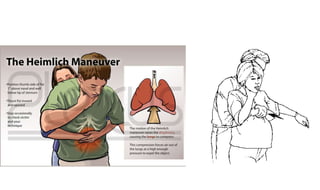
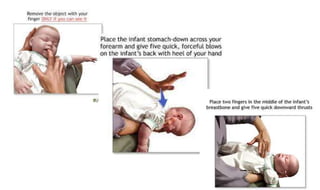
• CHOKING
• ACLS (ADVANCED CARDIAC LIFE SUPPORT) ALGORHYTHMS
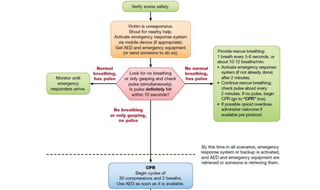
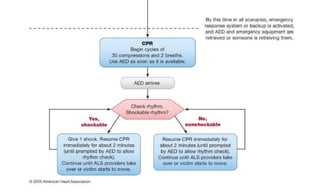
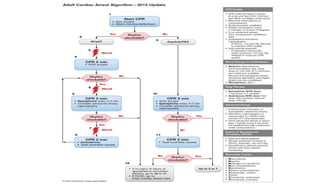
BLS : Healthcare Provider Adult Cardiac
Arrest Algorithm—2015 Update
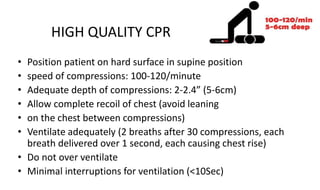
HIGH QUALITY CPR
• Position patient on hard surface in supine position
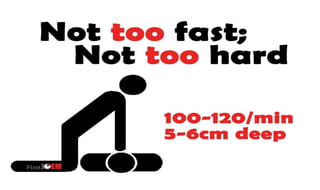
• speed of compressions: 100-120/minute
• Adequate depth of compressions: 2-2.4” (5-6cm)
• Allow complete recoil of chest (avoid leaning
• on the chest between compressions)
• Ventilate adequately (2 breaths after 30 compressions, each
breath delivered over 1 second, each causing chest rise)
• Do not over ventilate
• Minimal interruptions for ventilation (<10Sec)
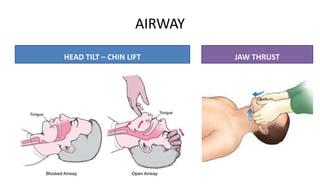
AIRWAY
HEAD TILT – CHIN LIFT JAW THRUST
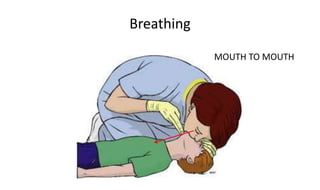
Breathing
MOUTH TO MOUTH
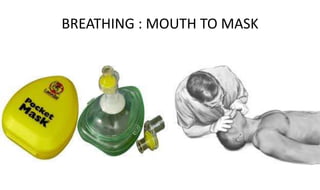
BREATHING : MOUTH TO MASK
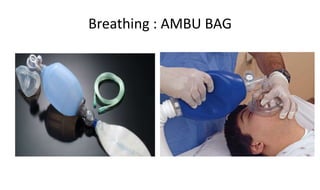
Breathing : AMBU BAG
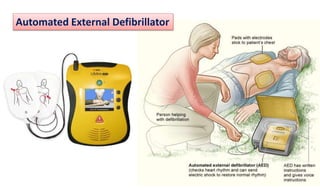
Automated External Defibrillator
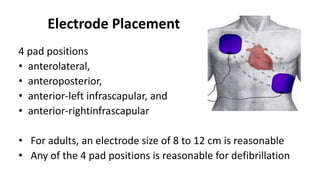
Electrode Placement
4 pad positions
• anterolateral,
• anteroposterior,
• anterior-left infrascapular, and
• anterior-rightinfrascapular
• For adults, an electrode size of 8 to 12 cm is reasonable
• Any of the 4 pad positions is reasonable for defibrillation
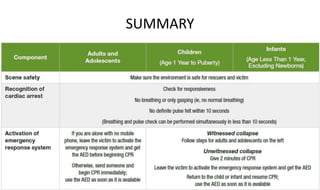
SUMMARY
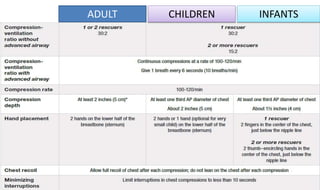
ADULT CHILDREN INFANTS
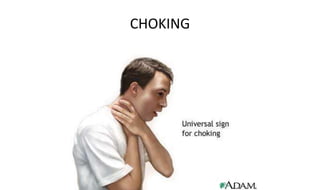
CHOKING
Advanced Cardiac Life Support
• CARDIAC ARREST (PULSELESS ARREST ALGORHYTHM )
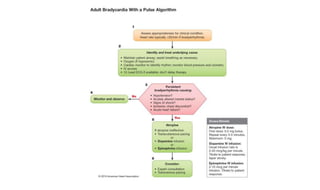
• ADULT BRADYCARDIA ALGORHYTHM
• ADULT TACHYCARDIA ALGORHYTHM
• AMI ALGORHYTHM
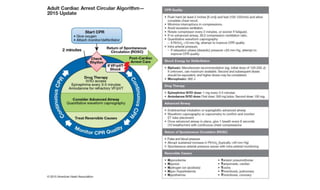
PULSELESS ARREST ALGORHYTHM
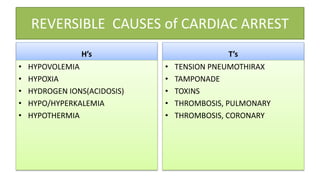
REVERSIBLE CAUSES of CARDIAC ARREST
H’s
• HYPOVOLEMIA
• HYPOXIA
• HYDROGEN IONS(ACIDOSIS)
• HYPO/HYPERKALEMIA
• HYPOTHERMIA
T’s
• TENSION PNEUMOTHIRAX
• TAMPONADE
• TOXINS
• THROMBOSIS, PULMONARY
• THROMBOSIS, CORONARY
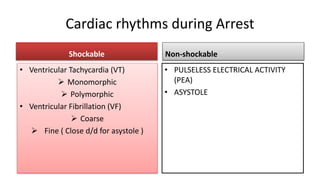
Cardiac rhythms during Arrest
Shockable
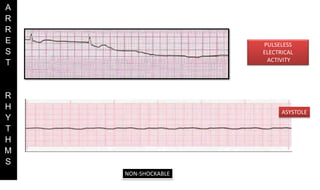
• PULSELESS ELECTRICAL ACTIVITY
(PEA)
• ASYSTOLE
Non-shockable
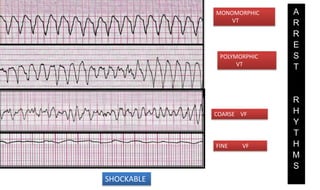
• Ventricular Tachycardia (VT)
 Monomorphic
 Polymorphic
• Ventricular Fibrillation (VF)
 Coarse
 Fine ( Close d/d for asystole )
MONOMORPHIC
VT
POLYMORPHIC
VT
COARSE VF
FINE VF
A
R
R
E
S
T
R
H
Y
T
H
M
S
SHOCKABLE
PULSELESS
ELECTRICAL
ACTIVITY
ASYSTOLE
A
R
R
E
S
T
R
H
Y
T
H
M
S
NON-SHOCKABLE
Management of Cardiac
Arrest
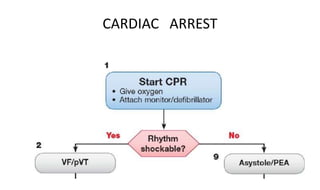
CARDIAC ARREST
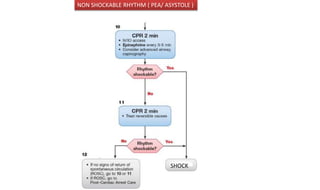
NON SHOCKABLE RHYTHM ( PEA/ ASYSTOLE )
SHOCK
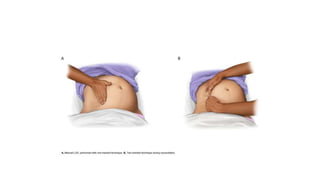
CPR in PREGNANT FEMALES
Monitoring During CPR
Physiologic parameters
• Monitoring of PETCO2 (35 to 40 mmHg)
• Coronary perfusion pressure (CPP) (15mmHg)
• Central venous oxygen saturation (ScvO2)
• Abrupt increase in any of these parameters is a sensitive
indicator of ROSC that can be monitored without
interrupting chest compressions
Quantitative waveform capnography
• If Petco2 <10 mm Hg, attempt to improve CPR quality
Intra-arterial pressure
• If diastolic pressure <20 mm Hg, attempt to improve CPR
quality
• If ScvO2 is < 30%, consider trying to improve the quality of
CPR
Interventions Not Recommended for Routine
Use During Cardiac Arrest
• Atropine : Available evidence suggests that routine use of
atropine during PEA or asystole is unlikely to have a
therapeutic benefit
• Sodium Bicarbonate : routine use of sodium bicarbonate is
not recommended for patients in cardiac arrest. In some
special resuscitation situations, such as preexisting
metabolic acidosis, hyperkalemia, or tricyclic
antidepressant overdose, bicarbonate can be beneficial
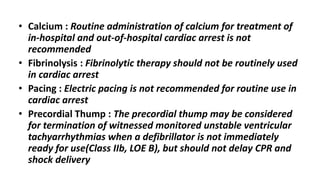
• Calcium : Routine administration of calcium for treatment of
in-hospital and out-of-hospital cardiac arrest is not
recommended
• Fibrinolysis : Fibrinolytic therapy should not be routinely used
in cardiac arrest
• Pacing : Electric pacing is not recommended for routine use in
cardiac arrest
• Precordial Thump : The precordial thump may be considered
for termination of witnessed monitored unstable ventricular
tachyarrhythmias when a defibrillator is not immediately
ready for use(Class IIb, LOE B), but should not delay CPR and
shock delivery
When Should Resuscitative Efforts Stop?
• Withholding and Withdrawing CPR
• (Termination of Resuscitative Efforts)
• Related to In-Hospital Cardiac Arrest
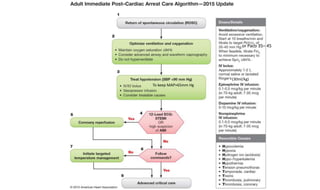
(30ml/kg)
or Paco 35– 45
To keep MAP>65mm Hg
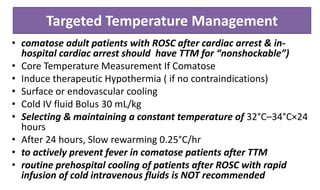
Targeted Temperature Management
• comatose adult patients with ROSC after cardiac arrest & in-
hospital cardiac arrest should have TTM for “nonshockable”)
• Core Temperature Measurement If Comatose
• Induce therapeutic Hypothermia ( if no contraindications)
• Surface or endovascular cooling
• Cold IV fluid Bolus 30 mL/kg
• Selecting & maintaining a constant temperature of 32°C–34°C×24
hours
• After 24 hours, Slow rewarming 0.25°C/hr
• to actively prevent fever in comatose patients after TTM
• routine prehospital cooling of patients after ROSC with rapid
infusion of cold intravenous fluids is NOT recommended
• An EEG for the diagnosis of seizure should be promptly
performed and interpreted, and then should be monitored
frequently or continuously in comatose patients after
ROSC.
• The same anticonvulsant regimens for the treatment of
status epilepticus caused by other etiologies may be
considered after cardiac arrest
Prognostication After Cardiac Arrest
• The earliest time to prognosticate a poor neurologic outcome
using clinical examination in patients not treated with TTM is 72
hours after cardiac arrest, but this time can be even longer after
cardiac arrest if the residual effect of sedation or paralysis is
suspected to confound the clinical examination
• In patients treated with TTM, where sedation or paralysis could
confound clinical examination, it is reasonable to wait until 72
hours after return to normothermia before predicting outcome
POOR NEUROLOGICAL OUTCOME
• Absence of pupillary reflex to light at 72 hours or more after cardiac arrest
• Presence of status myoclonus (different from isolated myoclonic jerks) during
the first 72 hours after cardiac arrest
• Absence of the N20 somatosensory evoked potential cortical wave 24 to 72
hours after cardiac arrest or after rewarming
• Presence of a marked reduction of the gray-white ratio on brain CT obtained
within 2 hours after cardiac arrest
• Extensive restriction of diffusion on brain MRI at 2 to 6 days after cardiac arrest
• Persistent absence of EEG reactivity to external stimuli at 72 hours after cardiac
arrest
• Persistent burst suppression or intractable status epilepticus on EEG after
rewarming
Organ Donation
• All patients who are resuscitated from cardiac arrest but
who subsequently progress to death or brain death should
be evaluated as potential organ donors.
• Patients who do not achieve ROSC and who would
otherwise have resuscitation terminated may be
considered as potential kidney or liver donors in settings
where rapid organ recovery programs exist
ADULT BRADYCARDIA WITH A PULSE
ALGORHYTHM
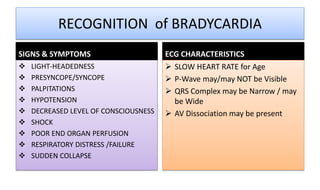
RECOGNITION of BRADYCARDIA
SIGNS & SYMPTOMS
 LIGHT-HEADEDNESS
 PRESYNCOPE/SYNCOPE
 PALPITATIONS
 HYPOTENSION
 DECREASED LEVEL OF CONSCIOUSNESS
 SHOCK
 POOR END ORGAN PERFUSION
 RESPIRATORY DISTRESS /FAILURE
 SUDDEN COLLAPSE
ECG CHARACTERISTICS
 SLOW HEART RATE for Age
 P-Wave may/may NOT be Visible
 QRS Complex may be Narrow / may
be Wide
 AV Dissociation may be present
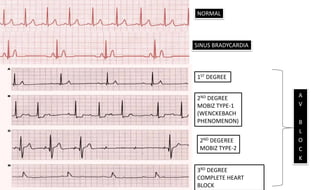
NORMAL
SINUS BRADYCARDIA
1ST DEGREE
2ND DEGREE
MOBIZ TYPE-1
(WENCKEBACH
PHENOMENON)
2ND DEGEREE
MOBIZ TYPE-2
3RD DEGREE
COMPLETE HEART
BLOCK
A
V
B
L
O
C
K
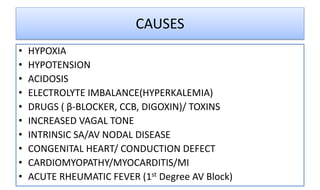
CAUSES
• HYPOXIA
• HYPOTENSION
• ACIDOSIS
• ELECTROLYTE IMBALANCE(HYPERKALEMIA)
• DRUGS ( β-BLOCKER, CCB, DIGOXIN)/ TOXINS
• INCREASED VAGAL TONE
• INTRINSIC SA/AV NODAL DISEASE
• CONGENITAL HEART/ CONDUCTION DEFECT
• CARDIOMYOPATHY/MYOCARDITIS/MI
• ACUTE RHEUMATIC FEVER (1st Degree AV Block)
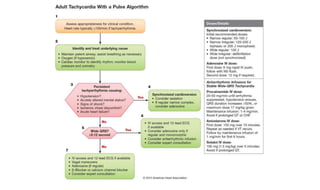
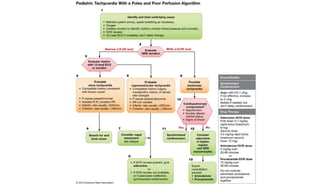
ADULT TACHYCARDIA WITH A PULSE
ALGORHYTHM
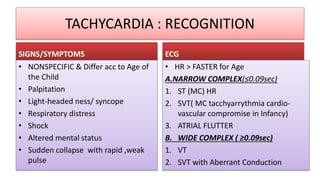
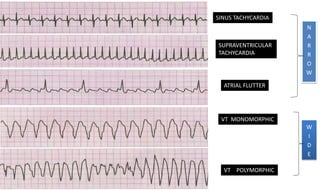
TACHYCARDIA : RECOGNITION
SIGNS/SYMPTOMS
• NONSPECIFIC & Differ acc to Age of
the Child
• Palpitation
• Light-headed ness/ syncope
• Respiratory distress
• Shock
• Altered mental status
• Sudden collapse with rapid ,weak
pulse
ECG
• HR > FASTER for Age
A.NARROW COMPLEX(≤0.09sec)
1. ST (MC) HR
2. SVT( MC tacchyarrythmia cardio-
vascular compromise in Infancy)
3. ATRIAL FLUTTER
B. WIDE COMPLEX ( ≥0.09sec)
1. VT
2. SVT with Aberrant Conduction
SINUS TACHYCARDIA
SUPRAVENTRICULAR
TACHYCARDIA
ATRIAL FLUTTER
VT MONOMORPHIC
VT POLYMORPHIC
N
A
R
R
O
W
W
I
D
E
ACUTE CORONARY SYNDROME ALGORHYTHM
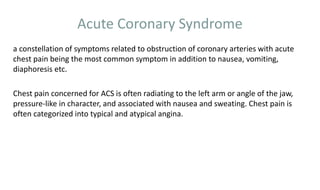
Acute Coronary Syndrome
a constellation of symptoms related to obstruction of coronary arteries with acute
chest pain being the most common symptom in addition to nausea, vomiting,
diaphoresis etc.
Chest pain concerned for ACS is often radiating to the left arm or angle of the jaw,
pressure-like in character, and associated with nausea and sweating. Chest pain is
often categorized into typical and atypical angina.
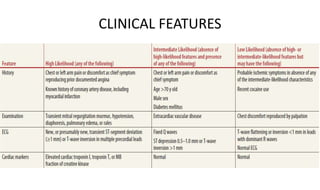
CLINICAL FEATURES
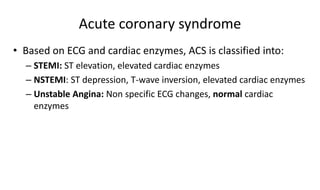
Acute coronary syndrome
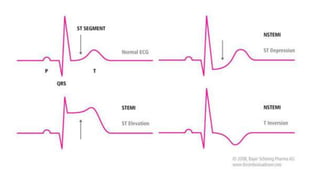
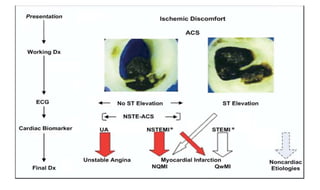
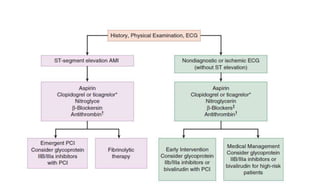
• Based on ECG and cardiac enzymes, ACS is classified into:
– STEMI: ST elevation, elevated cardiac enzymes
– NSTEMI: ST depression, T-wave inversion, elevated cardiac enzymes
– Unstable Angina: Non specific ECG changes, normal cardiac
enzymes
Universal Definition of Myocardial Infarction
• The term acute myocardial infarction (MI) should be used when there is evidence of
myocardial necrosis in a clinical setting consistent with acute myocardial ischemia.
Under these conditions, any one of the following criteria meets the diagnosis for MI
• Detection of a rise and/or fall of cardiac biomarker values (preferably cardiac troponin
[cTn]) with at least one value above the 99th percentile upper reference limit (URL)
and with at least one of the following:
• • Symptoms of ischemia
• • New or presumed new significant ST-segment T-wave (ST-T) changes or new left
bundle branch block (LBBB)
• • Development of pathologic Q waves in the electrocardiogram (ECG)
• • Imaging evidence of new loss of viable myocardium or new regional wall motion
abnormality
• • Identification of an intracoronary thrombus by angiography or autopsy
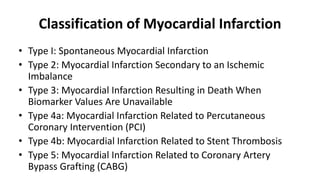
Classification of Myocardial Infarction
• Type I: Spontaneous Myocardial Infarction
• Type 2: Myocardial Infarction Secondary to an Ischemic
Imbalance
• Type 3: Myocardial Infarction Resulting in Death When
Biomarker Values Are Unavailable
• Type 4a: Myocardial Infarction Related to Percutaneous
Coronary Intervention (PCI)
• Type 4b: Myocardial Infarction Related to Stent Thrombosis
• Type 5: Myocardial Infarction Related to Coronary Artery
Bypass Grafting (CABG)
ECG
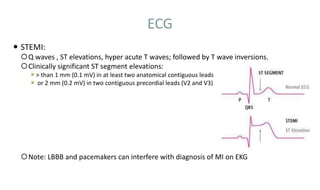
 STEMI:
Q waves , ST elevations, hyper acute T waves; followed by T wave inversions.
Clinically significant ST segment elevations:
> than 1 mm (0.1 mV) in at least two anatomical contiguous leads
 or 2 mm (0.2 mV) in two contiguous precordial leads (V2 and V3)
Note: LBBB and pacemakers can interfere with diagnosis of MI on EKG
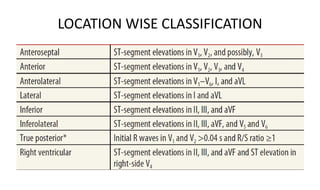
LOCATION WISE CLASSIFICATION
ECG
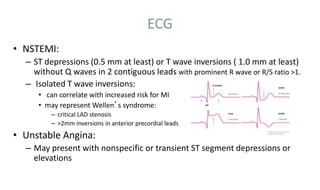
• NSTEMI:
– ST depressions (0.5 mm at least) or T wave inversions ( 1.0 mm at least)
without Q waves in 2 contiguous leads with prominent R wave or R/S ratio >1.
– Isolated T wave inversions:
• can correlate with increased risk for MI
• may represent Wellen’s syndrome:
– critical LAD stenosis
– >2mm inversions in anterior precordial leads
• Unstable Angina:
– May present with nonspecific or transient ST segment depressions or
elevations
Unstable Angina
• Occurs at rest and prolonged, usually lasting >20 minutes
• New onset angina that limits activity
• Increasing angina: Pain that occurs more frequently, lasts
longer periods or is increasingly limiting the patients activity
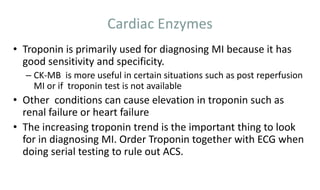
Cardiac Enzymes
• Troponin is primarily used for diagnosing MI because it has
good sensitivity and specificity.
– CK-MB is more useful in certain situations such as post reperfusion
MI or if troponin test is not available
• Other conditions can cause elevation in troponin such as
renal failure or heart failure
• The increasing troponin trend is the important thing to look
for in diagnosing MI. Order Troponin together with ECG when
doing serial testing to rule out ACS.
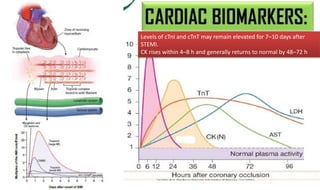
Levels of cTnI and cTnT may remain elevated for 7–10 days after
STEMI.
CK rises within 4–8 h and generally returns to normal by 48–72 h
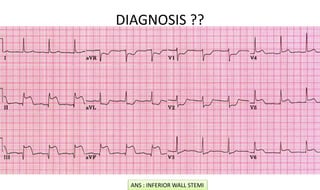
DIAGNOSIS ??
ANS : INFERIOR WALL STEMI
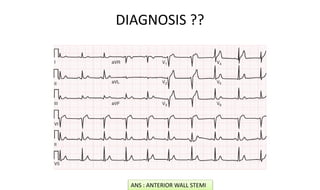
DIAGNOSIS ??
ANS : ANTERIOR WALL STEMI
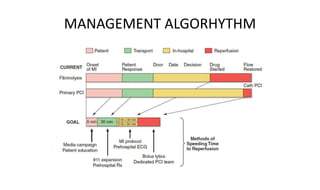
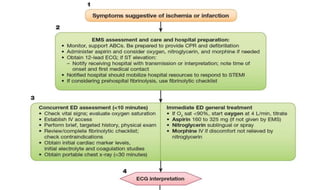
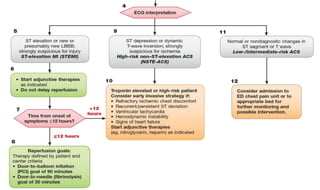
MANAGEMENT ALGORHYTHM
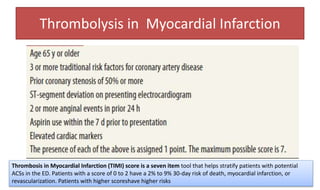
Thrombolysis in Myocardial Infarction
Thrombosis in Myocardial Infarction (TIMI) score is a seven item tool that helps stratify patients with potential
ACSs in the ED. Patients with a score of 0 to 2 have a 2% to 9% 30-day risk of death, myocardial infarction, or
revascularization. Patients with higher scoreshave higher risks
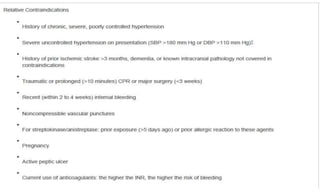
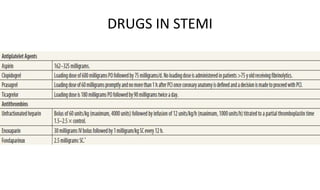
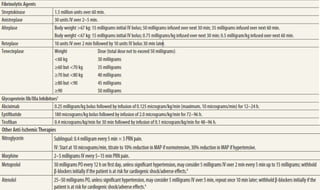
DRUGS IN STEMI
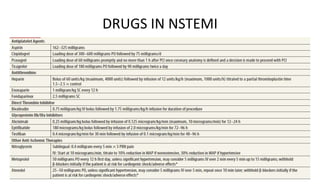
DRUGS IN NSTEMI
REFERENCES
• AHA 2015 GUIDELINES : BLS & ACLS
• TINTINALLI’S 8TH EDITION
• HARRISON’S 19TH
• BRAUNWALD’S 10TH
Action in time can save a life!!!
THANK YOU

Adult BLS & ACLS 2015

  • 1.
    ADULT BLS &ACLS : 2015 Presenter- Dr. SUBHANKAR PAUL Emergency Medicine, GAUHATI MEDICAL COLLEGE & HOSPITAL
  • 3.
    CONTENTS • BLS (BASICLIFE SUPPORT )GUIDELINES • CPR TECHNIQUE • CHOKING • ACLS (ADVANCED CARDIAC LIFE SUPPORT) ALGORHYTHMS
  • 4.
    BLS : HealthcareProvider Adult Cardiac Arrest Algorithm—2015 Update
  • 7.
    HIGH QUALITY CPR •Position patient on hard surface in supine position • speed of compressions: 100-120/minute • Adequate depth of compressions: 2-2.4” (5-6cm) • Allow complete recoil of chest (avoid leaning • on the chest between compressions) • Ventilate adequately (2 breaths after 30 compressions, each breath delivered over 1 second, each causing chest rise) • Do not over ventilate • Minimal interruptions for ventilation (<10Sec)
  • 9.
    AIRWAY HEAD TILT –CHIN LIFT JAW THRUST
  • 10.
  • 11.
  • 12.
  • 14.
  • 15.
    Electrode Placement 4 padpositions • anterolateral, • anteroposterior, • anterior-left infrascapular, and • anterior-rightinfrascapular • For adults, an electrode size of 8 to 12 cm is reasonable • Any of the 4 pad positions is reasonable for defibrillation
  • 16.
  • 17.
  • 19.
  • 22.
    Advanced Cardiac LifeSupport • CARDIAC ARREST (PULSELESS ARREST ALGORHYTHM ) • ADULT BRADYCARDIA ALGORHYTHM • ADULT TACHYCARDIA ALGORHYTHM • AMI ALGORHYTHM
  • 23.
  • 24.
    REVERSIBLE CAUSES ofCARDIAC ARREST H’s • HYPOVOLEMIA • HYPOXIA • HYDROGEN IONS(ACIDOSIS) • HYPO/HYPERKALEMIA • HYPOTHERMIA T’s • TENSION PNEUMOTHIRAX • TAMPONADE • TOXINS • THROMBOSIS, PULMONARY • THROMBOSIS, CORONARY
  • 25.
    Cardiac rhythms duringArrest Shockable • PULSELESS ELECTRICAL ACTIVITY (PEA) • ASYSTOLE Non-shockable • Ventricular Tachycardia (VT)  Monomorphic  Polymorphic • Ventricular Fibrillation (VF)  Coarse  Fine ( Close d/d for asystole )
  • 26.
  • 27.
  • 28.
  • 29.
  • 31.
    NON SHOCKABLE RHYTHM( PEA/ ASYSTOLE ) SHOCK
  • 34.
  • 36.
    Monitoring During CPR Physiologicparameters • Monitoring of PETCO2 (35 to 40 mmHg) • Coronary perfusion pressure (CPP) (15mmHg) • Central venous oxygen saturation (ScvO2) • Abrupt increase in any of these parameters is a sensitive indicator of ROSC that can be monitored without interrupting chest compressions
  • 37.
    Quantitative waveform capnography •If Petco2 <10 mm Hg, attempt to improve CPR quality Intra-arterial pressure • If diastolic pressure <20 mm Hg, attempt to improve CPR quality • If ScvO2 is < 30%, consider trying to improve the quality of CPR
  • 38.
    Interventions Not Recommendedfor Routine Use During Cardiac Arrest • Atropine : Available evidence suggests that routine use of atropine during PEA or asystole is unlikely to have a therapeutic benefit • Sodium Bicarbonate : routine use of sodium bicarbonate is not recommended for patients in cardiac arrest. In some special resuscitation situations, such as preexisting metabolic acidosis, hyperkalemia, or tricyclic antidepressant overdose, bicarbonate can be beneficial
  • 39.
    • Calcium :Routine administration of calcium for treatment of in-hospital and out-of-hospital cardiac arrest is not recommended • Fibrinolysis : Fibrinolytic therapy should not be routinely used in cardiac arrest • Pacing : Electric pacing is not recommended for routine use in cardiac arrest • Precordial Thump : The precordial thump may be considered for termination of witnessed monitored unstable ventricular tachyarrhythmias when a defibrillator is not immediately ready for use(Class IIb, LOE B), but should not delay CPR and shock delivery
  • 40.
    When Should ResuscitativeEfforts Stop? • Withholding and Withdrawing CPR • (Termination of Resuscitative Efforts) • Related to In-Hospital Cardiac Arrest
  • 41.
    (30ml/kg) or Paco 35–45 To keep MAP>65mm Hg
  • 42.
    Targeted Temperature Management •comatose adult patients with ROSC after cardiac arrest & in- hospital cardiac arrest should have TTM for “nonshockable”) • Core Temperature Measurement If Comatose • Induce therapeutic Hypothermia ( if no contraindications) • Surface or endovascular cooling • Cold IV fluid Bolus 30 mL/kg • Selecting & maintaining a constant temperature of 32°C–34°C×24 hours • After 24 hours, Slow rewarming 0.25°C/hr • to actively prevent fever in comatose patients after TTM • routine prehospital cooling of patients after ROSC with rapid infusion of cold intravenous fluids is NOT recommended
  • 43.
    • An EEGfor the diagnosis of seizure should be promptly performed and interpreted, and then should be monitored frequently or continuously in comatose patients after ROSC. • The same anticonvulsant regimens for the treatment of status epilepticus caused by other etiologies may be considered after cardiac arrest
  • 44.
    Prognostication After CardiacArrest • The earliest time to prognosticate a poor neurologic outcome using clinical examination in patients not treated with TTM is 72 hours after cardiac arrest, but this time can be even longer after cardiac arrest if the residual effect of sedation or paralysis is suspected to confound the clinical examination • In patients treated with TTM, where sedation or paralysis could confound clinical examination, it is reasonable to wait until 72 hours after return to normothermia before predicting outcome
  • 45.
    POOR NEUROLOGICAL OUTCOME •Absence of pupillary reflex to light at 72 hours or more after cardiac arrest • Presence of status myoclonus (different from isolated myoclonic jerks) during the first 72 hours after cardiac arrest • Absence of the N20 somatosensory evoked potential cortical wave 24 to 72 hours after cardiac arrest or after rewarming • Presence of a marked reduction of the gray-white ratio on brain CT obtained within 2 hours after cardiac arrest • Extensive restriction of diffusion on brain MRI at 2 to 6 days after cardiac arrest • Persistent absence of EEG reactivity to external stimuli at 72 hours after cardiac arrest • Persistent burst suppression or intractable status epilepticus on EEG after rewarming
  • 46.
    Organ Donation • Allpatients who are resuscitated from cardiac arrest but who subsequently progress to death or brain death should be evaluated as potential organ donors. • Patients who do not achieve ROSC and who would otherwise have resuscitation terminated may be considered as potential kidney or liver donors in settings where rapid organ recovery programs exist
  • 47.
    ADULT BRADYCARDIA WITHA PULSE ALGORHYTHM
  • 48.
    RECOGNITION of BRADYCARDIA SIGNS& SYMPTOMS  LIGHT-HEADEDNESS  PRESYNCOPE/SYNCOPE  PALPITATIONS  HYPOTENSION  DECREASED LEVEL OF CONSCIOUSNESS  SHOCK  POOR END ORGAN PERFUSION  RESPIRATORY DISTRESS /FAILURE  SUDDEN COLLAPSE ECG CHARACTERISTICS  SLOW HEART RATE for Age  P-Wave may/may NOT be Visible  QRS Complex may be Narrow / may be Wide  AV Dissociation may be present
  • 49.
    NORMAL SINUS BRADYCARDIA 1ST DEGREE 2NDDEGREE MOBIZ TYPE-1 (WENCKEBACH PHENOMENON) 2ND DEGEREE MOBIZ TYPE-2 3RD DEGREE COMPLETE HEART BLOCK A V B L O C K
  • 50.
    CAUSES • HYPOXIA • HYPOTENSION •ACIDOSIS • ELECTROLYTE IMBALANCE(HYPERKALEMIA) • DRUGS ( β-BLOCKER, CCB, DIGOXIN)/ TOXINS • INCREASED VAGAL TONE • INTRINSIC SA/AV NODAL DISEASE • CONGENITAL HEART/ CONDUCTION DEFECT • CARDIOMYOPATHY/MYOCARDITIS/MI • ACUTE RHEUMATIC FEVER (1st Degree AV Block)
  • 53.
    ADULT TACHYCARDIA WITHA PULSE ALGORHYTHM
  • 54.
    TACHYCARDIA : RECOGNITION SIGNS/SYMPTOMS •NONSPECIFIC & Differ acc to Age of the Child • Palpitation • Light-headed ness/ syncope • Respiratory distress • Shock • Altered mental status • Sudden collapse with rapid ,weak pulse ECG • HR > FASTER for Age A.NARROW COMPLEX(≤0.09sec) 1. ST (MC) HR 2. SVT( MC tacchyarrythmia cardio- vascular compromise in Infancy) 3. ATRIAL FLUTTER B. WIDE COMPLEX ( ≥0.09sec) 1. VT 2. SVT with Aberrant Conduction
  • 55.
    SINUS TACHYCARDIA SUPRAVENTRICULAR TACHYCARDIA ATRIAL FLUTTER VTMONOMORPHIC VT POLYMORPHIC N A R R O W W I D E
  • 58.
  • 59.
    Acute Coronary Syndrome aconstellation of symptoms related to obstruction of coronary arteries with acute chest pain being the most common symptom in addition to nausea, vomiting, diaphoresis etc. Chest pain concerned for ACS is often radiating to the left arm or angle of the jaw, pressure-like in character, and associated with nausea and sweating. Chest pain is often categorized into typical and atypical angina.
  • 60.
  • 61.
    Acute coronary syndrome •Based on ECG and cardiac enzymes, ACS is classified into: – STEMI: ST elevation, elevated cardiac enzymes – NSTEMI: ST depression, T-wave inversion, elevated cardiac enzymes – Unstable Angina: Non specific ECG changes, normal cardiac enzymes
  • 62.
    Universal Definition ofMyocardial Infarction • The term acute myocardial infarction (MI) should be used when there is evidence of myocardial necrosis in a clinical setting consistent with acute myocardial ischemia. Under these conditions, any one of the following criteria meets the diagnosis for MI • Detection of a rise and/or fall of cardiac biomarker values (preferably cardiac troponin [cTn]) with at least one value above the 99th percentile upper reference limit (URL) and with at least one of the following: • • Symptoms of ischemia • • New or presumed new significant ST-segment T-wave (ST-T) changes or new left bundle branch block (LBBB) • • Development of pathologic Q waves in the electrocardiogram (ECG) • • Imaging evidence of new loss of viable myocardium or new regional wall motion abnormality • • Identification of an intracoronary thrombus by angiography or autopsy
  • 63.
    Classification of MyocardialInfarction • Type I: Spontaneous Myocardial Infarction • Type 2: Myocardial Infarction Secondary to an Ischemic Imbalance • Type 3: Myocardial Infarction Resulting in Death When Biomarker Values Are Unavailable • Type 4a: Myocardial Infarction Related to Percutaneous Coronary Intervention (PCI) • Type 4b: Myocardial Infarction Related to Stent Thrombosis • Type 5: Myocardial Infarction Related to Coronary Artery Bypass Grafting (CABG)
  • 65.
    ECG  STEMI: Q waves, ST elevations, hyper acute T waves; followed by T wave inversions. Clinically significant ST segment elevations: > than 1 mm (0.1 mV) in at least two anatomical contiguous leads  or 2 mm (0.2 mV) in two contiguous precordial leads (V2 and V3) Note: LBBB and pacemakers can interfere with diagnosis of MI on EKG
  • 66.
  • 67.
    ECG • NSTEMI: – STdepressions (0.5 mm at least) or T wave inversions ( 1.0 mm at least) without Q waves in 2 contiguous leads with prominent R wave or R/S ratio >1. – Isolated T wave inversions: • can correlate with increased risk for MI • may represent Wellen’s syndrome: – critical LAD stenosis – >2mm inversions in anterior precordial leads • Unstable Angina: – May present with nonspecific or transient ST segment depressions or elevations
  • 68.
    Unstable Angina • Occursat rest and prolonged, usually lasting >20 minutes • New onset angina that limits activity • Increasing angina: Pain that occurs more frequently, lasts longer periods or is increasingly limiting the patients activity
  • 70.
    Cardiac Enzymes • Troponinis primarily used for diagnosing MI because it has good sensitivity and specificity. – CK-MB is more useful in certain situations such as post reperfusion MI or if troponin test is not available • Other conditions can cause elevation in troponin such as renal failure or heart failure • The increasing troponin trend is the important thing to look for in diagnosing MI. Order Troponin together with ECG when doing serial testing to rule out ACS.
  • 71.
    Levels of cTnIand cTnT may remain elevated for 7–10 days after STEMI. CK rises within 4–8 h and generally returns to normal by 48–72 h
  • 73.
    DIAGNOSIS ?? ANS :INFERIOR WALL STEMI
  • 74.
    DIAGNOSIS ?? ANS :ANTERIOR WALL STEMI
  • 75.
  • 79.
    Thrombolysis in MyocardialInfarction Thrombosis in Myocardial Infarction (TIMI) score is a seven item tool that helps stratify patients with potential ACSs in the ED. Patients with a score of 0 to 2 have a 2% to 9% 30-day risk of death, myocardial infarction, or revascularization. Patients with higher scoreshave higher risks
  • 82.
  • 84.
  • 86.
    REFERENCES • AHA 2015GUIDELINES : BLS & ACLS • TINTINALLI’S 8TH EDITION • HARRISON’S 19TH • BRAUNWALD’S 10TH
  • 87.
    Action in timecan save a life!!! THANK YOU

Editor's Notes

  • #60 Typical chest pain: met 3/3 criteria v.s. atypical chest pain, only met 2/3 criteria. 3 criteria are: 1. the presence of substernal chest pain or (2) discomfort that was provoked by exertion or emotional stress and (3) was relieved by rest and/or nitroglycerin.
  • #62 There is a subset of Q-wave v.s. non Q-wave MI (can fall under either NSTEMI or STEMI). Patients with nonQwave MI seem to have a better prognosis.
  • #66 Remember 50% of patients with history of LBBB do not present with chest pain in addition to difficult ECG interpretation  patient with LBBB is difficult to diagnose and manage and should have low threshold for acute MI in these patients.