Hypertensive emergency
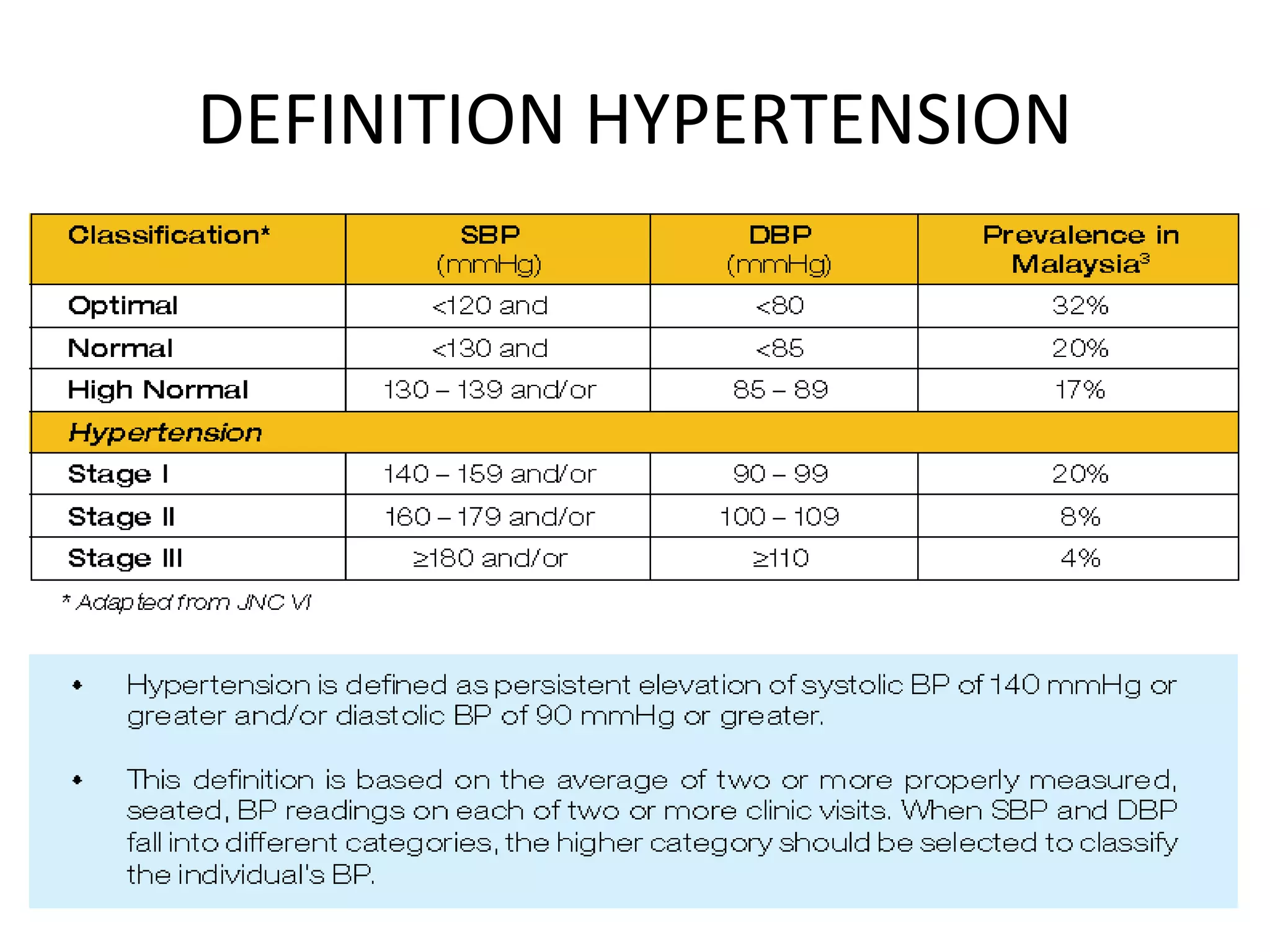
DEFINITION HYPERTENSION
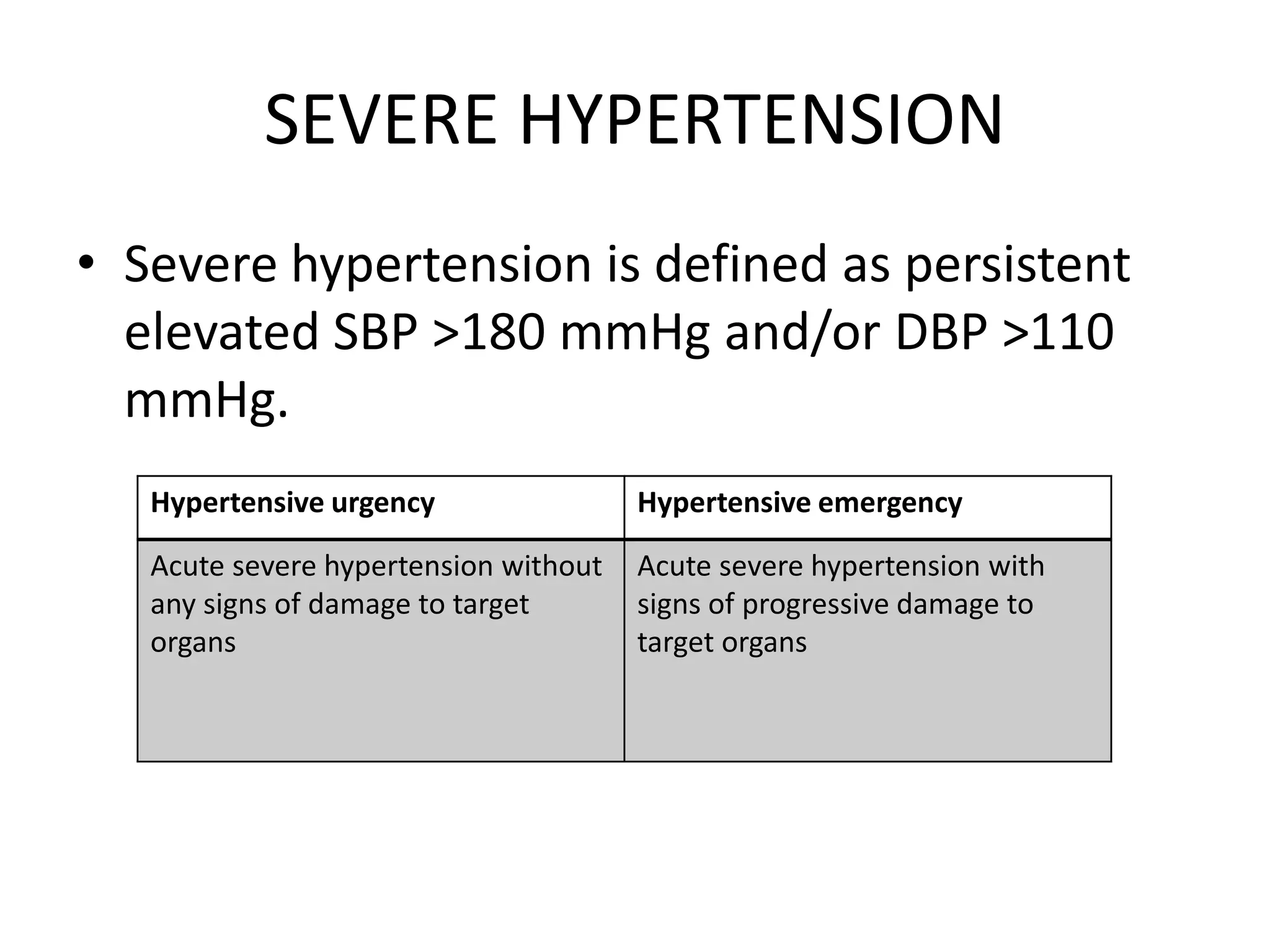
SEVERE HYPERTENSION
• Severe hypertension is defined as persistent
elevated SBP >180 mmHg and/or DBP >110
mmHg.
Hypertensive urgency Hypertensive emergency
Acute severe hypertension without
any signs of damage to target
organs
Acute severe hypertension with
signs of progressive damage to
target organs
EPIDEMIOLOGY
• In a recent large series, only a minority of
patients admitted (5.1%) had hypertensive
crises. Of those more than three quarters
(76.6%) constitute hypertensive emergencies.
ETIOLOGY
• Essential hypertension : non-compliance with
antihypertensive medication and inadequate
blood pressure control
• Secondary hypertension
Pathophysiology
EVALUATION
• A complete history should include:
• • duration and level of elevated BP if known
• • symptoms of secondary causes of hypertension
• • symptoms of target organ complications (i.e. renal failure and heart
failure)
• • symptoms of cardiovascular disease (e.g. CHD and cerebrovascular
disease)
• • symptoms of concomitant disease that will affect prognosis or treatment
e.g.
• diabetes mellitus, heart failure, renal disease and gout
• The evaluation of these patients should include a thorough history and
• physical examination, particularly looking for signs of acute target organ
damage /
• complication and causes of secondary hypertension.
• • family history of hypertension, CHD, stroke, diabetes, renal
disease or dyslipidaemia
• • dietary history including salt caffeine, liquorice and alcohol intake
• • drug history of either prescribed or over-the-counter medication
(NSAIDs, nasal
• decongestants) and traditional or complementary medicine
treatment
• • lifestyle and environmental factors that will affect treatment and
outcome (e.g.
• smoking, physical activity, work stress and excessive weight gain
since childhood)
• • presence of snoring and or day time somnolence which may
indicate sleep
• apnoea
MANAGEMENT
• Management of these patients depends on
the clinical presentation and laboratory
• investigations.
HYPERTENSIVE URGENCY
• Initial treatment should aim for about 25%
reduction in BP over 24
• hours but not lower than 160/90 mmHg
HYPERTENSIVE EMERGENCY
• The BP needs to be reduced rapidly. It is
• suggested that the BP be reduced by 25%
depending on clinical scenario over 3 to 12
• hours but not lower than 160/90 mmHg
• Rapid reduction of BP (within minutes to hours) in
asymptomatic severe hypertension or
• hypertensive urgencies is best avoided as it may precipitate
ischaemic events.102
• Oral or sublingual drugs with rapid onset of action can
result in an uncontrolled BP
• reduction. Several serious side effects have been reported
with the administration of
• sublingual fast-acting nifedipine and therefore this is no
longer recommended.103 (Level III)
• However oral nifedipine retard can be used and has been
recommended as first line
• therapy for hypertensive urgencies.
HYPERTENSIVE CRISIS
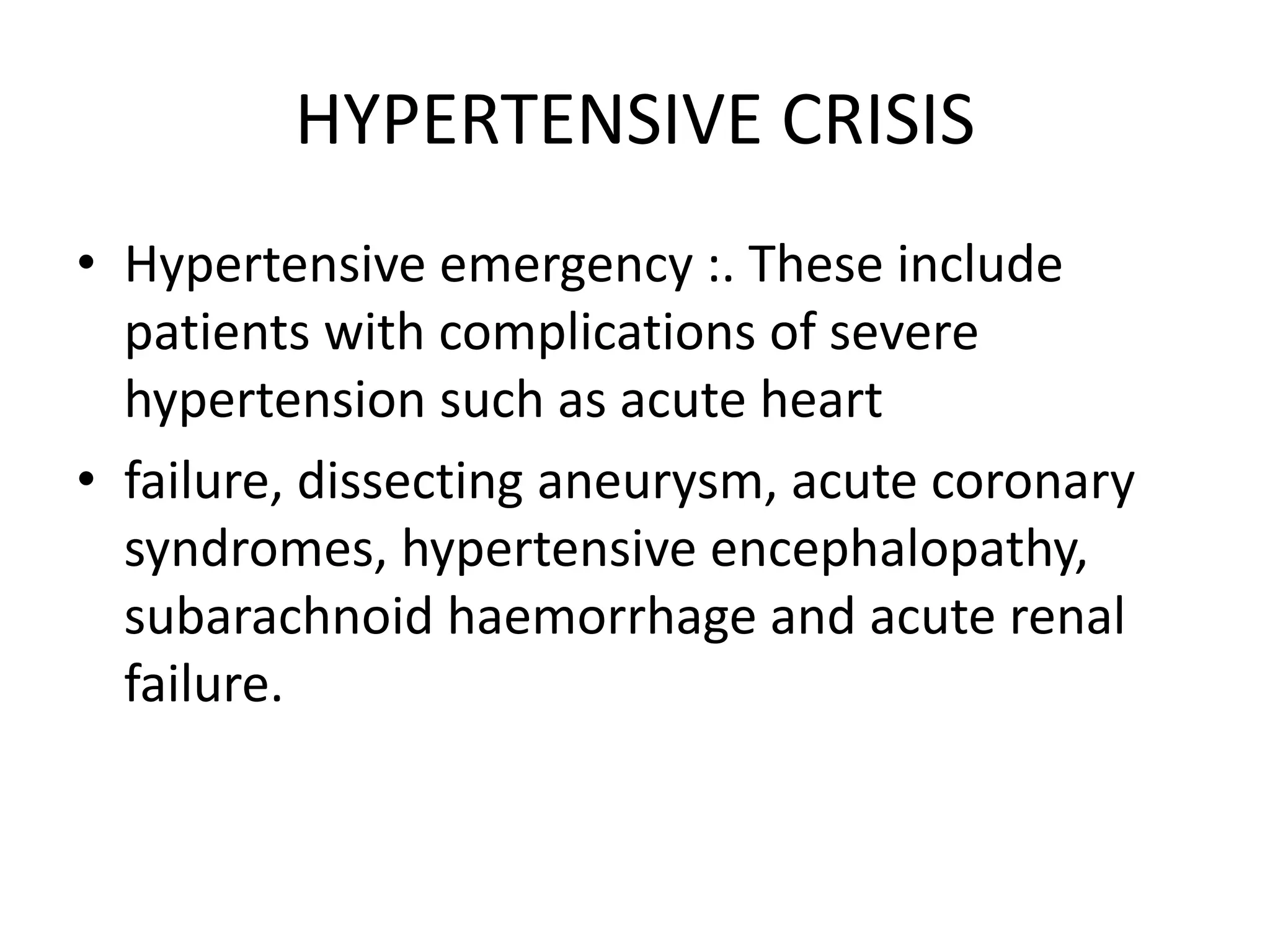
• Hypertensive emergency :. These include
patients with complications of severe
hypertension such as acute heart
• failure, dissecting aneurysm, acute coronary
syndromes, hypertensive encephalopathy,
subarachnoid haemorrhage and acute renal
failure.
Hypertensive emergency
• Target organ damage:
• Brain:
• Hypertensive encephalopathy is characterized by
lethargy, dullness, headache, seizures and visual
disturbances including blindness. • Cerebral
infarction, hemorrhage and facial nerve palsy
may occur.
• Neuroimaging shows features of white matter
degeneration in the parieto-occipital area
(posterior leukoencephalopathy), which are
reversible with treatment.
• Retina
Grade 1 Generalised arteriolar constriction - seen as `silver wiring` and Vascular
tortuosities. Grade 2 + irregularly located, tight constrictions - `AV nicking` or `AV
Nipping` Grade 3 + with cotton wool spots and flame-haemorrhages Grade 4 + with
swelling of the optic disk (papillodema) only 8.6% had evidence of retinopathy
diagnosed with an ophthalmoscope

Hypertensive crisis

  • 1.
  • 2.
  • 3.
    SEVERE HYPERTENSION • Severehypertension is defined as persistent elevated SBP >180 mmHg and/or DBP >110 mmHg. Hypertensive urgency Hypertensive emergency Acute severe hypertension without any signs of damage to target organs Acute severe hypertension with signs of progressive damage to target organs
  • 5.
    EPIDEMIOLOGY • In arecent large series, only a minority of patients admitted (5.1%) had hypertensive crises. Of those more than three quarters (76.6%) constitute hypertensive emergencies.
  • 6.
    ETIOLOGY • Essential hypertension: non-compliance with antihypertensive medication and inadequate blood pressure control • Secondary hypertension
  • 8.
  • 9.
    EVALUATION • A completehistory should include: • • duration and level of elevated BP if known • • symptoms of secondary causes of hypertension • • symptoms of target organ complications (i.e. renal failure and heart failure) • • symptoms of cardiovascular disease (e.g. CHD and cerebrovascular disease) • • symptoms of concomitant disease that will affect prognosis or treatment e.g. • diabetes mellitus, heart failure, renal disease and gout • The evaluation of these patients should include a thorough history and • physical examination, particularly looking for signs of acute target organ damage / • complication and causes of secondary hypertension.
  • 10.
    • • familyhistory of hypertension, CHD, stroke, diabetes, renal disease or dyslipidaemia • • dietary history including salt caffeine, liquorice and alcohol intake • • drug history of either prescribed or over-the-counter medication (NSAIDs, nasal • decongestants) and traditional or complementary medicine treatment • • lifestyle and environmental factors that will affect treatment and outcome (e.g. • smoking, physical activity, work stress and excessive weight gain since childhood) • • presence of snoring and or day time somnolence which may indicate sleep • apnoea
  • 12.
    MANAGEMENT • Management ofthese patients depends on the clinical presentation and laboratory • investigations.
  • 13.
    HYPERTENSIVE URGENCY • Initialtreatment should aim for about 25% reduction in BP over 24 • hours but not lower than 160/90 mmHg
  • 15.
    HYPERTENSIVE EMERGENCY • TheBP needs to be reduced rapidly. It is • suggested that the BP be reduced by 25% depending on clinical scenario over 3 to 12 • hours but not lower than 160/90 mmHg
  • 17.
    • Rapid reductionof BP (within minutes to hours) in asymptomatic severe hypertension or • hypertensive urgencies is best avoided as it may precipitate ischaemic events.102 • Oral or sublingual drugs with rapid onset of action can result in an uncontrolled BP • reduction. Several serious side effects have been reported with the administration of • sublingual fast-acting nifedipine and therefore this is no longer recommended.103 (Level III) • However oral nifedipine retard can be used and has been recommended as first line • therapy for hypertensive urgencies.
  • 18.
    HYPERTENSIVE CRISIS • Hypertensiveemergency :. These include patients with complications of severe hypertension such as acute heart • failure, dissecting aneurysm, acute coronary syndromes, hypertensive encephalopathy, subarachnoid haemorrhage and acute renal failure.
  • 19.
    Hypertensive emergency • Targetorgan damage: • Brain: • Hypertensive encephalopathy is characterized by lethargy, dullness, headache, seizures and visual disturbances including blindness. • Cerebral infarction, hemorrhage and facial nerve palsy may occur. • Neuroimaging shows features of white matter degeneration in the parieto-occipital area (posterior leukoencephalopathy), which are reversible with treatment.
  • 21.
  • 22.
    Grade 1 Generalisedarteriolar constriction - seen as `silver wiring` and Vascular tortuosities. Grade 2 + irregularly located, tight constrictions - `AV nicking` or `AV Nipping` Grade 3 + with cotton wool spots and flame-haemorrhages Grade 4 + with swelling of the optic disk (papillodema) only 8.6% had evidence of retinopathy diagnosed with an ophthalmoscope