Definition:
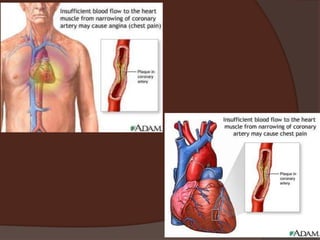
        Angina pectoris is a clinical syndrome, usually
characterized by episodes or paroxysms of pain or pressure in
the anterior chest. The cause is causually insufficient coronary
blood flow.
 •   Angina is a common manifestation of CHD.
 •   Angina can also occur in clients with normal-coronary
     arteries, but it is less common.
 •   Clients with aortic stenosis, hypertension, and
     hypertropic cardiomyopathy can also have Angina
     pectoris
Types of Angina:

 • Stable Angina

 • Unstable Angina
 • Intractable or refractory angina.
 • Variant Angina.
 • Silent ischemia.
Etiology:

 1) Physical exertion :
   Walking outdoors is the most common form of
   the exertions, that produce an attack.
   Isometric exertion of the arms as on raking
   leaves, painting of lifting heavy objects also
   causes exertional angina
 2) Strong emotions:
   Stimulate the sympathetic nervous system
   and increase the work of the heart. This result
   in an increase in HR, BP and myocardial
   contractility.
3) Temperature extremes:
     It may be either hot or cold, increases the
     workload of the heart.
 •    Blood vessels constricts  in Response to cold climate.
 •    Blood vessel dilate  hot stimulus

     Cold weather also cause increased
     metabolism to maintain internal temperature
     regulation.
4) Cigarette Smoking: causes vasoconstruction
    and an increased HR because of nicotine
    stimulations of the catecholamine releases. It
    also diminishes available oxygen by
    increasing level of carbon monoxide
5) Sexual Activity: increase the work load and
    sympathetic stimulation. In a person with
    severe CAD, the resulting extra workload of
    the heart may precipitate angina


6) Stimulants: Such as cocaine, cause increased
     HR and subsequent myocardial demand.
     Stimulation of catecholamine release is the
     precipitating Factor
Clinical Manifestations:

 Characteristics of Angina:
    Angina is a clinical syndrome characterized by
    discomfort in the chest, Jaw, shoulder, back
    or arm. Angina pectoris produce transient
    paroxysmal attacks of substernal or precordial
    pain with the following characteristics.
 Onset – Angina can develop quickly or slowely.
 Location: Nearly 90% of clients experience the
 pain as retrosternal or slightly to the left of the
 sternum
Radiation: The pain usually radiates to the left
    shoulder and upper arm, and may then travel
    down the inner aspect of the left arm to the
    elbow, wrist and Fourth and Fifth fingers. The
    pain may also radiate to the right
    shoulder, neck, Jaw or epigastric region.

Duration: Angina usually last less than 5 minutes.
However, attack precipitated by a heavy meal or
extreme angor may last 15 to 20 minutes.
Sensation: Clients describe the pain of angina as
squeezing, burning, pressing, choking, aching or
bursting pressure. The clients often says the pain
feels like gas, heart burn, or indigestion.


Severity: The pain of angina is usually mild or
moderate in severity.      It is often called
“discomfort”, not “pain”. Rarely is the pain
described as “severe”
Associated characteristics: other manifestation
that may accompany the pain includes:
•   Dyspnea.
•   Pallor
•   Sweating
•   Faintness
•   Palpitations.
•   Dizziness.
•   Digestive disturbances.

Angina pectoris

  • 3.
    Definition: Angina pectoris is a clinical syndrome, usually characterized by episodes or paroxysms of pain or pressure in the anterior chest. The cause is causually insufficient coronary blood flow. • Angina is a common manifestation of CHD. • Angina can also occur in clients with normal-coronary arteries, but it is less common. • Clients with aortic stenosis, hypertension, and hypertropic cardiomyopathy can also have Angina pectoris
  • 4.
    Types of Angina: • Stable Angina • Unstable Angina • Intractable or refractory angina. • Variant Angina. • Silent ischemia.
  • 5.
    Etiology: 1) Physicalexertion : Walking outdoors is the most common form of the exertions, that produce an attack. Isometric exertion of the arms as on raking leaves, painting of lifting heavy objects also causes exertional angina 2) Strong emotions: Stimulate the sympathetic nervous system and increase the work of the heart. This result in an increase in HR, BP and myocardial contractility.
  • 6.
    3) Temperature extremes: It may be either hot or cold, increases the workload of the heart. • Blood vessels constricts  in Response to cold climate. • Blood vessel dilate  hot stimulus Cold weather also cause increased metabolism to maintain internal temperature regulation. 4) Cigarette Smoking: causes vasoconstruction and an increased HR because of nicotine stimulations of the catecholamine releases. It also diminishes available oxygen by increasing level of carbon monoxide
  • 7.
    5) Sexual Activity:increase the work load and sympathetic stimulation. In a person with severe CAD, the resulting extra workload of the heart may precipitate angina 6) Stimulants: Such as cocaine, cause increased HR and subsequent myocardial demand. Stimulation of catecholamine release is the precipitating Factor
  • 8.
    Clinical Manifestations: Characteristicsof Angina: Angina is a clinical syndrome characterized by discomfort in the chest, Jaw, shoulder, back or arm. Angina pectoris produce transient paroxysmal attacks of substernal or precordial pain with the following characteristics. Onset – Angina can develop quickly or slowely. Location: Nearly 90% of clients experience the pain as retrosternal or slightly to the left of the sternum
  • 9.
    Radiation: The painusually radiates to the left shoulder and upper arm, and may then travel down the inner aspect of the left arm to the elbow, wrist and Fourth and Fifth fingers. The pain may also radiate to the right shoulder, neck, Jaw or epigastric region. Duration: Angina usually last less than 5 minutes. However, attack precipitated by a heavy meal or extreme angor may last 15 to 20 minutes.
  • 10.
    Sensation: Clients describethe pain of angina as squeezing, burning, pressing, choking, aching or bursting pressure. The clients often says the pain feels like gas, heart burn, or indigestion. Severity: The pain of angina is usually mild or moderate in severity. It is often called “discomfort”, not “pain”. Rarely is the pain described as “severe”
  • 11.
    Associated characteristics: othermanifestation that may accompany the pain includes: • Dyspnea. • Pallor • Sweating • Faintness • Palpitations. • Dizziness. • Digestive disturbances.