#RSAC
SESSION ID:
Michael Muckin Scott Fitch
Achieving Defendable
Architectures via
Threat-Driven Methodologies
ANF-F03
LM Fellow, Cyber Architect
Lockheed Martin
LM Fellow, Cyber Architect
Lockheed Martin
#RSAC
2
The system shall encrypt data at rest.
#RSAC
3
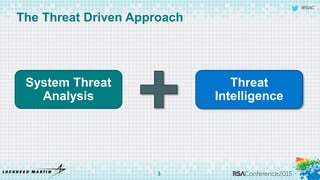
System Threat
Analysis
Threat
Intelligence
The Threat Driven Approach
#RSAC
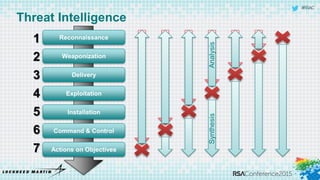
Reconnaissance1
Weaponization2
Delivery3
Exploitation4
Installation5
Command & Control6
Actions on Objectives7
Synthesis
Threat Intelligence
Analysis
#RSAC
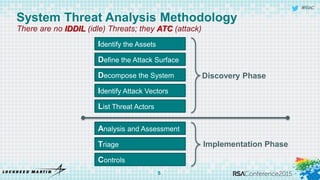
System Threat Analysis Methodology
5
Discovery Phase
Implementation Phase
There are no IDDIL (idle) Threats; they ATC (attack)
Identify the Assets
Define the Attack Surface
Decompose the System
Identify Attack Vectors
List Threat Actors
Analysis and Assessment
Triage
Controls
#RSAC
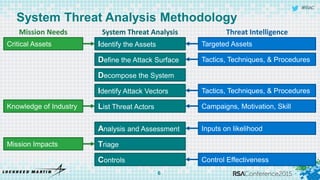
System Threat Analysis Methodology
6
Identify the Assets
Define the Attack Surface
Decompose the System
Identify Attack Vectors
List Threat Actors
Analysis and Assessment
Triage
Controls
Critical Assets
Knowledge of Industry
Mission Impacts
Mission Needs
Targeted Assets
Tactics, Techniques, & Procedures
Campaigns, Motivation, Skill
Inputs on likelihood
Threat Intelligence
Control Effectiveness
System Threat Analysis
#RSAC
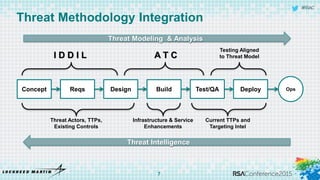
Threat Methodology Integration
7
Concept Reqs Design Build Test/QA Deploy Ops
Threat Modeling & Analysis
Threat Intelligence
I D D I L A T C
Testing Aligned
to Threat Model
Threat Actors, TTPs,
Existing Controls
Infrastructure & Service
Enhancements
Current TTPs and
Targeting Intel
#RSAC
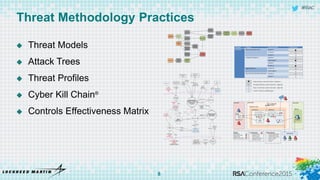
Threat Methodology Practices
 Threat Models
 Attack Trees
 Threat Profiles
 Cyber Kill Chain®
 Controls Effectiveness Matrix
8
#RSAC
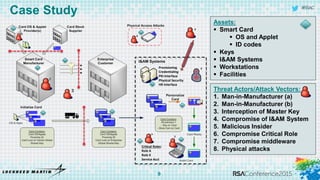
Case Study
9
Assets:
 Smart Card
 OS and Applet
 ID codes
 Keys
 I&AM Systems
 Workstations
 Facilities
Threat Actors/Attack Vectors:
1. Man-in-Manufacturer (a)
2. Man-in-Manufacturer (b)
3. Interception of Master Key
4. Compromise of I&AM System
5. Malicious Insider
6. Compromise Critical Role
7. Compromise middleware
8. Physical attacks
Provisioning
Credentialing
PKI Interface
Physical Security
HR Interface
Critical Roles:
Role A
Role X
Service Acct
#RSAC
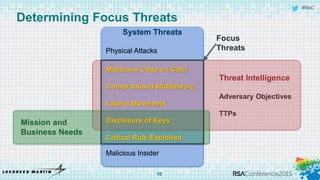
Determining Focus Threats
10
System Threats
Physical Attacks
Malicious Insider
Threat Intelligence
Adversary Objectives
TTPs
Focus
Threats
Mission and
Business Needs
Malicious Code on Card
Compromised Middleware
Lateral Movement
Disclosure of Keys
Critical Role Exploited
#RSAC
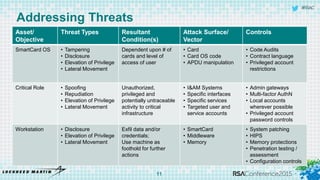
Addressing Threats
Asset/
Objective
Threat Types Resultant
Condition(s)
Attack Surface/
Vector
Controls
SmartCard OS • Tampering
• Disclosure
• Elevation of Privilege
• Lateral Movement
Dependent upon # of
cards and level of
access of user
• Card
• Card OS code
• APDU manipulation
• Code Audits
• Contract language
• Privileged account
restrictions
Critical Role • Spoofing
• Repudiation
• Elevation of Privilege
• Lateral Movement
Unauthorized,
privileged and
potentially untraceable
activity to critical
infrastructure
• I&AM Systems
• Specific interfaces
• Specific services
• Targeted user and
service accounts
• Admin gateways
• Multi-factor AuthN
• Local accounts
wherever possible
• Privileged account
password controls
Workstation • Disclosure
• Elevation of Privilege
• Lateral Movement
Exfil data and/or
credentials;
Use machine as
foothold for further
actions
• SmartCard
• Middleware
• Memory
• System patching
• HIPS
• Memory protections
• Penetration testing /
assessment
• Configuration controls
11
#RSAC
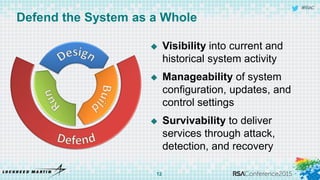
Defend the System as a Whole
 Visibility into current and
historical system activity
 Manageability of system
configuration, updates, and
control settings
 Survivability to deliver
services through attack,
detection, and recovery
12
#RSAC
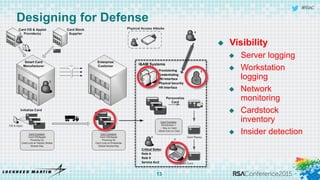
Designing for Defense
13
 Visibility
 Server logging
 Workstation
logging
 Network
monitoring
 Cardstock
inventory
 Insider detection
Provisioning
Credentialing
PKI Interface
Physical Security
HR Interface
Critical Roles:
Role A
Role X
Service Acct
#RSAC
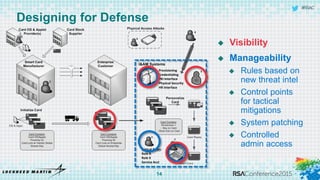
Designing for Defense
14
 Visibility
 Manageability
 Rules based on
new threat intel
 Control points
for tactical
mitigations
 System patching
 Controlled
admin access
Provisioning
Credentialing
PKI Interface
Physical Security
HR Interface
Critical Roles:
Role A
Role X
Service Acct
#RSAC
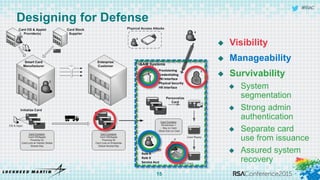
Designing for Defense
15
 Visibility
 Manageability
 Survivability
 System
segmentation
 Strong admin
authentication
 Separate card
use from issuance
 Assured system
recovery
Provisioning
Credentialing
PKI Interface
Physical Security
HR Interface
Critical Roles:
Role A
Role X
Service Acct
#RSAC
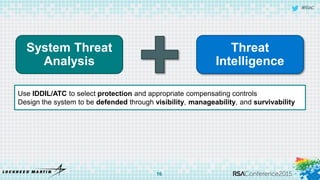
16
System Threat
Analysis
Threat
Intelligence
Use IDDIL/ATC to select protection and appropriate compensating controls
Design the system to be defended through visibility, manageability, and survivability
#RSAC
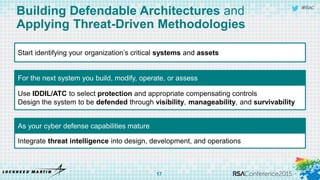
Building Defendable Architectures and
Applying Threat-Driven Methodologies
17
Start identifying your organization’s critical systems and assets
Use IDDIL/ATC to select protection and appropriate compensating controls
Design the system to be defended through visibility, manageability, and survivability
For the next system you build, modify, operate, or assess
Integrate threat intelligence into design, development, and operations
As your cyber defense capabilities mature
#RSAC
18
http://lockheedmartin.com/cyber

Achieving Defendable Architectures Via Threat Driven Methodologies

  • 1.
    #RSAC SESSION ID: Michael MuckinScott Fitch Achieving Defendable Architectures via Threat-Driven Methodologies ANF-F03 LM Fellow, Cyber Architect Lockheed Martin LM Fellow, Cyber Architect Lockheed Martin
  • 2.
    #RSAC 2 The system shallencrypt data at rest.
  • 3.
  • 4.
  • 5.
    #RSAC System Threat AnalysisMethodology 5 Discovery Phase Implementation Phase There are no IDDIL (idle) Threats; they ATC (attack) Identify the Assets Define the Attack Surface Decompose the System Identify Attack Vectors List Threat Actors Analysis and Assessment Triage Controls
  • 6.
    #RSAC System Threat AnalysisMethodology 6 Identify the Assets Define the Attack Surface Decompose the System Identify Attack Vectors List Threat Actors Analysis and Assessment Triage Controls Critical Assets Knowledge of Industry Mission Impacts Mission Needs Targeted Assets Tactics, Techniques, & Procedures Tactics, Techniques, & Procedures Campaigns, Motivation, Skill Inputs on likelihood Threat Intelligence Control Effectiveness System Threat Analysis
  • 7.
    #RSAC Threat Methodology Integration 7 ConceptReqs Design Build Test/QA Deploy Ops Threat Modeling & Analysis Threat Intelligence I D D I L A T C Testing Aligned to Threat Model Threat Actors, TTPs, Existing Controls Infrastructure & Service Enhancements Current TTPs and Targeting Intel
  • 8.
    #RSAC Threat Methodology Practices Threat Models  Attack Trees  Threat Profiles  Cyber Kill Chain®  Controls Effectiveness Matrix 8
  • 9.
    #RSAC Case Study 9 Assets:  SmartCard  OS and Applet  ID codes  Keys  I&AM Systems  Workstations  Facilities Threat Actors/Attack Vectors: 1. Man-in-Manufacturer (a) 2. Man-in-Manufacturer (b) 3. Interception of Master Key 4. Compromise of I&AM System 5. Malicious Insider 6. Compromise Critical Role 7. Compromise middleware 8. Physical attacks Provisioning Credentialing PKI Interface Physical Security HR Interface Critical Roles: Role A Role X Service Acct
  • 10.
    #RSAC Determining Focus Threats 10 SystemThreats Physical Attacks Malicious Insider Threat Intelligence Adversary Objectives TTPs Focus Threats Mission and Business Needs Malicious Code on Card Compromised Middleware Lateral Movement Disclosure of Keys Critical Role Exploited
  • 11.
    #RSAC Addressing Threats Asset/ Objective Threat TypesResultant Condition(s) Attack Surface/ Vector Controls SmartCard OS • Tampering • Disclosure • Elevation of Privilege • Lateral Movement Dependent upon # of cards and level of access of user • Card • Card OS code • APDU manipulation • Code Audits • Contract language • Privileged account restrictions Critical Role • Spoofing • Repudiation • Elevation of Privilege • Lateral Movement Unauthorized, privileged and potentially untraceable activity to critical infrastructure • I&AM Systems • Specific interfaces • Specific services • Targeted user and service accounts • Admin gateways • Multi-factor AuthN • Local accounts wherever possible • Privileged account password controls Workstation • Disclosure • Elevation of Privilege • Lateral Movement Exfil data and/or credentials; Use machine as foothold for further actions • SmartCard • Middleware • Memory • System patching • HIPS • Memory protections • Penetration testing / assessment • Configuration controls 11
  • 12.
    #RSAC Defend the Systemas a Whole  Visibility into current and historical system activity  Manageability of system configuration, updates, and control settings  Survivability to deliver services through attack, detection, and recovery 12
  • 13.
    #RSAC Designing for Defense 13 Visibility  Server logging  Workstation logging  Network monitoring  Cardstock inventory  Insider detection Provisioning Credentialing PKI Interface Physical Security HR Interface Critical Roles: Role A Role X Service Acct
  • 14.
    #RSAC Designing for Defense 14 Visibility  Manageability  Rules based on new threat intel  Control points for tactical mitigations  System patching  Controlled admin access Provisioning Credentialing PKI Interface Physical Security HR Interface Critical Roles: Role A Role X Service Acct
  • 15.
    #RSAC Designing for Defense 15 Visibility  Manageability  Survivability  System segmentation  Strong admin authentication  Separate card use from issuance  Assured system recovery Provisioning Credentialing PKI Interface Physical Security HR Interface Critical Roles: Role A Role X Service Acct
  • 16.
    #RSAC 16 System Threat Analysis Threat Intelligence Use IDDIL/ATCto select protection and appropriate compensating controls Design the system to be defended through visibility, manageability, and survivability
  • 17.
    #RSAC Building Defendable Architecturesand Applying Threat-Driven Methodologies 17 Start identifying your organization’s critical systems and assets Use IDDIL/ATC to select protection and appropriate compensating controls Design the system to be defended through visibility, manageability, and survivability For the next system you build, modify, operate, or assess Integrate threat intelligence into design, development, and operations As your cyber defense capabilities mature
  • 18.