ANEMIA
MWEMA JOHN
KASSIM MOH’D
ANEMIA
Definitions:- Anemia is the decrease in total
amounts of RBCs
Anemia is decreased hemoglobin in the
blood. (<13.5 g/100ml)
Anemia is the lowered ability of the blood to
carry oxygen.
ETIOLOGY
• Decreased production of RBCs
• Increase in loss or destruction of RBCs
TYPES OF ANEMIA AND
THEIR CAUSES.
 Iron deficiency anemia- lack of iron in hemoglobin which
is an important component in it leads to iron deficiency
anemia. It may be due to chronic blood loss,
recurring/ongoing bleeding.
 Aplastic anemia- complete bone marrow failure leading
to reduced production of blood cells. May be caused by
cancer treatment, chronic exposure to toxic chemicals
etc
 Pernicious anemia- deficiency in vitamin B12. happens
to people who are unable to absorb vit B12.
 Hemolytic anemia- rupture and destruction of RBCs due
to antibodies clinging on to the surfaces of RBCS.
Cont……
 Sickle cell anemia- genetic disease of RBCs. This
results to RBCs presenting with an abnormal crescent
shape resembling a sickle. This makes them sticky and
rigid and prone to getting trapped in small vessels.
 Megaloblastic anemia- blood disorder marked by
appearance of very large RBCs crowding out the healthy
ones.
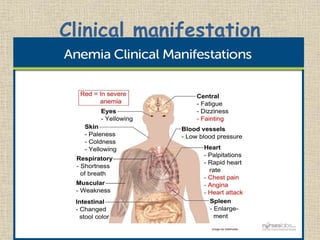
Clinical manifestation
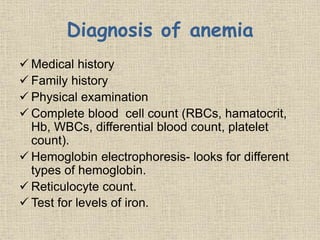
Diagnosis of anemia
 Medical history
 Family history
 Physical examination
 Complete blood cell count (RBCs, hamatocrit,
Hb, WBCs, differential blood count, platelet
count).
 Hemoglobin electrophoresis- looks for different
types of hemoglobin.
 Reticulocyte count.
 Test for levels of iron.
Medical management.
 The purpose of establishing the etiology/the underlying
cause of anemia is to permit selection of a specific and
effective therapy. Treatment of anemia involves dealing
with the causative agent.
 Transfusions – packed red blood cells for PTs with active
bleeding.
 Iron supplementation- oral administration of ferrous
sulfate 65mg TDS.
 Nutritional therapy and dietary considerations.
 Electrolyte supplementation- serum potassium levels
may fall during therapy for severe folate deficiency and
can lead to sudden death. Therefore potassium
supplements are essential. (Potassium chloride) K-Tab.
Complications
• Anemia has general complications and this
includes:
• Heart failure. As the heart compensates by
pumping faster than the normal rate, the heart
muscles gradually weaken until the muscles wear
out and the heart fails to function.
• Paresthesias. Paresthesias develop when the
muscles do not have enough oxygen delivered to
them.
• Delirium. Insufficient oxygen in the brain results in
delirium and is considered a fatal complication of
anemia.
NURSING MANAGEMENT
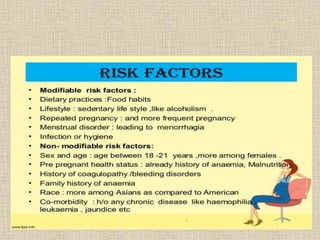
o Assessment :- health history and physical exam,
medical history – some medications can depress
bone marrow activity, history of alcoholism, family
history, nutritional assessment.
o Nursing dx- fatigue rt to hemoglobin and diminished
oxygen carrying capacity of the blood as evidenced
by patient exhibiting weakness.
o Also, altered nutrition less than body requirements rt
to inadequate intake of essential nutrients as
evidenced by low levels of feritin.
o PLANNING AND GOALS- Pt to exhibit decreased
fatigue, attainment and maintenance of adequate
nutrition within hospital stay.
Nursing interventions
i. prioritize activities by assisting the pt in
prioritizing activity to establish balance
between activity and rest
ii. Help the pt to maintain some physical
activity and exercise to prevent
deconditioning from inactivity.
iii. Encourage the patient on taking healthy
diet packed with essential nutrients.
iv. Advice about alcohol intake and its
interference with the utilization of nutrients.
Anemia

Anemia

  • 1.
  • 2.
    ANEMIA Definitions:- Anemia isthe decrease in total amounts of RBCs Anemia is decreased hemoglobin in the blood. (<13.5 g/100ml) Anemia is the lowered ability of the blood to carry oxygen.
  • 3.
    ETIOLOGY • Decreased productionof RBCs • Increase in loss or destruction of RBCs
  • 4.
    TYPES OF ANEMIAAND THEIR CAUSES.  Iron deficiency anemia- lack of iron in hemoglobin which is an important component in it leads to iron deficiency anemia. It may be due to chronic blood loss, recurring/ongoing bleeding.  Aplastic anemia- complete bone marrow failure leading to reduced production of blood cells. May be caused by cancer treatment, chronic exposure to toxic chemicals etc  Pernicious anemia- deficiency in vitamin B12. happens to people who are unable to absorb vit B12.  Hemolytic anemia- rupture and destruction of RBCs due to antibodies clinging on to the surfaces of RBCS.
  • 5.
    Cont……  Sickle cellanemia- genetic disease of RBCs. This results to RBCs presenting with an abnormal crescent shape resembling a sickle. This makes them sticky and rigid and prone to getting trapped in small vessels.  Megaloblastic anemia- blood disorder marked by appearance of very large RBCs crowding out the healthy ones.
  • 7.
  • 8.
    Diagnosis of anemia Medical history  Family history  Physical examination  Complete blood cell count (RBCs, hamatocrit, Hb, WBCs, differential blood count, platelet count).  Hemoglobin electrophoresis- looks for different types of hemoglobin.  Reticulocyte count.  Test for levels of iron.
  • 9.
    Medical management.  Thepurpose of establishing the etiology/the underlying cause of anemia is to permit selection of a specific and effective therapy. Treatment of anemia involves dealing with the causative agent.  Transfusions – packed red blood cells for PTs with active bleeding.  Iron supplementation- oral administration of ferrous sulfate 65mg TDS.  Nutritional therapy and dietary considerations.  Electrolyte supplementation- serum potassium levels may fall during therapy for severe folate deficiency and can lead to sudden death. Therefore potassium supplements are essential. (Potassium chloride) K-Tab.
  • 10.
    Complications • Anemia hasgeneral complications and this includes: • Heart failure. As the heart compensates by pumping faster than the normal rate, the heart muscles gradually weaken until the muscles wear out and the heart fails to function. • Paresthesias. Paresthesias develop when the muscles do not have enough oxygen delivered to them. • Delirium. Insufficient oxygen in the brain results in delirium and is considered a fatal complication of anemia.
  • 11.
    NURSING MANAGEMENT o Assessment:- health history and physical exam, medical history – some medications can depress bone marrow activity, history of alcoholism, family history, nutritional assessment. o Nursing dx- fatigue rt to hemoglobin and diminished oxygen carrying capacity of the blood as evidenced by patient exhibiting weakness. o Also, altered nutrition less than body requirements rt to inadequate intake of essential nutrients as evidenced by low levels of feritin. o PLANNING AND GOALS- Pt to exhibit decreased fatigue, attainment and maintenance of adequate nutrition within hospital stay.
  • 12.
    Nursing interventions i. prioritizeactivities by assisting the pt in prioritizing activity to establish balance between activity and rest ii. Help the pt to maintain some physical activity and exercise to prevent deconditioning from inactivity. iii. Encourage the patient on taking healthy diet packed with essential nutrients. iv. Advice about alcohol intake and its interference with the utilization of nutrients.