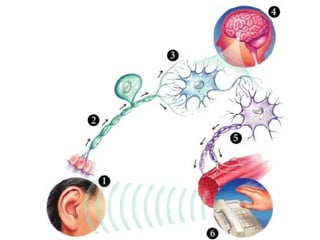
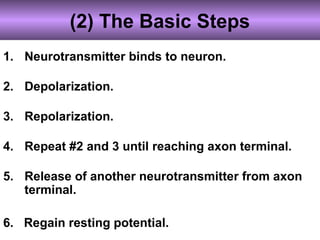
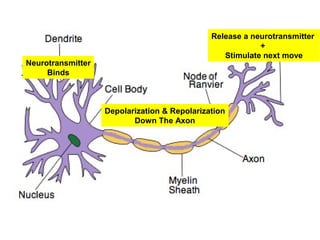
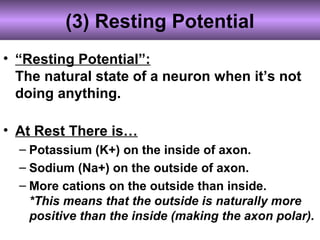
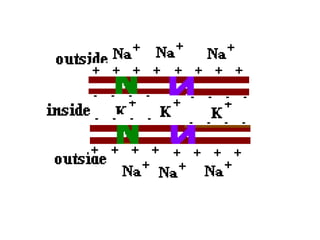
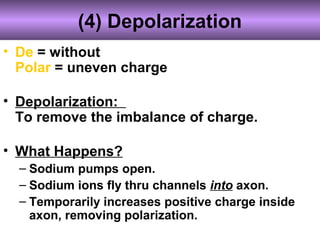
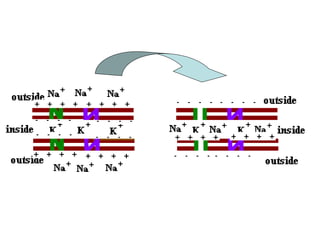
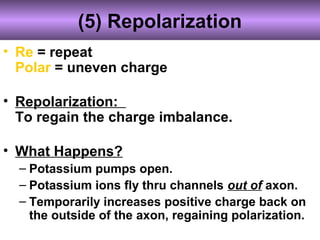
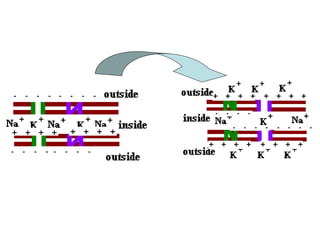
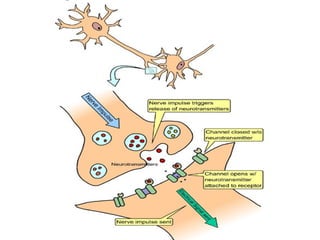
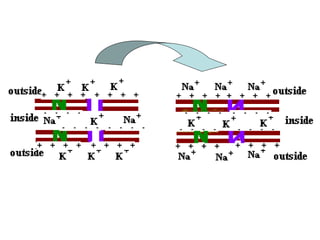
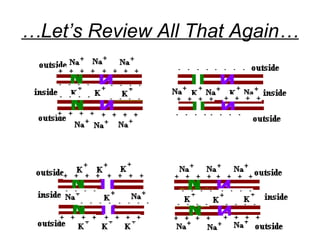
Nerve impulses occur through a chain reaction of chemical events within neurons. When a neurotransmitter binds to a neuron, it causes depolarization by allowing sodium ions to enter the axon. This is followed by repolarization where potassium ions exit to regain the charge imbalance. This cycle of depolarization and repolarization propagates down the axon until the neurotransmitter is released at the axon terminal to stimulate the next neuron. For a nerve impulse to continue, sodium and potassium pumps must actively transport ions back to their resting positions inside and outside the axon membrane.