by Yapa Wijeratne
Faculty of Medicine
University of Peradeniya
Sri Lanka
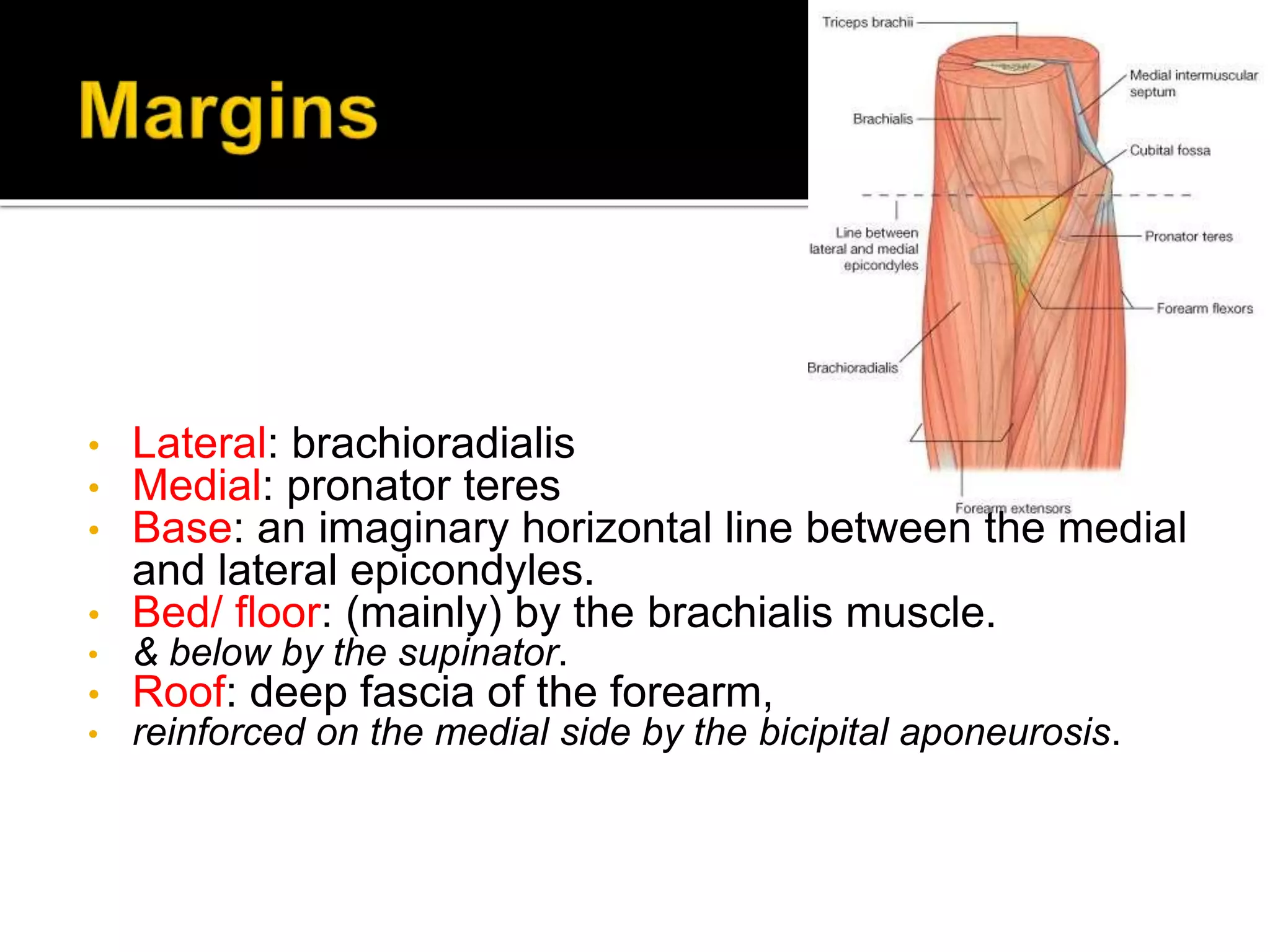
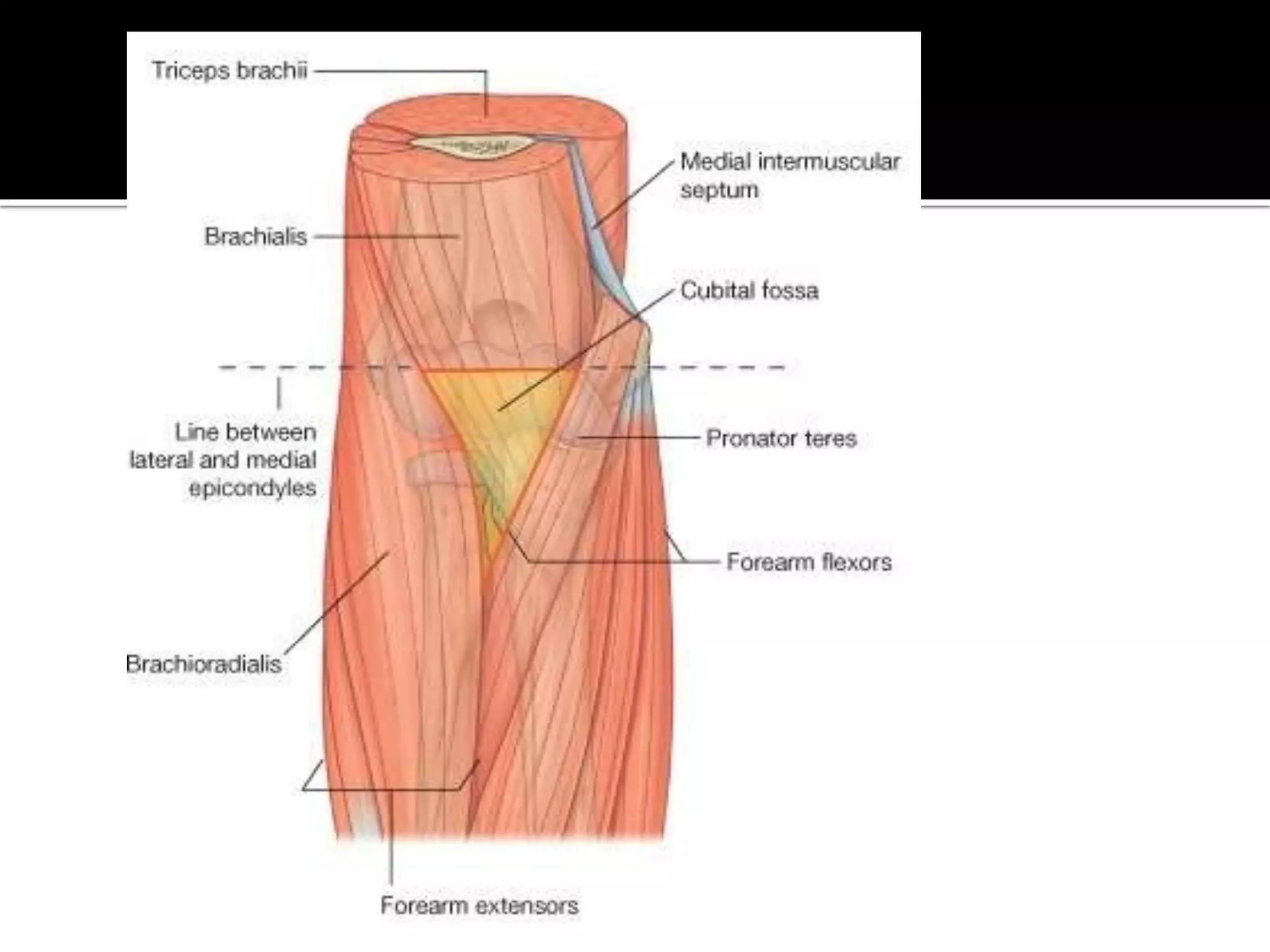
• Lateral: brachioradialis
• Medial: pronator teres
• Base: an imaginary horizontal line between the medial
and lateral epicondyles.
• Bed/ floor: (mainly) by the brachialis muscle.
• & below by the supinator.
• Roof: deep fascia of the forearm,
• reinforced on the medial side by the bicipital aponeurosis.
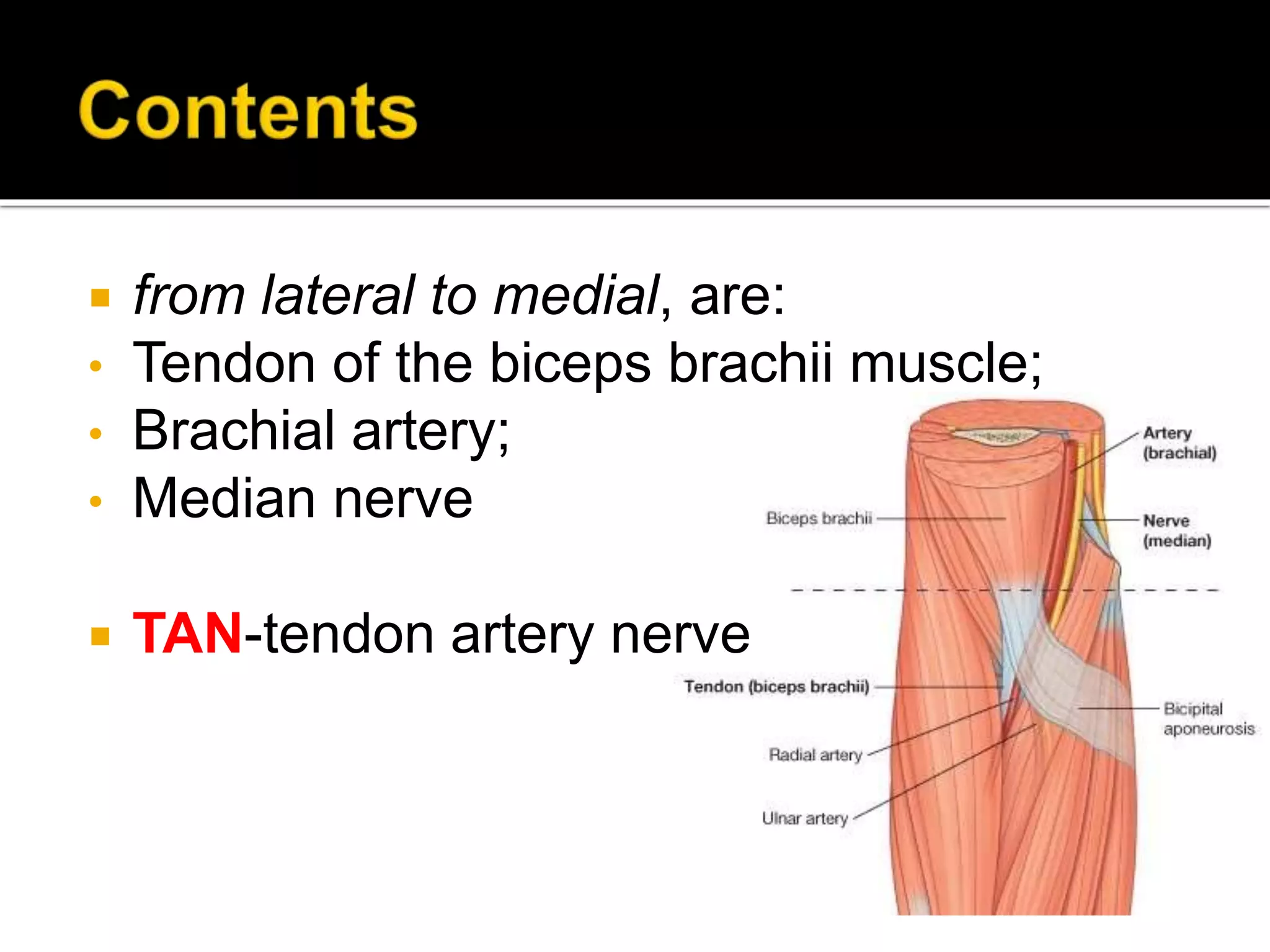
 from lateral to medial, are:
• Tendon of the biceps brachii muscle;
• Brachial artery;
• Median nerve
 TAN-tendon artery nerve
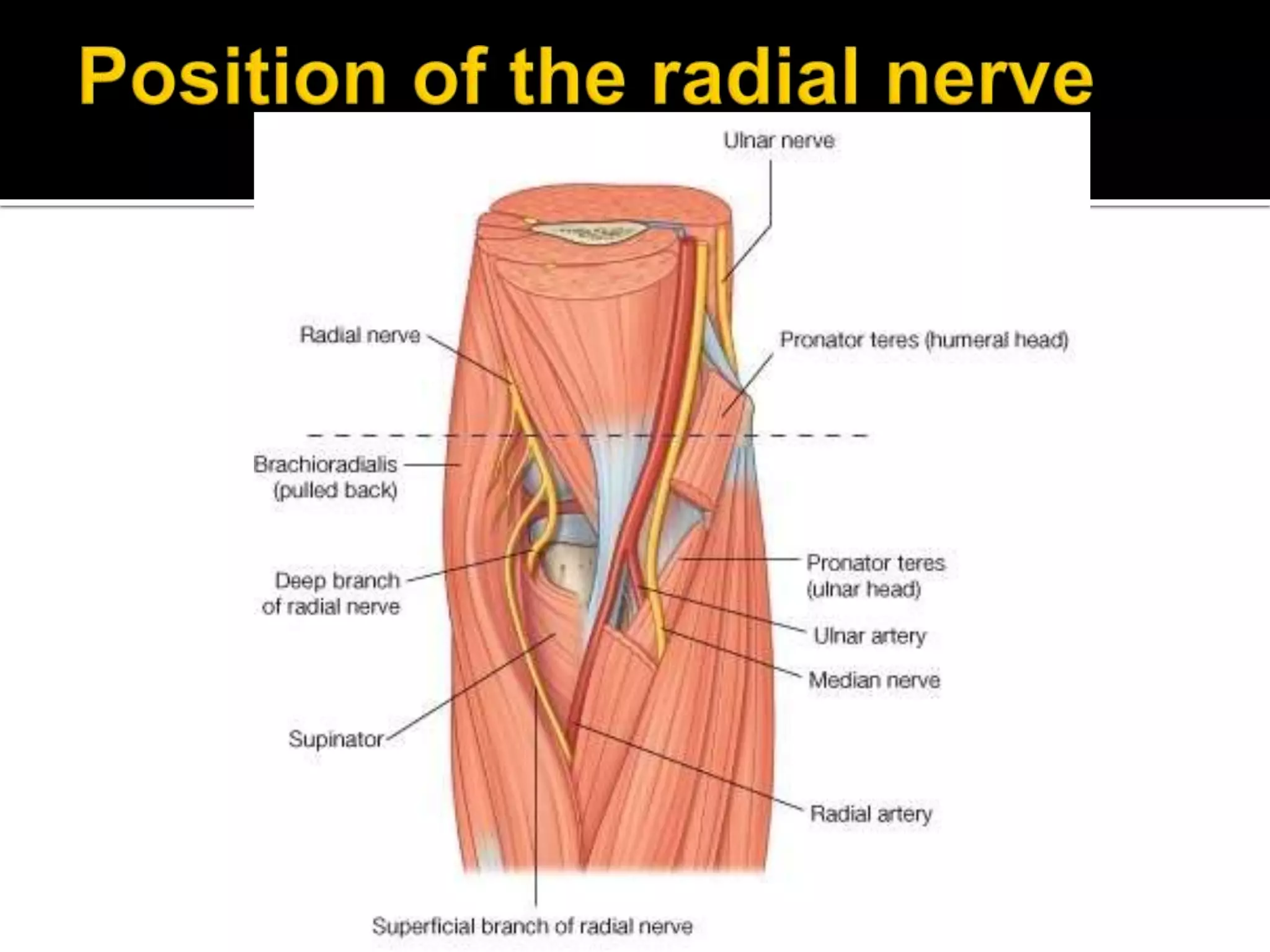
• Lies just under the lip of the brachioradialis muscle.
• In this position, the radial nerve divides into superficial
and deep branches:
1. The superficial branch continues into the forearm
just deep to the brachioradialis muscle;
2. The deep branch passes between the two heads
of the supinator muscle to access the posterior
compartment of the forearm.
• The ulnar nerve DOES NOT PASS THROUGH the
cubital fossa. Instead, it passes posterior to the
medial epicondyle.
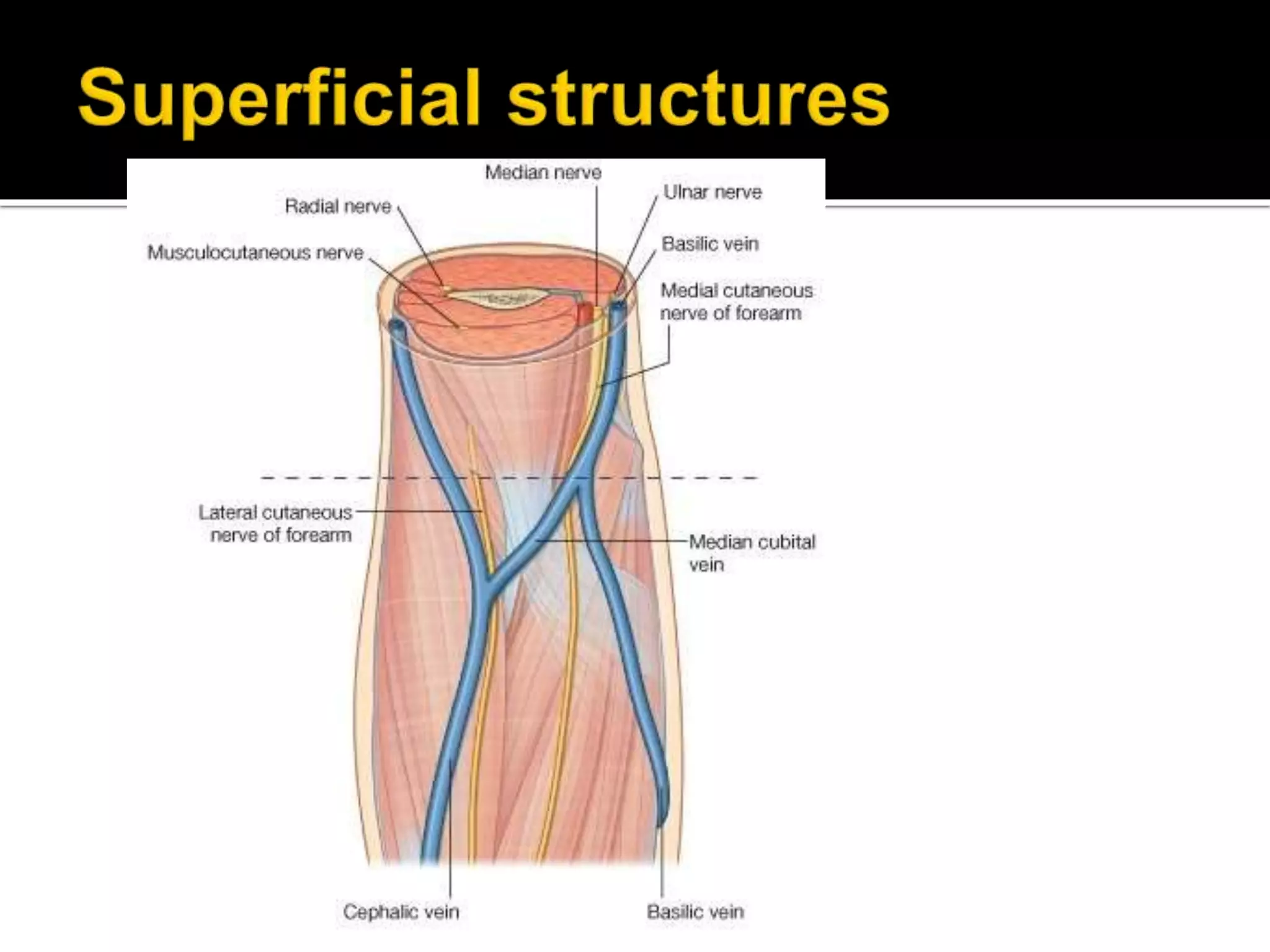
 1.Median cubital vein,
 which passes diagonally across the roof and
connects the cephalic vein on the lateral side of
the upper limb with the basilic vein on the medial
side.
 The bicipital aponeurosis separates the median
cubital vein from the brachial artery and median
nerve.
 2.Cutaneous nerves-
• Medial cutaneous nerve of the forearm
• Lateral cutaneous nerve of the forearm

Anatomy of Cubital fossa

  • 1.
    by Yapa Wijeratne Facultyof Medicine University of Peradeniya Sri Lanka
  • 2.
    • Lateral: brachioradialis •Medial: pronator teres • Base: an imaginary horizontal line between the medial and lateral epicondyles. • Bed/ floor: (mainly) by the brachialis muscle. • & below by the supinator. • Roof: deep fascia of the forearm, • reinforced on the medial side by the bicipital aponeurosis.
  • 4.
     from lateralto medial, are: • Tendon of the biceps brachii muscle; • Brachial artery; • Median nerve  TAN-tendon artery nerve
  • 5.
    • Lies justunder the lip of the brachioradialis muscle. • In this position, the radial nerve divides into superficial and deep branches: 1. The superficial branch continues into the forearm just deep to the brachioradialis muscle; 2. The deep branch passes between the two heads of the supinator muscle to access the posterior compartment of the forearm. • The ulnar nerve DOES NOT PASS THROUGH the cubital fossa. Instead, it passes posterior to the medial epicondyle.
  • 8.
     1.Median cubitalvein,  which passes diagonally across the roof and connects the cephalic vein on the lateral side of the upper limb with the basilic vein on the medial side.  The bicipital aponeurosis separates the median cubital vein from the brachial artery and median nerve.  2.Cutaneous nerves- • Medial cutaneous nerve of the forearm • Lateral cutaneous nerve of the forearm