Anal fissure
Prepared by laxmi bhatta lamichhane
Anal fissure
Introduction
• An anal fissure is an ulceration or tear in the
lining of the anal canal, usually in the posterior
wall that occurs as a result of excessive tissue
stretching and possibly from passage of hard or
large stool. It is a common condition and do not
lead to more serious conditions such as colon
cancer. Anal fissure affects people of all ages,
particularly young and otherwise healthy people.
These are equally common in men and women.
Contd…
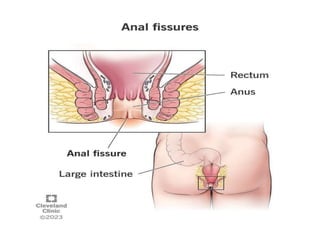
• fissure looks like a fresh tear, somewhat like a
paper cut. A long-lasting, also called chronic, anal
fissure likely has a deeper tear. It also may have
internal or external fleshy growths. A fissure is
considered chronic if it lasts more than eight
weeks.
• The fissure's location offers clues about its cause.
A fissure that occurs on the side of the anal
opening, rather than the back or front, is more
likely to be a symptom of another disorder, such
as Crohn's disease.
Causes
• Vigorous stretching of the anal canal.
• Constipation and try to pass a large, hard stool.
• Repeated diarrhea( due to drying out the skin around anal
opening).
• Excessive tension in the muscle rings (sphincters)
controlling the anus.
• Trauma also can cause fissures, during child birth, 11% of
women develop anal fissure.
• Due to digital insertion during examination and anal
intercourse.
• Low fiber diet play significant t role in the development of
fissure.
Sign and symptom
• A sharp stinging or burning pain during a
bowel movement The pain can be severe, last
for a few hours.
• Fissure may itchy.
• They often bleed lightly or cause a yellowish
discharge.
Diagnosis
• Symptom and looking at the anus during physical
examination.
• Digital rectal or endoscope examination. Tests may
include:
A. Anoscopy. An anoscope is a tubular device inserted
into the anus to help to see the rectum and anus.
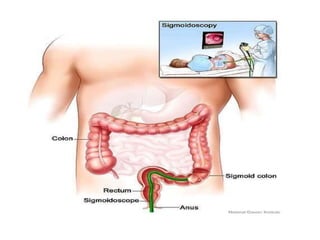
B. Flexible sigmoidoscopy.: Inserts a thin, flexible tube
with a tiny video taking lense into the bottom
portion of colon. This test may be done for people
younger than 45 and have no risk factors for intestinal
diseases or colon cancer.
Contd….
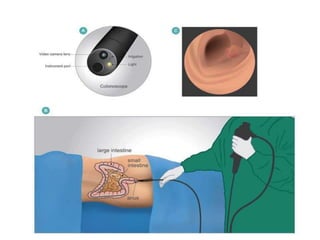
• Colonoscopy. This test involves inserting a
flexible tube in to the rectum to inspect the
entire colon. Colonoscopy may be done if :
– Client are older than age 45.
– Have risk factors for colon cancer.
– Have symptoms of other conditions.
– Have other symptoms, such as stomach pain or
diarrhea.
Management
• Most of the fissure heal on their own or with self
care.
• Stool softener or lubricant suppositories also can
be helpful.
• A warm sitz bath for 10 to 15 minutes after each
bowel movement eases discomfort and helps
increase blood flow which promotes healing.
• Self care: To promote habit to avoid hard dry
stool which include:
Contd…
• Anal fissures often heal within a few weeks
with appropriate home treatment. Take steps
to keep your stool soft, such as increasing your
intake of fiber and fluids. Soak in warm water
for 10 to 20 minutes several times a day,
especially after bowel movements. This can
help relax the sphincter and promote healing.
If symptoms persist, you'll likely need further
treatment.
Contd..
Drink plenty of water daily.
Eat more fiber diet.
Apply a medicated cream or ointment as
directed and take Sitz bath.
Do exercise regularly.
Take stool softner or laxative as prescribed by
doctor
Nonsurgical treatments
• Externally applied nitroglycerin (Rectiv). This
can help increase blood flow to the fissure and
promote healing. It also can help relax the
anal sphincter. Nitroglycerin is generally
considered the treatment of choice when
other conservative measures fail. Side effects
may include headache, which can be severe.
• Topical anesthetic creams such as lidocaine
(Xylocaine) may help relieve pain.
Contd…
• OnabotulinumtoxinA (Botox) injection, to
paralyze the anal sphincter muscle and relax
spasms.
• Blood pressure medicines, such as nifedipine or
diltiazem, to help relax the anal sphincter. These
medicines are generally applied to the skin but
also can be taken by mouth. However when taken
by mouth, their side effects can be greater. These
medicines may be used when nitroglycerin is not
effective or causes significant side effects.
Surgical mangement
• When all above measures fall, surgery may be
indicated. Sphincter spasm can be relieved either by
stretching (dilating) the anus or internal anal
sphicterotomy can be done by cutting the internal
sphincter. If you have a chronic anal fissure that is
resistant to other treatments, or if your symptoms are
severe.
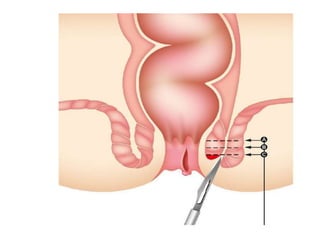
• A procedure called lateral internal sphincterotomy
(LIS). LIS involves cutting a small portion of the anal
sphincter muscle. This technique may help promote
healing and reduce spasm and pain.
Lifestyle modification and home
remedies
• Several lifestyle changes may help relieve discomfort
and promote healing of an anal fissure, as well as
prevent recurrences. Changes include:
• Adding fiber to your diet. Eating about 25 to 35 grams
of fiber a day can help keep stools soft and improve
fissure healing. Fiber-rich foods include fruits,
vegetables, nuts and whole grains. Fiber containing
food may cause gas and bloating, so increase intake
gradually.
• Drinking adequate fluids fruit and vegetable to help
to prevent from constipation.
Contd…
• Not straining during bowel
movements. Straining creates pressure, which
can open a healing tear or cause a new tear.
• Sitting in a warm bath. Also called a sitz bath,
soaking in warm water for 10 to 20 minutes
several times a day can soothe the skin and
promote relaxation. If possible, take a sitz
bath after bowel movements.
• Avoid constipation/hard stool.
reference
• https://www.mayoclinic.org/diseases-
conditions/anal-fissure/diagnosis-
treatment/drc-20351430.
• https://www.google.com/search?q=lateral+an
al+sphincterotomy&&tbm=isch&ved=2ahUKE
wimxK_3uY AhU5ELcAHRbKA6.

Anal fissure.pptx

  • 1.
    Anal fissure Prepared bylaxmi bhatta lamichhane
  • 2.
    Anal fissure Introduction • Ananal fissure is an ulceration or tear in the lining of the anal canal, usually in the posterior wall that occurs as a result of excessive tissue stretching and possibly from passage of hard or large stool. It is a common condition and do not lead to more serious conditions such as colon cancer. Anal fissure affects people of all ages, particularly young and otherwise healthy people. These are equally common in men and women.
  • 3.
    Contd… • fissure lookslike a fresh tear, somewhat like a paper cut. A long-lasting, also called chronic, anal fissure likely has a deeper tear. It also may have internal or external fleshy growths. A fissure is considered chronic if it lasts more than eight weeks. • The fissure's location offers clues about its cause. A fissure that occurs on the side of the anal opening, rather than the back or front, is more likely to be a symptom of another disorder, such as Crohn's disease.
  • 5.
    Causes • Vigorous stretchingof the anal canal. • Constipation and try to pass a large, hard stool. • Repeated diarrhea( due to drying out the skin around anal opening). • Excessive tension in the muscle rings (sphincters) controlling the anus. • Trauma also can cause fissures, during child birth, 11% of women develop anal fissure. • Due to digital insertion during examination and anal intercourse. • Low fiber diet play significant t role in the development of fissure.
  • 6.
    Sign and symptom •A sharp stinging or burning pain during a bowel movement The pain can be severe, last for a few hours. • Fissure may itchy. • They often bleed lightly or cause a yellowish discharge.
  • 7.
    Diagnosis • Symptom andlooking at the anus during physical examination. • Digital rectal or endoscope examination. Tests may include: A. Anoscopy. An anoscope is a tubular device inserted into the anus to help to see the rectum and anus. B. Flexible sigmoidoscopy.: Inserts a thin, flexible tube with a tiny video taking lense into the bottom portion of colon. This test may be done for people younger than 45 and have no risk factors for intestinal diseases or colon cancer.
  • 9.
    Contd…. • Colonoscopy. Thistest involves inserting a flexible tube in to the rectum to inspect the entire colon. Colonoscopy may be done if : – Client are older than age 45. – Have risk factors for colon cancer. – Have symptoms of other conditions. – Have other symptoms, such as stomach pain or diarrhea.
  • 11.
    Management • Most ofthe fissure heal on their own or with self care. • Stool softener or lubricant suppositories also can be helpful. • A warm sitz bath for 10 to 15 minutes after each bowel movement eases discomfort and helps increase blood flow which promotes healing. • Self care: To promote habit to avoid hard dry stool which include:
  • 12.
    Contd… • Anal fissuresoften heal within a few weeks with appropriate home treatment. Take steps to keep your stool soft, such as increasing your intake of fiber and fluids. Soak in warm water for 10 to 20 minutes several times a day, especially after bowel movements. This can help relax the sphincter and promote healing. If symptoms persist, you'll likely need further treatment.
  • 13.
    Contd.. Drink plenty ofwater daily. Eat more fiber diet. Apply a medicated cream or ointment as directed and take Sitz bath. Do exercise regularly. Take stool softner or laxative as prescribed by doctor
  • 14.
    Nonsurgical treatments • Externallyapplied nitroglycerin (Rectiv). This can help increase blood flow to the fissure and promote healing. It also can help relax the anal sphincter. Nitroglycerin is generally considered the treatment of choice when other conservative measures fail. Side effects may include headache, which can be severe. • Topical anesthetic creams such as lidocaine (Xylocaine) may help relieve pain.
  • 15.
    Contd… • OnabotulinumtoxinA (Botox)injection, to paralyze the anal sphincter muscle and relax spasms. • Blood pressure medicines, such as nifedipine or diltiazem, to help relax the anal sphincter. These medicines are generally applied to the skin but also can be taken by mouth. However when taken by mouth, their side effects can be greater. These medicines may be used when nitroglycerin is not effective or causes significant side effects.
  • 16.
    Surgical mangement • Whenall above measures fall, surgery may be indicated. Sphincter spasm can be relieved either by stretching (dilating) the anus or internal anal sphicterotomy can be done by cutting the internal sphincter. If you have a chronic anal fissure that is resistant to other treatments, or if your symptoms are severe. • A procedure called lateral internal sphincterotomy (LIS). LIS involves cutting a small portion of the anal sphincter muscle. This technique may help promote healing and reduce spasm and pain.
  • 18.
    Lifestyle modification andhome remedies • Several lifestyle changes may help relieve discomfort and promote healing of an anal fissure, as well as prevent recurrences. Changes include: • Adding fiber to your diet. Eating about 25 to 35 grams of fiber a day can help keep stools soft and improve fissure healing. Fiber-rich foods include fruits, vegetables, nuts and whole grains. Fiber containing food may cause gas and bloating, so increase intake gradually. • Drinking adequate fluids fruit and vegetable to help to prevent from constipation.
  • 19.
    Contd… • Not strainingduring bowel movements. Straining creates pressure, which can open a healing tear or cause a new tear. • Sitting in a warm bath. Also called a sitz bath, soaking in warm water for 10 to 20 minutes several times a day can soothe the skin and promote relaxation. If possible, take a sitz bath after bowel movements. • Avoid constipation/hard stool.
  • 20.