An Introduction to Total Productive Maintenance (TPM)By ArpitMishraM.Tech. HSER-080209003
ObjectivesTo provide the safe and good working environment to the worker.“If you focus on result you will never change.           If you focus on change you will get Result.”
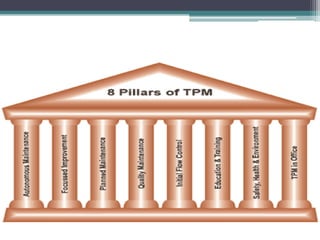
ContentsWhat is TPMWhy TPMTPM HistoryTPM ObjectivesSimilarity and difference between TPM and TQMTypes of MaintenancePillars of TPMBenefits of TPMMajor LossesConclusionReferences
TPM: TOTAL PRODUCTIVE MAINTENANCET: TOTAL  Participation of  all Employees.
Covers all Departments.
Cover all operation, equipment and process.P: PRODUCTIVEPursue the maximization of efficiency of the production system by making all loses zero.Zero accidents Zero defects Zero breakdowns.M: MAINTENANCEMaintenance is not only to repair and maintain the machines.
To improve the efficiency of the equipment.
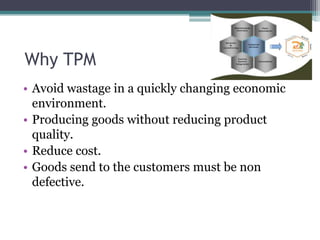
Maintenance covers the entire life cycle of the production system.Why TPMAvoid wastage in a quickly changing economic environment.Producing goods without reducing product quality.Reduce cost.Goods send to the customers must be non defective.
TPM - HistoryTPM is a innovative Japanese conceptOrigin of TPM can be traced back to 1951 Nippondenso was the first company to introduce plant wide preventive maintenance in 1960
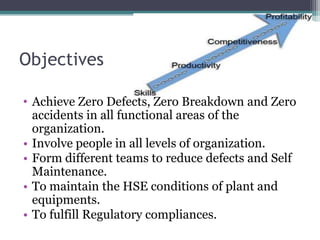
ObjectivesAchieve Zero Defects, Zero Breakdown and Zero accidents in all functional areas of the organization.Involve people in all levels of organization.Form different teams to reduce defects and Self Maintenance.To maintain the HSE conditions of plant and equipments.To fulfill Regulatory compliances.
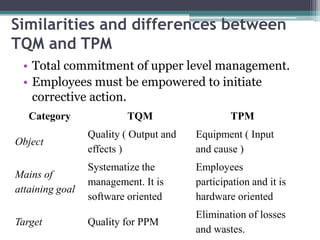
Similarities and differences between TQM and TPMTotal commitment of upper level management.Employees must be empowered to initiate corrective action.
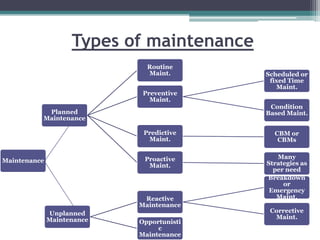
Types of maintenance
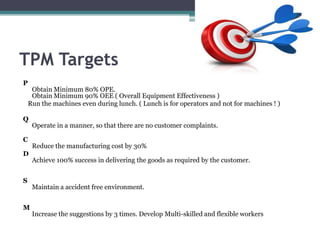
TPM TargetsPObtain Minimum 80% OPE.Obtain Minimum 90% OEE ( Overall Equipment Effectiveness )   Run the machines even during lunch. ( Lunch is for operators and not for machines ! )Q Operate in a manner, so that there are no customer complaints.C Reduce the manufacturing cost by 30%DAchieve 100% success in delivering the goods as required by the customer.S Maintain a accident free environment.M Increase the suggestions by 3 times. Develop Multi-skilled and flexible workers
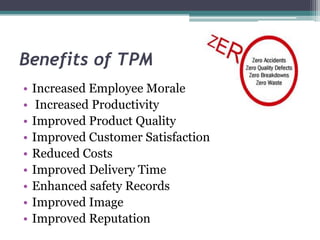
Benefits of TPMIncreased Employee Morale Increased ProductivityImproved Product QualityImproved Customer SatisfactionReduced CostsImproved Delivery TimeEnhanced safety RecordsImproved ImageImproved Reputation
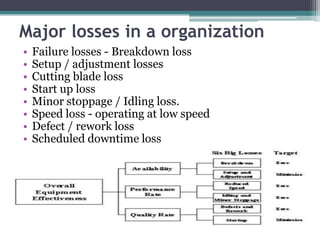
Major losses in a organizationFailure losses - Breakdown lossSetup / adjustment lossesCutting blade lossStart up lossMinor stoppage / Idling loss.Speed loss - operating at low speedDefect / rework lossScheduled downtime loss
Cont………..Management lossOperating motion lossLine organization lossLogistic lossMeasurement and adjustment lossEnergy lossDie, jig and tool breakage lossYield loss.
ConclusionTPM may be the only thing that stands between success and total failure for some companiesIt can be adapted to work not only in industrial plants, but in construction, building maintenance, transportation, and in a variety of other situations.Easy to operation, Improvement the availability and productivity, make operation and area safer.

An introduction to total productive maintenance (tpm

  • 1.
    An Introduction toTotal Productive Maintenance (TPM)By ArpitMishraM.Tech. HSER-080209003
  • 2.
    ObjectivesTo provide thesafe and good working environment to the worker.“If you focus on result you will never change. If you focus on change you will get Result.”
  • 3.
    ContentsWhat is TPMWhyTPMTPM HistoryTPM ObjectivesSimilarity and difference between TPM and TQMTypes of MaintenancePillars of TPMBenefits of TPMMajor LossesConclusionReferences
  • 4.
    TPM: TOTAL PRODUCTIVEMAINTENANCET: TOTAL  Participation of all Employees.
  • 5.
  • 6.
    Cover all operation,equipment and process.P: PRODUCTIVEPursue the maximization of efficiency of the production system by making all loses zero.Zero accidents Zero defects Zero breakdowns.M: MAINTENANCEMaintenance is not only to repair and maintain the machines.
  • 7.
    To improve theefficiency of the equipment.
  • 8.
    Maintenance covers theentire life cycle of the production system.Why TPMAvoid wastage in a quickly changing economic environment.Producing goods without reducing product quality.Reduce cost.Goods send to the customers must be non defective.
  • 9.
    TPM - HistoryTPMis a innovative Japanese conceptOrigin of TPM can be traced back to 1951 Nippondenso was the first company to introduce plant wide preventive maintenance in 1960
  • 10.
    ObjectivesAchieve Zero Defects,Zero Breakdown and Zero accidents in all functional areas of the organization.Involve people in all levels of organization.Form different teams to reduce defects and Self Maintenance.To maintain the HSE conditions of plant and equipments.To fulfill Regulatory compliances.
  • 11.
    Similarities and differencesbetween TQM and TPMTotal commitment of upper level management.Employees must be empowered to initiate corrective action.
  • 12.
  • 14.
    TPM TargetsPObtain Minimum80% OPE.Obtain Minimum 90% OEE ( Overall Equipment Effectiveness ) Run the machines even during lunch. ( Lunch is for operators and not for machines ! )Q Operate in a manner, so that there are no customer complaints.C Reduce the manufacturing cost by 30%DAchieve 100% success in delivering the goods as required by the customer.S Maintain a accident free environment.M Increase the suggestions by 3 times. Develop Multi-skilled and flexible workers
  • 15.
    Benefits of TPMIncreasedEmployee Morale Increased ProductivityImproved Product QualityImproved Customer SatisfactionReduced CostsImproved Delivery TimeEnhanced safety RecordsImproved ImageImproved Reputation
  • 16.
    Major losses ina organizationFailure losses - Breakdown lossSetup / adjustment lossesCutting blade lossStart up lossMinor stoppage / Idling loss.Speed loss - operating at low speedDefect / rework lossScheduled downtime loss
  • 17.
    Cont………..Management lossOperating motionlossLine organization lossLogistic lossMeasurement and adjustment lossEnergy lossDie, jig and tool breakage lossYield loss.
  • 18.
    ConclusionTPM may bethe only thing that stands between success and total failure for some companiesIt can be adapted to work not only in industrial plants, but in construction, building maintenance, transportation, and in a variety of other situations.Easy to operation, Improvement the availability and productivity, make operation and area safer.