

February 2020
Francisco Dominguez
Director of Quality
GETTING STARTED
WITH 6S
2
2
INTRODUCTION
This power point presentation will get you on the path toward
efficiency and improved production. The ideas presented here
are meant to build a foundation of knowledge about 6S so that
you may be successful in implementing 6S into your facility.
Change is difficult, but don’t worry – we’re here to help. This
information will reduce any anxiety and uncertainty, and give you
the confidence to embark on the journey toward a better
production process.
3
3
INTRODUCTION
WHAT IS 6S?
5
5
6S is a system of
VISUAL MANAGEMENT
6
6
First developed at Toyota in the 1950s, 5S is a foundational method of Lean
manufacturing and REVOLUTIONISED the way industries conduct production. 6S
expands on the original concept.
THE 6S METHOD
IMPLEMENTING A GOOD
6S PROGRAM WILL:
8
8
THE 6S METHOD
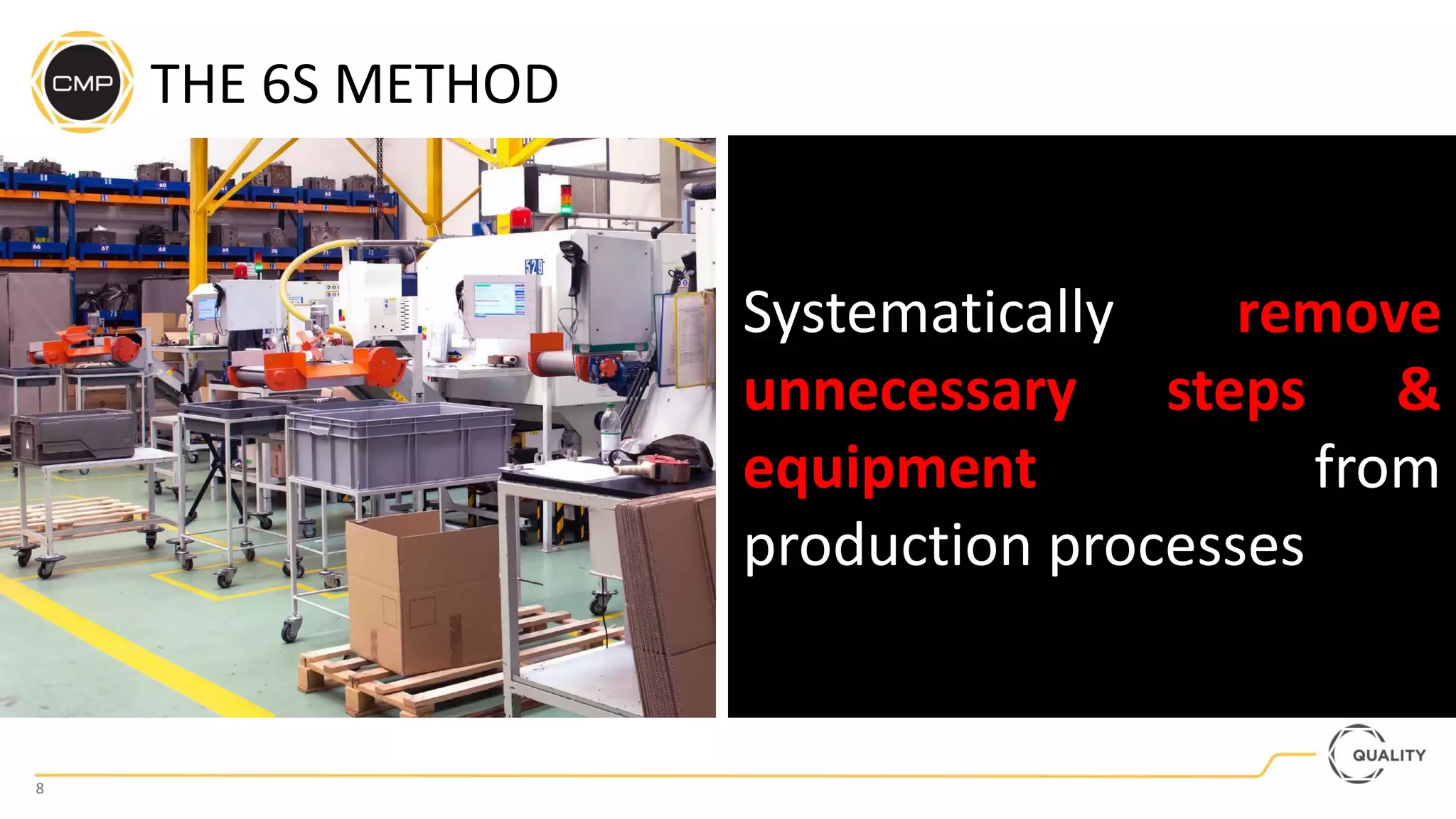
Systematically remove
unnecessary steps &
equipment from
production processes
9
9
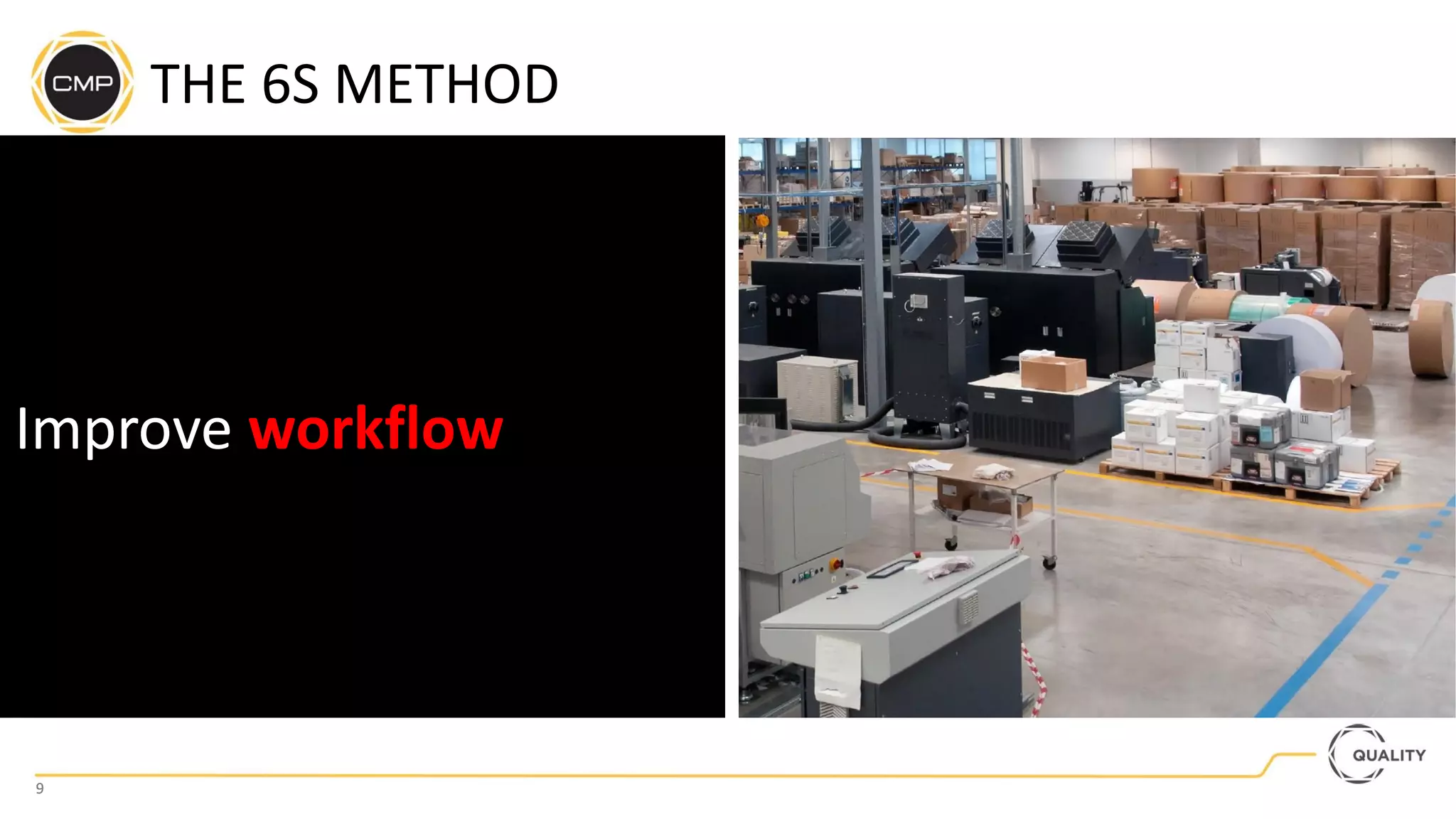
Improve workflow
THE 6S METHOD
10
10
THE 6S METHOD
Establish better standards
11
11
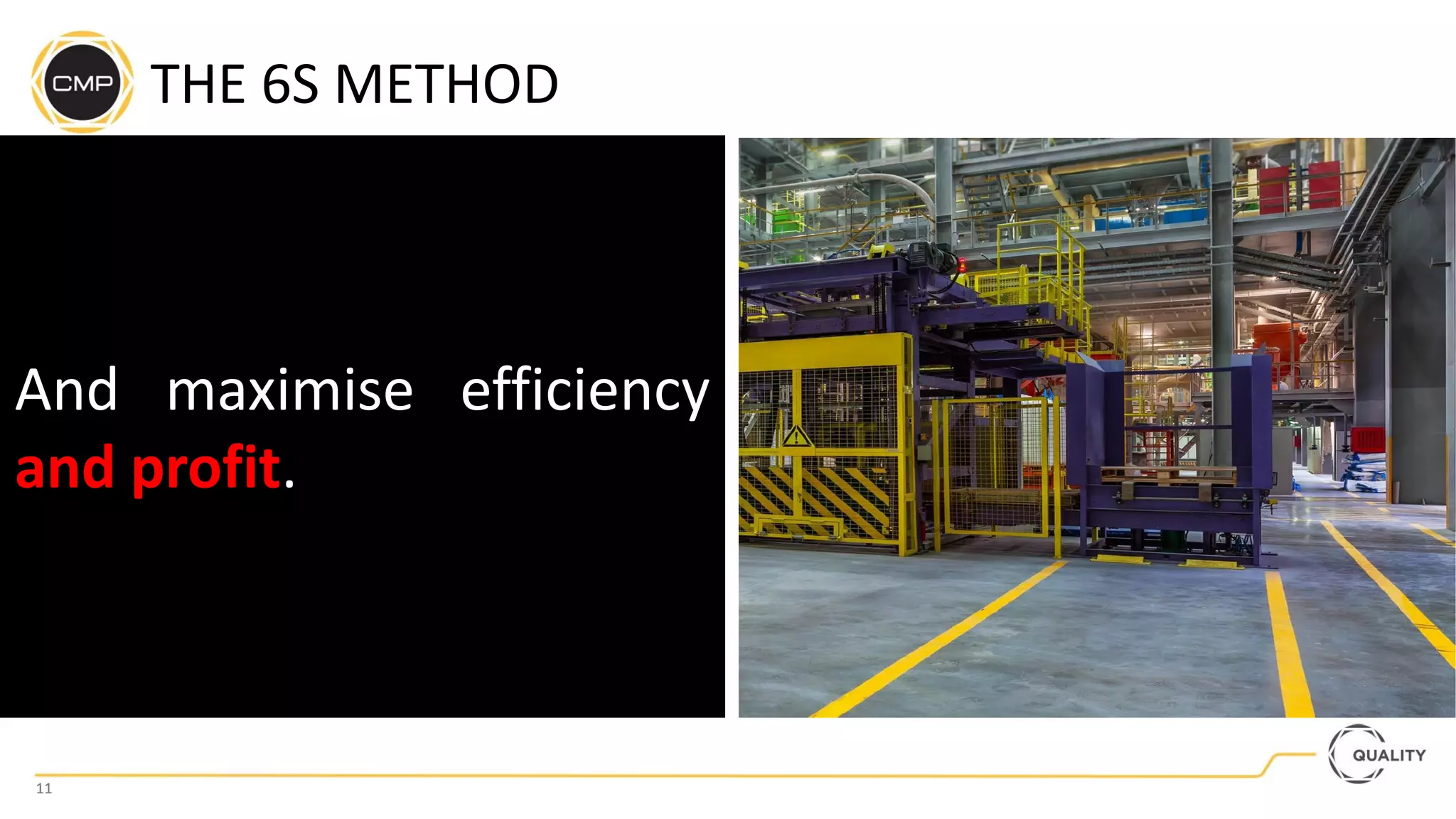
And maximise efficiency
and profit.
THE 6S METHOD
THE FIRST FIVE STAGES
OR “PILLARS” OF 6S
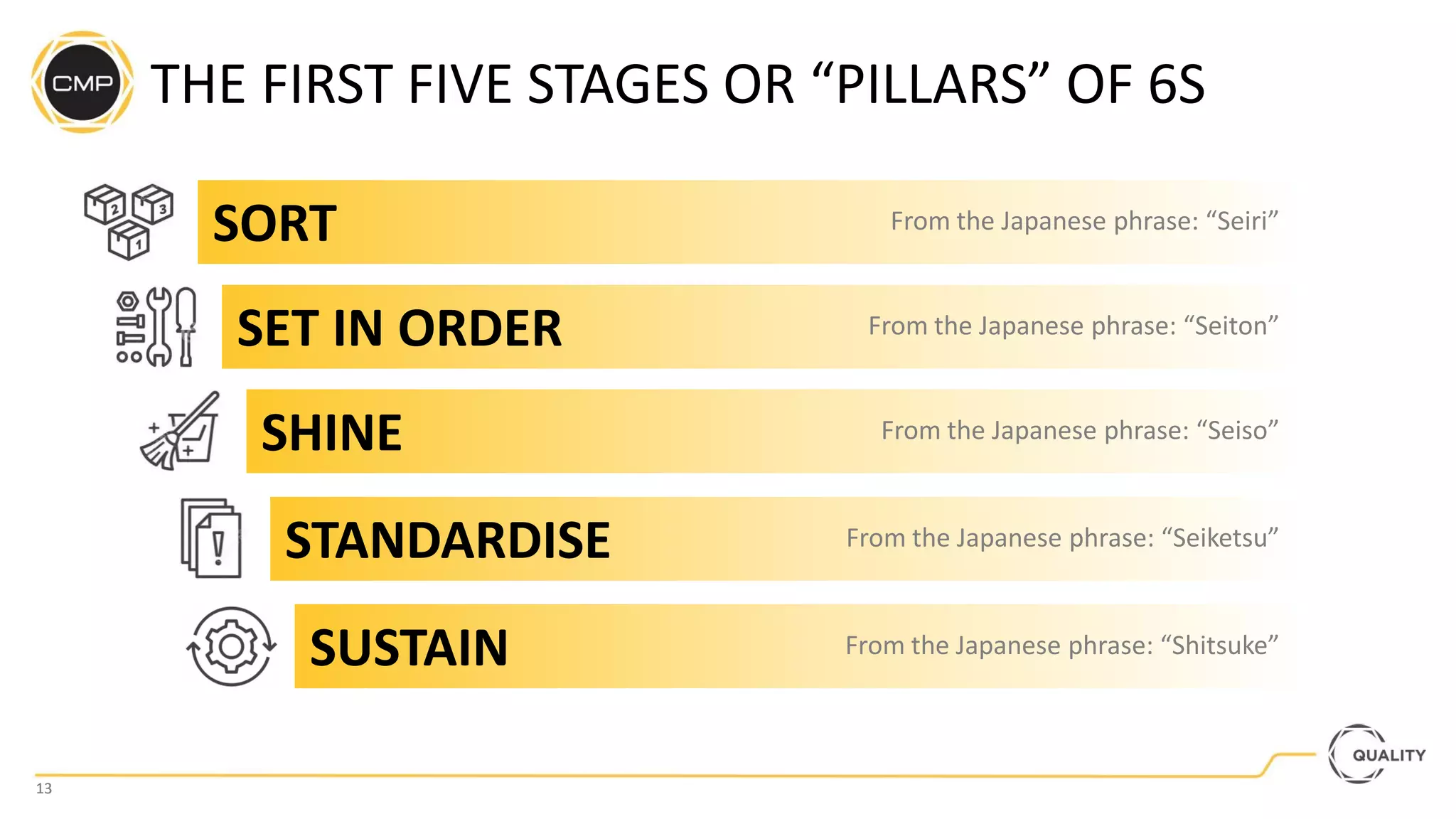
SORT
13
13
THE FIRST FIVE STAGES OR “PILLARS” OF 6S
From the Japanese phrase: “Seiri”
SET IN ORDER From the Japanese phrase: “Seiton”
SHINE From the Japanese phrase: “Seiso”
STANDARDISE From the Japanese phrase: “Seiketsu”
SUSTAIN From the Japanese phrase: “Shitsuke”
14
14
THE FIRST FIVE STAGES OR “PILLARS” OF 6S
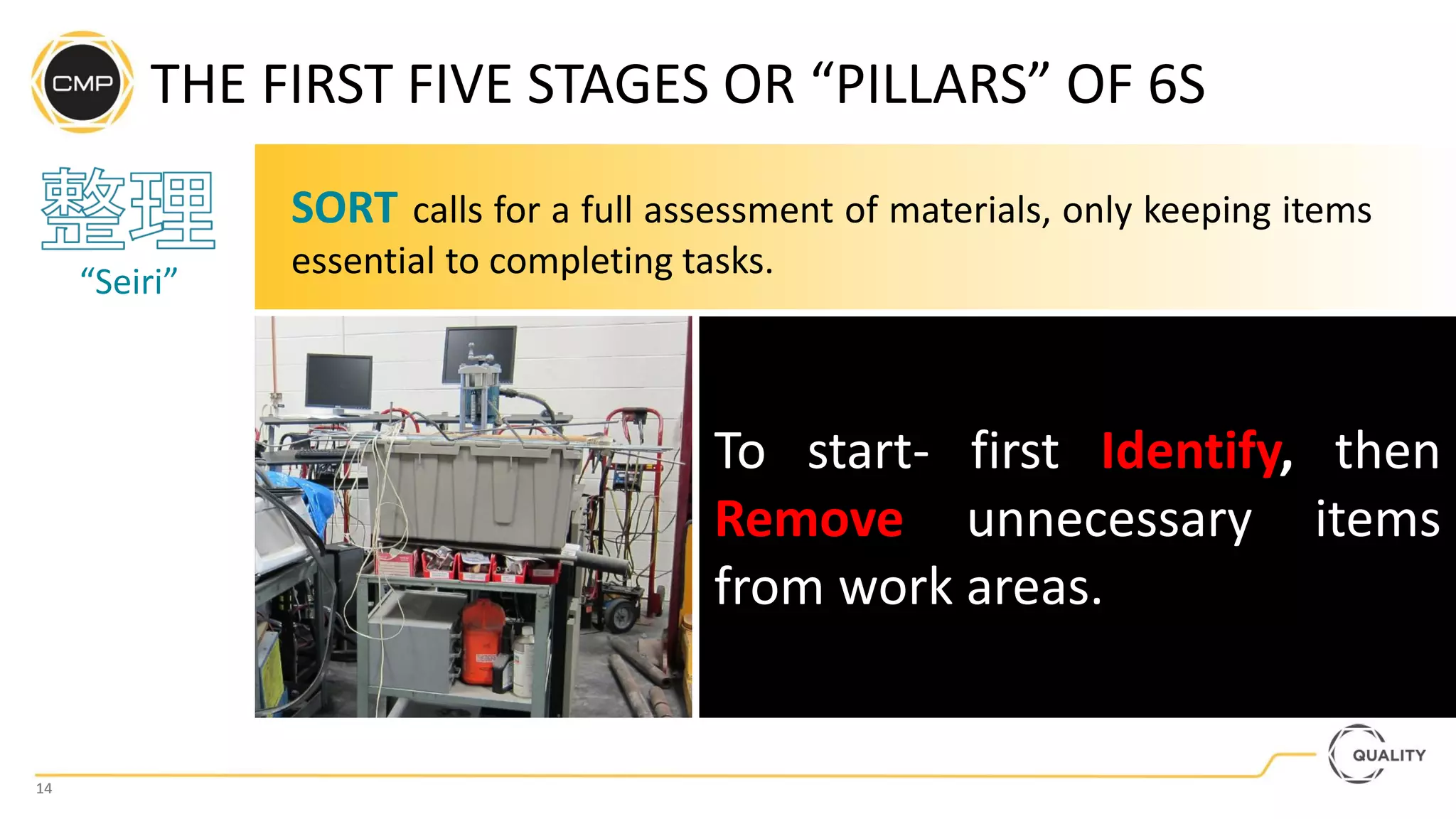
“Seiri”
SORT calls for a full assessment of materials, only keeping items
essential to completing tasks.
To start- first Identify, then
Remove unnecessary items
from work areas.
15
15
THE FIRST FIVE STAGES OR “PILLARS” OF 6S
“Seiri”
Can’t decide if
something should
stay?
16
16
THE FIRST FIVE STAGES OR “PILLARS” OF 6S
“Seiri”
Use the 5S’s Red Tag System to document how often
the tool in question is actually used
17
17
THE FIRST FIVE STAGES OR “PILLARS” OF 6S
“Seiri”
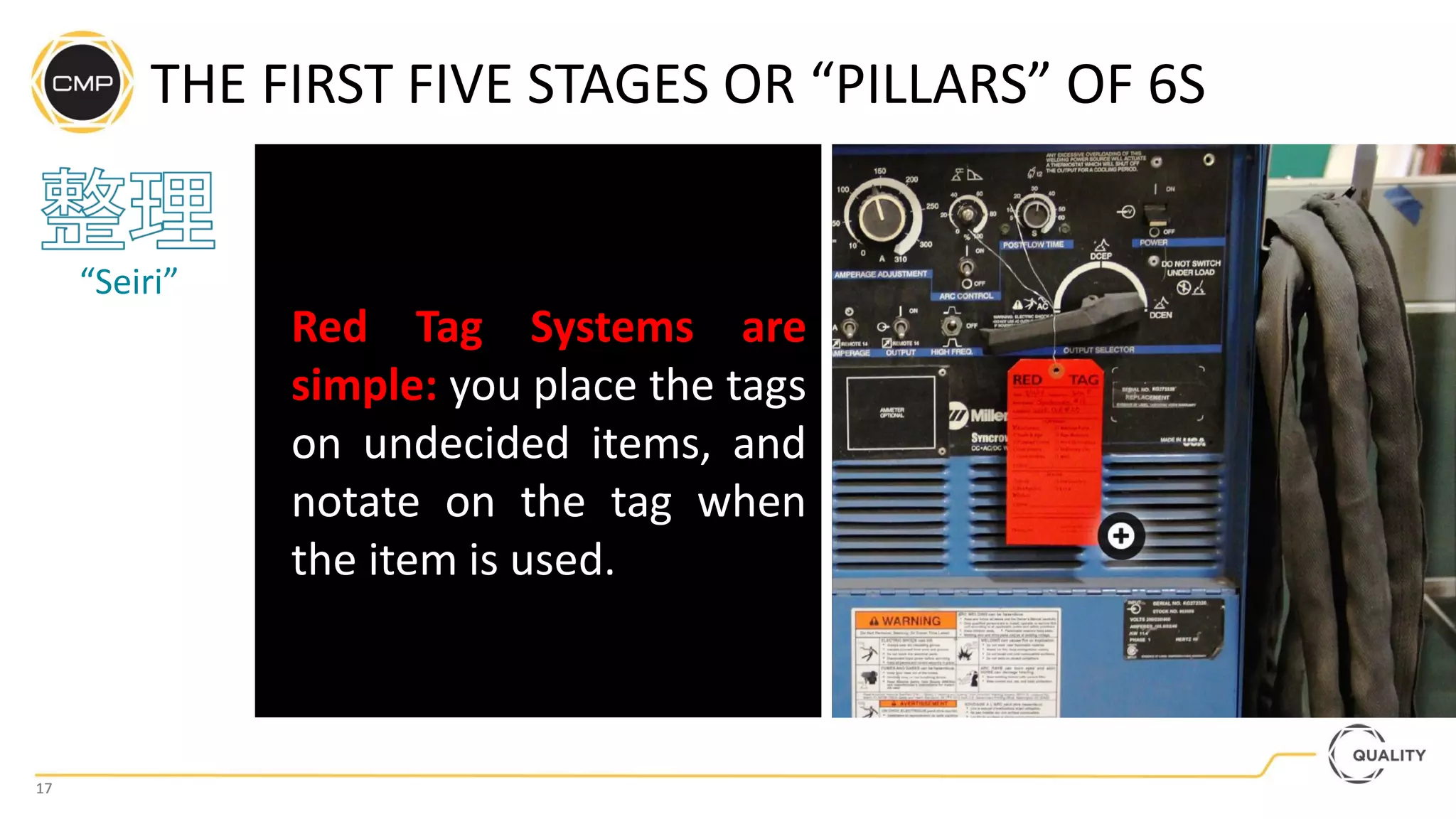
Red Tag Systems are
simple: you place the tags
on undecided items, and
notate on the tag when
the item is used.
18
18
THE FIRST FIVE STAGES OR “PILLARS” OF 6S
“Seiri” Once you have an idea of how
often a tool is used over time,
you can decide whether or not
it should stay.
19
19
THE FIRST FIVE STAGES OR “PILLARS” OF 6S
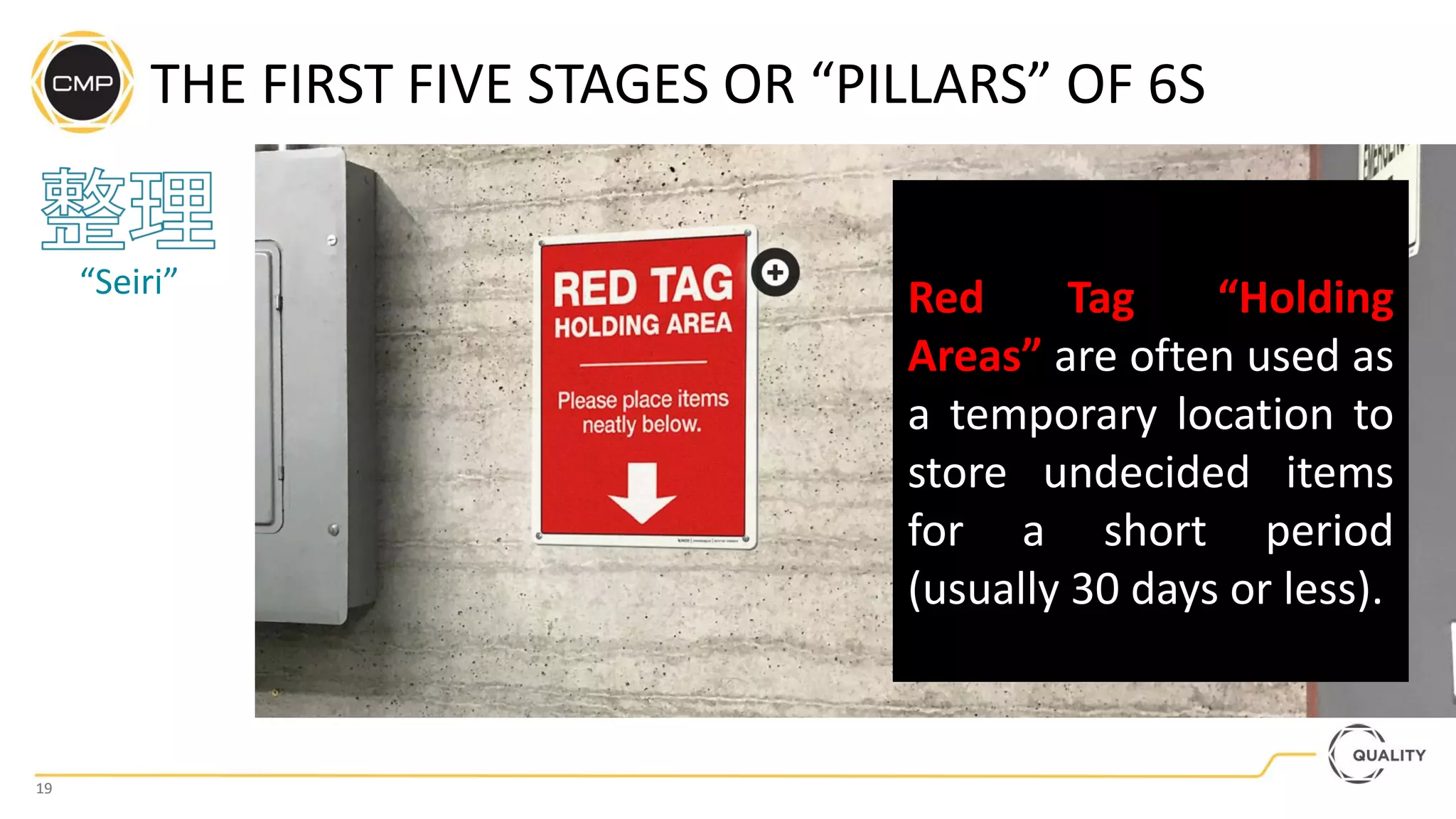
“Seiri” Red Tag “Holding
Areas” are often used as
a temporary location to
store undecided items
for a short period
(usually 30 days or less).
20
20
THE FIRST FIVE STAGES OR “PILLARS” OF 6S
“Seiri”
Once the Sort stage is
complete, your workplace will
be free of unnecessary clutter
and will immediately see
improved productivity.
21
21
THE FIRST FIVE STAGES OR “PILLARS” OF 6S
“Seiton”
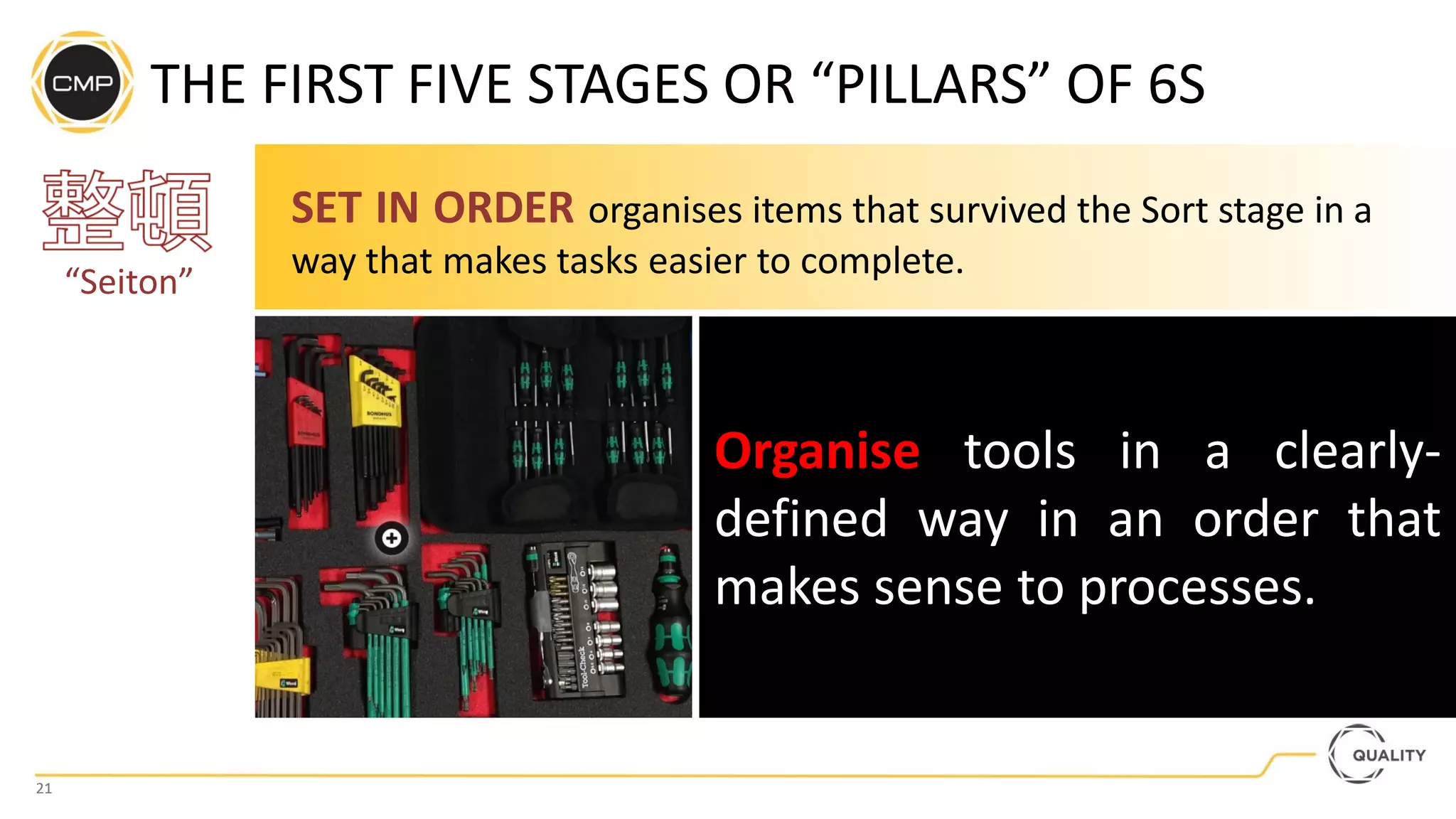
SET IN ORDER organises items that survived the Sort stage in a
way that makes tasks easier to complete.
Organise tools in a clearly-
defined way in an order that
makes sense to processes.
22
22
THE FIRST FIVE STAGES OR “PILLARS” OF 6S
Label printers can be used to organise your system.
“Seiton”
23
23
THE FIRST FIVE STAGES OR “PILLARS” OF 6S
“Seiton”
Floor marking tape and
arrows are great ways to
define storage/parking
areas.
24
24
THE FIRST FIVE STAGES OR “PILLARS” OF 6S
Set in Order enables workers
to perform more productively
and without the frustration of
not being able to find the tool
they need.
“Seiton”
25
25
THE FIRST FIVE STAGES OR “PILLARS” OF 6S
“Seiso”
SHINE requires proactive efforts be taken to keep workplace
areas clean and orderly.
Shine also considers recycling,
waste removal and surface’s
cleanliness.
26
26
THE FIRST FIVE STAGES OR “PILLARS” OF 6S
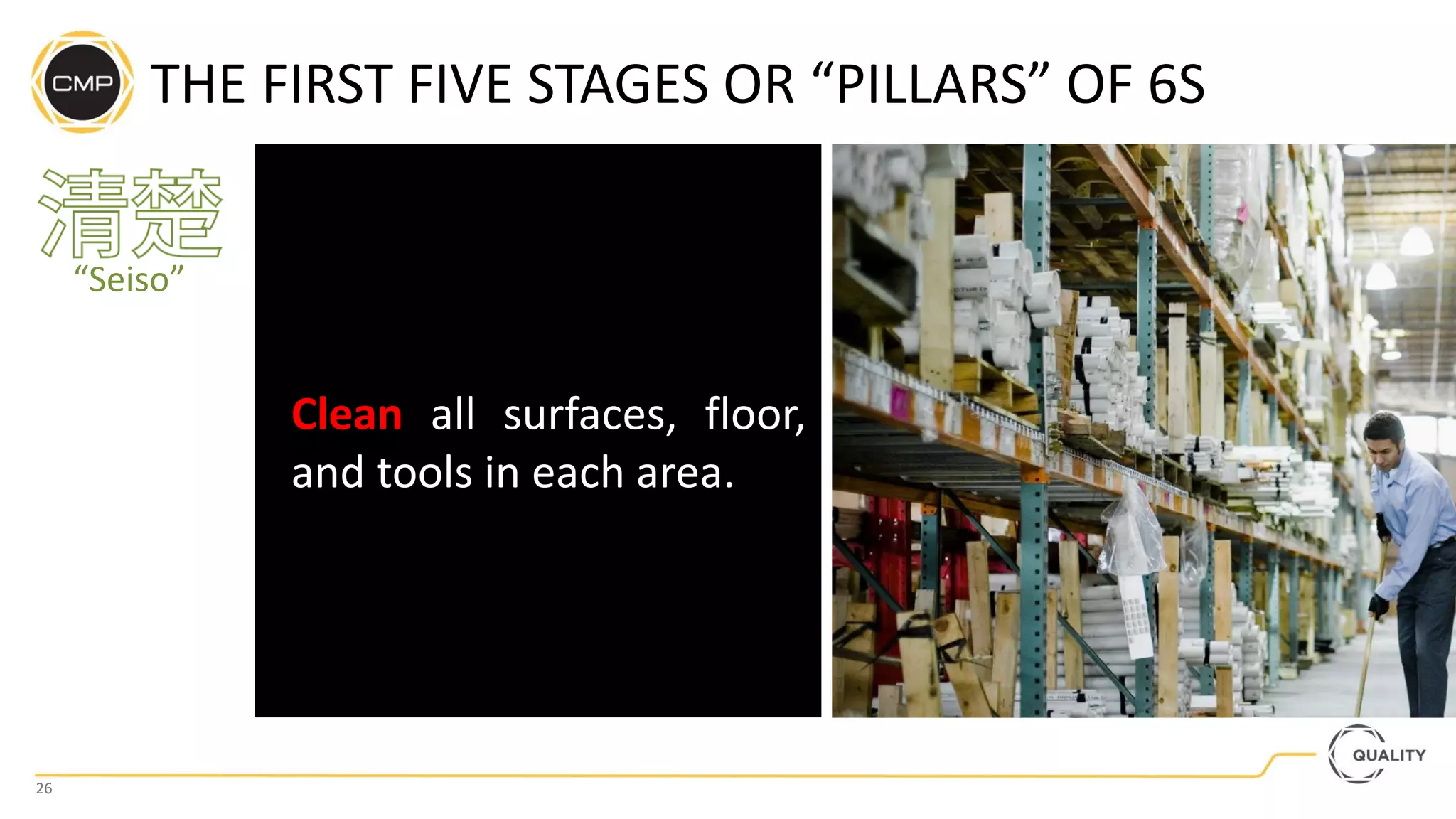
Clean all surfaces, floor,
and tools in each area.
“Seiso”
27
27
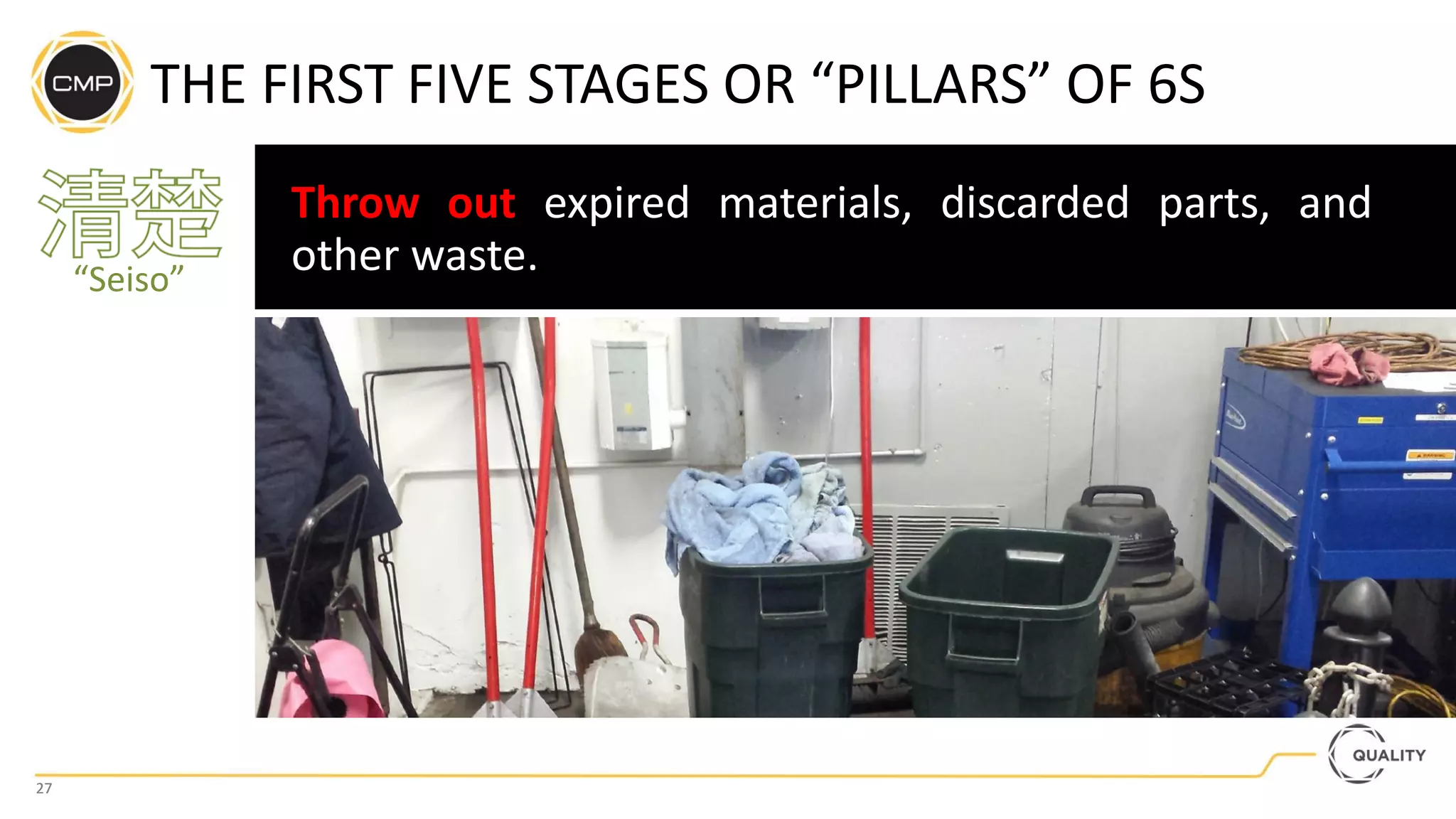
THE FIRST FIVE STAGES OR “PILLARS” OF 6S
Throw out expired materials, discarded parts, and
other waste.
“Seiso”
28
28
THE FIRST FIVE STAGES OR “PILLARS” OF 6S
When facilities are clean,
employees work better, faster,
and have higher morale.
“Seiso”
29
29
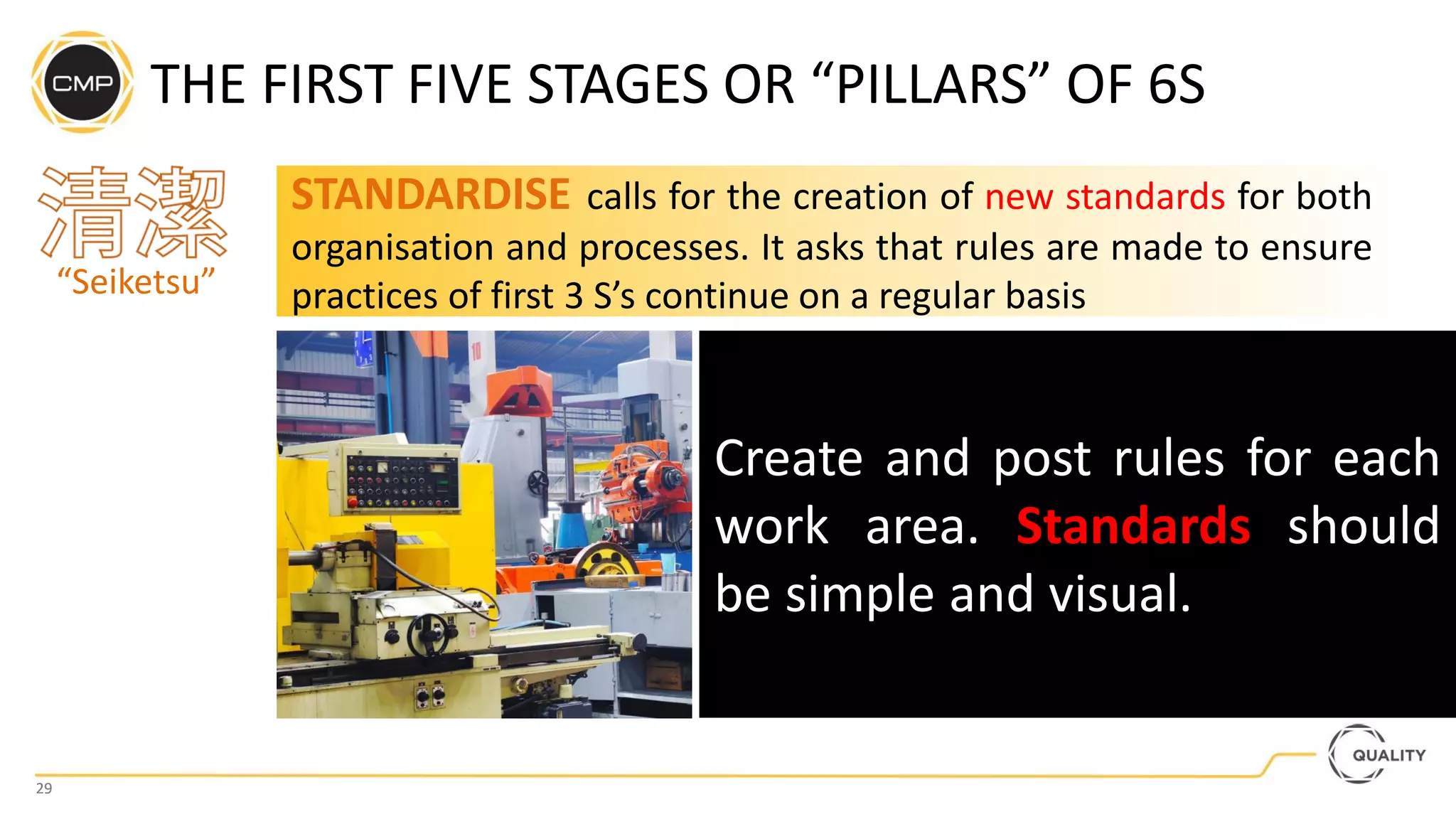
THE FIRST FIVE STAGES OR “PILLARS” OF 6S
“Seiketsu”
STANDARDISE calls for the creation of new standards for both
organisation and processes. It asks that rules are made to ensure
practices of first 3 S’s continue on a regular basis
Create and post rules for each
work area. Standards should
be simple and visual.
30
30
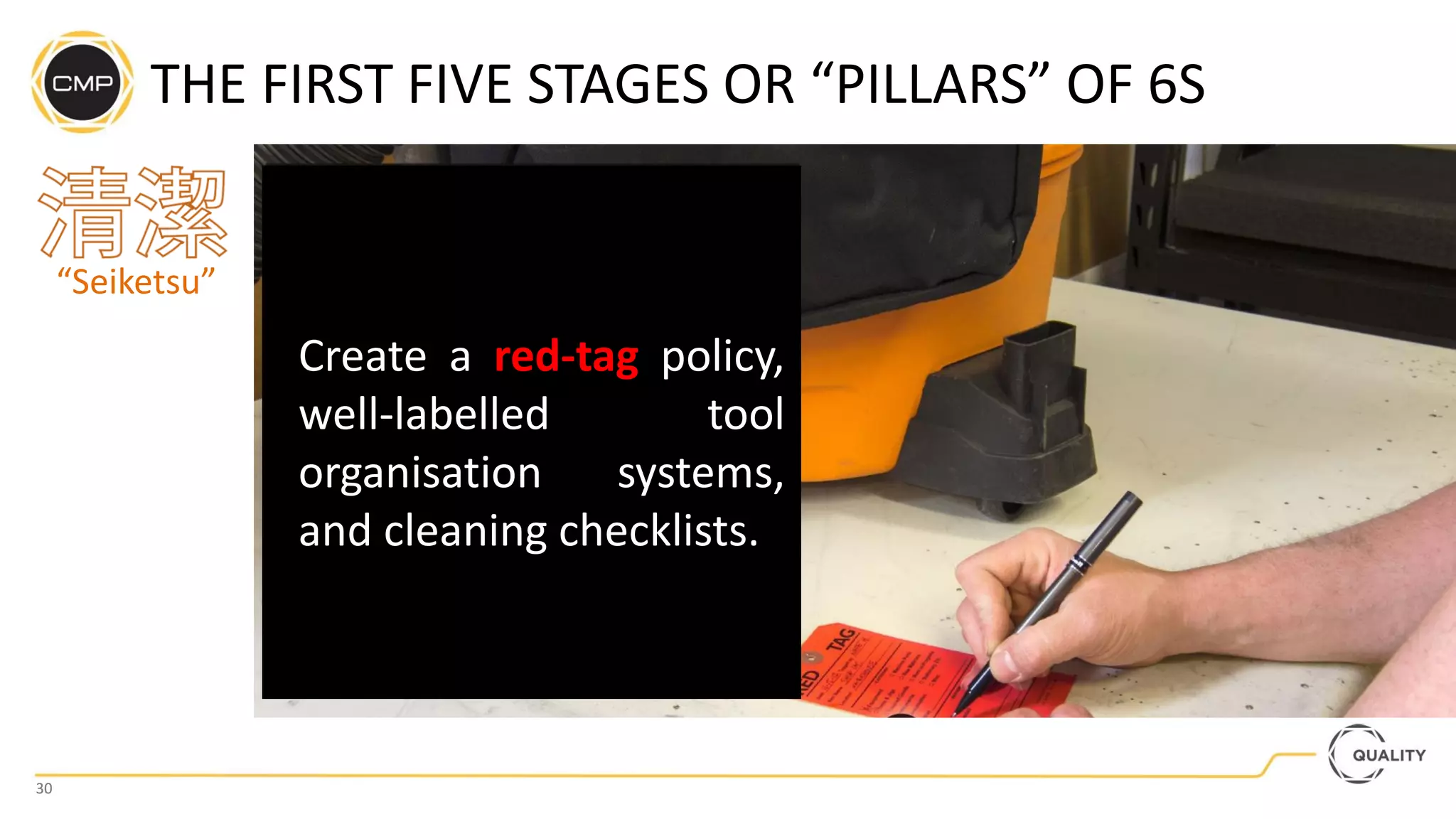
THE FIRST FIVE STAGES OR “PILLARS” OF 6S
Create a red-tag policy,
well-labelled tool
organisation systems,
and cleaning checklists.
“Seiketsu”
31
31
THE FIRST FIVE STAGES OR “PILLARS” OF 6S
STANDARDISE makes it easy to
train new employees on 6S,
and helps maintain principles
past implementation.
“Seiketsu”
32
32
THE FIRST FIVE STAGES OR “PILLARS” OF 6S
“Shitsuke”
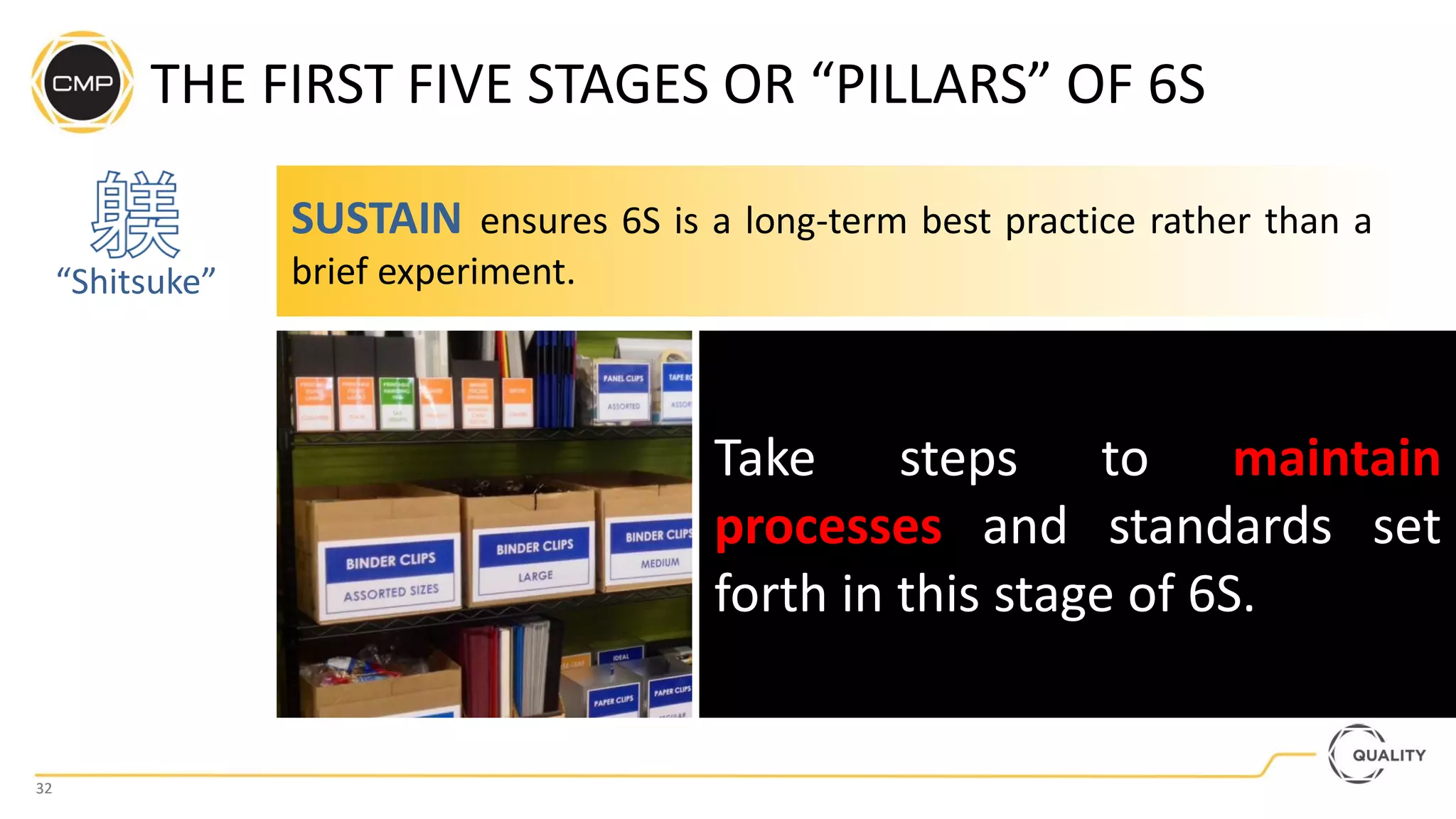
SUSTAIN ensures 6S is a long-term best practice rather than a
brief experiment.
Take steps to maintain
processes and standards set
forth in this stage of 6S.
33
33
THE FIRST FIVE STAGES OR “PILLARS” OF 6S
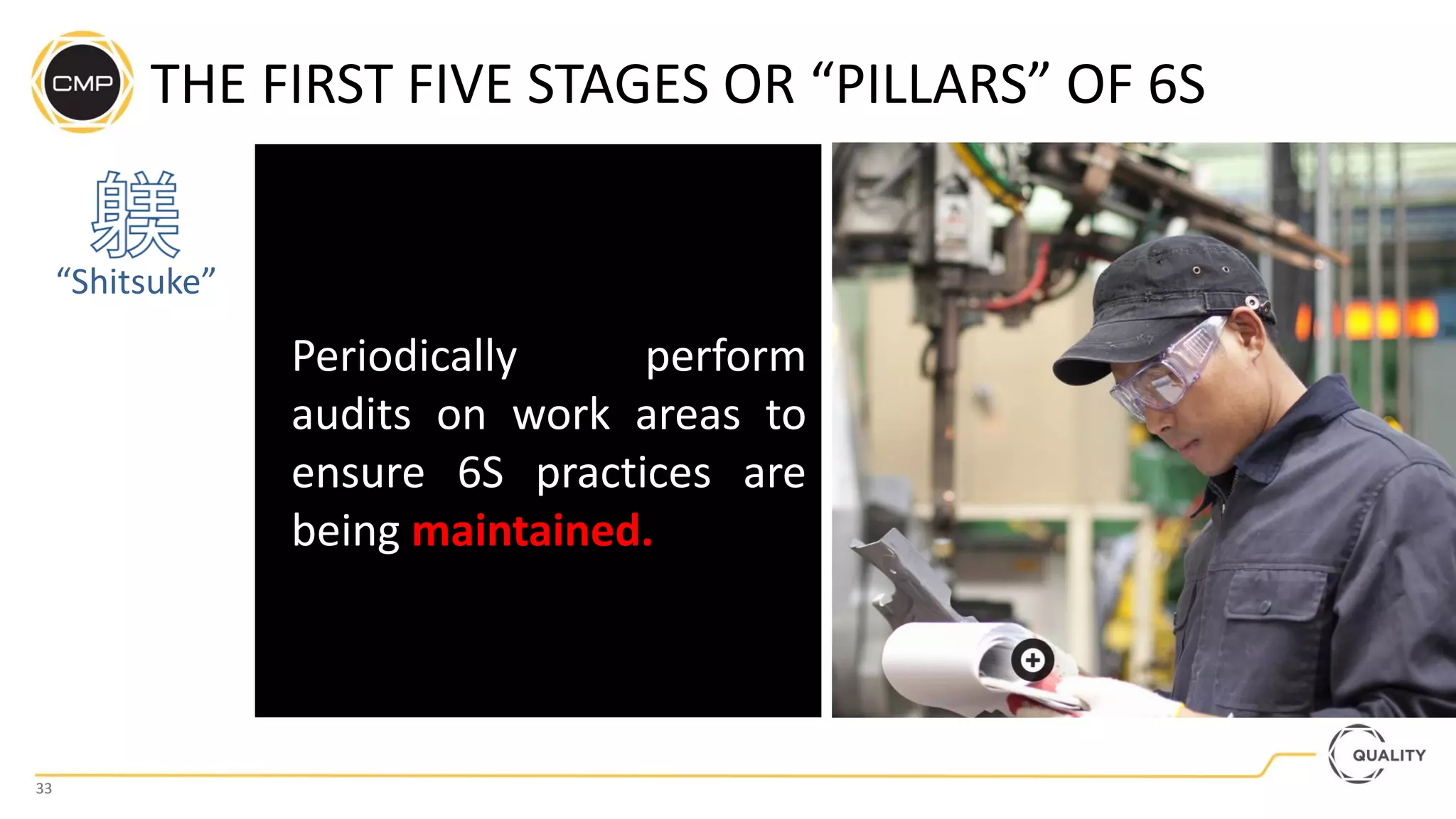
Periodically perform
audits on work areas to
ensure 6S practices are
being maintained.
“Shitsuke”
34
34
THE 6S METHOD
“Anzen-sei”
SAFETY is the sixth pillar of the 6S.
While the sixth S is not part of the
original concept developed at Toyota,
implementing strong safety processes
improve the productivity and eliminate
waste in many ways.
35
35
THE 6S METHOD
“Anzen-sei”
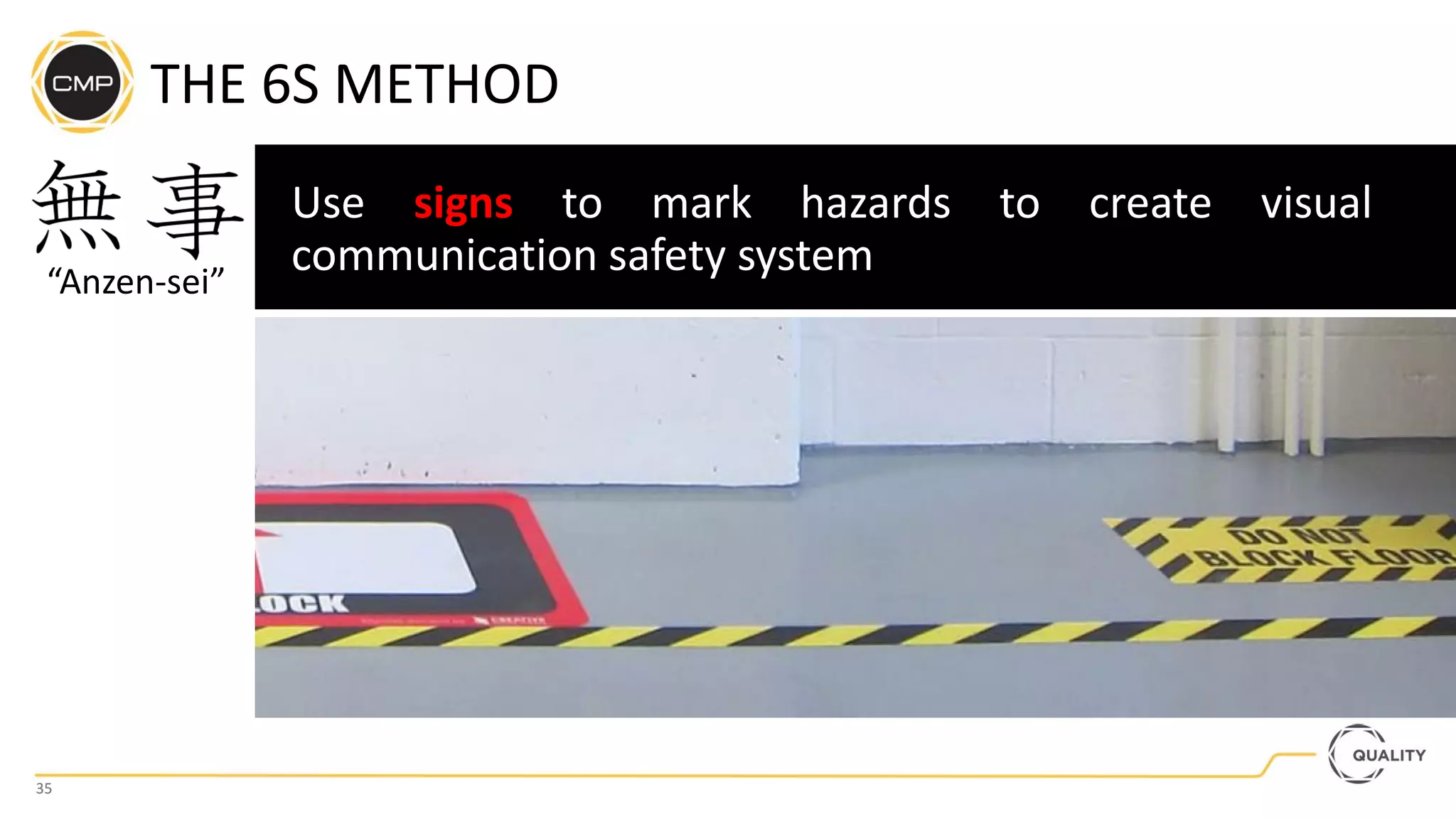
Use signs to mark hazards to create visual
communication safety system
36
36
THE 6S METHOD
“Anzen-sei”
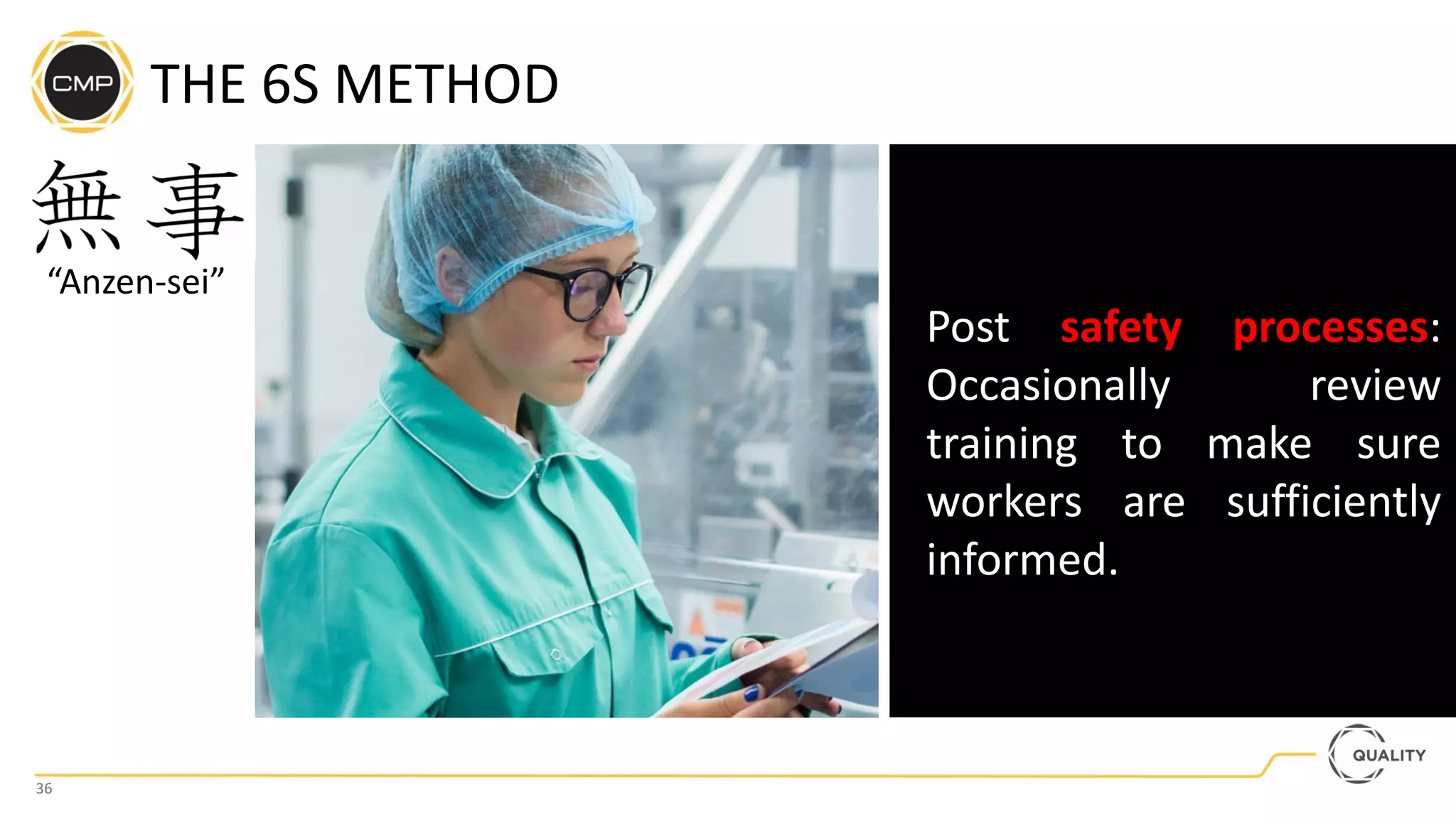
Post safety processes:
Occasionally review
training to make sure
workers are sufficiently
informed.
37
37
THE 6S METHOD
“Anzen-sei”
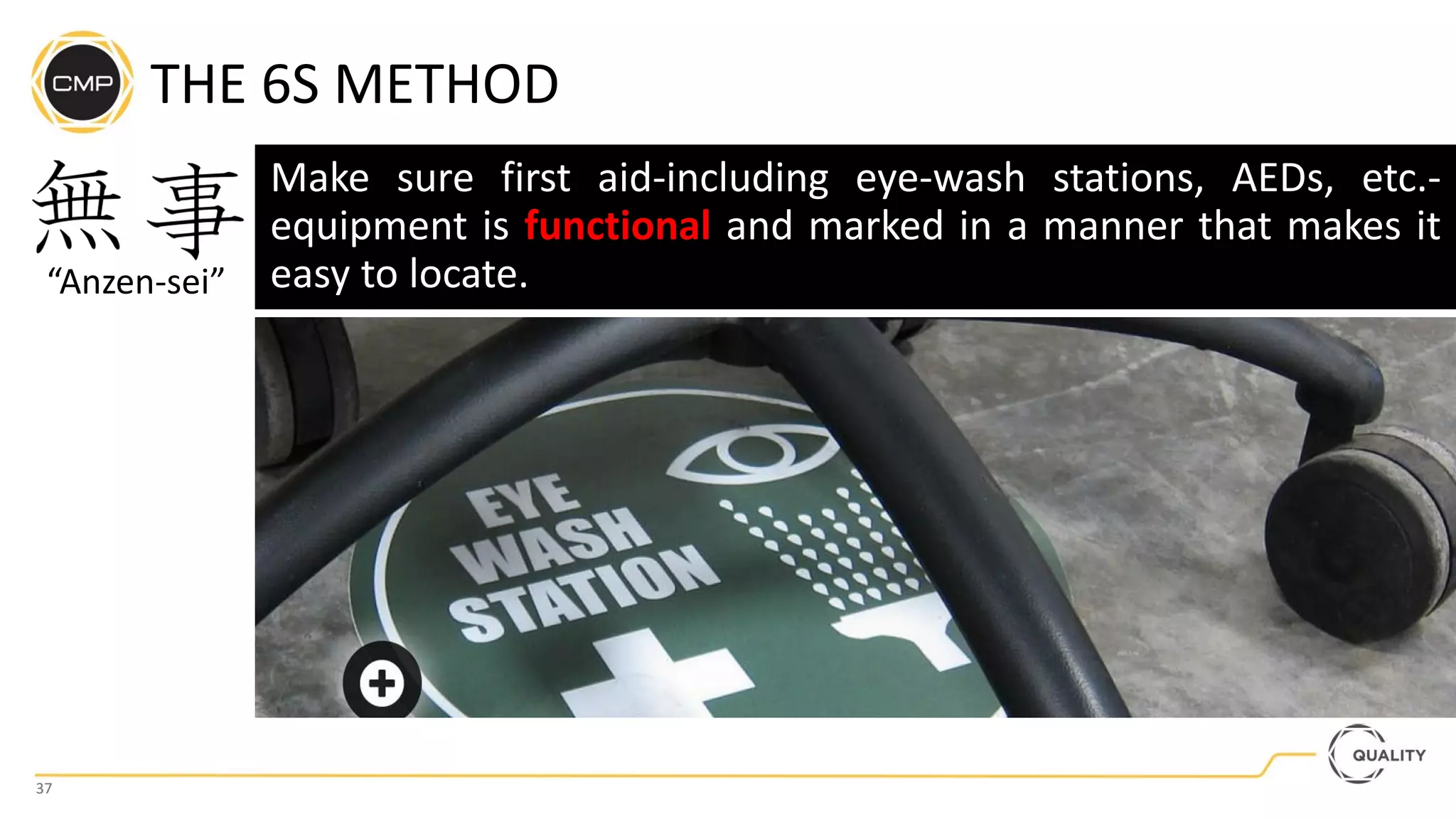
Make sure first aid-including eye-wash stations, AEDs, etc.-
equipment is functional and marked in a manner that makes it
easy to locate.
38
38
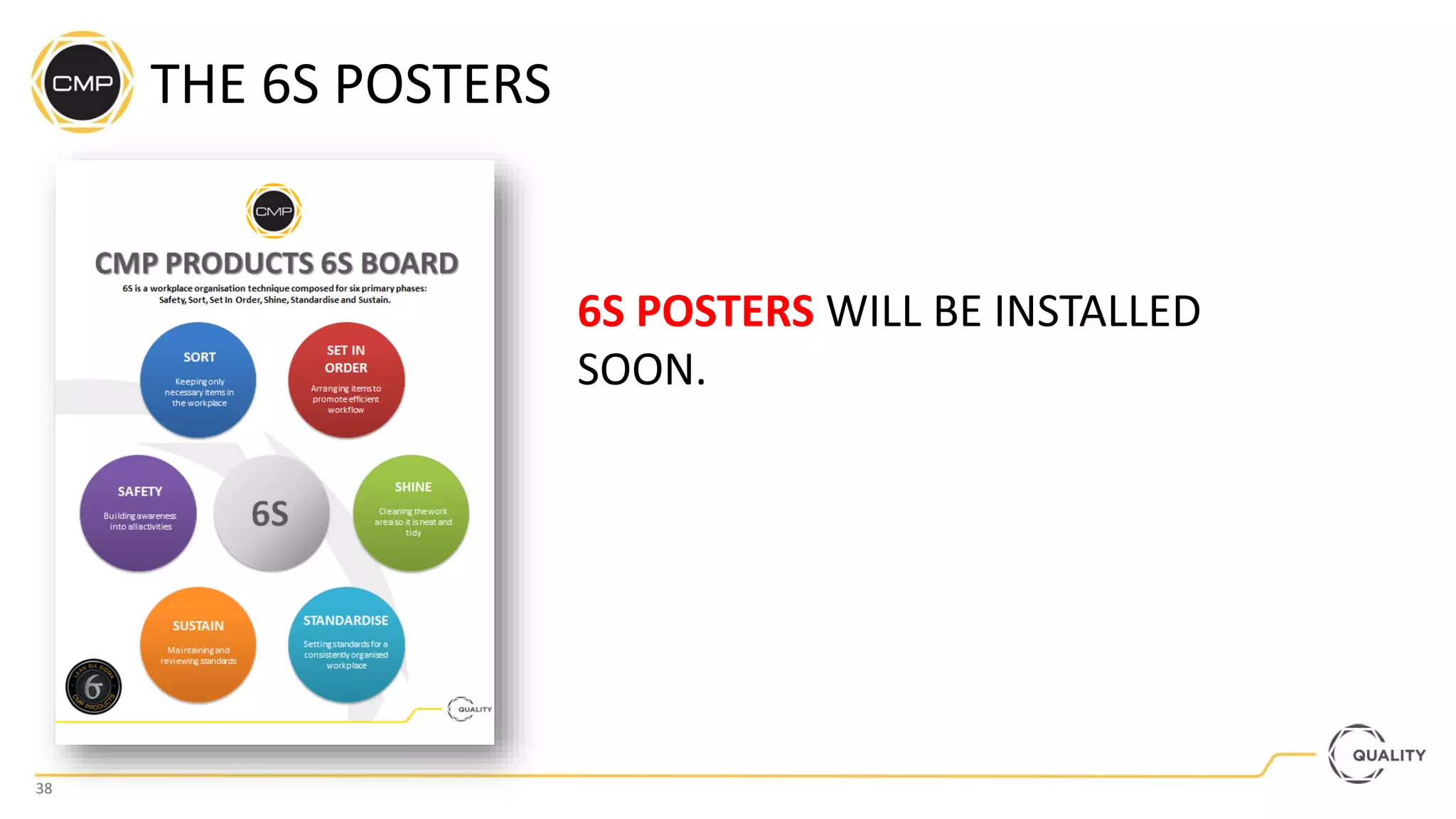
THE 6S POSTERS
6S POSTERS WILL BE INSTALLED
SOON.
39
39
THE 6S METHOD
BY NOW, YOU SHOULD HAVE A SOLID FOUNDATION OF
6S, AND AN IDEA OF HOW TO GET STARTED ON
BUILDING A SYSTEM OF ORGANISATION AND VISUAL
COMMUNICATION THAT WILL WORK FOR YOUR
FACILITY.
INTERESTED IN LEARNING MORE? THE NEXT STAGE
WILL BE THE KAIZEN TRAINING!
QUESTIONS?

6S training presentation

  • 1.
    February 2020 Francisco Dominguez Directorof Quality GETTING STARTED WITH 6S
  • 2.
    2 2 INTRODUCTION This power pointpresentation will get you on the path toward efficiency and improved production. The ideas presented here are meant to build a foundation of knowledge about 6S so that you may be successful in implementing 6S into your facility. Change is difficult, but don’t worry – we’re here to help. This information will reduce any anxiety and uncertainty, and give you the confidence to embark on the journey toward a better production process.
  • 3.
  • 4.
  • 5.
    5 5 6S is asystem of VISUAL MANAGEMENT
  • 6.
    6 6 First developed atToyota in the 1950s, 5S is a foundational method of Lean manufacturing and REVOLUTIONISED the way industries conduct production. 6S expands on the original concept. THE 6S METHOD
  • 7.
  • 8.
    8 8 THE 6S METHOD Systematicallyremove unnecessary steps & equipment from production processes
  • 9.
  • 10.
  • 11.
    11 11 And maximise efficiency andprofit. THE 6S METHOD
  • 12.
    THE FIRST FIVESTAGES OR “PILLARS” OF 6S
  • 13.
    SORT 13 13 THE FIRST FIVESTAGES OR “PILLARS” OF 6S From the Japanese phrase: “Seiri” SET IN ORDER From the Japanese phrase: “Seiton” SHINE From the Japanese phrase: “Seiso” STANDARDISE From the Japanese phrase: “Seiketsu” SUSTAIN From the Japanese phrase: “Shitsuke”
  • 14.
    14 14 THE FIRST FIVESTAGES OR “PILLARS” OF 6S “Seiri” SORT calls for a full assessment of materials, only keeping items essential to completing tasks. To start- first Identify, then Remove unnecessary items from work areas.
  • 15.
    15 15 THE FIRST FIVESTAGES OR “PILLARS” OF 6S “Seiri” Can’t decide if something should stay?
  • 16.
    16 16 THE FIRST FIVESTAGES OR “PILLARS” OF 6S “Seiri” Use the 5S’s Red Tag System to document how often the tool in question is actually used
  • 17.
    17 17 THE FIRST FIVESTAGES OR “PILLARS” OF 6S “Seiri” Red Tag Systems are simple: you place the tags on undecided items, and notate on the tag when the item is used.
  • 18.
    18 18 THE FIRST FIVESTAGES OR “PILLARS” OF 6S “Seiri” Once you have an idea of how often a tool is used over time, you can decide whether or not it should stay.
  • 19.
    19 19 THE FIRST FIVESTAGES OR “PILLARS” OF 6S “Seiri” Red Tag “Holding Areas” are often used as a temporary location to store undecided items for a short period (usually 30 days or less).
  • 20.
    20 20 THE FIRST FIVESTAGES OR “PILLARS” OF 6S “Seiri” Once the Sort stage is complete, your workplace will be free of unnecessary clutter and will immediately see improved productivity.
  • 21.
    21 21 THE FIRST FIVESTAGES OR “PILLARS” OF 6S “Seiton” SET IN ORDER organises items that survived the Sort stage in a way that makes tasks easier to complete. Organise tools in a clearly- defined way in an order that makes sense to processes.
  • 22.
    22 22 THE FIRST FIVESTAGES OR “PILLARS” OF 6S Label printers can be used to organise your system. “Seiton”
  • 23.
    23 23 THE FIRST FIVESTAGES OR “PILLARS” OF 6S “Seiton” Floor marking tape and arrows are great ways to define storage/parking areas.
  • 24.
    24 24 THE FIRST FIVESTAGES OR “PILLARS” OF 6S Set in Order enables workers to perform more productively and without the frustration of not being able to find the tool they need. “Seiton”
  • 25.
    25 25 THE FIRST FIVESTAGES OR “PILLARS” OF 6S “Seiso” SHINE requires proactive efforts be taken to keep workplace areas clean and orderly. Shine also considers recycling, waste removal and surface’s cleanliness.
  • 26.
    26 26 THE FIRST FIVESTAGES OR “PILLARS” OF 6S Clean all surfaces, floor, and tools in each area. “Seiso”
  • 27.
    27 27 THE FIRST FIVESTAGES OR “PILLARS” OF 6S Throw out expired materials, discarded parts, and other waste. “Seiso”
  • 28.
    28 28 THE FIRST FIVESTAGES OR “PILLARS” OF 6S When facilities are clean, employees work better, faster, and have higher morale. “Seiso”
  • 29.
    29 29 THE FIRST FIVESTAGES OR “PILLARS” OF 6S “Seiketsu” STANDARDISE calls for the creation of new standards for both organisation and processes. It asks that rules are made to ensure practices of first 3 S’s continue on a regular basis Create and post rules for each work area. Standards should be simple and visual.
  • 30.
    30 30 THE FIRST FIVESTAGES OR “PILLARS” OF 6S Create a red-tag policy, well-labelled tool organisation systems, and cleaning checklists. “Seiketsu”
  • 31.
    31 31 THE FIRST FIVESTAGES OR “PILLARS” OF 6S STANDARDISE makes it easy to train new employees on 6S, and helps maintain principles past implementation. “Seiketsu”
  • 32.
    32 32 THE FIRST FIVESTAGES OR “PILLARS” OF 6S “Shitsuke” SUSTAIN ensures 6S is a long-term best practice rather than a brief experiment. Take steps to maintain processes and standards set forth in this stage of 6S.
  • 33.
    33 33 THE FIRST FIVESTAGES OR “PILLARS” OF 6S Periodically perform audits on work areas to ensure 6S practices are being maintained. “Shitsuke”
  • 34.
    34 34 THE 6S METHOD “Anzen-sei” SAFETYis the sixth pillar of the 6S. While the sixth S is not part of the original concept developed at Toyota, implementing strong safety processes improve the productivity and eliminate waste in many ways.
  • 35.
    35 35 THE 6S METHOD “Anzen-sei” Usesigns to mark hazards to create visual communication safety system
  • 36.
    36 36 THE 6S METHOD “Anzen-sei” Postsafety processes: Occasionally review training to make sure workers are sufficiently informed.
  • 37.
    37 37 THE 6S METHOD “Anzen-sei” Makesure first aid-including eye-wash stations, AEDs, etc.- equipment is functional and marked in a manner that makes it easy to locate.
  • 38.
    38 38 THE 6S POSTERS 6SPOSTERS WILL BE INSTALLED SOON.
  • 39.
    39 39 THE 6S METHOD BYNOW, YOU SHOULD HAVE A SOLID FOUNDATION OF 6S, AND AN IDEA OF HOW TO GET STARTED ON BUILDING A SYSTEM OF ORGANISATION AND VISUAL COMMUNICATION THAT WILL WORK FOR YOUR FACILITY. INTERESTED IN LEARNING MORE? THE NEXT STAGE WILL BE THE KAIZEN TRAINING!
  • 40.