
This document discusses operational excellence through business process management and continuous improvement. It introduces the continuous improvement model and methodology of defining, measuring, analyzing, improving, and controlling processes. Key concepts are discussed like customer focus, fact-based decision making, and involving employees. Specific examples are provided around production processes, identifying opportunities, and engaging people in improvement initiatives. The role of people and change management are emphasized as critical success factors.
Background.The Continuous ImprovementModel.Managing Business Processes:Methodology.Identifying Opportunities.Improvement Approach.Tools and Solutions.Role of People in Continuous ImprovementContents
3.
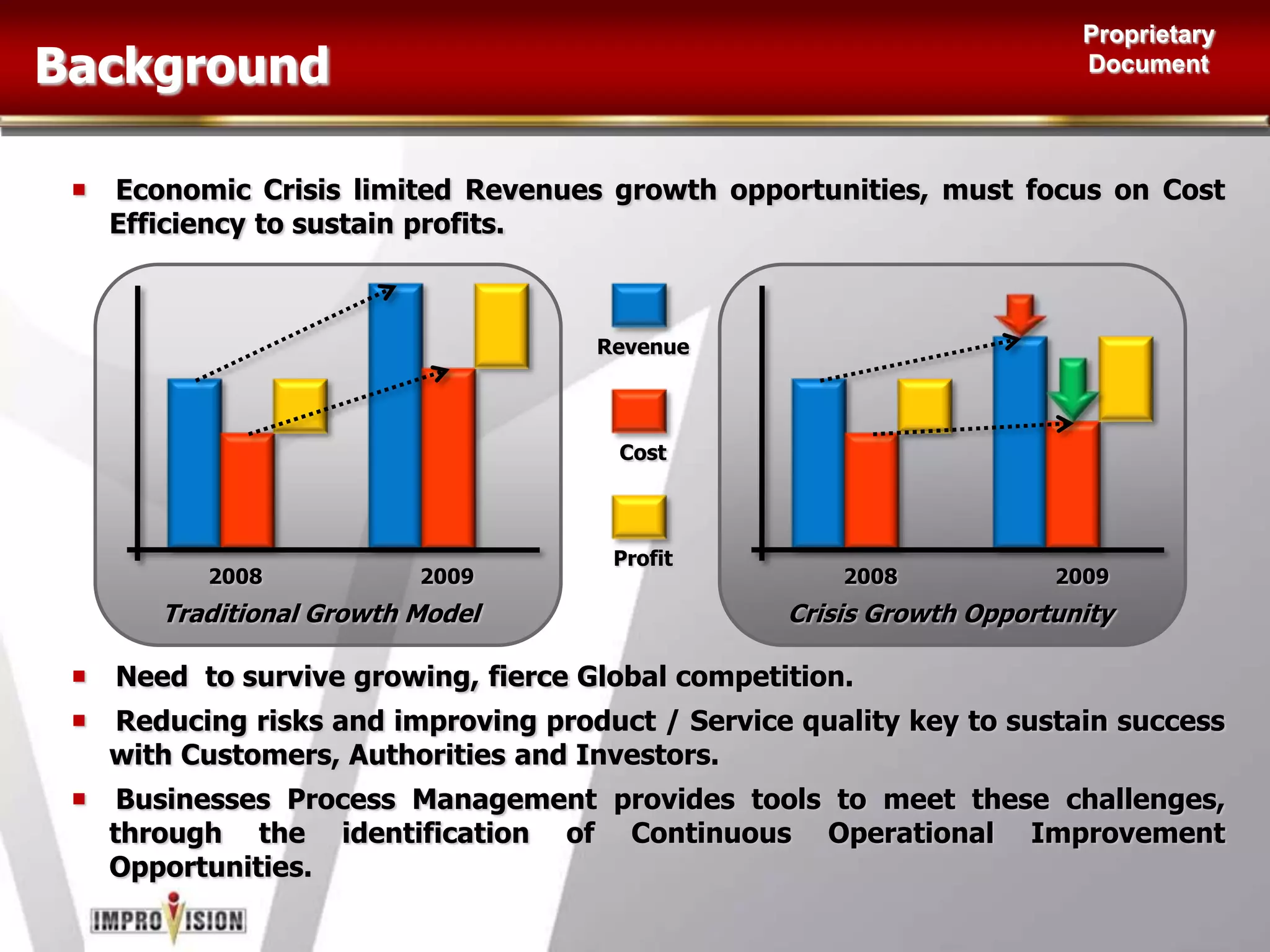
Economic Crisis limitedRevenues growth opportunities, must focus on Cost Efficiency to sustain profits.BackgroundRevenueCostProfit2008200920082009Crisis Growth OpportunityTraditional Growth ModelNeed to survive growing, fierce Global competition.
4.
Reducing risks andimproving product / Service quality key to sustain success with Customers, Authorities and Investors.
5.
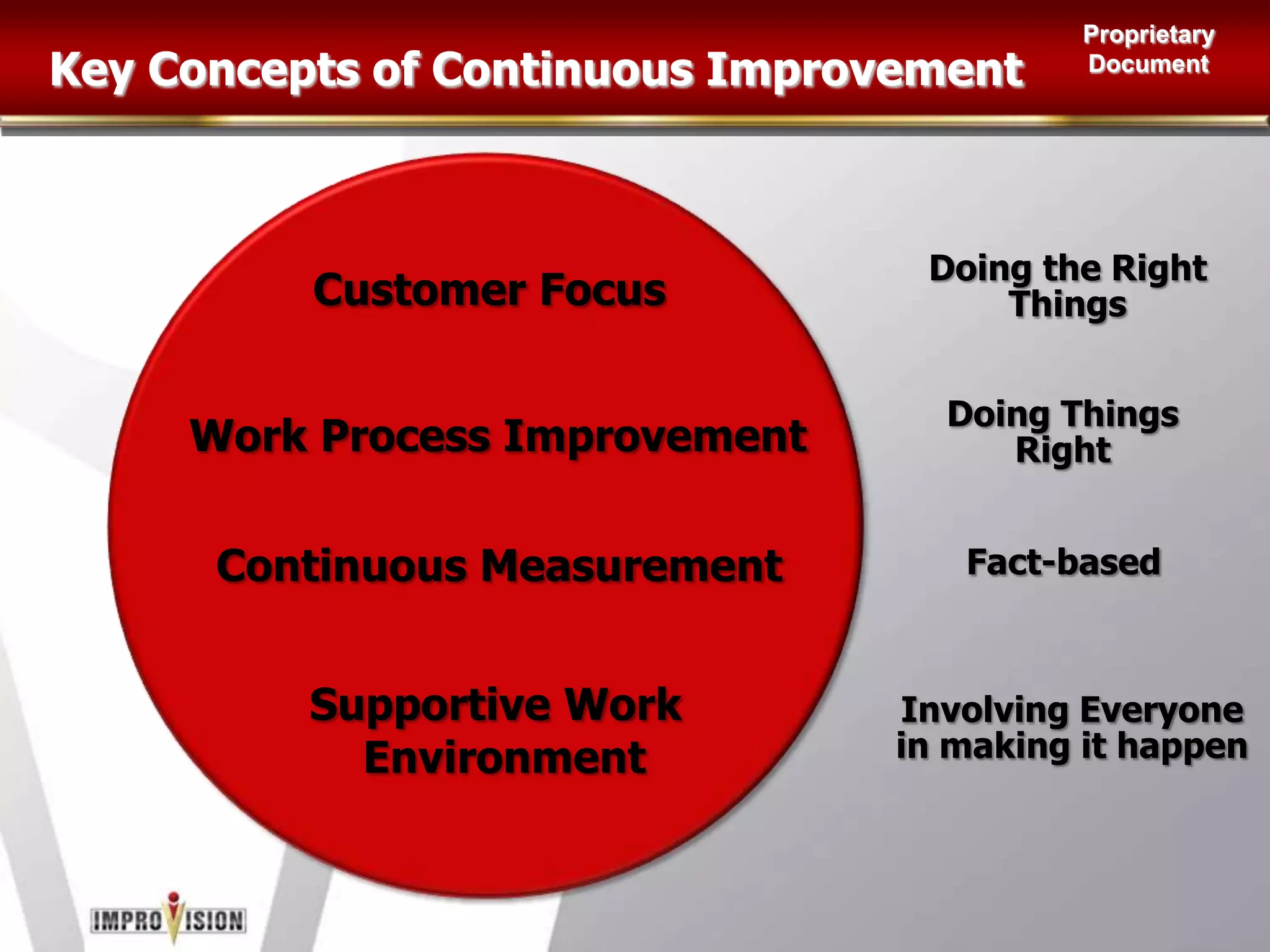
Businesses Process Managementprovides tools to meet these challenges, through the identification of Continuous Operational Improvement Opportunities.Key Concepts of Continuous ImprovementDoing the RightThingsCustomer FocusDoing ThingsRightWork Process Improvement Continuous MeasurementFact-basedSupportive Work EnvironmentInvolving Everyonein making it happen
6.
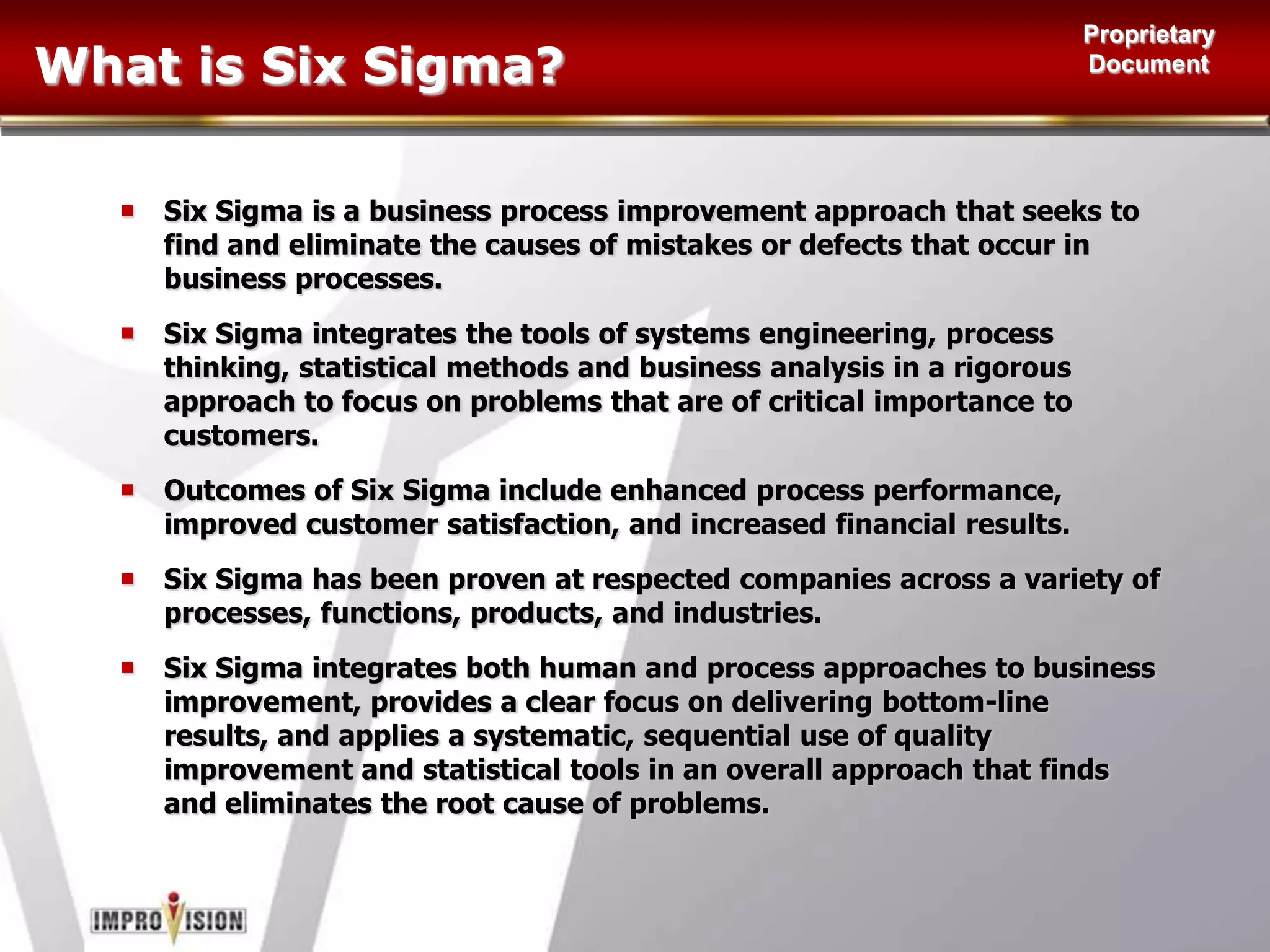
What is SixSigma?Six Sigma is a business process improvement approach that seeks to find and eliminate the causes of mistakes or defects that occur in business processes. Six Sigma integrates the tools of systems engineering, process thinking, statistical methods and business analysis in a rigorous approach to focus on problems that are of critical importance to customers.Outcomes of Six Sigma include enhanced process performance, improved customer satisfaction, and increased financial results.Six Sigma has been proven at respected companies across a variety of processes, functions, products, and industries.Six Sigma integrates both human and process approaches to business improvement, provides a clear focus on delivering bottom-line results, and applies a systematic, sequential use of quality improvement and statistical tools in an overall approach that finds and eliminates the root cause of problems.
7.
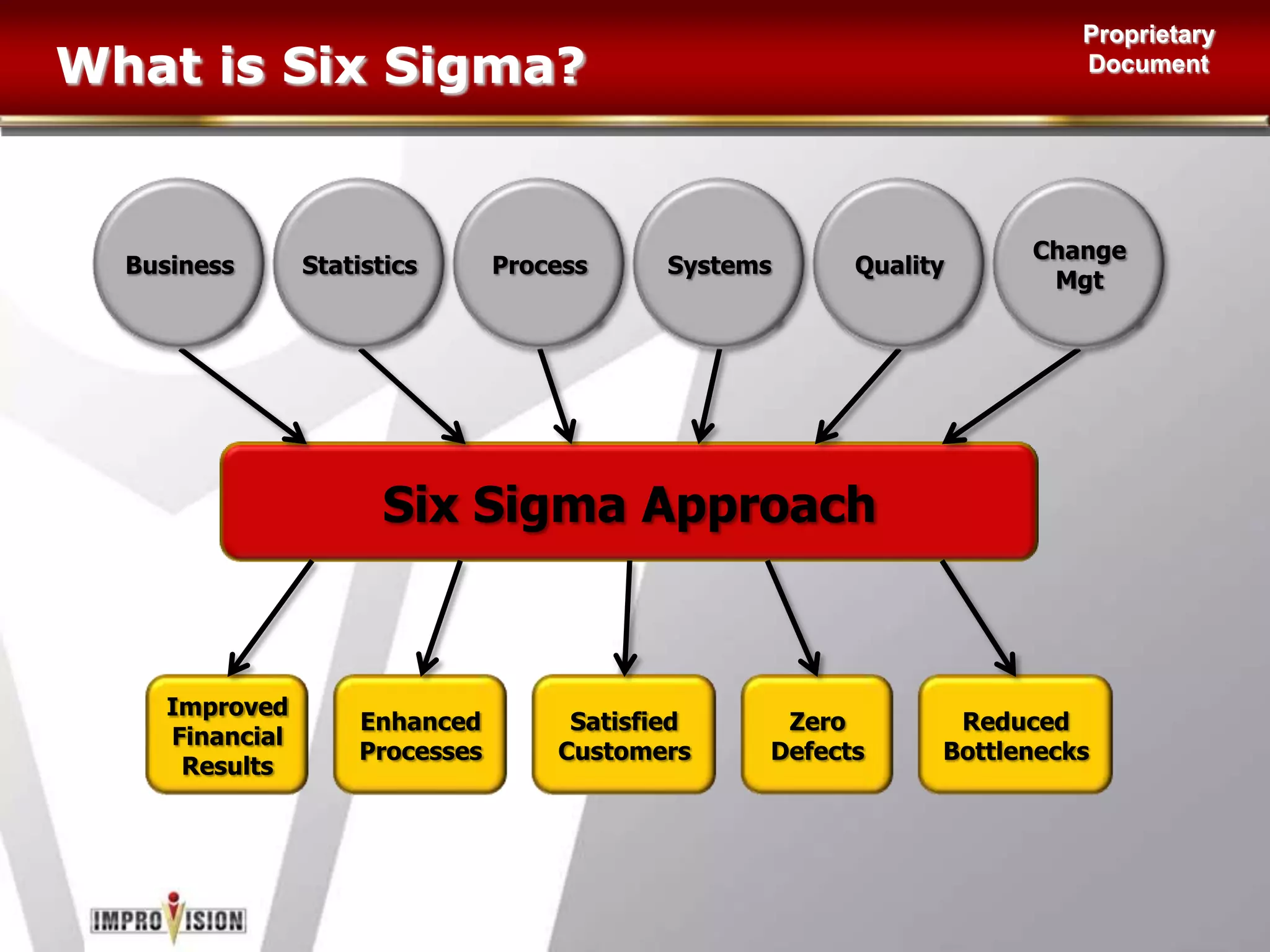
What is SixSigma?BusinessStatisticsProcessSystemsQualityChange MgtSix Sigma ApproachImproved Financial ResultsEnhanced ProcessesSatisfied Customers Zero DefectsReduced Bottlenecks
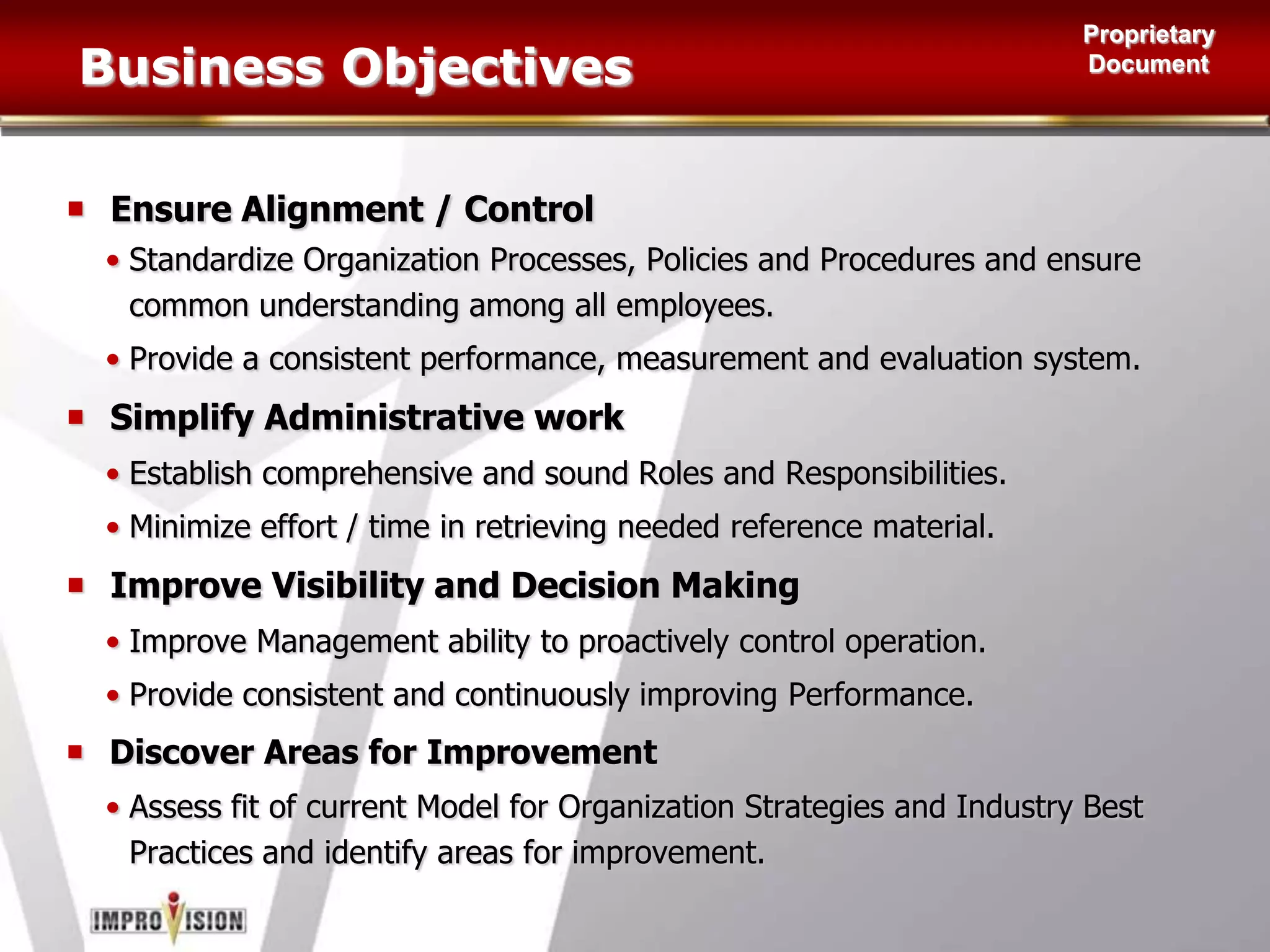
Business Objectives Ensure Alignment / ControlStandardize Organization Processes, Policies and Procedures and ensure common understanding among all employees.Provide a consistent performance, measurement and evaluation system.Simplify Administrative workEstablish comprehensive and sound Roles and Responsibilities.Minimize effort / time in retrieving needed reference material.Improve Visibility and Decision MakingImprove Management ability to proactively control operation.Provide consistent and continuously improving Performance. Discover Areas for ImprovementAssess fit of current Model for Organization Strategies and Industry Best Practices and identify areas for improvement.
10.
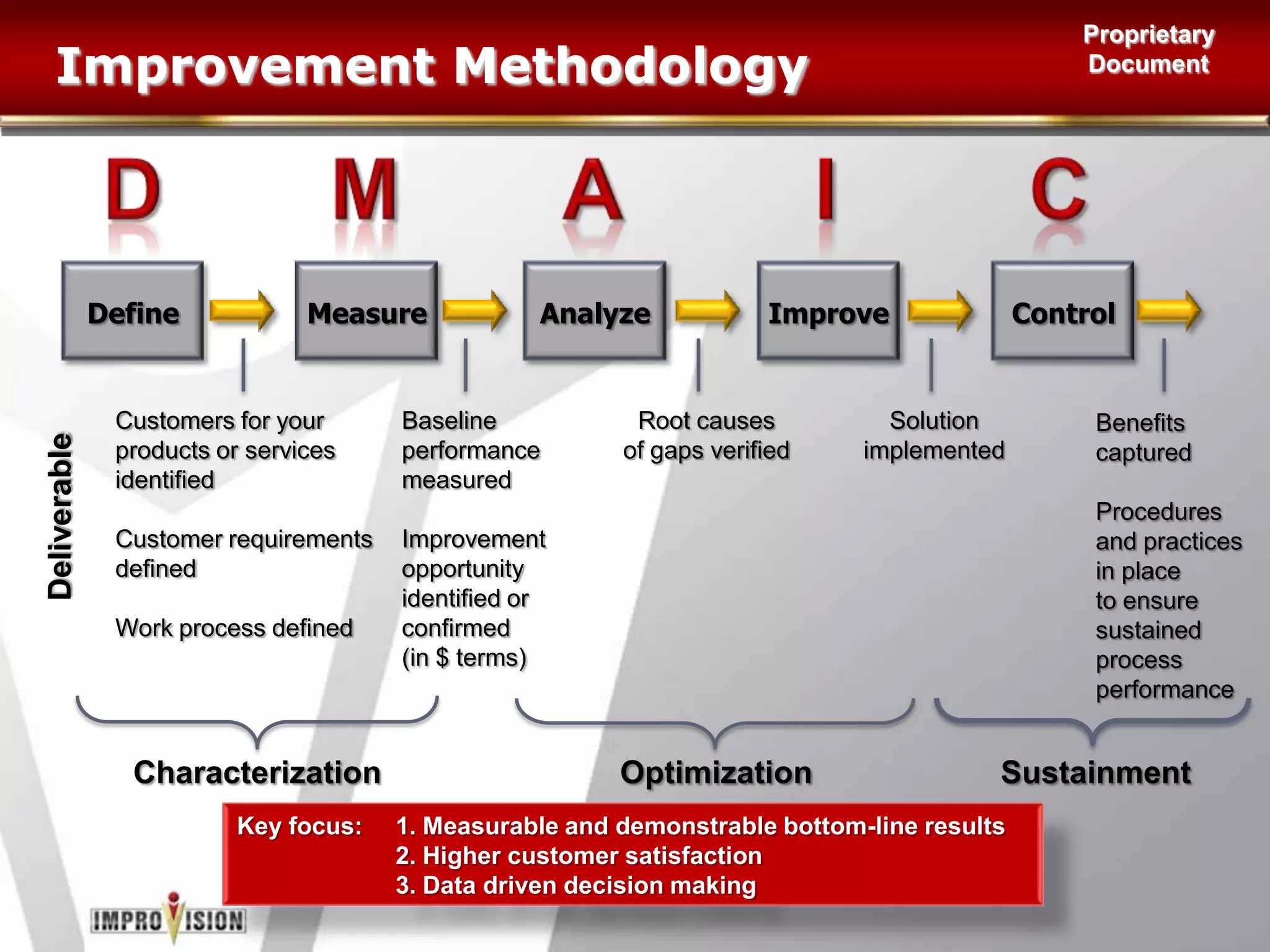
Improvement MethodologyImproveDefineMeasureAnalyzeControlDCIAMCustomers foryourproducts or services identifiedCustomer requirementsdefinedWork process definedBaselineperformancemeasuredImprovementopportunityidentified orconfirmed(in $ terms)Root causesof gaps verifiedSolutionimplementedBenefitscapturedProceduresand practicesin placeto ensuresustainedprocessperformanceDeliverableCharacterizationOptimizationSustainmentKey focus: 1. Measurable and demonstrable bottom-line results 2. Higher customer satisfaction 3. Data driven decision making
11.
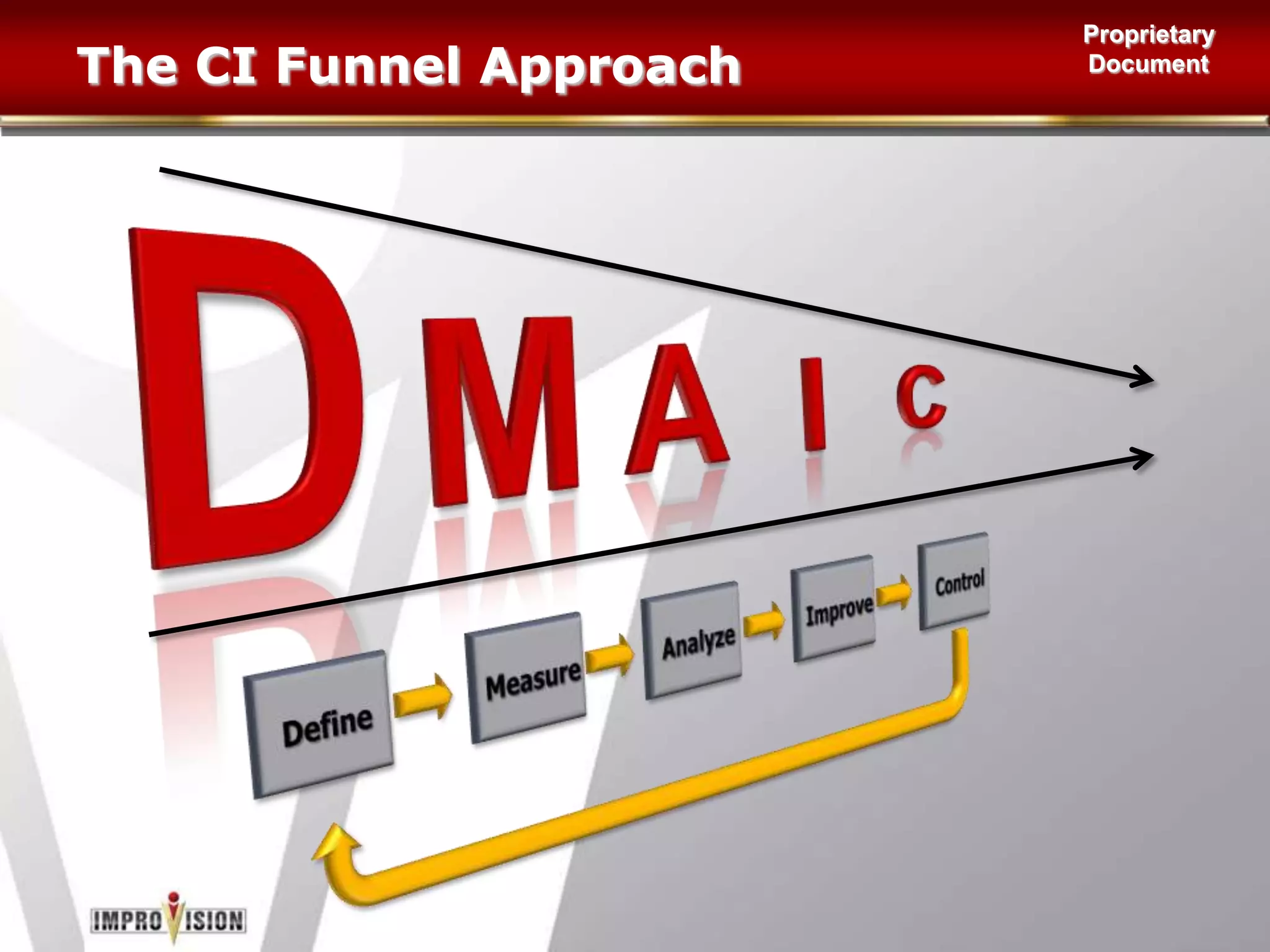
The CI FunnelApproachDMAICImproveDefineMeasureAnalyzeControl
12.
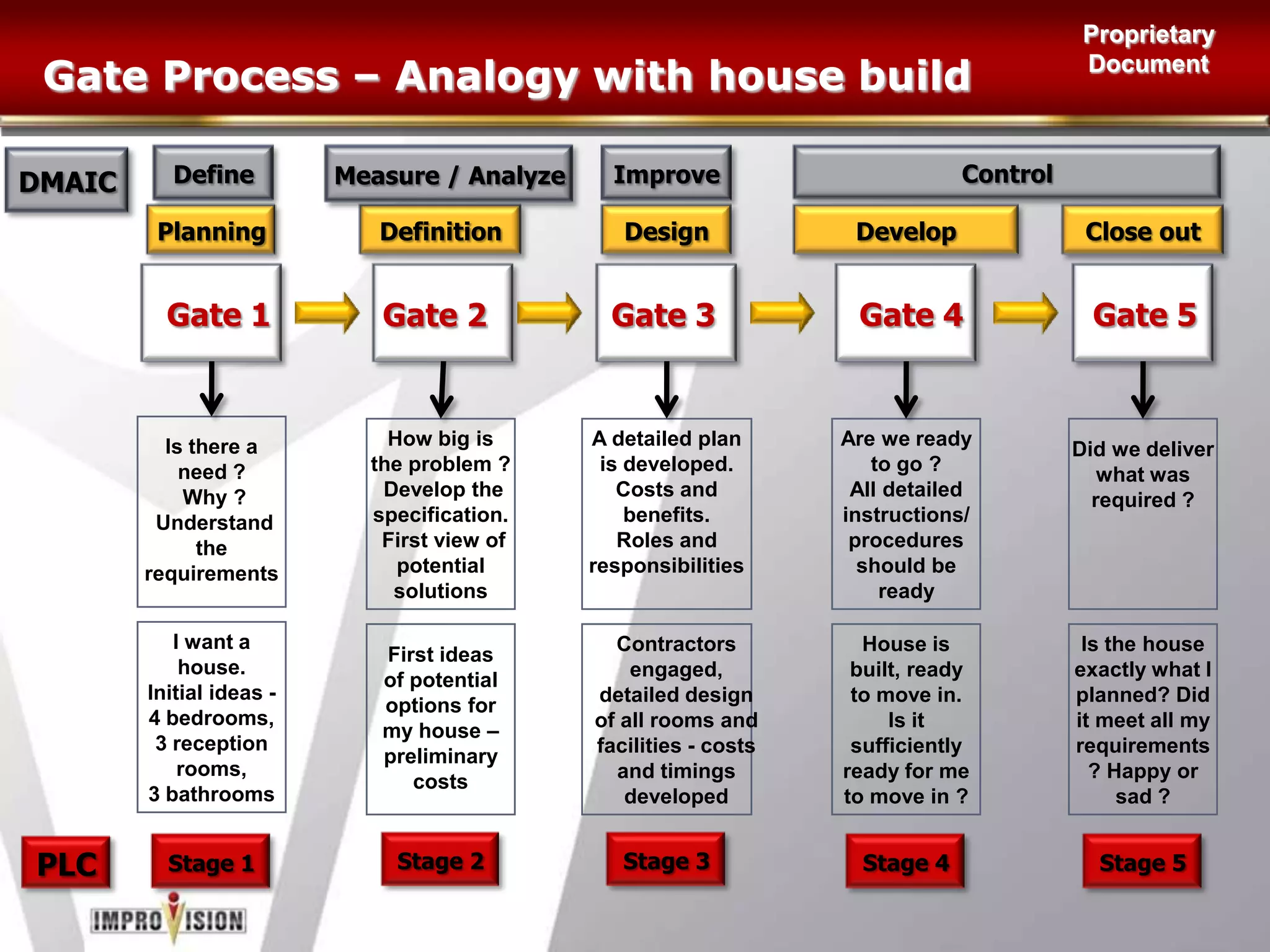
Gate 1Gate 2Gate3Gate 5Gate Process – Analogy with house buildDefineImproveMeasure / AnalyzeControlDMAICPlanningDesignDevelopClose outDefinitionGate 4How big is the problem ? Develop the specification. First view of potential solutionsA detailed plan is developed. Costs and benefits. Roles and responsibilitiesAre we ready to go ?All detailed instructions/ procedures should be readyIs there a need ? Why ? Understand the requirements Did we deliver what was required ?I want a house. Initial ideas - 4 bedrooms, 3 reception rooms, 3 bathroomsContractors engaged, detailed design of all rooms and facilities - costs and timings developedHouse is built, ready to move in. Is it sufficiently ready for me to move in ?Is the house exactly what I planned? Did it meet all my requirements ? Happy or sad ?First ideas of potential options for my house – preliminary costsStage 2Stage 3Stage 5Stage 4Stage 1PLC
13.
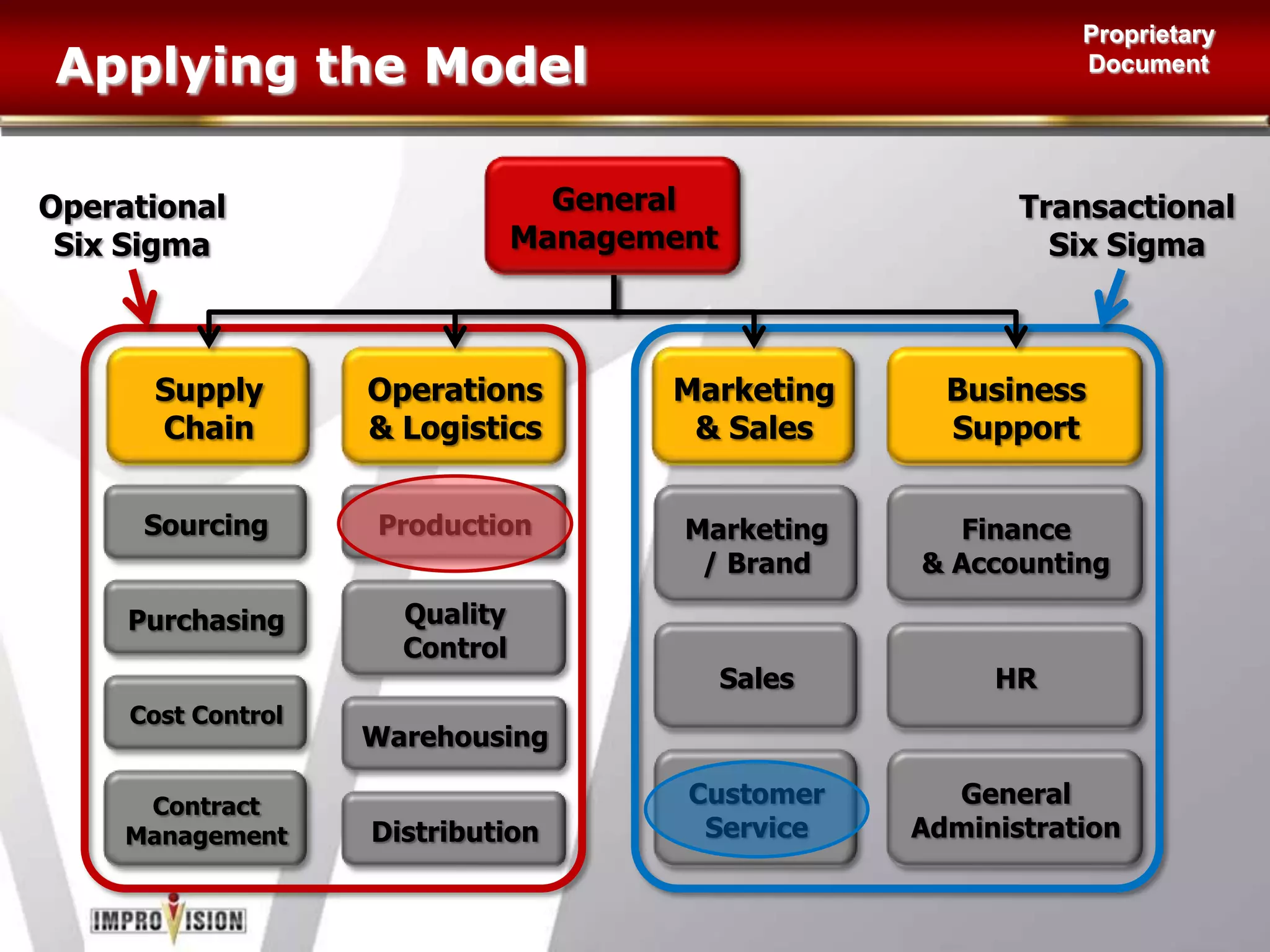
Applying the ModelGeneralManagementOperational Six SigmaTransactional Six SigmaSupply ChainOperations& LogisticsMarketing& Sales Business SupportMarketing / Brand SourcingProductionFinance & AccountingPurchasingQuality ControlSalesHRCost ControlWarehousingCustomer ServiceGeneral AdministrationContract ManagementDistribution
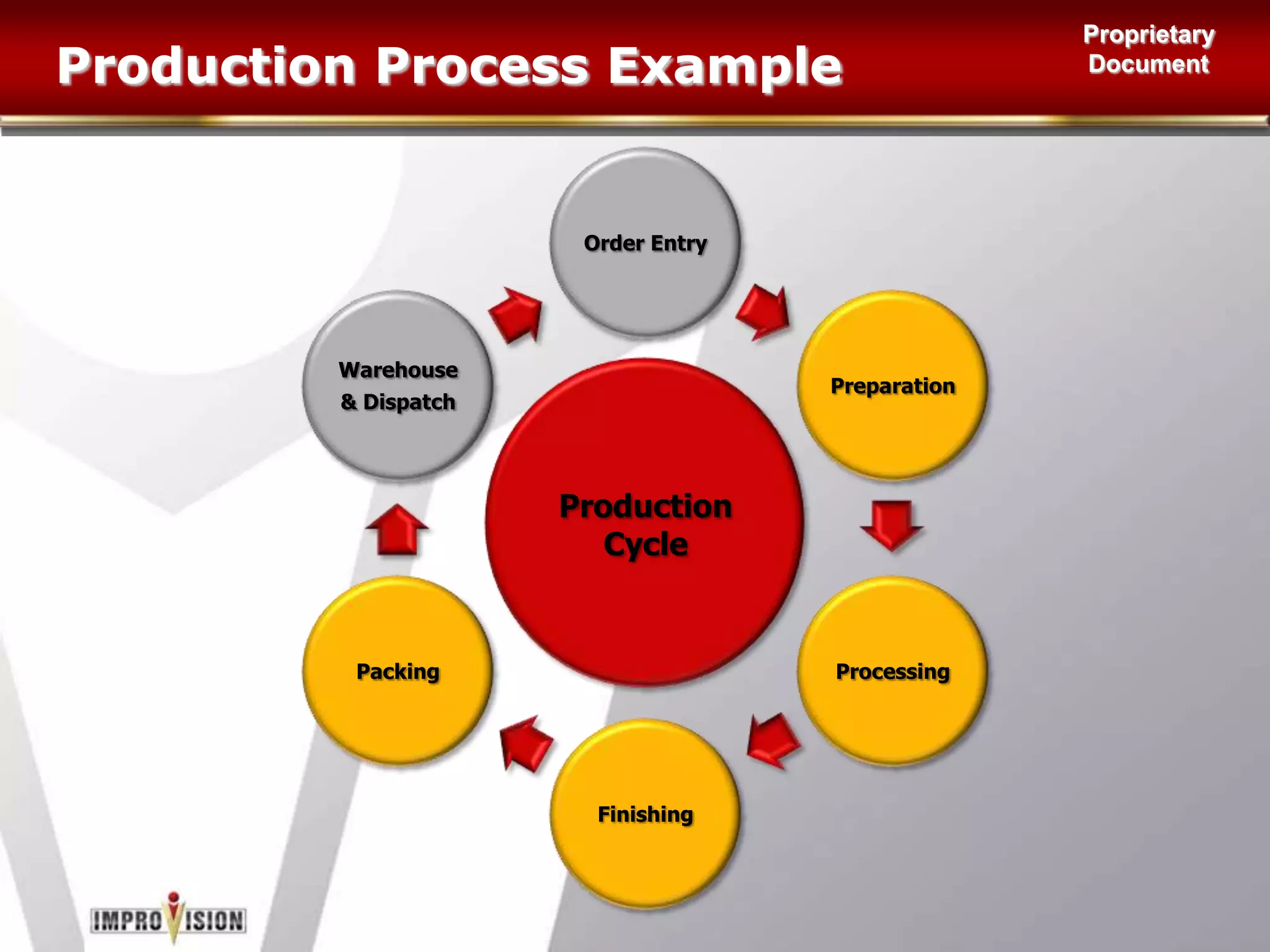
Identifying OpportunitiesFocusing onkey opportunities … “The 80/20 Rule”Example:Cost of Production= Raw Materials+ Additives + Electricity + Electrical items + Mechanical items + Fuels + Lubricants.
16.
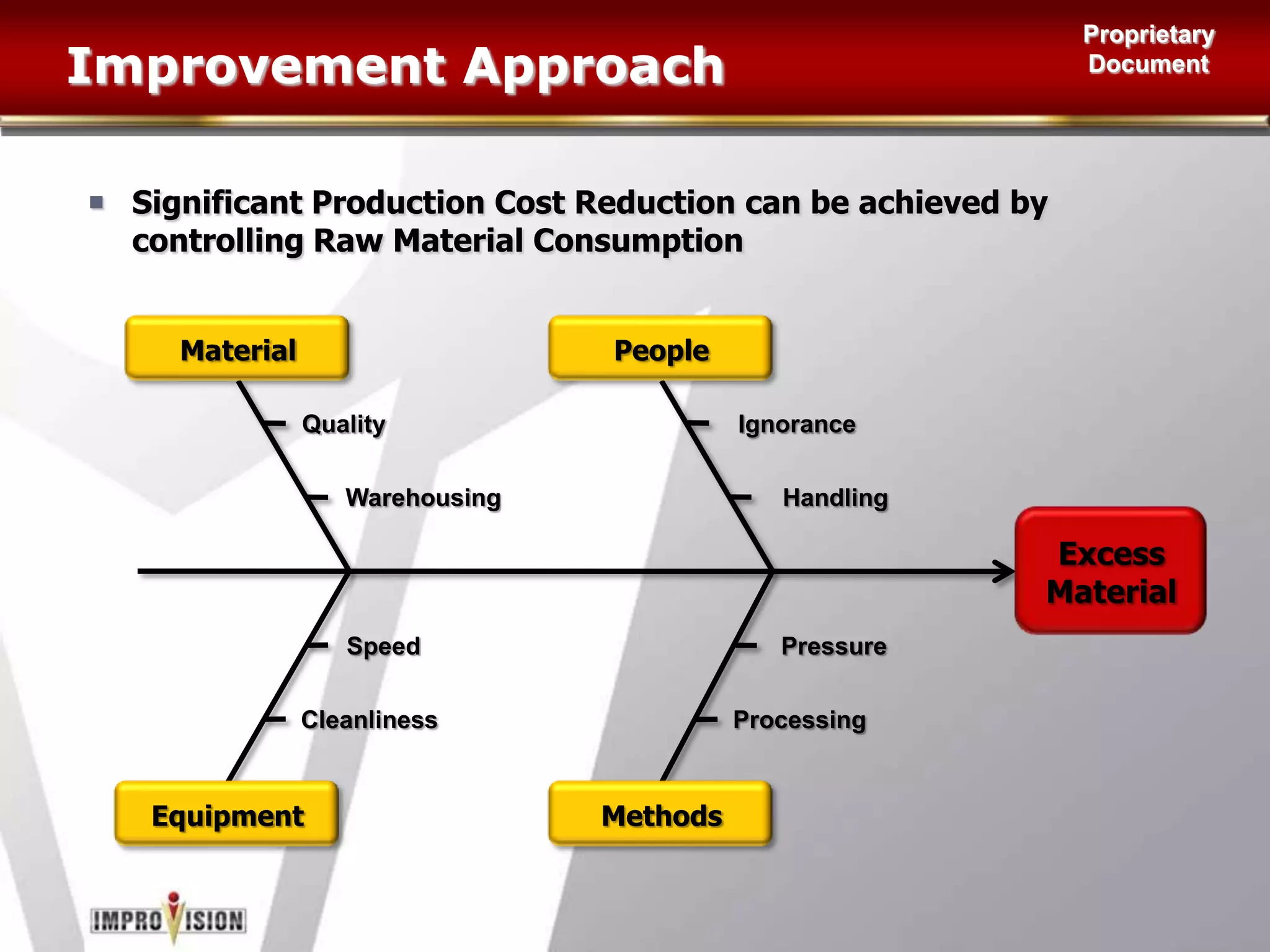
Improvement ApproachSignificant ProductionCost Reduction can be achieved by controlling Raw Material ConsumptionPeopleMaterialIgnoranceQualityHandlingWarehousingExcessMaterialSpeedPressureCleanlinessProcessingEquipmentMethods
17.
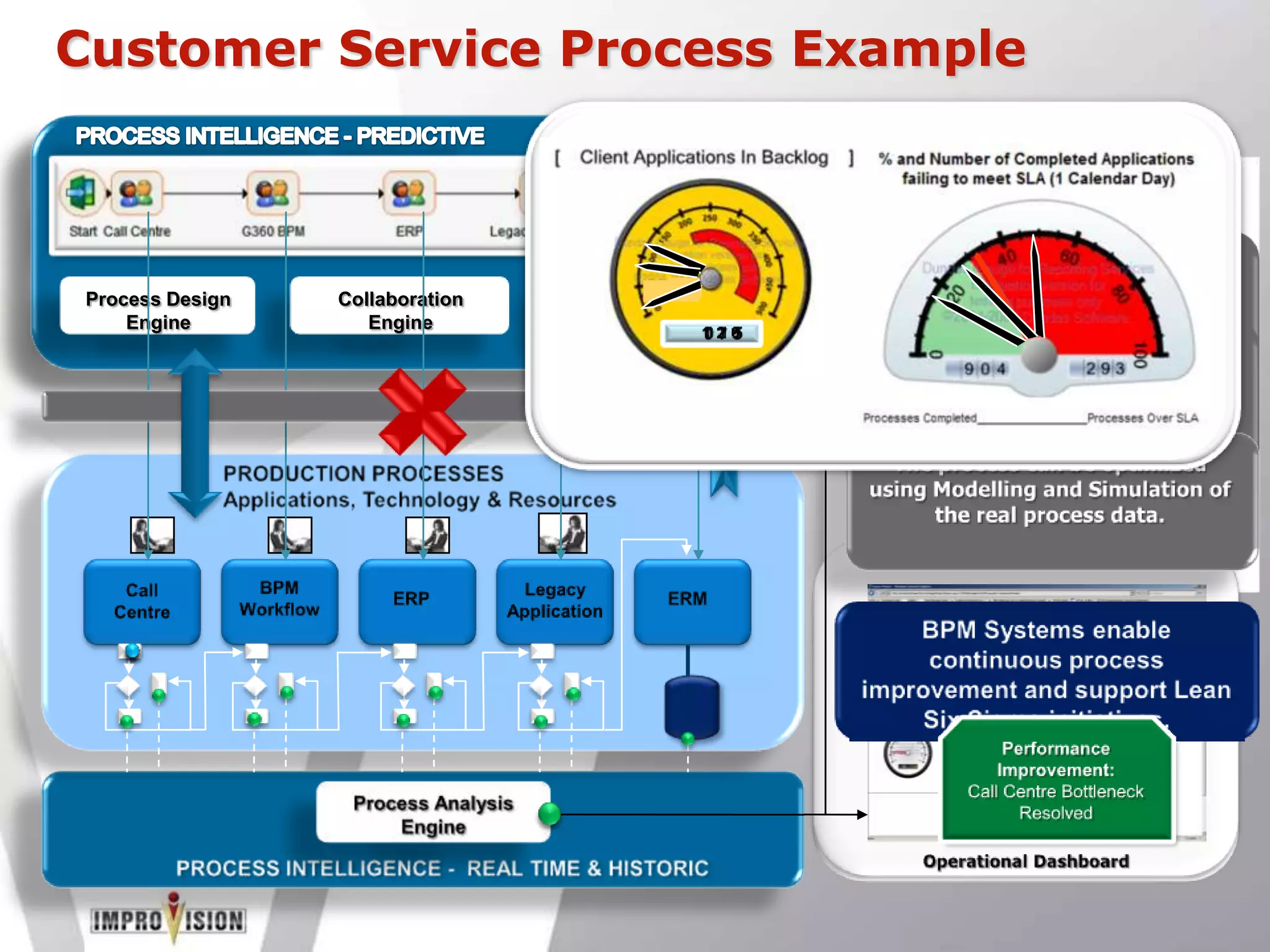
Performance Improvement Decision:IncreaseCall Centre staff by one personPerformance Improvement:Call Centre Bottleneck ResolvedCustomer Service Process ExamplePROCESS INTELLIGENCE - PREDICTIVEBUSINESS PROCESS ANALYSIS SOLUTIONSProcess Modelling and SimulationProcess DesignEngineCollaborationEngineSimulationEngine015120120075Customer requests flow through applications.The End to End business process consists of events from many applications.The process can be optimized using Modelling and Simulation of the real process data. PRODUCTION PROCESSES Applications, Technology & ResourcesEvents are generated by the applications. BPM System extracts these events and transforms them into Process Intelligence data.Modelling to Execution BPMN Lite ModellingOperational DashboardBPM WorkflowLegacy ApplicationCall CentreERMERPBPM Systems enable continuous process improvement and support Lean Six Sigma initiatives.Simulation of Production ProcessMeasureProcess AnalysisEngineReportingBPMN ModelPROCESS INTELLIGENCE - REAL TIME & HISTORIC
18.
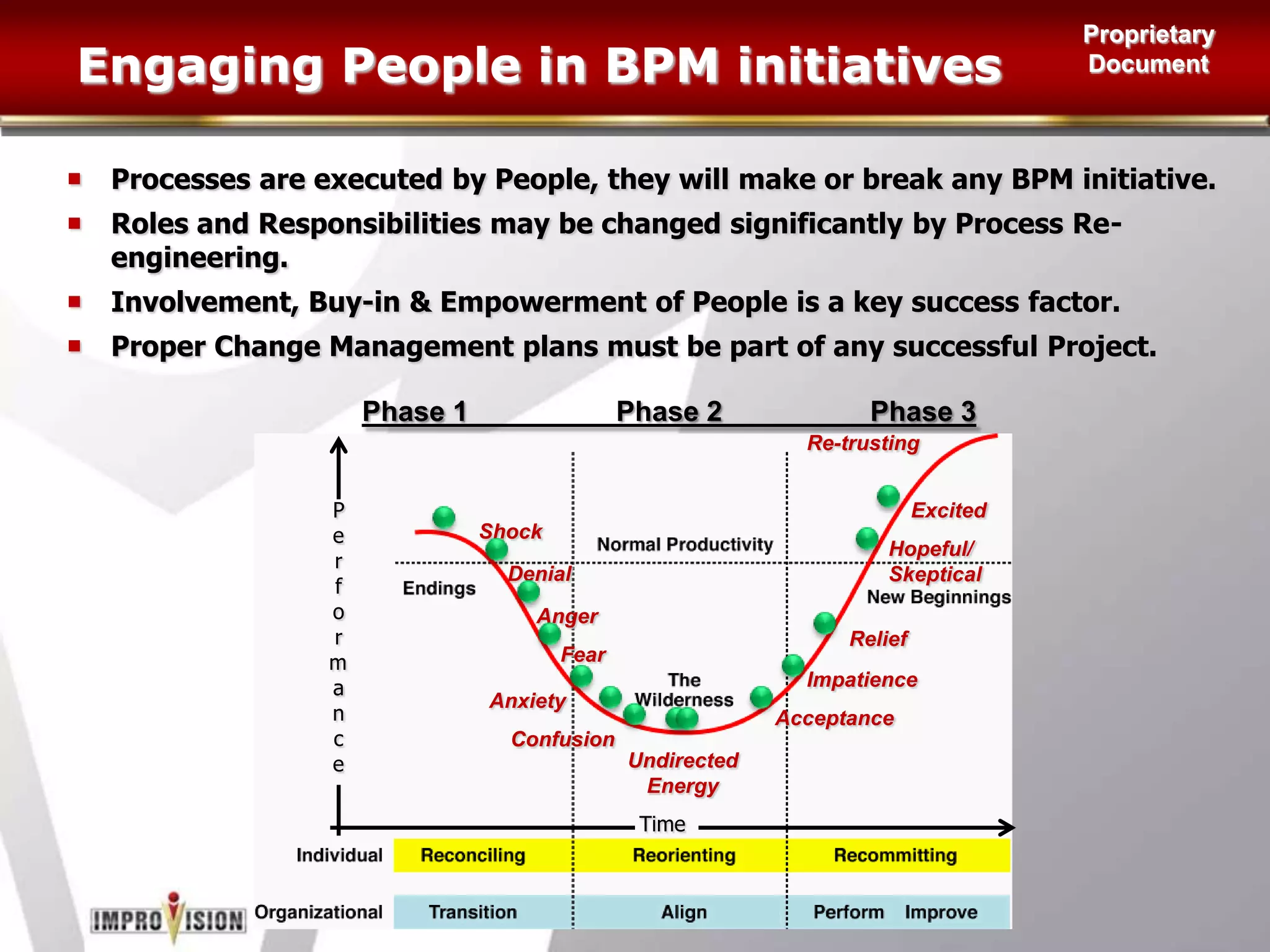
Engaging People inBPM initiativesProcesses are executed by People, they will make or break any BPM initiative.Roles and Responsibilities may be changed significantly by Process Re-engineering.Involvement, Buy-in & Empowerment of People is a key success factor.Proper Change Management plans must be part of any successful Project.Phase 1 Phase 2 Phase 3Re-trustingPer formanceExcited ShockHopeful/ SkepticalDenialAngerReliefFearImpatienceAnxietyAcceptanceConfusionUndirected Energy Time
19.
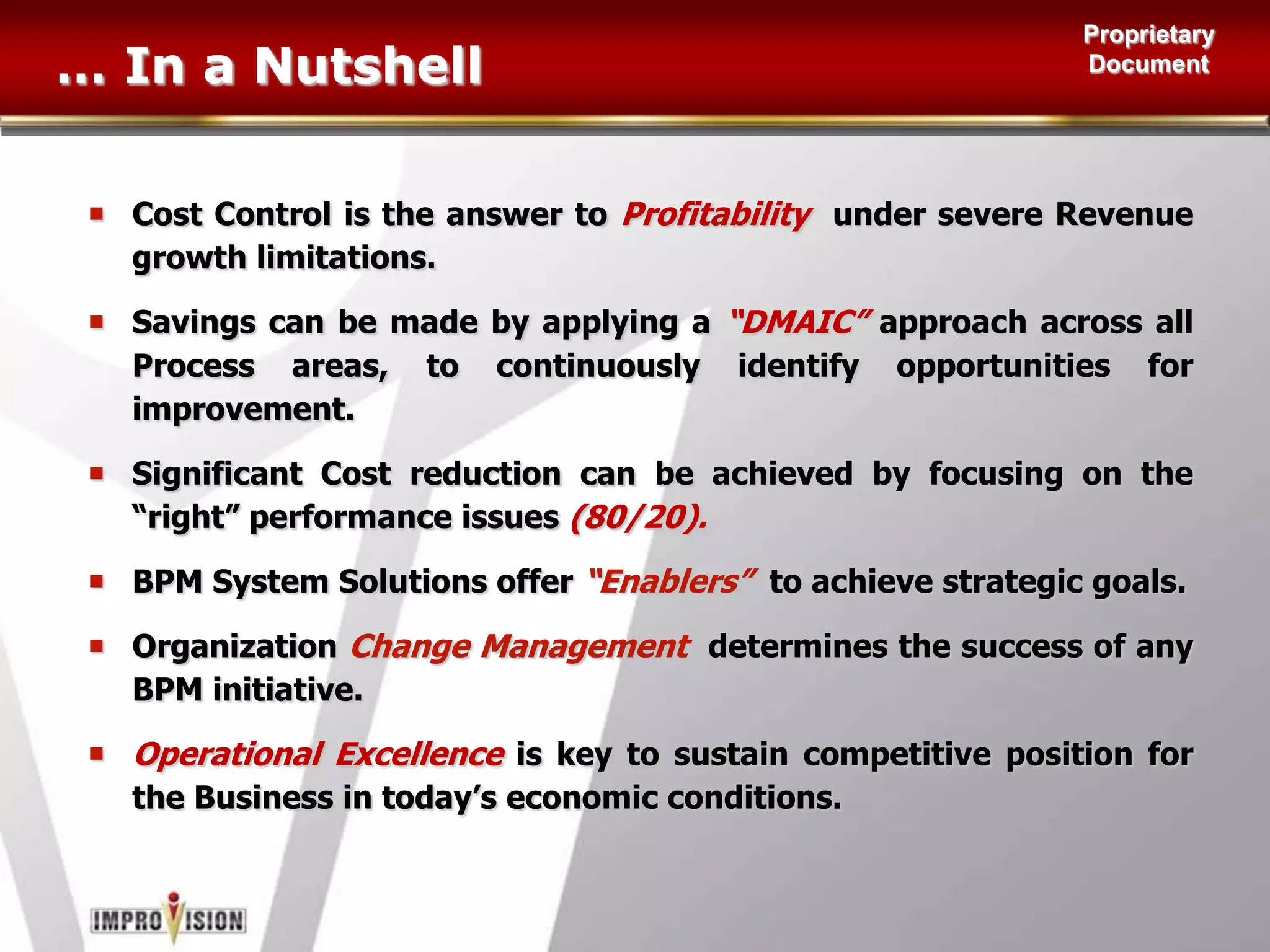
… In aNutshellCost Control is the answer to Profitability under severe Revenue growth limitations.Savings can be made by applying a “DMAIC” approach across all Process areas, to continuously identify opportunities for improvement.Significant Cost reduction can be achieved by focusing on the “right” performance issues (80/20).BPM System Solutions offer “Enablers” to achieve strategic goals.Organization Change Management determines the success of any BPM initiative.Operational Excellence is key to sustain competitive position for the Business in today’s economic conditions.