Gayathri R
Gayathri R
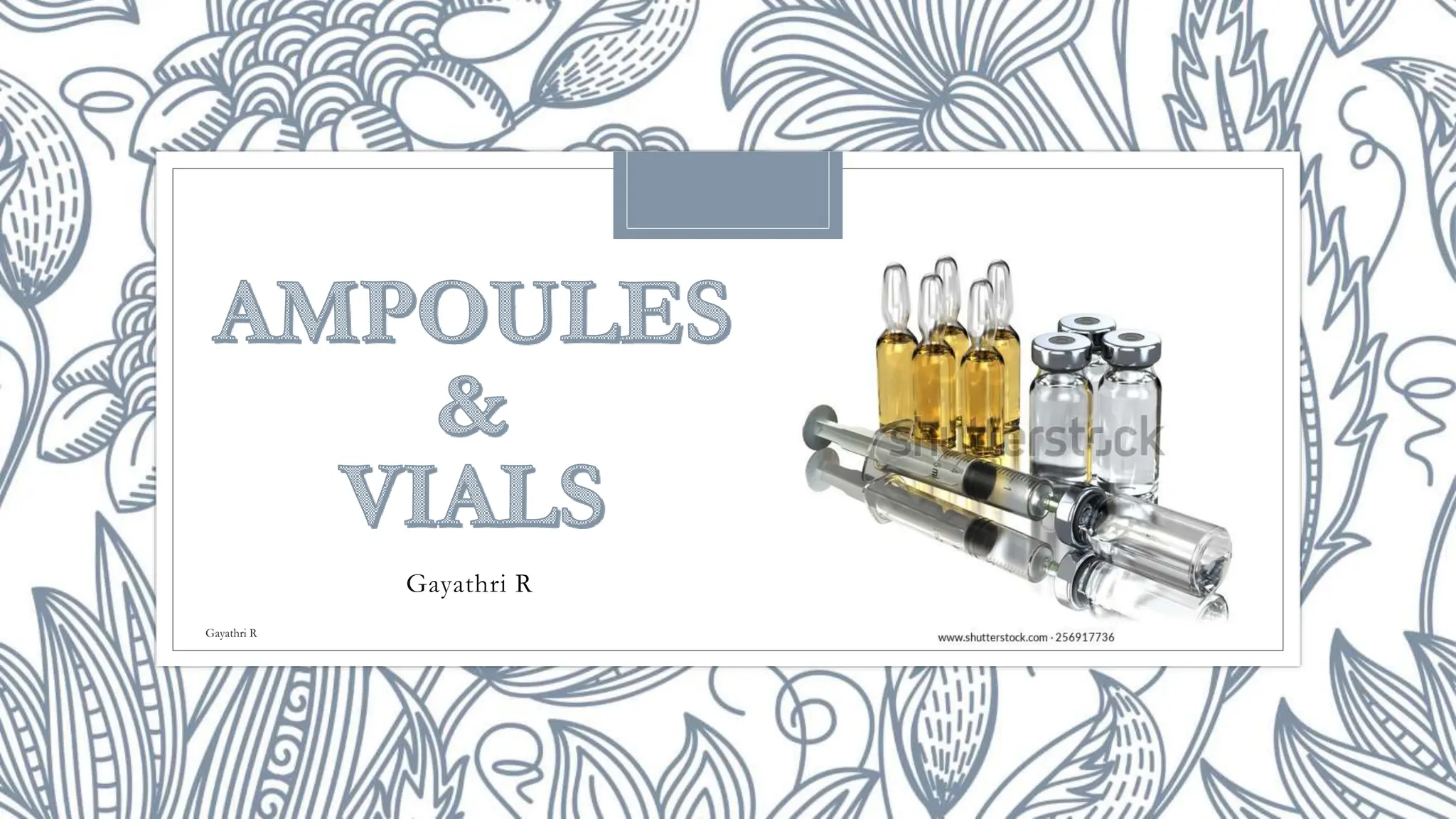
Ampoules, small sealed vials containing a precise dosage of medication
or solution, have become indispensable in the realm of modern
medicine. These tiny glass containers, often overlooked, play a vital role
in healthcare, ensuring the safe and effective delivery of
pharmaceuticals to patients worldwide. This essay explores the
significance of ampoules, their evolution over time, and their diverse
applications across various medical fields.
Gayathri R
◦ Ampoules have existed for more than 1,000 years and been
used to store pharmaceutical solutions since the middle of
the 19th century. The word “Ampoule” actually comes from
the Latin “Ampulla”, which means bottle.
◦ Hermetically sealed glass ampoules were invented in by
French pharmacist, Stanislaus Limousin
Gayathri R
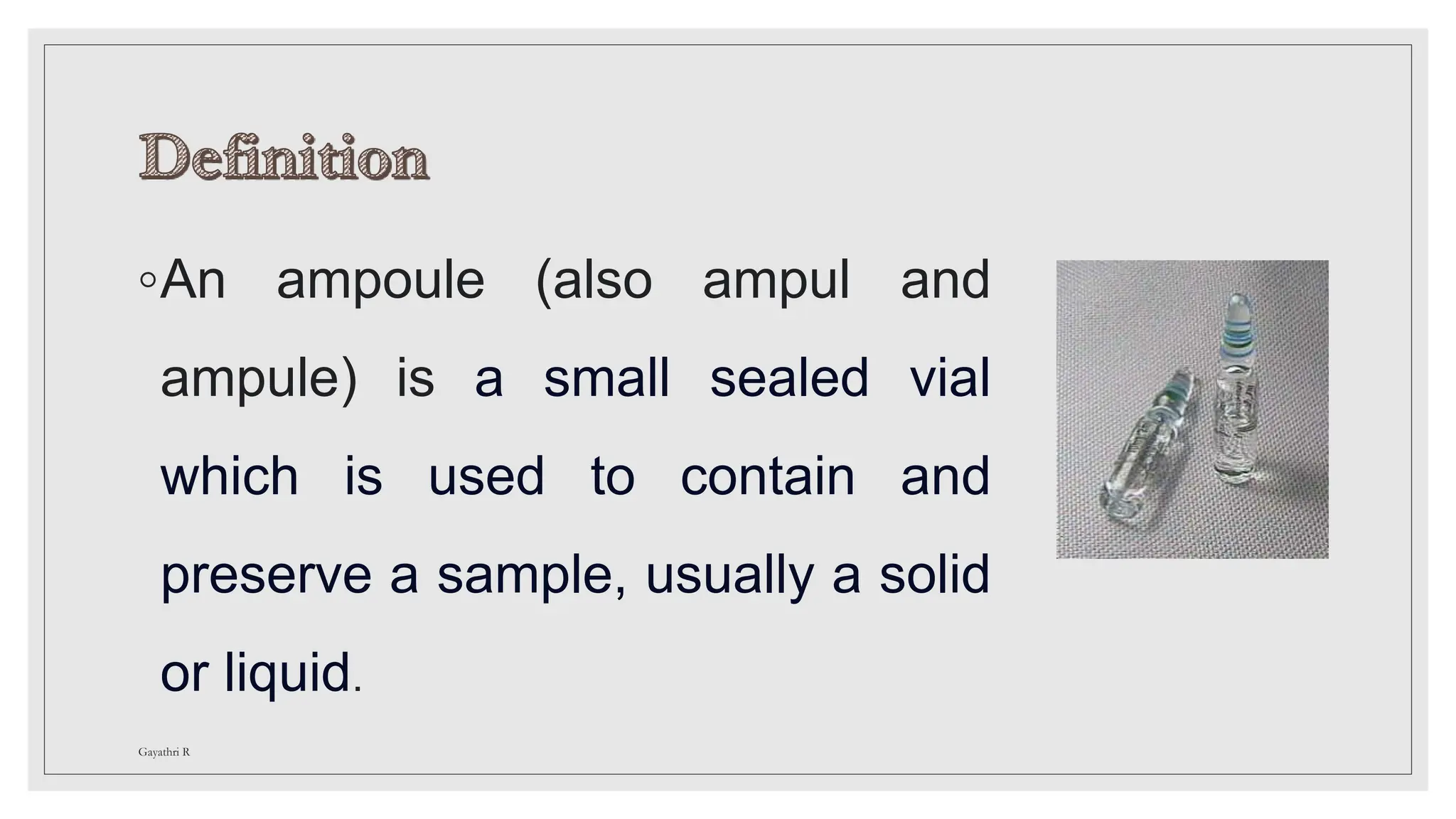
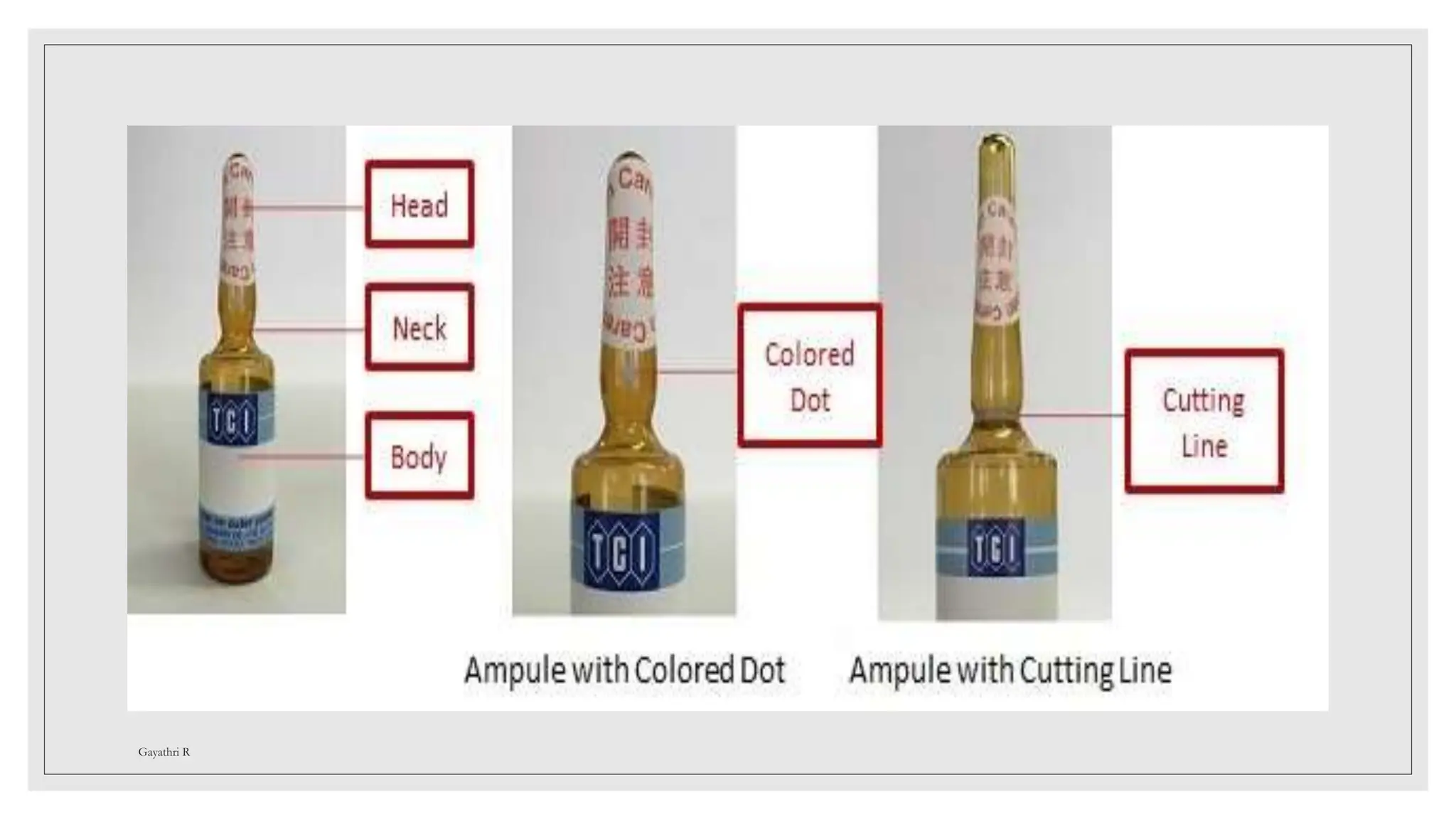
◦An ampoule (also ampul and
ampule) is a small sealed vial
which is used to contain and
preserve a sample, usually a solid
or liquid.
Gayathri R
◦Used to contain
pharmaceuticals and chemicals
that must be protected from air
and contaminants.
Gayathri R
Gayathri R
Gayathri R
Gayathri R
Gayathri R
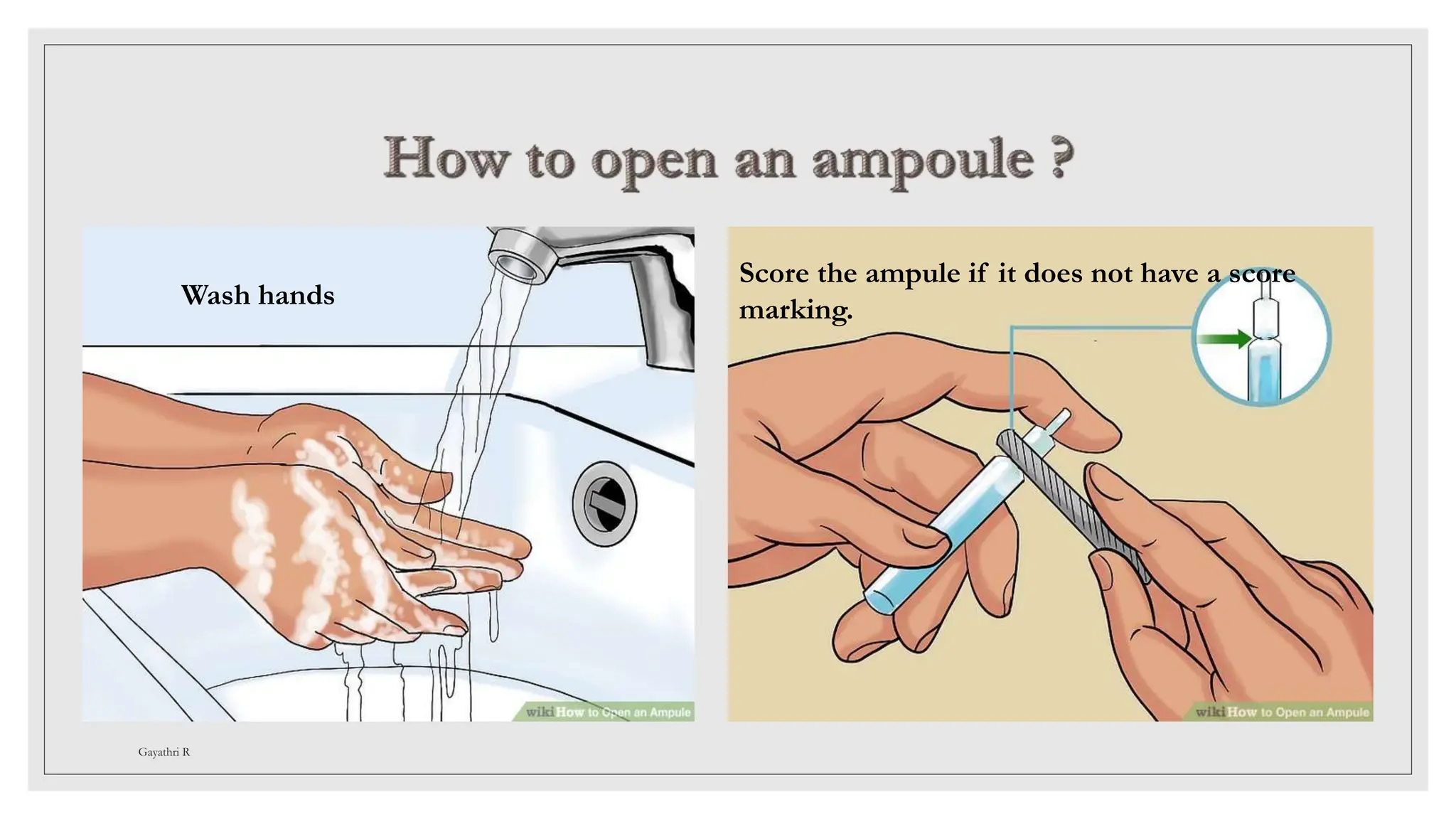
Wash hands
Score the ampule if it does not have a score
marking.
Gayathri R
◦ Make sure all the liquid is in the bottle of the ampule.
Clean the ampule with an alcohol
swab.
Make sure all the liquid is in the bottle of the
ampule.
Gayathri R
Use gauze to protect your hands when you
grip the ampule.
Hold the bottom half of the ampule in
place and snap the top half towards
you.
Gayathri R
Rotate the ampule and try again if the
ampule didn’t break.
Wrap the top half of the ampule in tissue and
discard it.
Gayathri R
 Gather your supplies and perform hand
hygiene.
 A syringe to withdraw the medication with a
non-filtered needle or needleless device to
administer the medication.
A filter straw or needle to help filter out
any small glass pieces that may have
entered the solution so you won’t inject
them in the patient when you administer
the medication.
Gayathri R
o Filter straws come in various lengths (example: 4” to 1 ¾), so pick the correct size based
on the size of the ampule
o Gauze to help you break the ampule.
o Alcohol prep to help you clean the outside of the ampule before breaking it.
o Ampule of medication
‫٭‬ Inspect the ampule for any damage, discoloring of solution, or particles in the solution.
‫٭‬ Make sure the liquid in the ampule is all collected in the body of the ampule rather than
the head and neck.
Gayathri R
‫٭‬To do this: lightly tap on the head of the ampule and it will drip
down into the body of the ampule.
‫٭‬Clean the neck of the ampule with alcohol prep and let it dry.
‫٭‬Connect the syringe to the filter straw (leave it in the protective
packaging until you’re ready to use it) and leave the syringe’s needle in
the protective packaging until ready to use as well.
‫٭‬Take the gauze and wrap it around the head and neck of the ampule.
Gayathri R
‫٭‬Sit the ampule on a flat sturdy surface and pull on the head
of the ampule in a snapping motion to break off the head
of the ampule at it’s neck…most ampules have a scored
neck so they are easy to break off.
Gayathri R
‫٭‬Discard the head of the ampule into the sharps box (or however your
facility requires).
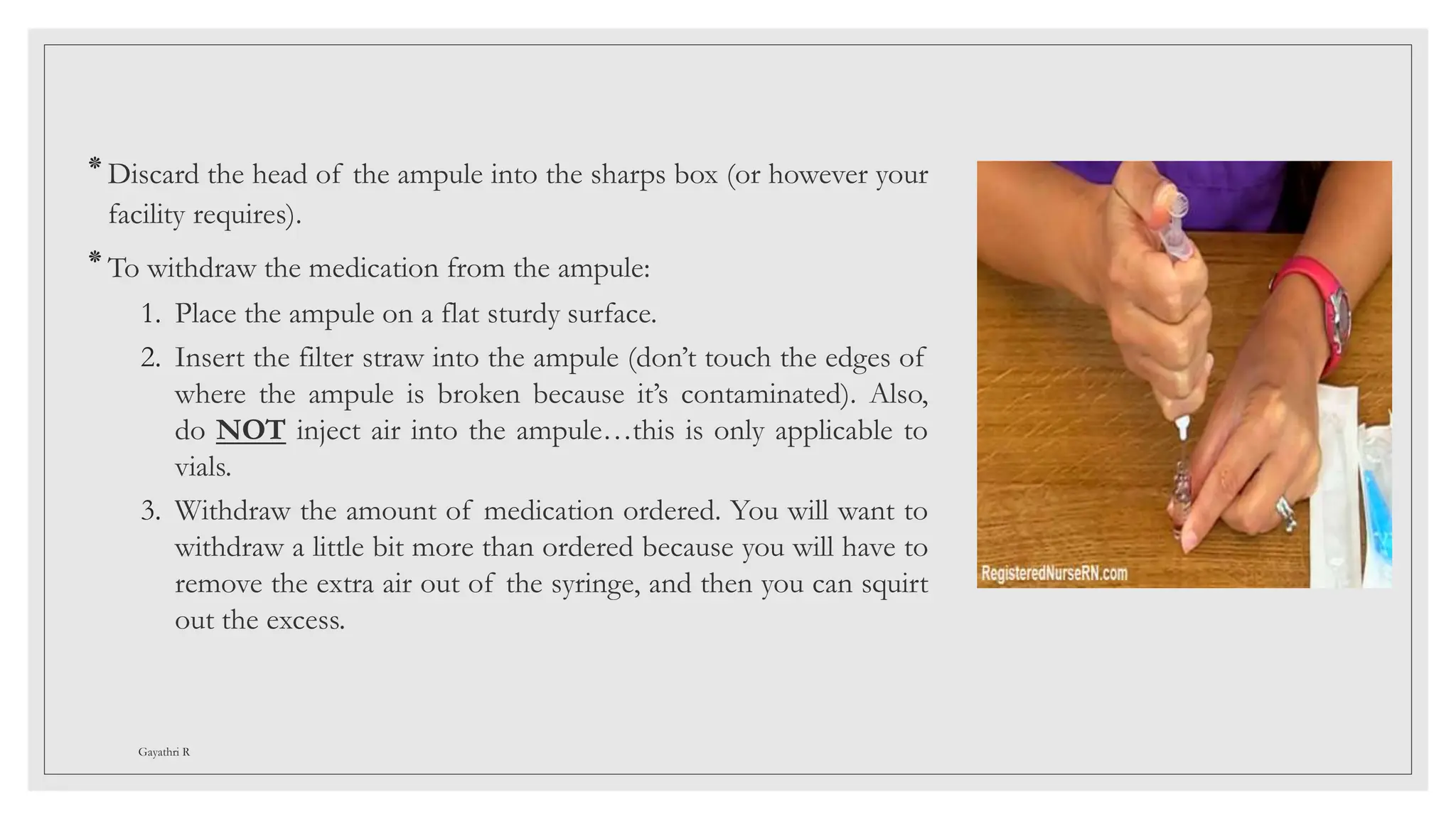
‫٭‬To withdraw the medication from the ampule:
1. Place the ampule on a flat sturdy surface.
2. Insert the filter straw into the ampule (don’t touch the edges of
where the ampule is broken because it’s contaminated). Also,
do NOT inject air into the ampule…this is only applicable to
vials.
3. Withdraw the amount of medication ordered. You will want to
withdraw a little bit more than ordered because you will have to
remove the extra air out of the syringe, and then you can squirt
out the excess.
Gayathri R
‫٭‬Remove the filter straw from the ampule and turn the
syringe upward and remove any air bubbles by flicking
the syringe and using the plunger to push out the air
bubbles.
‫٭‬Remove and discard the filter straw and ampule in the
sharps container (or as your facility requires).
‫٭‬Attach the syringe’s original needle device and keep it in
the protective covering until ready to use.
Gayathri R
◦ Vials, small containers made of glass or plastic, are essential components in the
field of healthcare. Their versatility and durability make them indispensable for
storing, transporting, and dispensing a wide range of pharmaceuticals and
medical substances. This essay delves into the significance of vials, their diverse
applications, and their role in ensuring the safety and efficacy of healthcare
interventions.
Gayathri R
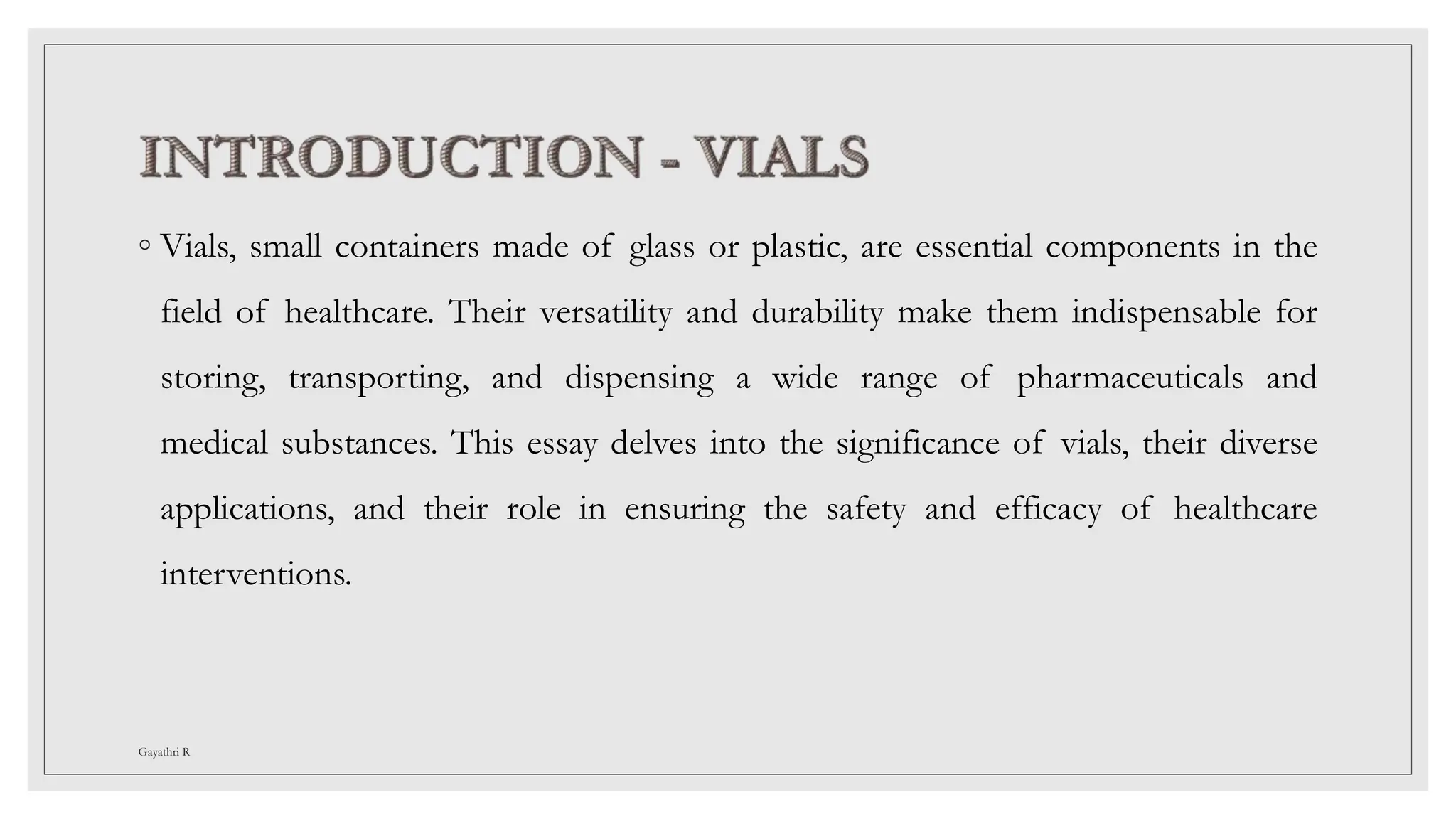
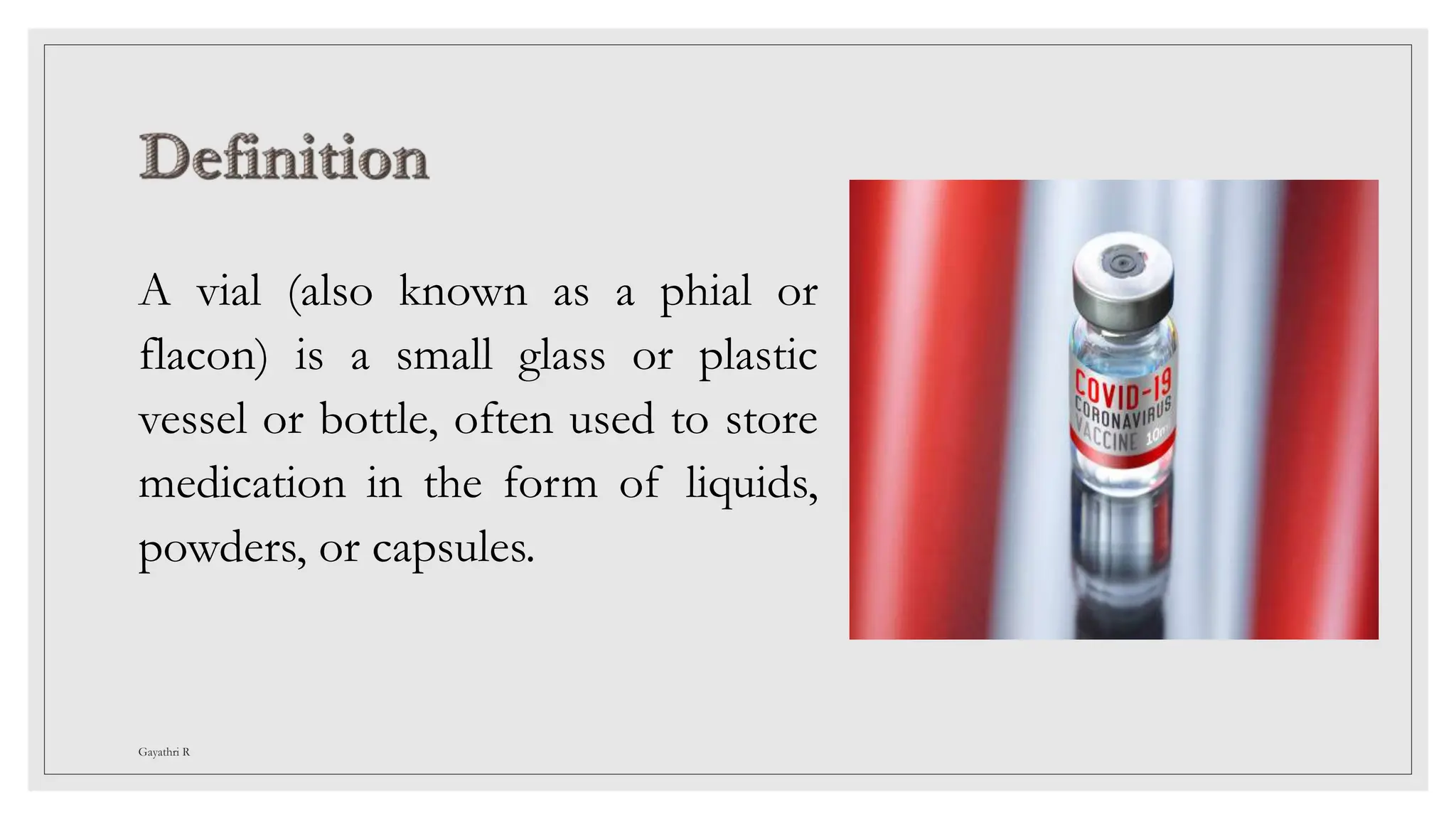
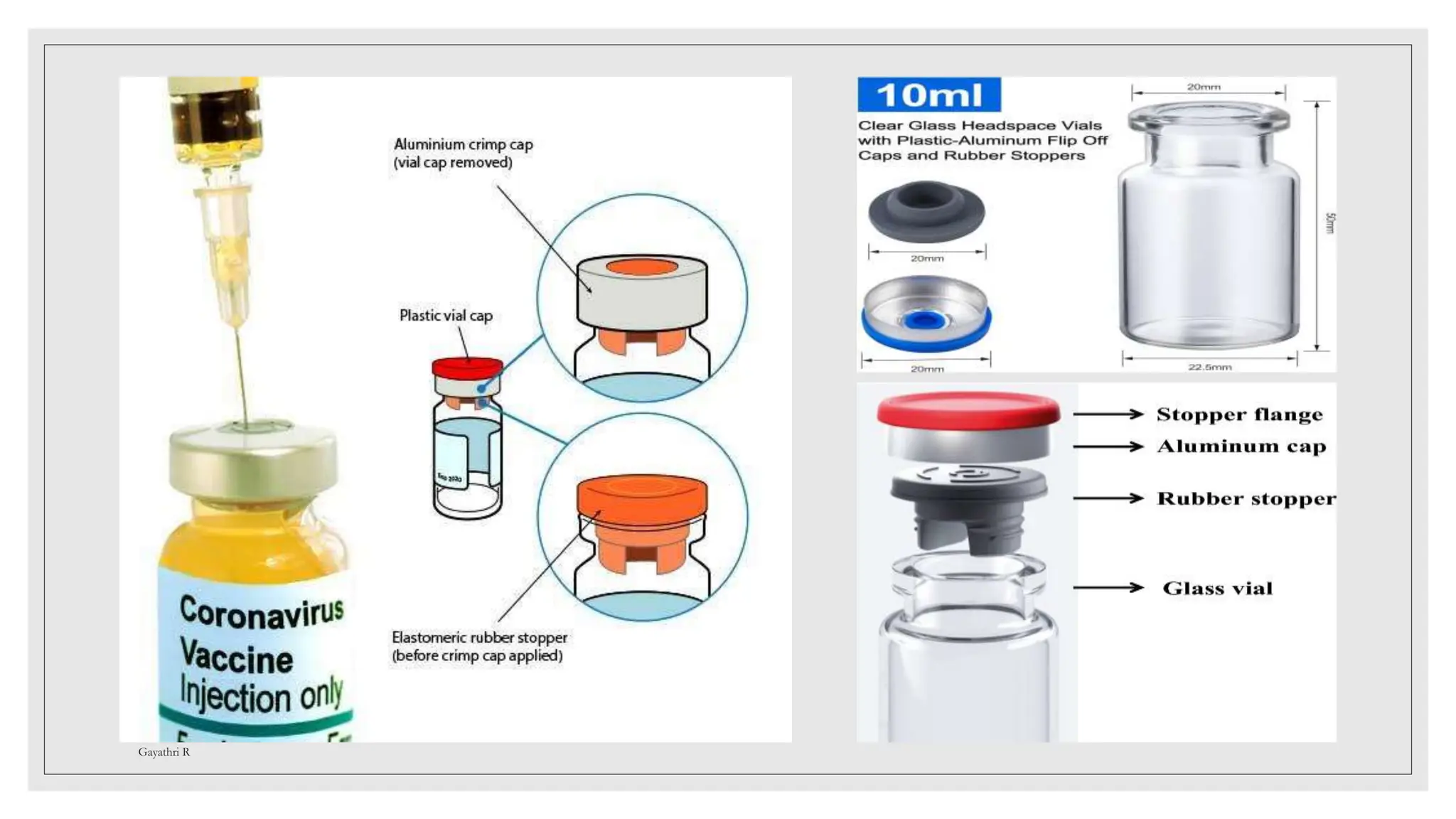
A vial (also known as a phial or
flacon) is a small glass or plastic
vessel or bottle, often used to store
medication in the form of liquids,
powders, or capsules.
Gayathri R
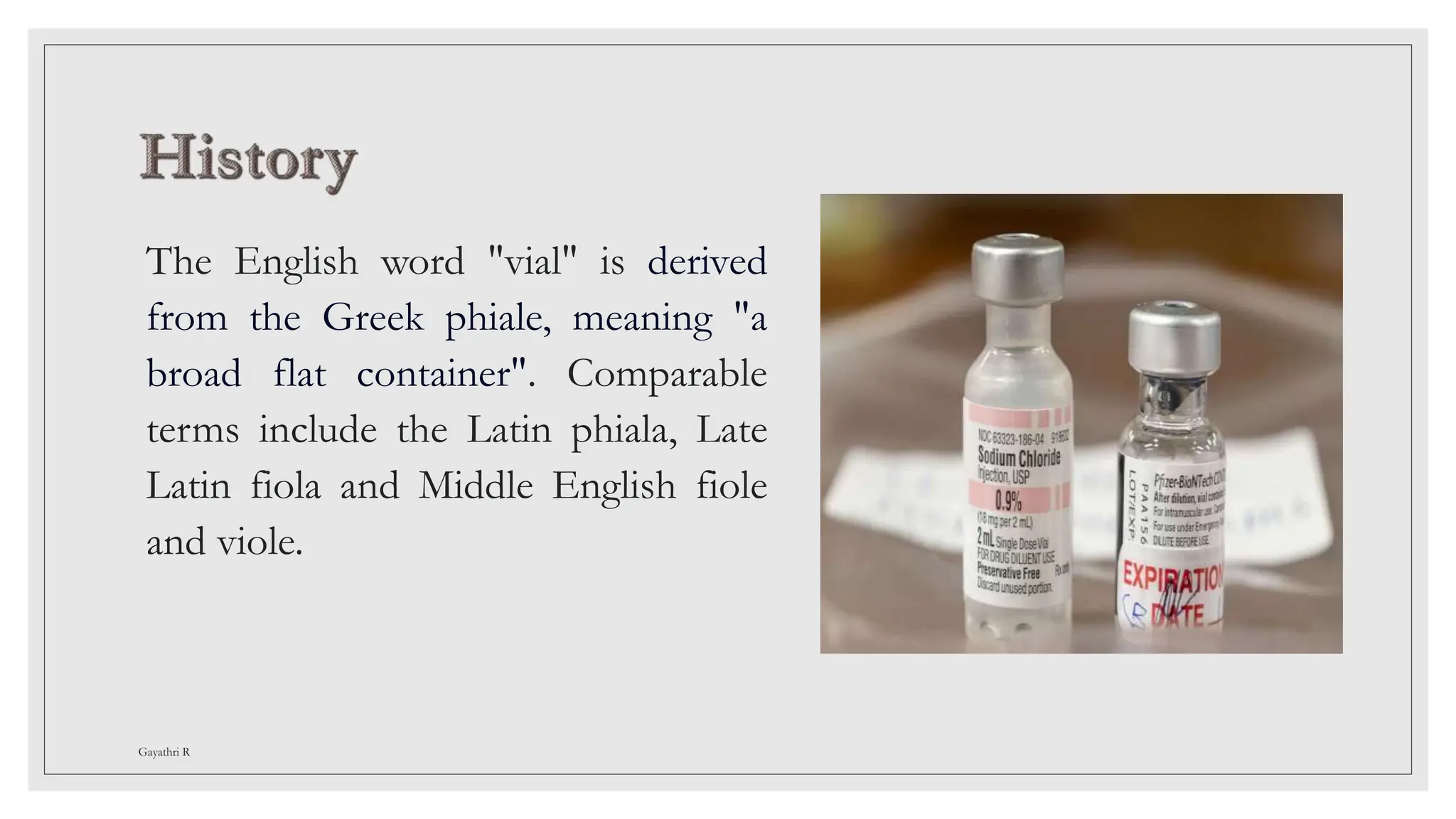
The English word "vial" is derived
from the Greek phiale, meaning "a
broad flat container". Comparable
terms include the Latin phiala, Late
Latin fiola and Middle English fiole
and viole.
Gayathri R
Gayathri R
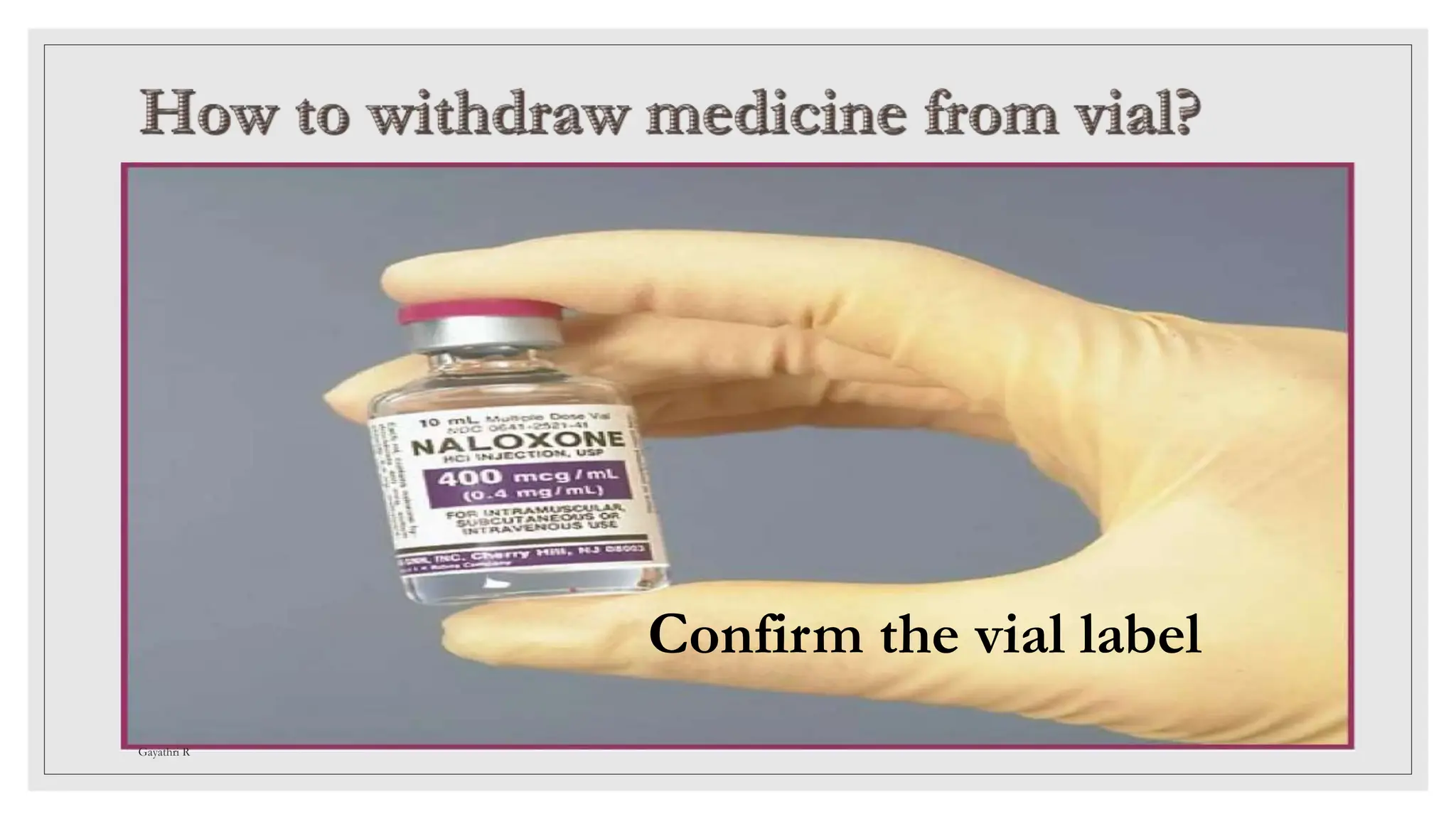
Confirm the vial label
Gayathri R
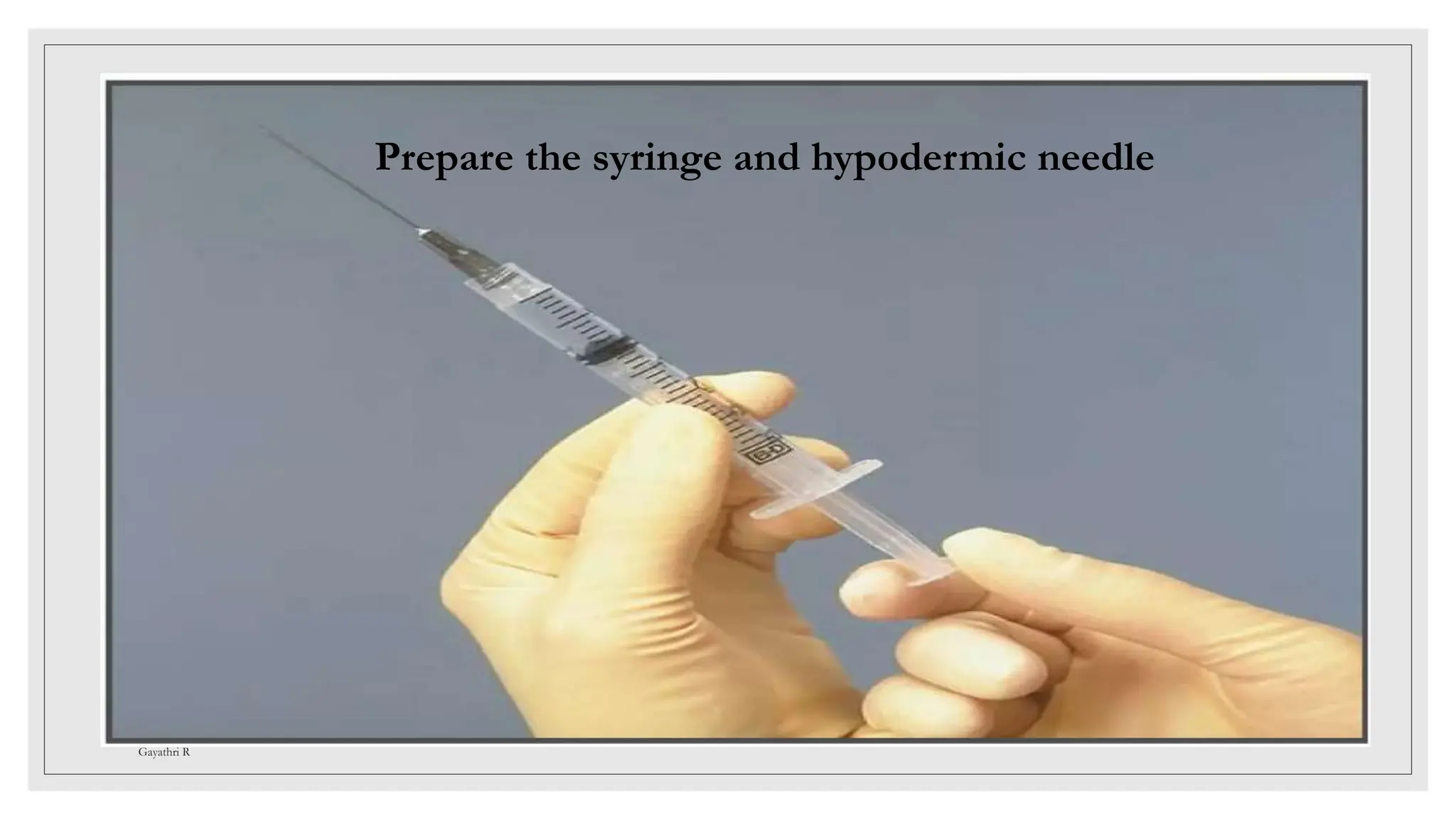
Prepare the syringe and hypodermic needle
Gayathri R
Cleanse the vial rubber top
Gayathri R
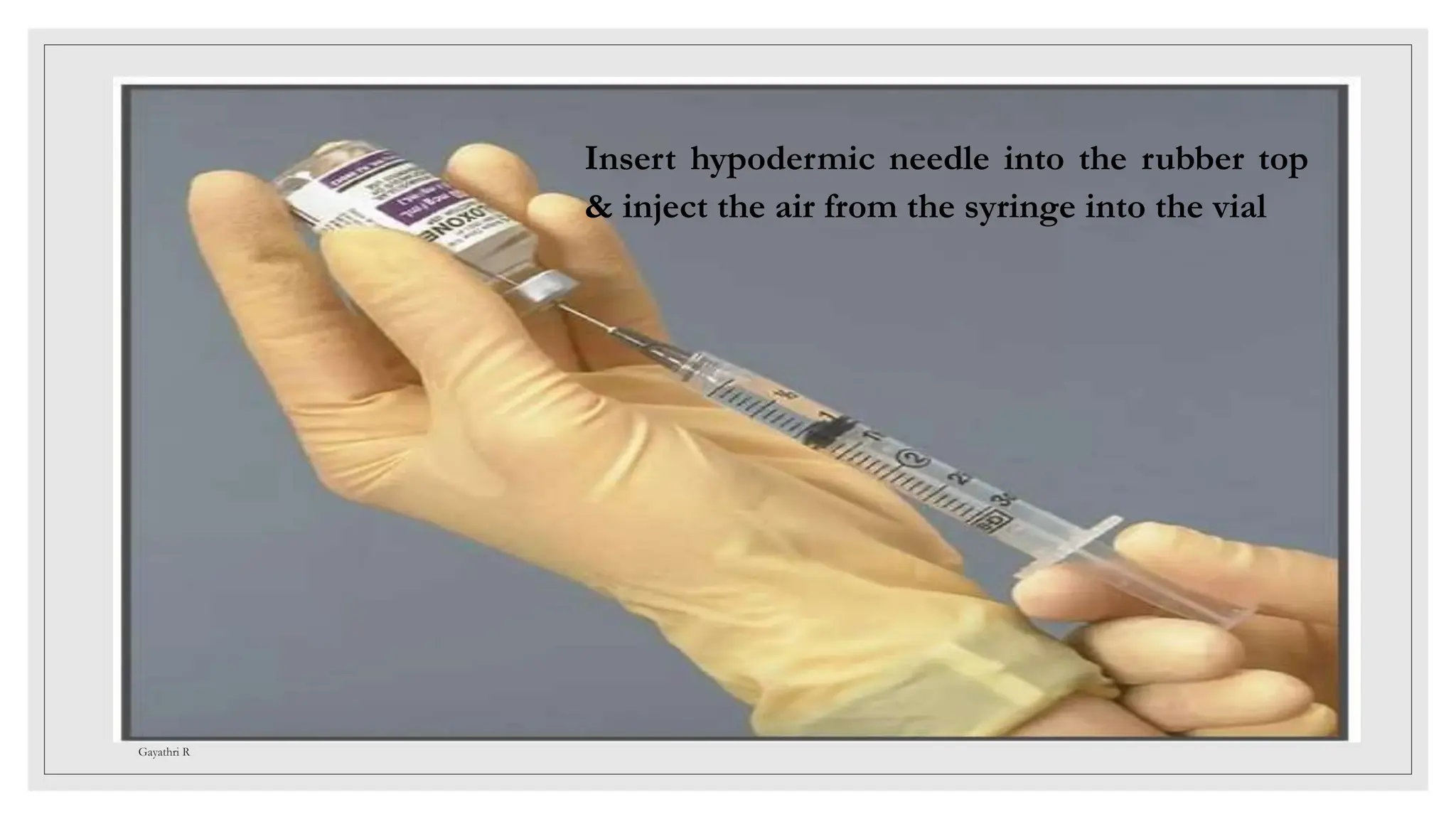
Insert hypodermic needle into the rubber top
& inject the air from the syringe into the vial
Gayathri R
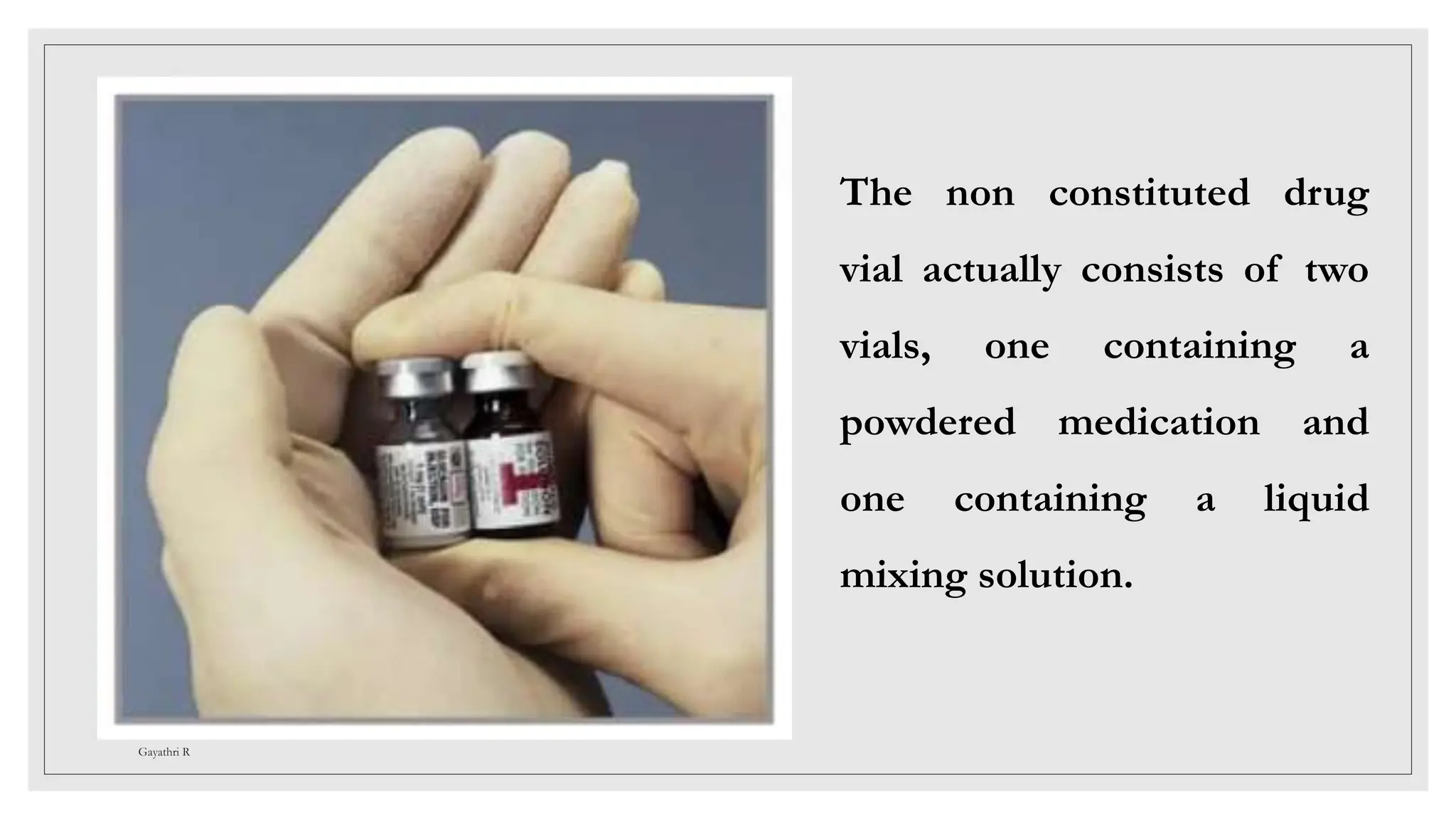
The non constituted drug
vial actually consists of two
vials, one containing a
powdered medication and
one containing a liquid
mixing solution.
Gayathri R
Non constituted drugs
come in separate vials.
Confirm the labels.
Gayathri R
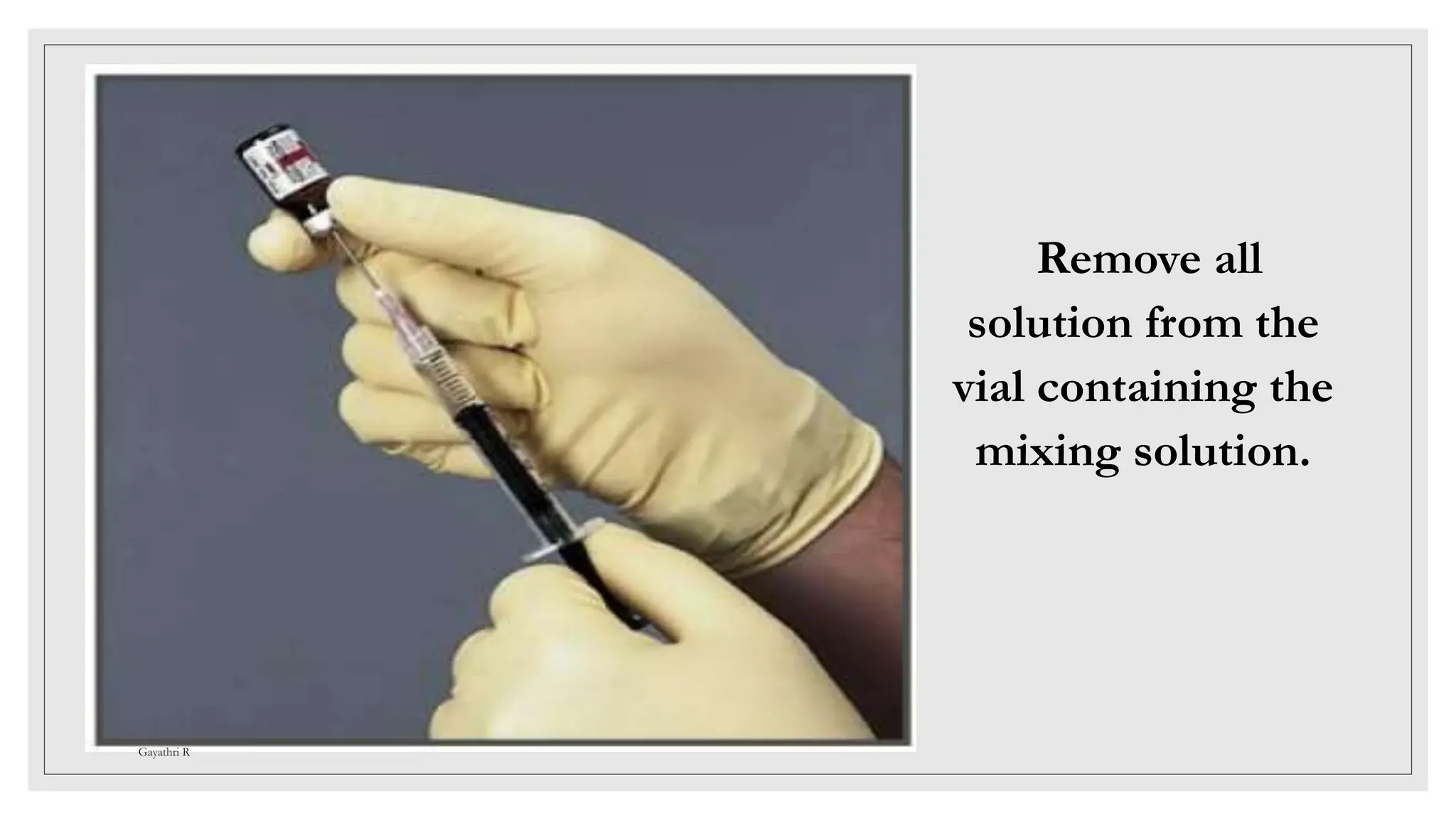
Remove all
solution from the
vial containing the
mixing solution.
Gayathri R
Cleanse the top of the
vial containing the
powdered drug and
inject the solution.
Gayathri R
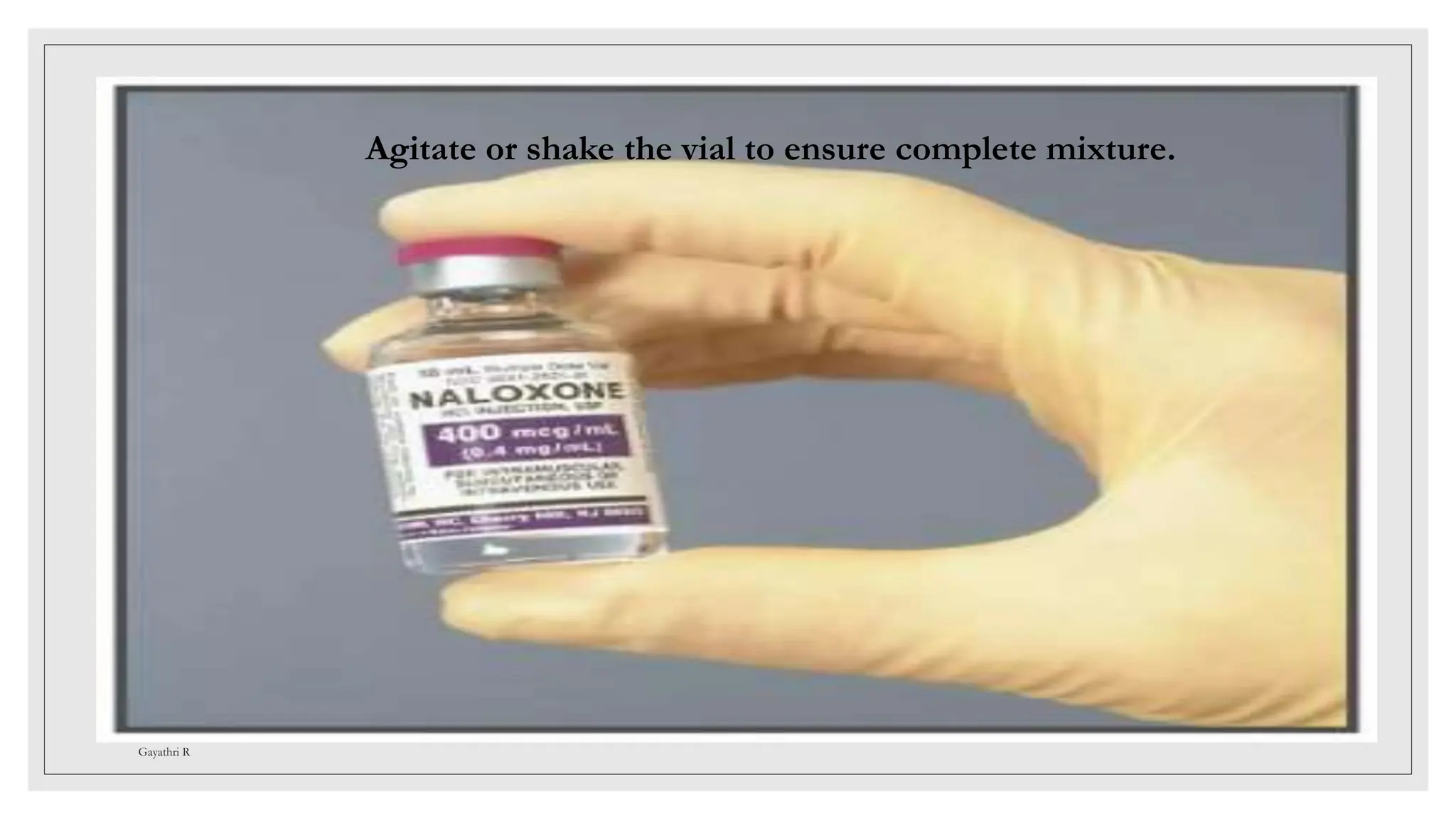
Agitate or shake the vial to ensure complete mixture.
Gayathri R
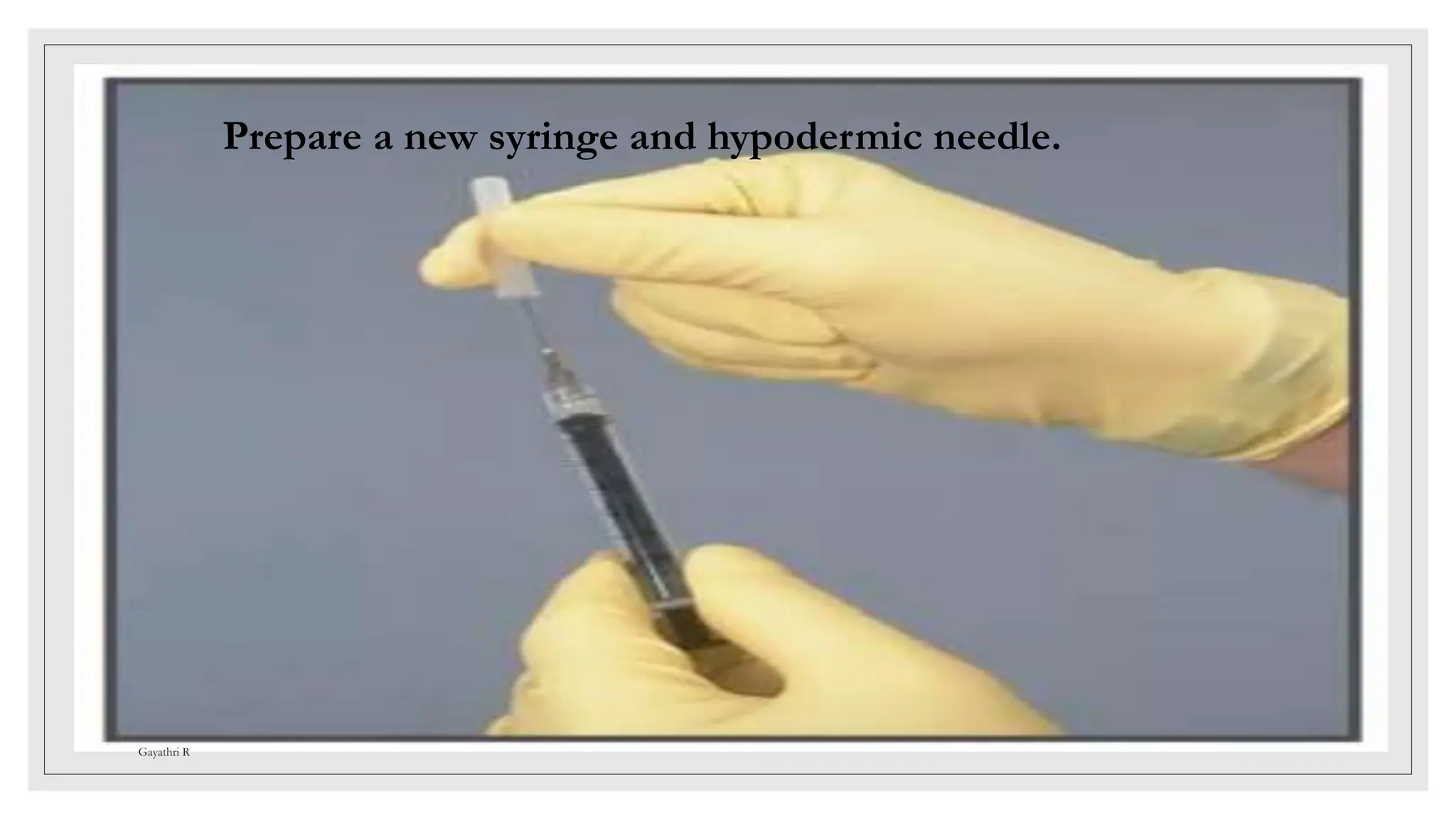
Prepare a new syringe and hypodermic needle.
Gayathri R
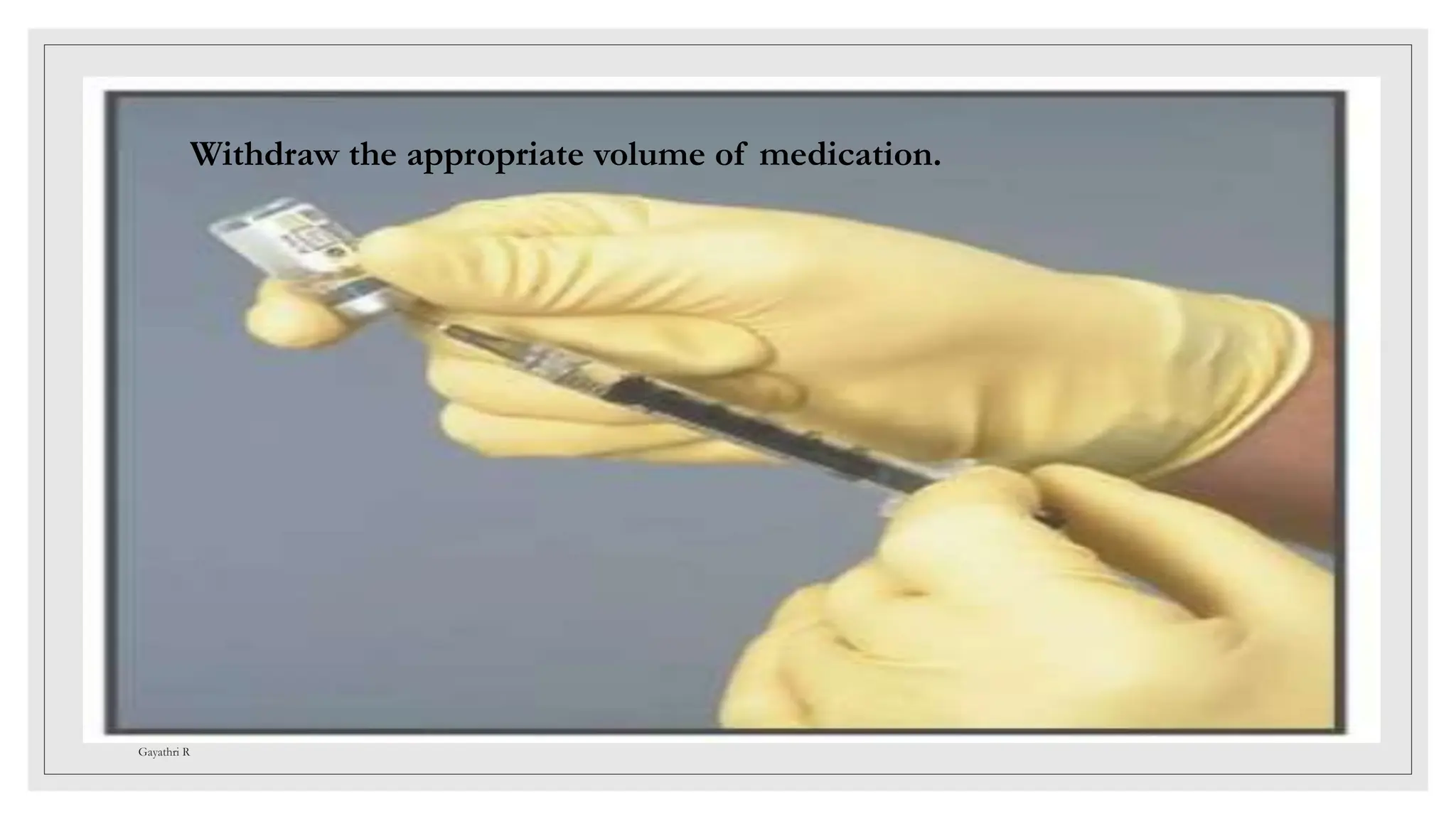
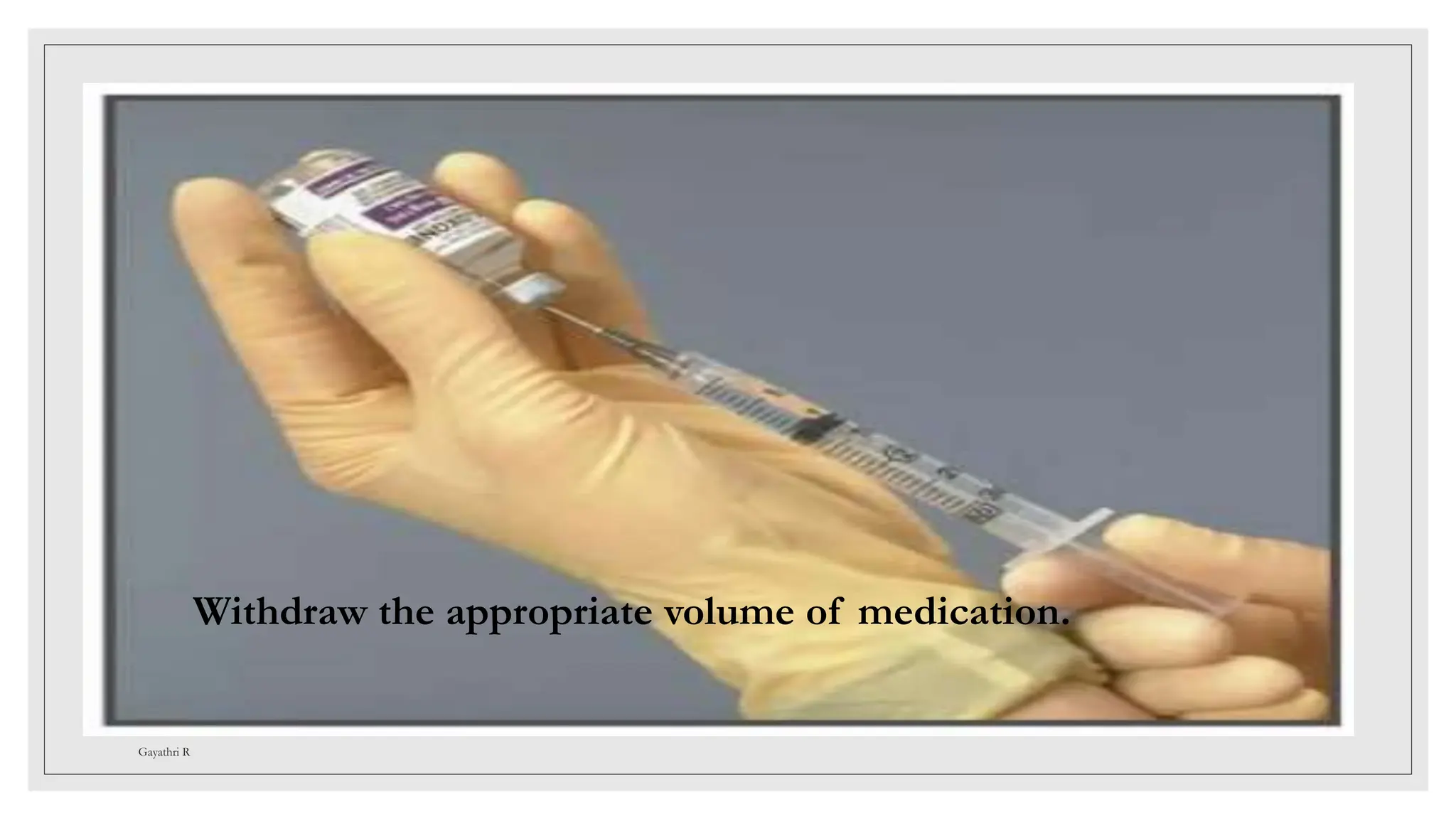
Withdraw the appropriate volume of medication.
Gayathri R
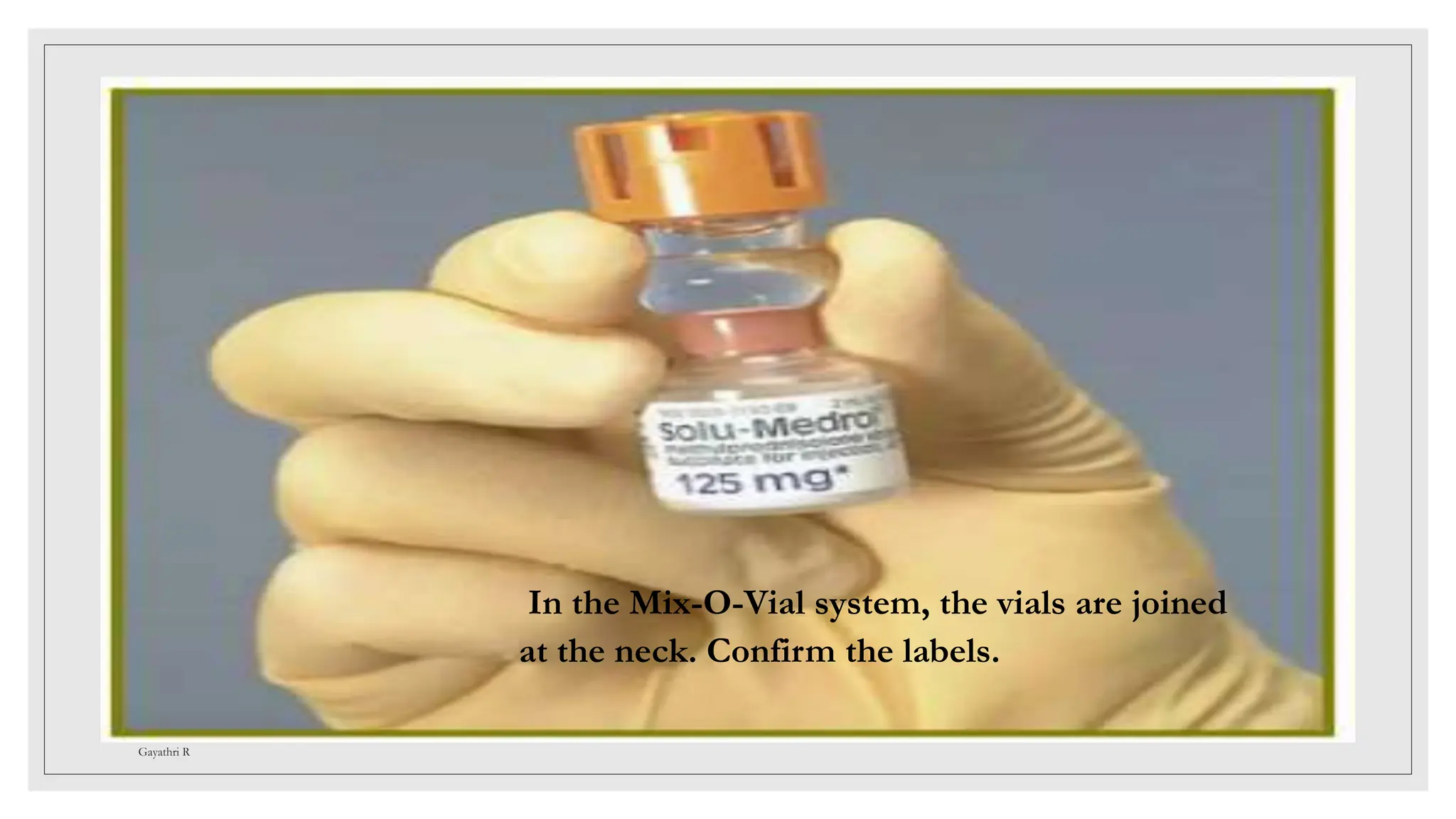
In the Mix-O-Vial system, the vials are joined
at the neck. Confirm the labels.
Gayathri R
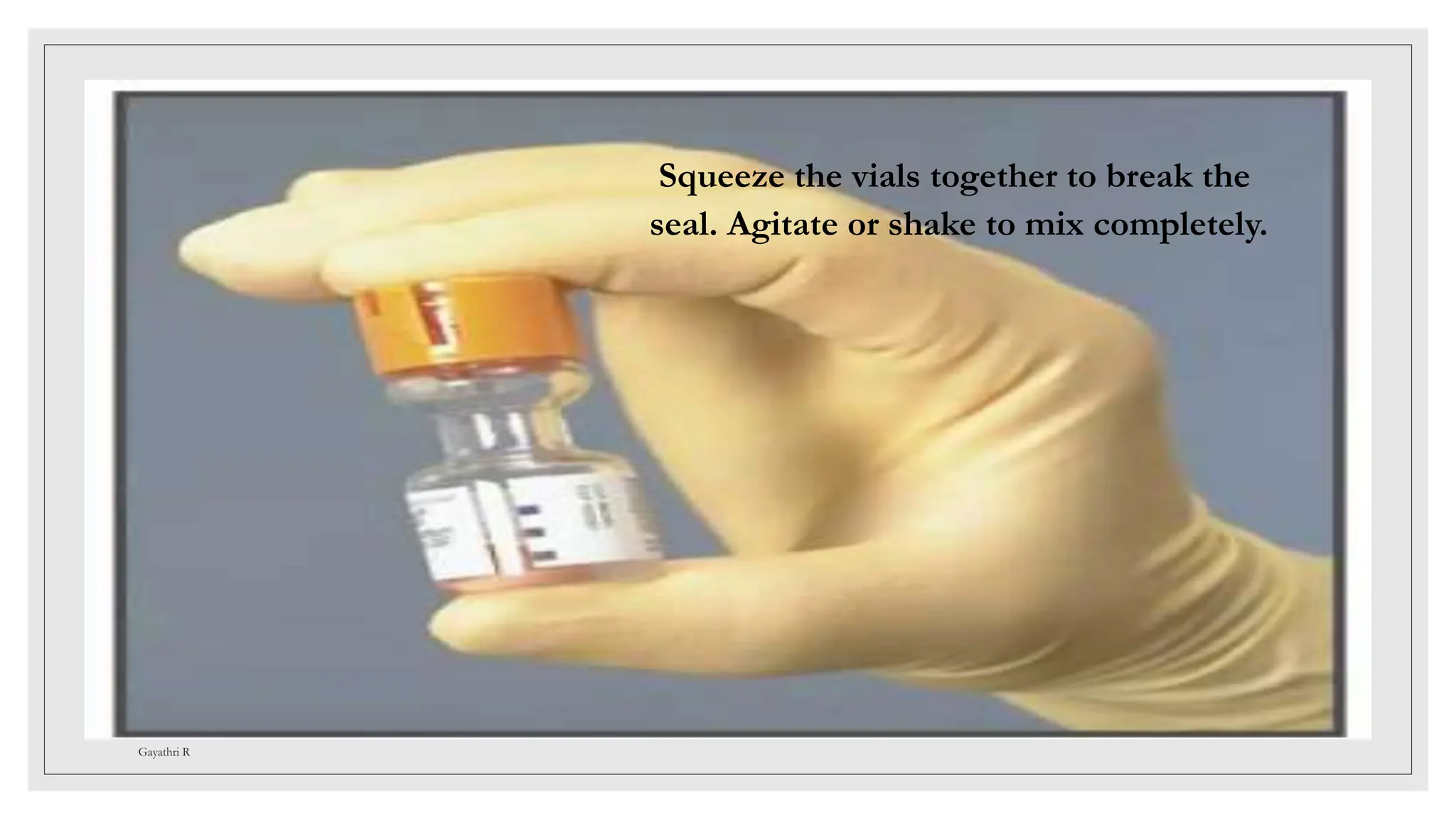
Squeeze the vials together to break the
seal. Agitate or shake to mix completely.
Gayathri R
Withdraw the appropriate volume of medication.
Gayathri R
Gayathri R
Gayathri R

AMPOULES AND VIALS PRESENTATION PPTX....

  • 1.
  • 2.
    Ampoules, small sealedvials containing a precise dosage of medication or solution, have become indispensable in the realm of modern medicine. These tiny glass containers, often overlooked, play a vital role in healthcare, ensuring the safe and effective delivery of pharmaceuticals to patients worldwide. This essay explores the significance of ampoules, their evolution over time, and their diverse applications across various medical fields. Gayathri R
  • 3.
    ◦ Ampoules haveexisted for more than 1,000 years and been used to store pharmaceutical solutions since the middle of the 19th century. The word “Ampoule” actually comes from the Latin “Ampulla”, which means bottle. ◦ Hermetically sealed glass ampoules were invented in by French pharmacist, Stanislaus Limousin Gayathri R
  • 4.
    ◦An ampoule (alsoampul and ampule) is a small sealed vial which is used to contain and preserve a sample, usually a solid or liquid. Gayathri R
  • 5.
    ◦Used to contain pharmaceuticalsand chemicals that must be protected from air and contaminants. Gayathri R
  • 6.
  • 7.
  • 8.
  • 9.
  • 10.
    Wash hands Score theampule if it does not have a score marking. Gayathri R
  • 11.
    ◦ Make sureall the liquid is in the bottle of the ampule. Clean the ampule with an alcohol swab. Make sure all the liquid is in the bottle of the ampule. Gayathri R
  • 12.
    Use gauze toprotect your hands when you grip the ampule. Hold the bottom half of the ampule in place and snap the top half towards you. Gayathri R
  • 13.
    Rotate the ampuleand try again if the ampule didn’t break. Wrap the top half of the ampule in tissue and discard it. Gayathri R
  • 14.
     Gather yoursupplies and perform hand hygiene.  A syringe to withdraw the medication with a non-filtered needle or needleless device to administer the medication. A filter straw or needle to help filter out any small glass pieces that may have entered the solution so you won’t inject them in the patient when you administer the medication. Gayathri R
  • 15.
    o Filter strawscome in various lengths (example: 4” to 1 ¾), so pick the correct size based on the size of the ampule o Gauze to help you break the ampule. o Alcohol prep to help you clean the outside of the ampule before breaking it. o Ampule of medication ‫٭‬ Inspect the ampule for any damage, discoloring of solution, or particles in the solution. ‫٭‬ Make sure the liquid in the ampule is all collected in the body of the ampule rather than the head and neck. Gayathri R
  • 16.
    ‫٭‬To do this:lightly tap on the head of the ampule and it will drip down into the body of the ampule. ‫٭‬Clean the neck of the ampule with alcohol prep and let it dry. ‫٭‬Connect the syringe to the filter straw (leave it in the protective packaging until you’re ready to use it) and leave the syringe’s needle in the protective packaging until ready to use as well. ‫٭‬Take the gauze and wrap it around the head and neck of the ampule. Gayathri R
  • 17.
    ‫٭‬Sit the ampuleon a flat sturdy surface and pull on the head of the ampule in a snapping motion to break off the head of the ampule at it’s neck…most ampules have a scored neck so they are easy to break off. Gayathri R
  • 18.
    ‫٭‬Discard the headof the ampule into the sharps box (or however your facility requires). ‫٭‬To withdraw the medication from the ampule: 1. Place the ampule on a flat sturdy surface. 2. Insert the filter straw into the ampule (don’t touch the edges of where the ampule is broken because it’s contaminated). Also, do NOT inject air into the ampule…this is only applicable to vials. 3. Withdraw the amount of medication ordered. You will want to withdraw a little bit more than ordered because you will have to remove the extra air out of the syringe, and then you can squirt out the excess. Gayathri R
  • 19.
    ‫٭‬Remove the filterstraw from the ampule and turn the syringe upward and remove any air bubbles by flicking the syringe and using the plunger to push out the air bubbles. ‫٭‬Remove and discard the filter straw and ampule in the sharps container (or as your facility requires). ‫٭‬Attach the syringe’s original needle device and keep it in the protective covering until ready to use. Gayathri R
  • 20.
    ◦ Vials, smallcontainers made of glass or plastic, are essential components in the field of healthcare. Their versatility and durability make them indispensable for storing, transporting, and dispensing a wide range of pharmaceuticals and medical substances. This essay delves into the significance of vials, their diverse applications, and their role in ensuring the safety and efficacy of healthcare interventions. Gayathri R
  • 21.
    A vial (alsoknown as a phial or flacon) is a small glass or plastic vessel or bottle, often used to store medication in the form of liquids, powders, or capsules. Gayathri R
  • 22.
    The English word"vial" is derived from the Greek phiale, meaning "a broad flat container". Comparable terms include the Latin phiala, Late Latin fiola and Middle English fiole and viole. Gayathri R
  • 23.
  • 24.
    Confirm the viallabel Gayathri R
  • 25.
    Prepare the syringeand hypodermic needle Gayathri R
  • 26.
    Cleanse the vialrubber top Gayathri R
  • 27.
    Insert hypodermic needleinto the rubber top & inject the air from the syringe into the vial Gayathri R
  • 28.
    The non constituteddrug vial actually consists of two vials, one containing a powdered medication and one containing a liquid mixing solution. Gayathri R
  • 29.
    Non constituted drugs comein separate vials. Confirm the labels. Gayathri R
  • 30.
    Remove all solution fromthe vial containing the mixing solution. Gayathri R
  • 31.
    Cleanse the topof the vial containing the powdered drug and inject the solution. Gayathri R
  • 32.
    Agitate or shakethe vial to ensure complete mixture. Gayathri R
  • 33.
    Prepare a newsyringe and hypodermic needle. Gayathri R
  • 34.
    Withdraw the appropriatevolume of medication. Gayathri R
  • 35.
    In the Mix-O-Vialsystem, the vials are joined at the neck. Confirm the labels. Gayathri R
  • 36.
    Squeeze the vialstogether to break the seal. Agitate or shake to mix completely. Gayathri R
  • 37.
    Withdraw the appropriatevolume of medication. Gayathri R
  • 38.
  • 39.