THIRD STAGE OF LABOUR
DEFINITION
The third stage of labor lasts from the
birth of the baby until the placenta is
expelled. It is known as the placental
stage of labour.
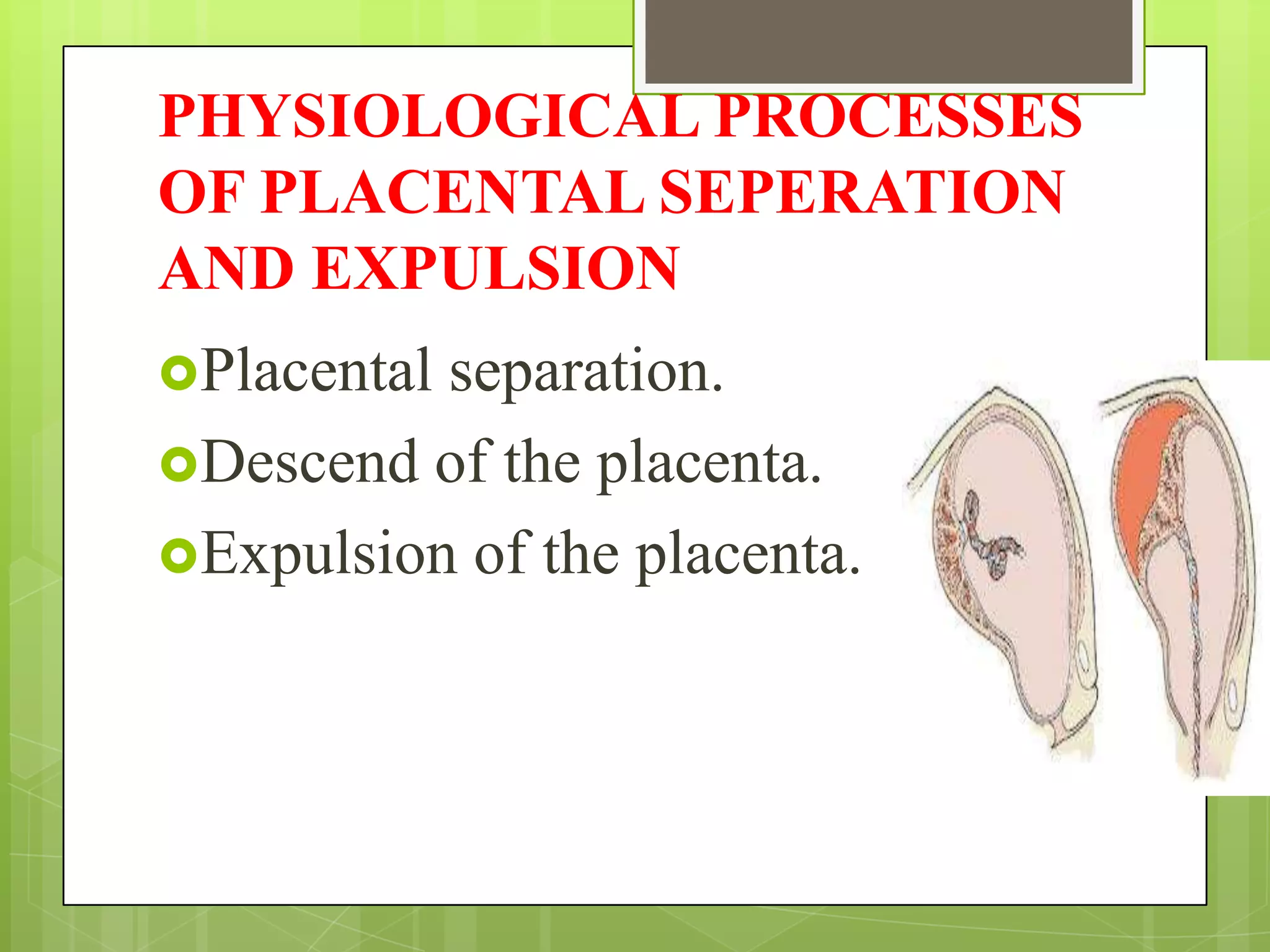
PHYSIOLOGICAL PROCESSES
OF PLACENTAL SEPERATION
AND EXPULSION
Placental separation.
Descend of the placenta.
Expulsion of the placenta.
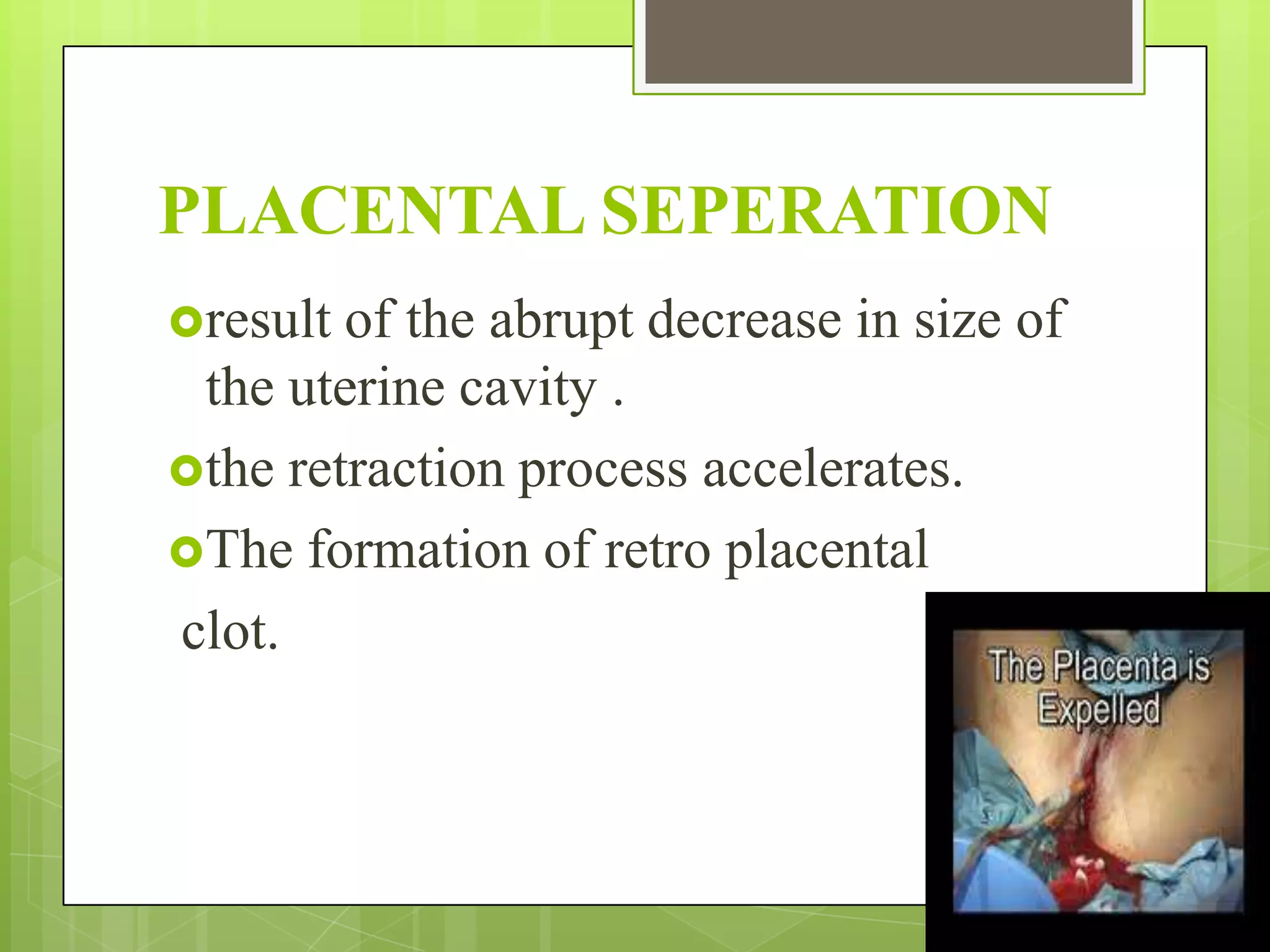
PLACENTAL SEPERATION
result of the abrupt decrease in size of
the uterine cavity .
the retraction process accelerates.
The formation of retro placental
clot.
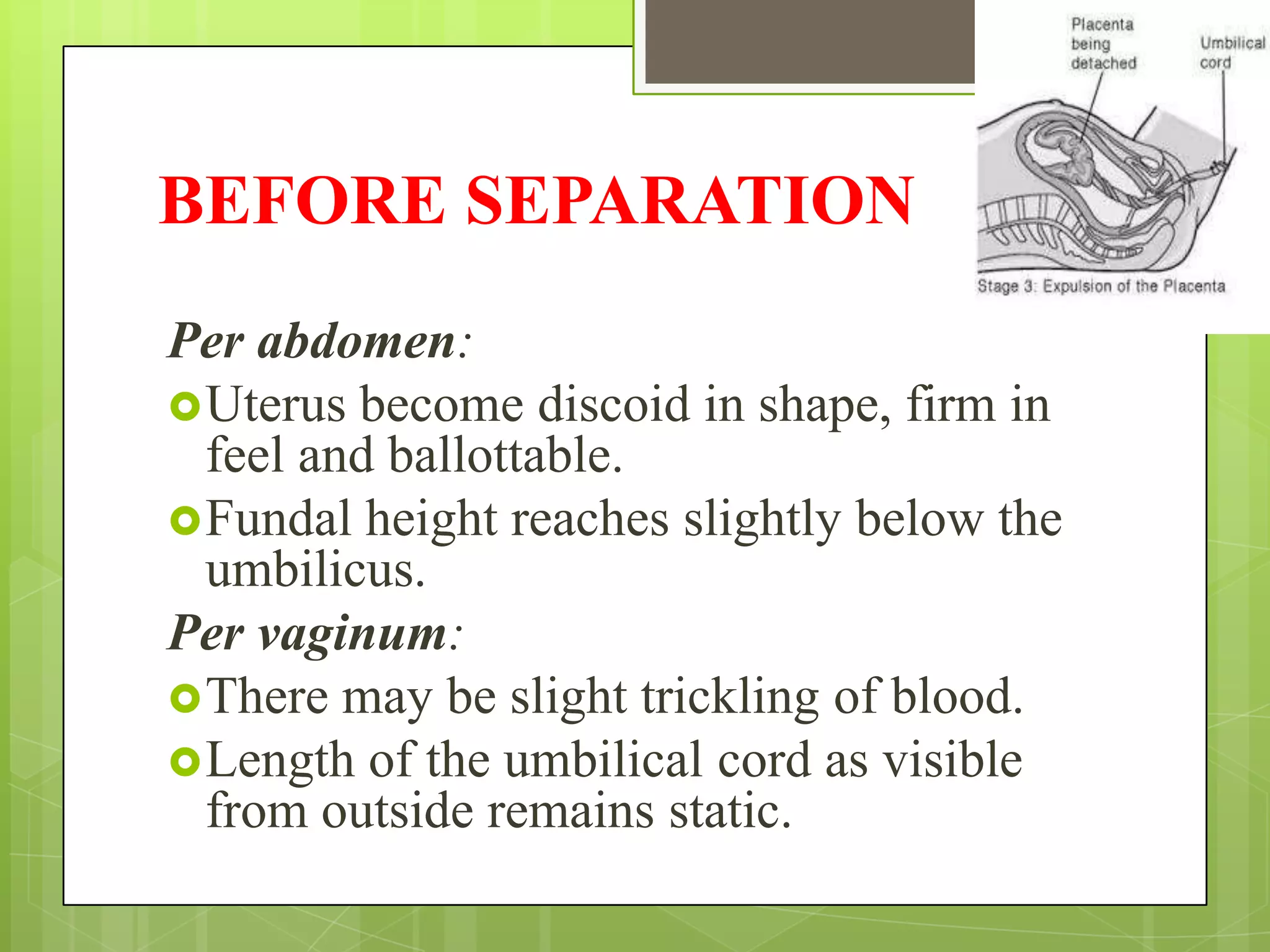
BEFORE SEPARATION
Per abdomen:
Uterus become discoid in shape, firm in
feel and ballottable.
Fundal height reaches slightly below the
umbilicus.
Per vaginum:
There may be slight trickling of blood.
Length of the umbilical cord as visible
from outside remains static.
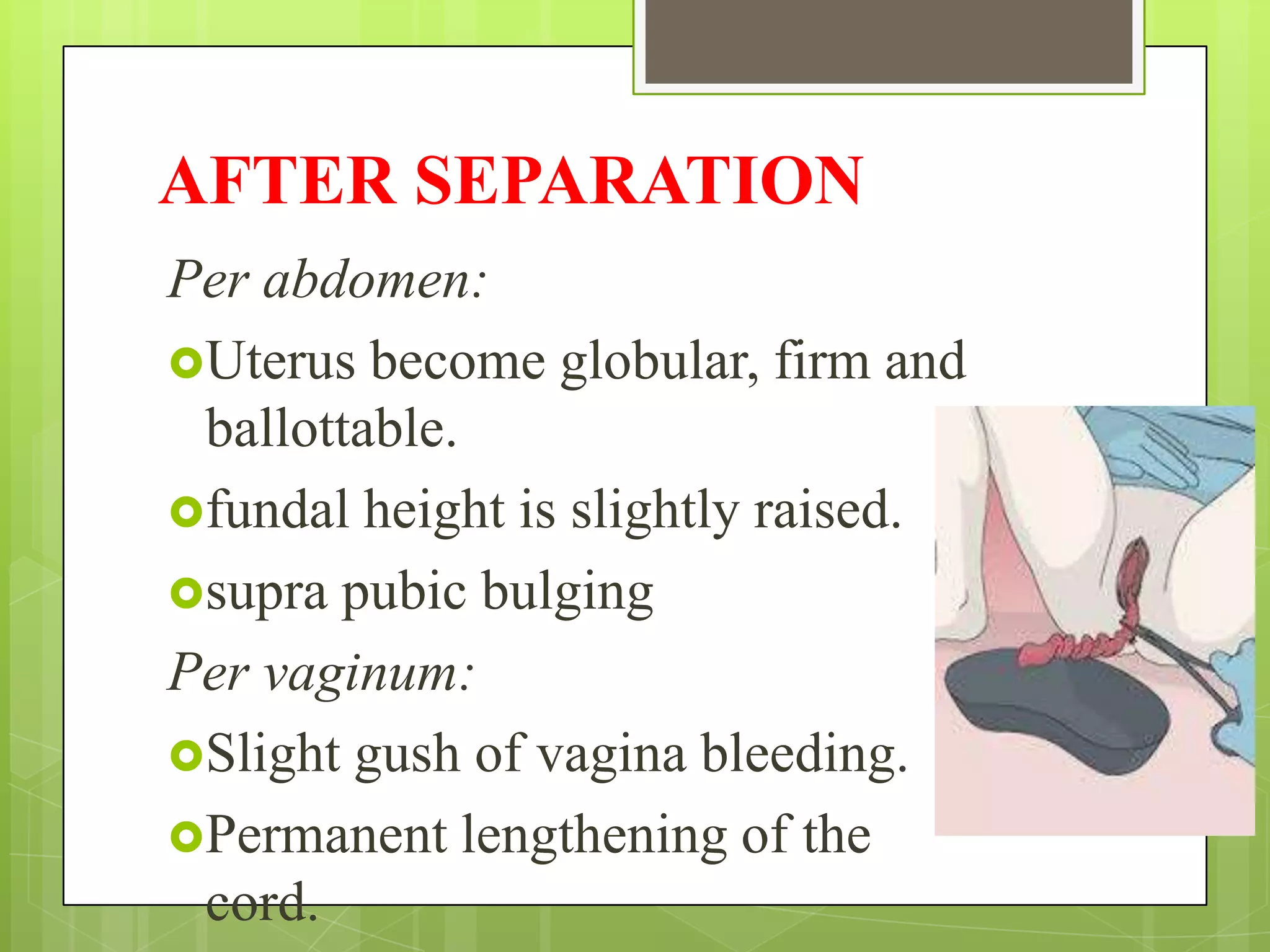
AFTER SEPARATION
Per abdomen:
Uterus become globular, firm and
ballottable.
fundal height is slightly raised.
supra pubic bulging
Per vaginum:
Slight gush of vagina bleeding.
Permanent lengthening of the
cord.
DESCEND OF THE PLACENTA
Sudden trickle or gush of blood.
Lengthening of the umbilical cord.
Change in the shape of the
uterus, globular.
Change in the position of the uterus.
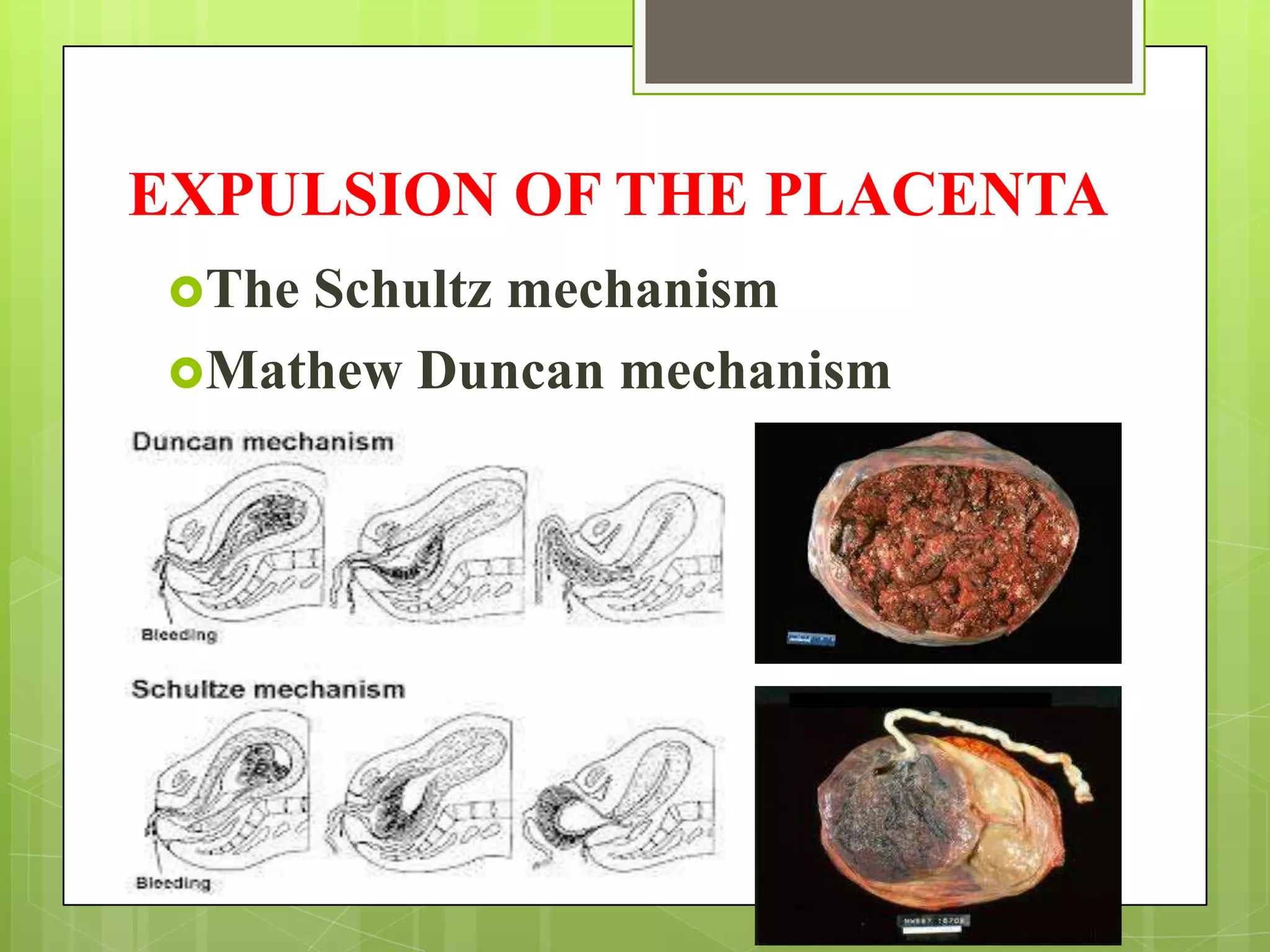
EXPULSION OF THE PLACENTA
The Schultz mechanism
Mathew Duncan mechanism
HEMOSTASIS
Retraction of the oblique uterine
muscle fibres .
vigorous uterine contraction
following placental separation.
transitory activation of the
coagulation and fibrinolytic systems.
MANAGEMENT OF THIRD
STAGE OF LABOUR
Guard the uterus to keep yourself and
anyone else from massaging it prior to
placental separation.
Do not massage the uterus before
placental separation, except when partial
separation has occurred by natural
processes and excessive bleeding evident.
MANAGEMENT OF THIRD
STAGE OF LABOUR
Do not pull on the umbilical cord before the
placenta separates or ever with an
uncontracted uterus.
Do not try to deliver the placenta prior to its
complete separation unless in the
emergency of third stage haemorrhage.
Wait for the natural process to occur and do
not interfere.
EXPECTANT MANGEMENT
A hand is placed over the fundus to feel the
signs of placental separation.
the client asked to bear down simultaneously
with the hardening of the uterus.
If the placenta fails to expel, one can wait for
upto 10 mts.
soon as the placenta passes through the
introitus, it is grasped by both hands and
twisted round and round or slightly up and
down with gentle traction .
EXPECTANT MANGEMENT
 Controlled cord traction [ modified
Brandt-Andrews method]:
EXPECTANT MANGEMENT
EXPRESSION BY FUNDAL PRESSURE
This is done by placing four fingers of the hand
behind the fundus and thumb in front of the
uterus to use as a piston. The uterus is made to
contract by gentle rubbing. When the uterus
becomes hard, it is pushed downwards and
backwards. The pressure should be withdrawn as
soon as the placenta passes through the introitus.
USE OF OXYTOCIC AGENTS
Prophylactic use
the administration of an oxytocic drug at the time
of delivery of the anterior shoulder.
Therapeutic administration
This method implies the use of an oxytocic either
to stop the bleeding once it has occurred or to
maintain the uterus in a contracted state when
there are indications that excessive bleeding is
likely to occur.
FUNDAL HEIGHT DURING
THIRD STAGE
At the end of the third stage following
the expulsion of the placenta, the
fundus is about 4cm below the
umbilicus.
COMPLETION OF THIRD STAGE
Continuing evaluation
ensure that the uterus is well contracted
Slight lacerations are usually repaired
immediately
The vulva and perineum are gently cleansed
mother’s blood pressure, pulse and
temperature should be taken
Once the mother is comfortable the placenta
and membranes is the next priority
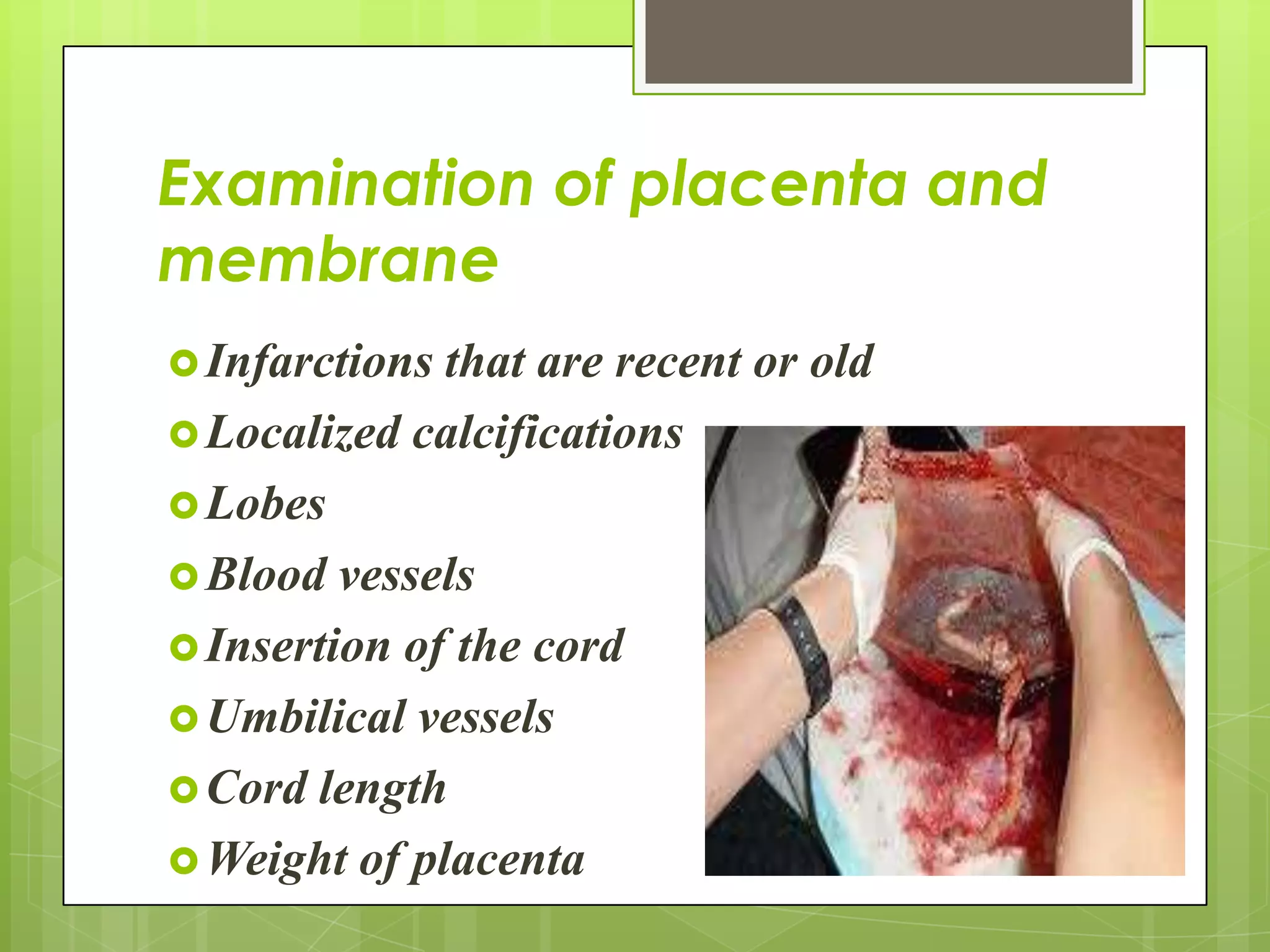
Examination of placenta and
membrane
Infarctions that are recent or old
Localized calcifications
Lobes
Blood vessels
Insertion of the cord
Umbilical vessels
Cord length
Weight of placenta
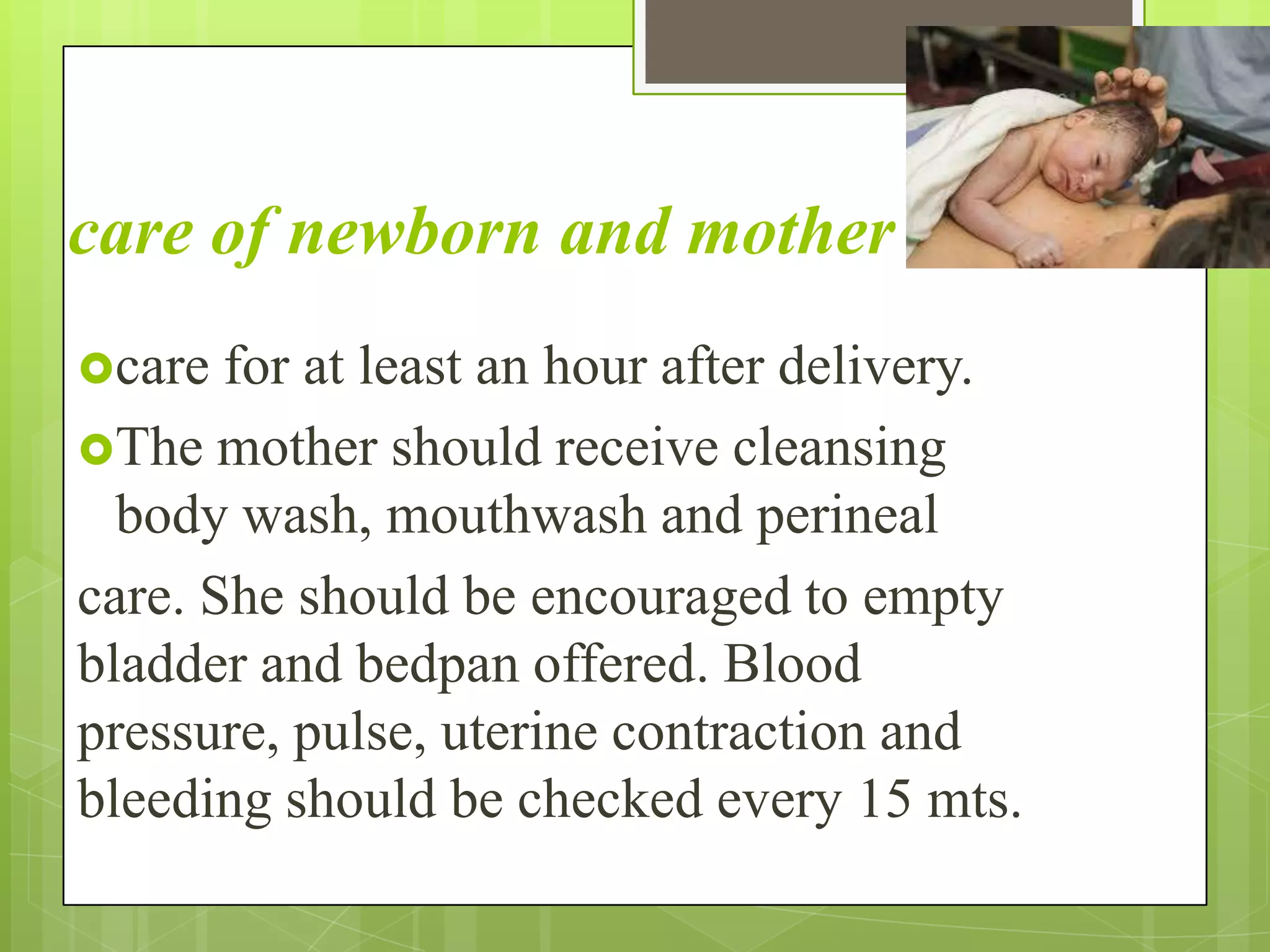
care of newborn and mother
care for at least an hour after delivery.
The mother should receive cleansing
body wash, mouthwash and perineal
care. She should be encouraged to empty
bladder and bedpan offered. Blood
pressure, pulse, uterine contraction and
bleeding should be checked every 15 mts.
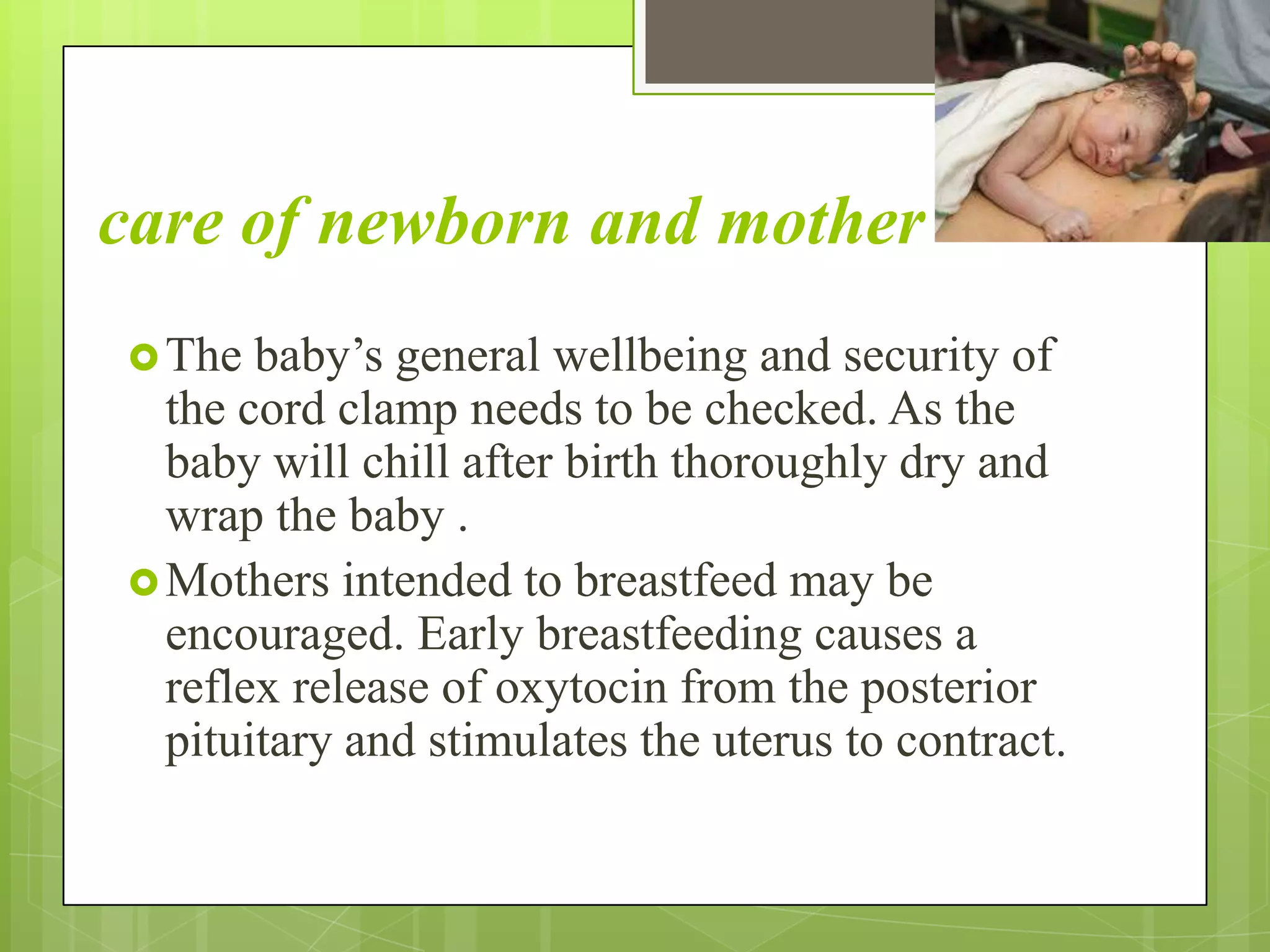
care of newborn and mother
The baby’s general wellbeing and security of
the cord clamp needs to be checked. As the
baby will chill after birth thoroughly dry and
wrap the baby .
Mothers intended to breastfeed may be
encouraged. Early breastfeeding causes a
reflex release of oxytocin from the posterior
pituitary and stimulates the uterus to contract.
Records
all the drugs
administered, examination of the
placenta, membranes and cord with
attention drawn to any abnormalities
and the amount of blood loss.
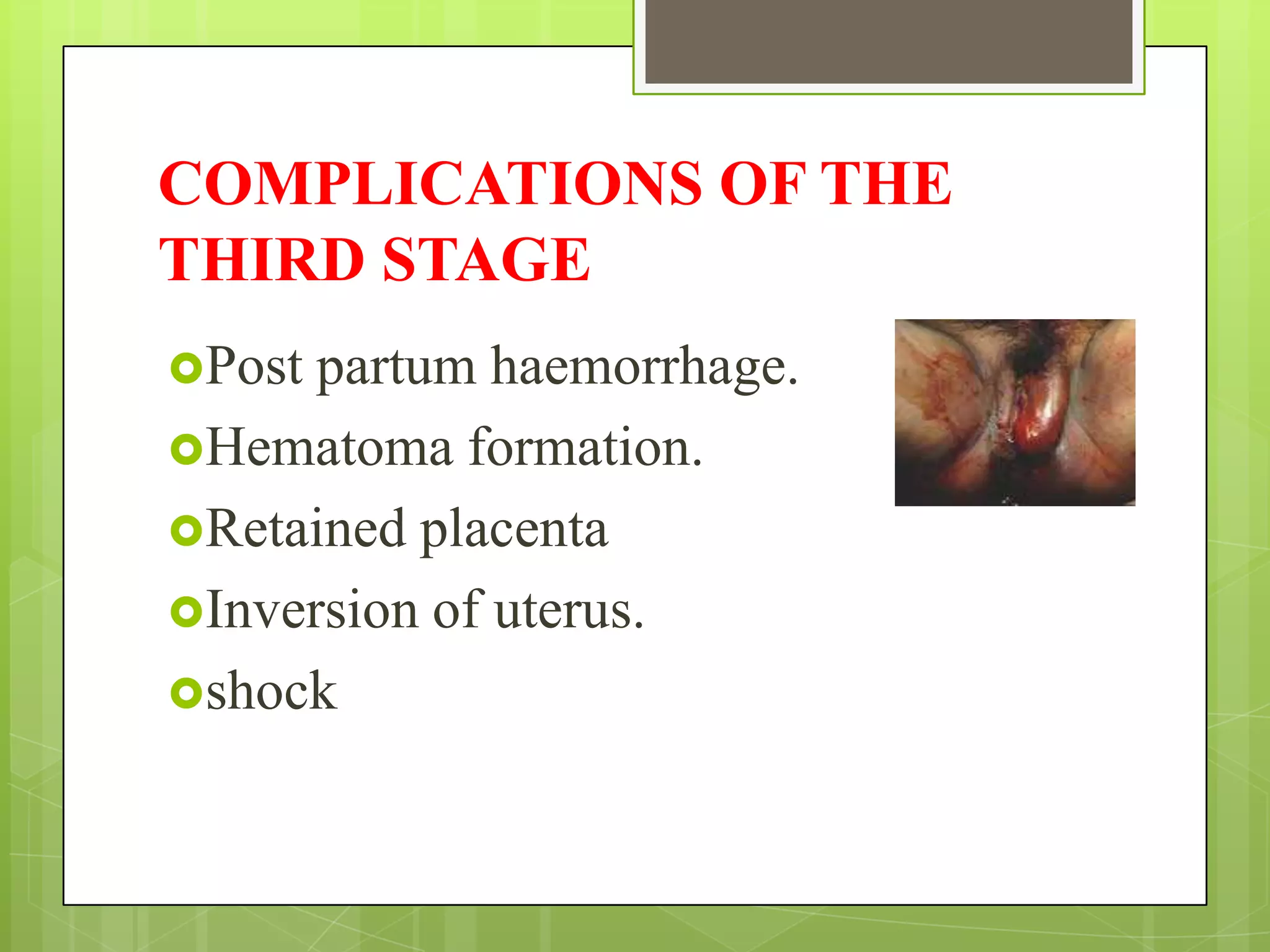
COMPLICATIONS OF THE
THIRD STAGE
Post partum haemorrhage.
Hematoma formation.
Retained placenta
Inversion of uterus.
shock
THANK YOU…….

Third stage of labour

  • 1.
  • 2.
    DEFINITION The third stageof labor lasts from the birth of the baby until the placenta is expelled. It is known as the placental stage of labour.
  • 3.
    PHYSIOLOGICAL PROCESSES OF PLACENTALSEPERATION AND EXPULSION Placental separation. Descend of the placenta. Expulsion of the placenta.
  • 4.
    PLACENTAL SEPERATION result ofthe abrupt decrease in size of the uterine cavity . the retraction process accelerates. The formation of retro placental clot.
  • 5.
    BEFORE SEPARATION Per abdomen: Uterusbecome discoid in shape, firm in feel and ballottable. Fundal height reaches slightly below the umbilicus. Per vaginum: There may be slight trickling of blood. Length of the umbilical cord as visible from outside remains static.
  • 6.
    AFTER SEPARATION Per abdomen: Uterusbecome globular, firm and ballottable. fundal height is slightly raised. supra pubic bulging Per vaginum: Slight gush of vagina bleeding. Permanent lengthening of the cord.
  • 7.
    DESCEND OF THEPLACENTA Sudden trickle or gush of blood. Lengthening of the umbilical cord. Change in the shape of the uterus, globular. Change in the position of the uterus.
  • 8.
    EXPULSION OF THEPLACENTA The Schultz mechanism Mathew Duncan mechanism
  • 9.
    HEMOSTASIS Retraction of theoblique uterine muscle fibres . vigorous uterine contraction following placental separation. transitory activation of the coagulation and fibrinolytic systems.
  • 10.
    MANAGEMENT OF THIRD STAGEOF LABOUR Guard the uterus to keep yourself and anyone else from massaging it prior to placental separation. Do not massage the uterus before placental separation, except when partial separation has occurred by natural processes and excessive bleeding evident.
  • 11.
    MANAGEMENT OF THIRD STAGEOF LABOUR Do not pull on the umbilical cord before the placenta separates or ever with an uncontracted uterus. Do not try to deliver the placenta prior to its complete separation unless in the emergency of third stage haemorrhage. Wait for the natural process to occur and do not interfere.
  • 12.
    EXPECTANT MANGEMENT A handis placed over the fundus to feel the signs of placental separation. the client asked to bear down simultaneously with the hardening of the uterus. If the placenta fails to expel, one can wait for upto 10 mts. soon as the placenta passes through the introitus, it is grasped by both hands and twisted round and round or slightly up and down with gentle traction .
  • 13.
    EXPECTANT MANGEMENT  Controlledcord traction [ modified Brandt-Andrews method]:
  • 14.
    EXPECTANT MANGEMENT EXPRESSION BYFUNDAL PRESSURE This is done by placing four fingers of the hand behind the fundus and thumb in front of the uterus to use as a piston. The uterus is made to contract by gentle rubbing. When the uterus becomes hard, it is pushed downwards and backwards. The pressure should be withdrawn as soon as the placenta passes through the introitus.
  • 15.
    USE OF OXYTOCICAGENTS Prophylactic use the administration of an oxytocic drug at the time of delivery of the anterior shoulder. Therapeutic administration This method implies the use of an oxytocic either to stop the bleeding once it has occurred or to maintain the uterus in a contracted state when there are indications that excessive bleeding is likely to occur.
  • 16.
    FUNDAL HEIGHT DURING THIRDSTAGE At the end of the third stage following the expulsion of the placenta, the fundus is about 4cm below the umbilicus.
  • 17.
    COMPLETION OF THIRDSTAGE Continuing evaluation ensure that the uterus is well contracted Slight lacerations are usually repaired immediately The vulva and perineum are gently cleansed mother’s blood pressure, pulse and temperature should be taken Once the mother is comfortable the placenta and membranes is the next priority
  • 18.
    Examination of placentaand membrane Infarctions that are recent or old Localized calcifications Lobes Blood vessels Insertion of the cord Umbilical vessels Cord length Weight of placenta
  • 19.
    care of newbornand mother care for at least an hour after delivery. The mother should receive cleansing body wash, mouthwash and perineal care. She should be encouraged to empty bladder and bedpan offered. Blood pressure, pulse, uterine contraction and bleeding should be checked every 15 mts.
  • 20.
    care of newbornand mother The baby’s general wellbeing and security of the cord clamp needs to be checked. As the baby will chill after birth thoroughly dry and wrap the baby . Mothers intended to breastfeed may be encouraged. Early breastfeeding causes a reflex release of oxytocin from the posterior pituitary and stimulates the uterus to contract.
  • 21.
    Records all the drugs administered,examination of the placenta, membranes and cord with attention drawn to any abnormalities and the amount of blood loss.
  • 22.
    COMPLICATIONS OF THE THIRDSTAGE Post partum haemorrhage. Hematoma formation. Retained placenta Inversion of uterus. shock
  • 23.