Ammeter, Voltmeter, Wattmeter,
Power Factor Meter
Ammeter
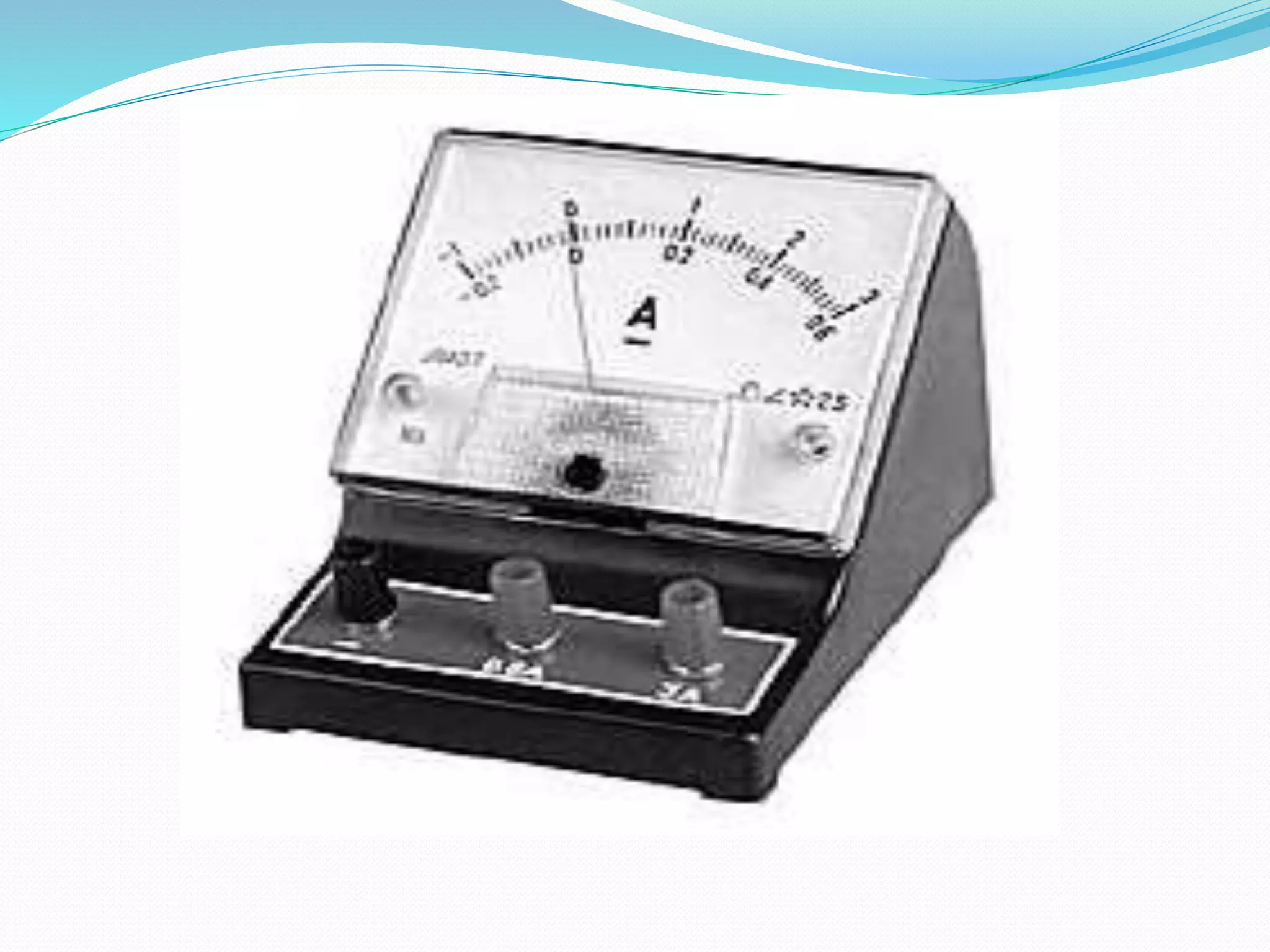
 An ammeter is a measuring instrument used to
measure the current in a circuit.
 Ammeters are either connected in series with the
circuit carrying the current to be measured (for small
fractional amperes), or have their shunt resistors
connected similarly in series. To measure larger
currents, a resistor called a shunt is placed in parallel
with the meter.
Working Principle of ammeter
 The main Principle of ammeter is that it must have a
very low resistance and also inductive reactance.
 Due to very low impedence the power loss will be low
 If it is connected in parallel it becomes almost a short
circuited path and all the current will flow through
ammeter as a result of high current the instrument
may burn.
Classification of Ammeter
Depending on the constructing principle, there are
many types of ammeter we get, they are mainly
 -Permanent Magnet Moving Coil (PMMC) ammeter.
 Moving Iron(MI) Ammeter.
 Electrodynamometer type Ammeter.
 Rectifier type Ammeter.
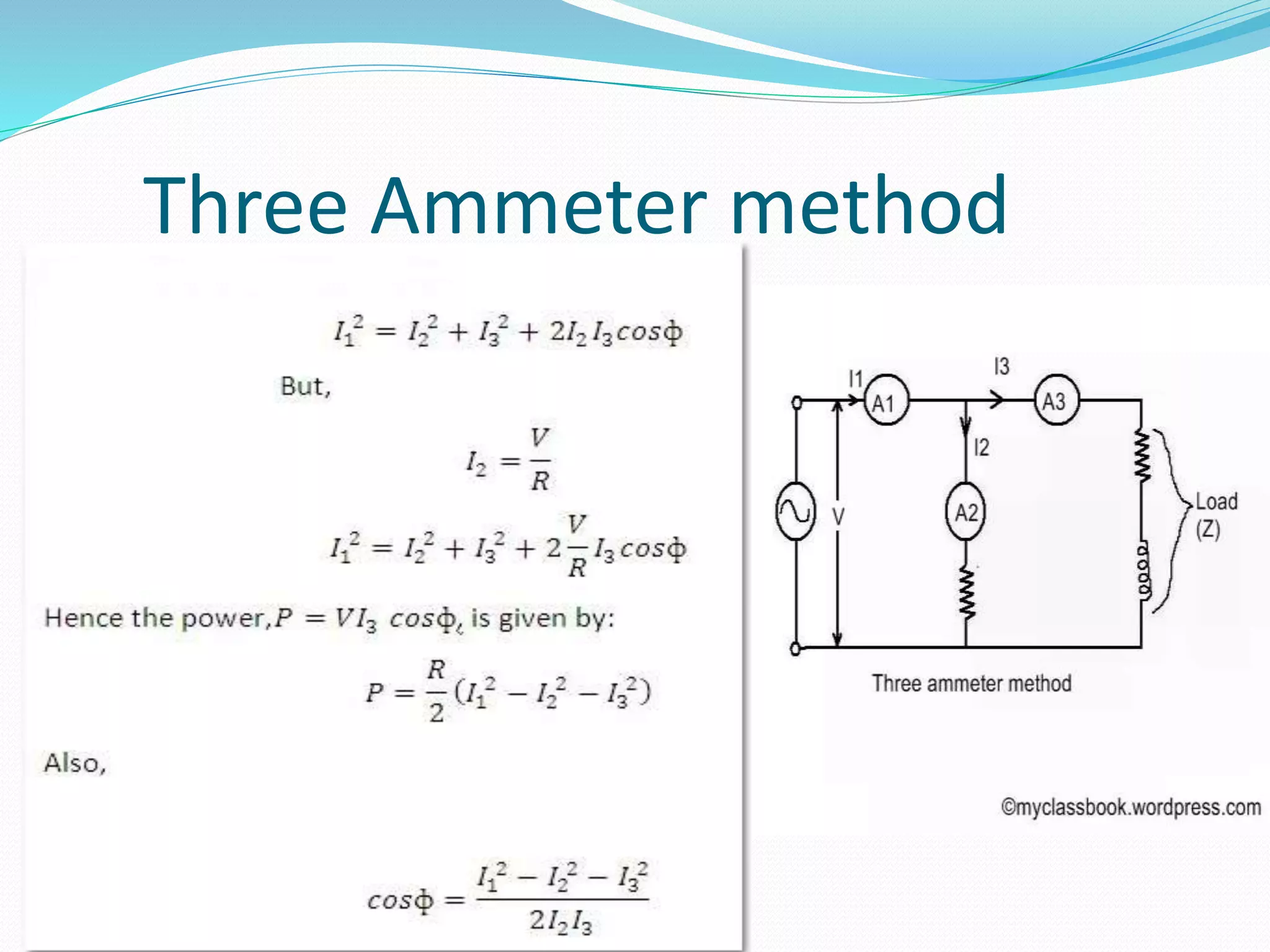
Three Ammeter method
Numerical
 Example 1:
 The following readings were obtained from three
ammeters used for a single phase power measurement:
An inductive load takes a current of 2.5 A; a non-
inductive resistor connected in parallel takes 2.4 A,
when connected across 250 V supply. The total current
taken from the supply is 4.5 A. Calculate:
 a) Power absorbed by the load.
 b) Load impedance.
 c) Power factor of the load.
Solution
 Given: I3 = 2.5 A; I2 = 2.4 A; I1 = 4.5 A; V = 250 V.
 Non-inductive resistance, R = (V/I2) = 250/2.4 = 104.17
 i) Power absorbed by the load, P:
 P = (R/2)*(I1^2 – I2^2 – I3^2)
 = (104.17/2)((4.5^2)-(2.4^2)-(2.5^2)) = 429.2 W
 ii) Load impedance, Z:
 Z = (V/I3) = (250/2.5) = 100
 iii) Power factor of the load, cos ? = (I1^2 – I2^2
– I3^2) /2I2I3
 = [(4.5^2)-(2.4^2)-(2.5^2)]/(2*2.4*2.5) = 0.687 (Ans.)
Voltmeter
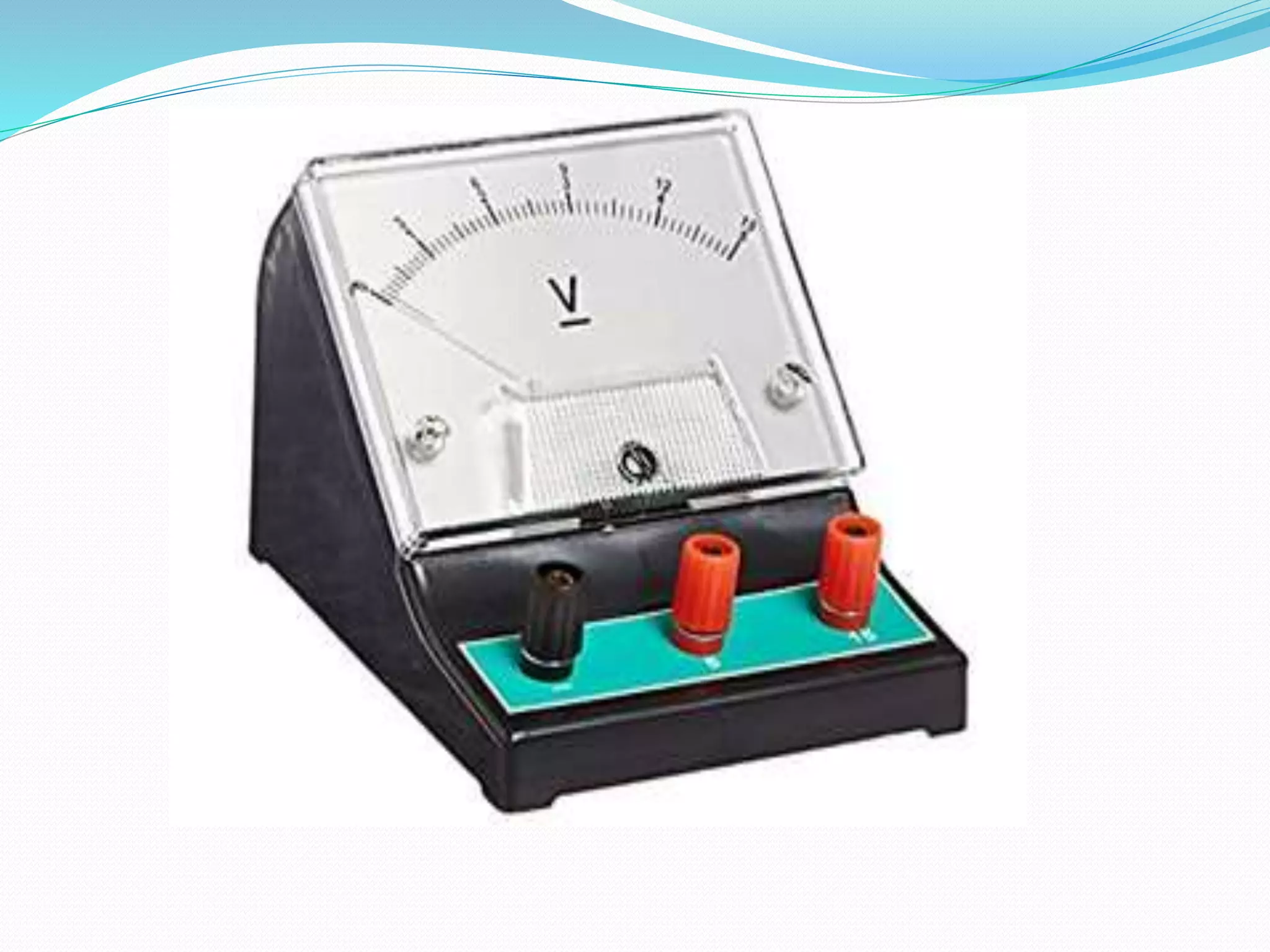
Voltmeter is an instrument
used for measuring
electrical potential
difference between two
points in an electric circuit.
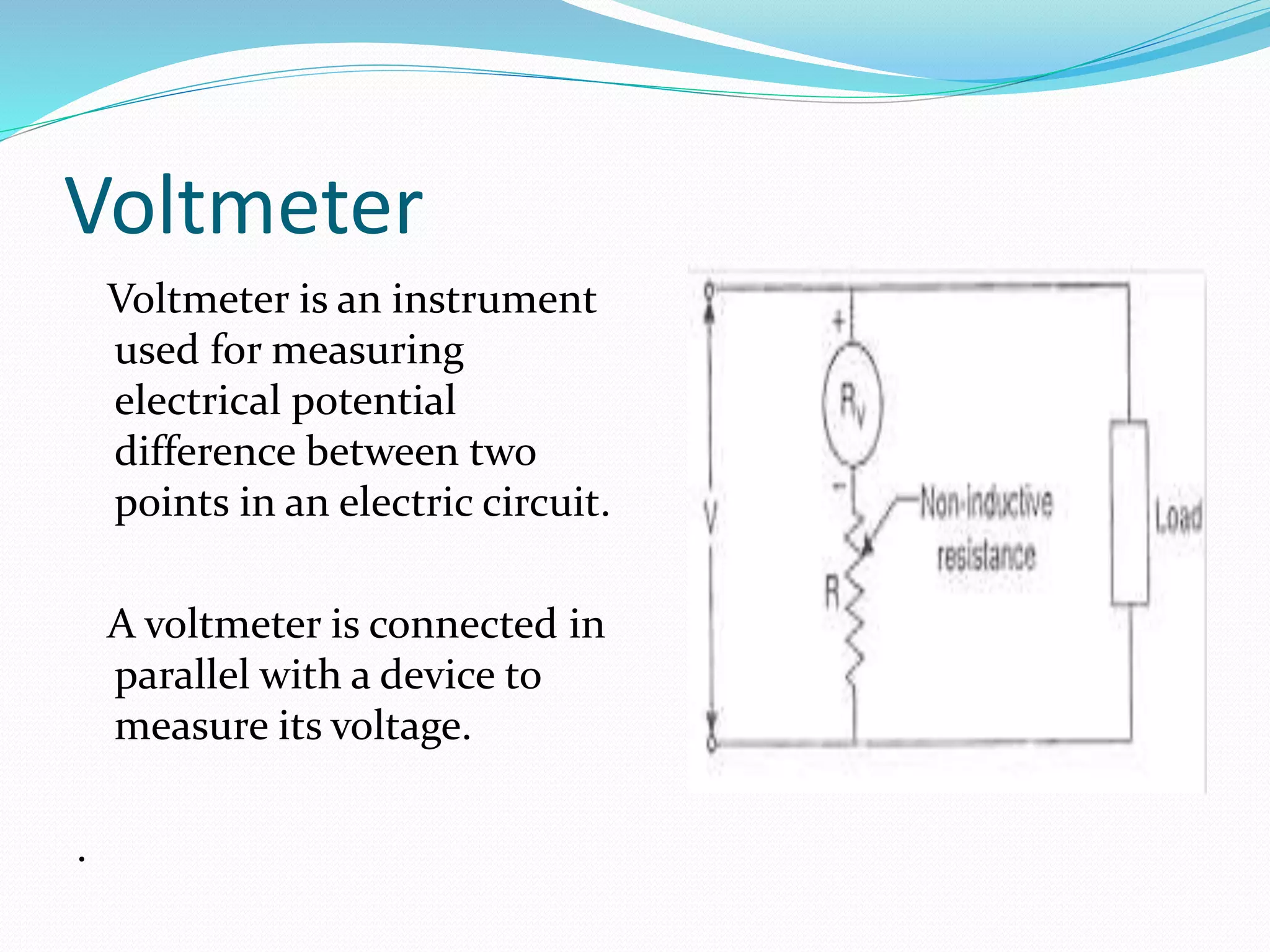
A voltmeter is connected in
parallel with a device to
measure its voltage.
.
Working principle of voltmeter
 The main principle of voltmeter is that it is connected
in parallel.
 Parallel connection is used because a voltmeter is
constructed in such a way that it has a very high value
of resistance. So if that high resistance is connected in
series than the current flow will be almost zero which
means the circuit has become open.
Classification of Voltmeter
 Permanent Magnet Moving coil (PMMC) Voltmeter.
 Moving Iron (MI) Voltmeter.
 Electro Dynamometer Type Voltmeter.
 Rectifier type Voltmeter
 Induction type Voltmeter.
 Electrostatic type Voltmeter.
 Digital Voltmeter (DVM).
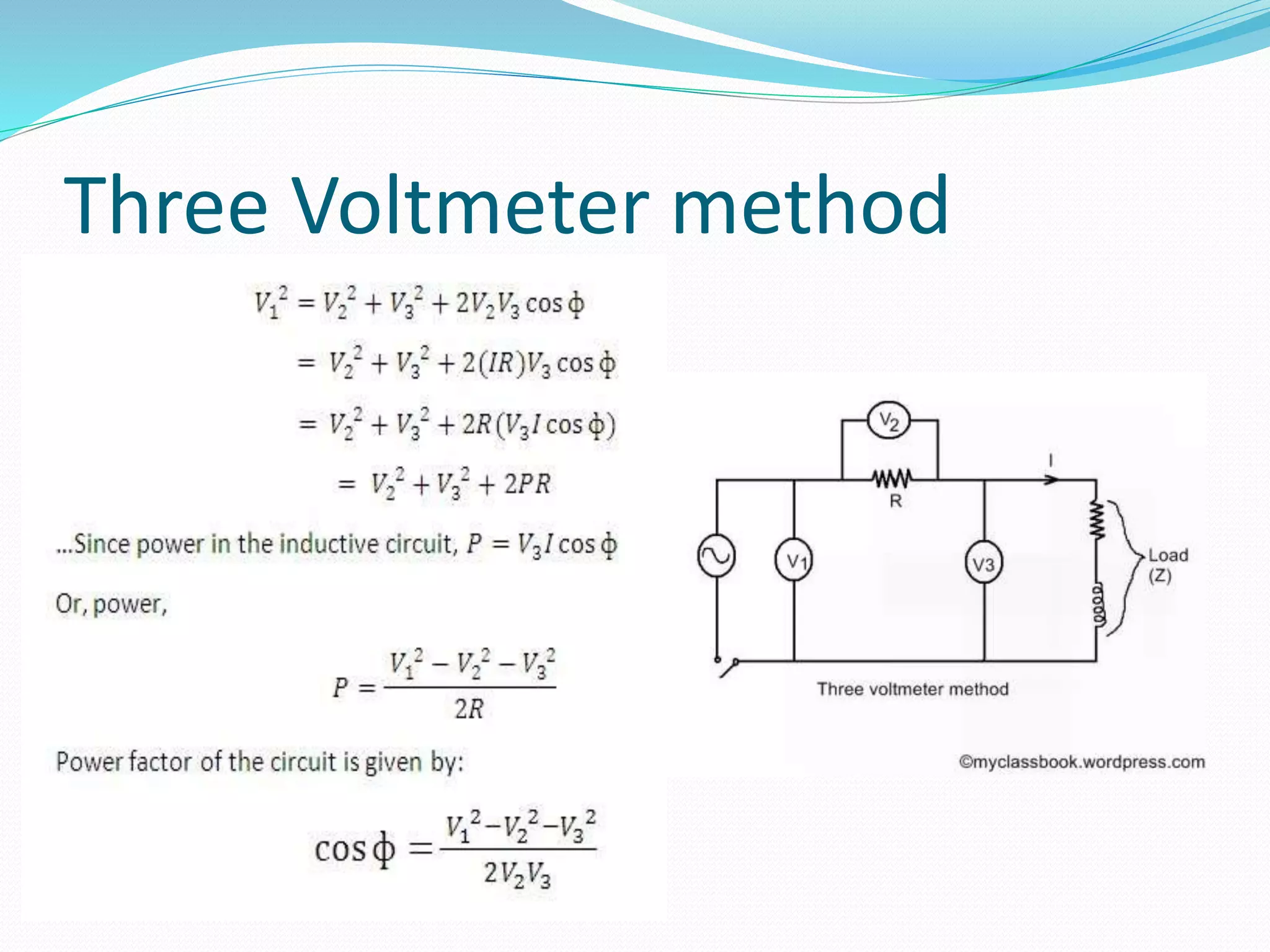
Three Voltmeter method
Numerical Example:
 Example 1:
 The following readings were obtained from three
voltmeters used for a single phase power measurement:
 V2 = 180 voltas across a non-inductive resistaor; V3 = 200
volts across an inductive load; V1 = 300 volts across the two
in series.
 Calculate the power factor of the inductive load.
 Solution:
 Given: V2 = 180 V; V3 = 200 V; V1 = 300 V
 Power factor, cos ? = (V1^2 – V2^2 – V3^3)/2V2V3
 Or cos ? = [(300^2) – (180^2) – (200^2)]/(2*180*200) =
0.244 (Ans.)
Watt Meter
 Wattmeter is an instrument used to measure the
power in an electrical circuit.
 The traditional form of wattmeter is called as
dynamometer wattmeter.
 The dynamometer wattmeter works on the motor
principle.
Working Principle
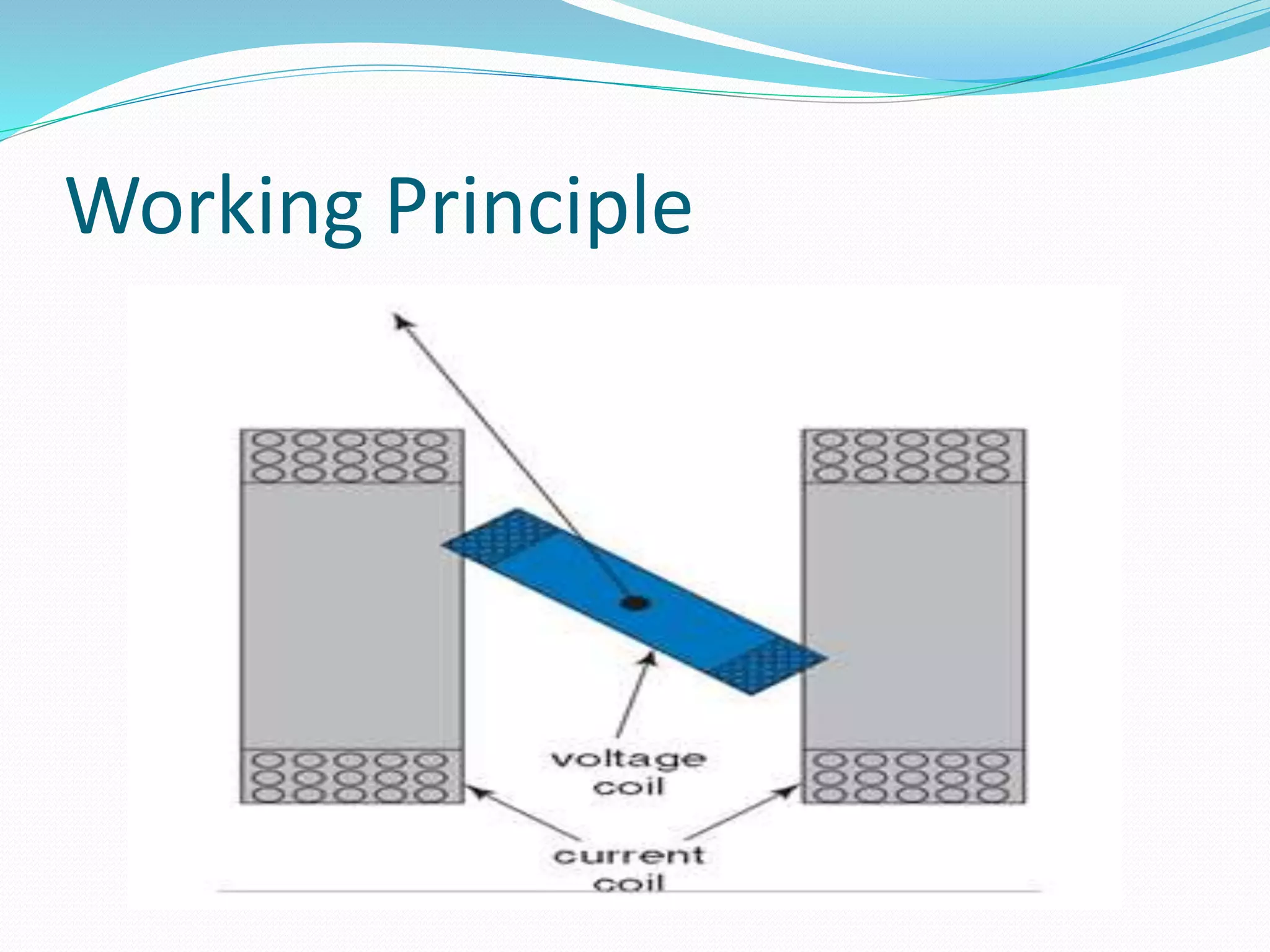
 The wattmeter has two sets of coils. One coil is fixed
and is made in two identical parts.
 It is made upon heavy gauge copper wire. So it has low
resistance. This is named as current coil.
 The other coil which is known as voltage coil, is wound
from fine gauge wire. So it has relatively high
resistance.
 The voltage coil is mounted on a circular manner. It is
placed between the two parts of the current coil.
Working Principle
Classification
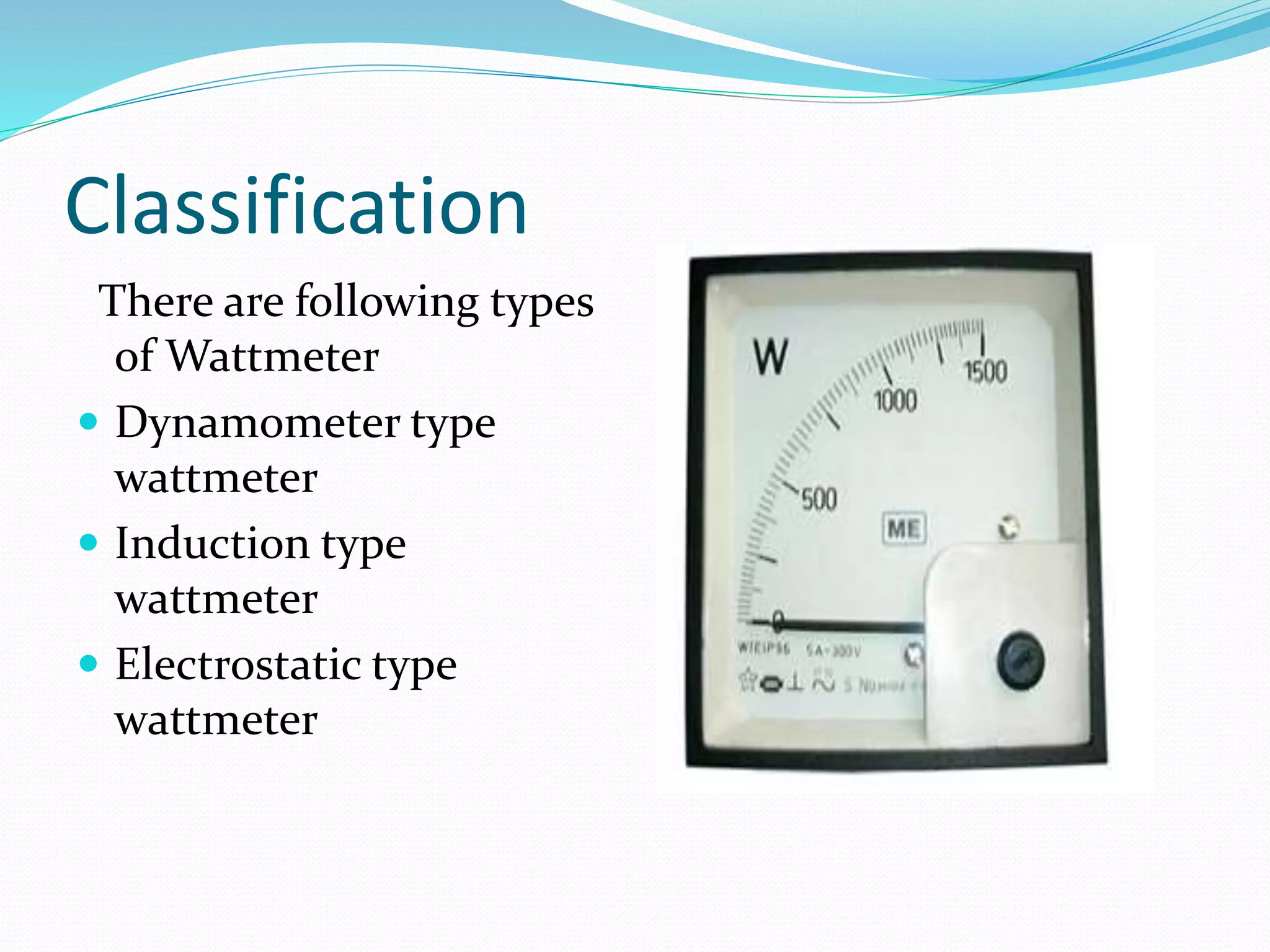
There are following types
of Wattmeter
 Dynamometer type
wattmeter
 Induction type
wattmeter
 Electrostatic type
wattmeter
Power Factor Meter
 Power factor measurement provides us the knowledge
of type of loads that we are using, helps in calculation
of losses happening during the power transmission
system and distribution.
 Hence We need a separate device for calculating the
power factor accurately and more precisely.
Construction
 General construction of any power factor meter circuit
include two coils pressure coil and current coil.
 Pressure coil is connected across the circuit.
 while current coil is connected such it can carry
circuit current, by measuring the phase difference
between the voltage and current .
Construction
 Usually the pressure coil is splits into two parts
 inductive part
 non-inductive part or pure resistive part. There is no
requirement of controlling system because at
equilibrium there exist two opposite forces which
balance the movement of pointer without any
requirement of controlling force.
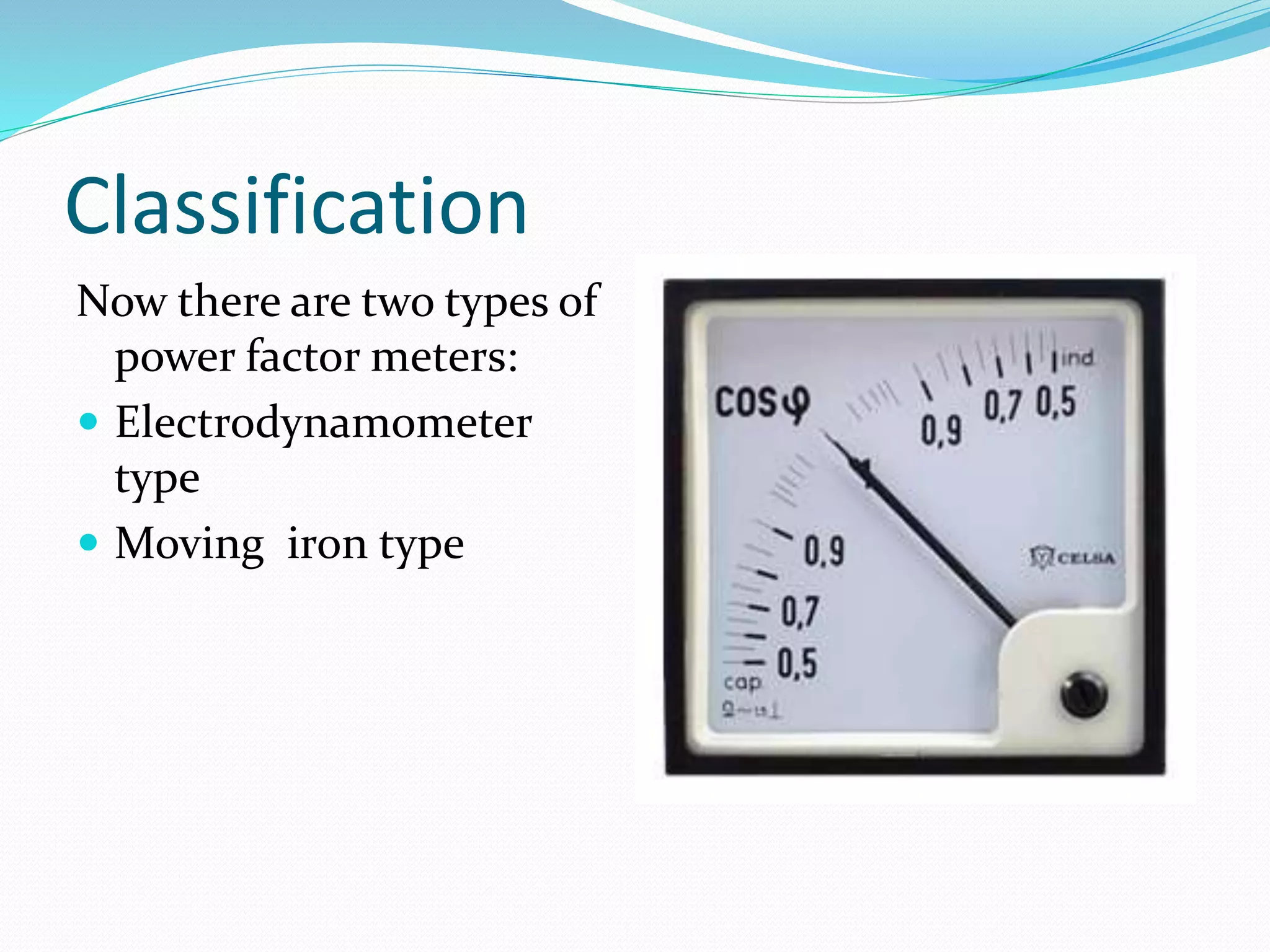
Classification
Now there are two types of
power factor meters:
 Electrodynamometer
type
 Moving iron type
We hope you liked our Presentation
and found it beneficial ……
Any Question!!!
23

Ammeter, voltmeter, wattmeter, power factor meter

  • 1.
  • 2.
    Ammeter  An ammeteris a measuring instrument used to measure the current in a circuit.  Ammeters are either connected in series with the circuit carrying the current to be measured (for small fractional amperes), or have their shunt resistors connected similarly in series. To measure larger currents, a resistor called a shunt is placed in parallel with the meter.
  • 3.
    Working Principle ofammeter  The main Principle of ammeter is that it must have a very low resistance and also inductive reactance.  Due to very low impedence the power loss will be low  If it is connected in parallel it becomes almost a short circuited path and all the current will flow through ammeter as a result of high current the instrument may burn.
  • 5.
    Classification of Ammeter Dependingon the constructing principle, there are many types of ammeter we get, they are mainly  -Permanent Magnet Moving Coil (PMMC) ammeter.  Moving Iron(MI) Ammeter.  Electrodynamometer type Ammeter.  Rectifier type Ammeter.
  • 6.
  • 7.
    Numerical  Example 1: The following readings were obtained from three ammeters used for a single phase power measurement: An inductive load takes a current of 2.5 A; a non- inductive resistor connected in parallel takes 2.4 A, when connected across 250 V supply. The total current taken from the supply is 4.5 A. Calculate:  a) Power absorbed by the load.  b) Load impedance.  c) Power factor of the load.
  • 8.
    Solution  Given: I3= 2.5 A; I2 = 2.4 A; I1 = 4.5 A; V = 250 V.  Non-inductive resistance, R = (V/I2) = 250/2.4 = 104.17  i) Power absorbed by the load, P:  P = (R/2)*(I1^2 – I2^2 – I3^2)  = (104.17/2)((4.5^2)-(2.4^2)-(2.5^2)) = 429.2 W  ii) Load impedance, Z:  Z = (V/I3) = (250/2.5) = 100  iii) Power factor of the load, cos ? = (I1^2 – I2^2 – I3^2) /2I2I3  = [(4.5^2)-(2.4^2)-(2.5^2)]/(2*2.4*2.5) = 0.687 (Ans.)
  • 9.
    Voltmeter Voltmeter is aninstrument used for measuring electrical potential difference between two points in an electric circuit. A voltmeter is connected in parallel with a device to measure its voltage. .
  • 10.
    Working principle ofvoltmeter  The main principle of voltmeter is that it is connected in parallel.  Parallel connection is used because a voltmeter is constructed in such a way that it has a very high value of resistance. So if that high resistance is connected in series than the current flow will be almost zero which means the circuit has become open.
  • 12.
    Classification of Voltmeter Permanent Magnet Moving coil (PMMC) Voltmeter.  Moving Iron (MI) Voltmeter.  Electro Dynamometer Type Voltmeter.  Rectifier type Voltmeter  Induction type Voltmeter.  Electrostatic type Voltmeter.  Digital Voltmeter (DVM).
  • 13.
  • 14.
    Numerical Example:  Example1:  The following readings were obtained from three voltmeters used for a single phase power measurement:  V2 = 180 voltas across a non-inductive resistaor; V3 = 200 volts across an inductive load; V1 = 300 volts across the two in series.  Calculate the power factor of the inductive load.  Solution:  Given: V2 = 180 V; V3 = 200 V; V1 = 300 V  Power factor, cos ? = (V1^2 – V2^2 – V3^3)/2V2V3  Or cos ? = [(300^2) – (180^2) – (200^2)]/(2*180*200) = 0.244 (Ans.)
  • 15.
    Watt Meter  Wattmeteris an instrument used to measure the power in an electrical circuit.  The traditional form of wattmeter is called as dynamometer wattmeter.  The dynamometer wattmeter works on the motor principle.
  • 16.
    Working Principle  Thewattmeter has two sets of coils. One coil is fixed and is made in two identical parts.  It is made upon heavy gauge copper wire. So it has low resistance. This is named as current coil.  The other coil which is known as voltage coil, is wound from fine gauge wire. So it has relatively high resistance.  The voltage coil is mounted on a circular manner. It is placed between the two parts of the current coil.
  • 17.
  • 18.
    Classification There are followingtypes of Wattmeter  Dynamometer type wattmeter  Induction type wattmeter  Electrostatic type wattmeter
  • 19.
    Power Factor Meter Power factor measurement provides us the knowledge of type of loads that we are using, helps in calculation of losses happening during the power transmission system and distribution.  Hence We need a separate device for calculating the power factor accurately and more precisely.
  • 20.
    Construction  General constructionof any power factor meter circuit include two coils pressure coil and current coil.  Pressure coil is connected across the circuit.  while current coil is connected such it can carry circuit current, by measuring the phase difference between the voltage and current .
  • 21.
    Construction  Usually thepressure coil is splits into two parts  inductive part  non-inductive part or pure resistive part. There is no requirement of controlling system because at equilibrium there exist two opposite forces which balance the movement of pointer without any requirement of controlling force.
  • 22.
    Classification Now there aretwo types of power factor meters:  Electrodynamometer type  Moving iron type
  • 23.
    We hope youliked our Presentation and found it beneficial …… Any Question!!! 23