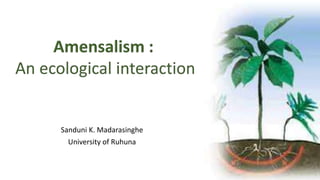
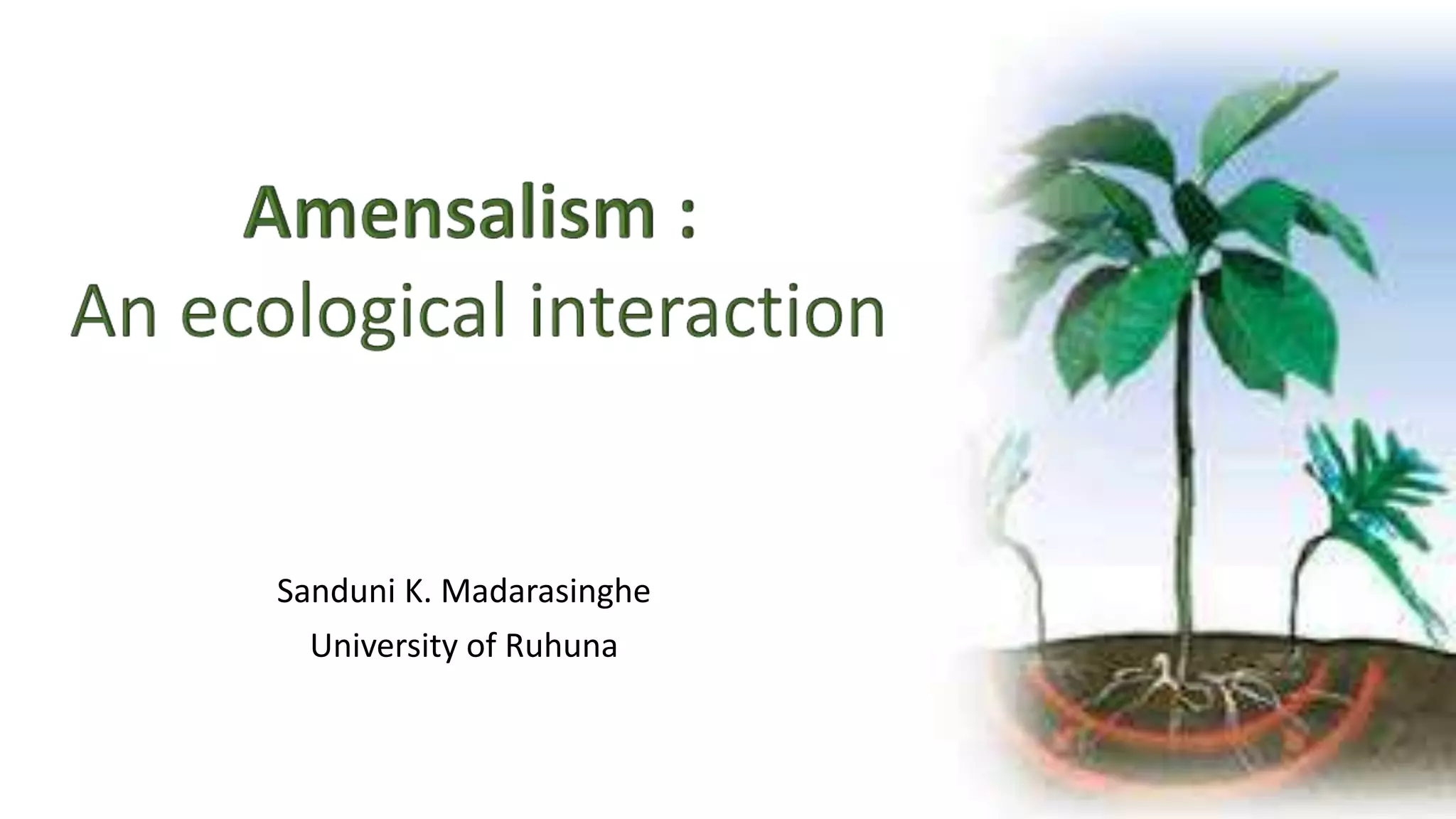
Sanduni K. Madarasinghe
University of Ruhuna
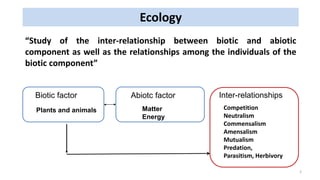
“Study of the inter-relationship between biotic and abiotic
component as well as the relationships among the individuals of the
biotic component”
Ecology
Biotic factor Abiotc factor Inter-relationships
Competition
Neutralism
Commensalism
Amensalism
Mutualism
Predation,
Parasitism, Herbivory
Matter
Energy
Plants and animals
2
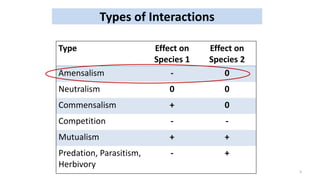
Types of Interactions
Type Effect on
Species 1
Effect on
Species 2
Amensalism - 0
Neutralism 0 0
Commensalism + 0
Competition - -
Mutualism + +
Predation, Parasitism,
Herbivory
- +
3
Amensalism
• Any relationship between organisms of different species in
which one organism is inhibited or destroyed while the
other organism remains unaffected
4
Example 1:
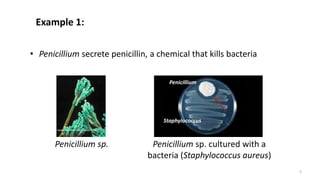
• Penicillium secrete penicillin, a chemical that kills bacteria
Penicillium sp. Penicillium sp. cultured with a
bacteria (Staphylococcus aureus)
5
Penicillium
Staphylococcus
Example 2:
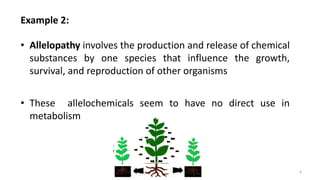
• Allelopathy involves the production and release of chemical
substances by one species that influence the growth,
survival, and reproduction of other organisms
• These allelochemicals seem to have no direct use in
metabolism
6
Examples for Allelopathy:
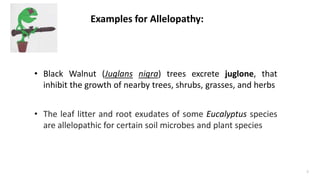
• Black Walnut (Juglans nigra) trees excrete juglone, that
inhibit the growth of nearby trees, shrubs, grasses, and herbs
• The leaf litter and root exudates of some Eucalyptus species
are allelopathic for certain soil microbes and plant species
7
8
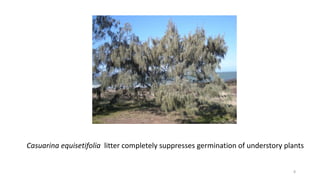
Casuarina equisetifolia litter completely suppresses germination of understory plants
References
• A text book of Plant Ecology (R.S. Ambasht)
• A text book of Plant Ecology (R.S. Shukla)
• http://www.allelopathyjournal.org
• http://csip.cornell.edu/Projects/CEIRP/AR/Allelopathy.htm
• Daizy R. Batish, Harminder Pal Singh (1998) Role of Allelopathy
in Regulating the Understorey Vegetation of Casuarina
equisetifolia. Environmental Forest Science, Vol.54 (Forestry
Sciences) pp 317-323
9
10

Amensalism

  • 1.
  • 2.
    “Study of theinter-relationship between biotic and abiotic component as well as the relationships among the individuals of the biotic component” Ecology Biotic factor Abiotc factor Inter-relationships Competition Neutralism Commensalism Amensalism Mutualism Predation, Parasitism, Herbivory Matter Energy Plants and animals 2
  • 3.
    Types of Interactions TypeEffect on Species 1 Effect on Species 2 Amensalism - 0 Neutralism 0 0 Commensalism + 0 Competition - - Mutualism + + Predation, Parasitism, Herbivory - + 3
  • 4.
    Amensalism • Any relationshipbetween organisms of different species in which one organism is inhibited or destroyed while the other organism remains unaffected 4
  • 5.
    Example 1: • Penicilliumsecrete penicillin, a chemical that kills bacteria Penicillium sp. Penicillium sp. cultured with a bacteria (Staphylococcus aureus) 5 Penicillium Staphylococcus
  • 6.
    Example 2: • Allelopathyinvolves the production and release of chemical substances by one species that influence the growth, survival, and reproduction of other organisms • These allelochemicals seem to have no direct use in metabolism 6
  • 7.
    Examples for Allelopathy: •Black Walnut (Juglans nigra) trees excrete juglone, that inhibit the growth of nearby trees, shrubs, grasses, and herbs • The leaf litter and root exudates of some Eucalyptus species are allelopathic for certain soil microbes and plant species 7
  • 8.
    8 Casuarina equisetifolia littercompletely suppresses germination of understory plants
  • 9.
    References • A textbook of Plant Ecology (R.S. Ambasht) • A text book of Plant Ecology (R.S. Shukla) • http://www.allelopathyjournal.org • http://csip.cornell.edu/Projects/CEIRP/AR/Allelopathy.htm • Daizy R. Batish, Harminder Pal Singh (1998) Role of Allelopathy in Regulating the Understorey Vegetation of Casuarina equisetifolia. Environmental Forest Science, Vol.54 (Forestry Sciences) pp 317-323 9
  • 10.